
I have long struggled with understanding why Labour under Corbyn has not been more forthright in supporting the Remain campaign. To be sure, such ambivalence must in part be because of the diversity of views within Labour’s membership, but they risk losing many of their younger supporters once the harsh economic, social, political and cultural realities of leaving the EU hit home.
The sacking of Owen Thomas from the shadow cabinet for his principled stand in favour of a second referendum, and for highlighting the risks of Brexit, emphasises the deep divisions within Labour and the power that the leader holds.
The most plausible reasons for Corbyn’s approach would seem to be that:
- He has long been suspicious of the European project, seeing it as a means through which the owners of capital have been able to exploit labour more effectively;
- He sees the EU as a threat to his ambitions fundamentally to restructure Britain, especially because he thinks that membership of the EU would limit his intentions to renationalize many of the utility industries that were privatized over the last half century; and
- Because he wants to be seen as the leader who made Britain great again.
However, his logic, if indeed that is what it can be called, is deeply problematic.
Corbyn’s recent statements on the EU and Brexit have indeed shown a more conciliatory approach to Europe, perhaps as a sop to those Labour voters who wish to remain, but many of his previous statements leave little doubt that he is highly critical of both the European project, and of the EU institutions that are seeking to deliver it:
- He voted to leave the EEC in 1975;
- In 1993, he spoke out against the Maastricht Treaty because it took “away from national parliaments the power to set economic policy and hands it over to an unelected set of bankers who will impose the economic policies of price stability, deflation and high unemployment throughout the European Community”;
- He voted against the Lisbon Treaty in 2008; and
- In 2016 he asserted that he wanted “a Europe that is based on social justice and good, rather than solely on free-market economics”.
To be sure, some people can grow wiser with age and change their minds. After winning the election in 2017 he said clearly that he wanted the UK to remain a member of the EU, but most of his recent actions would run counter to this assertion. Most importantly, he has done very little to put this aspiration into practice, and seeks to penalize any of his MPs who support a second referendum and express a desire to remain within the EU.
Corbyn’s criticisms of the EU fail to acknowledge the very considerable support that it has given to workers’ rights and social welfare across Europe. Workers in Britain have benefited considerably from this, and it is unlikely that they would have done so had the UK not been part of the EU over the last 45 years.
The scenario that Corbyn seems to be hoping for is that:
- May and the Tories will make a disaster of the Brexit negotiations, and will become unelectable at least for the next quarter of a century ;
- The British economy will swiftly plunge into decline as a result of Brexit;
- This will make his renationalization policies seem much more plausible than they do at the moment; and
- He will then be seen as the glorious saviour of a Britain that will indeed be made great again as a result of his actions.
For this to succeed, he cannot in any way be seen as supporting any of the present government’s policies towards the EU, he must continue to advocate that the EU serves the interests of the owners of capital rather than the workers, and he must encourage the collapse of our economy and society so that his policies can be seen as restoring our (and his) greatness again.
It seems so sad that on these critical issues he has failed to see the very considerable benefits that being part of the EU gives to Britain. Instead of simply leaving the EU, we should remain at its heart and change it from within. Outside the EU, Britain has little voice, little power, and none of the benefits that belonging to it can bring to all of our citizens.
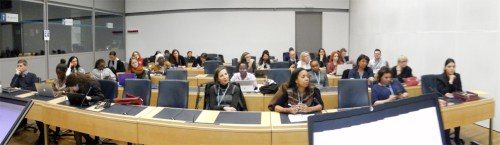
 It was an enormous privilege to work with David Hollow, Meghan Brugha and Mark Weber last year on a report for Save the Children International about the future of learning and technology in deprived contexts. I am delighted that this has now been published in a slightly abridged version (
 We concluded that nine broad changes in basic education are likely to be apparent by 2025:
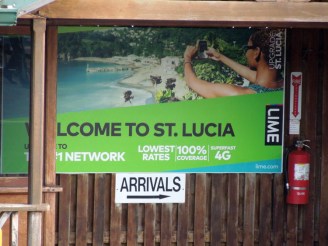 My earlier research with colleagues in Islamabad indicated very high levels of sexual harassment in Pakistan using mobile phones, both in traditional ways for calls and texts, and also through access to online social media. Evidence from other parts of the world also suggests that similar high levels are to be found in many countries with different cultural backgrounds and social structures, However, there have been very few cross-cultural comparisons using the same methodology. Together with Dr. Bushra Hassan from Pakistan, we are therefore using a similar online survey instrument to explore perceptions and experiences of the use of mobile devices in the
 These are some of the headline findings of our research, but we need many more responses to be able to undertake appropriate statistical analysis of the results that will help us to dig beneath the surface and explain why some of these patterns exist. The highest levels of responses have been from Guyana, the Cayman Islands and Trinidad and Tobago, and so we would particularly encourage responses from other parts of the region. We are also very aware that mobile devices are just one of the ways through which sexual harassment exists. However, it is an additional and very prevalent means, and we need to be aware of the extent that it is used to cause misery and oppression.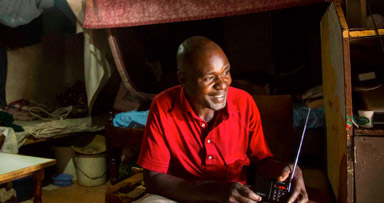
 abad) on the use of mobiles by young people in Pakistan as symbols shaping their identity (published in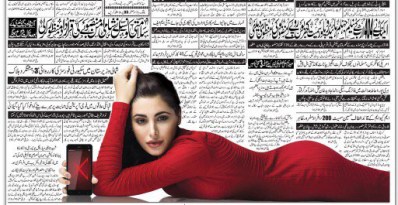

 is a global initiative committed to achieving gender equality in the digital age. Its founding partners are the
  The arrival of relatively cheap drones (or unmanned aerial vehicles, UAVs) that can be purchased and used by people other than the military and civilian “authorities” raises fundamental questions about privacy and security. To be sure, there is good evidence of the positive role that drones can play, particularly in providing humanitarian assistance, and in delivering supplies to remote regions, but insufficient attention is paid to their darker side. Increasingly, countries such as the UK are wisely seeking to control the use of drones near airports (see for example

 Tim Unwin's Blog