Category Archives: Caribbean

Liming in Tobago…

I guess a short visit to Tobago did not give enough time to enjoy the full sense of liming – that very special occupation of working hard at doing nothing while sharing food, drink and laughter with friends – but it did provide an insight into just what a pleasurable activity that can be!  The island is actually much bigger than it might appear on a map (300 sq kms) , and it was crazy to try to circumnavigate it by car in just one day!  Definitely not liming – although evenings spent with Carib beer and local rum to wash down the fresh fish went some way to make up for the energy spent swimming and walking during the day!

For those who like hidden away, almost empty beaches, the east of Tobago is far preferable to the larger beach resorts on the flat western tip of the island, and the forested slopes of Main Ridge, which was designated as a protected Crown reserve in 1776, provide a rich habitat for the diversity of colourful birds.  Argyle waterfall is also definitely worth a visit – but the unofficial guides at the entrance by the main road are to be avoided.  Visitors should make sure that they go to the main car park and official pathway!  A bit of effort also takes one to some of the beautifully maintained historical sites such as Fort King George and Fort James, and it is definitely worth wandering around the capital Scarborough, with its colourful buildings and murals.

Thanks to all of my friends who persuaded me to visit – at last!  I hope that the following pictures do some justice to the island and its people.

This slideshow requires JavaScript.

1 Comment

Filed under Caribbean, Photographs

Tobago: life on a wall

Visiting Scarborough today – that’s Scarborough in Tobago, not Scarborough, Yorkshire – I came across this amazing mural painted on a wall just beneath the Botanical Garden.  It captures so much of the culture of the island, represented in dancing, colour and energy, that I could not but help take some photographs – and share them here in the hope that others will enjoy them as much as I did!

This slideshow requires JavaScript.

Leave a comment

Filed under Caribbean, Dance, Photographs

On deciding to leave after one term of office as Secretary General of the Commonwealth Telecommunications Organisation

The advertisement for my replacement as Secretary General of the Commonwealth Telecommunications Organisation (CTO) has precipitated numerous questions as to why I am leaving.  So, I thought it might be helpful – not least to applicants – if I briefly tried to explain my decision here.  In so doing, I should stress right at the beginning that many members of the CTO’s Council and our Executive Committee were rather surprised by my decision, and did their best to try to persuade me to stay on.  I am immensely grateful to them for their support.  It is a huge privilege to be Secretary General of the CTO, and I have learnt a phenomenal amount doing the job.  I have also met some absolutely outstanding people – and to be sure, some less outstanding ones! The chance to lead an international organisation, committed to using ICTs to support people across the 53 countries of the Commonwealth is absolutely amazing, and I have thoroughly enjoyed the challenges that this has involved. However, there are two fundamental reasons why I have decided  to serve only one four-year term. These are what I have shared with members of our Council:

  • First, it is very important for there to be clarity and certainty over any transition in leadership of an organisation.  Changes of Chief Executives – or Secretary Generals – must be handled with very great care so that there is a smooth hand-over, and that confidence and trust in the organisation remains high.  I am going to be 60 this year (the truth is now out!), and I would like to have the opportunity to be considered for other jobs before I retire!  Sadly, some international organisations still have relatively low upper-age limits, with the UN, for example, having a mandatory age limit of 62!  Hence, I took the view that I should not stand for a second term as Secretary General of the CTO.  I simply felt that it would have been destabilising and damaging to the CTO if I had indeed been appointed for a second term, and then people had heard that I might be applying for various other jobs a year later, whether or not I actually got them.
  • Second, I think that eight years is too long for a single person to head an international organisation such as the CTO.  With such a long term of office, there becomes a real danger that the incumbent can begin to treat the organisation as his or her personal fiefdom, and I do not think that this is a particularly healthy situation.  Having just completed a three-year plus three-year stint as Chair of the Commonwealth Scholarship Commission, I am all the more convinced that six years (in a three plus three format) should be the maximum term of office for heads of organisations.  Fresh ideas, and new ways of doing things are definitely needed after this length of time!  I also think that any organisation should be bigger than its leader.  After a long period at the helm, there is a very real tendency for a leader and ‘their’ organisation to be seen as being very closely associated if not one-and-the-same, and I simply do not think that this is particularly healthy for the organisation.

I know that not everyone agrees with these views, but two of the things that I have sought to bring to the CTO have been trust and transparency, and it seems to me that both of these are absolutely central to the decision I have made. Of course there are other reasons as well.  The strategic plan that we created back in 2012 had at its heart an expansion in membership.  The aim was to bring back countries and organisations that had previously left the CTO, such as India, Australia, Canada and New Zealand.  Without them, the CTO is but a fraction of what it could be!  Not least, the additional membership fees would enable the CTO to expand its staffing and thereby deliver more and better services to all of its members.  Furthermore, since people can only be employed at the CTO if they are nationals of Full Member Countries, the absence of these countries means that the organisation is more restricted in its employment potential than need be the case – and membership is only £20,000 a year! Despite encouraging words, and indeed promises from some countries to rejoin, these have not yet materialised. Having banged my head against a brick wall on this, and one or two other matters, for nearly four years, I think it is time that I moved on and let someone else build on the foundations we have laid. As I began, let me conclude by stressing once again that the post is an amazing one.  It provides an opportunity to work with some fantastic people, to deliver real on-the-ground solutions that can help poor and marginalised communities use ICTs effectively for their development aspirations.  When eventually I leave in September this year, I know that I will have many regrets.  I have done my best to lead the CTO forward, so that it will be in a better position than when I started.  It is now time for someone else to take the CTO forward so that it can indeed achieve its full potential. Oh yes, and the deadline for applications is 26th January!

Leave a comment

Filed under Africa, Caribbean, Commonwealth, Development, ICT4D

Antigua out of season…

The opportunity to spend a few days of holiday in Antigua was not one to be missed – even if it was in the middle of the ‘so-called’ Hurricane Season! Never having been to the island before, the first challenge was to find a hotel. This was by no means easy, since most were shut for September, and those that were open were mainly offering all-inclusive deals. Can you imagine having to eat in the same hotel restaurant every night, and being stuck on a beach miles from anywhere? Well, if you do, read no further!

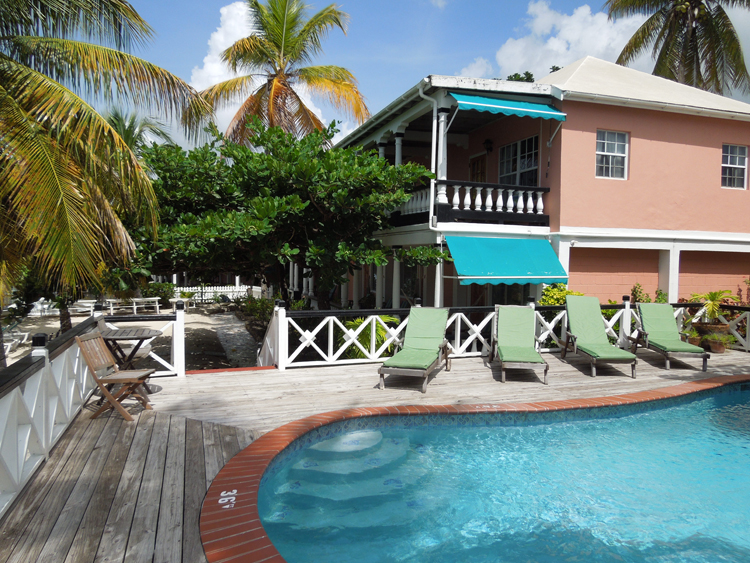
Catermaran Hotel 1Restless as we are, and eager to explore as much of where we are staying as possible, we searched long and hard to find a small, relatively hidden away, privately owned hotel. The result was the Catamaran Hotel in Falmouth Harbour – not far from Nelson’s Dockyard – and in the much-to-be-preferred south of the island (although only 30 minutes from the airport). The hotel advertises itself as “a peaceful getaway in an idyllic location” – and that it really was! From the first moment we arrived, the receptionist Annique made us feel incredibly welcome – and even offered us a room upgrade. The small hotel is right on the beach, with large self catering rooms. Although I don’t usually like using air conditioning, it was definitely necessary at this time of year, when the weather was regularly over 30 degrees C in the daytime, with high humidity as well. For most of the week we were here, we were the only guests, and had the swimming pool, a sailing dingy (thanks Robert for the great training), and the small beach all to ourselves. Just nearby is the excellent Bailey’s supermarket which provides most of the daily necessities (including excellent cherry coconut ice cream, plenty of Carib beer, and well-priced Cavalier rum), and a little further afield is the bit smarter Crab Hole Liquors at Cob Cross (where there is also a pharmacy).

Out of season, Antigua is incredibly quiet, with many of the restaurants and facilities shut. The two restaurants just by the Catamaran (the Captain’s Quarters and Cambusa) were both closed, as were most other restaurants on the island! Hence, a car was absolutely essential for getting around! We did our best to travel almost every road, and visit most of the island’s historical sites and beaches! Whilst the north-west of the island is where most of the light industry is located, with houses scattered almost everywhere across the countryside, the south is largely unspoilt with beautiful steep sloping wooded hillsides, and magnificent beaches. Sadly, many of the beaches have large modern hotels on them, largely preventing access to the beaches, and in some instances, as at Half Moon Bay, these hotels have simply been left to decay following storm damage.

Amongst our favourite beaches were:
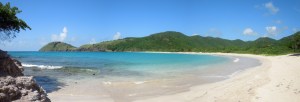
  • Rendezvous Bay PanoramaRendezvous Bay (near to Falmouth in the south of the island) – needs quite a steep 30 minute walk (each way) to get to unless you have a 4 wheel drive vehicle, but definitely well worth the effort. Sadly, rumour has it that it is subject to development – which would be a huge pity. We had the bay almost to ourselves, and there were lots of fish to be seen snorkeling
  • Windward BayWindward Bay (near Nelson’s Dockyard in the south of the island) – again, needs a short walk, but definitely worth it.
  • Pigeon Beach – a public beach popular with local people, and very near Nelson’s Dockyard. It is a short sail from the Catamaran – but do watch out for the poisonous Manchineel Tree!
  • Long Bay (in the north-east) – despite there being a hotel there, and even at this time of the year with lots of people, there were lots of fish to be seen snorkeling, especially at the eastern end.
  • Half Moon Bay (south-east of the island) is beautiful, despite the decaying hotel!
  • Morris Bay on the south-west coast is also the nicest beach on that part of the island.

Looking at some of the luxury hotels on the island – way beyond our price range – the nicest seemed to be:

  • the Carlisle Bay hotel – for those who can afford at least US$ 674 a night! Perhaps one day!

We took the time to visit many interesting parts of the island – and for those wanting to explore, rather than just getting sunburnt on a beach, the following were definitely worth visiting:
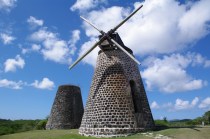
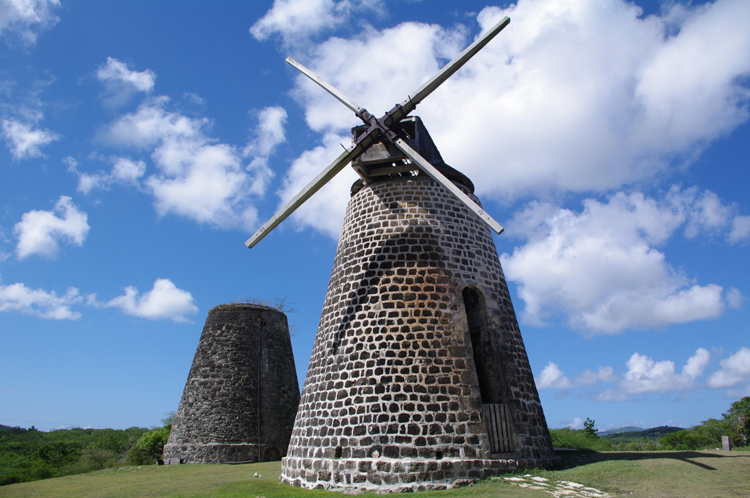
  • Betty's Hope sugar millBetty’s Hope – an old ruined sugar plantation – with a small museum – in the central east of the island
  • Fig Tree Drive – from the centre to the south-west of the island – through lush wooded hillsides, with an opportunity to buy the delicious Antiguan black pineapples from roadside stalls
  • Wallings reservoir – a Victorian reservoir just off Fig Tree Drive, with walking trails up into the hillsides
  • Christian Valley – an agricultural station with trails (hard to find!) from which a rich variety of Nelson's Harbour 3birdlife is visible (sadly now named Obama Mountain National Park – formerly Boggy Peak – seems after all quite appropriate!)
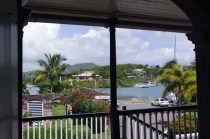
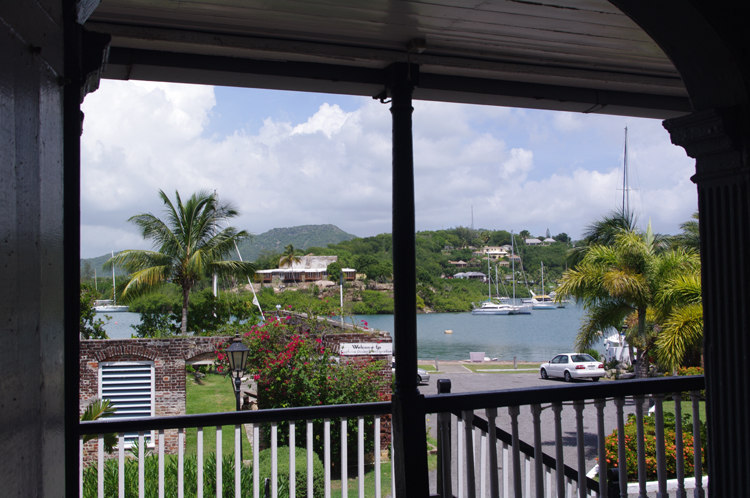
  • Nelson’s Dockyard – definitely worth visiting – the reconstructed 18th century dockyard where Nelson was based between 1784 and 1787 – a haven for English ships during their battles in the region, offering good protection against storms.
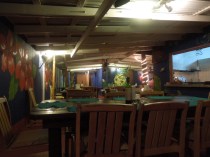
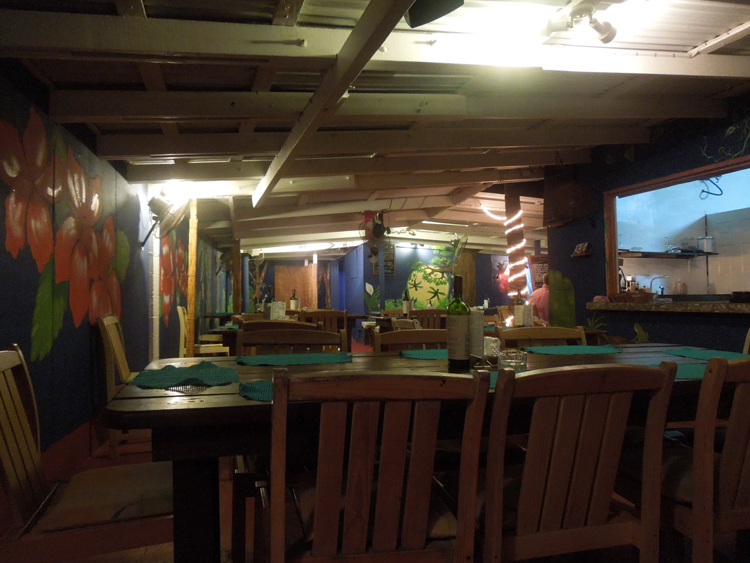
TrappasAs for restaurants, most were closed! We were very pleased, though, that Trappas was open (in English Harbour on the road to Nelson’s Dockyard) most of the days we were here, offering largely European style food, but with a touch of Caribbean flavour. The food was well-cooked, reasonably priced (ECD 25 for a starter, and ECD 50 for a main course), and there was a good atmosphere with locals and tourists alike. Nearby, the Mad Mongoose opened while we were here, and offered a livelier atmosphere (must definitely be very lively in season), with slightly cheaper, but still tasty, food.

The only bad eating experience we had was when we were tired and needed a quick drink and lunch in St John’s – and very unfortunately chose to sit down in Cheers. We thought the menu was in ECD (in line with most other restaurants) and only when the bill came, given to us by the unpleasant and supercilious front of house ‘waiter’, did we discover that a simple prawn salad cost US$ 27! Please avoid this horrid place at all costs! Much better would be to go to the nearby Quay Bar and Grill, which seemed much more atmospheric and well-priced – although sadly we did not eat at it!

Below are just a few photos that try to capture just what the beautiful island of Antigua is like out of season. When all of the yacht crews are here it must be very different, and much, much more lively, but taking a risk of the odd storm or even hurricane, and putting up with the higher temperatures and humidity, Antigua is definitely worth getting to know out of season!

This slideshow requires JavaScript.

1 Comment

Filed under Beer, Caribbean, Photographs

Reflections on Montserrat – crafting a viable economy for 5000 people

The chance to work with the Ministry of Communication and Works on the tiny island of Monserrat in the Caribbean last week gave me a rare opportunity to reflect not only on the economic viability of many of the UK’s Overseas Territories, but also on the ways that people living in small island states cope in the aftermath of physical disasters.  Montserrat was devastated by Hurricane Hugo in September 1989, leaving some 11,000 of the island’s population of 12,000 without homes.  Ten people were killed, 89 were injured, and the cost of the damage was reported to be at least $260 million.  In the years afterwards, substantial reconstruction took place, but then in 1995 the island’s Soufrière Hills volcano became active again.  The island’s capital, Plymouth, was soon buried by more than 12 metres of ash and mud, which also destroyed the airport and harbour.  The southern part of the island became uninhabitable, and a strict exclusion zone was introduced to limit future loss of life.  Then, in 1997 a pyroclastic flow passed down Mosquito Ghaut, overflowing the valley sides and killing 19 people who were in the exclusion zone.  Subsequently, there has been ongoing volcanic activity, mostly consisting of ash falls in the south of the island, but in 2009-10 further pyroclastic flows also occurred.  This double disaster had immense impact on the island’s population, with some 8,000 people choosing to leave, primarily for the UK which had granted the islanders full residency rights in 1999, and British citizenship in 2002.

Although I broadly knew about the island’s history, it is impossible to appreciate both the impact of these physical disasters, and the resilience of the people without actually visiting the island, and standing on the hillside overlooking the devastated city of Plymouth.  Having spent a couple of days with Montserratians before visiting Plymouth, and appreciating something of their warmth and generous hospitality, I was left with an overwhelming sense of sadness just standing on the edge of an ash filled swimming pool overlooking the devastated landscape of the island’s former capital.

This slideshow requires JavaScript.

Monserratians are determined people, and those who I met were adamant about not only their British citizenship, but also their love for the island and their wish to ensure that it has a viable economy for the future.  The cost of the necessary reconstruction and development is nevertheless very, very substantial.  Much is already being done: there are plans for a new harbour; geothermal drilling is underway to see whether it could provide a source of energy for the future; and a submarine cable is to be laid to support their international digital connectivity.  However, much still needs to be done to ensure that the island can once again be self-sufficient as it was before the volcanic eruptions.  The challenge is that it is extremely difficult to identify how best this can be achieved, especially with such a small population.

From my very short visit, it is not easy to see the niche areas that the Monsterratians can build upon to regain their economic vitality.  Thinking back to the late 1970s when the Beatle’s producer George Martin created the AIR studios, Montserrat was able to attract some of the world’s most famous musicians to its green and peaceful environment.  There are still beautiful landscapes on the island, but the nature of the recording industry has changed so much that it would be difficult to imagine such an ‘adventure’ working again.  Perhaps, though, George Martin’s house (Olveston House – on Penny Lane), which now serves as a most welcoming guest house for visitors, does indicate one way forward, in that the island could carve itself out as a niche for high quality, environmentally sensitive tourism.  It is certainly beautiful, and the people most friendly.  However, its airport is tiny, with the runway only able to take very small planes, and it requires a new, much larger harbour to attract cruise ships and yachts to the island. There remains, though, the inevitable “chicken and egg” problem: visitors will not come unless there are high quality facilities on the island, and few people are willing to invest without there being strong prospects for sufficient visitor numbers to enable them to recoup their investments.

On the more quirky side, any country has to turn to its strengths and opportunities.  The volcano itself is a source of interest to visitors on the neighbouring islands, with air tours regularly bringing people from Antigua to visit.  It seems a shame that Montserrat itself currently benefits relatively little from such initiatives, and it must be possible for innovative initiatives to be developed that could enable Montserratians to reap dividends from such opportunities.  For film makers wishing to produce films in apocalyptic settings, the old capital of Plymouth on Montserrat would make an ideal – albeit highly risky – setting!  The island is also known as the Emerald Isle of the Caribbean, not only because of its lush vegetation, but also because it was settled by Irish immigrants from St. Kitts.  The potential for its Irish heritage to be marketed much more strongly, could also foster enhanced tourism from Éire.  Some of the bays in the north of the island would also make ideal facilities for luxury yacht marinas, and their development could offer a very different kind of destination for those sailing the Caribbean.  Finally, the ultimate strength of any country is its people, and there is no doubt that better connectivity to the Internet will enable those who wish to stay on the island and build economic activity around the provision of digital services will  be able to do so much more effectively once the new cable is completed.  Already, one software company (Lavabits) is developing its business there, and with an educated population, well-connected to the diaspora living in the UK, there has to be further potential for the islanders to use the Internet, not only to attract tourism, but also to build a new digitally-based economy in Monsterrat.

It was a real privilege to spend time on the island.  I admire the resilience, fortitude and determination of those whom I met, and I greatly appreciated their warmth and generosity.

1 Comment

Filed under Caribbean, Commonwealth, ICT4D, Photographs, Politics, UK