Category Archives: Environment

The flawed logic of the new government’s renewable energy programme: re-valuing the rural environment

“…families and businesses continue to pay the price for Britain’s energy insecurity. Bills remain hundreds of pounds higher than before the energy crisis began and are expected to rise again soon. At the same time, we are confronted by the climate crisis all around us, not a future threat but a present reality, and there is an unmet demand for good jobs and economic opportunities all across Britain
Backed by a capitalisation of £8.3 billion of new money over this Parliament, Great British Energy will work closely with industry, local authorities, communities and other public sector organisations to help accelerate Britain’s pathway to energy independence”…” Great British Energy will create thousands of good jobs, with good wages, across the country. We will seize the opportunities of the clean energy transition and ensure the British people capture those benefits”

Ed Miliband, Secretary of State for Energy Security and Net Zero, Great British Energy founding statement, 25 July 2024) https://www.gov.uk/government/publications/introducing-great-british-energy/great-british-energy-founding-statement.

The new UK government’s recent announcement about renewable energy will please many people, especially the business community who will benefit from government subsidies and easing of regulation, urban dwellers who will be able to continue their energy-extravagant lifestyles at the expense of Britain’s rural heritage, and the jingoists who believe that Britain really is “Great”.  However, it is based on a deeply flawed understanding of the causes of climate change and the need to reduce carbon emissions,[i] as well as a flawed approach to valuing the rural environment. 

In addressing these issues, I must first acknowledge my own rural “peasant” biases.  My early research in the 1970s and 1980s was about the evolution of the medieval rural landscape in England, and at the same I was also undertaking research on the contemporary lives of people living in rural areas in some of the poorest parts of Asia and Europe.  I was honoured to serve as the elected Secretary General of the Permanent European Conference for the Study of the Rural Landscape for a decade between 1990 and 2000.  These interests have never left me, and over the last 50 years I have come to have a deep love for, interest in, and understanding of the importance of rural landscapes as one of the richest parts of Britain’s heritage. I also know a world where the only heating in my house was from a back boiler, which also had to be on if I wanted any hot water.  In winter, I vividly recall the water in the glass by my bed freezing at night.  We wore layers of warm clothing in winter, and enjoyed the heat of summer, long before central heating and air conditioning[ii] became widespread.[iii]

This critique focuses primarily on three of the main issues that arise from the government’s recent announcements: lower cost electricity generation; renewable impact (both production and distribution); and the business model that serves the interests of the few rich rather than the many poor. 

Energy supply and demand: why lower cost energy will increase the environmental impact

The idea that lowering energy costs through the use of renewable energy will be good for the people and good for the environment is deeply problematic.  It appears to be grounded in the mis-placed belief that carbon emissions and their impact on climate change are perhaps the biggest challenge facing humanity, and that in our country we can address this through a heavily subsidised energy system that will enable us to be energy independent at a lower cost than we are paying at the moment.  As Ed Miliband wrote on 25 July 2024, “That is why making Britain a clean energy superpower by 2030 is one of the Prime Minister’s 5 missions with the biggest investment in home-grown clean energy in British history.”[iv]

The problem is that lowering energy costs is almost certain to increase energy consumption in the long term, and it is energy consumption that is the real problem, not the blend of energy that we choose to supply.  It is often argued that energy is an inelastic good, and that demand and supply are not responsive to price.[v]  In part, this is because there are no close substitutes for “energy” as a whole, although differential costs for alternative fuel types mean that choices of specific fuels (including renewables) will indeed change depending on price.

There are, though, at least two problems with such an argument.  First, one of the largest drivers of energy demand, and thus carbon emissions globally, is actually demographic growth (see my An environmentally harmful alliance of growth mantras).[vi]  Historically, population growth in the UK has also been one of the main factors increasing energy demand, although the restructuring of our economy since the 1970s “from energy intensive industries, such as cement and steel, to services-based industries such as finance and consulting” has actually led to a substantial decrease in overall energy consumption.[vii]  This decline in industrial consumption has masked domestic patterns of consumption.  Moreover, recent evidence suggests that the impact of increased pricing mainly as a result of the Russian invasion of Ukraine has also actually had an impact on reducing existing demand (along with warmer weather) to levels not seen since the 1950s.[viii]  This brings into question just how inelastic energy pricing really is.  It seems highly likely that reducing prices as a result of the proposed government investment in renewables will actually lead to a resurgence in domestic consumption, which is something that will have negative impacts on the environment. Second, though, demand is also heavily influenced by what societies deem to be appropriate lifestyle choices.  Being profligate with energy has been a core characteristic of British lifestyles for at least half a century when energy has been relatively cheap.  We don’t actually need to heat and cool our homes and offices as much as we do.  If price pressures encouraged us to reduce our domestic energy consumption, then this could only be a good thing nationally for the environment – although energy providing companies would undoubtedly bemoan the reduction because they flourish on increasing markets.

It would be much more sustainable to focus more on implementing effective strategies to reduce overall energy demand instead of increasing lower cost provision of renewable energy, especially when its environmental harms are fully appreciated.  To be sure, there will remain those for whom energy costs will still be too high (so-called “fuel poverty”), but it is relatively easy to resolve this through appropriate financial subsidies or tax benefits for the financially poorest in our society, rather than funding businesses to produce more cheap renewable energy.

The environmental impact of the production and distribution of renewable energy.

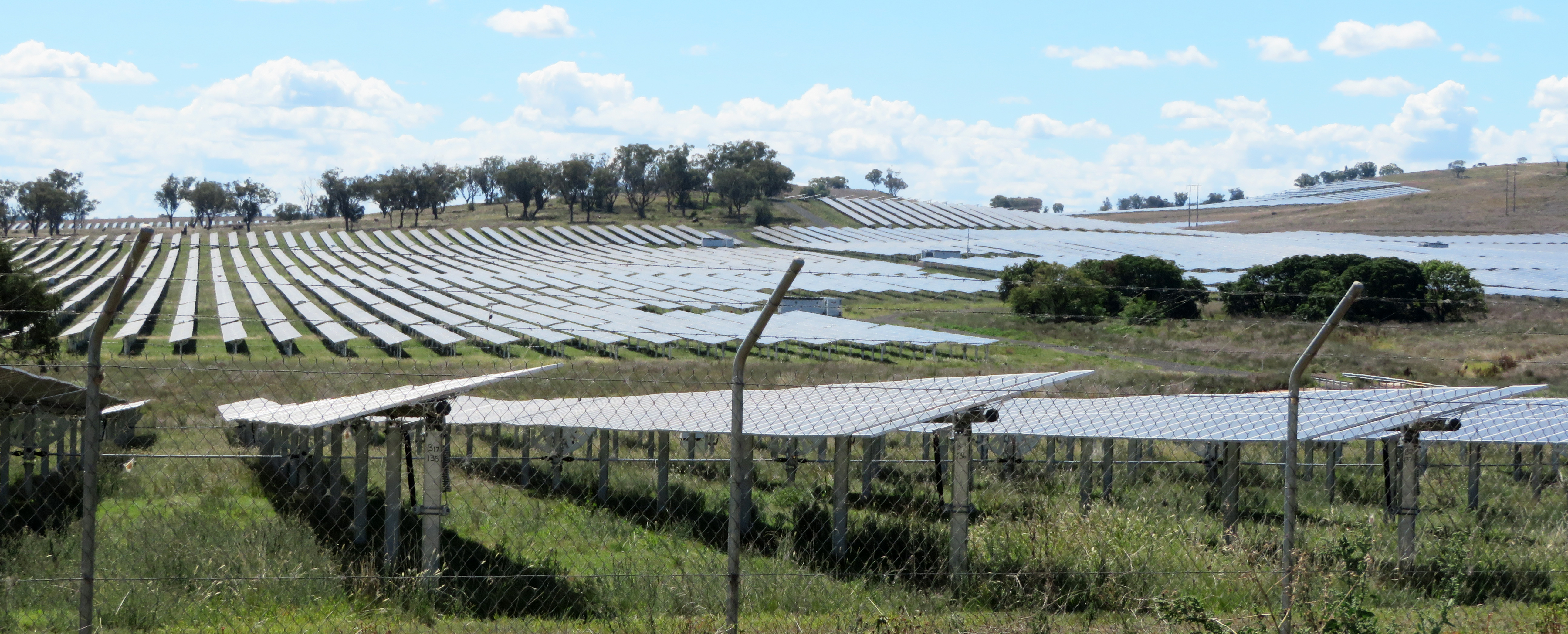
One core element of the new government’s plan is to change the planning procedures to make it easier for renewable energy projects, notably wind farms and solar panels to be constructed on the land of the British Isles.[ix] As Mullane (2024) has commented, “Under the old policy any local community opposition could block the development of onshore wind farms, but this is no longer the case. The revised policy places onshore wind on the same footing as other energy developments under the National Planning Policy Framework (NPPF). This means onshore wind applications will now be processed in the same way as other renewable energy projects.”[x] Moreover, if large windfarms are indeed designated as nationally significant infrastructure projects this would mean that the Secretary of State, Ed Miliband, would sign off on them, and local councils and citizens would not have a say in the decision.[xi]  For such decisions to be made, though, the Secretary of State would need to prove that the benefits of an onshore windfarm or similar energy project were greater than the costs, and among these costs has to be the environmental impact that they have.  Our present systems of judging such impact, though, are woebegone, and fail to take satisfactory recognition of the real cost of destroying the historic landscapes that lie at the heart of our culture.[xii]  The required environmental impact analyses are indeed quite detailed, but they fail sufficiently to address fundamental questions about the nature of the landscape, especially when windfarm turbines can be seen from a very long distance away.  Traditionally, many such processes have been based on some kind of “willingness to pay” approach, where costs are estimated based on how much people would be willing to pay extra not to have something, such as a windfarm, in their neighbourhood.  Unfortunately, people living in such areas are often poor, and the amounts they are willing to pay are readily overwhelmed by the financial and political alliances of companies and governments.[xiii]  The basic problem, though, is that we don’t have a robust system for judging the impact of these initiatives, and it would seem to be essential that we do put an acceptable process in place before mega-onshore-windfarms are created that will change the landscape forever.  Will, for example, detailed archaeological surveys be required before these schemes are put in place?

It is not only the environmental impact of windfarms and solar panels that requires attention but also the infrastructure necessary to transmit the electricity to where it is used.  There is a robust ongoing debate about the impact of pylons, with campaigners arguing that they should not be built, and cables instead put underground at a cost that would in most instances not make such projects feasible.[xiv]  Ultimately, the decisions that will be made will be political ones, and it seems likely at present that the new government will override such objections, claiming that they are nothing more than nimbyism.[xv]  The use of new designs of pylons in the shape of a T might go some way to reduce the eyesore of these infrastructure projects,[xvi] but other more radical solutions also need to be found.  One option, for example, would be to build entire new communities around such installations, so that there would be no need for pylons to transport electricity to current centres of high demand.  Thinking more radically, it would make sense for heavy industrial uses of electricity to be relocated to parts of the world where few people live and there are excellent sun or wind resources that could be tapped to power them.[xvii]  British companies could invest in industrial production in the Sahara for example, although this would not necessarily resolve the geo-political desire for self-sufficiency in energy.

A related challenge is that the areas of highest absolute demand for energy in the UK are often not where there is greatest potential for renewable production, especially for wind, hydro, and tidal.  Over the last 35 years, transport (c.38% in 2022) has consumed the largest share of energy, followed by domestic (c.27% in 2022), industry (c.18% in 2022) and services (c. 17% in 2022).[xviii] These activities tend to be concentrated in and around urban areas, and accessing energy from places where it tends to be produced often therefore becomes yet another example of the “urban” exploiting and extracting a surplus from the “rural”.[xix]  To be sure, wealthier people with larger houses tend to consume more energy per household, and often live in rural or suburban areas, but such impressions are misleading when interpreting total energy consumption across all sectors.  Maps of energy consumption per unit of area in different parts of the UK are difficult to find, since most data are disaggregated on a per household basis.  This in itself further disadvantages low population density, rural areas, because it gives the impression that they also have high total consumption levels, which is usually not the case.[xx]  The voices of the relative few rural people who live in areas which are likely to be dominated by renewable energy production for the urban masses and the rich, need to be heard as representatives of the heritage landscapes that cannot speak for themselves.

The business interests behind renewable energy

An important part of the government’s case for expanding renewable energy production is that it will contribute to UK economic growth, employment, and expertise that will enable British companies to have a competitive advantage abroad – so that Britain can be truly great again.  That is why Miliband makes the jingoistic claims that ““making Britain a clean energy superpower by 2030 is one of the Prime Minister’s 5 missions with the biggest investment in home-grown clean energy in British history”.[xxi]  That is why the Labour Party talks and writes about how they will “Make Britain a clean energy superpower”.[xxii]

This development will only happen if the government spends billions of pounds of taxpayer’s hard-earned money on subsidising companies to develop these technologies and build the infrastructure to provide electricity where it is wanted.  The price of renewable energy without government subsidy would be unaffordable by most people, and few companies would invest in the renewable sector without such subsidies and guarantees.  The government has announced that it will spend £8.3 billion new money over the life of this parliament in capitalising Great British Energy, a publicly owned company, to “work closely with industry, local authorities, communities and other public sector organisations to help accelerate Britain’s pathway to energy independence”.[xxiii]  Interestingly, it does not mention citizens or comrades in this list of those it will work with, let alone “for”.  Companies have sold the government a dream that renewable energy will save the world from climate change and make Britain great again. This is primarily in their interests, not ultimately in the interests of the majority of British citizens.  Moreover, the very real environmental harms caused by such massive roll-out of these technologies are either ignored or vastly under-estimated.

The growing power of the renewable energy sector is well-illustrated by their reaction to the new government’s apparently ambitious new subsidies.  As The Guardian has recently reports: “Labour’s clean energy targets may already be in jeopardy just weeks after the party came to power with the promise to quadruple Britain’s offshore wind power, according to senior industry executives…The offshore wind industry has said there will not be enough time to develop the projects needed to create a net zero electricity system by the end of the decade unless ministers increase the ambition and funding of the government’s upcoming “make or break” subsidy auctions”.[xxiv] Ironically, many environmentalists, coming from a very different position to that of most companies, have also criticised the government for not going far enough.  As the co-leader of the Green Party, Adrian Ramsey, has said “We need real change if we are to meet the demands of the climate crisis. These Labour plans do not deliver it…Compared to Labour’s original commitment to spend £28bn a year on green investment, this announcement of just £8.3bn over the course of the parliament looks tiny and is nowhere near enough to deliver Labour’s promise of ‘clean electricity’”.[xxv] 

There is much to be applauded about the government’s aspirations, but some of the propaganda such as that noted below from the Labour Party seems to be over-ambitious  – it is certainly surprising to see the claim that this will make us secure from “foreign dictators”.

Britain needs Great British Energy
A new publicly owned, clean power company for Britain.
Britain already has public ownership of energy – just by foreign governments. Taxpayers abroad profit more from our energy than we do. It is time to take back control of our energy.
A first step of a Labour government will be to set up a new publicly owned champion, Great British Energy, to give us real energy security from foreign dictators.
Great British Energy will be owned by the British people, built by the British people and benefit the British people. It will be headquartered in Scotland, invest in clean energy across our country, and make the UK a world leader in floating offshore wind, nuclear power, and hydrogen.

https://great-british-energy.org.uk/

In conclusion

The British people need to recognise that there will be a very significant impact on our precious rural landscapes from these new government policies.  The scale of this is largely unacknowledged and unappreciated.  Human impact on nature – our physical environment – has reached crisis point, and this is an issue very much bigger than merely climate change and the reduction of carbon emissions.  The new government policies, although possibly being well-intentioned, will not solve the crisis for the British people, but are in danger of making it worse.

This article has merely touched on three of the main issues surrounding the new government’s renewable energy policy, and in conclusion offers three suggestions for practical ways forward:

  • First, we should focus much more on reducing demand for energy, rather than on supply issues.  Population growth and energy-extravagant lifestyles are the real underlying reasons why we have an energy crisis.  We need to make fundamental changes to our lifestyles that respect nature rather than consume it through our selfish individualistic greed and ambition.
  • Second, we need to have a fundamental overhaul of our approaches to environmental impact assessment relating to renewable energy intiatives, that is much more holistic and places greater value on respect for nature and our cultural heritage embedded in rural landscapes.  We cannot allow a Secretary of State to over-ride citizen opinion by imposing large infrastructure projects in areas of significant environmental value.[xxvi]
  • Third, whilst energy security is an important concern of government, and it is indeed the private sector that is currently the main engine of the economy, governments need to prioritise the interests of all their citizens, and especially the poorest, helpless and most marginalised.  The proposed policies seem to serve the interests of global capital more than they do those of the majority of citizens in the UK.  It is the interests of the business sector that are now driving renewable energy development, and these insufficiently address the holistic impact of their technologies on nature.[xxvii] We therefore need to provide much more training to those in private and public sector renewable energy companies about the holistic character of environmental impact, including the importance of cultural heritage in relevant decision making processes.

This is an important moment for British society, and a change in government always provides an opportunity for the introduction of beneficial new policies and practices.  The government’s intention to address energy security and the environmental impact of energy production is to be applauded, but, and it’s a big but, these proposals seem likely to do more harm than good.  Many people might feel better off as a result in the short-term, but the long-term environmental impacts of these proposals are likely to result in irretrievable harm to the British natural and cultural environment.  It may be that people in government and large swathes of our society, many of whom live modern urban and suburban lifestyles, do not really care.  I am sure that I am in a minority, but when our children’s children grow up in a world divorced from lived reality in nature, they will not only have broken the link with their past cultural heritage, but they will have no way of reclaiming it physically.  It will become merely a virtual memory, and it will be too late to retrieve that important element of being truly human that is encapsulated in our rural landscapes.  The labour of countless rural “peasants” that is encapsulated and represented in these landscapes will be obliterated and made inaccessible for ever from our lived experience because of our modern, technology-driven ignorance and greed.


[i] See the work of the Digital-Environment System Coalition DESC at https://ict4d.org.uk/desc and Unwin, T. (2022) “Climate Change” and Digital Technologies: redressing the balance of power (Part 1), https://timunwin.blog/2022/11/10/climate-change-and-digital-technologies-redressing-the-balance-of-power-part-1/

[ii] Air conditioning in 2023 was estimated to represent about 20% of total electricity use worldwide, and 10% of use in the UK, but total usage is likely to increase in the future (Khosravi, F., Lowes, R, Ugalde-Loo, C.E. (2023) Cooling is hotting up in the UK, Energy Policy, 174, https://doi.org/10.1016/j.enpol.2023.113456.)

[iii] See also Department for Business, Energy & Industrial Strategy (2022) UK Energy in Brief, UK: National Statistics, https://assets.publishing.service.gov.uk/media/63ca75288fa8f51c836cf486/UK_Energy_in_Brief_2022.pdf; and Energy Dashboard, https://www.energydashboard.co.uk.

[iv] Miliiband, E. (2024) Great British Energy founding statement: Secretary of State forward, https://www.gov.uk/government/publications/introducing-great-british-energy/great-british-energy-founding-statement.

[v] Taylor, H. (2022) How energy prices will play out, Investors’ Chronicle, https://www.investorschronicle.co.uk/content/cae53ff0-a422-5858-b619-9ccb21a00be6.

[vi] See also my COP 27, loss and damage, and the reality of Carbon emissions, and “Climate Change” and Digital Technologies: redressing the balance of power (Part 1)

[vii] World Economic Forum (2019) UK’s energy consumption is lower than it was in 1970, https://www.weforum.org/agenda/2019/08/uk-energy-same-as-50-years-ago/.

[viii] Mavrokefalidis, D. (2024) UK energy bible shows demand plummets to 1950s levels, Energy Live News, https://www.energylivenews.com/2024/07/30/uk-energy-bible-shows-demand-plummets-to-1950s-levels/.

[ix] Gov.uk (2024) Policy statement on onshore wind, 8 July 2024, https://www.gov.uk/government/publications/policy-statement-on-onshore-wind/policy-statement-on-onshore-wind.

[x] Mullane, J. (2024) Experts react to Ed Miliband lifting ban on onshore wind farms, Homebuilding & Renovating, 11 July 2024, https://www.homebuilding.co.uk/news/experts-react-to-ed-miliband-lifting-ban-on-onshore-wind-farms

[xi] Pratley, N. (2024) Labour lifts Tories’ ‘absurd’ ban on onshore windfarms, The Guardian, 8 July 2024, https://www.theguardian.com/environment/article/2024/jul/08/labour-lifts-ban-onshore-windfarms-planning-policy.  See also, Vaughan, A. and Smyth, C. (2024) Ed Miliband scraps de facto ban on onshore wind farms, The Times, 9 July 2024, https://www.thetimes.com/uk/politics/article/ed-miliband-onshore-wind-farms-ban-gtqjvqhrm.

[xii] For a selection of relevant UK procedures, see https://www.gov.uk/guidance/environmental-impact-assessment, https://assets.publishing.service.gov.uk/media/5a7c406eed915d7d70d1d981/geho0411btrf-e-e.pdf, https://assets.publishing.service.gov.uk/media/5b4cd2c9e5274a732b817d49/SECR_and_CRC_Final_IA__1_.pdf, https://www.legislation.gov.uk/uksi/2017/572/contents, https://www.gov.uk/guidance/offshore-energy-strategic-environmental-assessment-sea-an-overview-of-the-sea-process, https://rpc.blog.gov.uk/2021/11/10/considering-environmental-issues-in-impact-assessments/,

[xiii] An interesting new approach recently adopted by the Dutch government for offshore auctions focuses instead heavily on non-price indicators, including attention to the ecosystem and possible negative effects on birds and marine habitats https://windeurope.org/newsroom/news/new-dutch-offshore-auctions-focus-heavily-on-non-price-criteria/.  My thanks to Will Cleverly for bringing this example to my attention.

[xiv] See for example, Pratley, N. (2023) The next UK net zero battleground is electricity pylons, The Guardian, 26 September 2023, https://www.theguardian.com/business/nils-pratley-on-finance/2023/sep/26/the-next-uk-net-zero-battleground-is-electricity-pylons; Davies, S. (2024) Sparking a crucial debate: the problem with pylons, NESTA, https://www.nesta.org.uk/feature/future-signals-2024/the-problem-with-pylons/; Energy Networks Association (2024) Explainer – building new pylons in the UK, ENA, 5 July 2024, https://www.energynetworks.org/newsroom/explainer-building-new-pylons-in-the-uk.

[xv] See for example, Partington, R. (2024) Labour told it will need to defeat ‘net-zero nimbys’ to decarbonise Britain, The Guardian, 22 July 2024, https://www.theguardian.com/environment/article/2024/jul/22/labour-decarbonise-britain-resolution-foundation-report-net-zero-nimbys.

[xvi] National Grid (2023) National Grid energise world’s first T-pylons, https://www.nationalgrid.com/national-grid-energise-worlds-first-t-pylons.

[xvii] See Xlinks, One world, one sun, one grid, https://xlinks.co – thanks again to Will Cleverly for this example.

[xviii] Department for Energy Security & Net Zero (2023) Energy consumption in the UK (ECUK) 1970 to 2022, https://assets.publishing.service.gov.uk/media/651422e03d371800146d0c9e/Energy_Consumption_in_the_UK_2023.pdf.

[xix] CREDS (2024) Spatial variation in household energy consumption, showing the average total energy use (per person rather than per household) for each Lower Super Output Area (LSOA) in England and Wales, CREDS, https://www.creds.ac.uk/publications/curbing-excess-high-energy-consumption-and-the-fair-energy-transition/, 30 July 2024.  See also my 2013 piece on Valuing the impact of wind turbines on rural landscapes: Conca de Barberà, as well as other writings, including Unwin, T. (2023) Experiencing digital environment interactions in the “place” of Geneva (Session 403): the DESC Walk

[xx] See for example the maps in Department for Energy Security & Net Zero (2024) Subnational electricity and gas consumption statistics, https://assets.publishing.service.gov.uk/media/65b12dfff2718c000dfb1c9b/subnational-electricity-and-gas-consumption-summary-report-2022.pdf.

[xxi] Miliiband, E. (2024) Great British Energy founding statement: Secretary of State forward, https://www.gov.uk/government/publications/introducing-great-british-energy/great-british-energy-founding-statement.

[xxii] Labour (2024) Make Britain a clean energy superpower, https://labour.org.uk/change/make-britain-a-clean-energy-superpower/.

[xxiii] Miliiband, E. (2024) Great British Energy founding statement: Secretary of State forward, https://www.gov.uk/government/publications/introducing-great-british-energy/great-british-energy-founding-statement.

[xxiv] Ambrose, J. (2024) Labour must speed up wind power expansion or miss targets, says renewables industry, The Guardian, 29 July 2024, https://www.theguardian.com/environment/article/2024/jul/29/labour-must-speed-up-wind-power-expansion-or-miss-targets-says-renewables-industry.

[xxv] Green Party (2024) Great British Energy – not the real change we need, https://greenparty.org.uk/2024/05/30/great-british-energy-not-the-real-change-we-need/

[xxvi] It can be noted that “unspoilt” rural landscape in the UK is becoming scarcer and scarcer – and thus more precious.  While this is in large part because of increasing population and affluence, it is also morally wrong that urban elites (as well as the urban and the elites generally) should impose their personal prejudices and biases that will harm rural landscapes that they do not understand or value.  Moreover, significant destruction of the physical environment is also likely negatively to impact tourism revenue as cherished landscapes are changed by the construction of windfarms and mega-solar installations.  The CLA estimates that “Rural tourism accounts for 70-80% of all domestic UK tourism and adds £14.56bn to England and Wales’ Gross Value Added” (CLA, supporting rural tourism in England, 21 March 2024, https://www.cla.org.uk/news/supporting-rural-tourism-in-england/).

[xxvii] Many people working for companies in the sector do so because of their commitment to environmental well-being, but often those trained as engineers and scientists do not have a sufficient understanding of the physical and cultural environment impacted by their technologies.


Leave a comment

Filed under Britain, culture, Energy, Environment, government, Politics, UK

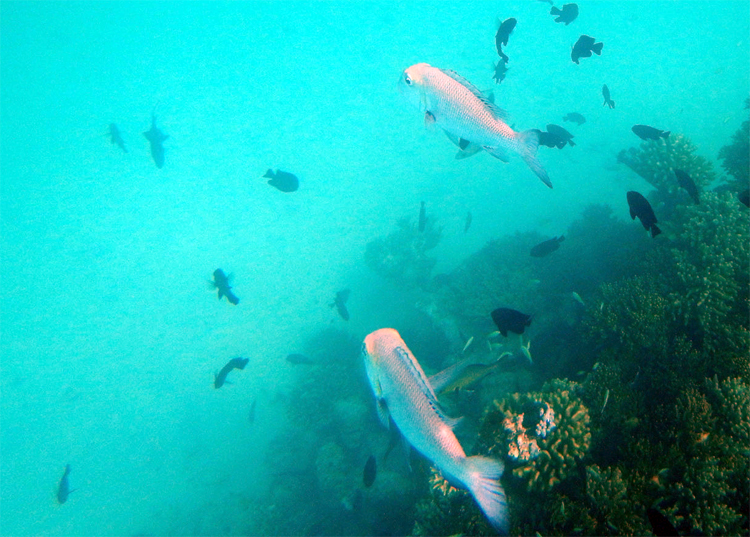
Coral reef fish in the Maldives

I spent last week in the Maldives at the lovely small hotel on Summer Island doing my best to be offline, just trying to relax and engage in the real world of nature away from the the tyranny of the virtual digital world. This provided a wonderful opportunity to explore the beautiful but endangered underwater world of the island’s coral reefs and the huge diversity of fish, as well as reef sharks and Moray eels, that swim among the corals. I hope that the photos below do justice to the diversity and beauty of this magical and precious ecosystem.

Summer Island is particularly renowned for its environmental and sustainability initiatives, including the largest 3D-printed artifical coral reef in the world created in 2018 (see this video produced to celebrate how the reef had developed by 2022). Huge thanks to all of the management and staff at Summer Island who made the stay so relaxing and enjoyable.

1 Comment

Filed under Asia, Climate change, Environment, Fish, Sustainability, technology, Wildlife

An environmentally harmful alliance of growth mantras

This post argues that a coalition of interests around economic and demographic growth has not only created significant inequalities across the world, but has also been the main factor driving global environmental degradation.  It is demographic growth in combination with a particular form of tech-led capitalist economic growth that has been the main driver of global environmental change, of which climate change is but a small part.

Economic Growth

Economic growth has for many decades been seen by economists and international organisations alike as the key means through which poverty can be eliminated, especially in the economically poorer countries of the world. This powerful mantra lay at the heart of the Millennium Development Goals (MDGs, 2000-2015) and has more recently been central to aspirations for the achievement of the Sustainable Development Goals (SDGs, 2015-2030).  Yet, as I have frequently argued elsewhere,[i] these aspirations have never been achieved, they focus on absolute poverty rather than relative poverty, and the resultant unfettered economic growth has almost always been associated with an increase in inequalities.  For those concerned with equity and who define “development” primarily as the reduction of inequalities, policies designed to increase growth alone are doomed to failure and need to be replaced.

National policies and international frameworks focused on growth primarily support the interests of those private sector companies and global corporations that have worked so assiduously to shape the UN rhetoric around economic growth and innovation.  Digital tech companies have long been at the forefront of this, not only driving growth, but also reaping the benefits of so doing.[ii]  Economic growth is deemed to be essential both to expand markets and also to increase labour productivity, whereby owners of the means of production can extract surplus value.

In trying to consider alternative models of socio-economic activity, I have often used the notion a “no-growth” economy as a heuristic device, encouraging audiences to consider how economic activity might be organised if growth was somehow prohibited.  Although there are many potential outcomes, one of the most interesting is the thought that the pressures to achieve a reduction in inequalities might increase under such conditions, thus leading to a fairer and more equitable society.  I have also found the work of the Post-Autistic Economics Network to be a helpful source of inspiration, challenging as it does many of the usually taken for granted assumptions of neo-classical (and indeed neo-liberal) economics.[iii]

Demographic growth

Recent debates about the balance between the positive and negative impacts of demographic growth on the economy have highlighted their inextricable intertwining with the rhetorics of economic growth.[iv]  On the one hand there are those who argue that ageing populations with few young and economically productive people are deeply problematic for economic growth, and that policies to encourage higher birth rates or immigration are essential to enable economic viability.  Years ago, I thus well remember the French advertising campaign to encourage families to have more children, beautifully encapsulated in this postcard:

On the other, are those who point to a demographic dividend in Africa, through which increasing numbers of young people are going to drive the economy forward, fuelled especially by the potential of digital tech.  See for example, this image below from Invest Africa in an article entitled How can Africa harness its demographic dividend (and note its emphasis on digital tech).

Both arguments are deeply problematic.  In the African case, this naïve dream is only going to be possible if young people are well educated and jobs are available for them; it seems more likely that this will actually be a demographic millstone rather than a dividend.  The “problem” of an ageing population likewise only becomes serious if systems are put in place to extend human life at high cost for long periods of time, or if labour productivity stagnates or declines.[v]

Much of the international debate concerning demographic change has been articulated around its interconnectedness with economic growth.  Put simply, the interests underlying the continued drive for economic growth are frequently the same as those that advocate for population increase as being positive and that technology can continue to ensure a healthy lifestyle for a very much larger human population.  Rather less interest has surprisingly been devoted to what human experiences of such changes might be.  This is especially so when the twin mantras of economic growth and demographic growth are confronted by their combined impact on the environment.  This is particularly evident in the reactions over the last 50 years to The Club of Rome’s 1972 report on Limits to Growth,[vi] and to the much more recent and controversial film Planet of the Humans, produced by Michael Moore in 2019.

Limits to Growth, Planet of the Humans and the legacy of Thomas Malthus

In 1972, the Club of Rome published its prescient report entitled Limits to Growth, which argued that if the then growth trends in population, industrialisation, resource use and pollution continued unchecked, then the carrying capacity of the earth would be reached some time within the following century.[vii]  I remember distinctly the wake-up call that this provided for me as an undergraduate, and thinking back to those days have been fascinated by how its message seemed increasingly to be ignored in the ensuing decades.  Few countries apart from China (see below) really responded to this message, although some such as India made tentative efforts to address it.  I distinctly remember, for example, being in Sonua market in what was then South Bihar (now Jharkhand) in 1976 and seeing this painted slogan of two parents and two children that formed part of the government’s 20 point programme during the 21 month state of emergency declared by Indira Gandhi.

India’s population was then 637.45 million; in 2023 it is 1,428.63 million.  The policy was not a success.

Interestingly, 30 years after the Club of Rome report, the authors published an update, in which they concluded that “it is a sad fact that humanity has largely squandered the past 30 years in futile debates and well intentioned, but halfhearted, responses to the global ecological challenge”.  This is an overly generous observation, largely because of the very specific interests that have underlain economic and demographic change in subsequent years. In essence, as noted above, the owners of the world’s major companies, supported by many economists have argued convincingly that both economic and demographic growth are essential for the future success of humanity, that the new SDGs are indeed sustainable,[viii] and that technology can continue to provide innovative solutions to the increasing problems caused by the pressure of people on the planet.  I find it extraordinary to think that in my lifetime the world’s population has risen by 288% from 2.77 billion people to 8 billion people.  What I find more frightening, though, is that there is nothing in the UN’s development goals really about population growth,[ix] and there was almost universal condemnation in the world’s capitalist countries when China adopted its 1 child per family policy when it was introduced in 1980.[x]  Widespread criticism of the Club of Rome’s report and others who held their views was based primarily on the grounds that they were neo-Malthusian,[xi] and that the world was coping perfectly well, in large part through technological advances that were overcoming the challenges of an increasing population.  Indeed, the observation that very much higher levels of population have been able to live on the planet over the last 50 years would seem to support such a view.  However, this fails to recognise that very many of those people live in abject poverty and misery, and that the environmental impact of such growth has been very significant indeed.  Unfortunately, much of the focus of the international community has been captured by the rhetoric around climate change, which has served to reduce emphasis on the wider environmental impact caused by the double mantra of economic and demographic growth.  Climate change causes nothing; it is the factors giving rise to changes in the climate that are the ultimate cause and the real problem that needs addressing.

These issues were brought to the fore by the film Planet of the Humans produced by Michael Moore, and directed by Jeff Gibbs in 2019.  This has been very widely criticised by those within the so-called environmental and green lobbies on the grounds that it was outdated and misleading, especially concerning the scientific evidence and more recent developments in renewable energy.  However, many of these criticisms miss the fundamental point of the film, which was that our economic system, based on the present model of capitalist growth is fundamentally unsustainable, particularly in the context of continued demographic growth.[xii]

Many of these arguments might appear to smack of neo-Malthusianism which has been almost universally condemned from a wide range of angles, as were the criticisms of Malthus’ original works.[xiii] Engels, writing in 1844,[xiv] put it this way: technological and scientific “progress is as unlimited and at least as rapid as that of population”.  Many continue to agree with Engels’ proposition, or at least hope that he was right.  However, the scale of human impact on the environment today is vastly different from when Malthus first wrote his Essay on the Principle of Population at the end of the 18th century, and the world’s population is now more than twice as much as it was when Limits to Growth was first published.  People are seriously talking about and investing in the colonisation of outer space to provide continued sustenance for the world; technology once again to the fore.  My emphasis in this piece, though, is not so much to take issue with the many diverse arguments of those who challenge neo-Malthusianism, but rather, and much more simply, to suggest that the dominant global focus on climate alone is hugely damaging because it fails to address the wider environmental impacts of our thirst for growth.

Environmental implications

“Climate change” has become a popular focus of concern and political protest, but as I have argued extensively elsewhere[xv] it is a deeply problematic notion conceptually, especially when abbreviated to just these two words “climate” and “change”, ignoring the words “human” and “induced”.  All too often, it is used in a way that externalises it as being somehow separate from the human actions that cause weather patterns to change, while at the same time also implying that humans can somehow solve it without addressing the deeper structural problems facing the world.  Likewise, all too frequently, the answer to the problem of “climate change” is naïvely deemed to be an over-simplified reduction in carbon emissions. Leaders of the digital tech sector, with their voracious appetite for growth and innovation are eager to comply with this agenda, while failing almost completely to recognise the enormous harms that they are causing to other aspects of the environment.  By focusing largely on “climate change” they can feel good whilst also maintaining their life blood of economic and demographic growth that drives their creation of profit.

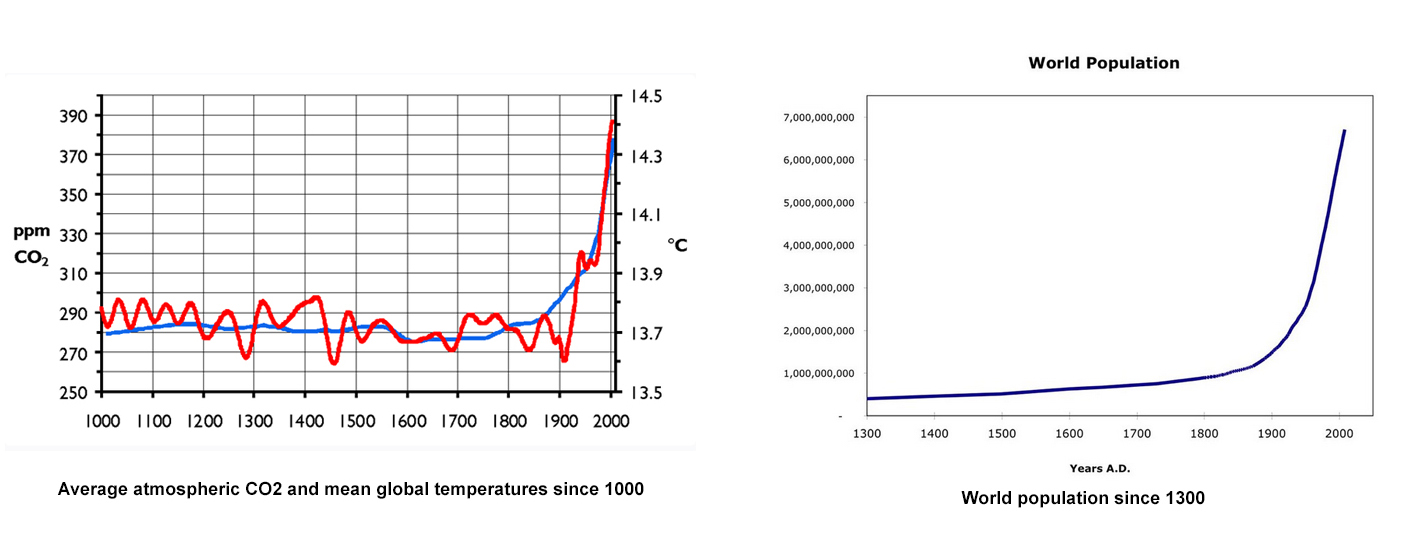
This is most definitely not to suggest that changes in temperature, rainfall, and wind patterns are unimportant; very far from it.  But it is to argue that these are caused fundamentally by the twin mantras of economic and demographic growth that have increasingly dominated the world over the last century, rather than by some exogenous notion of climate change.   More worryingly, these mantras have been fuelled still further by the unachievable and unsustainable Sustainable Development Goals that have become part of the problem rather than a solution.  Contrary to much popular rhetoric, the very dramatic increases in global carbon emissions do not appear to have begun until the beginning of the 20th century, and coincide very closely with increases in world population.[xvi]  Put another way, had global population not increased as dramatically as it has done over the last century, then those living here would not have been faced with the impending crisis that we now urgently need to address.

Moreover, and I would suggest more importantly, the emphasis on “climate change” has largely distracted attention from the crucial effort that must be placed on the wider environmental impacts of economic-demographic growth.  Climate is but a small part of the physical environment, which includes the lithosphere, biosphere and hydrosphere, alongside the atmosphere.  By focusing so heavily on climate, and ways that digital tech can be used to reduce carbon emissions, activists, academics, politicians, business leaders, civil society organisations and citizens alike are missing the bigger picture.  The design and use of digital tech is causing significant environmental harms that tend to be ignored in the search for a solution to climate change.[xvii]

In conclusion: a new beginning

This post has contributed to my previous body of work by articulating five main inter-related propositions:

  • There has been a coalition of interests between those advocating economic and demographic growth, largely reflecting the determinant structures of contemporary global capitalism.[xviii]
  • This is archetypically reflected in the power of the digital tech sector, which has permeated the UN system.[xix]
  • The dramatic impact of the digital tech sector on the wider physical environment has been largely hidden by an overwhelming global emphasis on climate change, and ways through which digital tech can reduce carbon emissions.
  • It is important to understand climate change as a result and not a cause, and therefore focus on doing something about the real causes of climate change (the economic-demographic growth mantra) rather than primarily addressing carbon emissions.
  • It is essential to understand changes to the climate as but a part of the much wider negative environmental impacts of the coalition of interests underlying the economic-demographic growth mantra.

Are we facing a new era of increasing mass-migration, famine, disease and warfare? Is the economic growth model that has dominated the last century going to consume itself in a falò delle vanità? Might there be less inequality and poverty in the world if there were fewer people and the wealth that was created was shared more equally? Can we imagine a beautiful physical environment that could be created out of the desolate and scourged world we are currently creating?  How might digital tech be used to serve the interests of the poorest and most marginalised more than those of the rich and powerful?  These questions are all inter-related, and we need to find answers to them before it is too late.


[i] Unwin, T. (2007) No end to poverty, Journal of Development Studies, 45(3), 929-953; see also my post in 2010 on Development as ‘economic growth’ or ‘poverty reduction’

[ii] For an overview of the role of the private sector in shaping UN tech policy see my Reflections on the Global Digital Compact  (2023).

[iii] For a brief history, see http://www.paecon.net/HistoryPAE.html; see also Stiglitz, J.E. (2019) People, Power and Profits: Progressive Capitalism for an Age of Discontent,  Allen Lane, and Stiglitz, J.E. (2002) Globalization and its discontents, New York: W.W. Norton & Company

[iv] See for example, World Economic Forum (2022) David Sinclair explains what an ageing population means for economies around the world, which includes a range of different aruments about the impact of an ageing population.

[v] Efforts by the Digital Barons (leaders of major US digital corporations) to extend human life far beyond its present span, such as those by Zuckerberg (see CNET, 2013), Larry Page (founding Calico, an Alphabet subsidiary, in 2013), Jeff Bezos (with his investment in Altos Labs, MIT Technology Review in 2021) and Larry Ellison (founder of Oracle, investing in ageing research, see Time, 2017) to name it a few are deeply worrying, both because only the rich will be able to afford such treatments, but also because they will inevitably mean an even greater population load on the planet; Elon Musk’s reported criticism of such practices (The Independent) is about the only occasion I have ever agreed with him about something!

[vi] See also The Limits to Growth+50

[vii] See also the raft of activities undertaken by the Club of Rome in 2022 to celebrate the 50th anniversary of the report, https://www.clubofrome.org/ltg50/.

[viii] Which, in case it is unclear from the thrust of my argument, most of them definitely are not.

[ix] See Population Matters, Population and the Sustainable Development Goals.

[x] The policy was reversed in 2015, and its impact remains controversial; see Wang, Z. et al. (2016) Ending an Era of Population Control in China: Was the One-Child Policy Ever Needed?, American Journal of Economics and Society.

[xi] See further below on Thomas Malthus; in essence, critics of neo-Malthusianism have suggested that these arguments were overstated and premature, and that technology would enabled very much higher population levels to be sustained.

[xii] See responses at https://planetofthehumans.com/filmmakers-responses/.

[xiii] See, for example, Saigal (1973), Wu Ta-kun (1979), Burkett (1998), Kelly (2021),  Shermer (2016),

[xiv] Engels, F. (1844) Outlines of a Critique of Political Economy”, Deutsch-Französische Jahrbücher, 1844, p. 1.

[xv] See,  for example, “Climate Change” and Digital Technologies: redressing the balance of power (Part 1), Digital technologies and climate change, Part I: Climate change is not the problem; we are, Digital technologies and climate change, Part II: “Unsustainable” digital technologies cannot deliver the Sustainable Development Goals, Digital technologies and climate change, Part III: Policy implications towards a holistic appraisal of digital technology sector, Problems with the Climate Change mantra.

[xvi] See https://timunwin.blog/wp-content/uploads/2022/11/graphs-2.jpg.

[xvii] See http://desc.global which is attempting to understand the relative balance between environmental harms and benefits of digital tech.

[xviii] In essence, demographic growth has been co-opted to serve the interests of the private sector (capitalism) in seeking to overcome the tendency towards a falling rate of profit. Put simply, population must grow to provide both an expanded market and more labour to ensure economic growth.

[xix] This is taken much further in my Reflections on the Global Digital Compact (2023)

1 Comment

Filed under digital technologies, Environment, ICT4D, United Nations

Digital and Youth: participating in World Data Forum side event in Macau

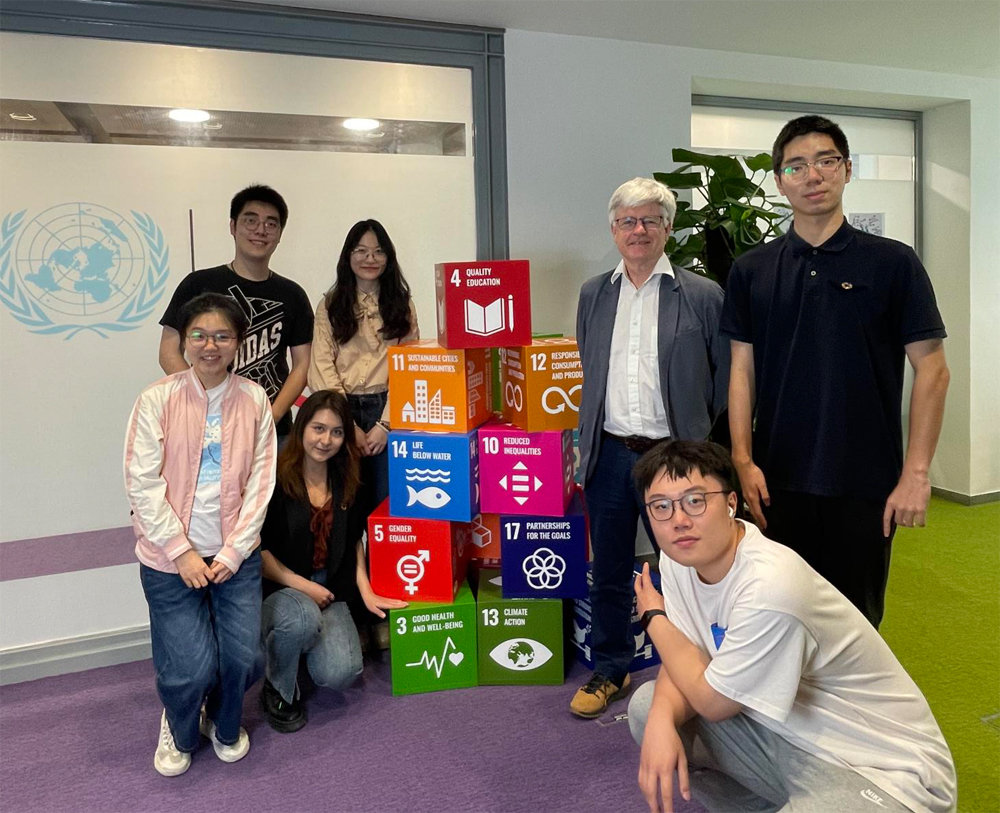
It was a great honour to be asked by a group of young Chinese interns at the United Nations University Institute in Macau to give a short keynote address at the hybrid event that they were organising from there on 30th April in partnership with The Institute for AI International Governance of Tsinghua University (I-AIIG), forming part of the World Data Forum satellite event being convened by the Institute in the city of Macau. As their introduction to the event summarised:

The younger generation are often seen as digital natives who have more exposure and access to data technology than older generations. They are also more likely to use data technology for learning, innovation, participation and empowerment. However, this also means that they face unique opportunities and challenges related to data that need to be explored and addressed.
As the satellite event of this year’s World Data Forum, this youth forum will take “Digital and Youth” as the main theme, adhere to youth leadership and youth participation, aiming to provide a platform for dialogue and exchange among different stakeholders who are interested in or affected by data and its impact on youth.

In the brief 15 minutes available, I chose to focus on three proposals:

  • We need new, more inclusive modes of inter-generational dialogue about digital
  • Just because it is possible to do something, does not mean that it is right or good to do so.
    • Digital tech is all too often assumed to be inherently good – but we need to mitigate the harms to ensure any good can prevail
  • We must all consider the environmental impact of data, and digital tech more widely. 
    • Digital tech is often the cause of environmental harms rather than a solution

The full presentation (in .pdf format is available at Data and Youth.

The event was great fun, and the organisers had brought together many leading young academics from across China working on digital tech in general, and data in particular, divided into four main sessions:

  • Youth Work on Digital Humanities in Empowering the Cultural Legacy
  • Digital technology and Wellness
  • Artificial Intelligence Cutting Edge
  • Personal Information Protection and Data Security Governance

Many thanks to everyone involved for making this such an interesting and enjoyable experience.

Leave a comment

Filed under China, Environment, ICT4D conferences, United Nations, Youth

COP 27, loss and damage, and the reality of Carbon emissions

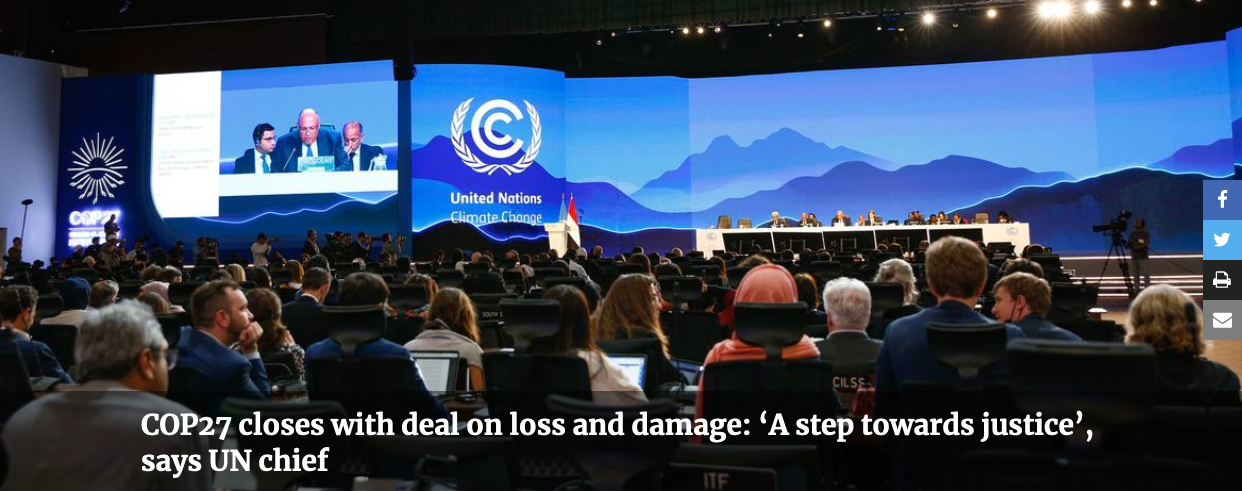
The soundbites from the widely acclaimed success of COP 27, especially around the creation of a loss and damage fund (see UNCC Introduction to loss and damage), made me look once more at the realities of global CO2 emissions to see which countries are actually generating the most CO2, which are improving their performance, and which are suffering most. Sadly, this only made me appreciate yet again that the over-simplifications that occur during so many UN gatherings such as COP appear to be more about political correctness and claiming success than they do about developing real solutions to some of the most difficult challenges facing the world.

COP 27 closing ceremony https://news.un.org/en/story/2022/11/1130832

The UN Climate Press Release on 20 November summarised the outcomes relating to the fund as follows: “Governments took the ground-breaking decision to establish new funding arrangements, as well as a dedicated fund, to assist developing countries in responding to loss and damage… Parties also agreed on the institutional arrangements to operationalize the Santiago Network for Loss and Damage, to catalyze technical assistance to developing countries that are particularly vulnerable to the adverse effects of climate change”.

Unfortunately, it is not quite as easy as it might seem to validate the claim underlying this that it is the rich countries who do most of the pollution and should therefore compensate the poor countries where the most harmful damages from CO2 occur (see, for example, ThePrint, India; UN News, noting that “Developing countries made strong and repeated appeals for the establishment of a loss and damage fund, to compensate the countries that are the most vulnerable to climate disasters, yet who have contributed little to the climate crisis”; and BBC News, A historic deal has been struck at the UN’s COP27 summit that will see rich nations pay poorer countries for the damage and economic losses caused by climate change”). How should it be decided, for example, which countries should be donors to this fund, and which should be beneficiaries from it? Pakistan, which led much of the discussion around the need for richer countries to fund the poorer ones, was actually the 27th largest global emitter of CO2 in 2019; China was the largest contributor, and India the 3rd largest.

The Table below, drawing on World Bank data (2022), gives the various rankings of the top 30 countries in terms of CO2 emissions per capita in 2019, and CO2 total emissions in 1990 and 2019, as well as the change in ranking of the latter two columns.

RankCountryCO2 metric tons per capita 2019CountryCO2 total emissions kt 1990CountryCO2 total emissions kt 2019Change in rank 1990-2019
1Qatar32.474United States4844520China10707219.7+1
2Kuwait22.022China2173360United States4817720.21-1
3Bahrain20.266Russian Federation2163530India2456300.05+4
4United Arab Emirates19.330Japan1090530Russian Federation1703589.97-1
5Brunei Darussalam16.132Germany955310Japan1081569.95-1
6Canada15.431Ukraine688620Germany657400.024-1
7Luxembourg15.306India563580Iran, Islamic Rep.630010.01+12
8Saudi Arabia15.285United Kingdom561770Indonesia619840.027+16
9Oman15.282Canada538661Korea, Rep.610789.978+6
10Australia15.238Italy532860Canada580210.022-1
11United States14.673France356240Saudi Arabia523780.029+11
12Palau13.888Poland350210Mexico449269.989+2
13Trinidad and Tobago12.323Mexico269580South Africa439640.015+3
14Turkmenistan12.263Australia263630Brazil434299.988+6
15Korea, Rep.11.799Korea, Rep.247680Turkiye396839.996+11
16Russian Federation11.797South Africa247660Australia386529.999-2
17Kazakhstan11.457Kazakhstan237250United Kingdom348920.013-9
18Czechia9.820Spain214950Vietnam336489.99+59
19Japan8.541Iran, Islamic Rep.198470Italy317239.99-8
20Netherlands8.504Brazil197900France300519.989-9
21Libya8.381Romania172630Poland295130.005-9
22Singapore8.307Saudi Arabia171410Thailand267089.996+11
23Belgium8.096Czechia150200Malaysia253270.004+23
24Malaysia7.927Indonesia148530Egypt, Arab Rep.249369.995+10
25Germany7.912Netherlands148380Spain239979.996-7
26Poland7.774Turkiye139200Kazakhstan212110.001-9
27Estonia7.672Korea, DPR123330Pakistan190570.007+15
28China7.606Uzbekistan117770United Arab Emirates188860.001+16
29Iran, Islamic Rep.7.598Belgium109310Ukraine174729.996-22
30South Africa7.508Venezuela, RB101630Iraq174559.998+9

Many important observations can be made from these figures, and I highlight just a few below:

Per capita emissions

  • The highest per capita emitters are generally those in countries with recently developed hydrocarbon-based economies, such as Qatar, Kuwait, Bahrain, the UAE and Brunei Darussalam, and generally not in the old rich industrial economies of Europe.
  • Surprisingly, quite a few European countries such as the UK, Denmark and Spain (ranked 52nd-54th) actually lie well outside the top 30 highest emitters
  • The twelve lowest per capita emitters for which data are available (not shown here) are all African countries.
  • There are many fewer countries above the world average, at 4.47 metric tons per capita (which would rank 61st) and many more ranked beneath it, implying that the highest emitters are much higher than the lowest are low: Qatar at 32.47, has 28 metric tons per person more than the average; yet, 55 countries have emissions per capita of <1 metric ton.

Total emissions

  • 60% of total CO2 emission are generated by people living in five countries (China, 31.18%, the United States 14.03%, India 7.15%, the Russian Federation 7.15%, and Japan 3.15%). Eleven further countries, all producing more than 350,000 kt CO2 annually account for a further 16.68% of emissions. More than three-quarters of emissions in 2019 were therefore from people in just 16 countries.
  • Those countries with the lowest total emissions are nearly all small island states (SIDS; not shown in the Table), but note that these were not necessarily the lowest per capita emitters.
  • The changes in total emissions since 1990 are also very interesting. The highest increases within the top 30 were Indonesia (+16) and Iran (+12), although much higher risers came into the top 30 from below, including Vietnam (+59), Malaysia (+23), UAE (+16) and Pakistan (+15).

These data do not make easy reading for policy makers, campaigners and the UN system as a whole, all of whom like to have simple answers and short soundbites. The world is unfortunately too complex and messy for these. As the world’s popultion passes 8 billion (2.8 times what it was when I was born), population growth is the dominant factor in determining total country-based emissions, but economic growth (following the US-led carbon-based capitalist mode of production) has also played a significant part. The big risers in total emissions are countries with large populations and/or with high economic growth rates over the last 30 years. Neither of these should be surprising. Poor countries, with low economic growth and relatively small populations are never likely to be amongst the largest consumers of energy. Overall, the biggest factor determining total CO2 emissions over the last century, and especially in the last 50 years, has been human population growth (see my recent post on “climate change”). Moreover, there has for long been an intricate and complex relationships between humans and carbon: the carbon cycle and the production of oxygen are essential for human life, and our economic systems have also been driven by carbon as a fuelfor centuries. These complexities make it extremely difficult, if not impossible, to argue that we need to create two groups of countries: one being the recipients of funding (from a loss and damage financial facility), and the other being contributors to it. Instead, we need to work collaboratively together to transform the underying factors causing environmental change, of which CO2 emissions are actually only but a small part.

That is not, though, to say that there should not be much greater global effort to work together to resolve the environmental problems caused by our centuries old carbon-based economy (as well as those caused by so-called renewable energy). It is also completely separate from moral arguments suggesting that there should be a shift in wealth distribution from the rich to the poor. However, these should not be conflated into over-simplistic statements and assertions about responsibililty for climate change, such as those being promoted by UN agencies and mainstream media at the end of COP 27. It is also to reassert that we need to work together with renewed vigour collaboratively across sectors and disciplines to understand better the complex interactions that humans have with the environments in which we live, and then to make wise decisions how to implement them in the interests of all the world’s peoples and not just those of the rich and privileged parts of the world.

The above draft was written on 21 November 2022 (and has been revised slightly subsequently)


In response to the above, Olof Hesselmark kindly asked why I had not added further details also about the spatial distribution of CO2 emissions – something that as a geographer I care greatly about! I responded that I hadn’t wanted to complicate matters further, but also that I guess it was because I am aware in my own mind of these spatial distributions, and the country names (and sizes) are in-built into my consciousness! However, they do add an important additional element of complexity to the discussion, and I am delighted that he has agreed for me to add his slightly cropped map of CO2 emissions per sq km below:

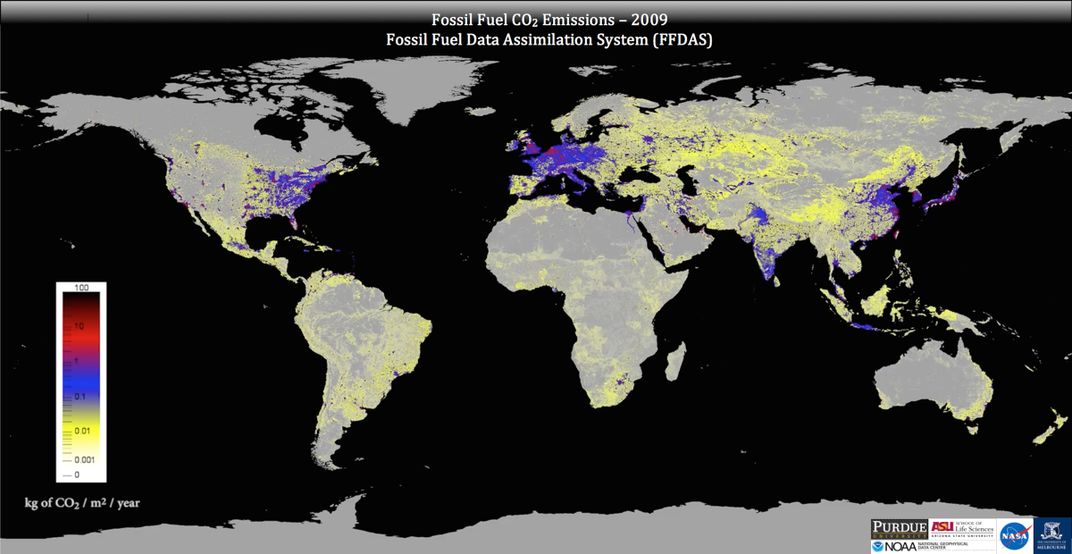
I’m not entirely sure which projection this is, but my preference for such maps is Eckert IV, or other equal area projections such as Gall-Peters or Mollweide that place less visual emphasis on the apparent size of countries in high latitudes. This map nevertheless highlights the varying densities of emissions, with China, Europe and the USA being high, and Africa and Latin America being low. It should also be emphasised that there are enormous differences within countries, as well as between them, with urban-industrial environments generally being much higher in their CO2 emissions than sparsely settled rural ones.

A different perspective once again is thus from the Smithsonian Magazine‘s 2009s map below (carbon emissions from 1997-2010), which does indeed show how a very few areas contribute the largest amount of CO2 emissions.

Update 22 November 2022

5 Comments

Filed under Climate change, Environment, Geography, United Nations

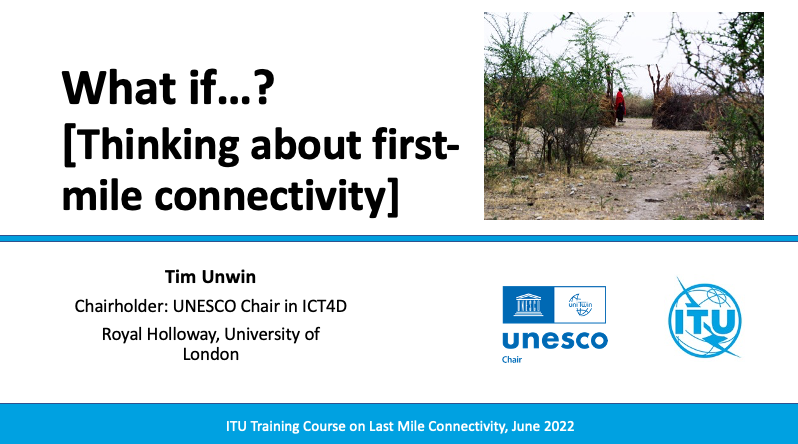
What if…?  [Thinking about first-mile connectivity]

It was great to have been invited by Aminata Amadou Garba to give the final talk in the ITU Academy’s training session on Last Mile Connectivity on 30th June. She was happy for me to be a little bit provocative, and so I returned to one of my long-standing arguments – that by using terms such as “the last mile” or the “last billion” we often denigrate the poorest and the most marginalised. If we really want to ensure that they benefit from the use of digital technologies, we should instead start thinking about them as “the first mile” because they are most important!

The session addressed seven main themes:

  1. The “last” mile in whose eyes?
  2. Parallels with the “next billion”
    • and the “Digital Divide”
  3. Whose perspectives matter most?
  4. The political economy of connectivity
  5. The fundamental role of regulation
  6. Global connectivity initiatives
  7. Environmental implications

I’m so glad that we were able to have quite a lively discussion both during and after the presentation – a copy of which is available here for those who might be interested.

1 Comment

Filed under digital technologies, Education, Environment, ICT4D, inclusion, Inequality, ITU, My Lectures, technology

Digital for Life?

View of the Eiger, Mönch and Jungfrau from small tarn above Grosse Scheidegg

It was a privilege to have been invited to contribute to the panel on Digital for Life? at the Club of Rome’s annual conference today along with luminaries such as Carlos Álvarez Pereira, Ndidi Nnoli-Edozien, Anders Wijkman, Charly Kleissner, Mariana Bozesan and Bolaji Akinboro. I fear, though, that my perspective was a little different from that of many of the panelists who were from a business, financial and entrepreneurial background. It was also challenging to convey the nuances of what I had intended to say in my opening 4 minutes!

So, for anyone who might be interested, I’m posting my speaking notes here. At least, this is more or less what I had intended to say!


Digital for Life?

I think of two things when presented with this question:

  • First, that many of those developing digital technologies and indeed in the biotech sector more widely are working hard to extend human life through digital tech.  The work of Calico (subsidiary of Alphabet, Google’s parent company) and Elon Musk’s creation of Neuralink are just two examples (claiming that “that people would need to become cyborgs to be relevant in an artificial intelligence age. He said that a “merger of biological intelligence and machine intelligence” would be necessary to ensure we stay economically valuable”, Guardian, 2017).   More widely, the increasing blending of human and digital makes me think that within a relatively short period of time, perhaps already, it will not be possible for “pure humans” to survive, in a world increasingly dominated by cyborgs. For many this does not matter; for others (including me) it does. We need to think such thoughts so that we can debate them openly, thereby enabling people to reach wise judgements as to the kinds of future “we” wish to create.  This in turn of course depends on who “we” are, and here I would err on the side of relativism and diversity.  I find one single universal “we” frightening; just as I do the idea of universal individual human rights, without the balancing necessary responsibilities to ensure that diverse individuals can live side-by-side (see Unwin, 2014).
  • The second idea I would like to share is that digital technologies are becoming increasingly harmful to life (of all kinds) on planet earth.  We need to understand the negatives of technology on nature/earth/the physical environment, as well as the positive potential of its use. This is obviously important in the context of the upcoming COP26 jamboree.  Although much effort has been expended on trying to show how digital tech is squeeky-green-clean and can contribute much to a reduction in CO2 and thus “save the planet from climate change”, the truth is much dirtier.  Increasing research shows just how anti-sustainable many digital techs are: fast fashion business models (smart-phone life/owned span around a couple of years); companies preventing right to repair; environmentally harmful mining of rare-earth minerals; bitcoin using more energy than Argentina or the Netherlands; satellite pollution of outer space (akin to the way we used to treat the oceans); digital tech creating twice as much carbon emissions as the airline industry; and energy demand spiralling upwards as 5G, AI, smart cities and a world of sensors come to dominate our lives.  The Digital-Environment System Coalition (DESC) that I founded earlier this year, and to which anyone is most welcome to join, is committed to rethinking the relationships between digital tech and the life of nature, focusing on both the benefits and the harms that it can be used to create.

Page one of the participants

We had a fascinating, albeit attenuated, discussion and I look forward to continuing the exploration. I have much to learn from what others think and say. These are critically important issues if we wish to leave a better world to the next generation, and not have it transformed irrevocably by the scientism of those creating ever more enslaving and destructive digital technologies.

Leave a comment

Filed under DESC, digital technologies, Environment, ICT4D

On ageing populations, “development” and Covid-19

There is increasingly clear evidence that older people are more likely to die from Covid-19 than are younger people: on 17th February,  the China CDC weekly report showed that among the cases known in China by then, the ≥80 age group had the highest case fatality rate at 14.8% (with the 70-79 age group being 8% and the 60-69% age group being 3.6%); and in early April, the WHO Regional Director for Europe highlighted that over 95% of Covid-19 deaths occurred in those over 60, with more than 50% in those aged 80 years or older.  In the UK, the Office for National Statistics (ONS) reported in mid-April that mortality from Covid-19 increased consistently with age, with only about 13% of deaths being of people under 65.  Significantly, though it noted that men had a death rate double that of women; more recent ONS reports have also shown that (when taking into account age) Black men and women were more than four times as likely to die from Covid-19 then were those of White ethnicity, and that such differences in mortality were partly a result of socio-economic disadvantage.  These data are stark, and are as yet still not fully explained.  As people grow older, they generally have greater comorbidities, and it may be the impact that Covid-19 has on these other health problems that is more significant than age itself.

However, this is an important reminder that Covid-19 is primarily an old-people’s disease.  It is striking to recall that in 1951 life expectancy at birth in England and Wales was only 66.4 for men and 71.5 for women; in 1901 the figures were 48.5 and 52.4 respectively (ONS, 2015).  Put simply, people born 70 years ago were not expected to live to the age at which most people are now dying from Covid-19.  This has important ramifications, and raises very difficult questions.  Have people, perhaps, become over expectant about longevity?  Will Covid-19 temper our aspirations to live for ever?  Will it be a check on the ambitions of companies such as Novartis, Alphabet and Illumina to extend life well beyond 100 years (CNBC, 2019)?  Is the main problem of Covid-19 that most people living in the richer countires of the world have become too cosy in their expectations of living to a ripe old age?

Implications for Europe and north America: too many old people

Thought experiments can be a helpful means of highlighting challenging issues.  Suppose, for example, that there had been no lockdowns in Europe and North America.  It seems very likely that substantial numbers of elderly people would have died already (see projections by epidemiologists at Imperial College which suggested that without mitigation strategies Covid-19 would have resulted in 40 milllion deaths globally in 2020).  If a vaccine or cure is not found, then it still seems likely that large numbers of elderly people will indeed die in Europe at an age well short of what they and their families have grown accustomed to expecting.

However, think of the impact that this will have on the economy and health services.  Once large numbers of elderly people have died, national pension bills will fall, the burden on health services will be reduced, the percentage of people within the economically productive age range will increase, and the economic vitality of their countries will be revitalised.  If Covid-19 (or its successors) become an everyday part of life, the economic “burden” of older people will be dramatically reduced.  It is scarcely surprising that rumours  circulated about the intentions of UK government policy in early- to mid-March.  As Martin Shaw noted at the time, it had been credibly reported that the “Government’s strategy was ‘herd immunity, protect the economy and if that means that some pensioners die, too bad’; or as summed up even more succinctly by a senior Tory, ‘Herd immunity and let the old people die’”.  Whilst the government strenuosly denied this, there is a realistic logic to the idea that letting large numbers of old people die would have clear economic benefits, and would avoid the very considerable costs that are accruing as a result of economic shutdown.

I should stress that this is definitely not a scenario that I would want to encourage or endorse, but in the early part of May, the balance of popular opinion (or the influence of the business community and mainstream media in the UK) does seem to be swinging towards a view that the costs of lockdown are too high to continue to protect the elderly, especially in those countries where there have already been very high death rates (as in Belgium, the UK, France, Italy, Spain and the USA).  Yet, the 20th and latest Imperial College Covid-19 report  concludes for Italy that “even a 20% return to pre-lockdown mobility could lead to a resurgence in the number of deaths far greater than experienced in the current wave in several regions”.

Implications for Africa and South Asia: youthful countries

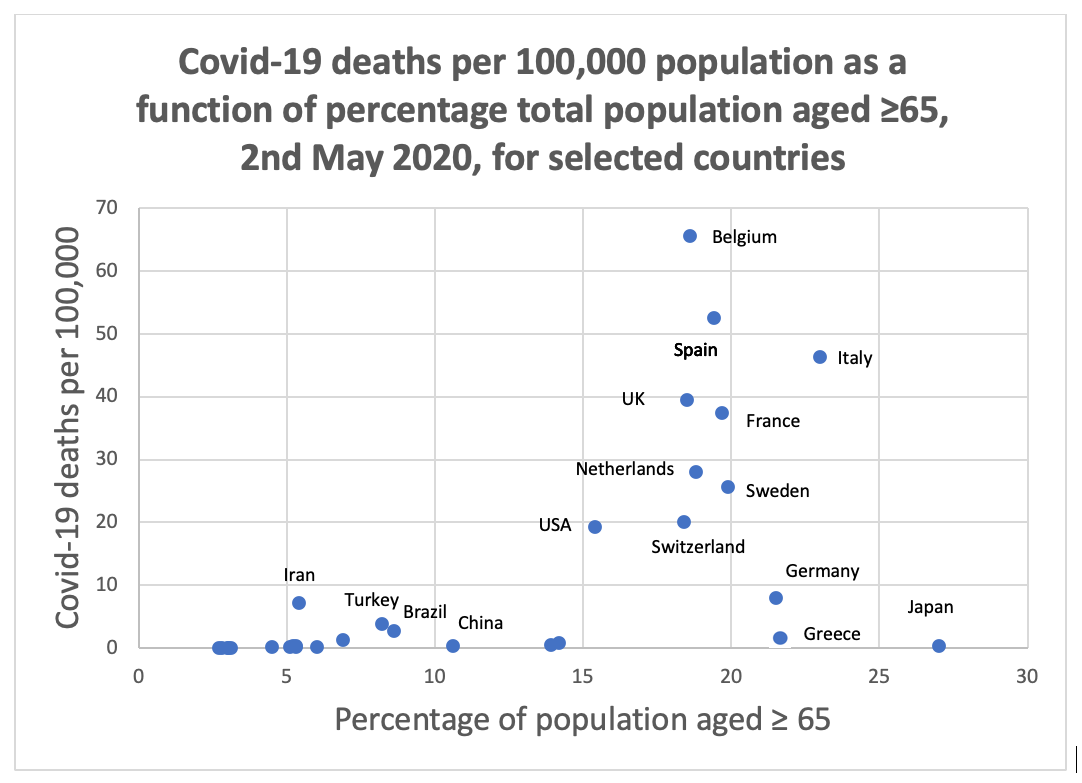
The real purpose of this reflection, though, is to consider the implications of the above arguments for some of the economically poorest countries in the world.  Data about Covid-19 infections and deaths in Africa and Asia are likely to be even less reliable than they are in Europe, and the countries in these continents are in any case much earlier in their encounters with Covid-19 than are those of Europe.  Recent reports, for example, suggest that the real number of deaths related to Covid-19 may be many times the number that are currently reported (see The Guardian‘s recent report on Somalia).  Nevertheless, we do have relatively accurate data about the demographic structures of most countries in the world.  The chart below therefore shows the relationships between current density of Covid-19 deaths and the percentage of population aged ≥65 for a sample of countries.[i]

Screenshot 2020-05-08 at 08.33.35

This graph is striking, but difficut to interpret (and can be misleading), mainly because most countries in Africa and Latin America are only at an early stage in their Covid-19 outbreaks.  We simply do not know how many deaths they are likely to witness, and few models have yet been published that predict the likely outcomes.   However, with the very notable exceptions of Japan, Greece and Germany, it re-emphasises that high percentages of Covid-19 deaths are mainly found in those countries that have more than 15% of their populations aged ≥65.  Even Brazil, where the death rate is currently growing rapidly, is still nowhere near at the level of mortality that has occurred in Europe and the USA.  The quite remarkable achievement of Greece, with only 147 deaths by 7th May, is also highly noteworthy because despite a fragile health service and an elderly population it has managed to achieve something that most other European countries have been unable to do.  Most commentators suggest that this is mainly because it imposed a dramatic lockdown even before the first deaths were recorded.

Most countries of the world have intiated lockdowns, and these are having particularly significant impacts on the poorest and most marginalised who can least afford it. An obvious question therefore arises: if Covid-19 mainly affects the elderly, should countries with young populations (such as most of those of Africa, Asia and Latin America) follow the “older” countries in imposing strict lockdowns that will have damaging effects on their economies and the livelihoods of those who can least afford it?  Put another way, are the mitigating actions of European and North American countries, where more than 15% of their populations are ≥65, relevant to economically poorer countries with less than 10% of their populations in this age group?

It is far from easy to answer this.  Perhaps the very small numbers of people reportedly dying in Africa at present is only because the coronavirus has not yet gained a grip, and any loosening of the mitigating measures would unleash the pandemic at a scale similar to that seen in Europe.  The WHO, for example, has warned  that the Covid-19 pandemic might kill as many as 190,000 people in Africa in the year ahead (Al Jazeera, 8th May), with many more dying subsequently.  This may well be true, but there is at least a chance that the youthful populations of Africa will be better able to deal with Covid-19 than have done the older populations of Europe.  It must, though, be emphasised that many younger people who are infected with Covid-19 do indeed have serious illnesses, and some die.  We also do not yet know the long-term health impacts of this coronavirus.  Moreover, the evidence that socially disadvantaged people are also more likely to die than their more affluent neighbours further suggests that the poorest and most marginalised in these countries may well have higher death rates.

As I have illustrated elsewhere, there is some (but by no means conclusive) evidence that environmental factors may also play a role in limiting the spread of Covid-19.  If the environments of Africa and South Asia are indeed not particularly conducive to the spread of Covid-19, then their youthful populations might not need to endure the very tight lockdowns imposed in many European countries. That having been said, the rapidly increasing number of infections and deaths in Brazil (with 121,600 cases and 8,022 deaths as of 7th May), which has physical environments and climates similar to many parts of western and southern Africa, does not bode well for the future spread of Covid-19 in Africa.

Conclusions

In conclusion, there remains much that is unknown about how Covid-19 spreads and who it affects most damagingly.  The evidence from Japan, Greece and Germany shows that even when countries do have a high percentage of elderly people, it is still possible to contain and limit the spread of Covid-19, thereby preventing very large numbers of deaths.  The abject failures of governments in countries such as the UK and Belgium to manage the pandemic and save lives likewise indicate how not to respond to the pandemic.  The governments of African and South Asian countries, with their youthful populations who appear less likely to suffer severe symptoms, may well therefore have an advantage over their European counterparts.  If they can draw lessons about what has worked and what has failed, then they are also in a good position to bounce back swiftly from the economic harm caused by economic and social lockdowns.


[i] The selected countries included the ten most populous countries in the world (in descending order of total population, China, India, USA, Indonesia, Pakistan, Brazil, Nigeria, Bangladesh, Russia, Mexico), a selection of European countries with mixed trajectories (listed alphabetically, Belgium, France, Germany, Greece, Italy, the Netherlands, Spain, Sweden, Switzerland), and a diverse sample of African (alphabetically, DRC, Egypt, Kenya, Rwanda, South Africa, Tanzania), and other (alphabetically, Iran, Japan, South Korea, Turkey) countries.

4 Comments

Filed under Africa, Asia, Covid-19, Environment, Europe, Health

Digital-political-economy in a post-Covid-19 world: implications for the most marginalised

Now is the time to be thinking seriously about the kind of world that we wish to live in once Covid-19 has finished its rampage across Europe and North America.[i] Although its potential direct health impact in Africa and South Asia remains uncertain at the time of writing, countries within these continents have already seen dramatic disruption and much hardship as well as numerous deaths having been caused by the measures introduced by governments to restrict its spread.  It is already clear that it is the poorest and most marginalised who suffer most, as witnessed, for example, by the impact of Modi’s lockdown in India on migrant workers.[ii]

This post highlights five likely global impacts that will be hastened by Covid-19, and argues that we need to use this disruption constructively to shape a better world in the future, rather than succumb to the potential and substantial damage that will be caused, especially to the lives of the world’s poorest and most marginalised.  It may be that for many countries in the world, the impact of Covid-19 will be even more significant than was the impact of the 1939-45 war.  Digital technologies are above all accelerators, and most of those leading the world’s major global corporations are already taking full advantage of Covid-19 to increase their reach and their profits.[iii]

The inexorable rise of China and the demise of the USA

http://hiram1555.com/2016/10/21/presidential-debates-indicate-end-of-us-empire-analyst/

Source: Hiram1555.com

I have written previously about the waxing of China and the waning of the USA; China is the global political-economic powerhouse of the present, not just of the future.[iv]  One very significant impact of Covid-19 will be to increase the speed of this major shift in global power.  Just as 1945 saw the beginning of the final end of the British Empire, so 2020 is likely to see the beginning of the end of the USA as the dominant global (imperial) power.  Already, even in influential USAn publications, there is now much more frequent support for the view that the US is a failing state.[v] This transition is likely to be painful, and it will require world leaders of great wisdom to ensure that it is less violent than may well be the case.

The differences between the ways in which the USA and China have responded to Covid-19 have been marked, and have very significant implications for the political, social and economic futures of these states.  Whilst little trust should be placed on the precise accuracy of reported Covid-19 mortality rate figures throughout the world, China has so far reported a loss of 3.2 people per million to the disease (as of 17 April, and thus including the 1290 uplift announced that day), whereas the USA has reported deaths of 8.38 per 100,000 (as of that date); moreover, China’s figures seem to have stabilised, whereas those for the USA continue to increase rapidly.[vi]  These differences are not only very significant in human terms, but they also reflect a fundamental challenge in the relative significance of the individual and the community in US and Chinese society.

Few apart from hardline Republicans in the USA now doubt the failure of the Trump regime politically, socially, economically and culturally. This has been exacerbated by the US government’s failure to manage Covid-19 effectively (even worse than the UK government’s performance), and its insistent antagonism towards China through its deeply problematic trade-war[vii] even before the outbreak of the present coronavirus. Anti-Chinese rhetoric in the USA is but a symptom of the realisation of the country’s fundamental economic and policial weaknesses in the 21st century.   President Trump’s persistent use of the term “Chinese virus” instead of Covid-19[viii] is also just a symptom of a far deeper malaise.   Trump is sadly not the problem; the problem is the people and system that enabled him to come to power and in whose interests he is trying to serve (alongside his own).  China seems likely to come out of the Covid-19 crisis much stronger than will the USA.[ix]

Whether people like it or not, and despite cries from the western bourgeoisie that it is unfair, and that the Chinese have lied about the extent of Covid-19 in their own country in its early stages, this is the reality.  China is the dominant world power today, let alone tomorrow.

An ever more digital world

https://www.forbes.com/sites/columbiabusinessschool/2020/04/21/how-covid-19-will-accelerate-a-digital-therapeutics-revolution/

Source: Forbes.com

The digital technology sector is already the biggest winner from Covid-19.  Everyone with access, knowledge and ability to pay for connectivity and digital devices has turned to digital technologies to continue with their work, maintain social contacts, and find entertainment during the lockdowns that have covered about one-third of the world’s population by mid-April.[x]  Those who previously rarely used such technologies, have overnight been forced to use them for everything from buying food online, to maintaining contacts with relatives and friends.

There is little evidence that the tech sector was prepared for such a windfall in the latter part of 2019,[xi] but major corporations and start-ups alike have all sought to exploit its benefits as quickly as possible in the first few months of 2020, as testified by the plethora of announcements claiming how various technologies can win the fight against Covid-19.[xii]

One particularly problematic outcome has been the way in which digital tech champions and activists have all sought to develop new solutions to combat Covid-19.  While sometimes this is indeed well intended, more often than not it is primarily so that they can benefit from funding that is made available for such activities by governments and donors, or primarily to raise the individual or corporate profile of those involved.  For them, Covid-19 is a wonderful business opportunity.  Sadly, many such initiatives will fail to deliver appropriate solutions, will be implemented after Covid-19 has dissipated, and on some occasions will even do more harm than good.[xiii]

There are many paradoxes and tensions in this dramatically increased role of digital technology after Covid-19. Two are of particular interest.  First, many people who are self-isolating or social distancing are beginning to crave real, physical human contact, and are realising that communicating only over the Internet is insufficiently fulfilling.  This might offer some hope for the future of those who still believe in the importance of non-digitally mediated human interaction, although I suspect that such concerns may only temporarily delay our demise into a world of cyborgs.[xiv] Second, despite the ultimate decline in the US economy and political power noted above, US corporations have been very well placed to benefit from the immediate impact of Covid-19, featuring in prominent initiatives such as UNESCO’s Global Education Coalition,[xv] or the coalition of pharmaceutical companies brought together by the Gates Foundation.[xvi]

Whatever the precise details, it is an absolute certainty that the dominance of digital technologies in everyone’s lives will increase very dramatically following Covid-19 and this will be exploited by those intent on reaping the profits from such expansion in their own interests.

Increasing acceptance of surveillance by states and companies: the end of privacy as we know it.

https://www.wired.com/story/phones-track-spread-covid19-good-idea/

Source: Wired.com

A third, related, global impact of Covid-19 will be widely increased global acceptance of the roles of states and companies in digital surveillance.  Already, before 2020, there was a growing, albeit insufficient, debate about the ethics of digital surveillance by states over issues such as crime and “terrorism”, and its implications for privacy.[xvii]  However, some states, such as China, South Korea, Singapore and Israel, have already used digital technologies and big data analytics extensively and apparently successfully in monitoring and tracking the spread of Covid-19,[xviii] and other coalitions of states and the private sector are planning to encourage citizens to sign up to having fundamental aspects of what has previously been considered to be their private and personal health information made available to unknown others.[xix]

One problem with such technologies is that they require substantial numbers of people to sign up to and then use them.  In more authoritarian states where governments can make such adherence obligatory by imposing severe penalties for failure to do so, they do indeed appear to be able to contribute to reduction in the spread of Covid-19 in the interests of the wider community.  However, in more liberal democratic societies, which place the individual about the community in importance, it seems less likely that they will be acceptable.

Despite such concerns, the growing evidence promoted by the companies that are developing them that such digital technologies can indeed contribute to enhanced public health will serve as an important factor in breaking down public resistance to the use of surveillance technologies and big data analytics.  Once again, this will ultimately serve the interest of those who already have greater political and economic power than it will the interests of the most marginalised.

Online shopping and the redesign of urban centres.

https://www.independent.co.uk/life-style/health-and-families/coronavirus-herd-immunity-meaning-definition-what-vaccine-immune-covid-19-a9397871.html

Source: Independent.co.uk

Self-isolation and social distancing have led to the dramatic emptying of towns and cities across the world.  Businesses that have been unable to adapt to online trading have overnight been pushed into a critical survival situation, with governments in many of the richer countries of the world being “forced” to offer them financial bail-outs to help them weather the storm.  Unfortunately, most of this money is going to be completely wasted and will merely create huge national debts for years into the future.  People who rarely before used online shopping are now doing so because they believe that no other method of purchasing goods is truly safe.

The new reality will be that most people will have become so used to online shopping that they are unlikely to return in the future to traditional shopping outlets. Companies that have been unable to adjust to the new reality will fail.  The character of our inner-city areas will change beyond recognition.  This is a huge opportunity for the re-design of urban areas in creative, safe and innovative ways.  Already, the environmental impact of a reduction in transport and pollution has been widely seen; wildlife is enjoying a bonanza; people are realising that their old working and socialising patterns may not have been as good as they once thought.[xx]  Unfortunately, it is likely that this opportunity may not be fully grasped, and instead governments that lack leadership and vision will instead seek to prop up backward-looking institutions, companies and organisations, intent on preserving infrastructure and economic activities that are unfit for purpose in the post-pandemic world.  Such a mentality will lead to urban decay and ghettoization, where people will fear to tread, and there is a real danger of a downward spiral of urban deprivation.

There are, though, many bright signs of innovation and creativity for those willing to do things differently.  Shops and restaurants that have been able to find efficient trustworthy drivers are now offering new delivery services; students are able to draw on the plethora of online courses now available; new forms of communal activity are flourishing; and most companies are realising that they don’t actually need to spend money on huge office spaces, but can exploit their labour even more effectively by enabling them to work from home.

We must see the changes brought about by responses to Covid-19 as important opportunities to build for the future, and to create human-centred urban places that are also sensitive to the natural environments in which they are located.

Increasing global inequalities

https://gulfnews.com/photos/news/indian-migrants-forced-to-walk-home-amid-covid-19-lockdown-1.1585394226024?slide=2

Source: Gulfnews.com

The net outcome of the above four trends will lead inexorably to a fifth, and deeply concerning issue: the world will become an even more unequal place, where those who can adapt and survive will flourish, but where the most vulnerable and marginalised will become even more immiserated.

This is already all too visible.  Migrant workers are being ostracised, and further marginalised.[xxi]  In India, tens of thousands of labourers are reported to have left the cities, many of them walking home hundreds of kilometres to their villages.[xxii] In China, Africans are reported as being subjected to racist prejudice, being refused service in shops and evicted from their residences.[xxiii]  In the UK, many food banks have had to close and it is reported that about 1.5. million people a day are going without food.[xxiv]  The World Bank is reporting that an extra 40-50 million people across the world will be forced into poverty by Covid-19, especially in Africa.[xxv]  People with disabilities have become even more forgotten and isolated.[xxvi]  The list of immediate crises grows by the day.

More worrying still is that there is no certainty that these short-term impacts will immediately bounce-back once the pandemic has passed.  It seems at least as likely that many of the changes will have become so entrenched that aspects of living under Covid-19 will become the new norm.  Once again, those able to benefit from the changes will flourish, but the uneducated, those with disabilities, the ethnic minorities, people living in isolated areas, refugees, and women in patriarchal societies are all likely to find life much tougher in 2021 and 2022 even than they do at present.   Much of this rising inequality is being caused, as noted above, by the increasing role that digital technologies are playing in people’s lives.  Those who have access and can afford to use the Internet can use it for shopping, employment, entertainment, learning, and indeed most aspects of their lives.  Yet only 59% of the world’s population are active Internet users.[xxvii]

Looking positively to the future.

People will respond in different ways to these likely trends over the next few years, but we will all need to learn to live together in a world where:

  • China is the global political economic power,
  • Our lives will become ever more rapidly experienced and mediated through digital technology,
  • Our traditional views of privacy are replaced by a world of surveillance,
  • Our towns and cities have completely different functions and designs, and
  • There is very much greater inequality in terms of opportunities and life experiences.

In dealing with these changes, it is essential to remain positive; to see Covid-19 as an opportunity to make the world a better place for everyone to live in, rather than just as a threat of further pain, misery and death, or an opportunity for a few to gain unexpected windfall opportunities to become even richer.  Six elements would seem to be important in seeking to ensure that as many people as possible can indeed flourish once the immediate Covid-19 pandemic has dissipated:

  • First, these predictions should encourage all of us to prioritise more on enhancing the lives of the poorest and the most marginalised, than on ensuring economic growth that mainly benefits the rich and privileged. This applies at all scales, from designing national health and education services, to providing local, community level care provision.
  • This requires an increased focus on negotiating communal oriented initiatives and activities rather than letting the greed and selfishness of individualism continue to rule the roost.
  • Third, it is essential that we use this as an opportunity to regain our physical sentient humanity, and reject the aspirations of those who wish to create a world that is only experienced and mediated through digital technology. We need to regain our very real experiences of each other and the world in which we live through our tastes, smells, the sounds we hear, the touches we feel, and the sights we see.
  • Fourth, it seems incredibly important that we create a new global political order safely to manage a world in which China replaces the USA as the dominant global power. The emergence of new political counterbalances, at a regional level as with Europe, South Asia, Africa and Latin America seems to be a very important objective that remains to be realised.  Small states that choose to remain isolated, however arrogant they are about the “Great”ness of their country, will become ever more vulnerable to the vagaries of economic, political and demographic crisis.
  • Fifth, we need to capitalise on the environmental impact of Covid-19 rapidly to shape a world of which we are but a part, and in which we care for and co-operate with the rich diversity of plant and animal life that enjoys the physical richness of our planet. This will require a comprehensive and rigorous evaluation of the harm caused to our world by the design and use of digital technologies.[xxviii]
  • Finally, we need to agree communally on the extent to which individual privacy matters, and whether we are happy to live in a world of omnipresent surveillance by companies (enabling them to reap huge profits from our selves as data) and governments (to maintain their positions of power, authority and dominance). This must not be imposed on us by powerful others.  It is of paramount importance that there is widespread informed public and communal discussion about the future of surveillance in a post-Covid-19 era.

I trust that these comments will serve to provoke and challenge much accepted dogma and practice.  Above all, let’s try to think of others more than we do ourselves, let’s promote the reduction of inequality over increases in economic growth, and let’s enjoy  an integral, real and care-filled engagement with the non-human natural world.


Notes:

[i] For current figures see https://coronavirus.thebaselab.com/ and https://gisanddata.maps.arcgis.com/apps/opsdashboard/index.html#/bda7594740fd40299423467b48e9ecf6, although all data related with this coronavirus must be treated with great caution; see https://unwin.wordpress.com/2020/04/11/data-and-the-scandal-of-the-uks-covid-19-survival-rate/

[ii] Modi’s hasty coronavirus lockdown of India leaves many fearful for what comes next, https://time.com/5812394/india-coronavirus-lockdown-modi/

[iii] Jack Dorsey, the founder of Twitter and Square, might well be an exception with his $1 billion donation to support Covid-19 relief and other charities; see https://www.theverge.com/2020/4/7/21212766/jack-dorsey-coronavirus-covid-19-donate-relief-fund-square-twitter

[iv] See, for example, discussion in Unwin, T. (2017) Reclaiming ICT4D, Oxford: Oxford University Press.  I appreciate that such arguments infuriate many people living in the USA,

[v] See, for example, George Parker’s, We Are Living in a Failed State: The coronavirus didn’t break America. It revealed what was already broken, The Atlantic, June 2020 (preview) https://www.theatlantic.com/magazine/archive/2020/06/underlying-conditions/610261/.

[vi] Based on figures from https://coronavirus.thebaselab.com/ on 15th April 2020.  For comparison, Spain had 39.74 reported deaths per 100,000, Italy 35.80, and the UK 18.96.

[vii] There are many commentaries on this, but The Wall Street Journal’s account on 9 February 2020 https://www.wsj.com/articles/u-s-china-trade-war-reshaped-global-commerce-11581244201 is useful, as is the Pietersen Institute’s timeline https://www.piie.com/blogs/trade-investment-policy-watch/trump-trade-war-china-date-guide.

[viii] For a good account of his use of language see Eren Orbey’s comment in The New Yorker, Trump’s “Chinese virus” and what’s at stake in the coronovirus’s name,  https://www.newyorker.com/culture/cultural-comment/whats-at-stake-in-a-viruss-name

[ix] China’s massive long-term strategic investments across the world, not least through its 一带一路 (Belt and Road) initiative, have placed it in an extremely strong position to reap the benefits of its revitalised economy from 2021 onwards (for a good summary of this initiative written in January 2020 see https://www.cfr.org/backgrounder/chinas-massive-belt-and-road-initiative)

[x] Kaplan, J., Frias, L. and McFall-Johnsen, M., A third of the global population is on coronavirus lockdown…, https://www.businessinsider.com/countries-on-lockdown-coronavirus-italy-2020-3?r=DE&IR=T

[xi] This is despite conspiracy theorists arguing that those who were going to gain most from Covid-19 especially in the digital tech and pharmaceutical industry had been active in promoting global fear of the coronavirus, or worse still had actually engineered it for their advantage.  See, for example, The New York Times, https://www.nytimes.com/2020/04/17/technology/bill-gates-virus-conspiracy-theories.html, or Thomas Ricker, Bill Gates is now the leading target for Coronavirus falsehoods, says report, https://www.theverge.com/2020/4/17/21224728/bill-gates-coronavirus-lies-5g-covid-19 .

[xii] See, for example, Shah, H. and Kumar, K., Ten digital technologies helping humans in the fight against Covid-19, Frost and Sullivan, https://ww2.frost.com/frost-perspectives/ten-digital-technologies-helping-humans-in-the-fight-against-covid-19/, Gergios Petropolous, Artificial interlligence in the fight against COVID-19, Bruegel, https://www.bruegel.org/2020/03/artificial-intelligence-in-the-fight-against-covid-19/, or Beech, P., These new gadgets were designed to fight COVID-19, World Economic Forum, https://www.weforum.org/agenda/2020/04/coronavirus-covid19-pandemic-gadgets-innovation-technology/. It is also important to note that the notion of “fighting” the coronavirus is also deeply problematic.

[xiii] For my much more detailed analysis of these issues, see Tim Unwin (26 March 2020), collaboration-and-competition-in-covid-19-response, https://unwin.wordpress.com/2020/03/26/collaboration-and-competition-in-covid-19-response/

[xiv] For more on this see Tim Unwin (2017) Reclaiming ICT4D, Oxford: Oxford University Press, and for a brief comment https://unwin.wordpress.com/2016/08/03/dehumanization-cyborgs-and-the-internet-of-things/.

[xv] Although, significantly, Chinese companies are also involved; see https://en.unesco.org/covid19/educationresponse/globalcoalition

[xvi] For the work of the Gates Foundation and US pharmaceutical companies in fighting Covid-19 https://www.outsourcing-pharma.com/Article/2020/03/27/Bill-Gates-big-pharma-collaborate-on-COVID-19-treatments

[xvii] There is a huge literature, both academic and policy related, on this, but see for example OCHCR (2014) Online mass-surveillance: “Protect right to privacy even when countering terrorism” – UN expert, https://www.ohchr.org/SP/NewsEvents/Pages/DisplayNews.aspx?NewsID=15200&LangID=E; Privacy International, Scrutinising the global counter-terrorism agenda, https://privacyinternational.org/campaigns/scrutinising-global-counter-terrorism-agenda; Simon Hale-Ross (2018) Digital Privacy, Terrorism and Law Enforcement: the UK’s Response to Terrorist Communication, London: Routledge; and Lomas, N. (2020) Mass surveillance for national security does conflict with EU privacy rights, court advisor suggests, TechCrunch, https://techcrunch.com/2020/01/15/mass-surveillance-for-national-security-does-conflict-with-eu-privacy-rights-court-advisor-suggests/.

[xviii] Kharpal, A. (26 March 2020) Use of surveillance to fight coronavirus raised c oncenrs about government power after pandemic ends, CNBC, https://www.cnbc.com/2020/03/27/coronavirus-surveillance-used-by-governments-to-fight-pandemic-privacy-concerns.html; but see also more critical comments about the efficacy of such systems as by Vaughan, A. (17 April 2020) There are many reasons why Covid-19 contact-tracing apps may not work, NewScientist, https://www.newscientist.com/article/2241041-there-are-many-reasons-why-covid-19-contact-tracing-apps-may-not-work/

[xix] There are widely differing views as to the ethics of this.  See, for example, Article 19 (2 April 2020) Coronavirus: states use of digital surveillance technologies to fight pandemic must respect human rights, https://www.article19.org/resources/covid-19-states-use-of-digital-surveillance-technologies-to-fight-pandemic-must-respect-human-rights/ ; McDonald, S. (30 March 2020) The digital response to the outbreak of Covid-19, https://www.cigionline.org/articles/digital-response-outbreak-covid-19. See also useful piece by Arcila (2020) for ICT4Peace on “A human-centric framework to evaluate the risks raised by contact-tracing applications” https://mcusercontent.com/e58ea7be12fb998fa30bac7ac/files/07a9cd66-0689-44ff-8c4f-6251508e1e48/Beatriz_Botero_A_Human_Rights_Centric_Framework_to_Evaluate_the_Security_Risks_Raised_by_Contact_Tracing_Applications_FINAL_BUA_6.pdf.pdf

[xx] See, for example, https://www.bbc.com/future/article/20200326-covid-19-the-impact-of-coronavirus-on-the-environment, https://www.msn.com/en-gb/news/world/the-environmental-impact-of-covid-19/ss-BB11JxGv?li=BBoPWjQ, https://www.theguardian.com/world/2020/mar/26/life-after-coronavirus-pandemic-change-world, and https://www.scientificamerican.com/article/how-the-coronavirus-pandemic-is-affecting-co2-emissions/.

[xxi] See The Guardian (23 April 2020) ‘We’re in a prison’: Singapore’s million migrant workers suffer as Covid-19 surges back, https://www.theguardian.com/world/2020/apr/23/singapore-million-migrant-workers-suffer-as-covid-19-surges-back

[xxii] Al Jazeera (6 April 2020) India: Coronavirus lockdown sees exodus from cities, https://www.aljazeera.com/programmes/newsfeed/2020/04/india-coronavirus-lockdown-sees-exodus-cities-200406104405477.html.

[xxiii] Financial Times (13th April) China-Africa relations rocked by alleged racism over Covid-19, https://www.ft.com/content/48f199b0-9054-4ab6-aaad-a326163c9285

[xxiv] Global Citizen (22 April 2020) Covid-19 Lockdowns are sparking a hunger crisis in the UK, https://www.globalcitizen.org/en/content/covid-19-food-poverty-rising-in-uk/

[xxv] Mahler, D.G., Lakner, C., Aguilar, R.A.C. and Wu, H. (20 April 2020) The impact of Covid-19 (Coronavirus) on global poverty: why Sub-Saharan Africa might be the region hardest hit, World Bank Blogs, https://blogs.worldbank.org/opendata/impact-covid-19-coronavirus-global-poverty-why-sub-saharan-africa-might-be-region-hardest

[xxvi] Bridging the Gap (2020) The impact of Covid-19 on persons with disabilities, https://bridgingthegap-project.eu/the-impact-of-covid-19-on-people-with-disabilities/

[xxvii] Statista (Januarv 2020) https://www.statista.com/statistics/269329/penetration-rate-of-the-internet-by-region/

[xxviii] For a wider discussion of the negative environmental impacts of climate change see https://unwin.wordpress.com/2020/01/16/digital-technologies-and-climate-change/.

3 Comments

Filed under Africa, AI, Asia, capitalism, China, Climate change, Commonwealth, Covid-19, cybersecurity, Development, digital technologies, Disability, Education, Empowerment, Environment, Europe, Gender, Geography, ICT4D, ICTs, inclusion, India, Inequality, Internet, Latin America, Learning, poverty, Restaurants, Rural, SDGs, Sustainability, UK, United Nations

Inter Islamic Network on IT and COMSATS University workshop on ICT for Development: Mainstreaming the Marginalised

PostersThe 3rd ICT4D workshop convened by the Inter Islamic Network on IT (INIT) and COMSATS University in Islamabad, and supported by the UNESCO Chair in ICT4D (Royal Holloway, University of London) and the Ministry of IT and Telecom in Pakistan on the theme of Mainstreaming the Marginalised was held at the Ramada Hotel in Islamabad on 28th and 29th January 2020.  This was a very valuable opportunity for academics, government officials, companies, civil society organisations and donors in Pakistan to come together to discuss practical ways through which digital technologies can be used to support  economic, social and political changes that will benefit the poorest and most marginalised.  The event was remarkable for its diveristy of participants, not only across sectors but also in terms of the diversity of abilities, age, and gender represented.  It was a very real pleasure to participate in and support this workshop, which built on the previous ones we held in Islamabd in 2016 and 2017.

The inaugural session included addresses by Prof Dr Raheel Qamar (President INIT and Rector COMSATS University, Islamabad), Mr. Shoaib Ahmed Siddiqui (Federal Secretary Ministry of IT & Telecom) and Dr. Tahir Naeem (Executive Director, INIT), as well as my short keynote on Digital Technologies, Climate Change and Sustainability.  This was followed by six technical sessions spread over two days:

  • Future of learning and technology
  • Policy to practice: barriers and challenges
  • Awareness and inclusion: strategizing through technology
  • Accessibility and Technology: overcoming barriers
  • Reskilling the marginalised: understandng role reversals
  • Technical provisio: indigenisation for local needs.

These sessions included a wide diversity of activities, ranging from panel sessions, practical demonstrations, and mind-mapping exercises, and there were plenty of opportunities for detailed discussions and networking.

Highlights for me amongst the many excellent presentations included:

  • Recollections by Prof Abdful Mannan and Prof Ilyas Ahmed of the struggles faced by people with disabilities in getting their issues acknowledged by others in society, and of the work that they and many others have been doing to support those with a wide range of disabilities here in Pakistan
  • The inspirational presentations by Julius Sweetland of his freely available Open Source Optikey software enabling those with multiple disbilities to use only their eyes to write and control a keyboard
  • Meeting the young people with Shastia Kazmi (Vision 21 and Founder of Little Hands), who have gained confidence and expertise through her work and are such an inspiration to us all in continuing our work to help some of the pooorest and most marginalised to be empowered through digital technologies.

  • The very dynamic discussions around practical actions that we can all take to enable more inclusive use of  digital technologies (mindmaps of these available below)

Enormous thanks must go to Dr. Tahir Naeem (COMSATS University and Executive Director of INIT) and his team, especially Dr. Akber Gardezi and Atiq-ur-Rehman, for all that they did to make this event such a success.

A shortened version of this workshop was also subsequently held on Monday 3rd February at the University of Sindh in Jamshoro, thanks to the support and facilitation of Dr. Mukesh Khatwani (Director of the Area Study Centre for Far East and Southeast Asia) and his colleagues.  This also focused on the practical ways through which some of the most marginalised can benefit from the appropriate use of digital technologies, and it was once again good to have the strong involvement of persons with disabilities.

Quick links to workshop materials and outputs:


Leave a comment

Filed under Climate change, Conferences, Environment, Gender, ICT4D, ICT4D conferences, Pakistan, Uncategorized