
This is the second of a trilogy of three posts about the interface between digital technologies and climate change. It argues that the current design and use of digital technologies are largely based on principles of un-sustainability, and are therefore having a seriously damaging impact on the environment. The digital technology industry is one of the least sustainable and most environmentally damaging industrial sectors in the modern world. Its leaders have long been unwilling to face up to the challenges, and continue to focus primarily on the claim that they are contributing significantly to delivering the so-called Sustainable Development Goals.[i] If digital technologies are indeed to do “good”, especially with respect to the physical environment that sustains us all, it is time for a dramatic rethink of all aspects of the sector’s activities.
Four areas of particular concern need to be highlighted:
Redundancy and unsustainability
Redundancy and unsustainability are frequently built centrally into the digital technology business model. At least three key issues can be noted here:
- Most of the sector is based on the fundamental concept of replacement rather than repair. Those old enough will remember fixed line telephones that lasted virtually for ever. Now, many people replace their mobile phones at least every two years. New models come out; new fashions are promoted. To be sure there is a growing mobile phone and digital repair sector emerging in many poorer countries, but the fundamental business model across the sector is based on innovation to attract people to buy the latest new technology, rather than to build technology that can be re-used. Initiatives, such as Restart,[ii] are thus incredibly important in trying to change the mentality of consumers, and thereby companies and governments. They note that: the average mobile creates 55 kilograms of carbon emissions in manufacture, equal to 26 weeks of laundry; 1.9 billion mobile phones were projected to be sold in 2018, and their total carbon footprint in manufacture was at least equal to the Philippines’ annual carbon emissions, a country of over 100 million people; if we used every phone sold this year for 1/3 longer, we would prevent carbon emissions equal to Ireland’s annual emissions.[iii] Yet, many digital companies, especially Apple, have for a long time fought against enabling consumers to repair their own devices or have them repaired more cheaply elsewhere.[iv]
- The hardware-software development cycle forces users to upgrade their equipment on a regular basis. Innovation in the digital technology sector means that hardware developments often make old software unusable on newer devices, and new software (particularly operating systems) requires newer hardware on which to run. Inevitably, the consumer has to pay more to replace equipment or hardware with which they were previously perfectly happy. Not only does this increase the profits to the companies at the expense of consumers, but it also leads to massive redundancy with older equipment frequently simply being thrown away. This is scarcely sustainable.
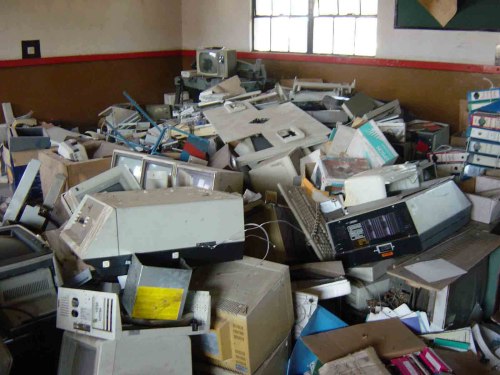
- The net effect is that despite efforts to recycle digital technology, e-Waste remains a fundamental problem for the sector. Much e-waste contains concentrated amounts of potentially harmful products, and this shows little sign of abating. In 2014 41.8 million tons of discarded electrical and electronic waste was produced, which represented some US$ 52 billion of potentially reusable resources, little of which was collected for recycling.[v] Reports in 2019 suggested that there were currently just under 50 million tonnes of e-waste, with only 20% of it being dealt with appropriately.[vi] In recent years a substantial trade has developed whereby poorer countries of the world have become dumps for such waste, with severe environmental damage resulting.[vii] Whilst waste-processing communities such as Guiyu in China[viii] have developed to gain economic benefit from e-waste, and recycling can help provide a partial solution for many materials, the fundamental point remains that the sector as a whole is built on a model that generates very substantial waste, rather than one that is focused inherently on sustainability.[ix]

Digital technologies are one of the main reasons for rising global electricity demand.
Digital technology, almost by definition, must have electricity to function, and as industry and society become increasingly dependent on electricity for production, exchange and consumption, the demand for electricity continues to rise. Moreover, most electricity production globally is currently generated by coal-fired power stations, which has led authors such as Lozano to claim that “The Internet is the largest coal-fired machine on the planet”.[x] Four interconnected examples can be given of the scale of this environmental impact.
- As noted briefly above, much more electricity is often consumed in manufacturing digital devices than in their everyday use. A startling report by Smil in 2016 thus noted that in 2015 all the cars produced in the world weighed more than 180 times the weight of all portable electronic equipment made that year, but only used 7 times the amount of energy in their production.[xi]
- The overall demand for electricity from the digital technology sector is growing rapidly. Smil goes on to note that ICT networks used about 5% of the world’s electricity in 2012, and this is predicted to rise to 10% by 2020,[xii] and to 20% by 2025.[xiii] Most measures of electricity demand focus on the direct uses of digital technology, such as powering servers, equipment and charging mobile devices (phones, tablets, and laptops), but indirect demand must also be recognised, notably the air-conditioning required to reduce the temperature of places running digital technology. The heat generated by such technologies is also actually an indication of their inefficiency.[xiv] For example, two-thirds of the power used by mobile base stations is wasted as heat.[xv] If digital technologies were designed to use energy more efficiently, rather than as something to be wasted, then this dramatic increase might be somewhat curtailed. However, the increased emphasis on data storage, management and analysis, and the ever-growing demand for data-streaming, does not seem likely to fall in the foreseeable future, and thus much more energy efficient systems need to be put in place to manage these processes.[xvi]
- Specific new technologies, notably blockchain, have been developed with little regard for their electricity demand and thus their environmental impact. The dramatic impact that blockchain has on electricity demand is now beginning to be more widely realised.[xvii] For example, in 2017 the World Economic Forum even posted an article that suggested that “by 2020, Bitcoin mining could be consuming the same amount of electricity every year as is currently used by the entire world”. Currently at the start of 2020, Bitcoin alone has a carbon footprint of 34.73 Mt CO2 (equivalent to the carbon footprint of Denmark), it consumes 73.12 TWh of electrical energy (comparable to the power consumption of Austria), and it produces 10.95 kt of e-waste (equivalent to that of Luxembourg).[xviii] The demand is simply driven by the design of Bitcoin technology which relies on miners frequently adding new sets of transactions to its blockchain, and then all miners confirming that transactions are indeed valid through the proof-of work algorithm. The machines that do this require huge amounts of energy to do so. Those who like to argue that blockchain more generally can contribute positively to achieving the Sustainable Development Goals, usually fail to recognise that such technology systems are inherently very demanding of energy and can scarcely be called sustainable themselves.
- Future projections relating to Smart Cities, 5G and the Internet of Things give rise to additional concerns over energy demand. There is much uncertainty about the environmental costs and benefits of upcoming developments in digital technology, and some efforts are indeed being made to reduce the rate of increase of energy demands. In the case of 5G, for example, the necessary denser networks will place much heavier demands on electricity unless more energy efficient technologies are put in place.[xix] Likewise, the massive roll-out of the Internet of Things has the potential dramatically to increase energy use, not least through the management of the vast amount of data that will be produced. Yet there are advocates who also argue that the use of these technologies will actually enable more efficient systems to be introduced.[xx] On balance, it is certain that most of these new technologies will themselves generate greater electricity demand, but only likely or possible that systems will be introduced to mitigate such increases. There needs to be a fundamental shift so that those designing new digital technologies in the future do so primarily based on environmental considerations. An alternative might be for governments and regulators across the world to start now by imposing very substantial penalties on technology developers who fail to do so.
Exploitation of the environment
The exploitation of many rare minerals is unsustainable environmentally and frequently based on labour practices that many see as lacking moral integrity. Two aspects are important here.
- First, most digital technologies rely on rare minerals that are becoming increasingly scarce. Many people are unaware, for example, that a mobile phone contains more than a third of the elements in the Periodic Table.[xxi] Minerals such as Cobalt, the 17 rare earth elements, Gallium, Indium and Tungsten are becoming more and more in demand, and as supply is limited prices have often increased significantly. They can also fluctuate dramatically. Above all, as these minerals become depleted, new technological solutions will be needed to replace them.
- Second, though, the actual exploitation of such resources is often hugely environmentally damaging, and the use of child labour is considered by many as being unacceptable[xxii] – yet such people still buy phones! Mine tailings, open cast mining methods, and waste spillages are all commonplace. Violence and conflict over ownership of the resources is also widespread, as are the negative health implications of many of the mining methods. Similarly, frequent reports highlight the plight of children exploited in mining the minerals necessary for digital technologies, particularly so in the Democratic Republic of Congo.[xxiii]
Direct impacts on “Climate Change” and the environment
Finally, all of these issues have varying extents of direct impact on “Climate Change” and the environment. Often this is not immediately apparent, and frequently this impact is difficult to measure, since it involves weighing up different priorities. It is here, though, that the “carbon fetish” associated with “Climate Change” referred to in Part I, is so damaging. Moreover, the general perception that new digital technologies are somehow “good” and “green”, and that objects such as smartphones are somehow inherently beautiful, beguiles many consumers into believing that they cannot possibly harm the environment. This section thus points to four areas where digital technologies do have a direct impact on the environment.

- The carbon impact of the digital technology sector is considerably more than most people appreciate.[xxiv] It has been estimated, for example, that the ICT sector emits about 2% of global CO2 emissions, and has now surpassed the airline industry in terms of the levels of its impact.[xxv] Others suggest that the digital sector will emit as much as 4% of total greenhouse gas emissions in 2020. A recent headline catching comparison is that it has been estimated that the watching of pornographic videos generates as much CO2 as is emitted in countries such as Belgium, Bangladesh and Nigeria.[xxvi] Given the global fetish around the significance of carbon, these figures should be a wake-up call, and indeed there is at last some increased attention being paid to trying to use renewable energy rather than fossil fuels to supply electricity to large elements of the digital technology sector, and especially data centres. Nevertheless, such shifts invariably cause other damaging environmental impacts as noted previously in Part I.
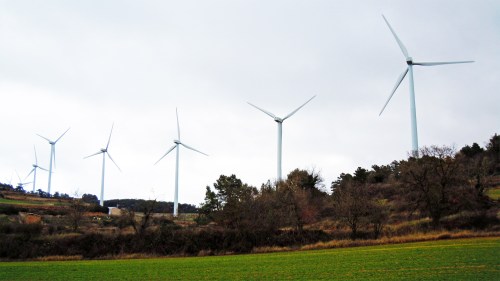
- Whilst the adoption of renewable sources of energy would undoubtedly reduce the carbon impact of digital technologies, their negative side-effects must also be taken into consideration. As noted above in Part I, unanticipated consequences, as well as those that are clearly already known about, also need to be taken into account. Moreover, the environmental impact of digital technologies is compounded by the enabling impacts that it has for even greater demands to be placed on electricity production. For example, digital technologies are a crucial enabling element for smart motorways and self-driving electric cars. Unless electricity for these cars and communication networks is produced from renewable sources the replacement of petrol and diesel cars by electric ones will have little impact on carbon emissions. However, the shift to renewable production will lead to a very significant environmental impact through the construction of wind turbines and solar farms. A 2017 report, for example, estimated that wind farms would need to cover the whole of Scotland to power Britain’s electric cars.[xxvii] Even if this is an exaggeration, it makes the point that there is indeed an environmental cost (not least in landscape impact) of such technologies.[xxviii]. Furthermore, many of these technologies are themselves not environmentally friendly. Wind turbine blades, for example, cannot be recycled, and once they are no longer usable they are currently generally disposed of in landfill sites.
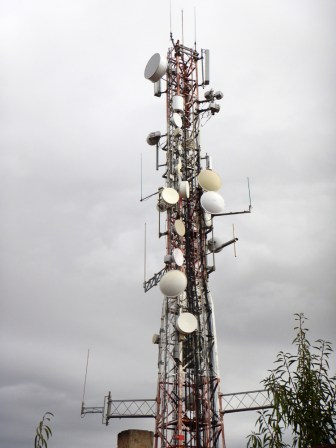 The impact of the large number of new cell towers and antennae that will be needed for 5G networks, as well as the buildings housing server farms and data centres also have a significant environmental impact. It is not just the electricity demands for cooling that matter, but the sheer size of data farms also has a significant physical impact on the environment.[xxix] The average data centre covers approximately 100,000 sq ft of ground, but the largest noted in 2018 was at Langfan in China and covered some 6.3 million sq ft (which is equivalent to the size of the Pentagon in the USA).[xxx] Furthermore, uncertainties over the health impact of new 5G networks have led to serious concerns among some scientists, as with the 5G appeal to the EU signed by a group of 268 (as of December 2019) scientists and doctors concerned about the impact of RF-EMF, especially with the higher frequency wavelengths being used in the 5G roll-out at high densities in urban areas.[xxxi] Whilst a majority of those involved in developing and installing such networks do not share these concerns, it is interesting that they have indeed gained some traction.[xxxii]
- A final very important, but frequently ignored, environmental impact is the proliferation of satellites in space. Far too often, space is seen as having no relevance for environmental matters, rather like the oceans were once considered, but in reality space pollution is of very important significance. The environmental impact of rockets that launch satellites into space has until recently scarcely been considered. As noted in a commentary in 2017, “Nobody knows the extent to which rocket launches and re-entering space debris affect the Earth’s atmosphere”.[xxxiii] The increasing problem of space congestion, though, is indeed now beginning to be taken seriously. As of January 2019, it was estimated that there have been about 8950 satellites launched into space of which around 5000 were still in space, with only 1950 still functioning.[xxxiv] The debris from satellites is potentially very hazardous, because every object of a reasonable size from a disintegrating satellite is potentially able to destroy another satellite. The European Space Agency estimates that there are 34,000 objects >10 cm, 900,000 objects <10 cm and > 1 cm, and 128 million objects <1 cm and > 1mm currently in orbit.
This second part of the trilogy of posts on digital technologies and climate change has argued that the digital technology sector is very largely based on business models that have been designed specifically to be unsustainable. Moreover, these technologies and their use have very significant impact both on the environment in general and also on the constituents of the Earth’s climate. As these technologies become used much more widely their negative impacts will increase.
In concluding Part II, it is interesting to conjecture over the extent to which this has been a deliberate process by those involved in conceptualising, designing and selling these technologies, or whether more generously it is an unintended consequence of actions by people who simply did not know what they were doing with respect to the environment. Digital technologies in many ways separate people from the physical environments in which they live. This reaches its most extreme form in Virtual Reality, but every aspect of digital technology changes human experiences of the physical world. Opening the envelope containing a letter is thus very different from opening an e-mail; receiving a digital hug is very different from receiving a physical hug from someone. I cannot help but wonder whether digital technologies, by increasingly separating us from the “real world” physical environment of which we have traditionally been a part, actually also serve to prevent us from really seeing the environmental damage that they are causing. It is as if these technologies are themselves preventing humans from understanding their environmental implications. Someone living in a their own virtual reality in a smart home in a smart city bubble, being moved around in autonomous smart vehicles when required, and communicating at a distance with everyone, will perhaps no longer mind about the despoliation of hillsides, the flooding of valleys, the carving out of canyons to feed the machines’ craving for minerals…
For the third part of this trilogy, see Digital technologies and climate change, Part III: Policy implications towards a holistic appraisal of digital technology sector
[Updated 13 July 2020]
[i] See for example, Unwin, T. (2018) ICTs and the failure of the SDGs, https://unwin.wordpress.com/2018/04/23/icts-and-the-failure-of-the-sdgs/; and Sharafat, A. and Lehr, W. (eds) ICT-Centric Economic Growth, Innovation and Job Creation, Geneva: ITU.
[ii] https://therestartproject.org/
[iii] https://therestartproject.org/the-global-footprint-of-mobiles/
[iv] See for example https://www.vox.com/the-goods/2019/7/3/18761691/right-to-repair-computers-phones-car-mechanics-apple. Although increasing legislation is beginning to have an impact, and Apple did announce a shift of emphasis in late 2019 to make repair easier – https://www.circularonline.co.uk/news/apple-announces-out-of-warranty-iphone-repair-programme/. The EU also passed significant legislation in late 2019 that emphasised the need for the “right to repair”, and included it in their Ecodesign Framework – https://ec.europa.eu/commission/presscorner/detail/en/IP_19_5895
[v] See https://unu.edu/news/news/ewaste-2014-unu-report.html
[vi] https://www.weforum.org/reports/a-new-circular-vision-for-electronics-time-for-a-global-reboot
[vii] Frazzoli, C., Orisakwe, O.E., Dragone, R. and Mantovani, A. (2010). Diagnostic health risk assessment of electronic waste on the general population in developing countries’ scenarios. Environmental Impact Assessment Review, 30: 388-399.
[viii] See for example http://www.environmentandsociety.org/arcadia/electronic-waste-guiyu-city-under-change
[ix] Note that the UN’s STEP (Solving The E-waste Problem) initiative is one attempt to address these issues at a global scale, although it is as yet having little impact.
[x] Lozano, K. (2019) Can the Internet survive Climate Change?, The New Republic, 18 Dedcemebr 2019, https://newrepublic.com/article/155993/can-internet-survive-climate-change
[xi] https://spectrum.ieee.org/energy/environment/your-phone-costs-energyeven-before-you-turn-it-on
[xii] https://spectrum.ieee.org/energy/environment/your-phone-costs-energyeven-before-you-turn-it-on
[xiii] https://www.theguardian.com/environment/2017/dec/11/tsunami-of-data-could-consume-fifth-global-electricity-by-2025; see also BBC, Why your internet habuits are not as clean as you think, https://www.bbc.com/future/article/20200305-why-your-internet-habits-are-not-as-clean-as-you-think
[xiv] For an early paper, see Carroll, A. and Heiser, G. (2010) An analysis of power consumption in a smartphone, USENIXATC’10: Proceedings of the 2010 USENIX conference on USENIX annual technical conference June 2010
[xv] https://www.theguardian.com/sustainable-business/2014/sep/10/energy-consumption-behind-smart-phone
[xvi] Jones, N. (2018) How to stop data centre from gobbling up the world’s electricity, Nature, 13 September 2018.
[xvii] An interesting alternative model is provided by Holochain, https://holochain.org/
[xviii] See the excellent work and graphics by Digiconomiost at https://digiconomist.net/bitcoin-energy-consumption
[xix] See Frenger, P. and Tano, R. (2019) A technical look at 5G energy consumption and performance, Ericsson Blog, but note that this is published by a corporation with deep vested interests in showing that impacts of 5G are not likely to be severe; see also https://www.cfr.org/blog/what-5g-means-energy and https://spectrum.ieee.org/energywise/telecom/wireless/will-increased-energy-consumption-be-the-achilles-heel-of-5g-networks
[xx] See for example https://www.digiteum.com/internet-of-things-energy-management
[xxi] Jones, H. (2018) Technology is making these rare elements among the most valuable on earth, World Economic Forum.
[xxii] See, for example, https://en.reset.org/knowledge/ecological-impact-mobile-phones, https://phys.org/news/2018-08-ways-smartphone-environment.html, and https://www.unenvironment.org/news-and-stories/story/your-phone-really-smart
[xxiii] https://www.theguardian.com/global-development/2018/oct/12/phone-misery-children-congo-cobalt-mines-drc
[xxiv] For a useful infographic, see https://climatecare.org/infographic-the-carbon-footprint-of-the-internet/; see also https://www.lovefone.co.uk/blogs/news/how-much-co2-does-it-take-to-make-a-smartphone. Recently the ITU, GeSI, GSMA and SBTi announced on 27 February 2020 a new “science-based” pathway in line with the UNFCCC Paris Agreement for the ICT industry to reduce greenhouse gas emissions by 45% by 2030, but as with so many other initiatives this focus primarily on carbon emissions, and fails to grapple with the wider environmental impact of the tech sector. See https://www.itu.int/en/mediacentre/Pages/PR04-2020-ICT-industry-to-reduce-greenhouse-gas-emissions-by-45-percent-by-2030.aspx, https://www.itu.int/ITU-T/recommendations/rec.aspx?rec=14084, and https://www.itu.int/en/mediacentre/Documents/Documents/GSMA_IP_SBT-report_WEB-SINGLE.pdf,
[xxv] See, for example, https://www.theguardian.com/commentisfree/2018/jul/17/internet-climate-carbon-footprint-data-centres ; see also https://www.dw.com/en/is-netflix-bad-for-the-environment-how-streaming-video-contributes-to-climate-change/a-49556716
[xxvi] https://www.newscientist.com/article/2209569-streaming-online-pornography-produces-as-much-co2-as-belgium/
[xxvii] https://wattsupwiththat.com/2017/10/30/16000-additional-wind-turbines-required-to-power-british-electric-car-fleet/
[xxviii] Likewise, there are many other very direct impacts on the environment. Elon Musk, for example, is reported to be planning to cut down at least 220 acres of forest in Germany by the end of March 2020, in preparation for building a large new factory to produce 500,000 new electric cars a year (The Times, “Musk taxes axe to forest as factory plans accelerate”, 13 January 2020, p.35; see also https://www.teslarati.com/tesla-forest-endangered-bats-gigafactory-4/)
[xxix] https://www.colocationamerica.com/blog/data-center-environmental-impacts
[xxx] https://www.datacenters.com/news/and-the-title-of-the-largest-data-center-in-the-world-and-largest-data-center-in
[xxxi] https://www.5gappeal.eu/
[xxxii] See https://www.bbc.co.uk/news/world-europe-48616174
[xxxiii] David, L. (2017) Spaceflight pollution, Space.com, https://www.space.com/38884-rocket-exhaust-space-junk-pollution.html
[xxxiv] European Space Agency data https://www.esa.int/Safety_Security/Space_Debris/Space_debris_by_the_numbers. For a recently reported near miss when two non-operational satellites came very close to each other (possibly within 12 m) over Pensylvania in the USA on 30 January 2020, see https://www.bbc.co.uk/news/world-us-canada-51299638. More recently still, the dramatic increase in satellite swarms as a result of constellations of small satellites being launched https://slate.com/technology/2019/12/space-satellite-constellations-spacex-starlink-junk.html, as with Elon Musk’s SpaceX programme, is now receiving further criticism from those complaining about space pollution, not least from a visual perspective in the nighths sky. See for example https://www.theverge.com/2020/3/24/21190273/spacex-starlink-satellite-internet-constellation-astronomy-coating. In January 2021 a new “record” was set when 143 satellites were launched into orbit by a single SpaceX Falcon rocket https://www.bbc.co.uk/news/science-environment-55775977.
Updated 24th January 2021







 Tim Unwin's Blog