Category Archives: Higher Education

Latest UK Higher Education Statistics

The UK’s Higher Education Statistics Agency has just published its latest data on student enrolments and qualifications obtained for the academic year 2010/11.  Key findings include:

  • just over 2.5 million people are enroled in UK Higher Education Institutions (HEIs)
  • slightly more students are doing postgraduate courses (up 2% since 2009/10), with slightly fewer doing undergraduate ones
  • UK domiciled students account for 83% of all enrolments
  • there is some considerable volatility in subject areas: for undergraduates enrolments in agriculture and related subjects increased 11% between 2009/10, whereas for architecture, building and planning, they decreased 6%; for postgraduates the greatest increase was in mathematical sciences (8%), whereas computer science numbers declined 6%.
  • 64% of students gained an upper second or first class degree; more women than men achieved such degrees (65% of full-time students received such degrees; 51% of part-time students) (see Table 6 of HESA statistics).

One of the most striking of these findings is the continual grade inflation that is taking place in higher education.  In  2006/7 only 60% of all students gained upper second or first class degrees.  Going back in time, in 2000/01 only 54% of full-time students gained such degrees, and in 1994/95 it was 49% (HESA statistics).  Such inflation is hardly surprising, given that institutions are increasingly being judged externally by this measure.  I doubt that it is improvements in the quality of teaching that have led to such results.

Typical measures that universities use to inflate such results operate both at the institutional level through the mechanisms that are used to turn marks into overall grades, but also in the ways through which marks for courses are derived.  Institutionally, the following are typical mechanisms that have been used:

  • introducing systems that ignore the worst marks achieved
  • weighting the overall portfolio of marks in ways that lead to higher overall grades
  • introducing mechanistic processes for candidates just below a threshold that automatically elevate them to the higher grade
  • reducing the amount of unseen terminal examinations, and increasing the amount of easier types of assessment at which students perform better

At the more individual level, academics are also judged by the quality of results obtained by students doing their courses, and so it is quite common to find academics who:

  • give strong hints at the subject matter that will be coming up in unseen exams
  • give substantial amounts of help to students on assignments, such as dissertations, that are meant to be independent
  • decide to be that little bit more generous at the margins, choosing to emphasise the stronger points over the weaker ones
  • restructure their courses so that they contain elements that students find it easier to do well in

It could be argued that each of these is desirable, and that we should indeed be rewarding our good students for the efforts that they put in.  The fundamental point to be noted, though, is that getting a ‘good’ degree in 2011 means something very different from getting an upper second or first even a decade ago.

2 Comments

Filed under Higher Education, Universities

ACU Session at WISE 2011: Doctorates, development and the brain drain

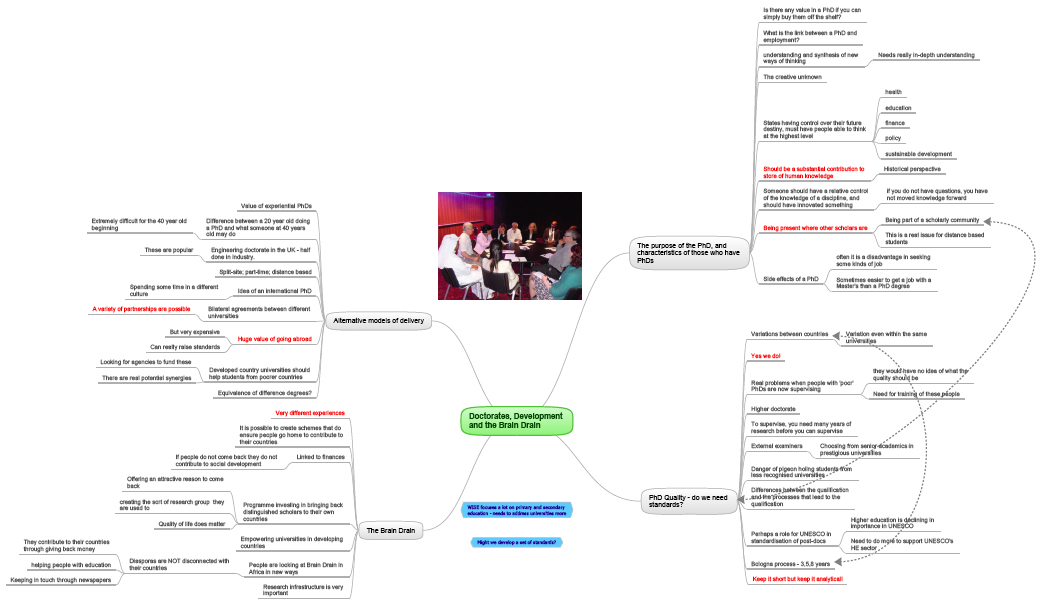
I was delighted to be able to help the Association of Commonwealth Universities run a workshop on “Doctorates, development and and brain drain” at the recent World Innovation Summit for Education (WISE) held in Doha from 1st-3rd November.  This focused on four key themes:

  • the purposes of a PhD and the characteristics of those who have PhDs
  • the quality of a PhD; do we need standards?
  • alternative modes of delivery for doctorates
  • the brain drain

Although the number of participants was small, the discussion was highly interesting, and the mind map below attempts to capture what we discussed (click WISE 2011 for a .pdf version).

Leave a comment

Filed under Commonwealth, Development, Education, Higher Education, Postgraduate supervision, Universities

Shadow Scholars, plagiarism and academic merceneries

Ages ago a friend, knowing of my interests in the extent of plagiarism in higher education, sent me a link to an article in the Chronicle of Higher Education entitled The Shadow Scholar: the man who writes your students’ papers tells his story.  In a nutshell, this tells ‘the story of how he makes a living writing papers for a custom-essay company and to describe the extent of student cheating he has observed’. Although it refers primarily to the US context, it provides a salutary tale for all those involved in helping university students to learn.  Above all, it should remind us that such practices are becoming increasingly commonplace.  In the month that followed its original publication, the report attracted 640 comments, and these are also well worth a read.

On re-reading it today, I am even more convinced that it should become required reading for academics and students alike!

Leave a comment

Filed under Education, Higher Education

On ‘retirement’…

Around 18 months ago, Royal Holloway, University of London offered a severance/early retirement deal for staff, and after much reflection I decided to apply.  My application was accepted, and I will therefore be ‘leaving’ the College in the autumn after 30 years working there – although I am delighted that I have been appointed as an Emeritus Professor, and so I will still be retaining very close links involving both teaching and research!

Many friends have asked why I have chosen to leave, and so I thought I would share my reflections here.  They say much about the state of British higher education in the 21st century. I was appointed to Bedford College back in 1981, and have many great memories of my times both there and in the merged institution of Royal Holloway and Bedford New College.  It has been a wonderful place to teach and do research, and I have had some amazing colleagues.  However, UK universities have changed so much in this period that I no longer feel that I can really achieve what I want to do within the confines of this environment.  Let me try to explain why.  I guess there are five main reasons for my decision:

  • a decline in collegiality amongst academics within universities
  • changing student attitudes to being at university
  • institutional and individual approaches to learning and teaching
  • a failure to promote Geography as the important discipline that it is
  • institutional leadership

The decline in collegiality

One of the main reasons I am leaving is quite simply because the sense of collegiality that I participated in as a young academic has been eroded to such an extent that I no longer enjoy the spirit of shared intellectual adventure that lay at the heart of university life when I began my career. Many academics are now so absorbed in advancing their own careers that they have almost no time for their colleagues or their students.  Long gone, for example, are the mid-morning and late-afternoon coffee and tea breaks when administrative, technical and academic staff would all come together to share a few minutes of each other’s company.

At the time of the merger of Bedford and Royal Holloway Colleges in the mid-1980s, I explicitly chose to live near the campus so that I could participate fully in its life – and be collegial.  Rather few people now do so. Many ‘colleagues’ live far away and seem to spend more of their working lives off campus than they do on it. Colleagues who absent themselves are not there to support the students, are not there to attend seminars, are not there to answer the inevitable minor queries, are not there to share research ideas, and are not there to support each other. What has really saddened me is the way in which some young colleagues claim to be collegial and yet their actions seem to suggest that they have no idea what the word means.

Perhaps I was foolish not to be more careerist myself, but what I loved was my research and teaching, and all that mattered was that I should earn the respect of my colleagues and students for what I did.  When I returned to Holloway in 2004 after my secondment to DFID, I therefore specifically created a ‘Collective’, to try to rekindle that mutual support for colleagues and students that I had valued so much – and still believe in.  Ultimately this has not really succeeded in the way I had hoped, in part because it runs counter to the selfish arrogance that drives so many academics today.  It also saddens me that some young academics expect me – as a professor – to be hierarchical and cannot understand that I truly believe in the communal values that lie at the heart of sharing knowledge.

As for the causes of this changed mentality, it is clear that the fragmentation of unified pay scales, the introduction of the research assessment exercise, and increased competition between departments and institutions for the ‘best’ academics have all played their part.  However, we as academics are also to blame, in that we have not stood up to these changes vehemently enough, and have insufficiently emphasised the critical importance of collegiality in our endeavours.  That having been said, I should also say without any hesitation that there are some brilliant young academics in our department, who are indeed collegial.  Their life is tough, very tough, and I wish them well in trying to retain their humanity and love for the discipline.

Student attitudes

Throughout my career, I have vacillated between being angry that many students do not work hard enough, and being sorry for them that our society has shaped them in this way.  More often than not, I have sympathised with them, and done my best to enthuse them with my love for Geography, and the crucial importance of rigorous academic enquiry. Perhaps I am retiring in part because I taught second year human geography techniques for too long!  Excessive alcoholic indulgence by some students after sports fixtures the previous day, often meant that half the class was absent for my techniques lectures on Thursday morning, and many of those that were there  seemed disinterested in participating. Small wonder that they had difficulties doing the practical classes; small wonder that many did poor dissertations.

The average number of hours that students study a week during term time in the UK is somewhere between 25 and 30. My expectation of a minimum 40 hours work a week is thus way beyond this, and I have not found a way of reconciling these figures.  I love teaching, but after 30 year of hitting my head against a brick wall, I now want to spend time teaching students who really seem to care about their learning.  Having taught at Peking University recently, where many students seem to spend more than 60 hours a week studying, I feel re-invigorated.  It is scarcely surprising that the Chinese economy is so much more vibrant than is ours in the UK.  All this having been said, we do indeed have some able, keen and enthusiastic students in our department – and I will miss them.  They are just too few in number!  It was brilliant, though, how some of them responded when I offered to teach an extra-curricula course entitled “Critical Practices: an exploration of ideas in Critical Theory and Revolutionary Practice” more than a year ago now.  This was learning and teaching how I wish I could have done it more often.  The course was completely outside the normal curriculum, counted for nothing towards their degree assessment, and was based around discussions between us all.  I enjoyed it hugely, and think that they too seemed to gain something from it.

Approaches to learning and teaching

I have always believed that universities should be about sharing ideas at the frontiers of knowledge, that such intellectual enquiry is therefore challenging, that standards of assessment should be maintained, and that it is essential to treat students as human beings if we are to encourage the critical enquiry that I value so much.  So many of these values have fallen by the wayside: in order to make courses popular they often take the form of learn and regurgitate; in some courses students are more or less told what questions to expect in the exams; students have to be treated as numbers in the name of fairness; we have to send them to ‘experts’ if they have personal issues, rather than first trying to help them ourselves; and we have devised mechanisms for ensuring that they get higher grades than they would have achieved in the past, so that out institutions climb up the various rankings in terms of results and added value! I am often seen as a harsh marker, but why should I change my expectations in a world that is moving towards mediocrity?

The amount of teaching that academics do has been vastly reduced in large part because hitting the research assessment criteria is seen as being more important.  I am probably the only member of staff in our department who gives non-assessed essays to the final year students doing my course.  Around two-thirds of the marks for most courses remain as being based on unseen exams at the end of the year, and yet we do not give students time to practise and have feedback.  My non-assessed/formative essays are seen by some students purely as being an extra burden of work, rather than as an opportunity for them to learn how to write better essays!  I believe that all undergraduates should have to write an essay a week (or produce a similar assignment in subjects where essay writing is not normal practice), and that we should mark them and provide feedback.  How else are they going to improve?

Likewise, I have always expected that undergraduate dissertations should be based on at least a month’s fieldwork.  Yet, many years ago I recall a younger colleague saying that given the pressures that students have to earn income during the vacations it was unrealistic for me to expect such high standards.  So it has increasingly become acceptable for dissertations to be based on a handful of interviews, rather than the detailed rigorous field research that I once expected.  This does not only apply at undergraduate level, but I have also recently been dismayed at the quality of several PhDs that I have examined.  Not only have I identified clear plagiarism in some, but also the amount of field research on which others have been based is totally paltry compared with what I expect from my own students.

In a different but related vein, I have always sought to entertain students for dinners and BBQs at our home, in part to get to know them better so that I can write honest references about them, but also to show that I am human, and care about them as individuals.  Yet, this behaviour is frowned upon by several of my colleagues.  I was therefore very deeply honoured that our students should nominate me successfully for an Apple for the Teacher award from our Students Union this year – this is the greatest complement that they could possibly have paid me, and is one of my most treasured achievements in my 30 year career.

The Place of Geography

I read this morning in an e-mail from our Head of Department that Geography has now dropped out of the top ten subjects in the UK in terms of the number of students studying  at A level; numbers have fallen from 32,063 to 31,226 from 2010 to 2011, a drop of 2.6% in a single year.  This is incredibly sad, and only reinforces the arguments that I made in a recent publication (The role of Geography and Geographers in policy and government departments, in Agnew, J. and Livingstone, D.N. (eds) (2011) The Sage Handbook of Geographical Knowledge, London: Sage, 271-284) about how academic geographers have largely failed to engage externally with the public, with politicians, and with schools.  I have always sought to champion the subject in schools and the wider political arena – as reflected in my early work for the Geographical Association – indeed, that was what my book The Place of Geography was explicitly intended to do!

I am also saddened at the way in which many geographers seem so unwilling to defend what to me lies at the core of our discipline: an engagement with the ways in which humans interact with the physical world, and an understanding of how we thereby construct particular places.  By building their careers increasingly on a few tiny areas of intellectual enquiry, geographers have all too often moved away from what I still see as the essence of our discipline.  I have always been fascinated by new ideas – often at the interface of disciplines – and enjoy being able to engage across many different intellectual areas.  So, having worked for 30 years, I now find myself increasingly at odds with the views being advocated by many, but by no means all, of our disciplinary leaders.  Rather than continuing to swim against the tide, I am ‘retiring’ to enable me to do the research, teaching and practical work that I believe in.  There is so much still to be done.

Institutional leadership

Finally, I decided to retire because I was disappointed in the specific institutional leadership in place at Royal Holloway at the time I took the decision.  University Vice Chancellors are a motley crew.  Some, but all too few, are outstanding.  I do not envy them the task – it is immense and complex – but Vice Chancellors and Principals have to show real leadership qualities, they must champion intellectual excellence above all else, they must be wise, they must be fair and transparent, and they must be collegial.  Quite simply, I was no longer convinced that I could achieve the things I wanted to do – especially for the ICT4D Centre – within the confines of the institution where I was.  I felt so much more valued by those outside the institution than I did within it!  At the time, I did not know that we were about to have a new and dynamic Principal, and I am certain that Holloway is on the way up again, having fallen dramatically in profile and achievement under the previous regime.

It is obviously with regrets that I am retiring from Royal Holloway, University of London. I have a huge number of very fond memories – of some amazing colleagues, and great students.   I am indeed therefore delighted to be continuing as an Emeritus Professor, and in this capacity will do all I can to support the institution that I have loved and sought to support for the past 30 years.

10 Comments

Filed under Geography, Higher Education

Back copies of journals seeking a new home …

I am seeking to dispose of back copies of the journals I have collected over the last 30 years as an academic – but cannot find anyone who might be interested in having them!  I hate to see them simply going to a shredder, but even organisations that send publications to universities without the resources to purchase them now seem to shred back issues and use the money to support online subscriptions instead.

So, if anyone knows of a good home for the following journals, please let me know:

  • Advances in Horticultural Science (since c.1990)
  • Annals of the Association of American Geographers (since c.1980)
  • Area (since c. 1970)
  • Australian Wine Research Institute Technical Review (since c.1990)
  • Children’s Geographies (since 2002)
  • Environmental Ethics (since c.1995)
  • Geographical Journal (c. 1985-2000)
  • Journal International des Science de la Vigne et du Vin (since c.1990)
  • Journal of Geography in Higher Education (since c. 1985)
  • Landscape History (since 1980)
  • Philosophy and Geography (since 2001)
  • Professional Geographer (since c.1980)
  • Third World Quarterly (since c. 1990)
  • Transactions of the Institute of British Geographers (since c.1970)
  • Treballs de la Societat Catalana de Geografia (since c. 2000)
  • Vitis (since c. 1990)

It seems a great waste to consign these journals to a skip, but unless I have requests for them by the end of September they will have to be shredded.  Please help find a home for them!

6 Comments

Filed under Development, Education, Higher Education

Graduation at Royal Holloway, University of London, 2011

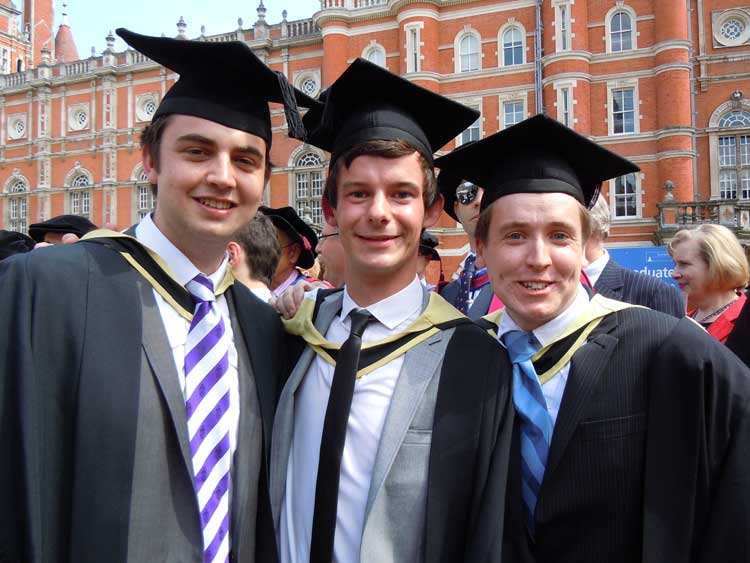
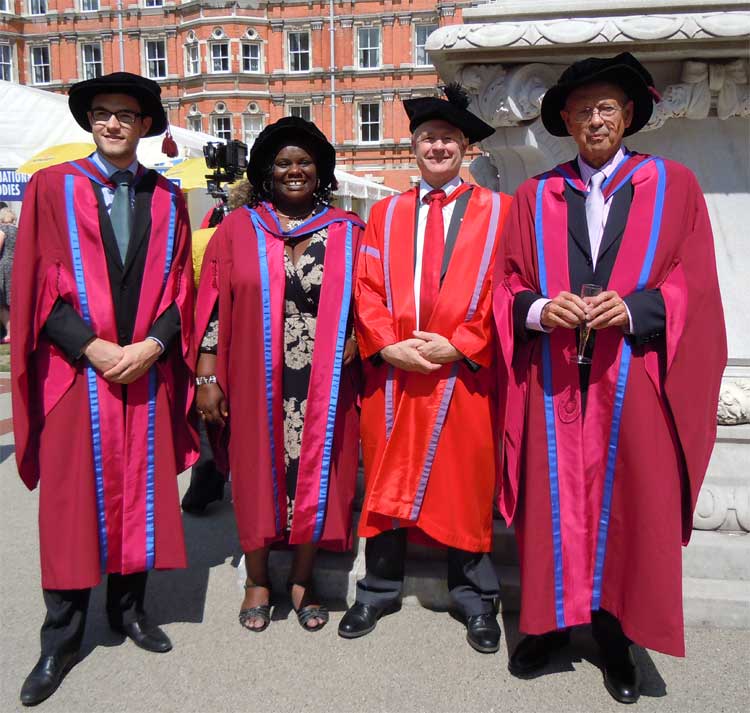
Last Friday was graduation day for Geographers at Royal Holloway, University of London. It was great to see three of my former PhD students getting their degrees.  Many congratulations to:

Likewise, it was also good to see so many of our undergraduates – particularly those doing my course on ICT4D – gaining their well deserved degrees.  Three of them – Olly Parsons, Ben Parfitt and Jamie Gregory – are spending time this summer in Uganda undertaking research in support of the Ugunja Community Resource Centre.  To follow them, check out

Many congratulations to all of our graduates!

Leave a comment

Filed under Geography, Higher Education

Reflections on Geography at Bedford College (and then Royal Holloway) in the 1980s

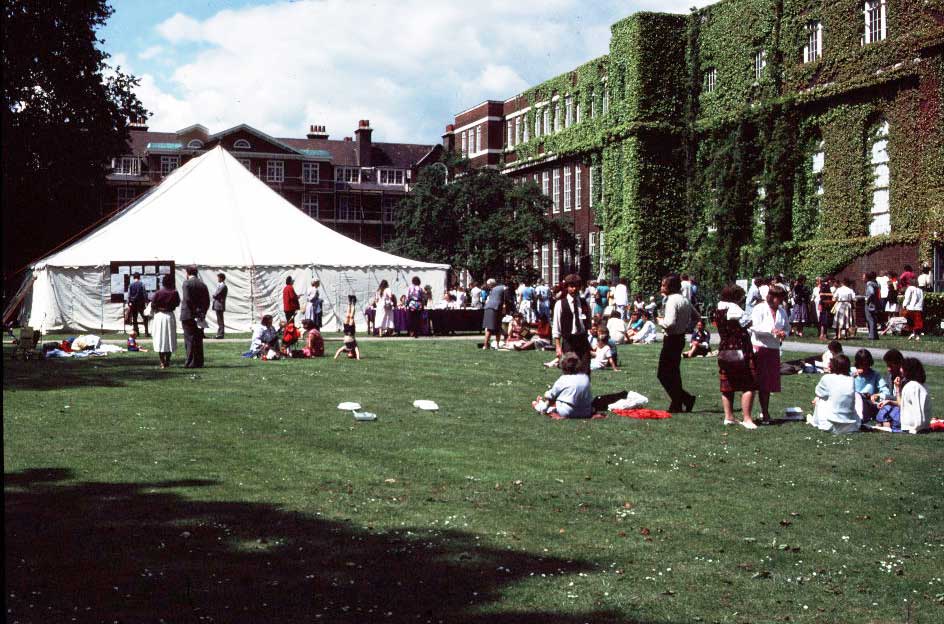
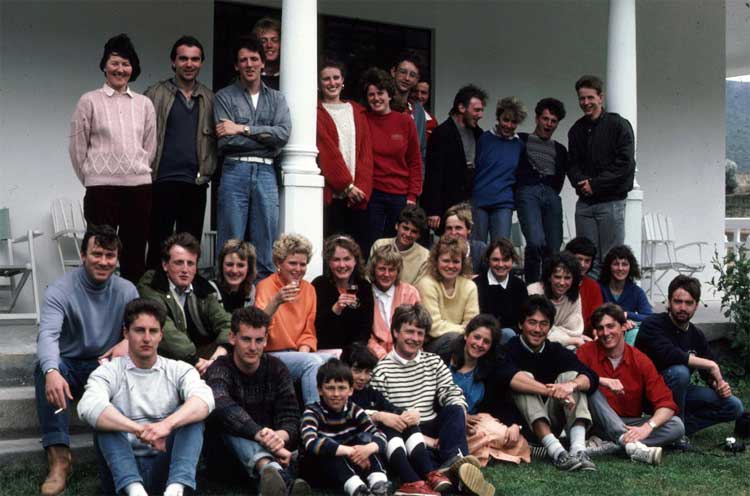
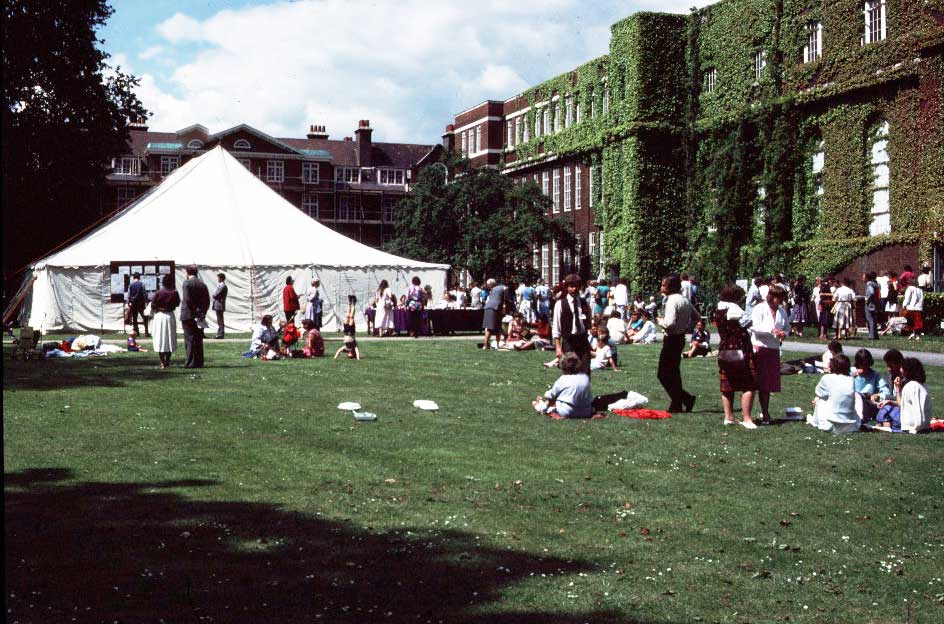
The Geography Department at Royal Holloway, University of London, is hosting an alumni event focusing on the 1980s to be held on 16th July.  As one of the last ‘surviving’ members of staff to have worked at Bedford College, I was asked by Klaus Dodds to write a few words about my recollections, so that they could be included on a poster in the Department.  Just thought that it might be interesting also to post them here, together with some imagery from 20-30 years ago!

The Department 30 years ago was so much smaller than today – fewer staff, fewer undergraduates, and fewer postgraduates.  It was a world largely without computers.  No e-mails!  One could think, and write, and teach students who were genuinely interested in learning.  It was brilliant!

I distinctly remember being appointed, and joining in 1981.  There were but a handful of jobs advertised in human geography that year.  I had been interviewed for a job at Exeter, but couldn’t hear properly what the panel chair was mumbling!  Needless to say I did not get that job!  My girlfriend was working in London, while I was still living in Durham and working at the Geography Department there.  Then this job came up at Bedford – amazingly the College where my mother had studied mathematics many years previously!  I remember being asked at the interview what it would mean for my personal life if I got the job, and responding that of course it would mean that Pam and I could get married. Imagine being asked such a thing in interviews today!

I was appointed to teach historical geography – and loved it!  I diligently used to write out my lecture notes in full – and read them to my students!!  Scarcely something that new lecturers would do now, in a world of PowerPoint!  But I did use slides on the old projector. I was very little older than the students were, and they forgave me for my nervousness.  I think my enthusiasm must have made up for a lot – medieval taxation documents, field systems, and prehistoric monuments!

One highlight was when the new electronic typewriter with a memory arrived; the precursor for word processors and personal computers.  One day, I was using it when the Departmental Secretary came in and threw me off, saying that she had something important to write.  Suppressing my fury, I left the dark room where it lived, and hit the wall outside with my fist.  My hand crumpled….  I then spent all afternoon running “The Green Revolution Game” with my students; my hand bent in pain.  Only in the early evening did I go to St Thomas’s – and of course they diagnosed a broken hand!

Then there were the great students doing the Master’s course in Third World development.  The course was led by Alan Mountjoy, and attracted bright people from all over the world – some of my favourite teaching ever; if only I was still in touch with some of them – particularly the Egyptian journalist who gave me a photograph of Jürgen Habermas.

And there was the IRA bombing in 1982.  I heard the first blast in Hyde Park whilst I was working at the RGS, and then got back to Bedford to see the debris remaining from the other blast that had taken place at the bandstand just nearby in Regent’s Park.  A sad day.

But the early 1980s was the time of mergers across London.  I became deeply involved in planning for the merger with King’s, and remember being saddened when it was announced that this had fallen through.  Going to Egham did, though, have one advantage in that we did not have to negotiate with another Geography Department already there; we could instead build our own identity from within.  On a personal level, we also decided to move from our rented flat in Kennington out to a newly built house in Englefield Green, on the Larksfield estate.  I remember this being a huge risk, since I had not been made permanent and we bought before it had definitely been confirmed that the merger would go through.

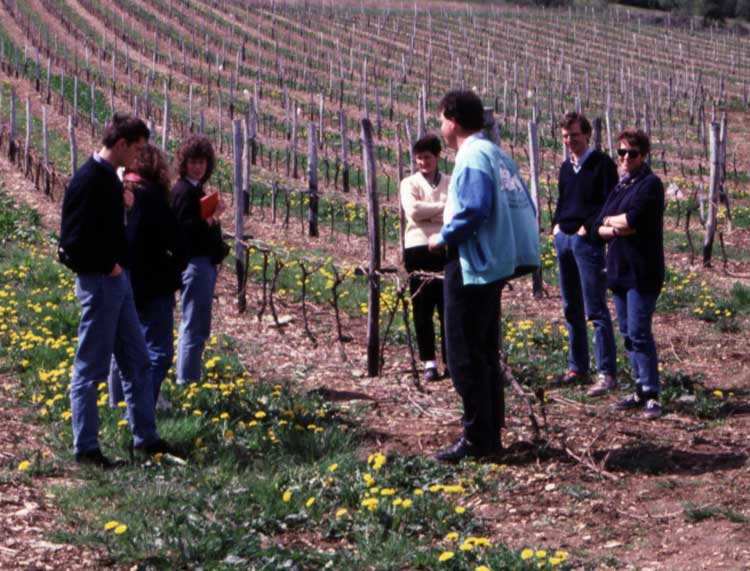
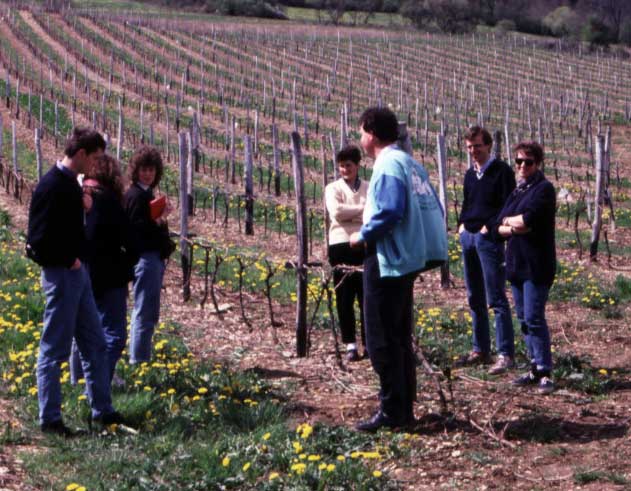
The move meant that we could reorganise our courses, and I recall working with Chris Green and others on a new teaching structure that would mean that our third year courses would become much more research oriented and also applied.  This provided the opportunity for me to launch my new course on the historical geography of viticulture and the wine trade.  At first, this was rejected by the University Geography board as being far too esoteric – but I resubmitted it again pointing out that if there was a course at SOAS on the geography of oil, surely we could teach about viticulture and wine.  After all, the wine trade has been in existence for millennia.  This course also provided an opportunity to work more closely with those in the wine trade, and highlights definitely included the wine tastings and the field trips to Burgundy and Champagne.  Imagine being allowed today to ‘race’ in minibuses across France from vineyard to vineyard and campsite to campsite.  How generous were the winemakers who shared their time and their wines with us!!

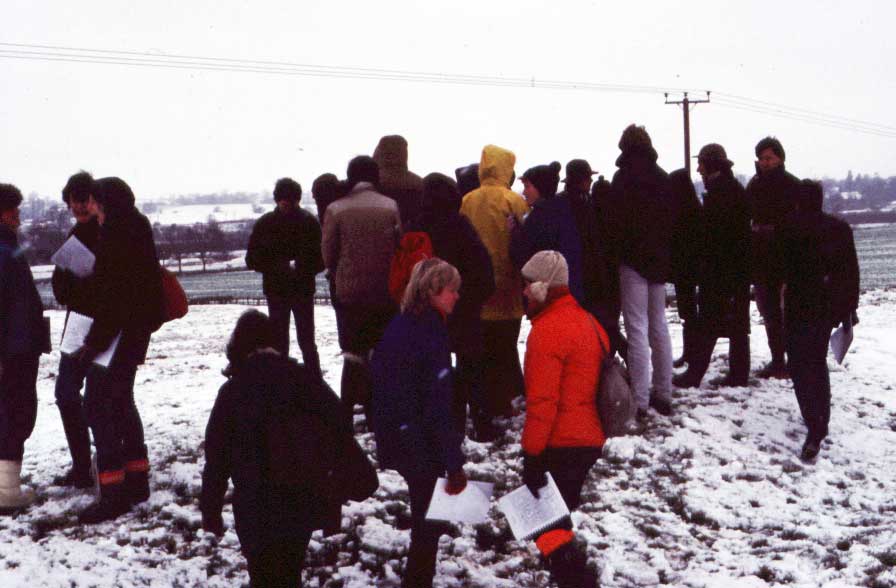
But I recall other field trips too: the day excursions to Northamptonshire and Bedfordshire for my second year students, exploring field systems and deserted medieval villages, more often than not in the snow; and then the second year trip to Portugal, again with generous hospitality from friends in the port wine trade.

There were great characters in the Department: Ron Halfhide, who became Departmental Superintendent, and was always the life and soul of the party, helping to arrange wonderful Geographical Society events; David Hilling, the ‘uncle’ figure, who cared for students (and rugby) in ways that we are no longer permitted to do; John Thornes, who as Head of Department told me that I should really make myself the specialist in one area of the discipline, such as the geography of Portugal.  John certainly taught me some lessons!  On his recommendation, I drafted two chapters of ‘the’ book on Portugal, and sent them to a publisher.  The academic referees liked them, but the publisher said that there was no market for a book on agricultural innovation in Portugal.  Never again have I written anything for a book publisher without a contract!

Above all, I remember those days as ones of amazing freedom – when we could craft new knowledge in the innocent ways we believed were right, when we could treat students as friends and not numbers, when collegiality rather than individual selfish career progression mattered.  They were good times”.

20 Comments

Filed under Geography, Higher Education, Universities

The future of the UK’s universities – a radical scenario

Earlier in the year at the ACU’s Executive Heads meeting in Hong Kong, I caused real offence to at least one participant when I argued that it made no sense at all  for 50% of the UK’s young people to study at university.  A damp bank holiday Monday gives me the opportunity to try to clarify my arguments for him – and for any others who might be interested.

First, let me make clear what I did not say.  I never said that young people should not receive training after they leave school.  I never said that people should be prevented from life-long learning.  Far from it.  All people should receive opportunities to gain the training that they  can benefit from, and  this training should be relevant and of high quality.  What I do not believe is that such training is best done at universities.  My argument is built on four main foundations:

  • the role of the university
  • the relationship between universities and economic growth
  • the abilities and interests of young people in the UK, and
  • the need to provide outstanding technical and professional education for all young people who want to gain such skills in the UK.

What should universities be for?

I believe passionately that universities have a central place in any civilised society.  Free and independent universities, funded by the state, play a crucial role in shaping the meaning and identity of our societies.  They are the places where creativity and innovation  happen, where the boundaries of knowledge are constantly moved forward, where questions that were once unthought are now uttered and answered.  They are the places where many of our brightest and most articulate scholars and scientists should want to work, and where young people who want to commit themselves to crafting new knowledges should indeed be able to learn from them.  Universities are places funded by those who believe that it is good to support a group of people – academics – whose role it is to reflect on the society of which they are a part, to understand the reasons why it is not functioning as it might, and ultimately to make that society a better one in which everyone can live richer lives.

Over the last 20 years, though, successive governments have overseen the destruction of such a vision.  Increased regulation and control of research has helped to extinguish much innovative thinking, and the flame of learning has been quenched by an increasingly regulated teaching environment. All too often claims that universities are elitist have led to a destruction of excellence, caused by a focus on  lowest common denominators. What saddens me hugely is that so many academics have been complicit in this agenda, fearful over their own jobs and the future of the institutions in which they work.  Let me make one thing absolutely clear.  Universities should not be where large numbers of students are taught to accept and regurgitate accepted truths – be they about the nature of our economy, or about the skills needed to become better managers.  Instead, they should be places where those who want to study hard, to grapple with complex and difficult ideas, to dream as yet undreamt dreams, and to change the ways in which we understand the world in which we live, can indeed do so.  They are not places where students should necessarily be taught; rather, they are places where ‘students’ have the opportunity to learn from the most brilliant minds in our society. Incidentally, I also think that this process needs time, and that a three year degree is probably about right for ideas to develop and mature to a sufficient level for someone to be worthy of a university degree.

The fundamental problem is that not many people are actually able to do this, and even fewer want to do so.  Many students seem simply to want to gain skills that will enable them to get a reasonable job, earn a satisfactory income, and live a comfortable life.  The provision of skills training for such a life is something entirely different from gaining the critical stance to knowledge that I believe a university should be all about.

Universities and economic growth

A dangerous myth has grown up in recent years that claims that having large numbers of young people trained in universities is somehow good for economic growth.  Building on this myth, Tony Blair’s Labour Party conference statement in 2000 said that he expected 50% of people in the UK to have benefited from higher education by the time they are 30. However, note the blurring of vocabulary, and the fundamentally important difference between ‘universities’ and ‘higher education’.  With the end of the distinction in the UK between universities and polytechnics in 1992, all institutions became merged into a general higher education sector and most chose to use the word university to describe themselves.  Universities and higher education in the UK became synonymous.

The trouble is that there is actually rather little evidence that having 50% of 30 year olds with a degree is necessarily good for a country’s economic growth.  Likewise, despite claims that those with degrees will be able to earn more during their lifetimes than those without, there is likewise very little evidence that having a degree will necessarily mean that all students will gain high paying jobs.  As many students graduating this summer are finding out, there simply is not  enough graduate employment  around for them all to find the sort of jobs that they had been led to believe they should get. As the BBC reported earlier this year, “One in five UK university leavers who entered the labour market failed to find a job last year, as graduate unemployment reached its highest level since 1995, government figures show”.

There is indeed a broad correlation between GDP per capita and the percentage of people in a country who have studied at a university.  However, the mere existence of such a correlation does not impute causality.  Much more research is needed on the precise trajectories of the relationships between economic growth and participation in universities in different countries.  While it is intuitive to think that having a certain number of people trained in universities will indeed contribute to the well being of a country, there is absolutely nothing intuitive about saying that having 50% participation rates will necessarily increase economic growth.  Indeed, the evidence would seem to suggest instead that the surplus created by having a higher GDP per capita actually enables more people to go to university.  Thus, above a certain level, it is probably GDP per capita that influences university participation rather than the other way round.

Moreover, some of the most thriving economies are actually those that have a clear distinction between technical higher education and traditional universities. In Germany, for example, substantial numbers of young people on leaving school go to a Berufsschule where they combine further academic study with  apprenticeships, whilst many others choose to attend Technische Hochschulen where they are trained for specific careers rather than entering more traditional universities.  Is it surprising that Germany has much higher levels of technical professional expertise than does the UK?

Abilities and interests of young people in the UK

It is my contention that many students in the UK choose to go to university as a lifestyle choice rather than with any real intent to move the boundaries of knowledge forward.  It is the expected thing to do.  They have been told that they will earn more if they have a university degree.  There are very few jobs available for young people in any case, and so why not spend three years having fun at university?  Whether apologists for the health of UK universities like to claim otherwise, this is the harsh reality of UK student choice today.  About the only positive thing about the introduction of yet higher fees is that it is is likely to make many students who would be much better off  not  studying at universities think again about so doing.

In a recent study, the Higher Education Policy Institute ( Figure 8 ) thus notes that some 80,000 university entrants in 2010 had between 1 and 240 UCAS tariff points (240 is equivalent to three Cs at A level).  I contend that most students with below 3 Cs at A level have not proven that they have the intellectual apparatus to push the boundaries of knowledge forward, nor do many of them really have the inclination to do so. Of course there are exceptions to this, and we need to ensure that those who are truly able to contribute to and benefit from university, but do poorly at A levels or wish to enter through other routes, can indeed do so.  However, my fundamental point is that universities (as defined above) are not the right places for such students to gain post-secondary learning opportunities.  We need an alternative solution to give them the skills that they need, and we must stop pretending that universities are the place to do this.  For too long there has been an intellectual elitism that suggests somehow that an ‘academic’ degree is better than a ‘technical’ one.

It is therefore scarcely surprising that many students studying at UK universities are not really inspired by their courses, and choose to spend their time doing other things.  However, the extent of this is scandalous. There are many estimates for the average number of hours students in UK universities actually spend studying, but most lie within the range of 25-30 hours a week in term time.  One of the most reliable and recent surveys, by the Centre of Higher Education Research and Information at the Open University in 2009, thus concludes that “students in the UK spent an average of about 30 hours a week on studying, the least amount of time compared to their counterparts in other European countries”.  Interestingly a couple of years ago some of my students did a survey of the amount of time that their peers spent in the bars on campus, and the average came out at about 25 hours a week!  Perhaps their friends were exceptional, but I’m not so sure.

I expect students to study a minimum of 40 hours a week, and am seen by many colleagues as expecting too much.  Typical comments are “You cannot expect this – they have to spend time earning money to pay for their degrees”, or “But university is about far more than just studying”, or “Your expectations are old fashioned; get with the times”.  Sorry, this is simply not acceptable.  I have recently returned from an amazing and intellectually stimulating time at Peking University (Beida), and you should see how hard students there work!  The university day starts at 08.00 and finishes at 18.00, albeit with two hours ‘off’ for lunch.  Most students then spend several hours studying every night.  There is a thirst to learn, to explore ideas, to think afresh.  This is such a contrast to life on many British campuses.  It is hardly surprising that China is the vibrant economy that it is.  If we want to compete on a global stage, we need completely to rethink what students should be expected to do at university in the UK.

Providing a valuable technical and professional education

It is not easy to estimate how many students are really interested in pursuing knowledge critically in the sense discussed above.  However, to be generous, let me suggest that perhaps 25% of the school leaving population have the aptitude and an interest in so doing.  To cater for them we therefore need perhaps half of the universities that we currently have in the UK.  If pushed to an extreme, I would say that universities should actually only provide places for about 10% of school leavers!

This means that we need a complete reorganisation of post-secondary education, to provide people with the skills necessary to gain useful employment and contribute to the economic growth beloved of our political and industrial leaders.  Because we persist in wanting to maintain our universities, this is a subject that is almost never raised.  Somehow, it is believed that universities as they are currently structured will provide the skills necessary to revitalise our economy.  What nonsense.  Over and over again we hear from industrial leaders how poorly equipped graduates are for the workplace.  A recent survey by AP Business Contacts in March 2011 thus reports that employers found graduates lacking in five main areas:

  • Lack of business acumen, commercial understanding and preparation for the ‘leap’ from the academic to commercial environment
  • Lack of personal and interpersonal skills, including communication, emotional intelligence and organisational skill
  • Poor English language skills, ranging from a difficulty in making the transition from academic writing to business writing, to basic inadequacies in grammar and spelling
  • Attitudinal issues, including the unrealistic expectations of their role and inflated views of their capability early on
  • Specialist skills needed for specific jobs e.g. engineering, computer science

This is indeed a damning indictment, and those in higher education need to wake up and do something about it.

So, instead of universities, I have long believed that we need to introduce a completely new style of institution, perhaps called academies (although this term has been captured by those wishing to create a new kind of secondary institution), that are specifically designed to provide training for, and qualifications in, the skills required to gain the sorts of jobs that those with below 2 BBs at A level can realistically consider applying for.  Perhaps such entities could be distributed regionally, with one of each type in eight different regions of the country. Where there are particular regional specialisms, there could be concentrations of relevant ‘academies’.  Ideally, these institutions would be set up in partnership with employers, and have embedded within them apprenticeships or placements.  Typical of the sorts of institution I have in mind would be academies for multimedia design, for plumbing, for dance, for football, for horticulture, for engineering technicians, for photographers, for metal working production fitters, for line repairers and cable jointers, for chefs… (many of these, of course, fall within the government’s Tier 2 Shortage Occupation List).  These courses could be of variable duration, and most would not need to be longer than two years of full time study.  They would present a far cheaper solution than universities, and would provide learners with valuable skills in the employment market. Qualifications from these academies should be seen as being far more valuable than literally ‘use-less’ university degrees.  However, we still need the universities to serve as our places of critical reflection and innovation.  Much of what universities would do would indeed have little practical value – but that is in part what being civilised is all about.

There are probably far too many vested interests in the present system for such a radical scenario to be accepted.  Not least, too many Vice Chancellors and academics are overly eager to hold on to their precious elite institutions.  Isn’t it ironic that breaking the binary divide between polytechnics and universities was meant to do just that, and to get rid of elitism.  How sad that ultimately it has meant that so many of our universities have become so third-rate in terms of global competitiveness, and that they continue to fail our young people in terms of giving them either the vision or the skills to craft a new future that is better than the one we have left them.  Let us not be blinded by the debate over how to fund a moribund higher education system that is over-bloated and suffering from gout.  Instead, let us grasp this moment, and use it for a radical and visionary transformation of higher education in the interests of the next generation of people whose task it will be to sort out the mess we have left them!

2 Comments

Filed under Higher Education, UK, Universities

北京大學 – Life on Peking University Campus

I have been here for 10 days – amazing how quickly the time has flown by.  Given how tired I am, though, I guess it has been time very well spent!  Life – both intellectual and quotidian – is intense.  The campus itself is a great place to work, and the buildings and lake on the northern part of the campus are lovely places to walk in the early evenings to relax. It is fascinating being on campus, and very much living surrounded by the students.  Reflecting on my time here so far, the following spring to mind:

  • spring is advancing – blossom buds were just opening on a tree as I walked to work this morning
  • good to see somewhere else that matches my own usual ‘office’ day from 8 in the morning until six in the evening (although they do have a two hour lunch break)!
  • walking across campus to work in the morning, students and bicycles are enthusiastically everywhere- long before their peers would even be awake on the Holloway campus back home!
  • the first thing to be done on getting into the office is to fill one’s hot water carrier (thermos equivalent) from the tank and then make a cup of green tea – which is subsequently refreshed throughout the day
  • the intellectual vitality and curiosity – amongst students and staff – is so refreshing! UK students – at least many with whom I come into contact – have much to learn from the commitment and dedication of their peers here.
  • yesterday’s session with ‘my’ group of Master’s students was on research design – and it was great to explore aspects of Habermas’s work with them, and briefly summarise my critique of grounded theory.  They are so knowledgeable about much existing European social and educational theory!  It’s a real pleasure to work with them – and my concerns that my participatory ‘teaching’ style might not be acceptable were certainly ill-founded.
  • much exciting research is being done at the Graduate School of Education – and I am having really useful (if a bit exhausting) discussions with colleagues about everything from designing online surveys, to the use of mobiles for schools and parents to communicate, to the government’s plans to have interactive whiteboards in every classroom!
  • the IT services are great – thanks to the IT Service@Peking University.  It is brilliant to have wireless access in my office and ethernet in our hotel room.  Mind you, I do wish that I did not have so many e-mails from my other lives that need to be answered!
  • The diversity of places to buy food is overwhelming – there are just so many, and such a diversity of different tastes and textures
  • I even bought a very palatable bottle of Great Wall Cabernet Sauvignon on campus last night for RMB 34 (about £3.50) – the first wine to have passed my lips since arriving!

The photos below give just a flavour of the diversity and intensity of life here.  Thanks to all those who have made Pam and me feel so welcome here at Beida!

This slideshow requires JavaScript.

Leave a comment

Filed under China, Higher Education, Photographs

Speech at the launch of the British Academy’s Working with Africa Report

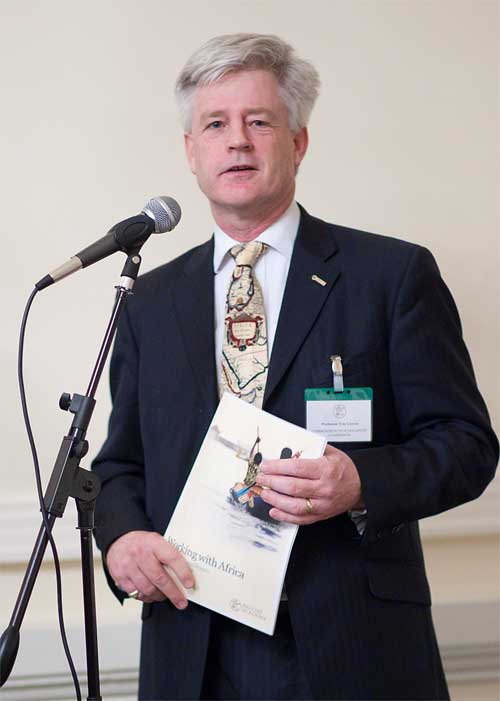
Following Professor Graham Furniss’s opening remarks, I was invited to speak in my role as Chair of the Commonwealth Scholarship Commission in the UK at the launch of the British Academy’s new report entitled “Working with Africa: Human and Social Science Research in Action” on 3rd March 2011.  My  short speech outlined the importance of the British Academy’s funding programmes, the difficulties facing African universities and academics, and the ways through which the Commonwealth Scholarship Commission (CSC) is seeking to support them in partnership with like-minded organisations.

I began by thanking  Graham Furniss, not only for his work at the British Academy in driving forward many of their African initiatives, but also for joining the CSC as a new Commissioner.  I then emphasised the quality of the research featured in Working with Africa and thoroughly recommended it to the audience as a good read.  I highlighted in particular the value of the British Academy’s past small grants programme, noting that small amounts of funding can go a long way in supporting outstanding and innovative research in the humanities and social sciences.  This is particularly true for UK researchers near the beginnings of their careers, but it is also very important for establishing networks and partnerships as exemplified by the Academy’s support for research in Africa.

Despite such funding, I emphasised the many challenges faced by African researchers, and the very difficult financial, infrastructural and capacity issues that African universities had to overcome.  I argued  that years of global emphasis on primary education in Africa had left the higher education sector in a very diminished state.  I also made the point that whilst much international emphasis is placed on support for scientific research designed to reduce poverty, research in the social sciences and humanities is at least as, if not more, important.  Such research helps develop understandings of critical issues concerned with governance, social equality, the law, cultural diversity and economic change.

Finally, I highlighted the critical role of the Commonwealth Scholarship Commission in supporting research and professional development in Africa.  The last decade has seen a transformation in the Commission’s activities, so that far from being a traditional awarder of basic scholarships, it now provides seven different kinds of award, including distance-based studentships as well as professional and academic fellowships.  Moreover, evidence from the CSC’s monitoring and evaluation programme clearly indicates the value that these have in terms of development impact.  The Commission is delighted that it continues to have the strong support of the UK government, and that DFID will be providing some £20 million a year towards its programme of awards in developing countries in the 2011-15 period.  To be effective, though, it is important that we work together in partnership.  I concluded by reiterating my thanks to the British Academy and also emphasising the need for the Commission and the Academy to work closely together in the future to achieve our shared objectives of enhancing scholarship in African universities.

Leave a comment

Filed under Africa, Higher Education, Universities