Category Archives: Higher Education

Last day in Nerja – riding above Frigiliana

The second day of independent student projects once again saw staff serving as taxi drivers.  However, it did also provide a brief moment for a participatory experience of  local tourist provision as two of us explored Frigiliana on horseback.  Much, much later the partying began.

Thanks to Don Thompson for organising another inspiring field course – and to all the students who made it so worth while.

This slideshow requires JavaScript.

Leave a comment

Filed under Geography, Higher Education, Photographs

Day 5 – taxi service and the Río de la Miel rally

On the last two days of the field course, students work in groups on their own research projects exploring aspects of the geography of the Nerja region – ranging from studies of Quaternary deposits to the architectural identity of villages transformed by tourism.  So, for much of the day I became a taxi driver, dropping off students measuring river morphology in the Chillar valley and others interviewing tourists and farmers in the picturesque village of Frigiliana.  The day ended, though, with experiencing the unique rally environment of the upper Río de la Miel valley (see video),  and then clambering up into the clouds to see the remains of the old fortress of Los Castillejos.  That was before the night began!

This slideshow requires JavaScript.

Leave a comment

Filed under Geography, Higher Education, Photographs

Andalucia Day 4 – tourism and argiculture in Frigiliana and Maro

The fourth day of our undergraduate field course based around Nerja saw us exploring the tensions between agriculture and tourist expansion in the villages of Maro and Frigiliana.  It was interesting to see how much change has taken place over the last few years, with considerable expansion in the amount of holiday accommodation, accompanied by some evidence of agricultural decline.  Yet, in part, the success of tourism is based very much on the landscapes created by a vibrant agricultural sector.

This slideshow requires JavaScript.

Leave a comment

Filed under Higher Education, Photographs

Andalucia Field Course Day 3 – Valle Tropical

The third day of our undergraduate field course in Andalucia took us to the villages of Otivar and Jete in the Valle Tropical to the north of Almunécar.  It provided a vivid reminder that geography is about all of the senses:

  • sights: the mountains, valleys, diversity of crops (from chirimoyas and bananas to vines and beans), tourist apartments, hang gliders…
  • sounds: birds, goats, dogs, children at school, cars driving along the motorway cutting across the valley…
  • tastes: the local wine, solomillo de cerdo (in the great Buena Vista restaurant in Otivar), asparagus in vegetable broth with bits of ham
  • smells: wild lavender and fennel; burning rubbish…
  • touch: steering wheels, the roughness of the schist and avocado skins

Thanks Mike and Alex

This slideshow requires JavaScript.

Leave a comment

Filed under Higher Education, Photographs, Restaurants

Day 2 Nerja

The second day of our urban exploration of Nerja led by Alasdair Pinkerton and Sara Fregonese – traditional architectures, urban origins, and cultural understandings of place…

This slideshow requires JavaScript.

Leave a comment

Filed under Higher Education, Photographs

Experiencing Nerja – Day 1

The Geography Department at Royal Holloway, University of London, has been taking first year students to the Andalucian town of Nerja and its surroundings since the late 1990s.  Below are just a few photos from the first day exemplifying

  • that geography is about understanding the human interactions with the physical environment that shape places, and
  • field trips should be about working hard and playing hard!

Video of panorama from Balcon de Europa

This slideshow requires JavaScript.

2 Comments

Filed under Higher Education, Photographs

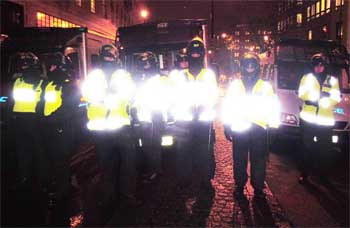
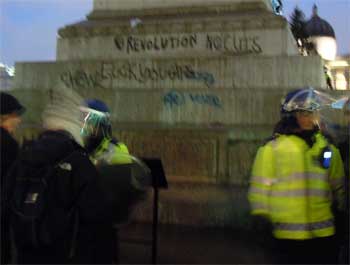
‘Student’ protests and political process in the UK

Being at the rally in Trafalgar Square today, supposedly against the proposed cuts in higher education, made me reflect on several aspects of the contemporary political process in the UK:

  • First, it is great to see so many UK students for once standing up for something that they see as being a cause worth fighting.  For far too long, many students here, unlike some of their peers elsewhere, seem to have been apathetic and lazy, unwilling to engage in any form of radical political protest, with the majority preferring instead to enjoy the good life associated with undertaking a minimal amount of academic work and a maximum amount of partying.  There is an irony here, though, as a young person on the train sitting next to me on the way home said “They are only looking after their own interests, in’t they. They can afford to!”
  • To gain groundswell political support, it is essential to have a simple message that people can sign up to – even if their own various interpretations of that message are different.  It is easy to unite people around a simple theme of complaining against ‘cuts’ that will affect them, but this hides the complexities surrounding the restructuring of UK universities and higher education.
  • At the heart of today’s protests were people intent on challenging the police – seeking to provoke them into violent retaliation.  At least whilst I was there, it was remarkable how calm the police remained against what many of them must have seen as being unprovoked and unfair abuse.  What struck me most about this was that many of those hurling the abuse chose to hide their identities through masks and hooded clothing, whilst individual police officers were fully identifiable by their ‘numbers’.  I do not want to be seen as an apologist for the police, and of course there have been cases where individual police officers have over-stepped the mark, but there is a real irony here in that protestors in the UK are indeed able to protest – peacefully – because, in general, the police have tried to be even handed in maintaining order and permitting people of all political persuasions to express an opinion.
  • I was amazed at how little anyone in the crowd seemed really to care about what, to me, matters most, the destruction of university based research excellence in the UK!  I have written at length elsewhere about this, but the protests convinced me even more of the importance of differentiating between ‘universities’ and higher education.  We need fundamentally to restructure UK higher education, and this should involve a very dramatic reduction in the number of students going to ‘universities’.  Instead, we should provide high quality and appropriate training and ‘education’, to fit all young people for the sorts of employment that they will subsequently enter.  Let’s create outstanding opportunities for young people to gain the skills and education that they need – but let’s not pretend that the institutions in which this takes place are universities.
  • And yes, of course, universities should be free for those able to benefit from the research-led opportunities that they provide, and for students who are committed to exploring the boundaries of knowledge diligently, rigorously and with enthusiasm!
  • Finally, I find it amazing that according to the Guardian, Vince Cable, “the cabinet minister in charge of tuition fees, said today he was prepared to abstain in a key vote on the government’s policy if that was what fellow Liberal Democrat MPs decided to do as a group. The business secretary said he was prepared to take the unprecedented step of not backing his own proposals for the sake of party unity”. How can the Secretary of State responsible for the introduction of increased tuition fees not vote in favour of them?  He should surely resign forthwith if that really is his view.

Leave a comment

Filed under Higher Education, Photographs, UK, Universities

Reflections on Open Educational Quality Initiative discussions

The Open Educational Quality Initiative’s (OPAL) workshop at UNESCO in Paris on 8th and 9th November offered a valuable opportunity to explore a range of issues relating to how we can build on Open Educational Resources to encourage Open Educational Practices.

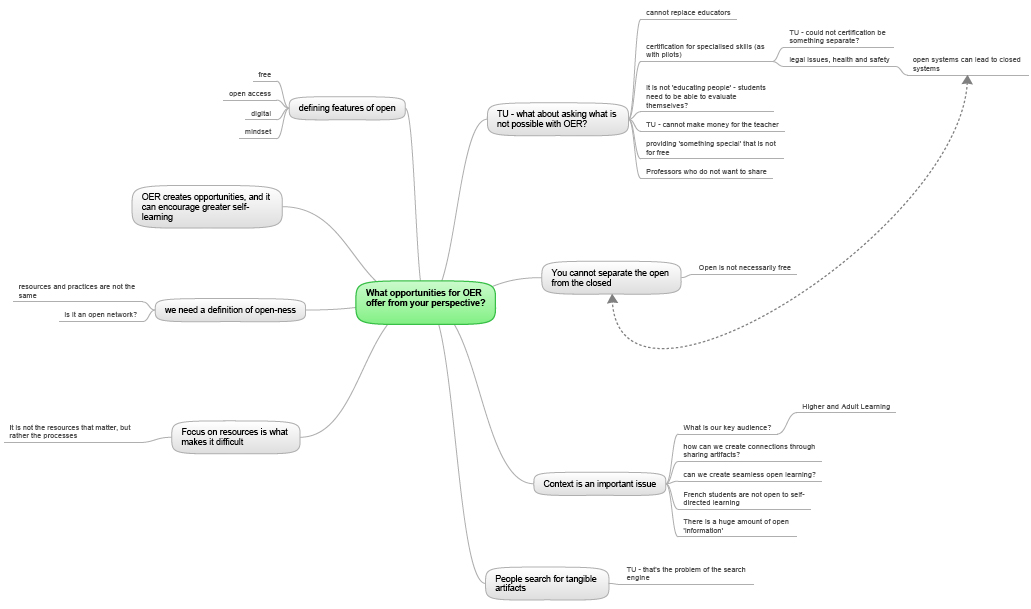
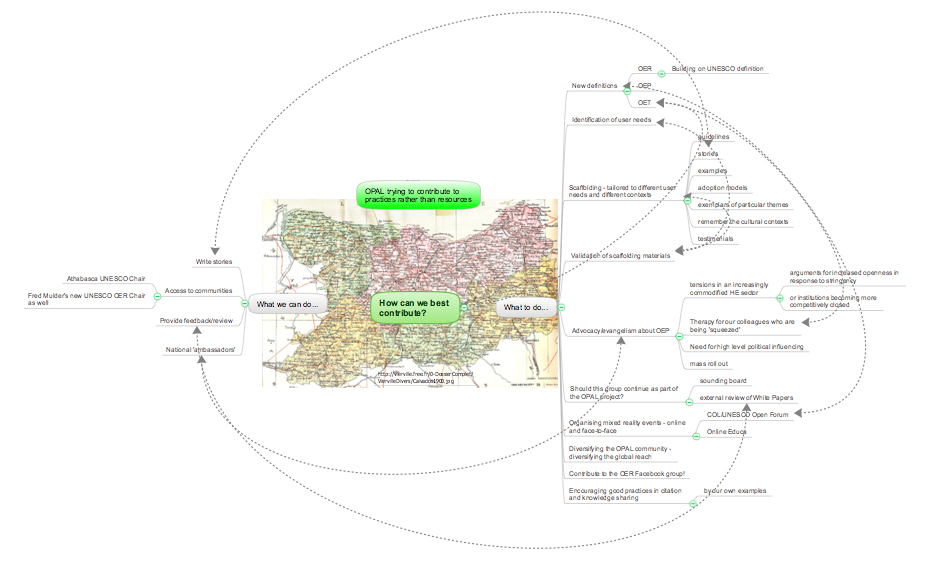
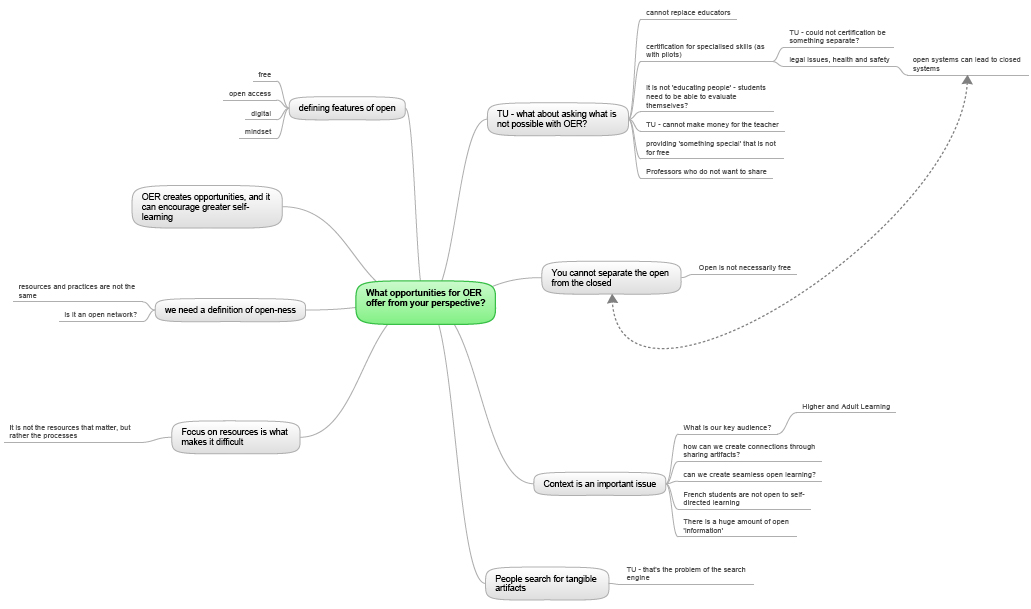
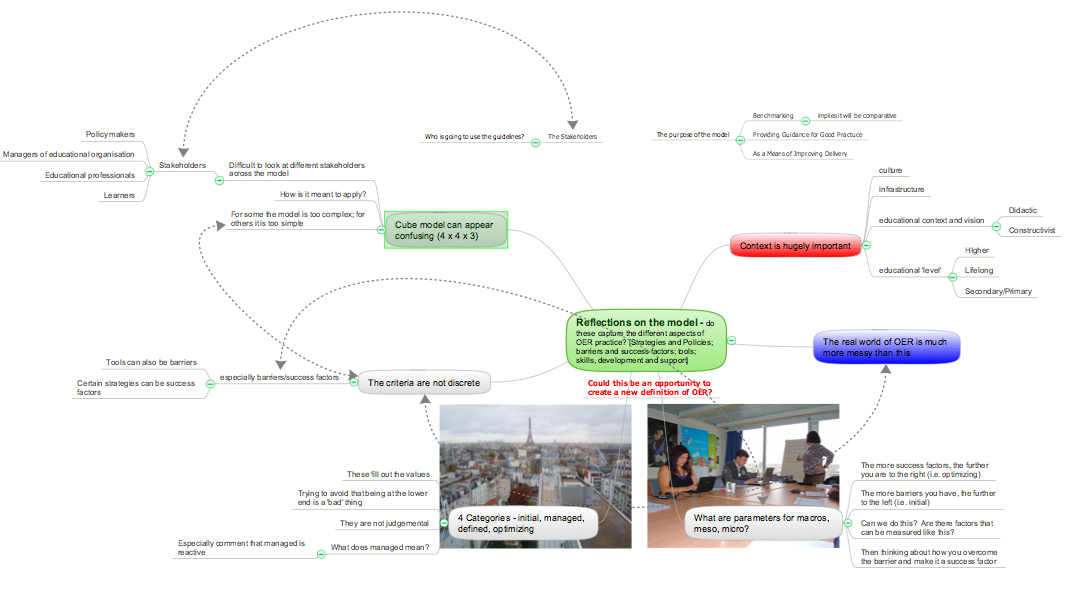
Below are the mind maps I constructed from our discussions on the following themes (click on the image to get higher resolution and larger versions!). Thanks to everyone who contributed to shaping my thoughts in these ways.

What are the main opportunities offered by Open Educational Resources?


What are the key challenges for preventing the implementation of the OPAL vision?


Reflections on the OPAL model – does it capture the different aspects of OER practices?


How can we best contribute?

Thanks to everyone who put this interesting gathering together – especially Ulf and Gráinne. Everything can be followed up on the OPAL site and its Cloudworks environment.

1 Comment

Filed under Higher Education, ICT4D

University students cheating – who is to blame?

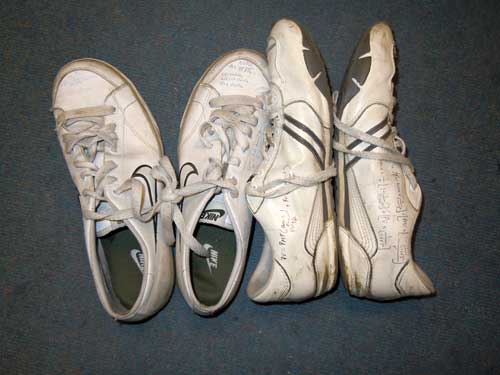
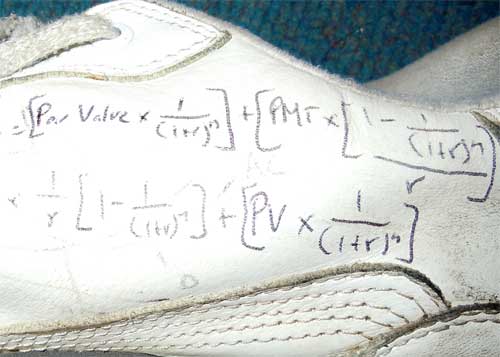
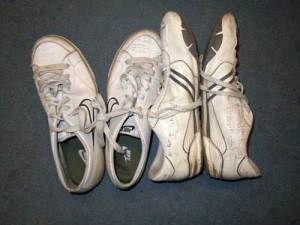
Some weeks ago, soon after exams were over, a friend brought me a couple of pairs of expensive sports shoes that she had found in a skip on campus, and asked what I thought about them.  As these picture show, written all across them were formulae that had clearly been put there to ‘assist’ their owner, or to put it more simply to help them cheat.

I have seen numerous forms of cheating before, but this was a first for me – and I would have thought that it was highly risky for the perpetrator!  Invigilation in exams has become ever more rigorous, and we are regularly sent lists of things to watch out for.  I recall on one occasion even being told  as an invigilator to be aware in case students wearing short skirts had written answers to questions on their thighs.  How we were meant to investigate this, I was never told.
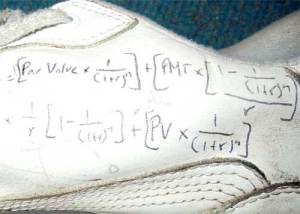
Why, then, is cheating so rife?  I guess, in large part it is because of the increasing credentialism and pressure that is put on students to learn and regurgitate, rather than actually thinking for themselves.  If questions in exams were primarily designed to explore how students thought, rather than on what they could remember (although the two are obviously closely related), then there would be much less benefit in trying to cheat.  I am also sure that cheating in part derives from the fact that many students have to spend much of their time earning an income to cover the costs of fees, accommodation and maintenance, and therefore are unable to acquire the level of knowledge that we expect from them when it comes to exams.  Some might even be lazy, and simply cheat because they prefer to do that, with all the associated excitement of being caught, than actually doing the exciting intellectual work required in the first place.

In all instances, though, this is such a waste!  Students should surely go to universities because they want to learn, to think for themselves, and to develop understandings that will help them influence the future for the better.  No amount of cheating, regurgitating accepted truths will ever help achieve this.

The scale of cheating across universities is immense: in 2006, the Daily Mail reported that 90% of students cheat when writing essays; in 2008, the Guardian reported some 9000 cases of plagiarism across 100 universities in the UK under the heading ‘cheating rife among university students’; and the Canadian publication Macleans recently commented that ‘With more than 50 per cent of students cheating, university degrees are losing their value’.

Plagiarism software has gone some way to prevent plagiarism in the writing of course assessed essays, but this does not avoid cases where a student pays someone else to create an entirely new essay for them – which happens far more frequently than one might expect! There are also numerous websites which claim to provide a service that will not be picked up by the most sophisticated plagiarism checking software.  It is ironic that one of the most important reasons why course-assessed work was introduced was that it was thought to be less stressful for students, and that they would therefore do better in it than in unseen terminal exams.  Perhaps, because of so many abuses, it would be fairer to all if we just went back to such unseen tests – although I guess this would put many companies producing the plagiarism checking software out of business!

This is all just so sad, and reflects once again the commodification of knowledge that I have railed about so much in the past.  Students should want to go to university to learn to think for themselves, and not just to repeat what they are expected to remember.  Cheating is a sign both that we have accepted the wrong people into university, but also that we have failed to inspire them to think afresh.  But then again, if universities have become just higher education institutions, teaching people to learn and regurgitate accepted facts, and if that is what society wants, then I suppose we just have to accept cheating as being central to modern life.

Just think, we could do some DNA testing on the shoes, sample all graduates, and identify who used them.  I wonder what degree they actually finished up with?
Leave a comment

Filed under Higher Education, Universities

Towards a free university

I have generally been highly critical of plans by successive UK governments to commodify higher education and create a free market in university degrees that will require students to pay fees of well over £6000 for their degrees.  The review of higher education chaired by Lord Browne published on 12th October thus commented that “We do not in our proposals include a cap on what institutions can charge for the costs of learning. There is no robust way of identifying the right maximum level of investment that there should be in higher education. A cap also distorts charging by institutions” (p.37).  Under these proposals, universities would be able to receive all of the money for charges of up to £6,000 and then pay a levy on the amounts that they charge above this.

So, how feasible might it be for universities in the UK not to charge students fees for the learning that they receive?  The standard reaction amongst most British vice chancellors to the possibility of increasing fees has been one of relief and welcome as they see it as the only way to counter the decline in income that they have faced in recent years, and that is about to get very much more severe if reports of the impending cut of perhaps 79% in funding for undergraduate teaching in the upcoming spending review prove to be true.  It would be a brave vice chancellor who used this as an opportunity to cut student fees, and provide students with a free education.  However, it would be a remarkably astute piece of marketing, and might just prove to be the means to save their institutions.

This, or course, depends a little on how we choose to define a university – and I see universities as something very, very different from the low quality, mass-producing, learn and regurgitate type of higher education institutions that dominate the world today.  A university should be a place of research and learning; it is where leading academics push the frontiers of knowledge forward, and in so doing enable bright students to learn something of value from them.  Universities are exciting places for those who are bright enough to benefit from the opportunities that they provide; they are dreadful for students who simply want to be taught the right answers to regurgitate in exams. The tragedy in the UK is that this distinction has been blurred, and in seeking to provide a higher education system that enables half of our young people to gain degrees, we have dumbed down the quality and created a system that we can no longer afford.

So, how might a university that provides free learning work?  The following are some tentative ideas:

  1. Such universities could focus primarily on gaining high value research funding, both from government research councils and also from external research contracts.  Whilst undertaking research, academics would also be expected to do some ‘teaching’ (for free), but at a much reduced level.
  2. New ICTs can help dramatically to reduce the amount of time academics actually spend in classes.  Filming of standard lectures, for example, which could be used for more than just one year, and the use of digital learning management systems can effectively reduce the time that academics actually need to spend teaching.
  3. Universities could change their employment contracts, only paying staff for nine or ten months a year (thereby leading to an immediate 16.7%-25% cut in salary bills), and expecting them to gain whatever extra income they wished to through external consultancy or contracts for the additional two or three months. This might actually turn out to be much more lucrative for academics in terms of salaries
  4. Once students have left halls of residence in droves (because they can no longer afford both fees and accommodation),  universities could focus on using this vacated space for the conference trade and other external sources of income generation.  This could then be used to subsidise free education to the students living locally
  5. Learning could be provided for free, but students would then be expected to pay something to take examinations if they wanted the external recognition that modern credentialism demands. Oh for the day when students could get a job without showing that they gained a 2:1 from the university of mass production, but rather by simply showing that they had learnt something from being with Dr. Wisdom!
  6. Might we even be able to move to a system whereby students paid academics on a voluntary basis – as with tips in a restaurant?
  7. Academics could write text books, make them available to students online and charge realistic prices for them, thereby gaining some of the profits traditionally made by textbook  publishers.
  8. Traditional styles of teaching could be changed dramatically.  If academics are spending most of their time doing research, perhaps students could learn by being apprentices, working together with the relevant academics and doing some of the simpler research tasks for them.

These are just a few ideas, and they are proposed here simply to show that the notion of a university where people can learn for free – something very different from free higher education for the masses – is not entirely ridiculous.  All it requires is some imagination, vision and passion.

Leave a comment

Filed under Education, Higher Education, UK, Universities