Category Archives: Higher Education

Problems with the Climate Change mantra

“Climate change” has become one of the dominant rhetorics of the early 21st century.  It is “politically correct”, and is widely seen as the major threat facing human society.  The failure of the UN Climate Change Conference held in Copenhagen last year is thus bemoaned as being a tragedy.  Perhaps, though, it gives us an opportunity to reflect on some of the über-hype associated with the notion of “climate change”.  To be sure, the impact of human occupation of the earth, and our associated despoliation of many aspects of the physical world in which we live, should rightly give cause for concern.  Likewise, we should clearly seek to limit the amount of pollution of all sorts that we generate.  However, I believe strongly that much of the debate and argument, particularly in the popular and populist media, is misplaced.  Six issues seem to me to be highly problematic:

  • First, it is absolutely essential that we differentiate between “human induced climate change” and “climate change”.  The latter has occurred long before hominids walked the earth; the former has existed in some form ever since “humans” began making changes to the environments in which they live.  Yes, the amount of human influence has increased enormously over the last two centuries – but that largely reflects the increasing number of people living on the planet.  The important point to note here is that climate has changed very significantly over recent millennia – even without substantial human interference.  The term “climate change” has generally now become all encompassing, so that in the popular imagination all climate change is seen as being human induced – this is highly problematic.
  • Second, in the past, humans have adapted to changes in the climate in many ways.  The glacial and interglacial periods of the Quaternary have been associated with extensive global changes in flora and fauna, and early humans had to migrate in order to survive.  Indeed, for much of history, periods of climate change have been associated with human movement.  Perhaps the fundamental challenge of contemporary climate change (including both human-induced and natural change) is that our political, social and economic systems are not geared up to cater for the mass population movements that have been the human response to climate change in the past.  We are not going to be able to make substantial changes to the physical aspects of climate change in the short term; let us then adapt our “human” systems better to manage the resultant demographic movements that must happen.  We need to be placing even more research emphasis on these social, political and economic processes, and perhaps less on the physical sciences associated with climate change.  If we do not, the potential for violent conflicts, as vast numbers of people seek to leave lands increasingly subject to flooding or desiccation, will be huge.  We need to plan now for very large populations of people to move from one part of the world to another.
  • Third, far too much of the focus of the climate change debate has been about the adverse effects of climate change.  Yes, it is very concerning that our species is having such an impact on the climate – but just as some parts of the world are going to become less inhabitable, others are going to become more hospitable to human occupation.  Far too little research has yet been done on the potential positive impacts of climate change.  Will vast new areas of the globe become available for food production?  Where will be the most desirable place to live in 200 years time?  There are even those who suggest that human induced global warming over the last millennium may actually have prevented (or delayed) the descent into a very much colder climate when ice sheets would once again have covered many cities nearer the poles.  It is an interesting question to ponder whether we would prefer climate warming or climate cooling?
  • Fourth, I have huge concerns about the amount of money that has been directed towards “scientific” research on climate change, at the expense of other equally (if not more) important research.  Climate change scientists have been very successful in gaining the political limelight, and redirecting enormous sums of money to their institutes.  Indeed, it is often said that during the first decade of the 21st century, you more or less had to mention climate change in any scientific grant application, at least in the field of the earth sciences, if you were to have a hope of getting funded!  This distortion of scientific enquiry has been highly damaging to the interests of other aspects of science.  The recent controversies (e-mail leaks in November 2009, “errors” over Himalayan glaciers, “errors” in Amazon data) over the actual basis of some of the “science”, are just one part of this issue – science is not, and never has been, value free.  Those involved in climate change research have a range of very specific interests and agendas that influence their work.
  • Fifth, there have likewise been numerous interests involved in the agendas of gatherings such as the Copenhagen Summit.  Primarily, these have been driven by those who have something to gain from reaching a “global agreement”.  Fundamentally, most people involved in these discussions want to reach a solution that will not lead to a dramatic change in their lifestyles. They want to find new ways of generating “clean” energy, so that they can continue to consume; they want to reap greater profits from carbon trading.  We have to stop living in this fool’s paradise.  If we are really sincere about reducing “adverse” human impact on the globe, we need a fundamental change of lifestyles.  The voices of radical opposition movements to such global summits do need to be listened to.
  • Sixth, quite simple changes to our lifestyles can have a major impact on the amount of energy we use, and thus in the amount of carbon we pump into the atmosphere. Simply constructing buildings with thicker walls and better ventilation systems could dramatically reduce the energy demands of air conditioners and heating systems, but we continue to build energy inefficient constructions across the world.  Wearing warmer clothes in cool climates, recycling much more of our waste, switching off equipment when not in use…  All of these can make a difference.  But most of us are not prepared to do this.  Why?

I wonder, somewhat paradoxically, if our fetish about human induced climate change may not actually reflect a deep desire in people to be “in control” of “nature”.  If we say that we are responsible for “climate change” that implies we have control over it – but as the tragic earthquake in Haiti so clearly demonstrates, “nature” has a nasty habit of reminding us that actually we may not be as all powerful as some of us may like to think.  Ultimately, does it really matter if the human race goes the way of the dinosaurs?  If so, why, and what should we seek to do about it?
7 Comments

Filed under Higher Education, Politics

Learning Management Systems in Africa

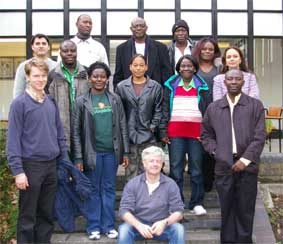
Our research paper on Learning Management Systems in Africa resulting from the DelPHE funded collaboration with colleagues in the University of Education, Winneba (Ghana), Maseno University (Kenya), and Eduardo Mondlane University (Mozambique) has just been published as

  • Tim Unwin, with Beate Kleessen, David Hollow, James B. Williams, Leonard Mware Oloo, John Alwala, Inocente Mutimucuio, Feliciana Eduardo and Xavier Muianga (2009) Digital learning management systems in Africa: myths and realities, Open Learning: the Journal of Open and Distance Learning, 25(1), 5-23.

In summary, the paper  reports on a survey of 358 respondents across 25 African countries into their usage of learning management systems. It concludes that while there are some enthusiastic advocates of such systems, the reality is that most African educators as yet have little knowledge about, or interest in, their usage. There remain very considerable infrastructural constraints to be overcome before they can be widely adopted for open and distance learning across the continent, and there is still reluctance in many institutions to develop systems that can enable learning resources to be made available in this way. This does not mean that the potential of high-quality digital learning management systems should be ignored in Africa, but rather that much more sustained work needs to be done in human capacity development and infrastructural provision if African learners are truly to benefit from the interactive learning experiences that such systems can deliver.

Leave a comment

Filed under Africa, Education, Higher Education, ICT4D

Mandelson at the Learning and Technology World Forum

Following Ed Balls and Gordon Brown, Peter Mandelson gave an enthusiastic and committed speech today at the Learning and Technology World Forum held in London at the Queen Elizabeth II Conference Centre.  He argued strongly that the UK Higher Education sector can, and should, play a significant role in helping to expand Britain’s ‘exports’.  Amongst some of the many things he said, were the following:

  • Britain has a very strong higher and further education sector
  • Over the last decade real term funding for research in Britain has doubled
  • There is now a real challenge to develop this resource into one equipped for a digital knowledge economy
  • British higher education needs to pioneer new forms of learning – especially ones that fit around work or distance
  • We need to develop alternatives to the traditional  3 year university degree programmes for students straight out of school
  • We need to build on online and distance based degrees to support people wishing to gain degrees
  • The UK’s higher education sector must diversify and change its models – enabling it to fit into new ways of living to suit the individual ways of students
  • ICTs can make the whole process of learning more efficient – he claimed that efficiencies have saved more than £ 1 billion in HE staff time since 2005 – and this represents a huge area for international collaboration
  • We have to focus on to the fact that what we can do together in collaboration will enable us to get more out of this
  • Britain is a pioneer in online learning
  • He concluded by saying that the key is seeing the digital revolution as an agenda where the benefits of international collaboration are not zero sum

Despite the concerns that I have over much of this agenda (see my previous blogs on Mandelson’s vision for higher education) his comments today provided a clear statement of the government’s commitment to using ICTs innovatively to support alternative forms of higher education.

Leave a comment

Filed under Higher Education

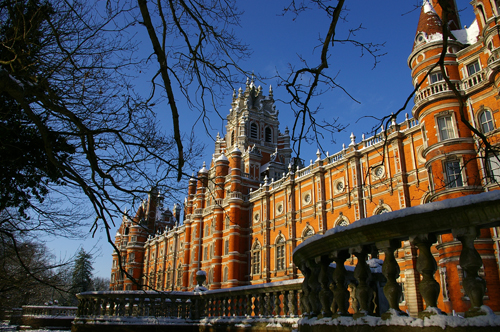
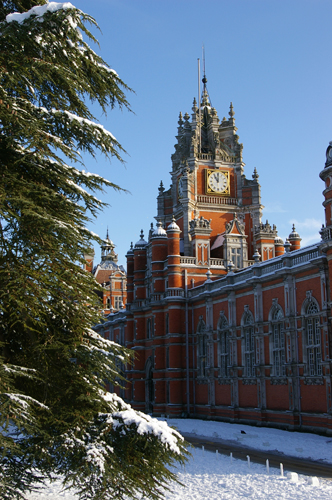
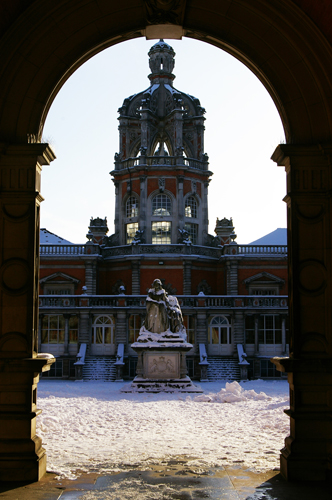
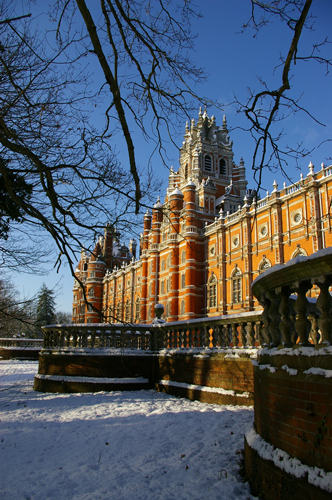
Royal Holloway, University of London in the snow, 9th January 2010

When I first arrived in the mid-1980s at Royal Holloway, University of London, I could not decide whether I actually liked the Founder’s Building, named after the College’s Founder Thomas Holloway.  It was certainly impressive, but it took a long time before its architectural qualities began to influence me for the better – now, after all these years, familiarity has led to friendship! Designed by the architect William Crossland, the Founder’s Building was inspired in part by the Château de Chambord in the Loire.

The unusual amount of snow that fell in the early days of January 2010 shows the building at its very best.  I hope these photographs illustrate why I have indeed come to admire those who conceived and constructed this impressive university building.

Please click on the above thumbnails for larger images

1 Comment

Filed under Higher Education, Photographs

Mandelson hammers another nail into the coffin of higher education in the UK

The Secretary of State for Business, Innovation and Skills, Peter Mandelson, hammered another nail into the coffin of UK higher education in his letter of 22nd December to the Chairman of the Higher Education Funding Council for England (HEFCE) confirming the Council’s budget for 2010/11. As has been widely reported (Independent, BBC, Daily Mail, Guardian) this announced that

  • an additional £135 million ‘adjustment’ will be required, over and above the ‘£180 million efficiency savings’ currently being implemented and the £83 million deduction announced in October 2008 (albeit noting that the government has agreed to switch £84 million from universities’ capital baselines so that the teaching gtant reduction can be held to £51 million);
  • ‘adjustments’ will be made to those institutions that have over-recruited, at a rate of £3,700 per full time under-graduate and PGCE student;
  • the net effect on funding will be a reduction in the HEFCE Grant Settlement from £7,809 million in 2009/10 to £7,291 in 2010/11;
  • HEFCE is being encouraged to develop proposals that will ‘provide significant incentives to enhance the economic and social impact of research’; and
  • the government wishes ‘to see more programmes, such as foundation and fast-track degrees, that can be completed full-time in two years’.

I have commented elsewhere in detail on Mandelson’s announcement in November concerning his Department’s new framework for the success (or should this be ‘failure’) of British higher education, but this latest announcement of cuts, alongside the notion of two-year degrees warrants further critique.  Six main points should be noted:

  • These policies are driven by the completely unsubstantiated belief that we need to have 50% of our population going through university.  Why?  No logical argument is given in support of this, and there is no evidence that this would benefit society, our economy or our young people.
  • Simply cutting university funding across the board is insane.  If these cuts are essential, then underperforming institutions should be closed, thereby enabling the fittest and healthiest to survive.
  • Rather than having two-year academic degrees, surely we should close down many universities and turn them into institutes specifically designed to train young people to be excellent in fields other than academic ones.  It is nonsensical to believe that half of our population is able to undertake and benefit from the highest quality academic degrees.  Surely it is better to provide these people with outstanding training in technical and other skills – be they plumbing, football, dance, culinary expertise, art and design, or marketing.  Some of our ‘competitor’ countries, such as Germany have a fine tradition in this arena – why do we not learn from their successes?  Much can indeed be taught and learnt intensively in two years in fields such as these.
  • For academic subjects – and yes, there is still a need to train young people to the highest level of academic excellence – it is important that time is spent exploring literatures, gaining a rich grasp of a subject, developing critical analytical expertise, and reaching the forefront of knowledge in a discipline.  This is not something that can be crammed into two years.
  • University academics are rightly encouraged to do research alongside their teaching – indeed, it is this combination of research and learning that lies at the heart of what a university is, or at least should be, about.  A university is not just a teaching institution.  If students are therefore to be ‘taught’ to the same level of achievement in two years, academics will quite simply not have enough time to do the research to drive their disciplines forward. UK higher education will not just stagnate as it is at present, but will plunge into terminal decline.
  • There are too many vested interests within the system, however, to enable the dramatic changes that I propose to take place.  The net effect will therefore be for student fees to rise higher than already predicted.  These cuts, alongside those announced in the pre-budget report, will lead to a dramatic increase in student fees, which are likely to reach on average around £5,000 a year by 2011, and £7,500 by 2013.  Why is it that so many other countries in Europe are still able to offer ‘free’ higher education to their populations and the UK has decided that it is unable to do so?  Our philistine government persists in seeing higher education as a private rather than a public good.  Before long, English born students will vote increasingly with their feet, and go and study for free in excellent universities oversees where more and more courses are now being taught in English.  What then for the UK’s remaining universities?

3 Comments

Filed under Higher Education

Pre-Budget report: impact on higher education

The Chancellor’s pre-budget report makes grim reading for higher education.  The key paragraph notes the following savings:

  • “£600 million from higher education and science and research budgets from a combination of changes to student support within existing arrangements; efficiency savings and prioritisation across universities, science and research; some switching of modes of study in higher education; and reductions in budgets that do not support student participation”

This is one of the largest cuts, comparing with “at least £500 million by reducing duplication between organisations and streamlining Arms Length Bodies”, “£300 million by improving energy efficiency across the public sector”, “£350 million of savings from the Department for Children, Schools and Families to be found from central budgets,” or “£140 million from reducing the costs of the senior civil service”.

However, there is no strategic plan for how these cuts will be implemented.  Elsewhere, I have argued that we should indeed close many of Britain’s universities, and replace them with more appropriate institutions, but instead of this it appears that those who will have to pay will be future generations of students, who will now have to fork out even higher fees. Perhaps they will see sense, and realise that this is ridiculous.  They have plenty of other opportunities to gain good quality higher education for free in other European countries!

It is deeply sad that such cuts have been driven by the perceived need to bail out banks and bankers whose profligacy and greed largely caused the near-collapse of the global financial system.  It would, though, be naive to think that taxing bankers in the UK alone will make any difference at all.  Only when the greed of finance capitalism is seen for what it really is at a global scale, and people across the world unite to force the introduction of alternative communal banking systems, may we be able truly to escape from such arrogant selfishness.

1 Comment

Filed under Higher Education

Putting a value on the UK’s universities

The latest report on the ‘added value’ of universities in this country undertaken by academics at the University of Strathclyde for Universities UK, has found that “Universities in the UK now generate £59 billion for the UK economy putting the higher education sector ahead of the agricultural, advertising, pharmaceutical and postal industries, according to new figures published today”.

In more detail, Universities UK summarised the report’s findings as follows:

  • “The higher education sector spent some £19.5 billion on goods and services produced in the UK.
  • Through both direct and secondary or multiplier effects this generated over £59 billion of output and over 668,500 full time equivalent jobs throughout the economy. The equivalent figure four years ago was nearly £45 billion (25% increase).
  • The total revenue earned by universities amounted to £23.4 billion (compared with £16.87 billion in 2003/04).
  • Gross export earnings for the higher education sector were estimated to be over £5.3 billion.
  • The personal off-campus expenditure of international students and visitors amounted to £2.3 billion”.

These are generally interpreted as being very positive results; UK Universities contribute significantly to our economy. Indeed, the Guardian newspaper picks up on the report’s findings, noting in particular that “Higher education generates 2.3% of the UK’s gross domestic product, making it ‘one of the most effective sectors,’ said Ursula Kelly, another of the report’s authors. ‘As a producer of goods and services alone, the sector makes an evidentially large contribution to the UK economy of £19.5bn.’ Universities brought in £5.3bn from overseas students, international conferences and work conducted for overseas businesses. They provide the equivalent of 314,600 full-time jobs, or 1.2% of all full-time jobs in the UK. Those visiting universities from abroad and overseas students spent £2.3bn off-campus, the study found”.

But amidst all this economic justification, let us never forget what universities should be about.  Above all universities should be moving the research frontiers forward, developing innovative and creative science and scholarship, and engaging students in the challenge of using this knowledge to make the world a better place.  It would be worth doing this even if universities did not make an economic profit.  Their value is worth immeasurably more than these crude economic indicators might suggest. One hallmark of a civilised society is that it has a university sector that is vibrant, pursues excellence, and challenges taken for granted assumptions.  Access to such universities must remain free for the brightest and most able students.  We are in danger of becoming uncivilised.

2 Comments

Filed under Education, Higher Education

Against Mandelson’s view of higher education in Britain

On the 3rd November, Lord Mandelson announced what his Department of Business, Innovation and Skills described as “a new framework for the future success of higher education”.  Perhaps this could lead to a certain kind of success, but it hammers with renewed vigour another nail into the coffin of universities in the UK.

As his Department stated, key measures set out in the framework, along with my responses, are as follows

  • More competition between universities, giving greater priority to programmes that meet the need for high level skills – Universities are not, and should not be seen as being, merely about high level skill provision.  Obviously this depends on how we define ‘high level skills’, but alongside those needed to make a prosperous economy (look how dismally our bankers have delivered over the last couple of years), are those skills associated with critical reflection and an ability to challenge taken for granted assumptions about the ‘good’ of our contemporary capitalist society.  Competition is also most definitely not the answer.  Universities work best when there is collaboration and cooperation rather than competition.
  • Business to be more engaged in the funding and design of programmes, sponsorship of students, and work placements – yes, it is indeed important that universities work closely with the private sector – after all, they benefit hugely from the investment of the state in delivering the cannon fodder of global capitalism.  However, the suggestion that the private sector should increasingly fund higher education smacks of the government trying to find others to pay for its failed commitment to furnish our society with a fit for purpose university system.
  • Creating more part-time, work-based and foundation degrees to make it easier for adults to go to university, with routes from apprenticeships through to Foundation Degrees and other vocational programmes – universities should not fundamentally be about providing foundation degrees – leave these to other types of institution.  The central purpose of a university should be about pushing the boundaries of knowledge forward, through high quality research and the encouragement of able young people to engage in rigorous scientific and scholarly enquiry.
  • Encouraging universities to consider contextual data in admissions, as one way of ensuring that higher education is available to all young people who have the ability to benefit – this is social engineering.  Yes, of course universities should seek to provide outstanding learning opportunities to those most able to benefit, but the simple mechanisms recommended are simply not sophisticated enough to enable the identification of those who can contribute most to the UK’s universities.
  • Universities setting out clearly what students can expect in terms of the nature and quality of courses offered – yes, and the best already do so!  But please, universities are fundamentally about moving the boundaries of research forward, and encouraging the development of enquiring minds in the most able people rather than passing on existing accepted knowledge.
  • Sustaining our world class research base by continuing to focus on excellence, concentrating research funding where needed to secure critical mass and impact – the highest quality research does not necessarily need to be concentrated.  The  most innovative research is often delivered  by individuals working in isolation – indeed, concentrating research activity based on past success criteria, will actually restrict the development of novel and exciting innovation.  Real innovation usually happens ‘at the edges’.
  • Encouraging collaboration between universities on world class research, especially in high cost science – the rationale for this is that we cannot afford high cost science.  But we cannot afford not to!  Furthermore, not all world class research is expensive.  Indeed, many Nobel prize winners actually do low cost research!

As I have argued elsewhere, universities are about far more than providing a second rate ‘education’ for students not really interested in learning.  We can afford a high quality university sector by reducing the number of universities and the number of students wasting their time pretending to study at them.

Why is it that the UK wants to treat universities as businesses when so many countries in the world still provide free higher education to their people – look for example at Finland and many of the German Länder? Why is it that the government persists in destroying a university system that was once the pride of the world? Perhaps most surprisingly of all, why are students and academics not rising up in revolutionary protest as did our comrades in the late 1960s?

The time has come to stand up and be counted.  We must resist this Philistine, ignorant and damaging attempt to destroy what is left of our universities.

4 Comments

Filed under Higher Education

Analysis in Geographical Research

There are many books that provide students with detailed accounts of the methods that they can use in geographical research, but very few that give much guidance on analysis.  Hence, whilst students – both undergraduate and postgraduate – can often undertake a competent piece of empirical data collection, all too often they come unstuck when it comes to how to analyse the data.  This note is therefore intended to provide a quick checklist of tips to help with analysis in geographical research, and it is derived particularly from my experiences in helping PhD students to grapple with these issues.

  • Do not be beguiled into thinking that there is one definitive way to analyse data – there are many different types of analysis.  Thus, positivist approaches focus on ‘explanation’ and ‘prediction’, whereas hermeneutic approaches focus on ‘understanding’; some critical approaches tend to focus on encouraging ’emancipation’.   Whichever approach one adopts, though, there are certain key principles that can generally help to guide analysis.
  • Analysis is the way in which researchers choose to make sense of the data. All good research will have some kind of analytical framework, which makes clear to the reader how the author has tried to interpret diversity in the empirical data.
  • Analysis must refer back to the conceptual/theoretical framework of the research.  Research is about moving knowledge forward.  Hence, the analytical chapters of a thesis, must show how the empirical data gathered has enabled the author to make sense of questions raised by the literatures examined in the conceptual or theoretical introductory chapters to a thesis.  Analytical chapters must have just as comprehensive a bibliography as the methodological and theoretical chapters.
  • Analysis should focus on the ‘why?’ questions.  All too often, students tend to concentrate on descriptive questions, such as ‘what?’, ‘where?’, ‘who?’ and ‘when?’ when gathering data, without then going on to ask ‘why?’.  Unless ‘why?’ is asked, it becomes very difficult to explain or understand  what is actually going on.  This applies just as much to asking why particular geomorphological structures are shaped as they are, as to asking why people behave in the ways that they do.  ‘How?’ questions fall between these two extremes – they can be used to ‘explain’ ‘how’ something works, but I do still prefer to read about ‘Why?’ as well.
  • It can be helpful to think about ‘dependent’ and ‘independent’ variables when trying to shape an analytical framework.  Particularly when working within a positivist approach, it is useful  to think about one group of variables (the independent ones) explaining the variation and differences in the pattern of the ‘dependent’ ones.
  • It is very important to have a good idea about the analytical framework before going out ‘into the field’ to collect data.  Unless one has some idea in advance about how the data are actually to be analysed, there is a danger that much redundant data could be gathered or that it will not be possible actually to explain or understand it.  Remember the ‘Why?’ questions!  This raises important issues to do with the balance between ‘inductive’ and ‘deductive’ approaches.  Very little research is either purely deductive or inductive, and there is always an exciting interplay between theoretical and empirical work.  Even when the research is heavily inductive, a focus on consistently asking ‘why?’ questions in the field can help to ensure  rigorous analysis.
  • Analysis is about imposing structure.  Very often when one is immersed in exploring the data gathered in empirical fieldwork it is difficult to see any structure in it.  Sometimes it is therefore useful to step back and try to look at it in a different way.  Asking (and answering!) a simple question, such as ‘What are the three main factors that help to explain this?’, can help to impose structure.

I do hope this is all helpful advice.  Please add comments below about the things that you find helpful in undertaking analysis.

Leave a comment

Filed under Education, Higher Education, Postgraduate supervision

Solving the crises facing UK universities

The time has come to ignite a debate about the real purpose of universities in the UK.  I believe passionately that universities should be about the advancement of knowledge, and the pursuit of excellence in research and teaching; they are not just about further education for the masses.  All too often universities in the UK are seen primarily in terms of their contribution to the economy. The incorporation of higher education within the Department for Business, Innovation and Skills during the government reorganisation of 2009 is just one symptom of how such thinking has pervaded not only government, but also the private sector and the public at large. All too often, charging fees for students is justified on the basis that graduates earn on average more than those without degrees.  Yet recent research based on figures from the Higher Education Statistics Agency suggests that many graduates do not actually add to their earning power by going to university (http://www.timesonline.co.uk/tol/life_and_style/education/article6832285.ece).

The OECD has long promoted the myth that there is something magical about a country having 50% of its population participating in higher education for the well being of the economy.  This is largely justified on macro-economic evidence suggesting a correlation between the percentages of a population who have been to university and GDP per capita.  However, the existence of such a correlation does not mean that having larger cohort percentages in higher education actually leads to greater economic growth; far from it, it can equally well mean that higher economic growth enables more people to afford to go to university!

In the late 1980s, the UK graduation rate was around 20%, and the government was eager to increase participation both for social and for economic reasons.  By 2004, the rate had risen to 39%, but government funding had not kept pace, leading to the familiar crisis of funding in UK higher education today. Public spending on university education in Britain is just 0.9% of GDP, which is well below Sweden’s at 1.6% (for a 40% participation rate) and the US’s at 2.9% percent (for a 37% participation rate) (figures from OECD’s Education at a Glance 2009 indicators).

What, though, is the evidence that having such percentages in higher education is indeed of benefit either to the individuals or the country, especially if we cannot afford to fund it properly?  Here, I wish to raise four issues that seem to me to be of particular importance:

  • Charging students fees for higher education is socially divisive and distorts the labour market. UK students already now graduate with an average debt of around £21,000, and this figure is set to rise substantially.  Unless they have affluent parents willing to pay off their debts, graduates are desperate to seek higher paid jobs so that they can start generating a real income.Is the so-called ‘education’ that they get, really worth this debt?
  • The academic abilities of many students entering universities is so low that they cannot achieve the academic excellence that universities should be aspiring to.  Many universities make offers to students equivalent to 2 Ds or 3 Es at A’ level.  The quality of education that such students receive can be good, but most students with A’ levels this low are unlikely to be at the cutting edge of knowledge creation in their later lives. How much intellectual benefit do they really gain from their degrees?
  • Going to university is often a lifestyle decision, and many students do not participate sufficiently actively in the pursuit of academic excellence. It is a scandal that students in the UK spend so little time on their academic studies. A report of the Higher Education Policy Institute surveyed 15,000 1st and 2nd year students in 2007 and found that the average time that they spent being taught and in private study was 26 hours a week (http://news.bbc.co.uk/1/hi/education/7011121.stm).  This is about the same amount of time that they spend in bars on campus!  In Portugal, students on average spend 40 hours a week on their academic work.  In effect, perhaps half of UK university students are doing what amount to part-time degrees, and yet they expect to get the same grades as those who can devote 40 or 50 hours  a week to their studies.
  • Grade inflation applies just as much at universities as it does for A’ levels.  Business leaders regularly bemoan the declining abilities of graduates.  Is this surprising given how little academic work many students do while at university?  Most university league tables include the percentage of upper second and first class degrees awarded as one of their key criteria.  With such an incentive, is it really surprising that many universities have devised intricate mechanisms to ensure that they award high numbers of such degrees?

None of this is to the benefit of the many keen and enthusiastic students from poor or otherwise marginalised backgrounds who aspire to go to a university to achieve academic excellence, and indeed move knowledge forward. Likewise, there are many outstanding and highly committed students who worthily gain excellent degrees – but my point is that there are far too few of these in our universities today.

Lest I am misunderstood, I should emphasise that academic excellence is something very different from elitism.  We must champion excellence through education and training at all costs.  Indeed, the demise of higher education in the UK owes much to a misplaced emphasis on reducing elitism rather than championing excellence.  Excellence and elitism are fundamentally different concepts.

So, how do we get ourselves out of this mess?  My manifesto for the future of UK universities and continuing education contains four key elements:

  • Reduce the number of universities by approximately half, with funding for research and teaching coming primarily from the government.  Universities are meant to be communities of scholars who undertake research and encourage students to think critically thereby leading to the advancement of knowledge.  This reduction in size of the sector will not dramatically reduce research quality, since this is already highly focused, and it will enable those students who attend university to have a much higher quality of learning environment.  Civilised societies must have excellent universities not only to promote innovation but also to act as their moral consciences through critical reflection.
  • Create a raft of continuing learning institutions to provide excellent training and skills acquisition in fields deemed to be valuable by society.  These could, for example, be in fields as diverse as football, IT skills, dance, plumbing, language training, chefs, line repairers, music, welders, and care assistants.  Businesses, civil society organisations and government should play key roles in determining both the areas of specialism and the funding.  Their key attribute would be that they would encourage people to strive for excellence in their chosen field. Courses would be for up to two years (thereby providing a substantial saving of time and funding on current university three year degrees) and people of all ages would be encouraged to use them to gain the skills required for particular jobs.
  • The system would be underpinned by rigorous selection processes to help ensure equality of access based on skills and aptitude, thereby enabling those best able to benefit from different types of post-secondary learning to do so.  At the heart of this new system will be a rigorous evidence-based procedure to ensure that appropriate advice and opportunities are given to people as to the type of post-secondary learning that they embark on.
  • A redefinition of qualification titles. The awards given by the new continuing learning institutes must also be deemed by society to be as valuable as university ‘degrees’.  This will depend greatly on the quality of learning provision, but if they can provide learners with the skills to enable them to gain highly paid jobs, as for example professional footballers or chefs, then their status will be assured.  Indeed, it is even possible  that those wishing to pursue research careers at universities may well find themselves being paid much less in the future than mechanics and plumbers (http://www.thisismoney.co.uk/news/article.html?in_article_id=429176&in_page_id=2).

These are radical proposals, and will be unpopular in many quarters.  However, unless we engage seriously with the crisis facing universities and skills acquisition in the UK, we will continue to muddle along in perpetual mediocrity.  We once had a university system of which to be proud. Let us not be beguiled by recent announcements suggesting that ‘British universities dominate the world Top Ten rankings for the first time this year (http://www.timesonline.co.uk/tol/life_and_style/education/student/article6865260.ece, 8th October 2009).  UK higher education is in crisis, and it needs dramatic surgery to make it excellent.

5 Comments

Filed under Ethics, Higher Education