Category Archives: ICT4D

Trust, privacy and digital security

The pace with which the UK government is forcing through legislation to permit its security agencies legally to gather information about the use of digital technologies by people living in the UK raises ethical issues of the utmost importance. In the past, I have very much emphasised the significant concerns that citizens should have about the use of their ‘digital lives’ by both global corporations and governments. In so doing, I have sought to emphasise the interesting conjuncture of ideas surrounding the three concepts of trust, privacy and the law that lie at the heart of such discussions (for some early thoughts, see my 2010 paper on ICTs, citizens and states).

One of the most remarkable things about digital technologies, and particularly the extremely rapid expansion of social media, has been the ways that people have been willing to make so much information available for public view that was previously considered to be ‘private’. Why, for example, if people are providing so much of their information on-line for free should they have any concerns about whether or not governments make use of this? Social media companies have benefited hugely from the willingness of people to give for free without thinking too much about the consequences, and so too have those providing search engines and location based digital services.  So why should governments not likewise use this information?

In trying to unravel some of the complexities of these issues, it is useful to contrast two very different perspectives on what privacy actual is:

  • The dominant view would seem to follow Etzioni (2005) in accepting that privacy is in effect a good that can be weighed up against other goods. From this perspective, people are willing to give up some of their ‘privacy’ in return for various perceived benefits. Hence, people seem to be willing to let companies use information about their e-mail or search engine usage, in return for having a ‘free’ e-mail account or the ability to search the Internet for ‘free’ for some information that they want to find. Similarly, it can readily be argued that governments can, and indeed should, be permitted to pry into the lives of individuals in order to protect all citizens, especially if a justification, such as preventing potential ‘terrorist’ action can be provided.
  • An alternative type of definition of privacy, though, is offered by Friedman (2005) who instead sees privacy as a means through which we have power over our own lives. He emphasises the asymmetric power relationships between states and citizen. Few citizens, for example, possess their own tanks or fighter aircraft, and few have the digital analysis technologies that large corporations and governments possess. As he suggests, in referring to the state, ‘limiting its ability to protect us from bad things done to us by ourselves or by other people, may not be such a bad deal’.

In the past, I have very much supported Friedman’s arguments, and on balance still do. However, this is where notions of ‘trust’ become so important. From conversations in many different countries, I have come to the clear view that where people do not trust their governments, then they are much more willing for their digital lives to be known by companies, but where they do trust their governments then the reverse is the case. Governments have the power to do very bad things to their people, and digital technologies have the potential to offer them very large amounts of knowledge indeed in support of such actions.

The interesting observation to be made here is that it is actually the companies, be they ‘phone operators or social media corporations, that actually already collect this information on a regular basis, and indeed use it to generate their profits. Whilst there is much angst against governments for wanting to access some of this information, I am surprised at how little concern there actually is about the uses that companies already make of such information. Again, in part, this comes down to trust, but I think this is only in part. Companies seem to me to be much more circumspect in telling people actually what data they collect and how they use it. They leave the governments to take the flack in wanting to access such information!

The arguments currently being debated as the Data Retention and Investigatory Powers Bill moves through the UK Parliament are ultimately derived from social contract theory. In essence, building on the ideas of Hobbes and Locke in the 17th century, the idea that citizens are willing to give up some of their rights to governments in return for protection of their remaining rights has become central to much of the way in which our governance systems work. Following Etzioni’s line of thought, citizens might therefore consider giving up some of their privacy in return for greater protection from other citizens (or ‘terrorists’) who for whatever reason wish to do them harm. It becomes incumbent for governments therefore to show that there is indeed a very considerable increase in the potential threat to citizens from ‘terrorism’, or indeed any other harmful effects, if they want to pry further into citizens’ privacy.

This is, in effect, what the UK government is seeking to do, without perhaps illustrating the full extent of the threat. As I learn more about these matters, and speaking with many people who I have come to trust over the last couple of years, I am becoming increasingly aware of just what the level of threat is, and I am much more persuaded by the arguments that some greater surveillance might indeed be necessary. However, the challenge for a government is that it is difficult for it to indicate just what these threats are because of the obvious security implications, and so citizens have to place a lot of emphasis on trusting their governments.

How can this be achieved? The most important thing in building trust on such matters is to have as full, open and transparent a debate as possible amongst relevant stakeholders. Rushing legislation through Parliament is therefore unwise, unless the level of threat is very severe indeed. I cannot judge this, but unfortunately recent failures of trust over such things as the UK’s support for the USA in the invasion of Iraq over ‘weapons of mass destruction’, make it very difficult for people to believe a UK government of any political colour on such matters.

MPs would therefore be wise if they are to pass this Bill to insist that immediately in its aftermath a wide-ranging and fully transparent consultation should take place, so that the issues are debated openly and constructively. This will take a considerable amount of time, but will ultimately be worth it, not only in rebuilding trust, but also in reaching a wise decision on how to balance privacy and security.

This does not, though,  resolve the concerns raised by Friedman, with whom my own allegiance really lies. The balance of power between states and their citizens is indeed unequal, and there must be mechanisms whereby governments and their servants can be held to account for their actions and misdemeanours. It is here where I believe the law is so important, and it seems to me that judges have a particularly crucial role to play in determining the appropriate balance. The separation of the judiciary from the executive is another important heritage of the British political system, and one that is shared to a greater or lesser extent in many Commonwealth countries. Whatever outcomes are agreed on in the consultation that I encourage, they must be enshrined in a very carefully constructed legal framework that can indeed insist on the severest of penalties for misuse of the powers that are being discussed in Parliament as I write.
 

Leave a comment

Filed under Commonwealth, Development, Ethics, ICT4D, Politics, UK

ICT4D Post at University of Cape Town

The University of Cape Town Department of Computer Science is seeking to make a permanent appointment at Professorial level in 2015. The candidate for this position will be a highly-motivated individual with a PhD in Computer Science and an excellent track record in leadership, teaching and research. The successful candidate will be expected to develop and teach Computer Science courses at undergraduate and postgraduate levels, supervise postgraduate students and provide a leadership role in academic strategy, research and innovation. The candidate should also demonstrate the ability to initiate research programmes, secure external funding, and develop industry and academic partnerships.

The Department hosts the UCT interdisciplinary Centre in ICT for Development. A specialist in ICT for Development would be preferred, but candidates with interests in any field of Computer Science are invited to apply. Our BSc Honours degrees are accredited by the British Computer Society and we have a large cohort of MSc and PhD students.

The annual remuneration package for 2014, including benefits, is R887 399 plus a 10% annual scarce skills allowance.

Application process:

To apply, please e-mail the completed UCT Application form (HR201) and all other relevant documentation as indicated on the form, plus a 2-3 page research and teaching statement, with the  subject line “Professor: Computer Science” followed by the reference number, to Ms Edith Graham at recruitment04@uct.ac.za

Address: Staff Recruitment and Selection, University of Cape Town, Private Bag X2, Rondebosch, 7700.
Telephone: +27 21 650 5405 Departmental website: http://www.cs.uct.ac.za

The application form can also be downloaded at http://web.uct.ac.za/depts/sapweb/forms/hr201.doc

An application which does not comply with the above requirements will be regarded as incomplete.

Reference number: SR031 /14 Closing date for applications: 15th September 2014

UCT is committed to the pursuit of excellence, diversity and redress. Our Employment Equity Policy is available at http://www.uct.ac.za/downloads/uct.ac.za/about/policies/eepolicy.pdf

Leave a comment

Filed under ICT4D, Universities

Multistakeholderism and consensus decision making in ICT4D

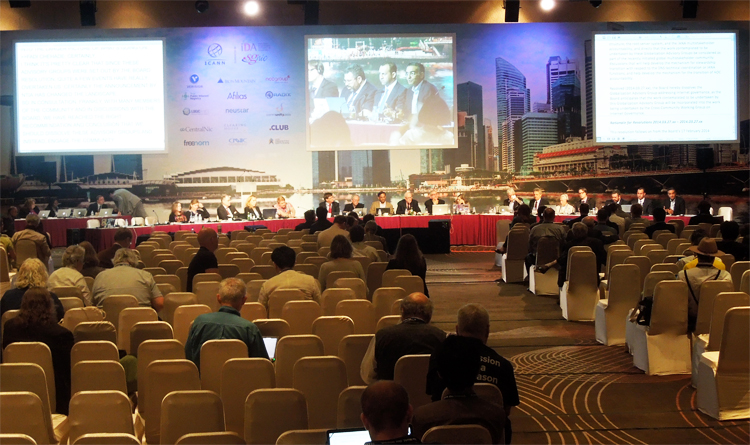
ICANNOne of the fundamental challenges facing ICANN, and regularly articulated at its recent 49th meeting in Singapore, is how to reach consensus amongst the many different stakeholders with interests in the future of the Internet.  Having been doing research over the last 15 years on how to ensure success in multi-stakeholder partnerships (see for example my recent 2013 post, and an older 2012 post on partnerships in education) as well as working with a range of groups on consensus decision making, I find these discussions fascinating, not least for their theatrical quality but also for the apparent lack of knowledge exhibited on the very extensive research that has already been done on managing multi-stakeholder partnerships.

Two  intersecting themes seem relevant, not only to ICANN, but also more widely to the many other ongoing international debates on global governance, particularly with reference to ICTs. These are hugely complex issues, far too challenging to resolve in a simple blog post, but what I want to do here is summarise what I see as being the main issues that require resolution:

  • Multi-stakeholderism representation.  I have to admit hugely to disliking the term multistakeholderism, despite the fact that I frequently plead for people to use the term “multi-stakeholder” rather than “public-private” to refer to the kinds of partnership that are necessary to deliver effective ICT for development initiatives.  “Multi-stakeholder” is preferable because it emphasises that such initiatives require a more diverse set of stakeholders than just the private and public sectors, and that they particularly need to involve civil society. Most research on multi-stakeholder partnerships has focused on how to bring partners together to deliver particular initiatives at a national or local scale, and far less in the context of reaching international agreements (although see Jens Martens’ important work on the latter). The use of the term “multi-stakeholder” has nevertheless been clearly recognised by ICANN (albeit defining it in a very particular way, as treating “the public sector, the private sector, and technical experts as peers”), but a fundamental challenge is to identify the means through which each group can, or should, be represented in international discussions on critical ICT issues.  Four issues seem particularly problematic and pertinent:
    • Defining multi-stakeholders groupings.  Most work on multi-stakeholder partnerships recognises a triadic typology of  “states”, the “private sector” and “civil society”.  However, there are additional types of entity over and beyond these that might be involved under these headings, including international organisations, foundations, and indeed user groups.  These are sometimes treated as sub-sets of civil society, but on other occasions as distinct entities in their own right that could be grouped into additional categories.
    • Numbers and scale.  In global bodies concerned with international treaties, such as UN bodies including the ITU, governments usually have the dominant say, albeit that this say is increasingly being challenged. It is relatively easy to choose the entities that represent governments – they are, after all, finite in number – but for the private sector and especially civil society it becomes much more problematic.  UNDESA’s integrated Civil Society Organizations (iSCO) System thus currently maintains a database of more than 24,000 entries (see also the UN Global Compact’s list).  How can representation from this diversity of stakeholders be included, especially when it is often unclear who exactly these civil society organisations represent?
    • Representative democracy.  Invariably it is only the larger and richer companies and civil society organisations that are able to participate in major international gatherings – often quite simply because of the cost of so doing – although many UN bodies do indeed welcome civil society participation once they have been recognised in some way as members.  In crafting such partnerships, and in line with the notion of representative democracy, there can be value in seeking to involve some kind of representative mechanism, whereby stakeholders elect from their membership people or institutions to speak on their behalf. This prevents the decision making process becoming too unwieldy, but those not elected onto the “Board” can feel aggrieved and not-represented.
    • Governance structures.  The mechanisms for selecting representatives also depend heavily on the kinds of governance structure that are deemed to be appropriate for the purpose in hand. Even here there are difficulties because someone has to determine these criteria in the first place.  At a simplistic level, it would be possible to imagine a multi-stakeholder decision making body made up of a set number of members from each of the three key sectors of “governments”, “companies” and “civil society”.  Within this, there would then need to be mechanisms for determining how the elections would take place, and what the constituencies should be.  In the ITU, for example, members of the Council and the Radio Regulation Board are elected based upon regional groupings.
  • Consensus decision making and democratic representation.  One of the most fascinating aspects of seeking to reach global agreement on particular issues is the choice of the process that is used to seek consensus. When combined with representative mechanisms, most consensus building models use an aggregative process, whereby agreement is sought at one level (for example the “local”), and then representatives from that level  meet at a higher level (such as the “regional”) to seek wider consensus.  This can be a very effective mechanism for reaching consensus, but the ways in which the governance of such structures operate can lead to very different outcomes.  This is highly pertinent to discussions about governance of the Internet and ICTs. Six main principles and issues seem particularly pertinent here:
    • Consensus building requires good will on behalf of all of those involved.  Put simply, if there is not a desire to reach agreement on the part of some of those involved, then no amount of skilled negotiation will reach a successful outcome.  The first stage of any consensus building process must therefore be the need to convict all participants of the benefits of reaching a consensus.  Ultimately, those not willing to commit to this need to be excluded in the interests of reaching agreement among those who are willing to engage in the process.
    • Generally speaking, it often makes sense to try to reach agreement on the most contentious issues at the lowest/local scale, because most time can usually be devoted to reaching consensus here.  For example, if it is expected that different ethnic groups have very different views on a subject, then it makes sense for the difficult issues to be resolved at the lowest scale that can combine these multiple different ethnic perspectives.  However, this does not always work, since unexpected disagreements can emerge later in the process, which can prevent the final reaching of a consensus.
    • Moderation of the consensus building process requires great skill and patience.  All too often, inexperienced chairs or moderators are charged with seeking to reach agreement among a particular constituency, and this can rapidly lead to dissatisfaction and disenfranchisement with the entire process.
    • The choice of representatives to carry forward the discussion at a higher level is critical.  Such people need to combine excellent negotiation skills with empathy for the different perspectives that they need to represent.  They also need to be trusted by their constituencies.
    • Despite a tendency to wish to return to the lowest level to get final agreement on the principles agreed at a higher level, this often leads to the unraveling of the process.  This is largely because consensus decision making requires skillful bargaining, and not everyone involved at the earliest stages of a process may be aware of the issues that emerge later in the process that require resolution.  It is, though, particularly useful if the higher level discussions are open to participation from anyone who wishes to be an observer from the lower levels in the process, since this can serve as a useful check on the probity of the representatives and negotiators.
    • Ultimately, those involved in building consensus need to adhere to the fundamental negotiating principle that they should focus particularly on “What can’t you live with; what can’t you live without“!

If, and it is a big if, the global Interent governance agenda is seen as being concerned with reaching agreement amongst “governments”, “private sector companies” and “civil society”, then drawing on the above two main alternative model structures can be conceptualised:

  • Model A – initial consensus building at a national level
    • The lowest level discussions take place in national forums that bring together representatives of governments, the private sector and civil society
    • National representatives (not necessarily drawn from governments) then meet to reach regional consensuses, such as for East, North, Southern and West Africa.
    • Finally, representatives from these global regions meet to thrash out global agreements.
  • Model B – initial consensus at a sectoral level
    • The lowest level discussions take place in regional sector-specific global forums one in each region (such as East, North, Southern and West Africa) for representatives of governments, another for the private sector and a third for civil society.
    • Representatives from each of these regional sector meetings (or indeed subdivisions within them) then meet to reach a global consensus.  For example, there would be a global private sector meeting bringing together regional private sector representatives, and similar fora for governments and for civil society.
    • Finally, representative of each of the three main groupings meet at a global meeting to bring together the three broad swathes of governments, the private sector and civil society.

To date, it would seem that Model B has often been the preferred modality of consensus building in discussions about Internet and ICT governance. The ITU, for example, holds regional meetings in advance of its major conferences, where it seeks to reach agreement on key issues.

Significantly, most of the major international bodies working in the field of ICTs and the Internet claim in some way to be multi-stakeholder. However, the driving force for each entity usually tends to be from one or the other sectors, be they governments, the private sector or civil society.  Against this context, broadly speaking, ICANN (a private sector, non-profit corporation) has tended to focus on the interests of the private sector, the IGF as a multi-stakeholder policy dialogue (purportedly supporting the UN Secretary General) is widely seen as being the main vehicle for civil society participation, and the ITU is the UN agency generally accepted as being a predominantly governmental body (although defining itself as a “public-private partnership”).  A real challenge is how to bring these together – or whether indeed there is actually real interest in so doing.  Attempts to create a truly global forum, including the ill-fated Global Alliance for ICTs and Development (GAID) have largely failed, although the WSIS+10 process led by the ITU and involving other UN agencies continues to strive to bring a wide range of participants together.

This post is already too long, and barely scratches the surface of these complex issues!  However, we have to find a way to stop holding the same conversations in different circles, and actually create structures and consensuses that serve the interests of the poorest and most marginalised!


4 Comments

Filed under ICT4D, Politics, Uncategorized

ICT Manager post at the Commonwealth Telecommunications Organisation

The Commonwealth Telecommunications Organisation (CTO) is advertising for an ICT Training Manager, with a closing date of 24th May. The Manager will serve as Head of its Capacity Development and Training Division. This exciting opportunity would suit applicants with a background in delivering effective capacity development and training in the ICT sector, preferably on an international level.

The key role of this position is to enhance and manage the delivery of the CTO’s capacity development and training programmes, both for member organisations and other entities working in the field of ICTs. It is expected that applicants will manage the appropriate delivery of relevant courses, and also undertake some of this training themselves. The role requires close liaison with the Head of Membership in managing and delivering the CTO’s distinct Programme for Development and Training, which currently forms a part of the Capacity Development and Training portfolio. Experience in the delivery of online training would be an advantage. Applicants must be from Full Member Countries of the CTO.

It should also be emphasised that the CTO is proactive in encouraging diversity in the workplace, and particularly encourages applications from women.

Leave a comment

Filed under Africa, Commonwealth, ICT4D

Towards a Commonwealth-wide Raspberry Pi initiative…

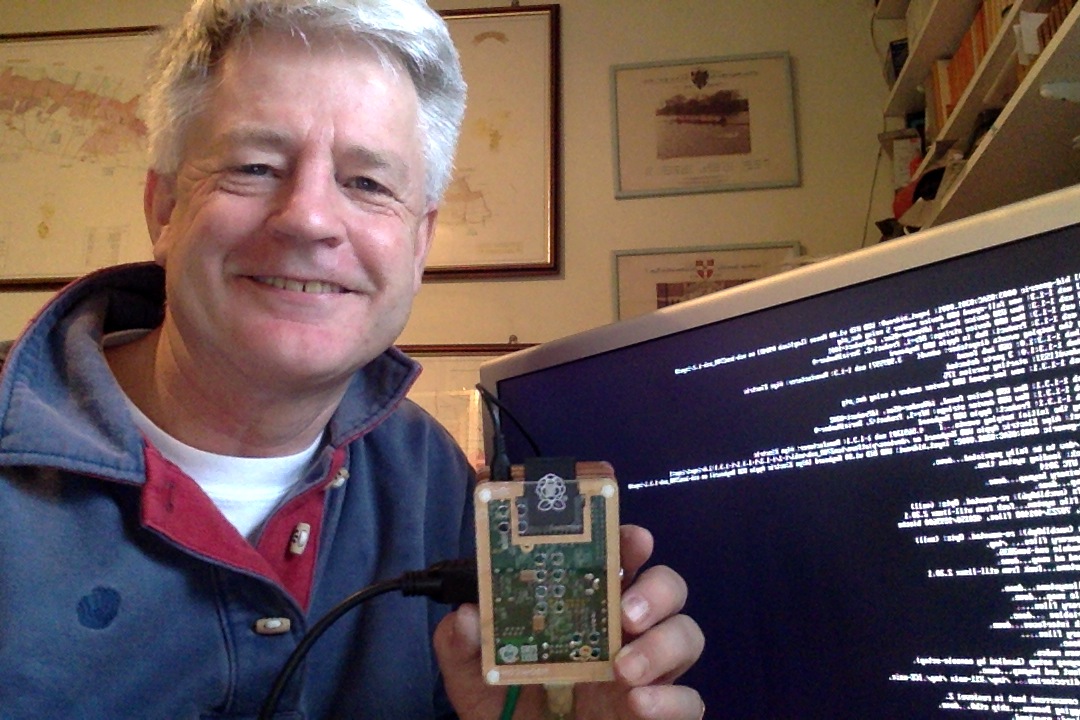
Me and Raspberry PiRaspberry Pi is transforming the ways in which young (and old!) people learn about computing, and provides a powerful, value for money means through which students across the world can gain skills relevant to Science, Technology, Engineering and Mathematics (STEM) curricula.  It is not only relevant to secondary education, but is also being used by undergraduates to develop their programming skills.  As yet, Raspberry Pis are not widely used in many of the poorer countries of the Commonwealth, but given their power and value for money they offer real potential for STEM education.  I had a great discussion earlier this week with Lance Howarth (CEO Raspberry Pi Foundation) during which I shared some of my ideas about how a multi-stakeholder partnership could be developed to help organisations in Commonwealth countries access and use Raspberry Pis effectively within their education systems.  Much would need to be done to implement such an initiative, but if enough interested parties could be brought together, we could make a real difference in helping to build relevant skills among young people across the Commonwealth.  Key things that would need to be put in place would include:

  • National champions willing to help take forward the initiative in initial countries;
  • Careful integration with relevant curricula at school and university level;
  • Establishing whether  current distribution channels enable easy access to hardware;
  • Appropriate support for teachers/lecturers (see details of the Picademy);
  • Funding support for enabling purchase of hardware

At this stage, it is important to gauge the level of interest that there might be in taking these ideas forward. If anyone is interested in helping to craft such an initiative, do please get in touch with me, and we can begin to build a coalition of the willing!  I think this is potentially very exciting, and it would be great to work with like-minded people to make it happen!  Do please respond in the comments below or on the ICT4D Facebook Group page.  Let’s make this happen!

24 Comments

Filed under Commonwealth, ICT4D

ICANN 49 Gala in Flower Dome, Singapore

The Gala Evening at ICANN 49 in Singapore was held at the amazing Flower Dome at Gardens by the Bay on the evening of Monday 26th March 2014.  With 3,332 panels of 42 varying shapes and sizes of spectrally selective glass, the dome was completed only a couple of years ago with a 1.2 hectare footprint and a height of 38 metres.  The temperature is kept at a constant 23°-25° C with humidity between 60% and 80%. It houses a wide range of plants from the Mediterranean and semi-arid subtropical regions, as well as having changing displays in its Flower Field.  Amongst its prize collection is an olive tree from Spain reputed to be a thousand years old!  This month, the English Wars of the Roses (1455-1487) between the Houses of York and Lancaster were fought out in red and white flowers.  Our guide mentioned that only three events a year are permitted in the Flower Dome, and so we were fortunate indeed to be able to enjoy such a location.  The images below do not really do it justice!  Thanks to the team at ICANN for giving us this opportunity!

This slideshow requires JavaScript.

Leave a comment

Filed under ICT4D, Photographs, Uncategorized

ICTs and ecosystems

david_stoddartAs a young geographer, I had the privilege of learning from the extraordinary David Stoddart, and can never forget reading the numerous books and papers on small island ecosystems that he recommended to us in the mid-1970s – and being jealous that he was able to be doing research on beautiful far-away places such as Aldabra!  Likewise, Richard Chorley and Barbara Kennedy’s Physical Geography: a Systems Approach was required reading on several courses.  Although not quite as inspirational as David Stoddart’s physical presence,  I recall being enthused by this book to go back and read some of Ludwig von Bertalanffy’s work on General Systems Theory, and struggling to balance this with my own increasing interest in structuralism and Marxist theory.

Hence, I have always adopted a principled and historical understanding of the origins and development of the systems approach in academic discourse.  This has made me ever more infuriated by the irritating, and quite simply inappropriate, usage of the word “ecosystem” by so many people, particularly in the business sector, who persist in using the word ecosystem to describe the system of digital technologies, ICTs and telecommunications.  Better argued than most is the use of the word “ecosystem”, for example, in Martin Fransman’s The New ICT Ecosystem (Cambridge University Press, 2010), but it remains fundamentally misguided, and little is gained by adding the “eco” to the “system”!  Despite my constant pleading that such usage is quite simply wrong, and corrupts the meaning of the word “ecosystem”, I have never made headway on this, and so want to try to capture here the basis for my critique.

There are two main reasons why I am so offended by the usage of the word “ecosystem” to refer to digital ICT systems:

  • Perfectly camouflaged dragonflyFirst, the word “ecosystem” is fundamentally a biological concept, and refers to the interaction between organisms and the physical environment in which they live.  The term originated in the early 1930s in the work of Arthur Roy Clapham and was made popular through the writings of the ecologist Arthur Tansley, who particularly emphasised the flows of materials between organisms and the environment.  As an ecological term, it is the “eco” that differentiates “ecosystems” from any other kind of system (the notion of “eco” being derived from the ancient Greek οἶκος meaning “house” or “dwelling”).  I absolutely agree that the context of ICTs is complex and that a systems approach can be of help in understanding and describing it, but I simply cannot see what value there is in adding the fundamentally “biological” attribute implied by the addition of “eco”.  Moreover, the physical, technical character of most ICTs is so fundamentally non-biological, that it seems even more inappropriate to keep using this term.  To be sure there is  exciting work going on at the interface between biological humans and non-biological machines, but this is rather different from the ways in which the word “ecosystem” is traditionally used in the ICT sector.
  • Starehe computer gravey#C4CSecond, and linked to the above, the advent of ICTs has itself actually had huge, and often very negative, implications for the environment, and thus for the very essence of  the “eco” that lies at the heart of the meaning of “ecosystem”. It is great that certain technology companies and organisations are now beginning to take a more environmentally responsible attitude to the environmental implications of their work.  The GSMA for example has placed great emphasis on trying to ensure that its annual Mobile World Congress in Barcelona is carbon neutral.  Likewise, since 2009 Apple has placed considerable emphasis on environmental agendas, including environmental footprint, renewable energy and product reports.  However, many of the reports on the benefits of ICTs and telecommunications in terms of reducing human impacts on the environment are only partial, and vastly overstate the beneficial aspects of ICT use for the environment.  Again, there are interesting initiatives in this area, as for example with Ericsson’s environmental programme, or the ITU’s environment and climate change work.  However, insufficient research of rigorous quality has yet been done in this area, and the impact of ICTs is such that it seems fundamentally inappropriate to use any word that seeks to impute some kind of positive biological linkage.

So, can people please stop using the word ecosystem to refer to the field of ICTs and telecommunications.  The word “system” alone seems just fine to describe the complex interrelationships and flows of energy between components in whatever integral whole those working in the ICT field want to talk about!

7 Comments

Filed under ICT4D, ICT4D general

If m-learning is the answer, what is the question?

I was very privileged that Adrian Godfrey asked me to say a few words to introduce the session on m-education that the GSMA convened earlier today at the Mobile World Congress in Barcelona.  It was good to be with a fun group of panelists, and I hope that we gave them some food for thought.

So, this is what I said.  It was designed to be provocative, but its intent was to emphasise that there are many different interests in the use of mobile devices for learning, and that if we are going to take advantage of the enormous potential that they can offer for the poorest and most marginalised then we need to recognise these interests, and work together in carefully crafted partnerships to deliver effective learning opportunities.

“If m-learning is the answer, what is the question?
MaasaiLess than two weeks ago, I was in northern Tanzania.  Walking across the dry savannah, I entered the thorned enclosure of a boma, or small village. I was welcomed by the Maasai chief’s son, who engaged me in conversation.  I remembered seeing striking images in the international media around 2007 of Maasai warriors, resplendent in their red, “lion proof” robes, holding mobile ‘phones to their ears, and knowing that I was due to speak a world away, here in Barcelona today, I slowly began to explore the question of mobile telephony.  I should not have done so.  The conversation left me embarrassed and humbled.

As my friends used their smart-phones to take photos, I asked “Does anyone in the village have a mobile phone?”

“No” he said, in his excellent English.

One of my friends asked “Would a mobile ‘phone not be useful to call your friends in other villages?”

“Why?” he responded, “I can walk two or three hours to see them”.

And I admired his life.

Earlier, he had shown me the small hut where young children were learning the alphabet and counting in English. So I gently sought to explore the benefits of mobile learning: “But if you had a smart-phone, could you not use it to get learning resources for your children?”.

He looked bemused. My question meant little to him.  He had asked for chalk and books.

I changed the subject.

Of course, many Maasai – and indeed poor people in rural areas across Africa – do indeed use mobile ‘phones, for a wide range of purposes.  But this brief conversation re-emphasised many of the challenges of mobile-learning, and highlights the importance of the question: “if m-learning is the answer, what is the question”.

Let me therefore tease out just four of these questions here in my opening comments:

If m-learning is the answer, what is the question?
How do we increase our data traffic?”  To me, this is one of the most important questions –  all too often asked behind the closed doors of the luxurious offices of mobile operators – that is answered by the term “m-learning”.  It is nothing to do with education or learning. There is far more data capacity in the world than is currently used.  The arrival of the submarine cables across Africa in recent years has transformed connectivity, and much remains unused.  Mobile networks are expanding rapidly, but again there is insufficient demand for their use. Hence, it is crucial for operators to encourage the development of more services if they are to generate the profits that they seek.  Mobile banking has been one such successful service emanating from Africa; now mobile health services, and mobile-learning are seen as important means of moving beyond the simple data requirements of social media apps.

If m-learning is the answer, what is the question?
“How can we gain external funding from governments and donors so that we can extend our networks?”
The costs of putting networks into low-density rural areas, far from the fibre backbones of most countries, greatly outweigh the likely returns, at least in the short term. It is “uneconomic”.  In many poorer countries of the world, operators have been able to gain lucrative revenue opportunities from those living in the relatively small dense urban areas, and have been able to circumvent requirements to provide universal coverage, that would benefit all citizens. Hence, operators are always seeking to find sources of co-financing that can help them extend their networks into “marginal” areas.  Where they have to pay taxes into Universal Service (or Access) Funds, they naturally want a share back in extending networks.  They need a handle to persuade governments, and indeed donor agencies, to provide resources to enable them to extend their infrastructure. How better than to persuade them that by so doing they will enable all of their citizens to benefit from the opportunities that m-learning has to offer.  “If you will help fund the networks, you can then use them to ensure that every citizen has access to m-learning, alongside m-health and m-gov”.  This makes real sense.  With the drive to deliver the Millennium Development Goals, the thirst by the international donor community to ensure that “their” targets are reached, and the aspirations of “enlightened” governments really to deliver valuable services to their citizens, m-learning really is the answer.

If m-learning is the answer, what is the question?
“What is the best market opportunity for our company?”
  Education is no longer of value largely for its own sake; it is a commodity to be bought and sold; it has become a vibrant market.  Hence, there are considerable profits to be made by everyone in the education industry.  The company could be an app-developer, eager to find the “killer” education-app.  It could be a publisher, eager to extend its sales.  It could be a teaching company (often known as schools), eager to grow the market for the services offered by its teachers.  Academics in research companies (sometimes still known as universities) are eager to compete to gain prestigious research grants to study, or perhaps more usually to “prove”, the potential of m-learning, and fuel this thriving industry. The explosion of mobile telephony, and the expectation that it will soon become ubiquitous opens up vast new possibilities for companies to extend the reach of their educational “solutions”.  We truly can achieve education for all, if only we can ensure that the poorest people can still afford a cheap smartphone, and that we can have universal network coverage.   And that is the point, it is education for all. Unlike “health”, which is mainly for those who are ill, learning is something that everyone “must” do.  It is institutionalised in our education systems, and now we are all encouraged to partake in lifelong learning.  Education is 24 x 7 x 365 x 80 or so, depending on how long we live – the magic multiplier number is 6,384,000 times the number of people in the world! This is a market indeed.

If m-learning is the answer, what is the question?
“How can we reach the most marginalised in our societies, and give them the highest possible quality of learning opportunity?”
  I guess this is the question that most people would have expected me to begin with. Of course m-learning provides a wealth of opportunity for the enlightened, the altruists, those who care about reducing the inequalities that digital technologies otherwise enhance, and hopefully some governments and civil society organisations, who are committed to providing quality learning opportunities for the poorest and most marginalised in our societies – those living in isolated rural areas, street children, people with disabilities.  The ubiquity of networks and devices, their mobility – anywhere, anytime – and their simplicity of use, all make mobile devices – be they phones, tablets or laptops, wonderful platforms for learning.

But we still need to work harder to find what works best. We still need high-quality, locally produced content, and above all we still need teachers trained in ways of using these technologies in the best interests of pupils.  Perhaps mobile devices may even one day free us completely from what many people see as being the shackles of an outmoded school system…”

3 Comments

Filed under 'phones, Accessibility, Africa, Commonwealth, Development, Education, ICT4D

Contributions to GSMA MWC Ministerial discussion on mobile-learning

It was great to be on Monday’s panel on “Why put ‘mobile’ in education?” hosted by Adrian Godfrey during the GSMA’s Mobile World Congress Ministerial Programme in Barcelona.  Mike Trucano set the panel underway by giving an important keynote on “Education, jobs and national productivity – why mobile education matters”, which was as usual full of down-to-earth sensible suggestions.  I suggested that governments should try cloning him, and each then have one clone to help them implement effective ICT and education initiatives.

Rebecca Walton (British Council) then hosted a panel discussion that also included Carolina Jeux (Telefónica), Chris Penrose (AT&T), and Tarek Shawki (American University, Cairo), asking us each a pre-set question to get the ball rolling.  Mine was “What are the three things that policy makers should know about mobile technologies in education, and what are the three things that governments should do?”.  This is actually much tougher than it might appear – keeping the list down to only three things each!

Here was my response:

Three things policy makers should know about mobile technologies in education:

  • The focus should be on the learning and not on the technology
  • Never ignore the content – far too many initiatives focus on putting equipment into schools or into learners’ hands – but often there is insufficient relevant content – and pupils do not always know how to access this themselves
  • It is essential to provide high quality training for teachers in how to use technologies in the classroom – and particularly mobile devices of all kinds. Keep mobile switched on in classrooms (and beyond)!

Top three things governments should do:

  • Approach mobile learning in a holistic and integrated way – bringing together all relevant ministries – ICTs, energy, education…
  • Focus on the most marginalised.  The market will take care of the majority, and it is the responsibility of states to deliver services for their poorest citizens. Hence, governments must implement programmes to support those living in isolated rural areas, and that will enable people with disabilities to gain the benefits of mobile learning
  • Begin by ensuring that the basic infrastructure is in place – electricity and connectivity (preferably mobile broadband) as far as possible making this universal.

I wonder what your three answers to these questions might be?

1 Comment

Filed under 'phones, Accessibility, Africa, Commonwealth, Development, Education, ICT4D

Commonwealth Telecommunications Organisation’s Digital Broadcasting Switchover Forum, Arusha

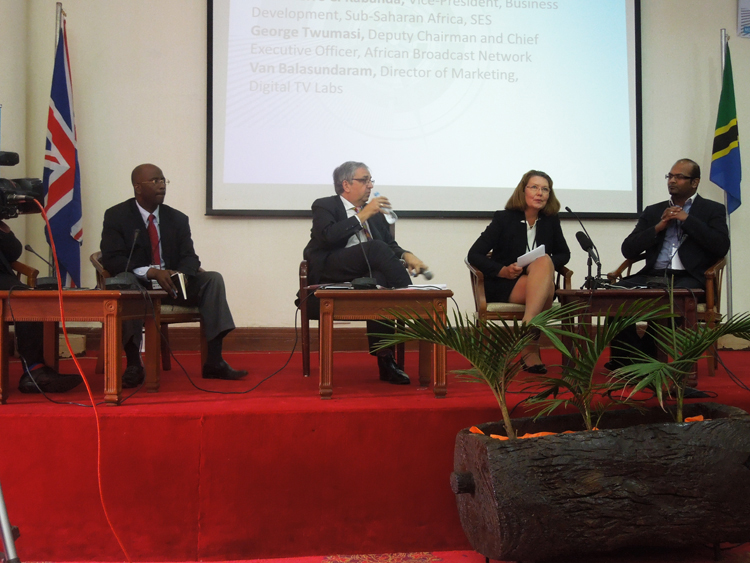
Just under 200 people (including regulators, the private sector and civil society groups) have come together to discuss critical issues surrounding the switchover/transition from analogue to digital broadcasting at the Commonwealth Telecommunications Organisation’s Digital Broadcasting Switchover Forum (#DBS2014) taking place from 11th-14th February 2014.  We were delighted that Hon Dr. Fenella E. Mukangara (Minister of Information, Youth, Culture and Sport of the United Republic of Tanzania) was able to open the Forum this morning.

With Nkoma and Mukangara

In my welcome address, as well as thanking the government of Tanzania and especially the Tanzania Communications Regulatory Authority, I took the opportunity to highlight four particular issues:

  • The importance for Africa –  digital transition/switchover has considerable potential, especially in terms of the diversity of services it can offer, as well as the digital dividend it will provide through the reallocation of spectra.  However, it must be used to  serve the interests of all of Africa’s people, especially the marginalised, such as people with disabilities and those living in sparsely populated rural areas.
  • The potential for Africa – people living in Africa should not be only learning from the experiences of other parts of the world in terms of good practices (part of the purpose of this Forum), but should also be developing innovative solutions for the context of Africa, that can in their turn be used in other international contexts. We must build on the richness of African innovation.
  • The challenges facing Africa – some of the many challenges facing Africa include:
    • it is not easy to deliver transition/switchover solutions at a cost that everyone can afford;
    • we must not fall into the trap of being forced to deliver to a time-schedule that may not  be realistically feasible;
    • ensuring indeed that the poor and marginalised – those who often currently benefit most from analogue radio and television – can indeed still afford to do access digital broadcasting;
    • ensuring quality standards of equipment such as set top boxes; and
    • ensuring that appropriate information is shared with everyone in a diversity of languages.
  • My own experiences of switchover – I recall my parents being really concerned about switchover in England, not fully understanding what was involved, but they were grateful that a free service for elderly people was provided to put in a set top box and help them to use it effectively.  My mother can now benefit from all that digital TV can offer! This particularly reminds that it is not so much the technology that is the challenge, but rather that the most difficult thing to get right is how to ensure that everyone, and particularly the elderly, the spatially marginalised and those with disabilities, can really benefit from digital switchover.

Sirpa OjalaImage from session on the future of African broadcasting

Leave a comment

Filed under Africa, ICT4D