Category Archives: ICT4D

Policy Brief on the Development Impact of ICT4D Partnerships

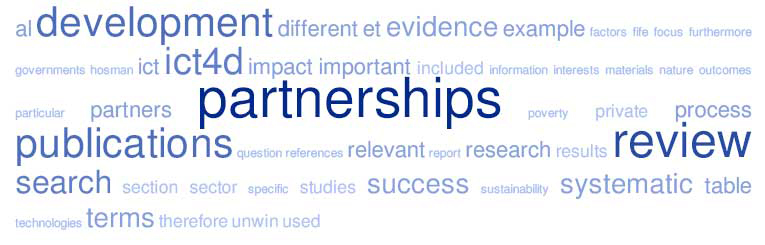
The Policy Brief resulting from the systematic review report by Marije Geldof, David Grimshaw, Dorothea Kleine and Tim Unwin on the development impact of ICT4D partnerships is now avalable from the R4D website (Policy Brief) and the ICT4D Collective website (Policy Brief).

This emphasises five key findings:

  1. Success is increased when detailed attention is paid to the local context and the involvement of the local community in partnership implementation.
  2. It is important for such partnerships to have clear and agreed intended development out-comes, even where constituent partners may themselves have different reasons for being involved in the partnership.
  3. Sustainability and scalability of the intended development intervention need to be built into partnership design at the very beginning.
  4. Successful partnerships are built on trust, honesty, openness, mutual understanding and respect.
  5. A supportive wider ICT environment needs to be in place, both in terms of policy and infrastructure, if such partnerships are to flourish and deliver effective development outcomes

Link to Full Systematic Review Report on ICT4D Partnerships (.pdf)

Leave a comment

Filed under Development, ICT4D

ICTD2012 Call for Papers

The call for papers for the ICTD2012 conference has just been released – full details given below:

CALL FOR PAPERS
Fifth IEEE/ACM International Conference on Information and Communication Technologies and Development, Georgia Institute of Technology, Atlanta GA USA

Conference dates: March 12-16, 2012
Paper submission deadline: July 22, 2011 (11:59pm UTC)
Conference website: http://www.ictd2012.org
Contact us at: program@ictd2012.org
Twitter: @ICTD2012   Facebook: ICTD 2012 Atlanta

ICTD provides an international forum for scholarly researchers exploring the
role of information and communication technologies (ICTs) in social,
political, and economic development. The conference program and accepted
papers will reflect and deepen the multidisciplinary nature of ICTD
research, with anticipated representation from anthropology, computer
science, communication, design, economics, electrical engineering,
geography, information science, political science, public health, sociology,
and so on.

Submitted papers are subject to a rigorous and selective double-blind peer
review; accepted papers will appear in electronic conference proceedings and
will be archived in the ACM and/or IEEE systems. A subset of the papers will
also appear in a special issue of Information Technologies & International
Development.

ICTD2012 is the fifth of an ongoing series of conferences occurring every
one-and-a-half years; previous conferences have taken place in: Berkeley, CA
(USA) ICTD 2006; Bangalore (India) ICTD 2007; Doha (Qatar) ICTD 2009; and London (United Kingdom) 2010.

For the purposes of this conference the term “ICT” comprises electronic
technologies for information processing and communication, as well as
platforms that are built on such technologies. “Development” means
international development, including, but not restricted to, poverty
alleviation, education, agriculture, healthcare, general communication,
gender equality, governance, infrastructure, environment and sustainable
livelihoods. Papers considering novel designs, new technologies, project
assessments, policy analyses, impact studies, theoretical contributions,
social issues around ICT and development, and so forth will be considered.
Well-analyzed negative results from which generalizable conclusions can be
drawn are also sought.

Relevant papers reporting high-quality original research are solicited. Full
papers will be reviewed by a multidisciplinary panel, and evaluated
according to their novel research contribution, methodological soundness,
theoretical framing and reference to related work, quality of analysis, and
quality of writing and presentation. Authors are encouraged (but not
required) to address the diversity of approaches in ICTD research by
providing context, implications, and actionable guidance to researchers and
practitioners beyond the authors’ primary domains.

Only original, unpublished, full research papers in English will be
considered. Submissions not meeting a minimum bar of academic research
writing will be rejected without full review. Papers should contain a
maximum of 8000 words. Reviews are double blind, so papers should not
include author names or other information that would identify the authors
(references to previous work by the authors should be in the third person).
Authors should follow IEEE formats and styles
http://www.ieee.org/documents/stylemanual.pdf. Samples of this are also
available in PDF at http://www.ictd2012.org/ICTD2012_sample.pdf and MS Word
http://www.ictd2012.org/ICTD2012_sample.doc formats. Authors will be
required to sign a copyright release for publication in the conference
proceedings.  Additional submission details will be posted on the conference
website at http://www.ictd2012.org, as the information becomes available.

As a new opportunity for 2012, we are offering a peer mentorship program for paper submissions. Submit your paper early (by May 1st, 2011) to this
program and get feedback from peer mentors ahead of the normal submission process and June deadline. See http://www.ictd2012.org/mentorship for details.

Atlanta is a world-class city with a rich and passionate history. Spring
comes early to Atlanta; March is likely to be sunny, crisp, and pleasant.
The conference venue is the Georgia Tech Hotel and Conference Center
(http://www.gatechhotel.com/). Georgia Tech is one of the top research
universities in the United States, distinguished by its commitment to
improving the human condition through advanced science and technology.

The conference website is http://www.ictd2012.org. Follow us on Twitter
@ICTD2012, or visit our Facebook page at “ICTD 2012 Atlanta”.

Contact us at program@ictd2012.org

Important dates:
Peer review mentor program submission deadline: May 1, 2011
Paper submission deadline: July 22, 2011
Acceptance notifications: September 16, 2011
Camera-ready papers due: January 16, 2012
Conference dates: March 12-16, 2012

Program Committee Chairs
Jonathan Donner, Microsoft Research India
Beki Grinter, Georgia Institute of Technology
Gary Marsden, University of Cape Town

General Conference Chairs
Michael Best, Georgia Institute of Technology
Ellen Zegura, Georgia Institute of Technology

2 Comments

Filed under Development, ICT4D, ICT4D conferences, ictd2010

Important new report on the impact of ICT4D partnerships on development

Together with Marije Geldof, David Grimshaw and Dorothea Kleine from the ICT4D Collective, I have just completed a DFID funded systematic review on the development impact of ICT4D partnerships. This is part of the extensive programme of systematic reviews initiated recently by DFID, that draws very largely on the model of such reviews used in the medical sciences.  DFID thus emphasises that ‘Systematic reviews have been used in health, education and social policy to meet this need. Systematic reviews are a well-established and rigorous method to map the evidence base in an unbiased way as possible, assess the quality of the evidence and synthesize it. Systematic reviews can then be mediated in specific ways to make it easier for policy makers and practitioners to rapidly understand the body of evidence and use this as a strong foundation on which to base policy and practice decisions’.  Undertaking the review was both challenging and interesting, and we not only reached substantive conclusions about the role of ICT4D partnerships, but we also made considerable comments about the difficulties in undertaking rigorously defined systematic reviews on topics such as this.

Based on our review of 53 key publications in the field, we had five main substantive conclusions:

  • Success of ICT4D partnerships is increased when detailed attention is paid to the local context and the involvement of the local community in partnership implementation
  • It is important for such partnerships to have clear and agreed intended development outcomes, even where constituent partners may themselves have different reasons for being involved in the partnership
  • Sustainability and scalability of the intended development intervention need to be built into partnership design at the very beginning
  • Successful partnerships are built on trust, honesty, openness, mutual understanding and respect
  • A supportive wider ICT environment needs to be in place, both in terms of policy and infrastructure, if such partnerships are to flourish and deliver effective development outcomes

In terms of our recommendations relating to the actual systematic review methodology, we suggest that

  • When dealing with multidisciplinary issues such as this, it is crucial to retain some flexibility in search strategies, and procedures such as those often adopted in reviews of health interventions may sacrifice real understanding in the name of overly zealous adherence to claimed rigour
  • External reviewers play a crucial role in guaranteeing the quality of such reviews, and they need to be rewarded for their contributions
  • Many of the publications that we reviewed lacked a rigorous account of their research methodology, and we recommend that all funders of development related research should insist that researchers carefully document their methods in all of their publications, so that readers can judge the reliability of the findings
  • Many publications on ICT4D partnerships do not specify either what they mean by partnerships or the real development outcomes that they were pursuing.  It is therefore very difficult to identify the precise impact of partnerships on development.  It may well be that interventions that claim to have benefited from partnerships could have been delivered more effectively through other contractual arrangements

Copy of report (.pdf)

Policy brief (.pdf)

Leave a comment

Filed under Development, ICT4D

ICTD2010 Papers and Posters online

Much of the material presented at ICTD2010 is now available on the conference web-site:

ICTD2012 will be hosted at Georgia Tech.

Leave a comment

Filed under Development, ICT4D

Social networks, digital technologies and political change in North Africa

Much has been written about the potential of new ICTs, and particularly mobile technologies and social networking software, to transform political and social systems.  A fundamental question that underlies all work in ICT4D is whether new ICTs can indeed be used by the poor to overthrow oppressive regimes, or whether, like other technologies before them, ICTs are used primarily by the rich and powerful to maintain their positions of power.  Until very recently, it seemed that despite the potential of ICTs to undermine dominant political structures, most attempts to do so have been ruthlessly crushed.  The ruling regime in Iran was thus able to suppress the ‘Twitter Revolution’ of 2009-10, and the Burmese government likewise maintained its grip on power despite extensive use of mobile ‘phones and the Internet during protests in 2007.

Recent events in North Africa, with the overthrow of President Ben Ali in Tunisia and the continuing protests against President Mubarak in Egypt, have widely been attributed in considerable part to the agency of mobile ‘phones and the use of social networking environments over the Internet.  Whilst it is too early fully to judge their importance in fueling such political protests, the following reports provide evidence in support of such claims:

Tunisia

Egypt

Wider ramifications

Much research needs to be undertaken on the real role of ICTs in these ongoing political processes.  What seems apparent, though, is that many participants do indeed believe that these technologies are helping them achieve their objectives.

5 Comments

Filed under 'phones, Accessibility, Africa, Development, Ethics, Social Networking

Corruption in the Global Fund – implications for ICT4D

I have long been critical of many aspects of the work of the Global Fund to Fight Aids, Tuberculosis and Malaria, and it therefore comes as no surprise to learn that the Fund’s newly reinforced Inspector General’s office has encountered corruption.  What is surprising, though, is its scale.  As an Associated Press report on 24th January  comments, “A full 67 percent of money spent on an anti-AIDS program in Mauritania was misspent, the investigators told the fund’s board of directors. So did 36 percent of the money spent on a program in Mali to fight tuberculosis and malaria, and 30 percent of grants to Djibouti.In Zambia, where $3.5 million in spending was undocumented and one accountant pilfered $104,130, the fund decided the nation’s health ministry simply couldn’t manage the grants and put the United Nations in charge of them. The fund is trying to recover $7 million in “unsupported and ineligible costs” from the ministry.”

In response, the Global Fund has issues a Press Release, including the following assertions: “The Global Fund has zero tolerance for corruption and actively seeks to uncover any evidence of misuse of its funds. It deploys some of the most rigorous procedures to detect fraud and fight corruption of any organization financing development. The vast majority of funds disbursed by the Global Fund is untainted by corruption and is delivering dramatic results in the fight against the three diseases.“Transparency is a guiding principle behind the work of the Global Fund and we expect to be held to the highest standards of accountability,” said Prof. Michel Kazatchkine, Executive Director of the Global Fund. The news report that has caused concerns refers to well-known incidents that have been reported by the Global Fund and acted on last year. There are no new revelations in yesterday’s media reports. In its report last year, the Global Fund’s Inspector General listed grave misuse of funds in four of the 145 countries which receive grants from the Global Fund. As a result immediate steps were taken in Djibouti, Mali, Mauritania and Zambia, to recover misappropriated funds and to prevent future misuse of grant money”.

At the time of the World Summit for the Information Society in 2003 and 2005, many private sector and civil society organisations were clamouring for a similar fund to support the implementation of ICT4D initiatives, and I distinctly remember discussions among donor government officials who strongly opposed such ideas.  In part, their arguments were based on the need to focus on using general budgetary support mechanisms to foster economic growth through Poverty Reduction Strategy Paper processes, but they also reflected concerns about the difficulty of ensuring that money from funds such as the Global Fund could be appropriately accounted for.  Whilst there are problems in accounting for all so-called Official Development Assistance, the Global Fund’s experiences suggest that bilateral donors were right in their scepticism. It is to be hoped that all those involved in the substantial disbursal of ‘development assistance’, and especially some of the large private foundations that have been established in recent years, will look closely at these findings, and act upon them to ensure that well-intentioned assistance does indeed go to the people who have most need of it.

Leave a comment

Filed under Development, ICT4D

On publishing in ICT4D

During the recent ICTD2010 conference, Hari kindly brought together a group of us to discuss academic publishing in the field of ICT4D.  Each speaker was to talk for about ten minutes, directing our ‘advice’ primarily towards those who may be less experienced in academic publishing.  Whilst I absolutely love seeing, holding and smelling the first copy of one of my new books, or reading one of my new papers in an academic journal, or seeing authors that I respect referencing one of my publications in their own work, I now recognise that a system that I once admired has become fundamentally, perhaps fatally, flawed.  There is sadly much that is not really scholarly and little at all that is value free in the world of academic publishing today.  It does not foster the excellence or originality that it is  intended to achieve.  All too often it leads instead to a morass of mediocrity and replication.

Two comments in the distant past still haunt me:

  • when my first academic paper was published, a friend and colleague said “congratulations, but you don’t expect anyone will read it do you”; and
  • a senior colleague in a government department once said to me: “I don’t ever read academic papers, I get consultants to provide a short synthesis of them for me”.

The reality of academic publishing is that very few papers are ever actually read, and few people are ever influenced by what is written in journals.

Some of the most challenging problems to do with academic publishing are:

  • Academic journals are fundamentally a way to ensure professional exclusivity.  They are a means through which one group of academics excludes others from participating in their ‘mysteries’.  Thus ‘apprentices’ have to learn the rituals and obey the rules if they wish to belong to this exclusive and privileged club.
  • Because of the need for authors to obey the rules, journals all too frequently fail to promote the very innovation that is meant to be their life blood.  There is a real danger that referees or editors will reject papers that are too innovative or fail to abide by the logics and requirements of a particular journal’s editorial board.
  • Many citation cartels exist, whereby in order to boost their rankings in citation indices, academics agree to cite each other’s papers in their own works.
  • There are also real issues surrounding the dominance of the English language, and far too few journal editors or reviewers are willing to pay heed to different cultural traditions of academic writing style.  We should do much more to enable people from different linguistic backgrounds to get their papers published in the ‘top’ journals.
  • Peer review is by no means the innocent, quality control exercise it is meant to be.  Far too often academics use it as a way of preventing ideas that are contrary to their own from being published.
  • Citation indices usually only incorporate the more prestigious journals, and thus often omit the more innovative and cutting edge papers.
  • The emphasis on quantity rather than quality of publication means that vast numbers of dreadful papers are submitted to journals – and it is very frustrating for editors and referees to have to sift through the dross!

The net outcome of these is that far too many papers that are published are mediocre and tend to replicate existing knowledge.  Moreover, many of these problems have become exacerbated over the last 20 years as academic publication in ‘top’ journals has become such an important part of research assessment exercises.

I offered five key tips for less experienced academics who wish to succeed in this environment:

  • The most important tip is that one must realise that academic publishing is a game.  New academics therefore have to learn the rules and play by them – if they want to achieve success in terms that the profession’s gatekeepers have defined.  Once your career is established, then you are in a position to try to change the rules!
  • Write something that is reasonably good and then submit it to a journal.  Referees are bound to suggest revisions, and so don’t be hurt by the comments.  Use them, alongside your own developing ideas, to improve the paper and resubmit it – in most cases it will eventually be published (as long as it is reasonably good in the first place!)
  • Publish less, but publish better; focus on quality rather than quantity.  When I was head of department, I remember encouraging colleagues to make sure that they published just two or three papers a year in major journals, and a book every three to four years.
  • Remember that few people actually read academic journals. If you want your ideas to have an impact, it is therefore essential that you make them available in different formats and contexts – as, for example, through your own blog
  • Only ever agree to have your supervisor’s name as an author on the paper if she or he has actually written a substantial amount of it!  Good academics don’t need to have their names on your research – although it is always nice to recognise their advice in an acknowledgement.

Two final points are worth mentioning.  The first is that publishing in a multidisciplinary field such as ICT4D is fraught with a particular set of additional difficulties.  Where academic success is defined in large part through publication in prestigious journals, most academics seek to publish their work in their own discipline’s top-ranked  journals.  It is thus more prestigious for a computer scientist working in ICT4D to publish in a top computer science journal than in a new ICT4D journal. Those who edit cross-disciplinary journals often therefore find that the papers that are submitted to them are those that have been rejected by other more mainstream journals.  Consequently, papers published in multidisciplinary journals are often of less good quality than those in the major single disciplinary journals.  This does, though, provide editors of multidisciplinary journals with an opportunity to be innovative and creative in what and how they publish. Moreover, it is incumbent on those working in the field to support new journals that are indeed trying to break the mould of traditional academic arrogance and exclusivity.

Finally, we need to explore alternative modalities of publishing.  Those of us working in the field of ICT4D should seek to use ICTs creatively to enable multiple voices from many different backgrounds to share their research findings.  However, we still need to find appropriate business models to enable more open and free publication options to be created.  Traditionally, journal publishers have added considerable value to the publication process, not least through funding the editorial and publication process.  Such costs remain to be covered, and few ‘free’ journals have yet actually enabled high quality original academic papers to be widely disseminated. We also need to work creatively with existing publishers, since they have much to offer the publication process.

For some of my more detailed reflections on peer review see:

[For the presentations by Geoff Walsham, Cathy Urquhart and Shirin Madon as well as the full discussion see the video “Publishing ICT4D Research available from ICTD2010 videos and photos]

2 Comments

Filed under ICT4D, Postgraduate supervision, Universities

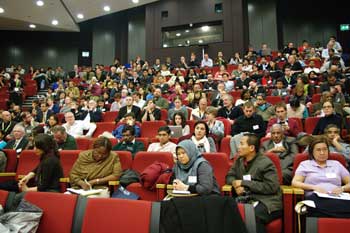
Leaving the best until last – Day 4 at ICTD2010

Great to hear how many people enjoyed the party last night – and thanks once again to Ugo and Fftang! Fftang!  I’m amazed how many people were fit for action this morning – but probably just as well that we were starting at 09.00 rather than 08.00!

An amazing set of discussions and workshops – some of the highlights in the pictures below.

Thanks once again to everyone who came to ICTD2010 and helped make it so valuable a place to explore our shared interests in ICT4D!

This slideshow requires JavaScript.


Leave a comment

Filed under ICT4D, ictd2010, Photographs

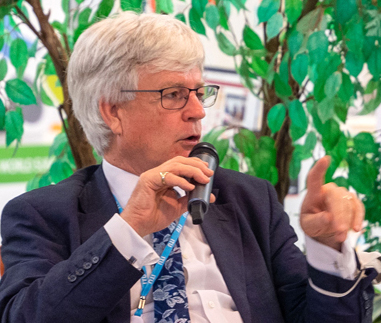
Day 3 at ICTD2010

The third day – reminiscent of one of my favourite films, The Third Man. Some serious papers, excellent posters and demos. It was the conversations in the corridors that I enjoyed most…

Thanks to Paul and Michelle for the evening reception – and in case anyone is wondering about exactly which winery Michelle was referring to it was Bloodwood in Orange!

Congratulations to Georgia Tech who will be the hosts for ICTD2012!

This slideshow requires JavaScript.

Leave a comment

Filed under ICT4D, ictd2010, Photographs, Wine

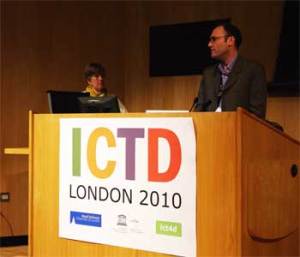
Geoff Walsham’s Keynote Address at ICTD2010

Great Keynote Address by Geoff Walsham at ICTD2010 – reminding us not only of the importance of the FOR DEVELOPMENT in ICT4D, but also that one can combine high quality scholarship with a touch of levity!  His jokes were a definite antidote to any excesses of the night before, and inspired us for the third day of ICTD2010.

This slideshow requires JavaScript.

Leave a comment

Filed under ICT4D, ictd2010, Photographs