Category Archives: ICT4D

Conflicting views on UK ID Card announcement

Alan Johnson, the UK’s Home Secretary,  made an important announcement on 30th June about the future of UK identity cards, noting in particular that:

  • ‘I want it to be a voluntary scheme’
  • ‘It is an important tool for tackling terrorism … it is very helpful’ but is not the whole toolkit
  • it would be an ‘identity card with thumbprint and biometric features’

This was further supported by an update on identity cards posted on the Home Office’s web-site which noted that

  • ‘From 2011-12, ID cards will roll out to the wider population on an entirely voluntary basis. This accelerated roll-out will benefit those people who need the cards the most. ID cards will be particularly helpful for young people who need to prove their age, and will empower businesses to ensure that they aren’t selling items such as alcohol and cigarettes to those who are underage. The government is also exploring the option of allowing pensioners aged 75 and over to receive an ID card free of charge’.
  • ‘The Home Secretary has asked the UK Border Agency to review its successful roll-out of compulsory ID cards to foreign nationals to see how it can be sped up. The agency has already issued 50,000 ID cards to people who are legally living and working in the UK. Under current plans, within three years all non-EEA foreign nationals coming to the UK for more than six months, or extending their stay here, will have a card’.
  • ‘Home Secretary Alan Johnson, said that the cards would be the most ‘convenient, secure and affordable way of asserting identity in everyday life.’ He said, ‘The benefits are not just for individuals but also for communities where a reliable proof of age will be invaluable in the fight against underage drinking and young people trying to buy knives.’ He also pointed out the benefits to young people, who he said, ‘on average, have to prove their age more than twice as often as adults.’ ‘

One of the precipitating factors behind this announcement was rising opposition that airside workers at Manchester and London City airports were being forced to have identity cards.  The Home Office site provides the following official response: ‘Under the new proposals, ID cards will be voluntary for workers at Manchester and London City airports. Workers will continue to be encouraged to get an ID card, which they can do for free, as it makes it easier for employers to carry out background checks and issue passes.’

These announcements are generally most welcome, because they go some way to recognising that:

  • many people in the UK do not want identity cards
  • the costs of introducing ID cards are much higher than was originally anticipated
  • the claim that they will have a significant impact on terrorism is simply not  true, and therefore the government’s attempt to introduce ID cards on the back of public concern over terrorism was devious and misleading
  • ID cards are primarily a means through which the state imposes control over its citizens rather than an actual benefit to those citizens.  If we have survived without ID cards in the past, why do we need them now?

From the above announcements, it would now seem that the main case ‘for’ ID cards now rests on their ability to prevent underage drinking, smoking and knife crime.  Could someone please tell me how ID cards will actually stop young people from getting access to alcohol, tobacco and knives?

It is interesting to note how mainstream media has reported different aspects of this announcement, mostly being supportive of the changes:

  • BBC: ‘Climbdown on compulsory ID cards’
  • The Guardian: ‘ID cards policy to continue’
  • The Guardian: ‘Passport details to be kept on ID register despite card U-turn’
  • The Times: ‘ID cards ‘will never be compulsory’ for Britons’

For other views on ID cards see:

  • No2ID the UK-wide, non-partisan campaign opposing the government’s planned ID card and National Identity Register

Leave a comment

Filed under Ethics

China and Internet filtering

The BBC today reported that the Xinhua News Agency has recently announced that China is to delay a controversial plan that would require all new computers sold in the country to be equipped with internet filtering software (Green Dam Youth Escort).   According to the BBC, “Officials say it is designed to shield children from pornography and violence. However, free speech activists have criticised the software plan as an attempt to tighten the Chinese government’s already strict controls on internet usage”.

The Xinhua report is as follows: “BEIJING, June 30 (Xinhua) — China will delay the mandatory installation of the controversial “Green Dam-Youth Escort” filtering software on new computers, the Ministry of Industry and Information Technology (MIIT) said here Tuesday. The pre-installation was delayed as some computer producers said such massive installation demanded extra time, said the ministry. All computers produced or sold in China were scheduled to be installed with such software after July 1, according to MIIT’s previous announcement. The ministry would continue to provide a free download of the software and equip school and Internet bar computers with it after July 1, said a spokesman with MIIT. The ministry would also keep on soliciting opinions to perfect the pre-installation plan, he said. The software is designed to block violence and pornographic contents on the Internet to protect minors. It could also help parents control how much time their children spent online“.

This is yet another example of the intricate changes in relationships between states and individuals that have been enabled by ICTs.  Much more work needs to be done better to understand the ethical implications of such changes.

Leave a comment

Filed under ICT4D

Updates on Iran

Most technologies have traditionally be used by those in power to maintain their positions of power.  However, new ICTs, particularly those associated with the Internet, such as Blogging and Twitter, have the potential dramatically to change existing power relationships.  The current situation in Iran provides a classic example of ways in which these technologies can be used to share information and to organise political action.

For just some of the many accounts of ongoing activities in Iran, for example, see:

Other interesting material on Iran and Twitter includes the following:

2 Comments

Filed under Ethics, ICT4D, Social Networking

Digital Britain

The UK’s Department for Culture, Media and Sport (I still think this is a crazy mixture, but…)  published its final report on Digital Britain on 16th June 2009.  It claims that “The Digital Britain Report is the Government’s strategic vision for ensuring that the UK is at the leading edge of the global digital economy. It is an example of industrial activism in a crucial growth sector. The report contains actions and recommendations to ensure first rate digital and communications infrastructure to promote and protect talent and innovation in our creative industries, to modernize TV and radio frameworks, and support local news, and it introduces policies to maximize the social and economic benefits from digital technologies”.

The key measures it recommends are:

  • A three-year National Plan to improve Digital Participation
  • Universal Access to today’s broadband services by 2012
  • Next Generation fund for investment in tomorrow’s broadband services
  • Digital radio upgrade by the end of 2015
  • mobile spectrum liberalisation, enhancing 3G coverage and accelerating Next Generation mobile services
  • robust legal and regulatory framework to combat Digital Piracy
  • support for public service content partnerships
  • a revised digital remit for Channel 4
  • consultation on funding options for national, regional and local news

One of the most interesting statements in the executive summary is that “For individuals a quiet revolution has delivered seamless connectivity almost everywhere. That revolution ranges from personal pocket libraries of music, audiovisual content and increasingly electronic literature on a scale inconceivable ten years ago; inexpensive broadband which allows efficient and family-friendly working patterns in the knowledge sector of the economy – and broadband at increasing speeds – the next generation of which, already available to nearly half Britain’s homes, allows us to send or receive 200 mp3 music files in five minutes, an entire Star Wars DVD in 3 minutes and the total digitised works of Charles Dickens in less than 10 minutes. It has given us access to a wide range of social networks, allowing us to share experiences and swap and create content. The digital revolution has also led to a huge expansion in the creation and availability of professional content. Today, the typical British consumer spends nearly half of their waking hours engaged in one form or another with the products and services of the communications sector”.  The report goes on to assert that “The UK is already a digitally enabled and to a significant degree digitally dependent economy and society. The Digital Britain Report aims to be a guide-path for how Britain can sustain its position as a leading digital economy and society”.

To my mind, the report is overly up-beat.  It fails satisfactorily to address the real challenges associated with a digital Britain, and especially:

  • it focuses primarily on the technological and economic dimensions – and not enough on the social, cultural and political issues raised by these
  • there is nothing overtly on the ethical and moral issues raised by this particular vision of a ‘digital Britain’ (‘ethics’ and ‘moral’ are words that are not even mentioned in the report)
  • although trying to grapple with some of the issues surrounding unequal access, its solutions are unlikely to have a significant impact on the lives of Britain’s poorest people and communities – the concept of a ‘digital divide’ is only mentioned three times, and there is no mention of words such as ‘inequalities’ or ‘inequality’; ‘equity’ is only mentioned twice.  The market cannot provide effective solutions for the most marginalised – and it should be the role of government to intervene to ensure that as many people as possible can benefit from the potential that such technologies can offer
  • insufficient attention is paid to the negative effects of the digital economy – in terms of the ways in which it reinforces power relationships, and enables ever greater ‘control’ and manipulation of the majority by the few.  The anarchic potential of the Internet is also insufficiently explored – and is treated negatively in the only place where it is addressed (“Most consumers, except the minority of the anarchic or those who believe in ‘freedom to’ without its counterbalancing ‘freedom from’, who believe in unsupported rights without countervailing duties, would prefer to behave lawfully if they can do so practically and with a sense of equity” p.110).  “Web 2.0” is likewise only mentioned once!
  • as I have argued elsewhere, one of the implications of Britain sustaining “its position as a leading digital economy and society” is that this will necessarily mean that it will relatively disadvantage those in poorer countries of the world.  Given my own interest in trying to ensure that poor people and marginalised communities can also truly benefit from digital communities, I am concerned by the complete lack of attention that this report pays to issues of ‘development’ – Africa is not mentioned at all, and ‘developing countries’ are only mentioned once to exemplify the impact of mobile ‘phones therein!  I wonder what colleagues in the UK’s Department for International Development have to say about this – another excellent example of lack of joined up government!

The UK government needs to understand that ICTs are about much more than simply the technology and the economy – if we are truly to use them to make the world a better place, we must emphasise the social, political and cultural aspects of their use much more than does this report on Digital Britain.

For other commentary in the UK press see:

  • James Ashton in the Times: A blurred vision for Digital Britain
  • Matthew Horsman in the Daily Telegraph: Only a sketchy road map of Digital Britain
  • BBC News: Digital Britain countdown begins

Leave a comment

Filed under ICT4D

eLearning Africa, 27-29 May 2009

This year’s eLearning Africa conference in Dakar, Senegal, starts on 27th May with pre-conference workshops and concludes on the evening of 29th May.  It promises to be an interesting opportunity to reflect on how best we can use e-learning to deliver on some of the continent’s biggest capacity development challenges.

The organisers suggest that the highlight will “include:

  • Discussion on the relative merits of one-to-one vs. shared computing which will feature in several sessions including a series of cases studies presented by SPIDER showcasing the way in which one-to-one computing has been realised in large scale equipment roll-outs in Rwanda, Ethiopia and Uruguay.
  • Debate about the extent to which open source solutions can be made sustainable. Are they the only solution for cash-strapped organisations or do they require a level of skills and resources not regularly found in colleges, universities and schools? Input on this topic will come from practitioners from the National Open University of Nigeria; MEF/IMSP, Benin; Makerere University, Uganda and many others.
  • The ongoing debate about the open educational movement in Africa will further develop this theme. Can the OER movement in Africa help to expand access to educational content for Africa’s resource-poor higher education institutions? Does it live up to its expectations? Presenters from OER Africa, the National University of Rwanda and the Shuttleworth Foundation in South Africa will present their experiences.
  • Mobile learning is of particular interest in Africa given the number of mobile devices available and the lack of reliable terrestrial Internet access. eLearning Africa 2009 features many interesting practical examples, such as m-learning for health-care workers, instigated by the Institute of Tropical Medicine in Belgium; mobile learning opportunities by l’Ecole Nomade in France; a study by the University of South Africa on the use of Mxit; and a partner programme of the Mid Sweden University and the Open University of Tanzania, using mobile phones to enhance in-service teacher training.
  • Affordable and reliable access solutions remain a challenge for most education and training practitioners in Africa. Presentation sessions in which access is discussed will include input from the Senegalese Government, the French Foreign Office, Computer Aid International and AfrISPA.
  • The results of new research led by IDRC’s PanAf Observatory will highlight the ways in which the pedagogical integration of ICTs can improve the quality of teaching and learning in Africa.
  • A discussion on the re-use and disposal of obsolete ICT equipment entitled E-Waste: Is Africa Heading for an Environmental Crisis? will feature a lively debate on issues around re-use and disposal of ICT equipment and the impact this has on the environment.
  • Dedicated sessions led by leading organisations active in this field including Agence Universitaire de la Francophonie (AUF), the World Bank, UNESCO and UNEP which will feature some of their projects, initiatives and successes.
  • There will be several inspirational case studies on the development of ICT4E policies, including presentations by IICD, The Netherlands, Ministère des Enseignements Secondaires, Cameroon, the University of Lagos, Nigeria and COFOPS-INTER, Cote D’Ivoire.
  • A special panel to highlight the eLearning initiatives of the Partnership for Higher Education in Africa, the South African Institute for Distance Education, and UCT’s Centre for Educational Technology. This panel will reflect on early lessons learned, explore specific educational technologies, introduce the emerging research agenda, and discuss how eLearning in African Higher Education can be advanced further.
  • University experience in putting in place effective technology- enhanced learning, which will feature presentations from universities including Université Cheikh Anta Diop dé Dakar, Senegal; University of Dar Es Salaam, Tanzania; Université de Nouakchott, Mauritania; and École des Sciences de l’Information, Morocco. They and many others will provide first hand witness accounts of the opportunities and challenges they face.
  • Sessions on the ways in which ICT is being used to support teacher training and the skills of public servants which will include input from the Ministry of Education, Malawi, the University of Education, Winneba, Ghana and the University of British Columbia, Canada.”

Leave a comment

Filed under Africa, ICT4D

World Press Freedom Day debate at the Frontline Club

01052009395The UK National Commission for UNESCO and the Press Freedom Network have convened today’s debate at the Frontline Club on the motion “Governments at war are winning the battle of controlling the international media”.  The proposers are Andrew Gilligan (Evening Standard) and Jamie Shea (Private Office of the Secretary General of NATO) and the opposers are Jeremy Dear (General Secretary, National Union of Journalists) and Alan Fisher (Al Jazeera English). William Horsley is the debate chair.

My interpretations of what was said by the speakers:

  • Wars create a sellers market in news; demand increases but supply reduces in times of war.  Wars are confusing.  It’s in the interest of those running the battle to keep things confused.  Embeds provide most of the reporting on ongoing wars as  in Afghanistan.  This makes news much more uncontroversial than they should be (Andrew Gilligan)
  • The voices of those suffering are given life by journalists.  War on terror has been accompanied by a war on civil liberties.  Journalists have risked their lives and been killed as they try to lift the veil of secrecy. Despite censorship, a complete blockade of news is not possible given the existence of mobile ‘phones, computers and the Internet (Jeremy Dear)
  • “No pictures, no news” – governments are quick learners.  Do governments make mistakes?  “Yes”.  Do they learn from their mistakes?  “Yes”.   Governments keep the journalists always occupied – keeping them in constant briefings, so they cannot go off and find out things for themselves! We no longer need to work through the media – governments create their own media networks – such as NATO TV.  Instead of using the press to get the message out, we now use pundits who are sympathetic to our cause. “Anyone can be his or her own journalist”. The profession has become democratised – so why cannot governments join in?  A good press helps those of us in government who believe in accurate information (Jamie Shea)
  • Journalists can now report immediately from the frontline; in the old days ‘geography’ mattered, but this is no longer true.  Governments are losing the battles because there are now more ways of accessing the truth than ever before – the bloggers and the twitters…  But the answer is not simply as a result of these new technologies.  Technology is one of our biggest assets – it is getting smaller and better all the time (Alan Fisher)

My thoughts and comments from the floor:

  • There was a tendency to imply that journalists are the arbiters of the truth.  But are they?  I think not.  We all bring parts of ourselves to the truths that we espouse.
  • A key theme, though, is the distinction between “independent journalism” and “public sector broadcasting” – independent voices are really important
  • I liked the comment from the floor that “journalists are concerned with their own greed”!
  • I echo the thoughts of a speaker from the floor who said that African governments are taking advantage of so-called press freedom – many African peoples do not have a choice
  • Much of the debate is indeed ethnocentric – despite global telecommunications
  • An African channel about whom the joke is “not wrong for long”!
  • Relationships between governments and the free press have to be based on mutual respect (Jamie Shea)
  • I would agree with Andrew Gilligan that very few people can actually get to the frontline of war zones – and therefore that professional journalists have a key role to play
  • I enjoyed Alan Fisher’s comments on the Georgia-Russia war – journalists on the ground can directly contradict what government spokespeople are saying
  • Do governments collude in disinterest? Is that why we don’t hear much about continuing violence in places such as DRC?
  • From the floor: “credibility has nothing to do with truth”
  • From the floor: “Deep in the Congo forest you cannot use your mobile ‘phone”.
  • From the floor: “In many countries, to get a SIM you still need to give your identity”
  • How many African countries really support freedom of the press?
  • In so many parts of the world, local journalists do not have the power actually to report because of government restrictions
  • Jeremy Dear emphasised the fundamental importance of journalists supporting each other in the face of oppression from governments
  • Andrew Gilligan: “bloggers have no credibility and little reach”

Who won the debate?  In favour: 38; Against: 15; Abstentions: 9.

1 Comment

Filed under Communication, Ethics

UK Government announces that it has no plans to create a central database for storing communications data

The UK’s Home Office has recently announced that it no longer has any plans to create a centralised database to store all communciations data.  In its consultation paper presented to Parliament in April 2009, and entitled “Protecting the Public in a Changing Communications Environment“, the Home Secretary Jacqui Smith commented that “this consultation explicitly rules out the option of setting up a single store of information for use in relation to communications data”.  This is excellent news for all those concerned that the government was indeed considering establishing such a centralised database of all digital communication (see my comments in February about this). The consultation paper is a very important document, and lays out clearly the various options facing a government eager to get the balance right between privacy and security.

The consultation paper asserts that “The Government has no plans for a centralised database for storing all communications data.  An approach of this kind would require communications service providers to collect all the data required by the public authorities, and not only the data required for their business needs.  All of this communications data would then be passed to, retained in, and retrieved from, a single data store.  This could be the most effective technical solution to the challenges we face and would go furthest towards maintaining the current capability; but the Government recognises the privacy implications of a single store of communications data and does not, therefore, intend to pursue this approach”.

With reference to third party data, two approaches are identified as possible ways forward:

  • “The responsibility for collecting and retaining this additional third party data would fall on those communications providers such as the fixed line, mobile and WiFi operators, who own the network infrastructure”
  • “A further step would be for the communications service providers to process the third party communications data and match it with their own business data where it has elements in common; this would make easier the interpretation of that data if and when it were to be accessed by the public authorities”.

In the light of this, the government intends to legislate “to ensure that all data that public authorities might need, including third party data, is collected and retained by communication service providers; and that the retained data is further processed by communications service providers enabling specific requests by public authorities to be processed quickly and comprehensively”.

The government is particularly eager to receive responses on four main questions:

  • Q1  On the basis of this evidence and subject to current safeguards and oversight arrangements, do you agree that communications data is vital for law enforcement, security and intelligence agencies and emergency services in tackling serious crime, preventing terrorism and protecting the public? Found on page 22
  • Q2  Is it right for Government to maintain this capability by responding to the new communications environment? Found on page 22
  • Q3  Do you support the Government’s approach to maintaining our capabilities?  Which of the solutions should it adopt? Found on page 30
  • Q4   Do you believe that the safeguards outlined are sufficient for communications data in the future? Found on page 30

As the consultation paper concludes, “The challenge is to find a model which strikes the right balance between maximising public protection and the ability of the law enforcement and other authorities to do their jobs  to prevent and detect crime and protect the public, and minimising the intrusion into our private lives”.

Leave a comment

Filed under Communication, Ethics, Uncategorized

Reflections on ICT4D @ The British Council, Manchester

A visit to the British Council’s offices in Manchester today, and an invitation to give a ‘brown bag’ lunch update on current issues in ICT4D that might be of interest to staff there, provided an opportunity for the following reflections:

  1. There are important differences between ICTD and ICT4D – quite simply the “4”.  Much work in this arena has tended to be top-down and supply-led – be it by the private sector or academics who have great ideas and want to try them out in ‘developing countries’.   But the “4” can be of very different kinds – either in support of economic growth agendas, or to empower poor and marginalised communities.  Yes, these are NOT the same thing.  As I have argued many a time elsewhere, economic growth will not, indeed cannot, reduce poverty – at least when the latter is defined in relative terms.
  2. Much of my own work has tried to explore the needs of poor and marginalised people, and then to identify how ICTs might be used to help them achieve their aspirations. However, I am very conscious that this approach runs up against difficulties, especially when confronted with “rights-based” arguments.  Much development literature has shifted from “needs” to “rights”.  I guess I have problems with this – although my argument is not as yet well articulated.  First, it is all very well talking about human rights, but when people are continuing to be marginalised whilst this discussion is ongoing, I do believe we should also be trying to address the immediate needs of the poorest.  Second, I fear that the human rights agenda is actually part of a wider “individualistic” agenda.  Yes, of course human rights are important – but we must not forget “collective” and “communal” responsibilities in the rush to ensure that individual human rights are upheld.
  3. The technologies – there are some great innovations out there – I am very impressed with work being done by the TIER group in Berkeley: robust low cost wifi for healthcare; small microscopes that can be attached to mobile ‘phones; and long distance wifi (WILDNet).  Yet, for many of the poorest people in the world, more traditional solutions have to be, at least in the short term, the most sensible.  Radio remains hugely important in much of Africa.  I remain unconvinced about the claims made for m-learning – a real issue that needs to be addressed remains the screen size.  But, the explosion of mobile services across rural Africa provides huge opportunities for innovation. One thing is for certain, within a decade we will look back on desktop computers – and, dare I say it, even my beloved Mac laptops – as being very archaic.  The future is small, connected and mobile!
  4. This brings me on to infrastructure.  If Africa is to gain any benefit at all from the potential of ICTs, we must pay more attention to two ‘ simple’ things: electricity and connectivity.  If all the aid that has been poured into Africa in the last half century had simply enabled most Africans to have electricity, just think of the changes that would have been enabled!  One of China’s great successes has been its ability to bring electricity to something like 95% of all the country’s population.  Without electricity modern digital technologies cannot function.  The costs of digital connectivity across Africa are likewise scandalous.  ICTs cannot in any way be seen as having any potential to contribute to poverty reduction until the prices of digital connectivity (be it by ‘phone, cable, or satellite)  are dramatically reduced.  Perhaps the arrival of the submarine cable in east Africa later this year will begin to make a difference, but we have yet to see whether the poor will really benefit
  5. Likewise, we must have rigorous regulatory environments if the poor are to benefit from ICTs.  At the very least, these must ensure universal access.  The challenge is that it is not cheap to provide connectivity in rural areas of Africa, and this is not something that the private sector is readily geared up to deliver.  Across much of Africa, it has been those who are relatively better off who have benefited most from deregulation of the telecommunications sector. We need to find cost effective ways through which dispersed rural populations can gain access to the ‘content’ and ‘interaction’ that modern digital technologies permit.
  6. This in turn makes us confront entirely new kinds of business model.  The extraordinarily rapid expansion of mobile technologies in much of Africa is an indication of the willingness of relatively poor people to pay for services that they see as being valuable.  This has opened up huge possibilities for the provision of new services, especially branchless or mobile banking.  The potential to deliver large-volume low-margin services across mobile platforms is one that we need to encourage.  Traditionally most ICT companies have focused on the top-end of the markets; the potential for bottom-of-the-pyramid models in contrast offers real opportunities for ICTs to be used by poor people to their advantage.
  7. The challenges of content provision – finally, we need to address the pressing question of why there is so little indigenous quality content development in many of the poorer countries of the world.  I have been involved in several collaborative attempts to help develop local content, and have clearly not yet learnt how to do this effectively!  In part, the reasons must be related to the costs of developing such content, and the lack of skills to do so.  But these factors alone cannot explain the relative dearth of quality digital resources developed within most of sub-Saharan Africa (South Africa being an exception).  There is huge potential for the shared development of locally relevant content, but this has yet to be realised.

In conclusion, the above thoughts perhaps reflect an overly pessimistic and sceptical picture of the field of ICT4D, and I am quite sure that many people will be able to point to their favourite success stories.  Of course there are some!  However, I am utterly fed up with the ways in which small-scale pilot projects are continuously claimed as being huge successes, when they have little chance of ever going to scale, because they were only ever designed to be effective as pilots!  We must get real and admit to our failures.  Rather than implementing countless small ‘computers in schools’ projects, for example, let’s just try and roll out a single programme at the national scale in Africa to train teachers in the effective use of a full range of ICTs to enhance the quality of the learning that they help children gain.  Only when we do so, and when we turn our attention to ways in which ICTs can really be used cost effectively and sustainably to support the world’s poorest peoples, notably street children and those with disabilities, will be able to make any claims that ICTs have had an impact on ‘development’ – at least in the ways that I choose to conceptualise it.

2 Comments

Filed under Africa, ICT4D

@Africa Gathering

me1

A rainy Saturday morning in London – Ed Scotcher has brought us all together to explore the interface between ICTs and African development in the first Africa Gathering.  He kindly asked me to say a few words of introduction – why is this Africa Gathering important?

  1. A joined up approach – it brings together people from many different backgrounds and contrasting experiences – and is therefore a marvellous opportunity for us to identify how we can work better together to help African people implement effective and lasting ICT4D solutions.  There has been so much wasted energy (and finance) in trying to implement ICT4D projects across Africa –  so many of which have failed.  Africa cannot afford such failure.  We must stop reinventing the wheel!  Working together in a joined up approach, we can perhaps begin to make a real difference.
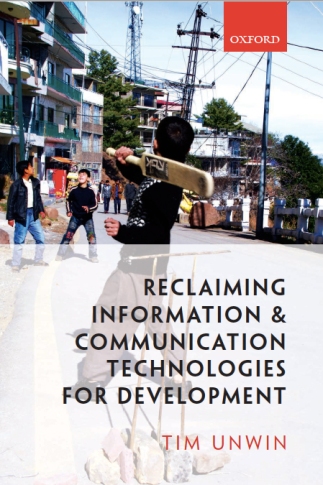
  2. To learn – there are so many exciting initiatives ongoing in the field of ICT4D in Africa – and it is difficult to keep track of them all.  I am so conscious that my recent book on ICT4D is now horribly out of date – and so it is great to be able to learn from the fantastic group of people that Ed has brought together here today!  This, though, raises some huge questions about how we actually synthesise this knowledge.  There are so many ongoing initiatives and even repositories of information (or should this be knowledge?) already ‘out there’ – and yet we continue to make the same mistakes!    If we think we know all the answers, we have already died intellectually!  We must keep learning and sharing what we have learnt.  We must also seek to be more humble, and to listen to the silent voices of Africa.africa-gathering-11
  3. Cool things happen at the edges – one of the most exciting things about ICT4D for me is that it brings people together from a wide range of backgrounds – we need to have computer scientists, philosophers, social scientists, anthropologists, mathematicians, chemists, physicists…. and yes, even geographers involved! We need to keep this diversity. I fear a little about the way in which some people would seem to be trying to define a standard curriculum for ICT4D – to me, this is frightening.  Once we say that “this is what ICT4D should be about” we put up walls that keep some people in and prevent others from entering. We must keep the multidisciplinarity of ICT4D alive – I so hope that those of us here today will keep the energy of difference alive – and that we will continue to hang on to the edges!
  4. African needs and voices – we are largely a white male audience today!  This makes me reflect once more on one of the things I keep on saying – far too many ICT4D projects are top-down and externally led.  Entrepreneurs and innovators in Europe and North America all too often come up with great ideas that are then ‘imposed’ on African people!  Instead, we need to get to know the needs of some of the poorest and most-marginalised people in Africa much better than we do at present.  As many people know, my own personal focus is on how we can use these technologies to help street children and people with disabilities to lead more fulfilled and enjoyable lives – if only more of our work would address the needs of some of these most marginalised peoples.  Others of course have other priorities – but rather than imposing our possibly unwanted solutions for problems that may not exist, let’s simply spend more time listening to what Africa’s poorest people want us to do for them.

Finally, I was going to begin by saying “Welcome Africa Gatherers”!  But that made me think about what gathering small-cheetahis about – bringing together things that already exist.  Perhaps we should instead be “African Hunters” – after all, African peoples have great hunting traditions – along with my friend the cheetah.  My hope for today is that we will indeed become hunters – hunters for ways in which we can use ICTs more effectively to empower the marginalised and poor, hunters for truth and wisdom, hunters for humility…

Thanks Ed for bringing us together!

7 Comments

Filed under ICT4D, ICT4D conferences

Reflections on the young researchers’ workshop at ICTD2009, Doha

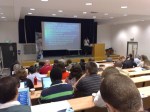
Suq smallSitting in the young researchers’ workshop here in Doha, amidst the splendour of the new Carnegie Mellon University campus, brings together a random series of unconnected thoughts about ICT4D:
  • much academic discourse plays to the tunes of conductors who are not necessarily particularly interested in the needs of the poorest and most marginalised
  • we need to break free from the shackles of traditional disciplinary frameworks
  • please let’s not try to create a single ICT4D ‘discipline’ – the exciting things happen at the edges, where we bring together contrasting ideas and arguments!
  • a huge amount of literature has already been published on ICT4D – let’s stop trying to reinvent the intellectual wheel.  Let’s engage with the really exciting ideas and arguments that are already there – and take them forward.  Let’s bring theory and practice together in innovative ways.  Let’s try to make a difference!
  • as I get older, the more I realise how little I know.  Academic ICT4D could do with a huge dose of humility!
  • there really is a difference between ICT4D and ICTD – which is why I believe so passionately in the ‘4’
  • we need to work much harder at learning each other’s languages – both culturally and academically
  • I am reminded about the line in Michael Moore’s film SiCKO, which commented that America is about ‘me’ whereas Europe is about ‘we’.  I think there is an important truth somewhere in this, although certainly Europe is becoming more about ‘me’ than ‘we’, and there are huge dangers in essentialist arguments such as this!  If ICT4D is to move forward, we do need to do it collaboratively – hence why I believe so strongly in the importance of our work being part of a Collective adventure
  • there is a real contrast between sitting here in the plush air-conditioned lecture theatre, and the harsh reality of life for out of school youth on the streets of Addis Ababa or the amputees in camps in Sierra Leone – how can ICTs be used to support these people in their life aspirations?

2 Comments

Filed under ICT4D