

I have previously written at some length about why the UN Secretary-General’s Global Digital Compact (GDC) is a deeply flawed agenda.[i] I will not repeat those arguments in detail here, but they do provide important context for the comments that follow. The first revision of the GDC text, published on 15 May 2024, provides a useful opportunity to review progress, and assess once again its strengths and fundamental weaknesses. This is timely following the recent WSIS+20 summit in Geneva, where many people I spoke with seemed to be vehemently against the GDC in private, but few were willing to make public statements about it – other than those with a vested interest in its agenda.
In summary
The essence of the GDC – and why it is so flawed – is captured in its scene setting opening paragraph:
1. Digital technologies are dramatically transforming our world. They offer immense potential benefits for the wellbeing and advancement of people, societies, and for our planet. They hold out the promise of accelerating the achievement of the Sustainable Development Goals.
There are three fundamental reasons why this is so problematic:
- First it adopts and propounds an instrumental view of digital tech, claiming that these technologies are transforming our world.[ii] There has in contrast been much literature in recent years that emphasises that it is not the technologies that are actually doing this, but rather that these changes are caused, deliberately and also perhaps sometimes unintentionally, by those who conceive, design, produce and sell them.[iii] It is these people, those I often refer to as the Digital Barons,[iv] and their acolytes (or “knights” – not necessarily in shining armour) who are actually the ones changing the world. We must focus on them, rather than the technologies they create, if we wish to gain a sounder understanding of the causes of change, and therefore what we have to do to rectify them.
- Second, this opening paragraph’s claim that “They offer immense potential benefits for the wellbeing and advancement of people, societies, and for our planet” tells but half the story. Digital technologies are designed and used to do both harms and positive things, but this scene-setting statement chooses only to focus on the latter. It thereby reinforces the widespread focus by those promoting the view that digital technologies (as well as science and innovation more generally) are inherently “good”. This is nonsense. There is some recognition later in the first revision draft of a small number of potential harms caused by digital tech, but by failing to call this out in the opening paragraph those drafting the document reinforce the view that the harms are somehow an aberration, and that digital tech is inherently good. Harms are central to digital tech.
- Third, those drafting the document link the GDC directly to the achievement of the SDGs and Agenda 2030, seeing digital tech as a saviour that will magically accelerate their success. Connecting everyone in the world, even if that were possible, would not necessarily solve the problems of poverty and inequality. It might actually make them worse. The SDGs were fundamentally flawed in their design and very few of them have any hope of being achieved by 2030. Not only is the economic growth agenda underlying them actually causing greater relative poverty in the world, but the use of digital technologies is also at the heart of this accelerating inequality and the increased damage being caused to the natural physical world. It is time to start looking beyond 2030 if we are to have any hope of making the world a better, more equitable, and nature-friendly place for humanity.[v]
The opening paragraph of the GDC did not have to be written in this way. It could have been drafted to reflect a completely different understanding of the use of digital tech in our societies, but that would not have served the coalition of interests between global capital and the UN Secretary-General’s Office that lie at the heart of the GDC.[vi]
These introductory concerns suffuse the whole document and summarise the main reasons why I see the GDC as actually being harmful to the interests of the poor and marginalised. The next sections go on to address in more detail some of the problems associated with GDC in terms of its novelty and claimed necessity, its use of language, and its modality of delivery. The penultimate section then notes some of the more positive attributes of the draft, before the final section highlights its most egregious aspects.

“Kejserens nye klæder”[vii]
There is little if anything new about the GDC.[viii] We have been discussing these issues for at least a quarter of a century, and there is a wealth of material written about them, not least generated by existing entities such as the WSIS Process, the Internet Governance Forum and ICANN. Yet much of this does not seem to be sufficiently recognised in the GDC first revision.[ix] It is almost as though the UN Secretary-General and those in his Secretariat have recently discovered the importance of digital tech, yet know very little about it, and nevertheless wish to claim leadership over the global digital-development agenda. This revised version of the GDC reads much like a partial synthesis of existing knowledge in the field, rather than a significant proposal to create an innovative, wise and forward looking document.[x]
Moreover, para 70 has the audaciousness to propose that “We recognize the role of the Secretary-General in leading UN system-wide collaboration on digital and emerging technologies”. Why should the UN Secretary-General, who is already very busy, and appears to have little in-depth knowledge about the interface between digital tech and development, be charged with leading this, when there are many other people in the UN system (not least DGs or SGs of UN agencies) who have many years of good experience and understanding in this field and would be better suited to the task?[xi] It is positive that he appears to have recognized the importance of the ways through which digital technologies are being used to create a new type of world, but surely the Secretary-General of the United Nations should be delegating this to someone else more experienced for the task and be focusing instead on the fundamental purposes of the UN, such as those articulated in Article 1, Paragraph 1 of the UN Charter, which emphasises the core purpose of the UN as it relates to peace:
“To maintain international peace and security, and to that end: to take effective collective measures for the prevention and removal of threats to the peace, and for the suppression of acts of aggression or other breaches of the peace, and to bring about by peaceful means, and in conformity with the principles of justice and international law, adjustment or settlement of international disputes or situations which might lead to a breach of the peace”.[xii]
This is to my mind a much more pressing need for the world in the mid-2020s, than is his attempt to take a lead on the global discourse on digital tech.[xiii]

Language and intent
There are also very real issues with the language used in the document, particularly from a legal perspective. Two key issues need further consideration: the distinction between “must” and “will” in the wording; and also who “we” actually refers to.
There are seven uses of the word “must”,[xiv] and 36 uses of “will” in the GDC First Revision. Generally in contractual parlance, “must” is used to impose an obligation, whereas “will” is used to refer to something in the future, but not necessarily to create an obligation, although the context of any such usage has important implications for its meaning.[xv] Although some will see many of the “musts” and indeed the “wills” in the GDC as desirable, it is unrealistic to think, for example, that any government (see below on who “we” are) could agree to a document that requires them to agree to all of the “musts” or even more loosely to all the “wills”. Some may aspire to many of these, but aspiration is fundamentally different from agreeing that they “must” do something.
Even more concerning is that nothing is said in the document about what might happen to a country, UN agency, or other entity that fails to deliver on an obligation relating to a “must” (or even a “will”). Furthermore, none of the “musts” appears to be time-bound in the document, and so are presumably meant to be started, if not completed, forthwith, and certainly by 2030; most of the “wills” are likewise merely aspirational, without any time limit.[xvi] Ten of the paragraphs in the GDC relating to commitments do specify a date, as in “we commit by 2030 to”, but another eight merely say “we commit to”. It is unclear whether this distinction between must and will is a result of loose drafting, or whether a distinction in meaning is indeed intended.
There is also ambiguity in the meaning of the words “commit” and “commitment” in the text. Overall, there are 63 commitments listed under the headings “we commit by 2030 to” and “we commit to”, but the character of these commitments varies from vague aspirations such as “increase the availability of digital technology platforms…:” (para 13b) and “Foster an open, fair, inclusive and non-discriminatory digital environment for all” (para 21a), to much more precise ones such as “Develop, through multistakeholder consultations, effective methodologies to measure, track and counter sexual and gender-based violence which occurs through or is amplified by the use of technology” (para 30e). Most are on the decidedly vague side, and despite a commitment in para 9 to “pursue meaningful and measurable actions”, no clear criteria are given to measure any of the commitments. It is difficult to see how anyone could agree to something that is not clearly defined and has no real means of evaluating whether or not it has been successful.[xvii] Most of the aspirations when looked at in detail are also unattainable.
Second, it remains very unclear as to exactly whom the word “we” refers in the Global Development Compact. The Office of the UN Secretary-General’s Envoy on Technology (OSET) states that “The Common Agenda proposes a Global Digital Compact to be agreed at the Summit of the Future in September 2024 through a technology track involving all stakeholders: governments, the United Nations system, the private sector (including tech companies), civil society, grass-roots organizations, academia, and individuals, including youth”.[xviii] Those attending the Summit are defined as “world leaders”,[xix] which narrows the field a bit, but is noticeably rather in contradiction to the GDC’s claim to include “grass-roots organizations, academia, and individuals, including youth”. In practice, Resolution 76/307 of the UN General Assembly on the modalities for the Summit of the Future makes clear that the action-oriented outcome document of the Summit will be agreed by consensus through intergovernmental negotiations (para 4), and therefore implies that it is governments who will make the final decisions. Given that the Summit is due to be held on 22 and 23 September, only three and a half months away, it is difficult to see how this might be achieved. Moreover, throughout the GDC there is mention of the importance of “multistakeholderism”[xx] (better as “multi-sector approaches”[xxi]) and language as noted above that implies a diversity of stakeholders must be included. This is recognised in Resolution 76/307 para 11 which requests the President of UNGA to draw up a list of relevant others who might participate in the Summit. At one level, it appears that “we” means everyone involved, at another it seems to imply governments, and at another UN agencies with the UN Secretary-General at the helm (as noted above). Reaching agreement amongst governments, the private sector and civil society about the complexity involved around the future governance of digital technologies by the deadlines required for the Summit seems palpably unrealistic. In practice, it is likely to be governments, heavily influenced by the private sector and global corporations, who will make the decisions. There is no guarantee that this will be in the interests of the vast majority of the world’s peoples, and especially of the poor, weak and marginalised.

Practicalities of delivering the GDC
Reaching agreement on the conceptualisation of the GDC is bad enough; putting any agreements into practice would be even worse. Who will serve as its Secretariat and be responsible for delivery ? How will entities actually make their commitments? How will these be monitored and reported? Who will pay for the very significant costs involved?[xxii] What will happen if an entity fails to deliver all the “musts”, “wills” and commitments”?
It is difficult to see how any single body could oversee and deliver all of the 63 GDC commitments, especially by 2030. Although it is not made explicit in the draft, the imprimatur that it gives to the UN Secretary-General would suggest that one option could be that it is intended for it to be delivered by OSET.[xxiii] However, the staffing of this office would seem to be insufficient in both quantity and relevant experience to be able to deliver on such an undertaking. While some people working within the orbit of the Office, mainly in an advisory capacity, do indeed have considerable expertise relevant to “digital and development”, this is by no means true of many of the staff there.[xxiv]
It is therefore good to see that the first revision of the GDC does indeed make reference to “building on” some of the existing UN structures that do indeed address these issues. This is welcome news, and runs counter to some of the earlier talk suggesting that the UN Secretary-General’s office was seeking to take central control over the future of digital tech and development. WSIS is thus mentioned 8 times, and it is reassuring to note that it states explicitly in para 5 that “We remain committed to the outcomes of the World Summit on the Information Society (WSIS) reflected in the Geneva Declaration of Principles and Plan of Action and the Tunis Agenda for the Information Society”. Likewise, the Internet Governance Forum (IGF) is mentioned four times, including the suggestion that “We consider that the Internet Governance Forum has a key role to play in amplifying the Compact’s purpose and objectives to a global multistakeholder constituency through its national and regional networks” (para 73). Such statements though, do not go far enough in challenging the perception that the GDC process is merely reinventing the wheel, is unnecessary, and is making the same mistakes that previous efforts to reach global agreements around digital tech have made in the past. They also still suggest that WSIS, the IGF, and other processes such as the United Nations Commission on Science and Technology for Development (CSTD) should be subservient to the Compact. Why is the Compact needed if it does not actually have the capacity to deliver anything worthwhile and substantive?

On the bright side
The first revision of the GDC does have some elements that many people will find welcome. Not least, this is because it repeats much of what has been said previously in numerous global fora about the governance of digital technology and its interface with international development.
Its five unexceptional main objectives are to:
- “Close all digital divides and accelerate progress across the Sustainable Development Goals;
- Expand inclusion in and benefits from the digital economy for all;
- Foster an inclusive, open, safe and secure digital space that respects, protects and promote human rights;
- Advance responsible and equitable international data governance;
- Strengthen international governance of emerging technologies, including Artificial Intelligence, for the benefit of humanity”.
Nevertheless, the wording of some of these is deeply problematic for the reasons outlined in my introduction above, and are discussed further in the next section.
There are also numerous, small items of detail that can be welcomed:[xxv]
- The potential of new risks to humanity (para 3), although note that these tend to be phrased as exceptions or aberrations, rather than as fundamental characteristics of digital technologies;
- Shared responsibilities that are necessary to anticipate and mitigate risks (paras 3 and 63), although little is said about the practicalities and partnerships necessary to deliver this;
- The emphasis placed on inclusive, open, safe and secure digital space (Objective 3, paras 14, 22-35), although many of these are aspirational and again fail to recognise sufficiently the explicit and deliberate harms caused by the design and use of much digital tech;
- The attention paid to accessibility and affordability (para 8g), although even here the assumption is about full participation (which serves the interests of global capital and surveillance), and ignores the notion of the “right not to be connected”;
- Developing and agreeing principles for environmental sustainability (paras 8e and 47), although there is an urgent need to go much further than what is anticipated here in the GDC and Summit of the Future more broadlyt;[xxvi]
- The need for robust cyber-security and information integrity standards and capacity (paras 20, 28, 30, 32, 34, 35), although the scale of what is required here is not sufficiently emphasised;[xxvii] it is also especially positive to see the emphasis that is placed on child protection (paras 23c, 31c);
- The emphasis on “human rights”, mentioned 32 times will be welcomed by many, but there is also a need for this to be balanced by an equivalent emphasis on “human responsibilities” that redresses the focus away from the individual and towards the community;[xxviii]
- The attention paid to the gender-based abuse, and especially to sexual violence (paras 29-30), although this needs to emphasise that it is across the full spectrum of gender identities, and that such violence also occurs to many other minorities who require equal attention and protection;
- The protection of privacy (para 38a), although this increasingly seems a lost cause; it is good to see para 38d highlighting that “data collection, access, sharing, transfer, storage and processing practices are transparent, secure and in compliance with international law”; and
- The emphasis placed in Objective 5 (paras 47-61) on the governance of emerging technologies; although as discussed further below this is rather limited in scope

Why “into the long grass” is a good option for kicking the GDC[xxix]
If some people enjoy spending time on developing initiatives such as the GDC, think that it serves their own interests, and can find people to fund the process, then who is to stop them? However, no-one should be under any impression that the proposed GDC document and process will make any significant difference to, or improve the lives of the many. Rather, as hinted at the beginning of this piece, it largely reflects an intriguing attempt to include and balance the power between global capital and national governments. It is a document that serves the interests of the rich and powerful against the poor and the weak and the marginalised. The best thing that could happen to it is that governments and UN agencies should reject it outright and condemn the UN Secretary-General and his acolytes for having wasted so much time and money on a vanity project.[xxx] That is hardly likely to happen, and so the second-best option would simply seem to be to kick it into the long grass. The UN has an uncanny knack of being able to do this, and so it is perhaps the optimal outcome that can be expected.
The fundamental problem with the GDC is that it is a product of a global system that has become ever more focused on serving the interests of those with power, especially the digital barons and the countries where they choose to live, at the expense of the world’s poorest and most marginalised people. It is premised on the basic assumption that digital tech is inherently good. This is fundamentally flawed. Most digital tech is developed and designed to enslave as many people as possible, so that profit can be extracted from them. In so doing, it also has devastating negative impacts on the environment. Many people are happy with this, and see it as being positive. I do not see it in this way, and I believe passionately that the global community (if such a thing still exists, or has ever existed) needs a fundamental rethink about digital tech if we are indeed to have a future.
As I argued in my earlier critique on the origins of the Global Digital Compact in April 2023, if it were to exist at all, it should be forward looking and far reaching focusing on three core challenges:
- The fundamental changes taking place in the relationship between machines and humans (focusing more on cyborgs than on the latest digital-fetish, AI);
- The fundamental implications for the environment as a result of the techno-digital-innovation complex that we are deliberately creating and thus our survival on planet earth; and
- The increased enslavement (loss of freedoms) of humans by machines and their designers (I here leave open the option that the machines may one day design themselves).
On a more practical note, many aspects of the present framing of the Global Digital Compact are deeply problematic, and it if were to be adopted would make the matters it claims to want to solve even worse. In addition to the three main problems embedded in the opening paragraph, and summarised at the start of this piece, the most significant of these are (in broadly chronological order as they appear in the first revision document):
- Its emphasis on human rights (first in para 5, and then mentioned 31 further times; see also above) is deeply problematic because it fails sufficiently to address the responsibilities or obligations of governments and individuals. Furthermore, it creates a tendency to focus on individual rights rather than communal responsibilities.[xxxi] In essence, the present rapid expansion of the use of digital tech in most people’s lives is deeply threatening to many kinds of “freedom”,[xxxii] and can thus be suggested to be inherently harmful to existing human rights law. It is either näive or deliberately misleading to claim that “Our cooperation will harness digital technologies to advance these rights”.[xxxiii]
- The notion of digital divides in para 7(1) (and 7 further times; see especially Objective 1, paras 10-17, and para 22) has long ago been shown to be deeply problematic.[xxxiv] Digital tech is actually being used to increase inequality and thus divides, and so it cannot be claimed that these can simply be closed thrieugh further use of digital tech. We need to recognise that its untrammelled use causes inequalities at all scales.
- The claim that the cornerstone of the Compact is inclusivity in para 8(1) (and 18 further mentions of “inclusive) ignores the realty that the poorest and most marginalised do not have a voice in such forums. Despite some efforts by the UN system to include diverse voices, and representation from all states, it remains (and is likely to do so in the future) the case that governments of small and poor states cannot afford (both in terms of time and funding) to participate in many such international gatherings on digital tech.[xxxv] Moreover, it is extremely difficult for most civil society organisations to stand up to the physical and financial weight of private sector companies in participating in such “multistakeholder” gatherings.[xxxvi]
- The conceptualisation of development embodied in the SDGs and Agenda 2030, as mentioned in para 8(b), is essentially grounded in an ideology of economic growth that actually increases relative poverty.[xxxvii] The notions of eradicating poverty and leaving no-one behind therefore become unachievable and meaningless. Relative poverty will always be with us; it is an inalienable accompaniment to the ecomomic system that we have created, and will only be made worse through expanding the use of digital tech in its present modality.[xxxviii] Using phrases such as “Emerging technologies offer new opportunities to turbocharge development” (para 8i) are undoubtedly true, but ignore the fact that these will also dramatically increase inequality and exploitation of the poor.
- The claims in the Compact over the potential of digital tech to “empower all women and girls” (para 8d) are ill-considered and illusional. Women and girls cannot all be empowered when there are so many men who are hostile to this and do not understand what they need to do to change their mothers’, sisters’ and daughters’ lived experiences. Moreover, digital tech is usually used to accentuate existing socio-economic and cultural characteristics: where there is equality it can help to maintain this, but where there is inequality it is usually used to exaggerate it.[xxxix]
- The Compact’s focus on environmental sustainability (first mentioned on para 8e, and then twice afterwards) is at best over-simplistic. It pays insufficient attention to the very significant harms that are caused to nature and the physical environment by the design and use of digital tech. To be sure, digital tech can be used positively to reduce carbon emissions and monitor environmental change, but the UN needs to adopt a very dramatic change of approach to this issue if real environmental sustainability is to be achieved, such as the holistic approach proposed by the Digital-Environment System Coalition (DESC).[xl] The compacrt’s aim, for example, to achieve “net-zero” (presumably meaning net-zero carbon emissions) takes no cognizance of the other environmental harms that will be caused in seeking to do so.
- As noted above, private sector interests lie at the heart of the GDC, as evidenced by paragraphs such as the principle 8(j) “Innovation-friendly: Creativity and competition drive digital advances. Our cooperation will foster innovation and the potential for societies and businesses, regardless of size or origin, to reap the benefits of digitalization and thrive in the digital economy”. This is where the true interests behind the GDC are to be found, and do not provide the basis for a better world. Para 11(b) for example, places emphasis on new methods of funding, which in effect are designed to reduce the costs for the private sector in rolling out digital interventions from which they will reap profits.[xli]
- The emphasis on capacity building in digital skills (para 13a), especially for women and girls (para 13c), is open to many different interpretations. In the context of the GDC, it seems as if this refers primarily to enabling everyone to have the skills to contribute to the digital economy, thereby increasing economic growth. However, it is essential that it also means training people in the safe wise and secure/private use of digital tech, so that they can limit the very significant harms that can be caused to them through such use. While the Compact does indeed refer to the importance of cyber security, again this seems to be primarily in the importance it has for the digital economy (see, for example, paras 20, 21i, and 13e ), rather than for the life-changing personal harms that its use can cause.[xlii]
- The use of the term “best practices” (7 times) persists in the myth that such things exist.[xliii] The term is almost always used by some individual or entity wishing to promote (or more usually sell) their particular approach to as large a market as possible, preferably universally (hence “best”). In reality, there are many good practices that people or governments can choose from and adapt to implement something that works well in their local context.
- The proposed commitment by 2030 to “Foster an open, fair, inclusive and non-discriminatory digital environment for all” (para 21a) is deeply problematic. Much depends on how the word “foster” is understood, but it is totally impossible for an open, fair, inclusive and non-discriminatory digital environment for all to be achieved by 2030. Moreover, there is no evidence or proposed mechanism to support how this might be achieved. As argued before in this piece, the digital tech companies thrive on inequality, and have shown little evidence of designing technologies that could deliver on such an aspiration, however desirable it might be.
- The commitment to “Refrain from Internet shutdowns and ensure that any restrictions are in full compliance with international law, including with the principles of legality, necessity, proportionality and non-discrimination” (para 28d) may be well-meaning, but it is remarkably naïve to think that all governments and potentially malicious actors would agree to such a constraint.
- Para 31 is problematic when it states “Call on digital technology companies and developers to engage with users of all ages and backgrounds to incorporate their perspectives and needs into the life cycle of digital technologies”. It is unclear why tech companies should consult babies (or old people in advanced stages of vascular dementia and Alzheimer’s disease) to understand their perspectives (see para 31a).[xliv] To be sure their interests should be considered, but as with so much of the document the actual wording lacks precision and is open to multiple interpretations.
- The suggestion that “we” urgently need to “Call on social media platforms to enhance the transparency and accountability of their systems” (para 35) seems to lack the necessary bite, and avoids difficult questions around regulatory environments that different widely in various parts of the world. Yes, social media companies must be made to be more transparent and accountable, but just “calling on” them is unlikely to make any significant difference. Likewise it also seem far too late to try to “Empower individuals and groups with the ability to consider, give and withdraw their consent to the use of their data and the ability to choose how that data is used” (para 38). Although this is highly desirable, it seems completely unfeasible across every country in the world.
- Why do we need yet another scientific panel on AI and emerging technolgies (para 53a), and what does it mean that this should be under the auspices of the UN? There are already countless forums where such issues are discussed, not least within UN agencies such as UNESCO and the ITU; there is no need for yet another one. Moreover, if this actually means that it should be under the auspices of the UN Secretary-General, there is little justification for it, and it would therefore largely seem to represent yet another power-grab by those surrounding him.[xlv] Can the UN affrd the proliferation of such bodies?
- Why does para 58 use the inappropriate and divisive terminology “North-South, South-South and triangular collaboration”, when the word “global” would suffice? The use of such terms implies geographical determinism that is innacurate and unhelpful.[xlvi]
- Ultimately, much of the document would seem to be based on the requirement for more funding to be made available to those wishing to implement and benefit from the contents of the GDC. This is acknowledged directly in para 65 which is a plea for governments, international financing entities, and companies to make financial pledges in support of the Compact. Such pledges are notoriously hard to monitor, and their precise impact is almost impossible to measure. Some companies may wish to contribute to raise their visibility in apparently “doing good”, and further contributing to the SDGs, but in practice they will also largely be the ultimate beneficiaries.[xlvii]

In conclusion
The processes leading to, and the first revision of the Global Digital Compact text are part of the problem and most definitely not a solution for the future use of digital technologies in the interests of everyone living in the world and those yet to be born. It is an outcome of the processes leading to the global digital crisis that gave rise to its birth. Those involved in crafting it are those resposible for the crisis. They are incapable of shaping a solution that will serve the world’s poorest and most marginalised peoples.
It is time for a fundamental rethink of the role of the UN Secretariat and its Secretary General. The issues that the Global Digtial Compact seeks to resolve are already being discussed by every UN agency, and by the governments of countries across the world. There is no need for this Global Digtial Compact. The document is deeply flawed, and for the reasons discussed above will not achieve its proposed outcomes. It is primarily a product of the coalition of interests between private sector companies and the UN system that serves both at the expense of the world’s poorest and most marginalised people and communities.
Its failure lies above all else in its genesis, and is well summarised by its opening paragraph. If we, the global we, are indeed to move forward, we need to recall that digital technologies have no power of themselves, that they can be used to do much harm as well as good, and that the economic growth model at the heart of the SDG agenda will never serve the interests of the world’s poor.
[i] See my Reflections on the Global Digital Compact, 2023; ICTs and the failure of the SDGs, 2018; and A new UN for a new (and better) global order (Part Two): seven solutions for seven challenges, 2022.
[ii] See also para 3.
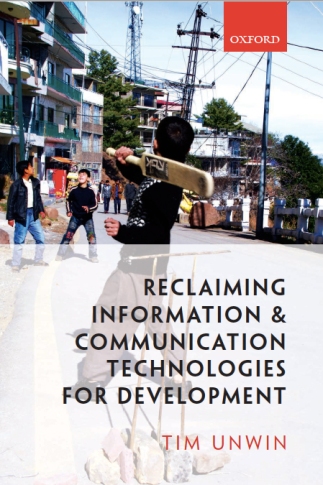
[iii] Not least, see my Reclaiming ICT4D (OUP, 2017)
[iv] See my Power hierarchies and digital oppression: towards a revolutionary practice of human freedom, and Freedom, enslavement and the digital barons: a thought experiment.
[v] Note too that the allocation of SDGs to many paragraphs of the GDC often seems to be quite random and rather difficult to justify – although that is in part a fault of the SDGs themselves which are often difficult to differentiate.
[vi] Not least as they are represented in the Office of his Envoy on Technology.
[vii] See my (Un)Sustainability in the Digital Transformation in which I referred to this title of one of Hans Christian Andersen’s folktales.
[viii] See also my earlier Reflections on the Global Digital Compact for more detail.
[ix] Although see further below on the GDC’s claims that it aims to build on the work of entitites such as the WSIS Process and the IGF. It is hard to find anything that the GDC actually adds to existing processes.
[x] It would actually be an interesting experiment to use different General Purpose AI systems to draft such a document and see how it differed from that produced through the GDC consultation process. Perhaps all of the submissions could be entered into such a system and a new draft constructed from them.
[xi] To be sure, Guterres graduated in the early 1970s with a degree in engineering, but neither this nor his subsequent career would seem to make him suitable to lead UN system-wide collaboration on digital tech. Having graduated, he worked briefly as a physics instructor and joined the Socialist Party in 1974. In 1976 he was elected to parliament, and became very much more active in national politics and the wider international Socialist movement, eventually becoming Prime Minister in 1995 (serving until 2002). Although focusing particularly on the economy, finance, planning and territorial administration, his time in politics provided him with little experience in digital tech and development. Thereafter, his UN experience from 2005 was likewise almost exclusively as High Commissioner for Refugees (a role he served in until 2015), and again in this capacity he had little real opportunity to become a global specialist in digital tech and development. See Britannica (2024) António Guterres https://www.britannica.com/biography/Antonio-Guterres, and United Nations Secretary-General biography https://www.un.org/sg/en/content/sg/biography (7 June 2024)
[xii] https://www.un.org/en/about-us/un-charter/chapter-1 (7 June 2024)
[xiii] The revised draft of the Pact for the Future, which is the core document of the UN Secretary General’s Summit of the Future rightly has Peace and Security as one of its key objectives (Section 2), but it is salient to note that the GDC is one of only two banner headings/sections on the summit’s website, the other being the Declaration of Future Generations. More generally, the Pact for the Future also suffers from many of my criticisms of the GDC. Although it claims to focus on the practicalities of how we can together create multilateral solutions for a better tomorrow, most of it is vague and aspirational, with very little chance of having any real impact in terms of improving the lives of the world’s poorest and most marginalised peoples.
[xiv] GDC First Revision, Para 2 “Our cooperation must leave no one behind and increase the potential for all states, communities and individuals to fully harness the benefits of technology”, para 6 “Our cooperation must be agile and adaptable to the rapidly changing digital landscape”, para 8c “All human rights, including civil, political, economic, social and cultural rights, and fundamental freedoms, must be respected, protected and promoted online and offline”, para 8l “Our cooperation must be capable of identifying, assessing, tracking and adapting to emerging technologies”, para 12 “…we must ensure that people can meaningfully use the Internet and safely navigate the digital space”, para 26” We recognize that the Internet is a critical global facility for inclusive and equitable digital transformation. To fully benefit all, it must be stable, secure and unfragmented”, and para 29 “We must urgently prevent and address sexual and gender-based violence which occurs through or is amplified by the use of technology, all forms of hate speech and discrimination, mis- and disinformation, cyberbullying and child sexual exploitation and abuse”.
[xv] See for example , English for Lawyers (Canada) Contracts: expressing obligations using shall, will and must (2020), Legal Directorate, Foreign Commonwealth and Development Office (2022) Treaties and Memoranda of Understanding: Guidance on Practice and Procedures. (MOUs), and UK House of Commons Library Briefing Paper on Principles of International Law: a brief guide (2020).
[xvi] Only four of the “wills” (two in para 11 and two in para 43) are in sections relating to commitments by 2030.
[xvii] The document does make brief mention of the set of targets developed by the ITU and the Office of the UN Secretary-General’s Envoy on Technology developed in 2022 https://www.itu.int/itu-d/meetings/statistics/umc2030/ (although little has yet been heard on the progress that was meant to be achieved on these by 2026), but does so in rather general terms of commitment to “Agree on common targets, indicators, and metrics for universal meaningful and affordable connectivity, building on the work of the ITU, and integrate these into international, regional and national development strategies” (Para 11(a)). Interestingly, targets are only specifically mentioned in two other places in the GDC First Revision.
[xviii] https://www.un.org/techenvoy/global-digital-compact (7 June 2024)
[xix] https://www.un.org/en/summit-of-the-future (7 June 2024)
[xx] There are numerous mentions in the GDC of multistakeholder (10, and one mention of multi-stakeholder) engagement, the private sector (14), civil society (5), and academia (2), and the implications for their potential engagement in the GDC process. A key problem of the GDC is that there is next to nothing about the precise mechanisms for such collaboration and engagement, and nothing about the penalties that those who fail to adhere to its principles will face.
[xxi] See inter alia my Contributions to UNESCO’s first Partners’ Forum: notes from the underground (2018) and A new UN for a new (and better) global order (Part One): seven challenges (2021)
[xxii] Paras 60 and 61 thus refer to the Global Fund AI and Emerging Technologies for Sustainable Development, which “should be put into operation with an initial amount of 100 million US dollars at launch in 2025, financed by voluntary contributions from public, private and philanthropic sources”. This seems largely to be a means of creating extra funding for private sector companies to roll out these new technologies to the poorer countries of the world, thus enhancing their markets and increasing their profits.
[xxiii] See my Reflections on the Global Digital Compact, 2023, for a wider discussion of this.
[xxiv] It is difficult to identify the exact numbers of staff involved in OSET, and the website of the Office of the Secretary-General’s Envoy on Technology does not provide their details. LinkedIn nevertheless mentions between 11 and 50 staff: https://www.linkedin.com/company/un-tech-envoy (10 June 2024))
[xxv] The paragraph numbers are not exhaustive but merely illustrative.
[xxvi] See in particular the work of https://ict4d.org.uk/desc (7 June 2024)
[xxvii] A strong case can be made for shifting towards an attitude where all digital tech should be considered first as a threat, rather than thinking that it is actually good and that harms are an aberration.
[xxviii] See my Prolegomena on Human Rights and Responsibilities (2014)
[xxix] Rejecting the GDC outright would save governments and the peoples of the world a great deal of time that could be better spent doing other things, but as with so many global summits and agendas few people want to rock the boat too much, and it is easier simply to kick them into the long grass by agreeing to parts of documents in general terms subject to further revision and discussion.
[xxx] This was not my term for it, but was suggested to me by a good friend and colleague attending the WSIS process in May 2024.
[xxxi] This is a long and complex argument, and it is developed in more detail in my Prolegomena on Human Rights and Responsibilities
[xxxii] See my Use it or lose it – our freedom (2024)
[xxxiii] The commitment to “Establish appropriate safeguards to prevent and address any adverse impact on human rights arising from the use of digital and emerging technologies” (para 23b) is naïve and completely unachievable, and shows little understanding of how and why digital technologies are designed and used. It should be removed, or rephrased to be more realistic of what can actually be delivered.
[xxxiv] See my Why we shouldn’t use terms such as “bridging the digital divide” or “digital leapfrogging” (2018)
[xxxv] See also, for example, para 37 calling for “the equal participation of all countries” in international data governance. Although this might be desirable, it is completely unrealistic.
[xxxvi] As noted above the term “multi-sector” is far preferable to “multistakeholder” when collaboration between governments, the private sector and civil society are being referred to. It can also be noted that many civil society organisations have been co-opted by corporations to their agendas, and are no longer realistically an independent voice.
[xxxvii] See also, for example, claims that AI has immense potential “to accelerate progress across all the SDGs”. Little is said about the enormous harms that could be created by so doing.
[xxxviii] It is also salient, and interesting, to note that in the Bible Matthew 26:11 reports Jesus as having said “The poor you will always have with you”. For further on relative and absolute poverty, as well as on economic growth and inequality, see my 2010 piece Development as ‘economic growth’ or ‘poverty reduction’, as well as my 2007 critique of Jeffrey Sachs’ work in “No end to Poverty”, Journal of Development Studies, 45(3), 929-953.
[xxxix] See the work of our TEQtogether initiative which involves men and women working together to transform men’s attitudes to women and technology.
[xl] See, for example, our recent contribution to the WSIS+20 meeting in Geneva in May 2024.
[xli] Typical of these are initiative such as Giga (para 11b) which inter alia make it cheaper for companies to exploit education systems and the data they glean from children and teachers across the world. Expanding the market lies at the heart of the capitalist economic system that underlies such practices.
[xlii] It is good, therefore, to see mention of cyberbullying and child sexual exploitation in para 29, but much more attention could be paid to such harms throughout the document.
[xliii] See my Interesting practices in the use of ICTs for education (2018)
[xliv] This para reads: We… “Call on digital technology companies and developers to engage with users of all ages and backgrounds to incorporate their perspectives and needs into the life cycle of digital technologies”.
[xlv] Similar arguments would apply to para 53(b) which commits to the UN creating an an International Contact Group on AI Governance.
[xlvi] See, for example, my Attributing geographical causality: why I have problems with using the terms “Global South” and “Global North” (2013)
[xlvii] The most sensible option would seem to be for no-one to provide any financial support for the Compact, which would be one way of kicking it into the long grass, and then the only wasted money would have been the cost of having drafted and discussed it at the Summit of the Future.
Note: For second revision of the GDC see https://www.un.org/techenvoy/sites/www.un.org.techenvoy/files/GlobalDigitalCompact_rev2.pdf published on 26 June 2024
First version: 11 June 2024
Slightly revised version in light of helpful comments: 5 July 2024


 is a global initiative committed to achieving gender equality in the digital age. Its founding partners are the

 Tim Unwin's Blog