Category Archives: Photographs

Rapid tour of northern New Zealand wineries

Twelve hours between flights into and out of Auckland provided a great opportunity to explore some of New Zealand’s more northerly vineyards.  Despite only having a couple of hours sleep before arriving around 05.00, and with a forecast of rain and thunderstorms, I set off northwards in the dark and rain.  The only trouble was that most of the wineries did not open until around 11.00, and so I had a lot of time to explore the surrounding countryside – much like the Scottish borders, and so very wet!

However it was great at last to see the vineyards and wineries at Kumeu River, Nobilo and Vila Maria (all pictured below).  Fortunately, the sun came out amazingly for a few short minutes when I was at Kumeu River, and so I could actually get some pictures that had a bit of brightness and contrast in them!  Their Chardonnays have long been one of my favourite New Zealand wines, and they are some of the closest New World wines to traditional Burgundies.  Visiting on a very rainy day, though, emphasised the heavy clay soils on which the Kumeu River vineyards are cultivated, a marked contrast to some of limestone soils of Burgundy!  I will have to look into that and explore further.

Not sure I would necessarily recommend driving a couple of hundred kilometres between flights in the rain, especially since to keep on the safe side I did not even taste any of the wines!  It was privilege enough, though,  just to visit!

This slideshow requires JavaScript.

Leave a comment

Filed under Photographs, Wine

Imagery of Samoa

Over the last few days participating at the UN Small Island Developing States conference in Samoa, I usually left my hotel before the sun was properly up, and have returned after dark. Having come all this way to the Pacific, I could not resist the temptation to go and explore something of the countryside this morning, and so decided to set off for a couple of hours walking along the south coast near the Sinelei Reef Resort. Below are some of the images I took to try to capture the experience.

This slideshow requires JavaScript.

I have a kaleidoscope of reflections about Samoa and its people! They keep asking me what I think about my all-too-short time here, and so I also want to share some thoughts here.

It is amazing how much effort the government and people put into convening the conference. This is visible everywhere, from the bunting and painted coconuts along the roadsides in the villages, to the tremendous effort that has gone in to arranging transport for the delegates. This shows the enormous warmth and generosity of the Samoans.

I really appreciated learning from the government officials who accompanied delegates in the mini-buses and shuttles that took us to and from our accommodation. They went out of their way to be helpful and to provide deep insights into island life. Much of what follows reflects their voices. I have to say, though, that not all delegates treated them with the courtesy that I think they deserved!

Samoa seems to be a very gentle and peaceful island, and it has had remarkable political stability over recent years. In part, people say, this is down to culture, and especially the role of Christianity. I don’t think I have ever been somewhere where there are so many churches, often several of different denominations in a single village!

One of the most striking things is the open-sided houses that are to be seen everywhere in rural areas. At night, as I was regularly driven across the island, people were very visible just relaxing in their houses, many of which had bright white mosquito nets showing up very brightly in the electric light.

As for agriculture, the dominant crops were definitely coconuts, bananas and taro, which could be seen everywhere in the lower lying areas of the island. However, I was surprised to see so many cattle grazing, and somehow had not expected the very considerable number of horses that were to be seen! These were the main form of transport before cars were introduced, and many still remain, both as beasts of burden but also for riding for riding and racing.

The island, though, has very clear vegetation zones, and as one ascends the hilly centre, and then falls down to Apia in the north, these are very obvious, with the bananas and coconuts being replaced by a wide range of forest trees. It is also reflected in the weather. One night, there was torrential rain where I was staying, but it had been perfectly dry in the capital, Apia.

The coast itself is amazing, lined with coconuts and with beautiful beaches, stretching away for miles. My photos do not really do this justice! For those who want to get away from everything, and just relax, this would be an ideal place to do so. I can also thoroughly recommend my hotel, the Sinalei Reef Resort! It has a rustic, eco-friendly atmosphere, so very different from the modern luxury resorts to be found across many other Pacific islands. The staff were wonderfully friendly, and were always there to offer advice in the gentle Samoan way.

Samoa also seems to be much less influenced by US culture and style, when compared with other islands such as Fiji. This was wonderfully refreshing! However, other external influences are increasingly obvious, not least the Chinese, who helped to develop the impressive new hospital in Apia, are running many of the shops and small supermarkets, and are also constructing a new building complex in one of the villages through which I walked – apparently, I was told, a school.

I confess I did not know that Robert Louis Stevenson, the author of Treasure Island and Kidnapped was buried on the hill overlooking Apia. Next time I visit, I will have to take the long walk to the top to understood why this was his chosen spot!

My one sadness was that almost every child I met on my walk said to me at some point “Give me money”. This was not an aggressive begging, but it made me think back to the wise advice I was given by my dear friend Sudhir on my first visit to India. What, I think, saddened me most about this was the sense of dependency that was being created. The resonating “Give me money” came so often as I walked past buildings funded by donors such as UNDP and the EU, and it made me realise that all too often such aid, alongside the practice of many tourists who not doubt do give them money, is in some ways demeaning and creating even amongst the youngest islanders a dependent relationship that has to be damaging to their culture. I wanted to say to the children, “Give me your wisdom”, or “Let me learn from you”, but I did not have the linguistic skills to say this.

Overall, I am so grateful for the warmth, gentleness and genuine hospitality of all those Samoans who I met. I have tried to capture my fresh memories here, as a small gift to them, and to encourage others to journey across the oceans to experience something of the peace and beauty of the island. Tread gently, though, so that our presence may enhance rather than damage this wonderful island.
3 Comments

Filed under Commonwealth, Photographs, Wildlife

Pacific Island Dancing: Lifeline Samoa

I had the unexpected pleasure of accidentally attending a dance performance by an amazing group of Samoans who were raising money this evening for Samoa Lifeline (Faataua Le Ol), which is  is the islands’ only non-government organisation dedicated to achieving a suicide free Samoa. Its main aim is to provide the people of Samoa with information, general and more specific help with any problems they may have that might lead them to be distressed enough to possibly consider suicide. It is a great initiative, and the dancers performed a range of dances reflecting those from different parts of the Pacific Islands, albeit largely in a modern idiom.  They were so good that I just want to share these images below:

This slideshow requires JavaScript.

Leave a comment

Filed under Dance, Photographs

Amazing moon over Virginia Water

Going for a short wander down the garden late last night, I could not help but see the amazing moon – so large and bright! Although I am not an astronomer, and don’t have a telescope with a camera, the sight of the moon behind one of the trees in the garden was so beautiful that I just had to photograph the view – and of course the moon itself!  It’s the first time I have ever taken a photo’ that so clearly shows the craters on the moon (click on the image for a larger version!).

I discovered this morning that this phenomenon is know as a “perigee supermoon”, and it occurs as a result of the elliptical orbit of the moon around the earth.  Apparently, there are going to be five such moons in 2014, with the next being on 10th August!

Leave a comment

Filed under Photographs, UK, Uncategorized

My favourite South African Wines…

ThelemaA visit to the Cape Province of South Africa last week in order to help select wines for the Athenaeum provided a great opportunity to learn something about  recent changes in the wine industry in the Cape and to taste some of the really excellent wines that are now being produced there.  It is some 40 years since I last visited Stellenbosch and Paarl, and it is great to see the quality of wines now being made in the region.

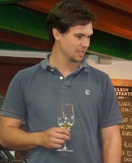
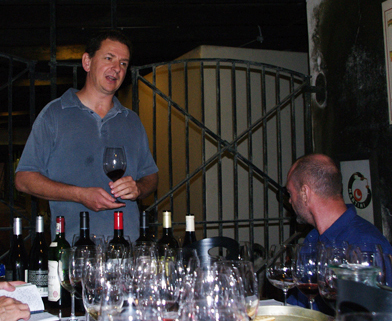
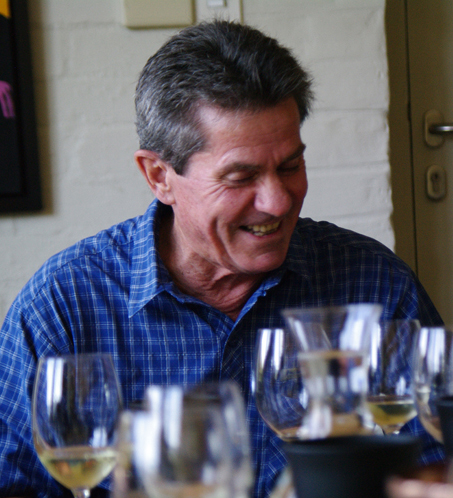
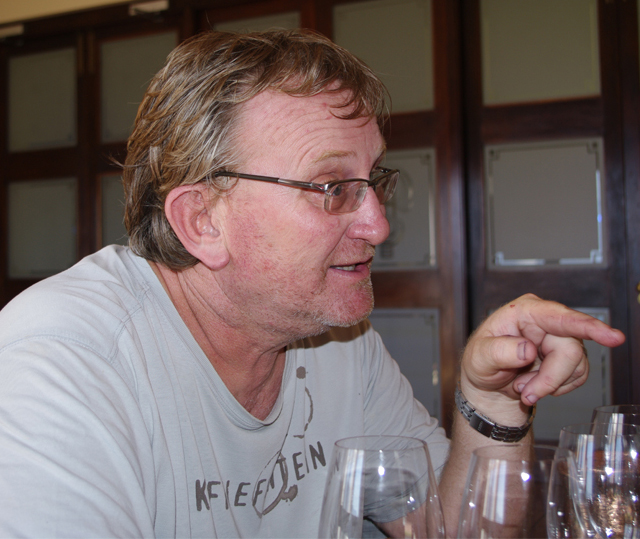
Thanks to Stuart and George who arranged the itinerary, and the hospitality of many amazing wine makers, we had the privilege of tasting nearly 200 wines from Stellenbosch, the Cape Peninsula, Franschhoek and the hinterland of Hermanus.  While this represented only a small fraction of the many wines now being made in South Africa, it did highlight three significant things for me:

  • First, the quality of the wines has improved very dramatically indeed over the last 15 or so years.  There are without doubt now some really excellent wines being made in South Africa, and they are very good value indeed, with many of the best wines being priced at under ZAR 250 (£15) a bottle.  We scarcely tasted a poor bottle, and it was difficult to choose those that I preferred best for my list of favourite wines below!
  • Second, South African wine makers have definitely learnt and understood the importance of terroir. Given my geographical wine “upbringing” in Burgundy, I have always argued that the physical environment has a very important role in determining the character of a wine, and it is good to see the increasing differentiation that now exists in the planting locations of different grape varieties in the Cape area.  Many of the wines we tasted emanated from some of the cooler vineyard locations, higher up on the mountain slopes, in windier locations, and closer to the sea.
  • Third, South Africa’s vineyards have to be amongst the most beautifully situated in the world, with many of them being in very picturesque locations, as I hope the pictures below illustrate.  Whilst leafroll virus is a serious problem for grape-growers, it does have the merit of turning vines a beautiful red colour in the autumn!

This slideshow requires JavaScript.

Despite the pleadings of my colleagues, I am still not convinced by many of the Chenin Blanc wines we tasted, perhaps with the exception of some of the sweet dessert wines.  I’m sure that some of my reticence stems from tasting too many rough Steen wines when I was younger!  While I recognise that modern good quality Chenin Blanc wines are indeed being made, I simply don’t particularly like them, finding the astringent flavours that I encountered in my youth all too often still to be present.  Likewise, I have to confess not really to liking wines made from the Pinotage grape.  All too often they too retain bitter flavours, and I found many of those we tasted to be rather unbalanced and poorly structured – with one delicious exception!

So, to conclude, my favourite wines, in alphabetical order of producers were:

  • 4Buitenverwachting (with MD Lars Maack)

    • 2009 Christine – excellent open fruity nose; 14.5% alcohol; rich, rounded, soft tannins; red fruit flavours; 45% Cabernet Franc contributes to tobacco and chocolate flavours (with 45% Cabernet Sauvignon and 10% Merlot); well balanaced and good length
  • Chamonix (with Wine-maker Gottfried Mocke)

    • 2011 Pinotage – a very unusual wine made in a similar style to Ripasso, combining fresh wine refermenting with air dried grapes; half-picked very young and undergoes carbonic maceration; other half desiccated and refermented with first picking; grown at 440 m 9on Greywacke soils; 14.5% alcohol; kept mainly in one-year-old Pinot Noir barrels; dark red with complex green and dark fruit flavours; very soft tannins.
    • 2012 Chardonnay Reserve – 13.5% alcohol; 14 months in 228 l French oak; 30 year old vines which show character and personality; 80% barrel fermented with 20% in 600 l concrete eggs, which enable wine to be oxygenated and the lees stay in suspension for longer than using other fermenters; high acidity early grapes are put into concrete, with later pickings going into barrels; always goes through malo-lactic; tries to pick fruit at lower sugar levels to make wines more in a Burgundian style; 65% new oak used for this vintage, which remains very evident; need to keep for some time.
  • 5Cape Point (with Wine-maker Duncan Savage)

    • 2011 Late Harvest Noble 8 – only made when conditions are right, with some 2000 half bottles being produced in 2011; 160 grams residual sugar; 10.5% alcohol;  Sauvignon Blanc and Semillon botrytised blend; rich balanced fruit flavours; good length; acidity balances out the rich fruit; dried apricot flavours.
  • Delheim (with Viticulturist Vic Sperling)

    • 102009 Vera Cruz Shiraz – we had the last bottle in the cellar sadly; produced from bush vines; 14.5% alcohol; rich, intense fresh red fruits on the nose; fruity flavours of plums and jam; good length and complexity; their Vera Cruz wines are only made in years when the fruit is good enough; a powerful wine to be kept for a while.
    • 2013 Edelspatz Noble Late Harvest – botrytised Riesling from Simonsberg Mountain; good acid balance; not overly rich; classic slight petrol nose, but well structured and luscious flavours of honey and apricots.
  • Glenelly (with Wine-maker Luke O’Cuinneagain)

    • 12012 Oaked Chardonnay – light golden colour; blanche toasted 500 l barrels designed to keep as much natural fruit flavour as possible; fresh with good fruit expression; distinctive pear flavour, with slight citrus touches; richer and softer than their unoaked Chardonnay; good structure and depth.
    • 2010 Syrah – designed to be like a northern Rhône wine; 100% whole bunch fermented; purple-red colour; very clean, with slight smell of bacon; white pepper and floral aromas; relatively low alcohol at 13.9%; soft tannins, but needs time to develop.
  • Klein Constantia (Wine-maker Matthew Day)

    • 22013 Sauvignon Blanc – made with free-run juice from grapes from across the property; very pale in colour; up-front nose of gooseberry and blackcurrant leaves; 4 months in steel on lees; fresh in mouth, with balanced acidity on edge of tongue; quite light and eminently drinkable
    • 2008 Vin de Constance – classic dessert wine made from Muscat de Frontignan grapes, left to dry on the vine; good rich flavours of candied orange, with other fruits including a slight pineapple taste; good depth and length; balanced acidity.
  • Meerlust (with Chris Williams, Cellar Master)

    • 62012 Pinot Noir – a serious wine; lovely rich nose; has been made since 2004 on coolest hilltops, which catch the breeze being only 3 kms from the sea; vines grown on decomposed granite; picked at 4-6 tonnes per hectare; vinified in small batches, some with natural fermentation; has an interesting liquorice nose; quite soft tannins; needs keeping for several years.
    • 2009 Rubicon – excellent Bordeaux blend style wine (69% Cabernet Sauvignon, 20% Merlot, 10% Cabernet France and 1% Petit Verdot); very rich and intense rich blackcurrant fruit flavours; complex; good length; well structured; definitely for keeping.
  • Newton Johnson (with Bevan Newton Johnson, MD)

    • 32012 Family Vineyards Pinot Noir – really good wine, clean, well structured, medium length, and rich complexity of Pinot flavours resulting from use of grapes from three adjacent vineyards (20% from Mrs. M, 30% from Block 6, and 50% from Windansea); first made in 2008/9; red fruit rather than vegetal.
    • 2012 Windansea Pinot Noir – Pinot Noir from a single vineyard which has more clay than adjacent ones, giving a deeper colour; a bit closed and more restrained than the fruitier more open Mrs. M and Block 6; well structured with good acid balance; excellent finesse; red and black berry fruits.  A really excellent wine.
  • Spier
    • 21 Gables Sauvignon Blanc – hand harvested; made from grapes grown in Durbanville near the Atlantic on red gravel and clay soils; nose of new mown hay; acidity clearly felt at edge of tongue; but well structured; rich complex flavours of gooseberry and slight asparagus; 13.5% alcohol.
  • Thelema (with Cellar Master Gyles Webb)

    • 82011 Cabernet Sauvignon “The Mint” – made from the first Cabernet Sauvignon vines they planted, with eucalyptus trees nearby, which give the wine a distinctive minty nose and flavour; mid-red colour; well-balanced and good structure; will be long-lived.
  • Vergelegen (with Wine-maker Andre van Rensburg)

    • 2011 Merlot – the first 100% Merlot wine made at Vergelegen since 1998; although Andre sees himself mainly as a Cabernet Sauvignon producer, he believes they have the environment to produce excellent Merlot; lovely soft nose and very gently tannins; still a bit young, and lacking a bit in length, but overall very pleasant.
    • 72010 DNA – Cabernet Franc does well at Vergelegen, but the yield needs to be reduced down to around 4 tonnes per hectare; aim is to pick the fruit as late as possible; mid-red, quite intense colour; 65% Cabernet Franc, Merlot 21% and Cabernet Sauvignon 13%; fantastic high notes on nose; very soft tannins; not as strong a smoky nose as I would have expected with this amount of Cabernet Franc; wine is designed to be fruity rather than green.  Wine is made in recognition of Andre’s respect to Cheval Blanc, with the DNA often being thought of as being similar to terroir.  Others might think that it is short for “Dickhead ‘n Arsehole”!  Incidentally, the label is not a fingerprint, but rather the contours of a hill!

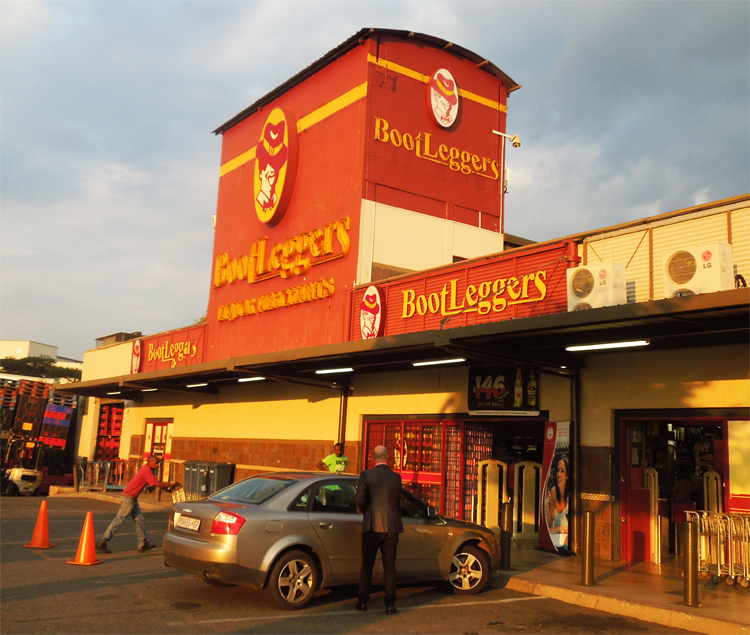
Finally, I have long appreciated the work that Charles Back has done at Fairview, and particularly his BootLeggerscommitment to social change in the region.  In 1997 he helped establish The Fairvalley Workers Association, which aims to help workers at Fairview to have their own land, and he was also the driving force behind the Fairvalley wine brand that is owned by the Workers Association, with profits from the sale of their wines (made using cellar facilities at Fairview, and FairTrade certified) being used to support community development initiatives.  Being in South Africa enabled me to access further wines that it is difficult to get in the UK, and so I particularly enjoyed the opportunity to explore the shelves of Bootleggers in Fourways Crossing and purchase additional wines, including some of Fairvalley’s remarkably good value 2009 Cabernet Sauvignon, which was delicious with boerewors, as well as  a bottle of Fairview’s 2010 Goat-Roti (Syrah/Viognier blend) that went especially well with barbecued fillet steak!

For those looking for somewhere quiet and relaxing to stay while exploring the vineyards of the Cape, I thoroughly recommend Majeka House, just outside Stellenbosch, which also houses the excellent Makaron Restaurant!


4 Comments

Filed under Africa, Photographs, Restaurants, Wine

Locusts at Walter Sisulu Botanical Garden

A short visit to Johannesburg provided an excellent opportunity to visit the beautiful Walter Sisulu Botanical Garden to learn something about the rich diversity of plant and bird life in South Africa.  While there, we encountered hundreds of locusts, and not only saw the devastation that they were doing to some of the plants, but also the amazing beauty of their colours when in flight.  They looked more like brightly coloured small birds than they did green locusts! Trying to capture them in photographs was, though, far from simple, not least since they would show no visible signs of taking off, and then suddenly lift off into the air and speed away.  Even using very fast shutter speeds it was difficult to capture them!  I hope, though, that the selection of images below captures not only their beauty, but also of the damage that they do.


This slideshow requires JavaScript.

Leave a comment

Filed under Africa, Photographs, Uncategorized

Jordan Wine Estate, Stellenbosch

It is some 40 years since I was last in Stellenbosch – and how it has changed!  Today, I had the privilege of being introduced to the wines of Jordan Wine Estate by Gary and Kathy Jordan – in the company of some good friends.  It is great to see the impact that UC Davis has on far-flung parts of the world, and also to meet wine-makers who combine expertise in geology and economics to produce some really very good wines!  Terroir is definitely alive and well here.  Sadly, I’m not yet able to share the flavours of the wines virtually, but I hope that the images below capture something of the beauty of this part of South Africa, as well as the care and attention to detail that marks out wine-making at Jordan Wine Estate!  Have to say that I particularly enjoyed the 2011 Cobblers Hill – and the lunch!

This slideshow requires JavaScript.

Leave a comment

Filed under Africa, Photographs, Wine

ICANN 49 Gala in Flower Dome, Singapore

The Gala Evening at ICANN 49 in Singapore was held at the amazing Flower Dome at Gardens by the Bay on the evening of Monday 26th March 2014.  With 3,332 panels of 42 varying shapes and sizes of spectrally selective glass, the dome was completed only a couple of years ago with a 1.2 hectare footprint and a height of 38 metres.  The temperature is kept at a constant 23°-25° C with humidity between 60% and 80%. It houses a wide range of plants from the Mediterranean and semi-arid subtropical regions, as well as having changing displays in its Flower Field.  Amongst its prize collection is an olive tree from Spain reputed to be a thousand years old!  This month, the English Wars of the Roses (1455-1487) between the Houses of York and Lancaster were fought out in red and white flowers.  Our guide mentioned that only three events a year are permitted in the Flower Dome, and so we were fortunate indeed to be able to enjoy such a location.  The images below do not really do it justice!  Thanks to the team at ICANN for giving us this opportunity!

This slideshow requires JavaScript.

Leave a comment

Filed under ICT4D, Photographs, Uncategorized

Wind turbines in the Conca de Barberà

I have written previously about the landscape implications of wind turbines in the Conca de Barberà, but always somehow hope when I visit this beautiful part of Catalunya that I will not be annoyed by them as much as I have been on previous occasions!  It never works.  I was walking in the hills above Poblet today, and the view across the vineyards and fields, looking across to the snow covered Pyrenees Mountains in the distance were completely destroyed by these ‘urban’ conceptualised and created monstrosities in the rural landscape!  Have to admit that it tempts me to thoughts of how easy they would be to destroy…

This slideshow requires JavaScript.

Leave a comment

Filed under Photographs

Runnymede floods and Staines under Thames, 16th February 2014

What seems like the first bright sunny day for weeks provided an opportunity to take a photographic record that would capture something of the flooding along the Thames in Runnymede, Egham and Staines.  The pictures below provide a follow-up to those that I took earlier in the year in January on a rather more cloudy day, when the floods were less extensive.

Whilst I have every sympathy with those living in flooded areas, these images emphasise that flood plains are meant to be just that – plains where rivers flood!  We have had exceptional amounts of rainfall, and no-one should therefore be surprised that such flooding has occurred!

This slideshow requires JavaScript.

Leave a comment

Filed under Photographs