Category Archives: Politics

Indian biometric census – beware of the dangers!

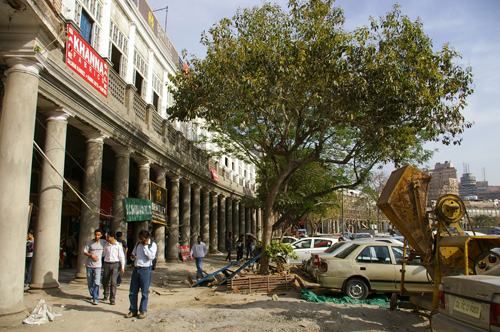
India’s 15th census has just been launched (Times of India, newsy.com video), with the physical count of people due to take place from 9th-28th February 2011.  Over the next year, some 2.5 million census officials will be visiting households across the country, to begin the process of recording information about them.

What is unusual about this census, though, is that every person over the age of 15 will be photographed and will also have all of their fingers fingerprinted, so as to create a national biometric database, information from which will be used to issue identity cards.  The first 16-digit identity number will be issued starting in November 2010 by the Unique Identification Authority, a new state department.

The first person to be listed was President Pratibha Patil, who according to the BBC, “appealed to fellow Indians to follow her example ‘for the good of the nation’.  ‘Everyone must participate and make it successful’, she said in Delhi”.

The government expects this to bring real benefits.  As the Times commented in July 2009, “It is hoped that the ID scheme will close … bureaucratic black holes while also fighting corruption. It may also be put to more controversial ends, such as the identification of illegal immigrants and tackling terrorism. A computer chip in each card will contain personal data and proof of identity, such as fingerprint or iris scans. Criminal records and credit histories may also be included”.

This is deeply worrying, and as with other such schemes fundamentally changes the relationship between citizens and the state. Interestingly, the initiative is being headed up by Nandan Milekani, the co-founder and former CEO of Infosys, who according to the Times has said that “we have the opportunity to give every Indian citizen, for the first time, a unique identity. We can transform the country”. Does he not realise that every Indian citizen already has a unique, and very special identity – in themselves?

Just because it is possible to do this, does not mean it is right to do so.  Not only are there profound ethical concerns about states creating databases of the biometric data of citizens, but there are also real practical problems. The opportunities for identity theft on a massive scale are very real, and should not be underestimated.  More worryingly, though, is the point that this changes the balance of power between individuals and the state, very much in favour of the latter.  If governments change, and people lose trust in them – as often happens – imagine what such governments might do with biometric data on all their citizens.  Imagine if Hitler or Stalin had had access to the biometric identities of all of the people living in Germany and Russia?  Imagine if the USA gained access to biometric data of everyone in the world?

The real winners in the promulgation of such digital initiatives are the companies who promote, design and manage them!  It is no coincidence that it is the co-founder of Infosys who is now chairperson of the Unique Identification Authority of India! Mind you, another group of people who will benefit hugely from the introduction of such technology will be those who make fake fingerprints for sticking onto your fingers – or even the plastic surgeons who alter fingerprints, as in the case of the Chinese woman who entered Japan illegally after having had her fingerprints altered…
5 Comments

Filed under Ethics, ICT4D, Politics

Indian Visa Application Centre, Hayes

PLEASE NOTE THAT THIS POST WAS FIRST WRITTEN IN FEBRUARY 2010 AND SOME OF THE INFORMATION IS NOW OUT OF DATE – from 23rd November 2010 a new online application system was introduced – details are available at http://in.vfsglobal.co.uk/.  However, the information contained below may well still be of interest for those seeking to get to the Hayes office – for which the blog was originally intended!

————————————————————————————————————————

After reading some of the horror stories online about applying for a visa to visit India, I embarked on the process, and thought some tips might be helpful for others – especially about actually getting to the Centre in Hayes!

  • Yes, the online system is a bit clunky – and it crashed on me once without saving what I had done – which was a pain! But by automatically checking for completeness it did save time filling out the forms, perhaps incorrectly, and therefore having to redo them again.
  • Before embarking on completing the forms online, do check you have all the information to hand – down to the level of detail required about the place of both parents’ birth!  Unfortunately, there is not an easy to find guide to completing the visa form available in the drop-down menus!  One solution is to print out a hard-copy form from those available, and then use this as a guide.  The trouble is that not all of the questions asked are unambiguous!
  • The automatic fee charging system did indeed seem to overcharge me – as least compared with the advertised fees for visas! Watch out for this!
  • Make sure that you submit all of the relevant required documents, or have them with you (together with two photographs) when you go to the Centre.
  • For those taking the application form to the Indian Visa Application Centre in Hayes, there are many comments on the Web about how difficult this is to find!  It is actually very simple!  The Centre is accessed on the south side of Uxbridge Road in Hayes, just by the Grand Union Canal.  For those driving from the M4, take the A312 north to its junction with the A4020, and then turn east towards Southall.  Don’t take the first right down Springfield Road, but watch out for the large Currys superstore just before the Fiat car showrooms. That is the best place to park! Walk a short distance (c. 100 yards) towards the canal, and turn right just beyond the Fiat garage. The entrance to the Application Centre is then through some large metal gates  just  after the car park behind the garage. This is just by the A4020 label next to the canal on this map!
  • Once inside, you will receive a numbered ticket, and will then have to wait in the large seated waiting hall.  There are around a dozen service desks, and so the queue moves relatively quickly.  At 08.30 in the morning, I only had to wait about 25 minutes to be ‘processed’.  Opening hours for submission of passports are 08.30-14.30 Monday to Friday; passport pickup (usually withing 2-3 working days) hours are 13.00-16.30 Monday to Friday.

27 Comments

Filed under Higher Education, ICT4D conferences, Politics

Problems with the Climate Change mantra

“Climate change” has become one of the dominant rhetorics of the early 21st century.  It is “politically correct”, and is widely seen as the major threat facing human society.  The failure of the UN Climate Change Conference held in Copenhagen last year is thus bemoaned as being a tragedy.  Perhaps, though, it gives us an opportunity to reflect on some of the über-hype associated with the notion of “climate change”.  To be sure, the impact of human occupation of the earth, and our associated despoliation of many aspects of the physical world in which we live, should rightly give cause for concern.  Likewise, we should clearly seek to limit the amount of pollution of all sorts that we generate.  However, I believe strongly that much of the debate and argument, particularly in the popular and populist media, is misplaced.  Six issues seem to me to be highly problematic:

  • First, it is absolutely essential that we differentiate between “human induced climate change” and “climate change”.  The latter has occurred long before hominids walked the earth; the former has existed in some form ever since “humans” began making changes to the environments in which they live.  Yes, the amount of human influence has increased enormously over the last two centuries – but that largely reflects the increasing number of people living on the planet.  The important point to note here is that climate has changed very significantly over recent millennia – even without substantial human interference.  The term “climate change” has generally now become all encompassing, so that in the popular imagination all climate change is seen as being human induced – this is highly problematic.
  • Second, in the past, humans have adapted to changes in the climate in many ways.  The glacial and interglacial periods of the Quaternary have been associated with extensive global changes in flora and fauna, and early humans had to migrate in order to survive.  Indeed, for much of history, periods of climate change have been associated with human movement.  Perhaps the fundamental challenge of contemporary climate change (including both human-induced and natural change) is that our political, social and economic systems are not geared up to cater for the mass population movements that have been the human response to climate change in the past.  We are not going to be able to make substantial changes to the physical aspects of climate change in the short term; let us then adapt our “human” systems better to manage the resultant demographic movements that must happen.  We need to be placing even more research emphasis on these social, political and economic processes, and perhaps less on the physical sciences associated with climate change.  If we do not, the potential for violent conflicts, as vast numbers of people seek to leave lands increasingly subject to flooding or desiccation, will be huge.  We need to plan now for very large populations of people to move from one part of the world to another.
  • Third, far too much of the focus of the climate change debate has been about the adverse effects of climate change.  Yes, it is very concerning that our species is having such an impact on the climate – but just as some parts of the world are going to become less inhabitable, others are going to become more hospitable to human occupation.  Far too little research has yet been done on the potential positive impacts of climate change.  Will vast new areas of the globe become available for food production?  Where will be the most desirable place to live in 200 years time?  There are even those who suggest that human induced global warming over the last millennium may actually have prevented (or delayed) the descent into a very much colder climate when ice sheets would once again have covered many cities nearer the poles.  It is an interesting question to ponder whether we would prefer climate warming or climate cooling?
  • Fourth, I have huge concerns about the amount of money that has been directed towards “scientific” research on climate change, at the expense of other equally (if not more) important research.  Climate change scientists have been very successful in gaining the political limelight, and redirecting enormous sums of money to their institutes.  Indeed, it is often said that during the first decade of the 21st century, you more or less had to mention climate change in any scientific grant application, at least in the field of the earth sciences, if you were to have a hope of getting funded!  This distortion of scientific enquiry has been highly damaging to the interests of other aspects of science.  The recent controversies (e-mail leaks in November 2009, “errors” over Himalayan glaciers, “errors” in Amazon data) over the actual basis of some of the “science”, are just one part of this issue – science is not, and never has been, value free.  Those involved in climate change research have a range of very specific interests and agendas that influence their work.
  • Fifth, there have likewise been numerous interests involved in the agendas of gatherings such as the Copenhagen Summit.  Primarily, these have been driven by those who have something to gain from reaching a “global agreement”.  Fundamentally, most people involved in these discussions want to reach a solution that will not lead to a dramatic change in their lifestyles. They want to find new ways of generating “clean” energy, so that they can continue to consume; they want to reap greater profits from carbon trading.  We have to stop living in this fool’s paradise.  If we are really sincere about reducing “adverse” human impact on the globe, we need a fundamental change of lifestyles.  The voices of radical opposition movements to such global summits do need to be listened to.
  • Sixth, quite simple changes to our lifestyles can have a major impact on the amount of energy we use, and thus in the amount of carbon we pump into the atmosphere. Simply constructing buildings with thicker walls and better ventilation systems could dramatically reduce the energy demands of air conditioners and heating systems, but we continue to build energy inefficient constructions across the world.  Wearing warmer clothes in cool climates, recycling much more of our waste, switching off equipment when not in use…  All of these can make a difference.  But most of us are not prepared to do this.  Why?

I wonder, somewhat paradoxically, if our fetish about human induced climate change may not actually reflect a deep desire in people to be “in control” of “nature”.  If we say that we are responsible for “climate change” that implies we have control over it – but as the tragic earthquake in Haiti so clearly demonstrates, “nature” has a nasty habit of reminding us that actually we may not be as all powerful as some of us may like to think.  Ultimately, does it really matter if the human race goes the way of the dinosaurs?  If so, why, and what should we seek to do about it?

7 Comments

Filed under Higher Education, Politics

Iran in 2010

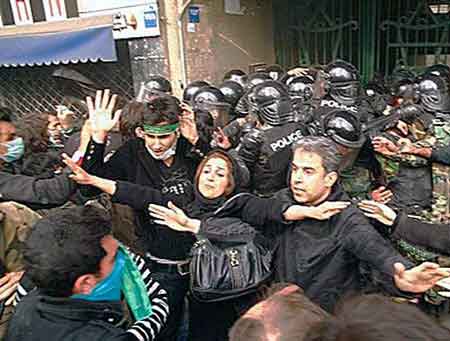
Recent events in Iran have made me think much about my friends there.  The highly respected Grand Ayatollah Hoseyn Ali Montazeri’s death on 19th December led to tens of thousands of people taking part in the procession in Qom that followed his funeral.  On 27th December opposition protests led to the deaths of at least 8 people, including Sayed Ali Mousavi, the nephew of the opposition leader Mir Hossein Mousavi, and today Mousavi  gave his first statement following this personal tragedy.  He sought to outline a five-step resolution to the political instability that has dominated the political scene since the disputed elections in June 2009, in which President Mahmoud Ahmadinejad claimed victory. Mousavi calls for the release of political prisoners, the rights of people to demonstrate, a transparent law for trustworthy elections, and the recognition of press freedoms. The government, though, shows little sign of responding positively or peacefully.

Opposition supporters continue to protest in the face of apparently increasingly violent repression by government forces.  My hope is that this violence can indeed be contained, and that peaceful negotiations may follow. Iran is a country of immense cultural heritage and importance, and it would be good to see its people living peaceful and fulfilled lives once more.

For those wishing to keep up-to-date with current news, the following links may be of interest:

2 Comments

Filed under Politics

Reflections on Obama’s acceptance speech

In response to my own blog earlier in the day,  I have to admit that Obama’s acceptance speech contains much that is good – I only hope that he is able to live up to these fine words!

It is good to see him acknowledge that there are others far more deserving: “Compared to some of the giants of history who have received this prize — Schweitzer and King; Marshall and Mandela — my accomplishments are slight. And then there are the men and women around the world who have been jailed and beaten in the pursuit of justice; those who toil in humanitarian organizations to relieve suffering; the unrecognized millions whose quiet acts of courage and compassion inspire even the most hardened of cynics.  I cannot argue with those who find these men and women — some known, some obscure to all but those they help — to be far more deserving of this honor than I”.

Likewise, it is good to read his statement that “I do not bring with me today a definitive solution to the problems of war.  What I do know is that meeting these challenges will require the same vision, hard work, and persistence of those men and women who acted so boldly decades ago. And it will require us to think in new ways about the notions of just war and the imperatives of a just peace”.

I cannot, though, agree with his statement that “the United States of America has helped underwrite global security for more than six decades with the blood of our citizens and the strength of our arms. The service and sacrifice of our men and women in uniform has promoted peace and prosperity from Germany to Korea, and enabled democracy to take hold in places like the Balkans”.  He claims that “We have borne this burden not because we seek to impose our will. We have done so out of enlightened self-interest”. I am quite convinced that there are many in the USA who have advocated war specifically because they want to impose their will on the world. The USA as a state has regularly promoted war  – in Iraq, in Vietnam, in Afghanistan, in Grenada…  Many people across the world have suffered explicitly because of US foreign policy – this is indeed self-interest; whether or not it is enlightened is a matter for debate.

Obama’s  agenda is in the interest of a capitalist US economy based on the individual rather than the communal values that so many people elsewhere in the world value so much.  He says, “Only a just peace based upon the inherent rights and dignity of every individual can truly be lasting”. To me, what matters more is how the individual behaves within the context of the communities that they are part of; it is the responsibilities that we have to others that are of more importance than a claim that we have any rights as individuals.

And, please, will he, along with other citizens of the USA, stop claiming that the USA is America. He claims that “America has never fought a war against a democracy, and our closest friends are governments that protect the rights of their citizens”.  This is debatable, but there is a huge difference between one country, the United States of America, and the entire continent, or indeed continents of America.

2 Comments

Filed under Politics

Nobel peace prize today …

Just to note the irony that US President Obama is receiving the Nobel Peace Prize today only a few days after committing to sending 30,000 more US troops to Afghanistan.  If he is as great as so many would have us believe, he should have listened to the advice of others and politely declined what used to be seen as an honour.  I wrote about this at greater length in October, but it still appalls me that the Nobel Committee could have sunk so low.  I used to believe that the Nobel Prize meant something valuable.  It has been hugely tarnished by this serious error of judgement.

1 Comment

Filed under Politics