The Sagrantino grape makes one of my favourite wines. It has strong tannins and tends to be low yielding, producing wines that are rich, dark, complex and long-lived. The classic area where it is grown is the small town of Montefalco in Umbria. The Sagrantino di Montefalco denomination has a maximum yield of 48 hl/ha and needs to be aged for 30 months before being sold, 12 of which must be in wood. Traditionally it has been used to make a wonderful passito style wine, made from partly dried grapes, but in recent years a dry secco has been introduced. The Sagrantino grape is also used in making a cheaper, lighter style of wine, dominated by the Sangiovese grape and usually blended with some Cabernet Sauvignon or Merlot, known as Rosso di Montefalco.
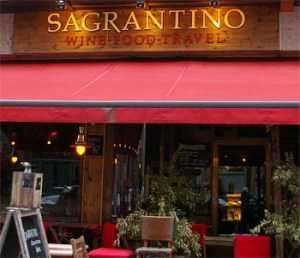 So, when I came across a small restaurant and wine bar called Sagrantino in Berlin in February this year, I was determined to return to see the extent to which it captured the essence of Umbria! Friday evening provided just the opportunity – and I was not disappointed. Tucked away on Behrenstrasse, just to the south of Unter den Linden and to the east of Friedrichstraße, Sagrantino is certainly worth getting to know. With several different Rosso di Montefalco wines, as well as the wonderful passito made by Arnaldo Caprai, it is a great place to chill out at the end of a day. Guess this might become one of my favourite places in Berlin!
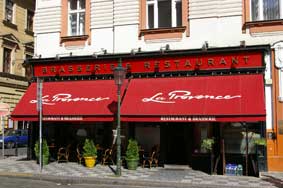 La Provence
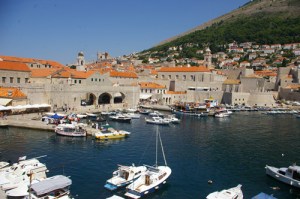 So, I have been hiding away in the Dalmatian coast of Croatia for the last week – and greatly enjoying the amazing coastal scenery!
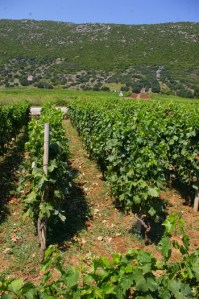 I was hoping to explore some of Croatia’s vineyards and wineries during our stay – but with prices of most of the ‘quality’ wines for sale being between$30 and $50 a bottle, I swiftly changed my mind! To be sure, it is indeed possible to find some reasonable wines at much less than this, but I cannot imagine who is willing to pay such prices – perhaps there are far too many over-rich tourists! If Croatia wants to establish itself as a reputable wine-making country, it needs to start making better value wines!
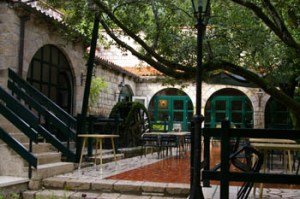 The best – and reasonably priced – was
  Thanks to
 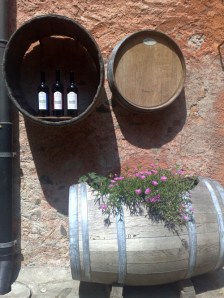 As for wine, Ticino often suffers from rain and dampness in October which has a tendency to cause rot – but sadly not of the noble kind – the Botrytis cineria here in Ticino is far from benevolent! Hence, grape growers have been keen to plant early ripening varieties, most notably Merlot. In recent years, these red grapes have also been used to make the white wine Bianco di Merlot, which can have complexity and subtle flavours – when well-vinified they have a fresh acidity that goes really well with the local food.
 available on the wine lists. Here are just a few of my favourite places to eat in Maputo:
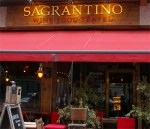 Walking through Berlin, I came across a restaurant named after one of my favourite grape varieties (Sagrantino) and apparently serving wines made by one of my favourite producers (




 Tim Unwin's Blog