Setting sun over Brandenburg

A recent visit to an old friend living near Müncheberg in the Land of Brandenburg on a glorious late autumn day provided a wonderful opportunity to experience the special landscape and wide open skyscape of this part of Germany.  The quickly fading light rendered the leafless silver birch trees a rich red colour, contrasting beautifully with the green sown fields alongside.  The sun setting behind a hemispherical tree in the distance also provided a wonderful silhouette against the vast sky beyond.  The pictures below hopefully capture something of this fascinating part of Germany, with its contrasts between wide open fields and dense areas of woodland.

This slideshow requires JavaScript.

I couldn’t resist adding one image from earlier in the day: a field filled with a vast flock of migratory geese!

Leave a comment

Filed under Germany, Photographs, Rural

IGF 2019 WS #64 Internet Accessibility Empowering Persons with Disabilities

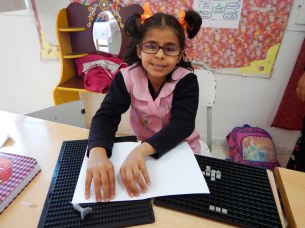
Visually impaired girl using Braille in Tunisia

Visually impaired girl using Braille in Tunisia

I’m so glad to have been invited to contibute to the session on Internet Accessibility Empowering Persons With Disabilities at this year’s Internet Governance Forum Meeting in Berlin (Wednesday 27th November, 1500-1650 CET in Room IV of the Estrel Congress Center, Sonnenallee 225, 12057 Berlin).

Hopefully, the introductory pieces by all of the speakers will be short, so that we can have a lively discussion.  I am speaking last, so previous speakers will probably have made all of the important points! However, for those unable to attend, this is what I am hoping to say:

I would like to use this opportunity to make four brief points:

First, unless universal inclusion and accessibility are built into all new digital technologies from the original design stage to end user, they will further increase inequality.  The more and more advanced technologies become, the further they benefit those who can afford and are able to use them, rather than the most marginalised and poorest, especially those with disabilities

Second, it is crucial that we change the design approach mindset so that inclusion becomes of paramount importance for the internet and the use of digital technologies.  This can be done in many ways, but I have always been impressed by the power of the market, and the role that procurement can play, especially by governments and large corporations.

Third, we can all get better at what we do!  I continually get cross with myself that I do not always insert alternative text for all of the images I post on my digital platforms, and in the slide decks that I share of my talks.  It is not good enough, but it takes longer to do, and with a tight schedule I usually forget. I need to do better; we all do.

Finally, and to end on a more optimistic note, of course the design of new digital technologies can indeed be used by people with disabilities to transform their lives.  There are always new things being developed – my latest exciting discovery is OptiKey .  However, we need to do much more to help change developers’ attitudes – and indeed those of the wider tech community.  Smart city technology for example should be being used much more to help the blind and visually impaired.  We must all do more – together with those with disabilities, and not just “for them”.

For more about our work on inclusion and disability, see our small site at Disabilities and ICT4D.


1 Comment

Filed under Accessibility, Disability, ICT4D conferences, inclusion, Uncategorized

Barbarians 31 – Fiji 33, Killik Cup 2019

It was great to watch such a free-flowing and open game of rugby at Twickenham yesterday (16th November 2019).  The referee Tom Foley rarely had to stop the game, and when he did both teams chose to kick for touch and further possession when they were awarded penalties, which added to the entertainment.    Having been behind 17-33, the Barbarians fought back to within two points at the end, making it a very exciting finish.  The handling was impressive, and despite the cold the crowd of 51,213 left invigorated by a most enjoyable afternoon!  I hope that the pictures below capture something of the entertainment and excitement.

This slideshow requires JavaScript.

For match reports see:

Leave a comment

Filed under Photographs, Rugby

The running shoes, girls’ learning in Africa and the gecko: a fable

shoesOnce there was a brilliant young entrepreneur living in Africa.  Let us call him Alfred.  He wanted to make loads of money, but was also very committed to trying to improve the quality of girls’ learning and education.  One evening, drinking probably too much Tusker, Alfred had a stroke of inspiration.  What if he could persuade the government that giving girls high quality new running shoes would transform the quality of their learning experience, and thus their future job prospects.  This was an absolute no brainer.  The government would have to buy his trainers for every girl in the school system!
Children 1

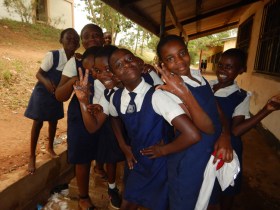
Schoolgirls in Ghana

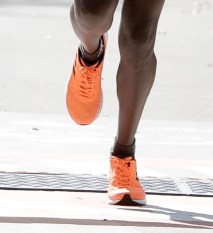
But how was he to start? Many international donors are eager to support such schemes that might contribute to achievements of SDGs4 (education) and 5 (gender).  So, he set about getting to know the heads of country office of some of the leading European donors, and learnt that at the heart of getting funding was the need to have a theory of change (well, really not a comprehensive “theory”, but just a basic description of how running shoes would improve girls’ learning).  This was easy: good quality running shoes would enable the girls to get fitter, and it is well known that a fit body creates a fit mind; then, if they ran to and from school each day they would have more time to do their homework; and with good shoes on their feet they would not suffer as many injuries or catch diseases that might impair their learning.  Alfred had to think of an inspiring name for these shoes, so that everyone would want a pair.  How about “Jepkosgei” after the great young Kenyan runner who had just won the New York Marathon?  She was very happy to lend her name to this incredibly exciting initiative that could transform girls’ learning.

Malawi classroom bright

A school classroom in Malawi

The stage was set.  His friends among the donors recommended a great European university research team who would do the baseline survey as part of one of their research grants, and then they would do a follow-up evaluation at the end of the first term.  The shoes would be randomly allocated to girls in classrooms in a small set of pilot schools, and the purpose was to show that giving girls smart new running shoes would indeed improve their results when compared with those in the classrooms that were not given the shoes.  At the end of term, the researchers returned.  Everyone was on best behaviour.  What would they discover?

The results were extraordinary.  In just one term, the girls had improved their scores by 20% in Mathematics and English.  The researchers checked and re-checked their resuts, but there was absolutely no doubt.  The President got to hear of Alfred’s great success, and eager to do well in the next elections he ordered all schools immediately to supply girls with Jepkosgei running shoes. Demand outstripped supply, but Alfred set up new factories to produce them, providing much needed employment and contributing to the country’s economic growth.  Soon neighbouring countries got to hear about the impact of running shoes on girls’ learning, and they too sent in orders for tens of thousands of shoes.  Alfred became a superstar.  He won numerous awards at prestigious international events, and was fêted by the likes of Bill Gates and António Guterres.  Alfred was an African hero transforming African girls’ learning.  Why hadn’t anyone thought of this before.  It was so simple.

Gecko 2

A friendly and wise gecko

Back at the school where this all began there was a wise old gecko.  He had watched and listened as the changes took place.  He knew why learning had changed.  When the girls had first been given their runing shoes they were so proud!  They were going to be like Joyciline Jepkosgei!  People were paying attention to them.  For the first time in their lives they had felt appreciated at school.  They wanted to respond positively.  But it wasn’t just this.  Other children in the school knew that if the pilot was a success, they too would be given smart new running shoes.  So, they did everything they could to help ensure that their peers with the shoes would learn especially well that term.  They did extra chores for them so they could concentrate on their work.  They provided advice and help when something wasn’t understood.  They gave them quizzes and checked they knew the right answers.  The teachers also wanted to ensure that these girls did really well as a result of the running shoes, and so they put extra effort into preparing their classes, and ensuring that the girls had the best opportunities to learn, despite the limited resources.  Some even helped them with the answers in the tests when the researchers came to evaluate the scheme.

It was all a wonderful success.  Alfred was happy and rich, the President was happy and re-elected, the donors were happy because they could show how they delivered on the SDGs.  But the girls weren’t happy, and their exam results gradually declined over the next few years.  Girls’ feet grow, and their lovely bright shoes were soon too small for them.  There was no way to hand them on or recycle them, and in any case after a couple of years continual use by their younger sisters they were wearing out.  The government couldn’t afford to buy new shoes for all the girls.  Once everyone had them, those who had been in the pilot no longer felt special, and no-one helped each other to try to improve results.  In any case, the government was now more interested in the 4th Industrial Revolution, and how they could use it to control their people and further advantage those who were already rich and powerful and living in the burgeoning constantly surveilled smart cities…

The gecko, though, continued to enjoy catching insects, and watching the children play.  Occasionally, he wistfully wondered why no-one had asked him how to improve girls education and learning.

Malawi school children small

A school in rural Malawi

Leave a comment

Filed under Education, ICT4D, Learning, Story-telling, technology, Uncategorized

Short guides to literature on technology use in education: both the positives and the negatives…

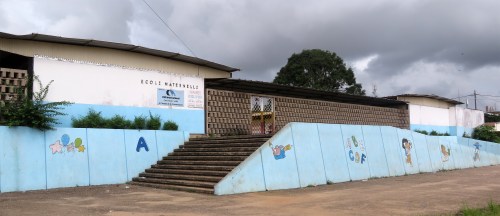
Infant school

Infant school in Cocody, Abidjan, Côte d’Ivoire

Far too many initiatives using technology in education fail to learn from the experiences of others as they seek to be innovative and novel.  Consequently, the same mistakes tend to be replicated over and over again.  Far too many researchers likewise fail to read but a fraction of the vast literature that has been published on technology and education, and bibliographies in PhD theses in the field are increasingly often only sketchy at best.

In 2017 and 2018 I had the privilege of being asked to write a report for UNICEF on how the organisation might respond to the future interface between technology and learning.  This involved reading hundreds of reports, interviewing numerous people, and drawing on my experiences across the world over the last quarter of a century.  It made me realise how little I know, and how much still needs to be done.

However, in order to help others on this journey of discovery and learning, I thought it might be helpful to share a shortened version of the footnotes (34 sides) and a short summary bibliography (10 sides) that I included in that report.  Many of the links to the original literature or examples are included (please let me know if any are broken so that I can try to update them!).  Not least, I hope that this might reduce the flow of questions I receive from people beginning to get interested in the field, either for research or because they have a great idea that they would like to introduce in practice on the ground – most of whom have never actually read much before asking me the question!  These are but starting points on a lifetime of learning and discovery, but I hope that people may find them useful.

I have previously posted summaries of some of the content of my UNICEF report elsewhere on my Blog as follows:

I must stress that these are very much my own views, and in no way represent the opinions of UNICEF or those with whom I have previosuly worked.  They are offered here, though, to get us all to ask some of the difficult questions about ways through which some of the poorest and most marginalised can benefit from the use of technology in education, if indeed that will ever truly be possible (at least in a relative sense).

Leave a comment

Filed under Africa, AI, Education, Higher Education, ICT4D, technology, United Nations

Marching for a “People’s Vote”, 19th October 2019

Panorama

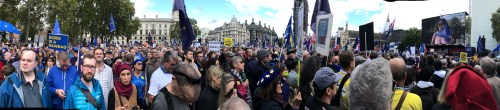
Today is the first day that Parliament has sat on a Saturday since 1982, and only the fourth time it has done so since the end of World War II.   The gathering had been called to discuss Prime Minister Johnson’s new Brexit deal with the EU.  It was also the day chosen for the latest People’s Vote march.  It is estimated that around a million people joined the march which wound its way from Hyde Park Corner to Parliament Square,

Central London was brought to a complete standstill, but despite the much larger police presence than previously, it was generally good humoured and festive.  Marchers came from all corners of the UK and beyond; they were young and old; men and women; people from all different background, religions and colours; in wheelchairs and on their feet…  They carried a wide array of amusing, clever, and sometimes challenging posters and banners.  The atmosphere was full of trepidation; Parliament was set to accept the deal.  The day started brightly.  England had thrashed Australia at the Rugby Union World Cup in Japan, and the sun was shining brightly over London.  As the afternoon progressed, though, the clouds began rolling in. After hours of discussions, Members of Parliament (MPs) were voting on the so-called Letwin Amendment, which would withhold approval of the deal, until it had been fully discussed by Parliament and the legislation passed to enact it.  This would have the effect of triggering the “Benn Act” which would force the Prime Minister to request a further postponement of Brexit until 31 January.  The rain started in Parliament Square, and the big screen revealed the tellers coming back into Parliament.  Everyone held their breath, hoping that the ayes would have it.  And so it was, by 220 votes to 206, a majority of 16.  The square erupted in cheers.  Prime Minister Johnson’s rotten deal, widely seen as being worse for the UK than that brokered by his predecessor May, had been delayed, if only for a while.

I hope that the pictures below capture something of the diversity and passion of those marching for a people’s vote, most of whom wish to remain in the EU.  It was a wonderful example of democracy still being alive and well in the UK.

This slideshow requires JavaScript.

I have often been a critic of many of our MPs, and their failure to serve our citizens, but the quality of speeches by MPs and others from the platform today was of very high quality: passionate, committed, eloquent, accurate, and above all advocating the democratic principles that lie at the heart of our country.  It was a very special, indeed an inspirational, day.

See also my reflections on the People’s March on 20th October 2018.

[In most instance where I photographed an individual close up so that they are easily recognisable, I specifically asked if I could share the picture on social media and permission was readily granted.  It was impossible, though, to ask everyone in crowd scenes.  Where possible, I tried to take photos primarily of people’s backs, but again this was not always feasible.  Should anyone wish me to remove an image please let me know and I will do so.  I do hope that none of these images cause anyone concern]

Leave a comment

Filed under Brexit, Photographs, Politics

Nairobi National Park

After several weeks “on the road”, a free morning in Nairobi provided a wonderful opportunity to spend some hours with friends visiting Nairobi National Park.  It is many years since I was last there, and people have said that building encroachment as well as the new railway and roads are increasingly affecting the lives of the wildlife.  However, following two days with rain and an early start, we were very fortunate to have a sunny morning during which we saw a wealth of animals and birds.  I very much hope that the images below capture some of the beauty and richness of Kenya’s wildlife.

This slideshow requires JavaScript.

VQueueistors should, though, be warned that passports/identity cards are needed to enter, and that payment (currently US$43 per foreign visitor) is required by card rather than cash.  It was amusing to reflect that the introduction of digital payment means has led to lengthy queues; although it may have reduced fraud, it has certainly lengthened the time it takes visitors to enter the park!
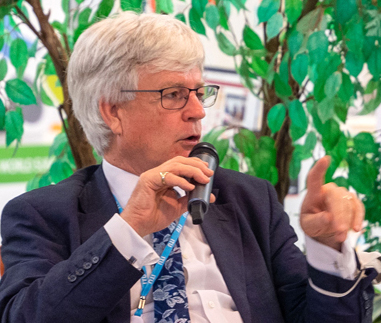
Many thanks to Pauline who collected us from the hotel, and our driver John who did a great job in locating the animals!

1 Comment

Filed under Africa, Photographs, Uncategorized, Wildlife

Hungarian music and dance, at Telecom World 2019

One of the highlights of the ITU’s Telecom World this year was the generous hospitality of our Hungarian hosts.  Preceding the impressive (if slightly concerning) drone display over the Danube, there was an excellent performance of music and dance in the recently refurbished neo-Renaissance Castle Garden Bazaar complex overlooking the Buda riverfront.  I hope that the images below capture something of the evening’s entertainment.  The men dancing were truly spectacular!

This slideshow requires JavaScript.

1 Comment

Filed under Conferences, Drones, ICT4D, Uncategorized

Tram 37A

“Tram 37A” would make a great title for a novel!  Travelling every day on this tram in Budapest provided a fascinating insight into life across a transect of the city that not many visitors glimpse.  From the hustle and bustle of Népszinház u., past the decaying Fiumei úti nemzeti sírkert (Kerepesi cemetery), across railways lines and road junctions, to the railway station at Kőbánya felső.  The images below provide just a quick overview of the everyday life of Tram 37A!  Perhaps the novel will come later…

This slideshow requires JavaScript.

2 Comments

Filed under Photographs, Uncategorized

Drones over the Danube, from Buda to Pest

The Hungarian government arranged an extraordinary drone display last night as part of their generous hospitality for this year’s ITU Telecom World event in Budapest.  I have never seen anything quite like it, and I hope the photos below provide just a glimpse into the technical and artistic success of this occasion.

This slideshow requires JavaScript.

So many thoughts sprang to mind!  In the future, drone displays may well take over from fireworks and laser shows!  But more worryingly, just imagine that each drone carried a small explosive payload, that the drones had facial and gait recognition capabilities, and that they were programmed autonomously to track you down…  There are many different futures: we need to ensure that the negatve aspects of digital technologies are mitigated, so that their positive aspects can flourish.

It is without doubt appropriate to thank HE Mr. István Manno, Head of the Protocol Department of the Ministry of Foreign Affairs and Trade of Hungary for his indefatigable work to ensure the strongest possible relationships between the ITU and the Government of Hungary, and especially for all of his efforts to make this evening event such a success.

3 Comments

Filed under Drones, ICT4D conferences, Uncategorized