Barbarians 31 – Fiji 33, Killik Cup 2019

It was great to watch such a free-flowing and open game of rugby at Twickenham yesterday (16th November 2019).  The referee Tom Foley rarely had to stop the game, and when he did both teams chose to kick for touch and further possession when they were awarded penalties, which added to the entertainment.    Having been behind 17-33, the Barbarians fought back to within two points at the end, making it a very exciting finish.  The handling was impressive, and despite the cold the crowd of 51,213 left invigorated by a most enjoyable afternoon!  I hope that the pictures below capture something of the entertainment and excitement.

This slideshow requires JavaScript.

For match reports see:

Leave a comment

Filed under Photographs, Rugby

The running shoes, girls’ learning in Africa and the gecko: a fable

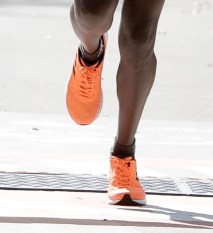
shoesOnce there was a brilliant young entrepreneur living in Africa.  Let us call him Alfred.  He wanted to make loads of money, but was also very committed to trying to improve the quality of girls’ learning and education.  One evening, drinking probably too much Tusker, Alfred had a stroke of inspiration.  What if he could persuade the government that giving girls high quality new running shoes would transform the quality of their learning experience, and thus their future job prospects.  This was an absolute no brainer.  The government would have to buy his trainers for every girl in the school system!

Children 1

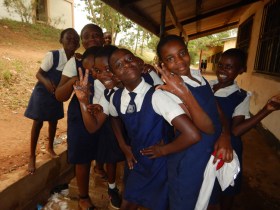
Schoolgirls in Ghana

But how was he to start? Many international donors are eager to support such schemes that might contribute to achievements of SDGs4 (education) and 5 (gender).  So, he set about getting to know the heads of country office of some of the leading European donors, and learnt that at the heart of getting funding was the need to have a theory of change (well, really not a comprehensive “theory”, but just a basic description of how running shoes would improve girls’ learning).  This was easy: good quality running shoes would enable the girls to get fitter, and it is well known that a fit body creates a fit mind; then, if they ran to and from school each day they would have more time to do their homework; and with good shoes on their feet they would not suffer as many injuries or catch diseases that might impair their learning.  Alfred had to think of an inspiring name for these shoes, so that everyone would want a pair.  How about “Jepkosgei” after the great young Kenyan runner who had just won the New York Marathon?  She was very happy to lend her name to this incredibly exciting initiative that could transform girls’ learning.

Malawi classroom bright

A school classroom in Malawi

The stage was set.  His friends among the donors recommended a great European university research team who would do the baseline survey as part of one of their research grants, and then they would do a follow-up evaluation at the end of the first term.  The shoes would be randomly allocated to girls in classrooms in a small set of pilot schools, and the purpose was to show that giving girls smart new running shoes would indeed improve their results when compared with those in the classrooms that were not given the shoes.  At the end of term, the researchers returned.  Everyone was on best behaviour.  What would they discover?

The results were extraordinary.  In just one term, the girls had improved their scores by 20% in Mathematics and English.  The researchers checked and re-checked their resuts, but there was absolutely no doubt.  The President got to hear of Alfred’s great success, and eager to do well in the next elections he ordered all schools immediately to supply girls with Jepkosgei running shoes. Demand outstripped supply, but Alfred set up new factories to produce them, providing much needed employment and contributing to the country’s economic growth.  Soon neighbouring countries got to hear about the impact of running shoes on girls’ learning, and they too sent in orders for tens of thousands of shoes.  Alfred became a superstar.  He won numerous awards at prestigious international events, and was fêted by the likes of Bill Gates and António Guterres.  Alfred was an African hero transforming African girls’ learning.  Why hadn’t anyone thought of this before.  It was so simple.

Gecko 2

A friendly and wise gecko

Back at the school where this all began there was a wise old gecko.  He had watched and listened as the changes took place.  He knew why learning had changed.  When the girls had first been given their runing shoes they were so proud!  They were going to be like Joyciline Jepkosgei!  People were paying attention to them.  For the first time in their lives they had felt appreciated at school.  They wanted to respond positively.  But it wasn’t just this.  Other children in the school knew that if the pilot was a success, they too would be given smart new running shoes.  So, they did everything they could to help ensure that their peers with the shoes would learn especially well that term.  They did extra chores for them so they could concentrate on their work.  They provided advice and help when something wasn’t understood.  They gave them quizzes and checked they knew the right answers.  The teachers also wanted to ensure that these girls did really well as a result of the running shoes, and so they put extra effort into preparing their classes, and ensuring that the girls had the best opportunities to learn, despite the limited resources.  Some even helped them with the answers in the tests when the researchers came to evaluate the scheme.

It was all a wonderful success.  Alfred was happy and rich, the President was happy and re-elected, the donors were happy because they could show how they delivered on the SDGs.  But the girls weren’t happy, and their exam results gradually declined over the next few years.  Girls’ feet grow, and their lovely bright shoes were soon too small for them.  There was no way to hand them on or recycle them, and in any case after a couple of years continual use by their younger sisters they were wearing out.  The government couldn’t afford to buy new shoes for all the girls.  Once everyone had them, those who had been in the pilot no longer felt special, and no-one helped each other to try to improve results.  In any case, the government was now more interested in the 4th Industrial Revolution, and how they could use it to control their people and further advantage those who were already rich and powerful and living in the burgeoning constantly surveilled smart cities…

The gecko, though, continued to enjoy catching insects, and watching the children play.  Occasionally, he wistfully wondered why no-one had asked him how to improve girls education and learning.

Malawi school children small

A school in rural Malawi

Leave a comment

Filed under Education, ICT4D, Learning, Story-telling, technology, Uncategorized

Short guides to literature on technology use in education: both the positives and the negatives…

Infant school

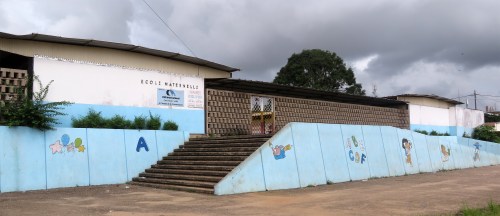
Infant school in Cocody, Abidjan, Côte d’Ivoire

Far too many initiatives using technology in education fail to learn from the experiences of others as they seek to be innovative and novel.  Consequently, the same mistakes tend to be replicated over and over again.  Far too many researchers likewise fail to read but a fraction of the vast literature that has been published on technology and education, and bibliographies in PhD theses in the field are increasingly often only sketchy at best.

In 2017 and 2018 I had the privilege of being asked to write a report for UNICEF on how the organisation might respond to the future interface between technology and learning.  This involved reading hundreds of reports, interviewing numerous people, and drawing on my experiences across the world over the last quarter of a century.  It made me realise how little I know, and how much still needs to be done.

However, in order to help others on this journey of discovery and learning, I thought it might be helpful to share a shortened version of the footnotes (34 sides) and a short summary bibliography (10 sides) that I included in that report.  Many of the links to the original literature or examples are included (please let me know if any are broken so that I can try to update them!).  Not least, I hope that this might reduce the flow of questions I receive from people beginning to get interested in the field, either for research or because they have a great idea that they would like to introduce in practice on the ground – most of whom have never actually read much before asking me the question!  These are but starting points on a lifetime of learning and discovery, but I hope that people may find them useful.

I have previously posted summaries of some of the content of my UNICEF report elsewhere on my Blog as follows:

I must stress that these are very much my own views, and in no way represent the opinions of UNICEF or those with whom I have previosuly worked.  They are offered here, though, to get us all to ask some of the difficult questions about ways through which some of the poorest and most marginalised can benefit from the use of technology in education, if indeed that will ever truly be possible (at least in a relative sense).

Leave a comment

Filed under Africa, AI, Education, Higher Education, ICT4D, technology, United Nations

Marching for a “People’s Vote”, 19th October 2019

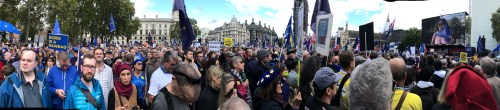
Panorama

Today is the first day that Parliament has sat on a Saturday since 1982, and only the fourth time it has done so since the end of World War II.   The gathering had been called to discuss Prime Minister Johnson’s new Brexit deal with the EU.  It was also the day chosen for the latest People’s Vote march.  It is estimated that around a million people joined the march which wound its way from Hyde Park Corner to Parliament Square,

Central London was brought to a complete standstill, but despite the much larger police presence than previously, it was generally good humoured and festive.  Marchers came from all corners of the UK and beyond; they were young and old; men and women; people from all different background, religions and colours; in wheelchairs and on their feet…  They carried a wide array of amusing, clever, and sometimes challenging posters and banners.  The atmosphere was full of trepidation; Parliament was set to accept the deal.  The day started brightly.  England had thrashed Australia at the Rugby Union World Cup in Japan, and the sun was shining brightly over London.  As the afternoon progressed, though, the clouds began rolling in. After hours of discussions, Members of Parliament (MPs) were voting on the so-called Letwin Amendment, which would withhold approval of the deal, until it had been fully discussed by Parliament and the legislation passed to enact it.  This would have the effect of triggering the “Benn Act” which would force the Prime Minister to request a further postponement of Brexit until 31 January.  The rain started in Parliament Square, and the big screen revealed the tellers coming back into Parliament.  Everyone held their breath, hoping that the ayes would have it.  And so it was, by 220 votes to 206, a majority of 16.  The square erupted in cheers.  Prime Minister Johnson’s rotten deal, widely seen as being worse for the UK than that brokered by his predecessor May, had been delayed, if only for a while.

I hope that the pictures below capture something of the diversity and passion of those marching for a people’s vote, most of whom wish to remain in the EU.  It was a wonderful example of democracy still being alive and well in the UK.

This slideshow requires JavaScript.

I have often been a critic of many of our MPs, and their failure to serve our citizens, but the quality of speeches by MPs and others from the platform today was of very high quality: passionate, committed, eloquent, accurate, and above all advocating the democratic principles that lie at the heart of our country.  It was a very special, indeed an inspirational, day.

See also my reflections on the People’s March on 20th October 2018.

[In most instance where I photographed an individual close up so that they are easily recognisable, I specifically asked if I could share the picture on social media and permission was readily granted.  It was impossible, though, to ask everyone in crowd scenes.  Where possible, I tried to take photos primarily of people’s backs, but again this was not always feasible.  Should anyone wish me to remove an image please let me know and I will do so.  I do hope that none of these images cause anyone concern]

Leave a comment

Filed under Brexit, Photographs, Politics

Nairobi National Park

After several weeks “on the road”, a free morning in Nairobi provided a wonderful opportunity to spend some hours with friends visiting Nairobi National Park.  It is many years since I was last there, and people have said that building encroachment as well as the new railway and roads are increasingly affecting the lives of the wildlife.  However, following two days with rain and an early start, we were very fortunate to have a sunny morning during which we saw a wealth of animals and birds.  I very much hope that the images below capture some of the beauty and richness of Kenya’s wildlife.

This slideshow requires JavaScript.

VQueueistors should, though, be warned that passports/identity cards are needed to enter, and that payment (currently US$43 per foreign visitor) is required by card rather than cash.  It was amusing to reflect that the introduction of digital payment means has led to lengthy queues; although it may have reduced fraud, it has certainly lengthened the time it takes visitors to enter the park!

Many thanks to Pauline who collected us from the hotel, and our driver John who did a great job in locating the animals!

1 Comment

Filed under Africa, Photographs, Uncategorized, Wildlife

Hungarian music and dance, at Telecom World 2019

One of the highlights of the ITU’s Telecom World this year was the generous hospitality of our Hungarian hosts.  Preceding the impressive (if slightly concerning) drone display over the Danube, there was an excellent performance of music and dance in the recently refurbished neo-Renaissance Castle Garden Bazaar complex overlooking the Buda riverfront.  I hope that the images below capture something of the evening’s entertainment.  The men dancing were truly spectacular!

This slideshow requires JavaScript.

1 Comment

Filed under Conferences, Drones, ICT4D, Uncategorized

Tram 37A

“Tram 37A” would make a great title for a novel!  Travelling every day on this tram in Budapest provided a fascinating insight into life across a transect of the city that not many visitors glimpse.  From the hustle and bustle of Népszinház u., past the decaying Fiumei úti nemzeti sírkert (Kerepesi cemetery), across railways lines and road junctions, to the railway station at Kőbánya felső.  The images below provide just a quick overview of the everyday life of Tram 37A!  Perhaps the novel will come later…

This slideshow requires JavaScript.

2 Comments

Filed under Photographs, Uncategorized

Drones over the Danube, from Buda to Pest

The Hungarian government arranged an extraordinary drone display last night as part of their generous hospitality for this year’s ITU Telecom World event in Budapest.  I have never seen anything quite like it, and I hope the photos below provide just a glimpse into the technical and artistic success of this occasion.

This slideshow requires JavaScript.

So many thoughts sprang to mind!  In the future, drone displays may well take over from fireworks and laser shows!  But more worryingly, just imagine that each drone carried a small explosive payload, that the drones had facial and gait recognition capabilities, and that they were programmed autonomously to track you down…  There are many different futures: we need to ensure that the negatve aspects of digital technologies are mitigated, so that their positive aspects can flourish.

It is without doubt appropriate to thank HE Mr. István Manno, Head of the Protocol Department of the Ministry of Foreign Affairs and Trade of Hungary for his indefatigable work to ensure the strongest possible relationships between the ITU and the Government of Hungary, and especially for all of his efforts to make this evening event such a success.

3 Comments

Filed under Drones, ICT4D conferences, Uncategorized

Brexit does not mean Brexit…

The endgame of “Brexit” is upon us, and if the UK’s Prime Minister is to be believed, the chances are high that the country will leave the EU without a deal at the end of October.

Screenshot 2019-08-31 at 16.16.19

This is not what the majority of the country’s citizens want.  It is not what most European leaders want.  Yet, in response to attempts at discussing the issues, very many “Brexiteers” simply resort to the statement that “Brexit means Brexit!“, and most are usually unwilling to engage in any kind of further rational debate on the issue.  The opprobrium poured on those who dare to try to debate the issue, the threats of violence, and the abusive posts on social media all testify to how divided our country is.  I have argued elsewhere that this was because those voting to leave in the 2016 referendum did so largely on emotional grounds, whereas most of those voting to remain did so on rational grounds.  However, whenever I hear it, I am always struck how very, very problematic this slogan is.  So, let me once again, please try in the simplest possible ways to convince those who believe that the slogan is true, that the referendum vote really does not mean that the UK should leave the EU:

  1. People did not know what they were voting for in the 2016 referendum.  There was absolutely no clarity at the time about what the options would be for leaving the EU, nor were the real implications fully understood.  It is therefore actually meaningless to say “Brexit means Brexit”.
  2. The referendum was only advisory.  The referendum was not legally binding, although some politicians did say that they would abide by it.  In the UK, though, there is a fundamental distinction between what is legal and what is not.  In some countries, referendums are indeed legally binding, but this one was not.
  3. The referendum campaign was repleat with lies.  It has been argued that neither side told the truth about Brexit during the 2016 campaign, but it is fairly widely accepted that those campaigning to leave lied to a far greater extent than did those campaigning to remain.  I have posted a selection of these lies and half-truths in my 2018 post The half-truths and misprepresentations that won Brexit.
  4. Brexit campaigners have been shown to have broken the law regarding the funding of their campaign.  Leave.EU was fined £70,000 over breaches of electoral law.  Moreover, in October 2018 Open Democracy reported that the “Police (are) still not invesitgating Leave campaigns, citing ‘political sensitivies’”.
  5. The Brexit campaign illegally used social media to influence voters.  The illegal funding was largely used to support targetted social media, and experts suggest that it could well have influenced over 800,000 voters.  The Leave campaign only won by 634,751 votes.  Moreover, there is strong evidence that disgraced firm Cambridge Analytica had indeed used sophisticated social profiling techniques to target voters.
  6. Only 27% of the total UK population actually voted to leave.  While 52% of those voting did indeed vote to leave, this represented only a small percentage of the total population.  Moreover, the 700,000 British citizens who had lived overseas for more than 15 years were also excluded from the vote.  Likewise, European citizens living and working in the UK were not permitted to vote.
  7. A majority of people in the UK now wish to remain in the EU.  By January 2019 demographic factors alone meant that there were more people likely to vote to remain than to leave, because of the number of elderly people (likely to vote leave) who had died since 2016, and the number of young people who are now 18 but could not vote in 2016 (likely to vote remain) who are now eligible to vote.
  8. If politicians can change their minds, why are the people not allowed to?  One of the most remarkable things about the last three years has been the willingness of parliamentarians to change their minds about Brexit, and yet they have not given the chance to the people of this country also to change their minds.  This seems to me to be hugely hypocritical.  Indeed, former Prime Minister May is the classice example of this.  She voted to remain, and yet continually emphasised once she was Prime Minister that Brexit means Brexit. For those who are interested in how other politicians continue to change their mind, do look at my post on Flip-flop views over Brexit.

Those are the main grounds why the observation that 52% of those voting in the 2016 referendum supported leave does not mean that we should leave the EU now in 2019, and especially not without any kind of agreement.

However, for those who wish to read a little further, let me highlight the absurdity of the figures and the way the referendum was constructed.  How would those supporting Brexit have reacted to a 52% vote in favour of remaining?  Might they not have tried to make similar arguments to those above (assuming of course that they were willing to debate these issues)?  What if only 25 million people had voted, and 52% had voted to remain.  That would only represent some 13 million people, or just under 20% of the total population.  Surely that could not be a legitimate basis for remaining they might say!

Whether to leave or remain has clearly divided the country, and indeed parliament.  However, in such circumstances, the wise thing to have done would have been to say that this is an insufficient mandate for change.  Indeed, as in many other key referendums, specific criteria could have been built into the original referendum.  For example, the referendum could have stated that it would require at least two-thirds of those eligible to vote to leave, or more than 50% of the total population voting this way, for the government to initiate procedures to leave.  The shaping of the referendum which was purely advisory has itself led to many of these problems.  The UK is a divided country, and in such circumstances where there is no clear mandate for change, our government(s) should have explored other options.  The actions of the Tory party over the last three years have only exacerbated the divides within our society.  After all, though, Brexit was never realy about the interests of the British people, but was instead fundamentally concerned with the survival of our existing political parties, and about the careers of individual politicians who saw it as an opportunity for their own engradisement.

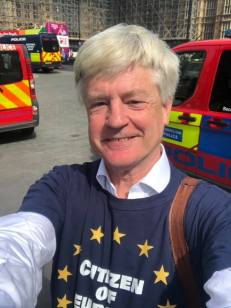
European Citizen 30 Aug 2019Whatever happens in the future, it will be essential for huge efforts to be put into reuniting our country.  The social divides that Brexit has opened will take years to heal, and may be even more damaging to the country than the economic crisis that will befall the UK if we do indeed leave, especially without a deal.  Today’s protests against PM Johnson’s plans to suspend Parliament are just a beginning.  There is very considerable potential for widespreead violence, and as in the run-up to most civil wars, families, communities and workplaces are all now becoming increasingly divided.  We need wise, brave, strong, visionary and inspirational leaders.  Tragically, there is no evidence that we have such politicians.

Leave a comment

Filed under Brexit, Politics, Uncategorized

Failures and corruption in DFID’s education programme in Pakistan

DFID’s much-vaunted education programme in Pakistan has been beset by problems since its very beginning.  Many of these issues could have been avoided if people responsible had listened to the voices of those on the ground who were working in the education systems and schools in Punjab and Khyber Pakhtunkhwa.  Those responsible for designing and implementing the flawed programme need to be identified, and take responsibility for their actions.  Many are still in highly paid and “respected” roles in private consultancy companies that are at risk of delivering such failed projects over and over again unless they are stopped.

A recent report in the Financial Times (by Bethan Staton and Farhan Bokhari, 24th August 2019) has gone largely unreported elsewhere, as a coalition of silence continues over this failure and corruption in a prestigious DFID programme.  As their report begins, “Buildings in more than nine in 10 schools in Pakistan delivered under a £107m project funded by the UK’s Department for International Development are not fit for purpose, leaving 115,000 children learning in makeshift classrooms as a new academic year begins”.  Some 1,277 out of the 1,389 schools that were meant to have been built or renovated are potentially at risk from structural design flaws, which put them at risk of collapse in earthquakes.  Pakistan is one of the most seismically active countries in the world and has had six major earthquakes over 6 Mw in the last decade.  The earthquake in October 2005 killed over 86,000 people, and set in train various initiatives to try to ensure that schools were indeed built to protect children in earthquakes.

The UK government has responded quickly to the FT’s report, with the new Secretary of State, Alok Sharma, saying that this is unacceptable and the contracting company would be retrofitting all affected classrooms at no extra cost to the taxpayer.  Stephen Twigg, the chair of the House of Commons International Development Select Committee, has also pledged to investigate this as part of an inquiry into the impact and delivery of aid in Pakistan.

However, all of this could have been avoided if earlier warnings had been heeded, especially from people in Pakistan on the ground who really knew what was going on.  The suspicion is that those who designed and benefitted from the programme thought that they could get away with benefitting personally from these contracts.  Yet again, suspicion falls on the probity of “international development consultants” and “implementing agencies”.  As a very good Pakistani friend said to me, “follow the money”.  So I have!

I first warned about problems with DFID funded education projects in Pakistan following a visit there in 2016.  I raised my concerns in a post in May of that year entitled Education reform in Pakistan: rhetoric and reality, and shared these with colleagues in DFID, but was assured that this was a prestigious DFID programme that was above reproach and was delivering good work.  My comments were, I was told, mere heresay.

That post ended with the following words:

“The main thing that persuaded me to write this piece was a Facebook message I received this morning, that then suddenly disappeared.  It read:

“It is true though Tim Unwin.  What is really pathetic is that neither Dfid nor Sindh/Punjab government are made accountable for those children whose education will discontinue after this debacle. Education Fund for Sindh boasted enrolling 100 thousand out of school kids. Overnight the project and project management has vanished, website dysfunctional…Poof and all is gone. There is no way to track those children and see what’s happening to their education”

This is so very sad.  We need to know the truth about educational reform in Pakistan – and indeed the role of donors, the private sector and richly paid consultants – in helping to shape this.   I cannot claim that what I have been told is actually happening on the ground, but I can claim that this is a faithful record of what I was told”.

I wish I knew why the words were taken down; perhaps the author did not want to be identified.  More importantly, I wish that people in DFID had listened to them.

My earlier post alluded to the coalition of interests in international development between individual consultants, global corporations, local companies, and government officials.  Let me now expand on this.

  • McKinsey, Pearson, Delivery Associates and Sir Michael Barber.  Barber is curently chairman and founder of Delivery Associates (among other roles) and was in many ways the mind behind DFID’s recent educational work in Pakistan.  From 2011-2015 he was DFID’s Special Representative on Education in Pakistan (as well as Chief Education Advisor at Pearson, 2011-2017), and in 2013 he wrote an enthusastic report entitled The Good News from Pakistan: How a revolutionary new approach to education reform shows the way forward for Pakistan and development aid everywhere, which explored in particular ways through which expansion in low-cost private sector educational delivery might spur the government to reform itself (pp.49-50).  However, as the Mail Online pointed out Barber was paid £4,404 a day for his advice.  As this source goes on to point out, “Sir Michael was handed the deal 18 months ago as part of a wider contract with management consultants McKinsey.  Originally McKinsey was planning to charge £7,340 a day for Sir Michael’s advice on improving Pakistan’s education system over 45 days, making a total of £330,300.  Overall, four consultants were to be paid £910,000 for 250 days’ work, although this was reduced to £676,720 after the firm agreed a ‘social sector discount’, which took Sir Michael’s daily rate to £5,505. A fellow director was paid the same rate while two ‘senior consultants’ were paid £2,350 a day”.  There is no doubt that Barber played a key role in shaping DFID’s educational policies in Pakistan and was paid “handsomely” for it.  The 2016 review of the PESP (II) (Punjab Education Support Programme) clearly describes his involement: “More formally, the bi-monthly stocktake of the Roadmap provides a high-level forum to discuss a range of key education indicators (such as student attendance and missing facilities) with the CM, Secretary Education and Sir Michael Barber, as the UK Special Representative for Education in Pakistan”.
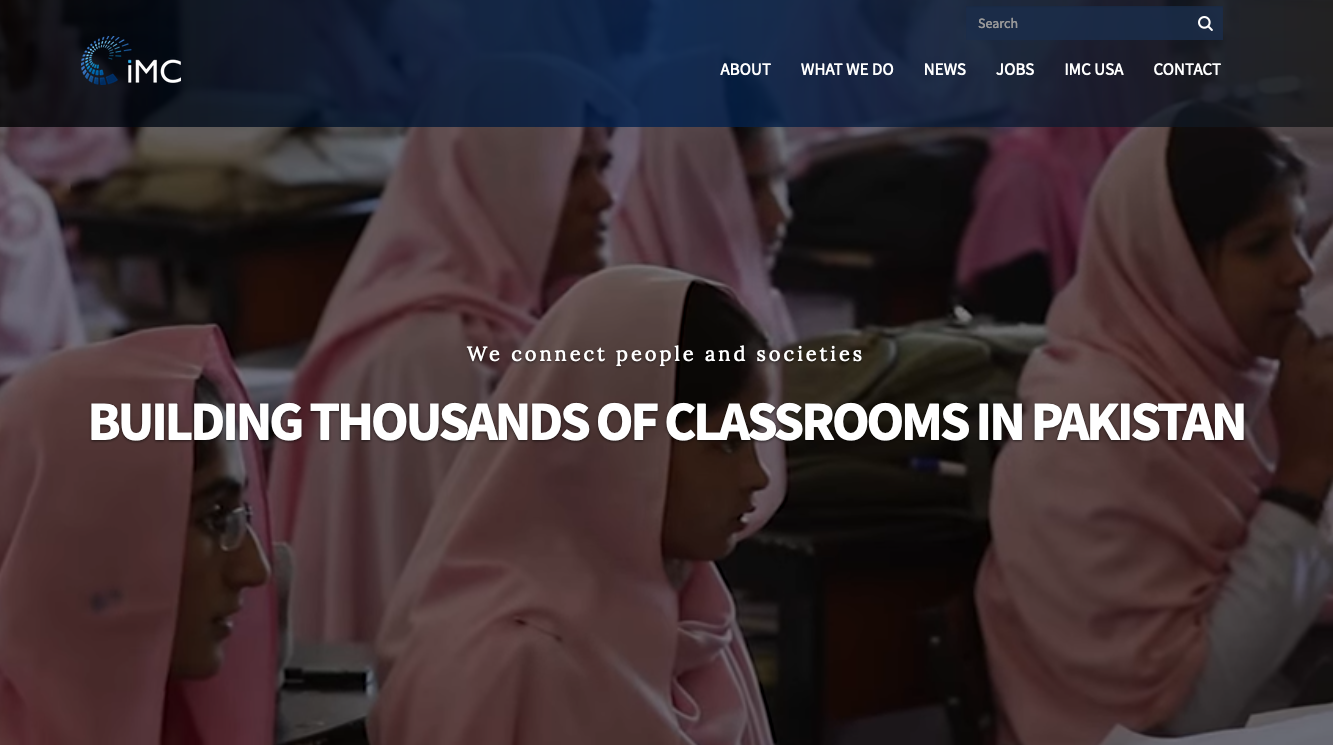
  • IMC Worldwide, the main contractor.  The British Company IMC Worldwide won the main contract for delivering much of DFID’s school building programme in Pakistan, and continues to claim on its website that the project is a great success (as noted on a screenshot of its home page earlier today, shown below).
Screenshot 2019-08-30 at 18.04.25

This goes on to highlight their success in improving up to 1500 classrooms, with videoclips emphasising in particular their use of reinforced foundations, innovative use of Chinese Brick Bond, preserving history through innovations, and building community engagement.  It is, though, worth remembering that the Punjab Education Support Programme PESP (II) January 2016 review commented that “The school infrastructure component has been slow to perform. This was due in part to a delay in legal registration of IMC Worldwide (the international private sector implementing partner) in Pakistan. Unit costs have also risen dramatically since the last Annual Review and work is behind the original schedule. The quality of construction in the classrooms that have been completed is encouraging”.  In hindsight, the quality of work would appear to have been anything but encouraging!

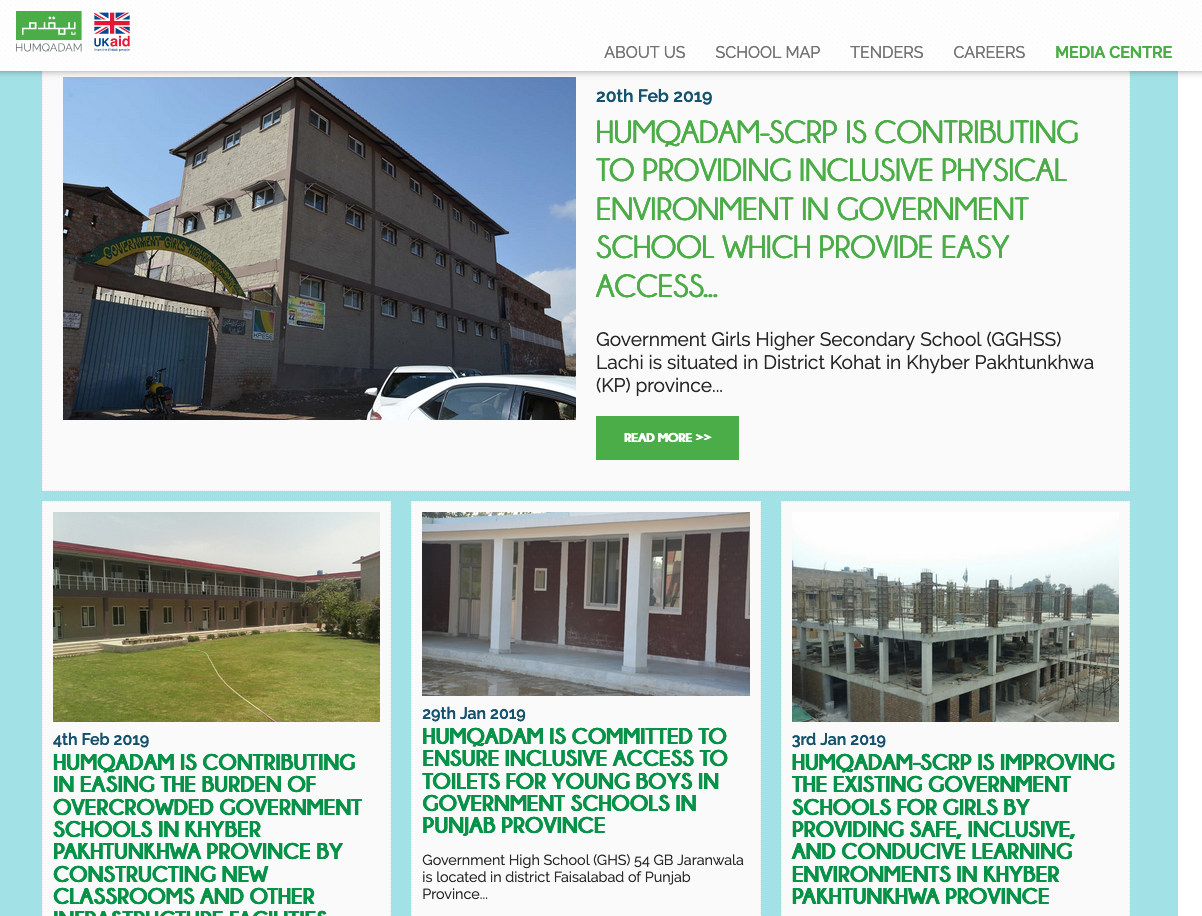
  • Humqadan-SCRP, the local initiative.  IMC needed to implement the programme through local contractors, and this led to the creation of Humqadan-SCRP.  The implementation phase started in May 2015 as a five year programme funded by DFID and the Australian government, and managed by IMC Worldwide.  It is very difficult to find out details about exactly who is involved in delivering the construction work on the ground (closed tenders are listed here).  Its newsletters in 2017 and 2018 mentioned that Herman Bergsma was the team leader, although he has now been replaced (his predecessor was Roger Bonner).
Screenshot 2019-08-30 at 18.44.44

As with the IMC site, Humqadan’s media centre page above indicates great success for the initiative.  However, local media in Pakistan has occasionally reported problems and challenges with the work.  In December 2017, Dawn thus highlighted the case of a school building being demolished in 2015, but still remaining to be reconstructed.  More worrying, though, are suggestions that IMC may have failed sufficiently to do quality checks, and had challenges in ensuring that local contractors were paid appropriately and on time; there are even claims that IMC may have sought to keep much of the money for themselves.  DFID’s July 2016 annual report for the Khyber Pakhtunkhwa Education Sector Programme (KESP) perhaps gives some credence to such rumours, noting that “Just before the finalisation of last year’s KESP annual review, Humqadam flagged to DFID an expected increase in their costs for construction and rehabilitation, but the detail was not clear at the time of publication. Humqadam subsequently confirmed that after going out to the market for the construction work, several cost drivers were significantly higher than in their original estimates. This had the effect of approximately doubling average classroom construction costs from PKR 450,000 (£2,813) to PKR 950,000 (£5,938)”.  The Pakistani construction sector is notoriously problematic and anyone the least bit familiar with the country should know the importance of good and rigorous management processes to ensure that appropriate standards are maintained.  A doubling of costs, though, seems remarkable; even more remarkable is DFID’s apparent acceptance of this.

  • The donor’s role, DFID.  DFID’s regular reports on progress with the project are mixed.  Ever since the beginning, they have tended to over-emphasise the successes, while underestimating the failures. That having been said, it is important to emphasise that some attempts have been made by DFID to grapple with these issues.  As I noted in my earlier post relating to the Punjab Education Support Programme (PESP II): “DFID’s Development Tracker page suggests that there was a substantial over-spend in 2013/14, and a slight underspend in 2015/16, with 2014/15 being just about on budget.  Moreover, DFID’s most recent review of the project dated January 2016 had provided an overall very positive account of the work done so far, although it did note that “The school infrastructure component has been slow to perform” (p.2)“.  The July 2016 KESP report likewise noted that “Over the 12 months since the last KESP review, DFID has responded by strengthening its management of the Humqadam contract to increase scrutiny and oversight. The team produced an enhanced monitoring strategy and commissioned a Third Party Verification (TPV) contract to verify that this intervention still represented value for money.”  It is nevertheless remarkable that the programme score for this programme increased from C in 2012, to B in 2013 and 2014, and then A from 2015 to 2016.  As far as DFID is concerned it was indeed therefore being successful.  Not insignificantly, though, the risk rating rose from High from 2012-2015 to Major in 2016.  Unfortunately there is no mention of Humqadan in the first Performance Evaluation of DFID’s Punjab Education Sector Programme (PESP2), published in 2019.  On balance, some aspects of the overall programme would indeed appear to be going well, but DFID’s monitoring processes would seem to have failed to pick up a potentially catastrophic failure in actual delivery on the ground.

This is clearly a complex and difficult situation, but above all two things stand out as being extremely sad:

  • Children on the ground in desperate need of good learning opportunities seem to have been failed, since so many new school buildings appear not to have been built to the appropriate standards; and
  • DFID’s reputation as one of the world’s leading bilateral donors has been seriously tarnished, whether or not the scale of construction failure is as high as the FT article suggests.

All of these problems could have been resolved if:

  • greater care had been taken in the design of the programme in the first place;
  • greater attention had been focused on the problems picked up in the annual reporting process;
  • greater scrutiny had been paid to the work of the consultancy companies and local contractors; and
  • greater efffort had been expended on monitoring local progress and quality delivery on the ground.

Above all, if senior DFID staff had listened more to concerns from Pakistanis working on the ground in rural areas of Punjab and Khyber Pakhtunkhwa, and had been less concerned about portraying its success as a donor agency, then these problems might never have arisen in the first place.  Yet again the coalition of interests of donor governments, international consultants and their companies and corporations, seem to have dominated the views and lives of those that they purport to serve.

If the Financial Times report is true, and the scale of incompetence and possible corruption is indeed as high as is claimed, I hope that DFID will take a very serious look at its processes, and ensure that those who have taken British taxpayers’ money for their own personal gain are never permitted to do so again.


Additional insights, August 2022

The above post was written some three years ago, but I have recently discovered additional materials that would indeed support some of my conjectures. Those interested might like to see the following by Matt Benson on LinkedIn about his resignation from what was then DFID:

These provide much more detail from the inside, and it would be good to know what the FCDO might have to say in response.

It strikes me that there are at least five fundamental issues that need to be addressed:

  • The implications that these issues have for the provision of education in Pakistan, especially for some of the poorest and most marginalised children;
  • The role of very highly paid individual consultants and international contractors in development initiatives across the world;
  • The ways through which the UK funds its international development programmes, especially now that these are delivered through the FCDO;
  • Mechanisms for assessing the impact of aid interventions openly and transparently, esecially where these are funded through taxpayer’s money; and
  • The accountability of individuals within development interventions.

Hopefully, there can be an open and constructive discussion around all of these important issues, because it is surely time to stop the exploitation of the international aid system by companies and individual consultants as appears to have happened on a significat scale in Pakistan.

Updated 22 August 2022
3 Comments

Filed under Education, ICTs, Pakistan, poverty, technology, Uncategorized