
Three days before Christmas, the page proofs of Reclaiming ICT4D have arrived. At one level, this is an amazing Christmas present, but at another I am not sure I am looking forward to the arduous task of going through them and checking for any errors over the holiday season!
On reading the beginning of the Preface again, I hope that the book does indeed fulfill the task I set myself. It does, though, seem a fitting commentary on the tasks that still need to be done in the field of ICT4D, especially this Christmas time:
“This book is about the reasons why poor and marginalized people have not yet benefited sufficiently from the widespread and pervasive expansion of information and communication technologies (ICTs) into most aspects of human life over the last quarter century. It is about the inequalities that the use of these technologies have enhanced, and the risks to us all that these are creating. However, it remains a book of hope; hope that by better understanding the interests underlying these increasing inequalities, wise people of good will may be able to work collectively together to help the poorest and most marginalized use ICTs to enhance and improve their lives.
Much has changed in the use of ICTs for ‘development’ (ICT4D) since my last edited book on the subject was published in 2009 (Unwin, 2009). In that book I laid out the case for why the focus of ICT4D should be on reducing inequalities as well as increasing economic growth, and this remains a core theme of this new book. However, I was much more optimistic a decade ago that ICTs would indeed be used effectively to enhance the lives of poor people. My previous book thus included chapters by leading authorities in their fields about the many ways through which ICTs were indeed being used to improve the quality and quantity of education, to transform health delivery, to enhance rural and agricultural incomes, and to enable better government. Most of those examples remain valid, and there is indeed much good work being done by civil society, governments and the private sector through which the poor can indeed benefit. This has been widely reported in the many books and papers that have been published over the last decade on the subject. However, as the present book argues, in this time the rich have got very much richer through the use of ICTs, and the poor have become relatively poorer. I am impatient and frustrated by this increasing inequality, and so rather than emphasising all of the oft-cited examples of the benefits of ICTs, I concentrate here on the interests underlying why ICTs are being used in this way. Yet, I still retain a belief that these technologies can indeed help empower poor people and this must never be forgotten through the darker sections of the book“.
It is so good to read this at last again in the final stages of production!
 This was an opportunity for me to explore the relevance to the European context of some of my ideas about ICTs and inequality gleaned from research and practice in Africa and Asia. In essence, my argument was that we need to balance the economic growth agenda with much greater focus on using ICTs to reduce inequalities if we are truly to use ICTs to support greater European integration. To do this, I concluded by suggesting that we need to concentrate on seven key actions:
 The ITU is preparing a new book, provisionally to be entitled “ICT4SDGs: Economic Growth, Innovation and
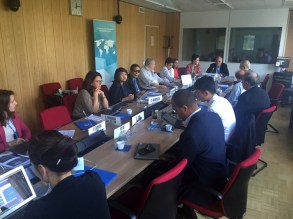 I have been invited to lead on a 6,000 word chapter, provisionally entitled “Sustainability in Development: Critical Elements” that has an initial summary as follows: “the chapter identifies how ICTs engage with the sustainability agenda and the various elements of the ecosystem (such as: education, finance/capital, infrastructure, policy, market, culture/environment, opportunities) and the stakeholders that are indispensable for ensuring resilient and sustainable development activities in developing countries in spite of some chronic shortages coupled with fast changing and fluid situations that can negatively hamper the efforts”.
 First, the term EdTech places the emphasis on the technology rather than the educational and learning outcomes. Far too many initiatives that have sought to introduce technology systematically into education have failed because they have focused on the technology rather than on the the education. The use of the term EdTech therefore places emphasis on a failed way of thinking. Technology will only be of benefit for poor and marginalized people if it is used to deliver real learning outcomes, and this is the core intended outcome of any initiative. It is the learning that matters, rather than the technology.
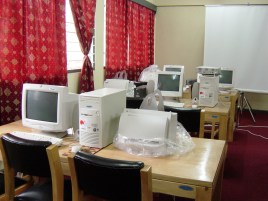 Second, it implies that there is such a thing as Educational Technology. The reality is that most technology that is used in schools or for education more widely has very little to do specifically with education or learning. Word processing and presentational software, spreadsheets, and networking software are nothing specifically to do with education, although they are usually what is taught to teachers in terms of IT skills! Such software is, after all, usually called Office software, as in Microsoft Office, or Open Office. Likewise, on the hardware side, computers, mobile phones and electronic whiteboards are not specifically educational but are rather more general pieces of technology that companies produce to generate a profit. Learning content, be it open or proprietary, is perhaps the nearest specifically educational technology that there is, but people rarely even think of this when they use the term EdTech!
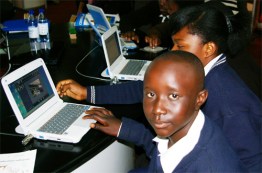 Third, it is fascinating to consider why the term EdTech has been introduced to replace others such as e-learning or ICT for education (ICT4E) which clearly place the emphasis on the learning and the education. The main reason for this is that the terminology largely reflects the interests of private sector technology companies, and especially those from the US. The interests underlying the terminology are a fundamental part of the problem. EdTech is being used and sold as a concept primarily so that companies can sell technology that has little specifically to do with education, and indeed so that researchers can be funded to study its impact!


 Tim Unwin's Blog