Unleashing the Potential: ICTs for Development

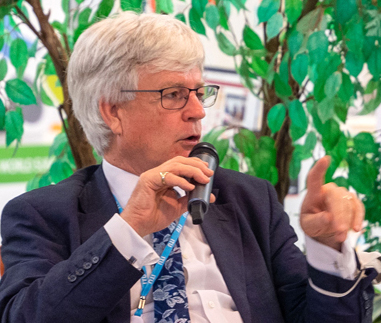
I had the privilege of being a keynote speaker at the SciFest symposium on ICT for development and learning held in association with a meeting of the Computer Science Days of the Finnish Computer Society held at the University of Joensuu on 15th April. Here is a summary of the key issues that I raised:

  • The main question I sought to address was “How can Computer Science contribute to the lives of some of  the poorest and most marginalised people in the world?”
  • Much computer science seems to be very theoretical, and practised by people who prefer to remain in their familiar institutional surroundings
  • However, for those who wish to gain new experiences, insights and intellectual challenges, working in some of the poorest countries of the world offers great opportunities
  • Unfortunately, much so-called ICT4D research and practice tends to be top-down and led by people from Europe and north America
  • All too rarely does such research really address development needs
  • As privileged academics, we ought to listen much more to the stated needs of the poorest and most marginalised in crafting our research agendas
  • The private sector is likely to enable many relatively poor people to benefit from ICTs, but the very poorest – those with disabilities and street children – need interventions by governments and civil society organisations to help them use ICTs to achieve their aspirations
  • For those computer scientists not lured by the interests of capital, there remains the wonderful challenge of working for social agendas that can make a difference – both to their own intellectual benefit, and to the benefit of the world’s poorest people

Leave a comment

Filed under Africa, ICT4D, My Lectures

The World Bank ‘releases’ its data

Yesterday, the World Bank announced the good news that it is making all of its statistical information available freely to anyone who has access to the Internet. As World Bank Group President Robert B. Zoellick commented, “I believe it’s important to make the data and knowledge of the World Bank available to everyone,”“Statistics tell the story of people in developing and emerging countries and can play an important part in helping to overcome poverty. They are now easily accessible on the Web for all users, and can be used to create new apps for development”. The database includes some 331 of the World Development Indicators (WDI) covering 209 countries from 1960 to 2008 translated into Spanish, French and Arabic.

However, this reveals what is very much a ‘World Bank’ view of the world.  The data are only partial, and should never be seen in some ways as ‘hard facts’.  There is a real danger that sources such as this may be used uncritically to give misleading views of international development.  Take education for example. There are only 5 indicators that show up when a search on “Find an Indicator” is done for “education” among the 331 indicators made available in this way:

  • public spending on education as a % of GDP
  • public spending on education as a % of government expenditure
  • ratio of female to male enrollments in tertiary education
  • ratio of girls to boys in primary and secondary education
  • trained teachers in primary education as a % of total teachers

However,  using “Topics”, one can find a further 24 indicators about education, and this provides a much more balanced view of global education.   On delving deeper, it is possible to access a still more detailed set of data from the databank itself.  Here, there are some 1247 different time series on educational data, and they can also be downloaded for free.  This is indeed a valuable resource.

Another problematic feature of the main public database is its maps.  At first sight, these could be seen to be  helpful visualisations of the data, but they are fundamentally misleading, because they use proportional symbols to represent % data – the higher the percentage, the larger the circle.  While such symbols are fine for absolute data (such as total GNI), they are inappropriate for showing ratios such as percentages for a spatial territory (such as % enrollment in secondary education).   For such data, it is much more appropriate to use choropleth maps that shade the areas in different densities.

These criticisms having been noted, we should applaud the World Bank for sharing its statistical understanding of the world in such an accessible way.  It tells us as much about the Bank as it does about development.

Leave a comment

Filed under Development, Education, Higher Education

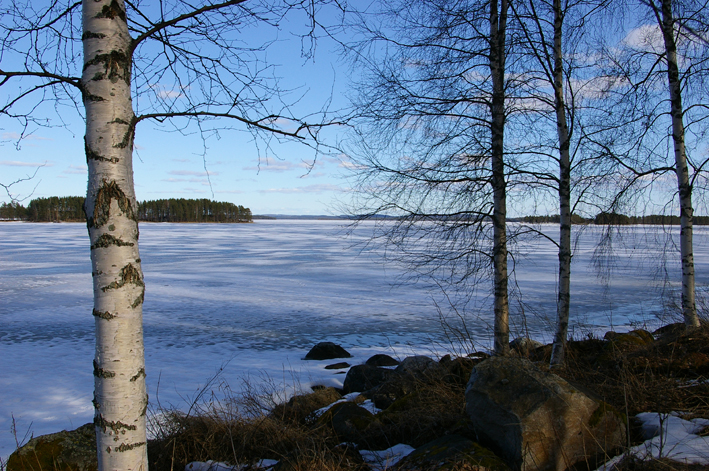
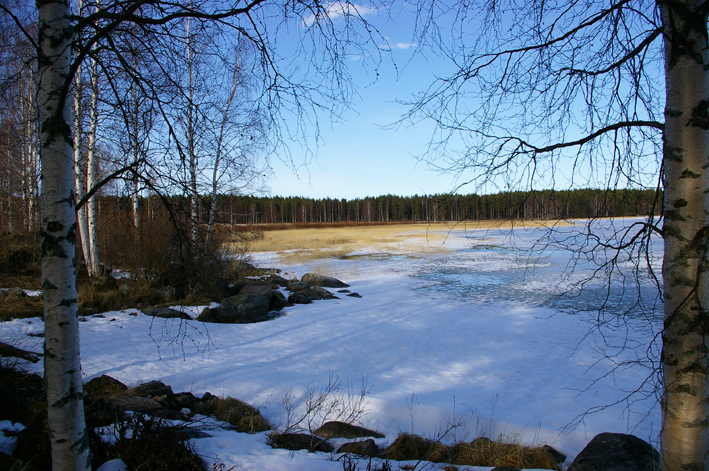
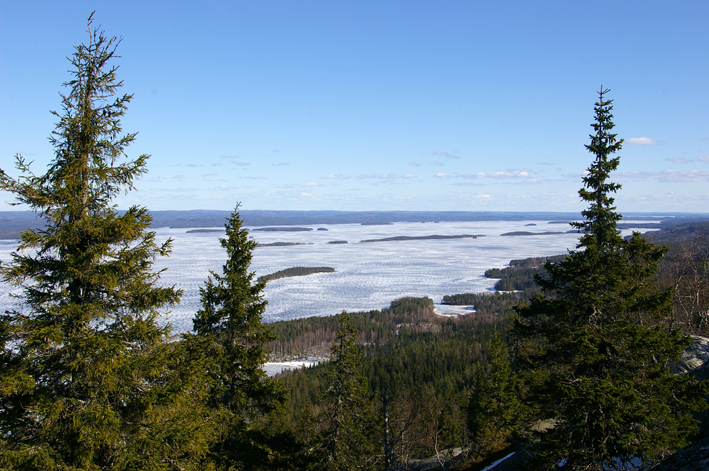
Koli National Park, Finland

The air traffic disruption caused by the ash plume from the Eyjafjallajökull volcanic eruption has had at least one positive benefit as far as I was concerned – an afternoon’s visit to the beautiful Koli National Park in eastern Finland, made famous in the 19th century by the music and paintings of Jean Sibelius, Juhani Aho and Eero Järnefelt. [Do click on the images below to see larger versions of the photographs]

1 Comment

Filed under Photographs, Uncategorized

Less than half of the students accepted at UK universities have A levels!

A recent report in the Sunday Times noted that according to UCAS figures only “49.8% of the 425,000 British students accepted at universities across the UK for full-time degrees starting last autumn had taken A-levels, down from nearly 70% in 1999”.  This is a remarkable figure, and reinforces my views abut the dumbing down of UK higher education that has taken place over the last decade.

To be sure, there are many reasons why A levels are no longer seen as the gold standard exam used for university entrance, but as the Sunday Times report goes on to argue, there are huge implications of this change.  Certainly, universities are now taking students from much more diverse backgrounds, and with different qualifications, which is all to the good – providing of course that these students have the intellectual capacity to cope with the rigorous demands of a quality higher education system.

One of the things that really concerns me about this, though, is that as the Sunday Times notes many schools are “pushing academically bright pupils towards vocational exams to improve league table positions. The result is the students have almost no chance of gaining entry to academic courses at top universities, shutting them out of highly paid jobs”. The article goes on to quote Anna Fazackerley, head of education at the Policy Exchange think tank, who claimed that “Vocational courses can be hugely worthwhile… However, many children from less wealthy backgrounds are pushed into less academic courses simply because their school has low aspirations for them and one eye firmly on league tables.”

This is worrying on two grounds: first, that such students appear to be being excluded from the best universities (however defined) because of decisions made by school teachers so as to ensure their success in the league tables; second, that the argument helps to perpetuate the myth that universities are only about creating graduates who will get high paid jobs.  We must never forget that universities should be about so much more than just enabling people to get better paid jobs!

Over the last 20 years, governments and those working in the higher education sector have combined to create a system that is fundamentally flawed, and fails to provide the intellectual and scholarly leadership that we so desperately need in this country.  Since 1992, when the former polytechnics and universities were merged, attempts have continued to create a unified higher education system – driven largely by the flawed belief that we need half of our young people to go to ‘university’.  We need to recognise that these have failed.  We are increasingly creating a system that delivers neither on academic excellence, nor on giving people the high level vocational qualifications that they want or need.

I wish to retain the idea of a “university” as a community of scholars and learners, all of whom are committed to the advancement of knowledge for the good of society.  Universities should not simply be about providing people with technical skills that certain people deem to be useful.  In the UK, we are indeed in need of people with an outstanding technical education; students doing dumbed down degrees at so-called ‘univeristies’, are not gaining the skills that either they, or our economy, require.  We also need outstanding scholars and scientists who are able to push forward the boundaries of knowledge; sadly, our present so-called ‘university’ system is likewise failing to deliver the excellence that it might be capable of – and it is expected to do so with increasingly severe funding cuts!

Leave a comment

Filed under Higher Education

Digital databases and political campaigning

Those addicted to the potential benefits of digital databases, identity cards and biometric passports, often berate me for my concerns about  the ethical implications of the introduction of such technologies (see for example, the comments of “James Bond” in response to my blog on the Indian census).

Today’s report in the Sunday Times that the ruling Labour party in Britain has sent personalised cards to cancer sufferers, warning them of the implications of a Conservative victory in the election on May 6th should serve as a salutary reminder.  This is how it was reported:

“LABOUR has become embroiled in a row about the use of personal data after sending cancer patients alarmist mailshots saying their lives could be at risk under a Conservative government. Cards addressed to sufferers by name warn that a Labour guarantee to see a cancer specialist within two weeks would be scrapped by the Tories. Labour claims the Conservatives would also do away with the right to be treated within 18 weeks. Cancer patients who received the personalised cards, sent with a message from a breast cancer survivor praising her treatment under Labour, said they were “disgusted and shocked”, and feared that the party may have had access to confidential health data. Labour sources deny that the party has used any confidential information. However, the sources admit that, in line with other political parties, it uses socio-demographic research that is commercially and publicly available. The postal campaign started last month before the general election was called. This is the first election in which parties have been able to use internet databases and digital printing to personalise their mailshots. Labour has sent out 250,000 “cancer” postcards, each addressed to an individual, asking: “Are the Tories a change you can afford?” Many of those receiving the cards have undergone cancer scans or treatment within the past five years.”

Of course there are real benefits of digital technologies, but we do need to reflect very carefully on who has access to personalised digital records, and on how such information is used.

Leave a comment

Filed under Ethics, ICT4D, Politics

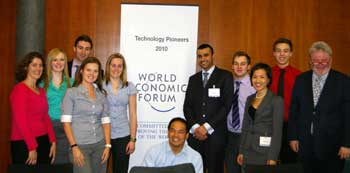
ICT4D Students at World Economic Forum

The final year undergraduate students studying ICT4D at Royal Holloway, University of London, have to do a formal presentation on some aspect of the course as part of their assessment (along with annotated bibliographies and a website – this year on Healthy Homes).

For 2010, we had the privilege of being able to convene these presentations at the World Economic Forum‘s offices in Cologny, Geneva on Thursday 8th April, on the themes of:

  • Why have mobile phones become so popular in Africa? (Alex Hamilton)
  • Education in Post-Conflict Zones: Pathways to Peace? (Helen Blamey)
  • Internet Access and Usage in Africa (Michael Hart)
  • What is really innovative about ICT4D? (James Huntley)
  • ICTs, Climate Change and Sustainable Development (Elizabeth Coulter)
  • Freeplay Energy: education and health solutions (Rickesh Patel)

Alex Wong (Senior Director, World Economic Forum), Joanna Gordon (Associate Director responsible for the ICT sector at the World Economic Forum) and Daniel Stauffacher (Chairman ICT4Peace Foundation) also gave short presentations on their work, as well as providing feedback on the student presentations.

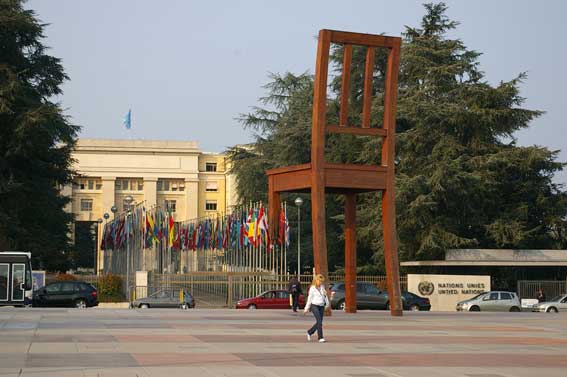
Being in Geneva provided an opportunity to see various UN buildings in the City, and some of the group also went on a six hour walk in the vicinity of Mont Salève (down from the Télépherique du Salève, through the villages of Mounetier and Mornex, and back to Veyrier) – a great opportunity to discuss ICT4D in the French countryside!

This slideshow requires JavaScript.

Leave a comment

Filed under Higher Education, ICT4D, Photographs

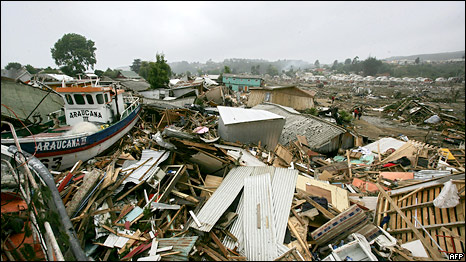
ICTs and educational reconstruction in post-earthquake Chile

How can ICTs best be used to support educational reconstruction in Chile following the devastating earthquake there on 27th February?

The Chilean Ministry of Education has established a task force to design a strategy for using ICTs to help alleviate the educational challenge of having some 500,000 children out of school for weeks, or even months, until new schools are constructed. They  need solutions that are practical, affordable and can be deployed rapidly.

A good friend of mine, Pedro Hepp from TIDE S.A, has been appointed to this task force and is eager to draw down on as much global experience as possible.  Much work has been done on ways in which ICTs can be used in the immediate aftermath of earthquake disasters, such as

However, many of these initiatives focus on the immediate aftermath of earthquake disasters.  Important as these are, the ’emergency’ aspects of Chile’s earthquake are now over, and the government is still facing the long haul of providing basic services to those who have lost so much. Now the spotlight of the international media has turned away from Chile, it is still important for people across the world to offer support and help to the victims of this devastating earthquake.

Please contact Pedro with advice and examples of good practices that have used ICTs in educational reconstruction following earthquakes elsewhere in the world.

[Photo from the BBC‘s site]

Leave a comment

Filed under ICT4D

Indian biometric census – beware of the dangers!

India’s 15th census has just been launched (Times of India, newsy.com video), with the physical count of people due to take place from 9th-28th February 2011.  Over the next year, some 2.5 million census officials will be visiting households across the country, to begin the process of recording information about them.

What is unusual about this census, though, is that every person over the age of 15 will be photographed and will also have all of their fingers fingerprinted, so as to create a national biometric database, information from which will be used to issue identity cards.  The first 16-digit identity number will be issued starting in November 2010 by the Unique Identification Authority, a new state department.

The first person to be listed was President Pratibha Patil, who according to the BBC, “appealed to fellow Indians to follow her example ‘for the good of the nation’.  ‘Everyone must participate and make it successful’, she said in Delhi”.

The government expects this to bring real benefits.  As the Times commented in July 2009, “It is hoped that the ID scheme will close … bureaucratic black holes while also fighting corruption. It may also be put to more controversial ends, such as the identification of illegal immigrants and tackling terrorism. A computer chip in each card will contain personal data and proof of identity, such as fingerprint or iris scans. Criminal records and credit histories may also be included”.

This is deeply worrying, and as with other such schemes fundamentally changes the relationship between citizens and the state. Interestingly, the initiative is being headed up by Nandan Milekani, the co-founder and former CEO of Infosys, who according to the Times has said that “we have the opportunity to give every Indian citizen, for the first time, a unique identity. We can transform the country”. Does he not realise that every Indian citizen already has a unique, and very special identity – in themselves?

Just because it is possible to do this, does not mean it is right to do so.  Not only are there profound ethical concerns about states creating databases of the biometric data of citizens, but there are also real practical problems. The opportunities for identity theft on a massive scale are very real, and should not be underestimated.  More worryingly, though, is the point that this changes the balance of power between individuals and the state, very much in favour of the latter.  If governments change, and people lose trust in them – as often happens – imagine what such governments might do with biometric data on all their citizens.  Imagine if Hitler or Stalin had had access to the biometric identities of all of the people living in Germany and Russia?  Imagine if the USA gained access to biometric data of everyone in the world?

The real winners in the promulgation of such digital initiatives are the companies who promote, design and manage them!  It is no coincidence that it is the co-founder of Infosys who is now chairperson of the Unique Identification Authority of India! Mind you, another group of people who will benefit hugely from the introduction of such technology will be those who make fake fingerprints for sticking onto your fingers – or even the plastic surgeons who alter fingerprints, as in the case of the Chinese woman who entered Japan illegally after having had her fingerprints altered…

5 Comments

Filed under Ethics, ICT4D, Politics

The surreal world of England’s railways

It was a grey, cold, miserable afternoon today – in case anyone hadn’t noticed…

We arrived at Huntingdon station soon after 16.00, only to discover that we had just missed the 15.59 train to King’s Cross!  Buoyed by a fine lunch (at The Old Bridge) and some strong coffee we prepared to sit out the wait until the next train at 16.33. But then something must have shifted in the planetary alignments, and we entered a world that even the best imaginations could scarcely conjure up.

Over the loudspeaker an announcement came that northbound trains had been delayed at Sandy because of a trespasser on the tracks.  Oh well, the indicator board showed that the 16.33 was still scheduled, so that should be fine – or so we thought!  Unfortunately, a very helpful railway employee then told us that the train that would form the 16.33 from Peterborough was actually the train that was stuck at Sandy, still waiting to go north through Huntingdon on its way to Peterboroough.  It would be at least 40 minutes before we could catch it on its way back south, even once it had arrived at Huntingdon on its way north!

While looking if there were any alternative solutions, we heard another announcement over the speakers that the 16.33 would shortly be arriving.  So, through the ticket barriers and out onto the platform we went.  Imagine our surprise when the kindly railway employee came out and apologised that this was an automated message that bore no resemblance to the truth – or words to that effect.  He had no idea when a train might actually come.

Time for Plan B!  The thought of staying on Huntingdon station for what could be well over an hour did not fill us with excitement.  So, we decided to take a taxi south to Stevenage, where there were at least trains on different lines that could then take us on our way.  Taxi rides are always interesting – and this one was no exception with the driver waxing eloquent about the deficiencies of the potential Chancellors on the televised debate last night, Tottenham Hotspur’s current footballing success, and the UK’s social benefits system.

And then we arrived at Stevenage – to see a train pulling away as we rushed over the footbridge and onto the platform.  That’s where the adventure really began.  Fast – very fast – train after train rushed by on the tracks without stopping, and every time the indicator board suggested that a train might actually take us on to King’s Cross, it was either cancelled or the clock simply added minutes to its expected time of arrival as we watched.  The cold wind chilled us as we waited patiently on the platform.  Surely a train must come soon.   We put our hope in the 17.34, which somehow seemed to be likely – not least because its expected arrival time did not change.  Bang on 17.34 a train whisked past – without stopping!  Dismay!  But then, not long afterwards, a train did stop, and some of us eagerly boarded.  What could be wrong with this?  Imagine our dismay when we were told to get off the train because it was only dropping off passengers – and no one was allowed to get on!  But many of the other trains had been cancelled – and there were many of us waiting to get to King’s Cross!  Surely they would let us stay on board.  The train had after all stopped, and we had got on.  Some of us stood our ground.  The announcements over the train’s speakers got more aggressive; the train would not leave until we got off.  The anger on the faces of the other passengers was visibly rising.  Some of us stuck our ground.  But then most people left, and fearing we might be ‘shopped’ by the other, now really quite irritated,  passengers on the train we gave in and left the train.  This was not, though, to be the end.  We pleaded with the rail officials – but to no avail.  I pleaded with other travellers to take communal action and board the train – but no-one moved. They must have thought me a revolutionary firebrand! Eventually, after an unexpectedly long delay at Stevenage, that train departed.  Talking with the kind RMT official on duty at Stevenage afterwards, he told us that the conductor on the First Hull Trains train had simply refused to consider letting other delayed passengers on board, because this train was only meant to let passengers alight.

Back into the cold, damp, darkening environment of dismal Stevenage railway station. The 17.39 seemed the most promising new bet, but it was going to be at least 30 minutes delayed because of a faulty train at Royston.  The indicator’s kept us amused as trains were scheduled on time well after they should have left; others were cancelled.  One of the best messages was “Delayed due to earlier train running late”

    Eventually, a train did arrive to take us onwards – at 18.08.  Just beforehand, a kindly announcer stated that “The train may be full” and that another one was to follow on behind shortly.  Fortunately, we were all able to squeeze on board, and eventually arrived at King’s Cross by about 18.45.  To be fair, this was only an hour later than the time that the 16.33 from Huntingdon would have arrived in London, but our surreal experiences made it feel very much longer! Thanks Siobhan and Robin for the adventure!

    Leave a comment

    Filed under Restaurants, Uncategorized

    ‘Collective’ reflections on plagiarism and the production of knowledges

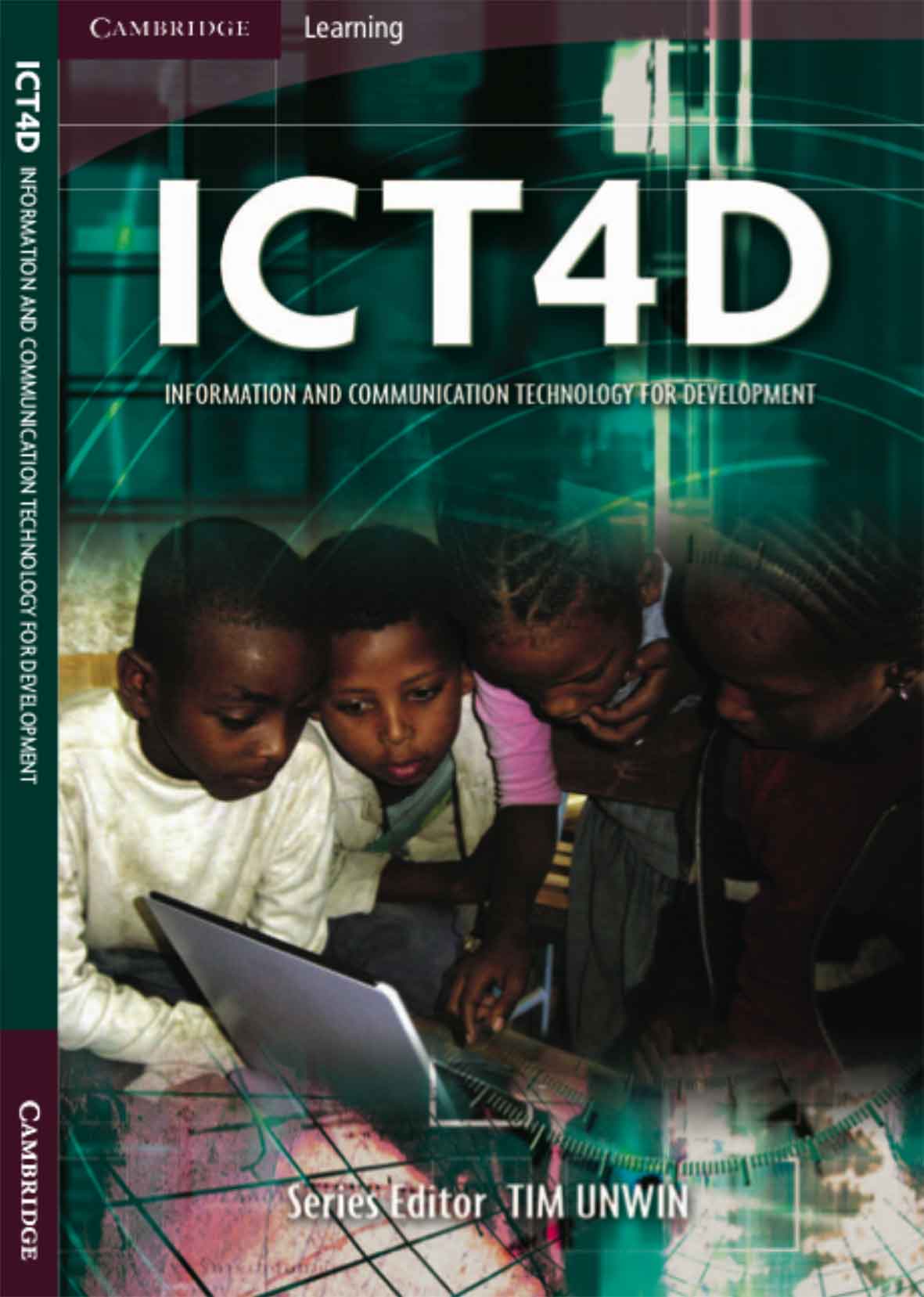
    ICT4D BookParticipating today in a very interesting seminar organised by COPE (Committee on Publication Ethics) at Woburn House in London, made me reflect on actually why plagiarism is becoming such a ‘problem’, and on ways in which we might create alternative ideas about this.

    The first question I wish to raise is whether ‘scientific ideas’ or ‘individual careers’ matter most?  As a starting point, let me suggest that actually it should be the ideas that are of most importance.  Yet, we always tend to associate ideas with people – hence, we have Nobel prizewinners who are individuals. It is authors’ names that are on articles.

    But following my logic, if it is the ideas that are of most importance, then perhaps plagiarism actually becomes less of a ‘problem’.  Plagiarism is generally seen as the passing off of someone else’s ideas as being one’s own.  So, if we do not attribute ideas to people, but let the ideas in a sense speak for themselves, and make them available for public scrutiny through for example the Web, then the ideas that are deemed to be of most importance might, in a sense, float to the top by popular choice.

    This is particularly important right now.  In the UK (as in many other countries) governments fund universities – both directly and through research councils.  Governments, very literally, pay academics to produce knowledge.  So, a case could be made for this knowledge to be ‘published’ under the government’s or research council’s ‘name’.  Imagine a world where there were no author(s)’s names on published articles.  Journal articles would just be known by their titles and the funding source.  Would not this be more open and honest?

    What does the individual author’s name matter – other than for their own personal careers?  In a world where knowledge has increasingly become a commodity, where individual academic careers depend largely on publication records, where departmental and institutional reputations and thus funding rest on publications and grants, it is of course essential that authors are named.  That is why plagiarism is so important an issue. But if we want to fragment this system, if we believe in knowledge as something so much more valuable than a commodity, if we wish to make this freely available – if we want to be a little less selfish about our own careers – then perhaps, there is some value in my proposal.

    After all, as one of my former PhD students regularly reminds me, where do our ideas actually come from?  We can never cite all of the influences on our writing.  I am quite sure that the inspirational lectures that I listened to as an undergraduate in one of the best universities in the world have influenced my subsequent writing.  The beggars I met on the street in Bihar have also influenced my ideas.  I am ashamed that I do not always cite them as influences on my writing – although I do indeed try to mention them in my acknowledgements.  In a sense, almost all of our written work is indeed plagiarised…

    4 Comments

    Filed under Ethics, Higher Education