@Africa Gathering

me1

A rainy Saturday morning in London – Ed Scotcher has brought us all together to explore the interface between ICTs and African development in the first Africa Gathering.  He kindly asked me to say a few words of introduction – why is this Africa Gathering important?

  1. A joined up approach – it brings together people from many different backgrounds and contrasting experiences – and is therefore a marvellous opportunity for us to identify how we can work better together to help African people implement effective and lasting ICT4D solutions.  There has been so much wasted energy (and finance) in trying to implement ICT4D projects across Africa –  so many of which have failed.  Africa cannot afford such failure.  We must stop reinventing the wheel!  Working together in a joined up approach, we can perhaps begin to make a real difference.
  2. To learn – there are so many exciting initiatives ongoing in the field of ICT4D in Africa – and it is difficult to keep track of them all.  I am so conscious that my recent book on ICT4D is now horribly out of date – and so it is great to be able to learn from the fantastic group of people that Ed has brought together here today!  This, though, raises some huge questions about how we actually synthesise this knowledge.  There are so many ongoing initiatives and even repositories of information (or should this be knowledge?) already ‘out there’ – and yet we continue to make the same mistakes!    If we think we know all the answers, we have already died intellectually!  We must keep learning and sharing what we have learnt.  We must also seek to be more humble, and to listen to the silent voices of Africa.africa-gathering-11
  3. Cool things happen at the edges – one of the most exciting things about ICT4D for me is that it brings people together from a wide range of backgrounds – we need to have computer scientists, philosophers, social scientists, anthropologists, mathematicians, chemists, physicists…. and yes, even geographers involved! We need to keep this diversity. I fear a little about the way in which some people would seem to be trying to define a standard curriculum for ICT4D – to me, this is frightening.  Once we say that “this is what ICT4D should be about” we put up walls that keep some people in and prevent others from entering. We must keep the multidisciplinarity of ICT4D alive – I so hope that those of us here today will keep the energy of difference alive – and that we will continue to hang on to the edges!
  4. African needs and voices – we are largely a white male audience today!  This makes me reflect once more on one of the things I keep on saying – far too many ICT4D projects are top-down and externally led.  Entrepreneurs and innovators in Europe and North America all too often come up with great ideas that are then ‘imposed’ on African people!  Instead, we need to get to know the needs of some of the poorest and most-marginalised people in Africa much better than we do at present.  As many people know, my own personal focus is on how we can use these technologies to help street children and people with disabilities to lead more fulfilled and enjoyable lives – if only more of our work would address the needs of some of these most marginalised peoples.  Others of course have other priorities – but rather than imposing our possibly unwanted solutions for problems that may not exist, let’s simply spend more time listening to what Africa’s poorest people want us to do for them.

Finally, I was going to begin by saying “Welcome Africa Gatherers”!  But that made me think about what gathering small-cheetahis about – bringing together things that already exist.  Perhaps we should instead be “African Hunters” – after all, African peoples have great hunting traditions – along with my friend the cheetah.  My hope for today is that we will indeed become hunters – hunters for ways in which we can use ICTs more effectively to empower the marginalised and poor, hunters for truth and wisdom, hunters for humility…

Thanks Ed for bringing us together!
7 Comments

Filed under ICT4D, ICT4D conferences

Reflections on the young researchers’ workshop at ICTD2009, Doha

Suq smallSitting in the young researchers’ workshop here in Doha, amidst the splendour of the new Carnegie Mellon University campus, brings together a random series of unconnected thoughts about ICT4D:

  • much academic discourse plays to the tunes of conductors who are not necessarily particularly interested in the needs of the poorest and most marginalised
  • we need to break free from the shackles of traditional disciplinary frameworks
  • please let’s not try to create a single ICT4D ‘discipline’ – the exciting things happen at the edges, where we bring together contrasting ideas and arguments!
  • a huge amount of literature has already been published on ICT4D – let’s stop trying to reinvent the intellectual wheel.  Let’s engage with the really exciting ideas and arguments that are already there – and take them forward.  Let’s bring theory and practice together in innovative ways.  Let’s try to make a difference!
  • as I get older, the more I realise how little I know.  Academic ICT4D could do with a huge dose of humility!
  • there really is a difference between ICT4D and ICTD – which is why I believe so passionately in the ‘4’
  • we need to work much harder at learning each other’s languages – both culturally and academically
  • I am reminded about the line in Michael Moore’s film SiCKO, which commented that America is about ‘me’ whereas Europe is about ‘we’.  I think there is an important truth somewhere in this, although certainly Europe is becoming more about ‘me’ than ‘we’, and there are huge dangers in essentialist arguments such as this!  If ICT4D is to move forward, we do need to do it collaboratively – hence why I believe so strongly in the importance of our work being part of a Collective adventure
  • there is a real contrast between sitting here in the plush air-conditioned lecture theatre, and the harsh reality of life for out of school youth on the streets of Addis Ababa or the amputees in camps in Sierra Leone – how can ICTs be used to support these people in their life aspirations?

2 Comments

Filed under ICT4D

ContactPoint – the UK State is creating a database of all children

Along with many other parents across the UK, I have recently received a letter from one of my children’s schools informing me that legislation has just been passed “requiring Local Authorities to set up and run a nationwide database, known as ContactPoint, which will contain basic details about every child and young person under the age of 18 who is ordinarily resident in England”.

Why should this legislation have been passed?  Why is it compulsory?  Why should everyone have to be registered? In effect, as young people grow older, this database will eventually record information about everyone “normally resident” in the UK. It will provide yet another means through which the State collects private information about individuals, thereby enabling it to impose greater control over its citizens.

The ContactPoint website claims that ” ContactPoint will be the quick way for a practitioner to find out who else is working with the same child or young person, making it easier to deliver more coordinated support. ContactPoint is an online directory, available to authorised staff who need it to do their jobs, enabling the delivery of coordinated support for children and young people. It is also a vital tool to help safeguard children, helping to ensure that the right agencies are involved at the right time and children do not slip through the net”.

But does this require details on EVERY child in the UK to be recorded on a central database?  The passing of this legislation on 26th January gives rise to very great concern:

  1. Why should every child need to be registered?  Why does the state need to gain information about the name, address, date of birth, and contact details of all parents to be registered centrally?
  2. Given the inability of  the UK government to keep such data secure in the past, there are high risks that this personal information will become accessible to a wide range of people in the future.  Children will therefore be put at risk.
  3. There is no evidence that such a database will make any difference to early interventions when  children really do need the State to intervene to protect them
  4. Who really benefits from this?  Is it not the companies who have persuaded the Government to introduce such very expensive digital systems?
  5. What gives the State any right at all to collect such individual private information.

We must resist this ever great control by the state over its citizens – just because digital technologies enable us to do this, does not mean it is right.

Tim

1 Comment

Filed under Ethics, ICT4D

Google’s brush with the mole men of Broughton

Those interested in the implications of ‘private’ information being made accessible to ‘others’ via the World Wide Web, might be amused by Rod Liddle’s article in the Sunday Times today entitled “The mole men of Broughton put the brakes on Google“.

As he says, “And we should worry a bit about Google, too. It has a suspiciously smiling facade for one of the most powerful and wealthy companies in the world. “Don’t be evil” is its rather cringy message to employees; everybody wears casual clothing, they have days of the week when they can work on stuff which interests them and there’s probably a Red Nose Day every afternoon. At least, in the good old days, with Rio Tinto-Zinc and Lonrho, you knew where you stood; these big corporations didn’t pretend to be nice. Google, however, tells everyone not to be evil and then connives with the authoritarian Chinese authorities in the creation of a firewall to keep out all sorts of stuff that might annoy them. Meanwhile, the company knows more about you than any intelligence agency could dream of. Use any of Google’s services and, like it or not, as a consequence of the much-criticised cookies, your every internet movement will be logged.  All that’s missing, one critic said five years ago, is it doesn’t know precisely where you live . . .”.

This raises very important issues about:

  • the rights that companies, or indeed governments, have to information about individual citizens
  • the amount of information people have about the uses to which such information is put
  • whose interests are best served by making this information available
  • the rights that individuals have to protect information about them being used without their explicit permission

An earlier article in The Times of 3rd April entitled “Village mob thwarts Google Street view car” is also worth reading for background to the story

Leave a comment

Filed under Ethics, ICT4D

Brussels restaurants

Continuing my periodic restaurant commentaries, last week in Brussels provided a great opportunity to listen to advice from friends who live there, and explore hidden away restaurants.  While I am tempted to keep these to myself, I enjoyed them so much that I thought I would share them here in the hope that these excellent restaurants will benefit from additional business.  Just don’t be there when I am!

  • La Quincaillerie – Rue du Page 45, B-1050 Brussels.  As one of the first restaurants to set up in the trendy Chatelain neighbourhood, La Quincaillerie stands out among the many fashion boutiques and purveyors of upmarket knick-knacks. It has an excellent wine list, and particularly good seafood and chicken; I really enjoyed the Tartare de boeuf au parmesan et à la roquette.  To drink, I would recommend the 2005 Gewürztraminer from Louis Sipp à Ribeauvillé in Alsace
  • La Canne en Ville – Rue de la Réforme 22, B-1050 Brussels.  Exceptional!  Try the Duo de coquilles Saint Jacques rôties et filet de sole farci à la mousseline d’écrevisses, beurre fouetté au citron.  And to drink, be adventurous and taste the Bourgogne rosé Marsannay Regis Bouvier 2005.

Leave a comment

Filed under Restaurants, Uncategorized, Wine

Sierra Leone – water taxis and political violence

pelicanI was warned not to take the water taxi from the airport to Freetown!  But the hovercraft was not running, and people said the helicopter (at almost twice the price) was even worse!  But in choppy seas, water taxis are most definitely not advisable – a few minutes out, waves came crashing through the glass at the front, wetting everyone, and filling the boat with water.  Two passengers were swiftly despatched to the stern so that the prow would come up.  Fortunately, that prevented more deluges, but every time the small boat topped a wave it came crashing down with a sickening thud on the next crest.  The 20 minute journey lasted longer than a hour – and in the pitch black of night it seemed far worse than perhaps it actually was.  How many of these small boats don’t actually make it?  No-one apparently knows.

But Freetown itself has been rocked by violence again (swissinfo.ch report).  Following fights during a by-election last week in Pujehun District, people purporting to be supporters of the ruling All Peoples Congress (APC) attacked the headquarters of the Sierra Leone Peoples Party (SLPP) on Monday.  Although I did not witness the attack, reports (see Reuters)  suggest that there was much violence, and several women claim to have been raped.  Perpetrators of the violence carried machetes, and the police are reported to have fired tear gas and bullets.  One person I spoke to definitely confirmed that there were at least four bursts of gunfire.  Two days later, the topic is still on many people’s minds, and is front page news in the newspapers.

Many are suggesting that the underlying causes of this violence is the widespread unemployment in the country.  Large numbers of people who were displaced during the civil war (1991-2002) moved to Freetown and have still not been able to find jobs.  Crime is reported to be increasing all the time, as some of these people resort to theft and threats of violence as the only way of gaining a livelihood.  As a commentary in the Standard Times on 16th March commented, ‘High unemployment among youths means many time bombs are waiting to go off at any time.  Is this what we expect at this precarious moment?  Who’s in charge here, and where is the pendulum of democracy and justice teetering towards? Our educational system has failed, especially the youths’.

Yesterday’s radio stations provided a wealth of commentary on the government’s decision in the aftermath of the violence to close the radio stations owned by the two main political parties, the APC’s ‘We Yone’ station and the SLPP’s ‘Unity Radio’ (see Cotton Tree News).  These are widely seen as having whipped up violent sentiments among the parties’ supporters, and some commentators likened their use to the role played by radios in Rwanda’s genocide.

Today, things seem quiet.  The word on the street is that arrests have been made.  However, many people are fearful that this may be just the tip of the iceberg, and that the country could be plunged back into the horrors of the 1990s.  Few want this, but for a country ranked bottom of the UN’s Human Development Index, the current global economic ‘crisis’ might herald a crisis of a very different kind.  It is incumbent on those who believe in peace and consensus politics, that we should find ways of supporting Sierra Leone, so that its people can look forward to the future with hope.

4 Comments

Filed under Africa, Radio

Story-telling and ICT4D

At this year’s e-Learning Africa conference in Dakar (27th-29th May 2009) we are convening a workshop that explores the interface between story-telling and ICT4D.  One of the outputs will be a digital ‘place’ where people can contribute their stories, and thereby use ICTs to support traditional African oral and story-telling traditions.

In this connection, it is salient to note that 20th March 2009  is World Story Telling Day – “a global celebration of the art of oral storytelling. It is celebrated every year on the spring equinox in the northern hemisphere, the first day of autumn equinox in the southern. On World Storytelling Day, as many people as possible tell and listen to stories in as many languages and at as many places as possible, during the same day and night. Participants tell each other about their events in order to share stories and inspiration, to learn from each other and create international contacts.”

“World Storytelling Day has its roots in a national day for storytelling in Sweden, circa 1991-2. At that time, an event was organized for March 20 in Sweden called “Alla berattares dag” (All storytellers day). The Swedish national storytelling network passed out some time after, but the day stayed alive, celebrated around the country by different enthusiasts. In 1997, storytellers in Perth, Western Australia coordinated a five-week long Celebration of Story, commemorating March 20 as the International Day of Oral Narrators. At the same time, in Mexico and other South American countries, March 20 was already celebrated as the National Day of Storytellers”.

Perhaps those who would like to tell a story related to ICT4D might like to post a comment below on March 20th!

Leave a comment

Filed under Uncategorized

Kenya – political tensions rising

The latest news from Kenya is not good.  The UK Times yesterday reported the cold blooded killings of Oscar Kamau Kingara, a human rights activit, and John Paul Oulu just outside the University of Nairobi’s halls of residence.  Apparently, they were ambushed in rush hour traffic and shot repeatedly by their killers who then sped away in two cars.

As the report continued, ‘“The human rights community in Kenya holds the Government fully and wholly responsible for the assassinations,” said Cyprian Nyamwamu, of the Kenya Human Rights Consortium. The police deny any government responsibility for the murders. The Prime Minister, Raila Odinga, condemned the killings and warned that the country was at crisis point. “We are hurtling towards failure as a state,” he said’.

It was the violence and bloodshed in Kenya at the end of 2007 and the beginning of 2008 that first persuaded me of the value of blogs – let us hope that the growing unrest in the country does not lead to another spate of bloodletting.

1 Comment

Filed under Uncategorized

UK surveillance update…

The Times yesterday published another article on CCTV cameras and surveillance in the UK, noting that the frequently cited claim that there are 4.2 million CCTV cameras in use in the UK is based on a survey of only two streets in London seven years ago!  Police forces across the country are now being asked to locate and record the location of every camera in the country – so that they can be used to identify suspected ‘criminals’.

Leave a comment

Filed under Ethics, ICT4D

Dr. Til Schönherr – in memoriam

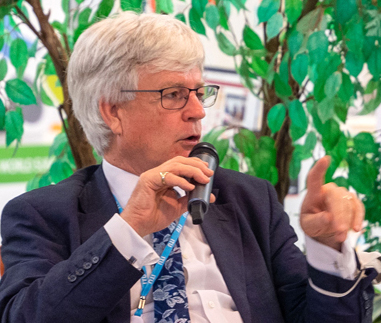
til_ijssel_h192It is with  very great sadness that I have recently learnt of Til Schönherr’s untimely and sudden death.  Til was project manager for eLearning strategy, media-didactic advice and training at InWEnt, Capacity Building International, Germany – a great enthusiast for the potential of eLearning to make a significant impact on development agendas, a generous and open colleague, and someone from whom I learnt a great deal.  He joined InWEnt’s E-Learning-Center in 2003, where he conceived and developed the “Capacity Building for e-Learning ” programme, and amongst his many activities, he played a leading role in the development of Global Campus 21, was enthusiastic about building collaborative partnerships with cognate organisations, was an active supporter of the e-Learning Africa conferences, and generously shared his time and insight with younger or less experienced colleagues.  Above all, I remember his intellectual generosity, the warmth of his handshake, the smile on his face, and the sharpness of his mind.  He was one of the people who contributed most over the last decade to our understanding of how to use e-Learning effectively in development practice – he will be very sorely missed.  Thanks Til for all you gave us.
3 Comments

Filed under ICT4D