Tag Archives: Africa

Speech at the launch of the British Academy’s Working with Africa Report

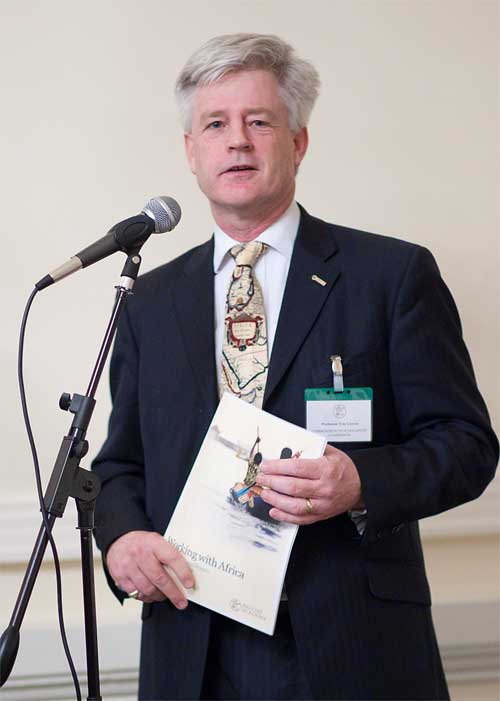
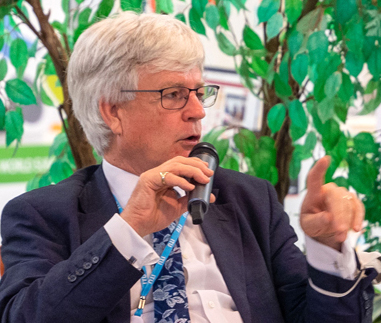
Following Professor Graham Furniss’s opening remarks, I was invited to speak in my role as Chair of the Commonwealth Scholarship Commission in the UK at the launch of the British Academy’s new report entitled “Working with Africa: Human and Social Science Research in Action” on 3rd March 2011.  My  short speech outlined the importance of the British Academy’s funding programmes, the difficulties facing African universities and academics, and the ways through which the Commonwealth Scholarship Commission (CSC) is seeking to support them in partnership with like-minded organisations.

I began by thanking  Graham Furniss, not only for his work at the British Academy in driving forward many of their African initiatives, but also for joining the CSC as a new Commissioner.  I then emphasised the quality of the research featured in Working with Africa and thoroughly recommended it to the audience as a good read.  I highlighted in particular the value of the British Academy’s past small grants programme, noting that small amounts of funding can go a long way in supporting outstanding and innovative research in the humanities and social sciences.  This is particularly true for UK researchers near the beginnings of their careers, but it is also very important for establishing networks and partnerships as exemplified by the Academy’s support for research in Africa.

Despite such funding, I emphasised the many challenges faced by African researchers, and the very difficult financial, infrastructural and capacity issues that African universities had to overcome.  I argued  that years of global emphasis on primary education in Africa had left the higher education sector in a very diminished state.  I also made the point that whilst much international emphasis is placed on support for scientific research designed to reduce poverty, research in the social sciences and humanities is at least as, if not more, important.  Such research helps develop understandings of critical issues concerned with governance, social equality, the law, cultural diversity and economic change.

Finally, I highlighted the critical role of the Commonwealth Scholarship Commission in supporting research and professional development in Africa.  The last decade has seen a transformation in the Commission’s activities, so that far from being a traditional awarder of basic scholarships, it now provides seven different kinds of award, including distance-based studentships as well as professional and academic fellowships.  Moreover, evidence from the CSC’s monitoring and evaluation programme clearly indicates the value that these have in terms of development impact.  The Commission is delighted that it continues to have the strong support of the UK government, and that DFID will be providing some £20 million a year towards its programme of awards in developing countries in the 2011-15 period.  To be effective, though, it is important that we work together in partnership.  I concluded by reiterating my thanks to the British Academy and also emphasising the need for the Commission and the Academy to work closely together in the future to achieve our shared objectives of enhancing scholarship in African universities.
Leave a comment

Filed under Africa, Higher Education, Universities

New guide to good practices in UK-Africa Higher Education partnerships

The Association of Commonwealth Universities’ Africa Unit has just published an excellent short guide on good practices in developing educational partnerships between higher education institutions in Africa and the UK.

As the Africa Unit comments, “The main reason behind the preparation of this Guide … is the lack of knowledge about the scope, nature and depth of partnerships in this area. The Guide does not set out to present a set of universal, objective rules to be followed and which will guarantee success. Instead, it identifies 10 valuable ‘principles of management and good governance’ which have been the driver behind a number of successful and sustainable UK-Africa partnerships, which can inform future partnerships”.

This is a really useful document, full of helpful tips and advice, and anyone considering developing such partnerships should get hold of a copy and read it diligently. The ten key principles that it advocates are:

  1. Shared Ownership
  2. Trust and Transparency
  3. Mutual Understanding of different Cultural and Working Environments
  4. Clear Division of Roles and Responsibilities
  5. Effective and Regular Communication
  6. Joint Strategic Planning and Implementation
  7. Strong Commitment across the board from Staff and Management
  8. Supportive Institutional Infrastructure
  9. Monitoring and Evaluation
  10. Sustainability

As someone who has been actively involved in such partnerships over the last decade, these principles resonate very strongly with my own experiences.  Many thanks to the Africa Unit for expressing them so clearly and succinctly.

1 Comment

Filed under Africa, Higher Education

ICTs, Citizens and the State – seminar at Michigan State University

Thanks to colleagues in the Telecommunication, Information Studies and Media Department at Michigan State University for their valuable critique of some of my thoughts on the ethical dimensions of e-government initiatives following my seminar there today.  My paper examined the moral implications of the use of ICTs in e-government initiatives, focusing especially on national databases, identity cards and surveillance technologies.  It suggested that in resolving debates over these, we need to reach ethical resolutions concerning notions of trust, privacy and the law.  I also drew attention to the ethical problems that emerge in linking the notion of Universal Human Rights with the introduction of ICTs in developing countries.

In terms of general conclusions, the following seem particularly pertinent:

  1. First, there are indeed many complex ethical aspects associated with e-government, and while to date the emphasis among governments of developing countries, international agencies and donors has very largely been on their positive practical benefits, I suggest that we need to pay much more thorough attention  to their ethical grounding, and especially to the balance of rights and interests between citizens and the state.
  2. Second, in so doing, I suggest that three areas warrant particular attention, namely the ethics of trust, privacy and the law.   It is here that Geuss’s (2008) emphasis on existing real political contexts, rather than the imposition of some external ideal ethical solution, needs to reiterated.  The fundamental point I wish to emphasise is that in each country where e-government initiatives are introduced, people need to ask about the rights and wrongs of such proposals in terms of existing ethical understandings of trust, privacy and the law.
  3. I also sought to raise fundamental questions concerning the continuing validity of much of the human rights based policy and legislation that has dominated global agendas during the last 50 years – particularly in the context of e-government initiatives, and their implication for the rights of individuals and the responsibilities of states.  We need to open up for sensible debate the value of the emphasis placed on human rights, criticism of which is all too often seen as being politically incorrect and a taboo subject. However, if people do not actually have ‘rights’ that they can give up to a state, then we need to reconsider the whole edifice upon which such arguments are built.  An idealistic belief that people have universal rights has not been any protection for those who have suffered at the hands of those who do not believe in such rights.  There is therefore a strong argument that we need to shift the balance away from rights, and towards the responsibilities that people and states have for each other.  For example, rather than simply claiming that knowledge is some kind of human right, it might be a much more positive step to argue that states have a responsibility to enable their citizens to gain knowledge.
  4. Capurro (2007) has argued that ‘Western’ concepts of individual privacy are very different from the ‘African’ emphasis on communal traditions.  It may well therefore be that many of the existing models of e-government developed around European and north America notions of individual privacy are inappropriate in an African or Asian context, and that instead Africans and Asians should instead be designing new such initiatives around their own traditions and cultural practices
  5. Whatever the benefits to states, individuals and communities of e-government initiatives, there is no doubt that global corporations developing the hardware and software for such systems have been very great beneficiaries.  One of the difficult ethical questions that arise from this concerns how we judge whether it is better for poor and marginalised communities for such e-government initiatives to have been introduced, or whether they might actually be more advantaged if their governments did not spend vast sums of money on their implementation.  Just because it is possible to implement national citizen databases, to use biodata for ID cards, and to introduce sophisticated digital surveillance mechanisms does not mean that it is right to do so.

2 Comments

Filed under Africa, Ethics, ICT4D, My Lectures

Learning Management Systems in Africa

Our research paper on Learning Management Systems in Africa resulting from the DelPHE funded collaboration with colleagues in the University of Education, Winneba (Ghana), Maseno University (Kenya), and Eduardo Mondlane University (Mozambique) has just been published as

  • Tim Unwin, with Beate Kleessen, David Hollow, James B. Williams, Leonard Mware Oloo, John Alwala, Inocente Mutimucuio, Feliciana Eduardo and Xavier Muianga (2009) Digital learning management systems in Africa: myths and realities, Open Learning: the Journal of Open and Distance Learning, 25(1), 5-23.

In summary, the paper  reports on a survey of 358 respondents across 25 African countries into their usage of learning management systems. It concludes that while there are some enthusiastic advocates of such systems, the reality is that most African educators as yet have little knowledge about, or interest in, their usage. There remain very considerable infrastructural constraints to be overcome before they can be widely adopted for open and distance learning across the continent, and there is still reluctance in many institutions to develop systems that can enable learning resources to be made available in this way. This does not mean that the potential of high-quality digital learning management systems should be ignored in Africa, but rather that much more sustained work needs to be done in human capacity development and infrastructural provision if African learners are truly to benefit from the interactive learning experiences that such systems can deliver.

Leave a comment

Filed under Africa, Education, Higher Education, ICT4D

Reflections on ICT4D @ The British Council, Manchester

A visit to the British Council’s offices in Manchester today, and an invitation to give a ‘brown bag’ lunch update on current issues in ICT4D that might be of interest to staff there, provided an opportunity for the following reflections:

  1. There are important differences between ICTD and ICT4D – quite simply the “4”.  Much work in this arena has tended to be top-down and supply-led – be it by the private sector or academics who have great ideas and want to try them out in ‘developing countries’.   But the “4” can be of very different kinds – either in support of economic growth agendas, or to empower poor and marginalised communities.  Yes, these are NOT the same thing.  As I have argued many a time elsewhere, economic growth will not, indeed cannot, reduce poverty – at least when the latter is defined in relative terms.
  2. Much of my own work has tried to explore the needs of poor and marginalised people, and then to identify how ICTs might be used to help them achieve their aspirations. However, I am very conscious that this approach runs up against difficulties, especially when confronted with “rights-based” arguments.  Much development literature has shifted from “needs” to “rights”.  I guess I have problems with this – although my argument is not as yet well articulated.  First, it is all very well talking about human rights, but when people are continuing to be marginalised whilst this discussion is ongoing, I do believe we should also be trying to address the immediate needs of the poorest.  Second, I fear that the human rights agenda is actually part of a wider “individualistic” agenda.  Yes, of course human rights are important – but we must not forget “collective” and “communal” responsibilities in the rush to ensure that individual human rights are upheld.
  3. The technologies – there are some great innovations out there – I am very impressed with work being done by the TIER group in Berkeley: robust low cost wifi for healthcare; small microscopes that can be attached to mobile ‘phones; and long distance wifi (WILDNet).  Yet, for many of the poorest people in the world, more traditional solutions have to be, at least in the short term, the most sensible.  Radio remains hugely important in much of Africa.  I remain unconvinced about the claims made for m-learning – a real issue that needs to be addressed remains the screen size.  But, the explosion of mobile services across rural Africa provides huge opportunities for innovation. One thing is for certain, within a decade we will look back on desktop computers – and, dare I say it, even my beloved Mac laptops – as being very archaic.  The future is small, connected and mobile!
  4. This brings me on to infrastructure.  If Africa is to gain any benefit at all from the potential of ICTs, we must pay more attention to two ‘ simple’ things: electricity and connectivity.  If all the aid that has been poured into Africa in the last half century had simply enabled most Africans to have electricity, just think of the changes that would have been enabled!  One of China’s great successes has been its ability to bring electricity to something like 95% of all the country’s population.  Without electricity modern digital technologies cannot function.  The costs of digital connectivity across Africa are likewise scandalous.  ICTs cannot in any way be seen as having any potential to contribute to poverty reduction until the prices of digital connectivity (be it by ‘phone, cable, or satellite)  are dramatically reduced.  Perhaps the arrival of the submarine cable in east Africa later this year will begin to make a difference, but we have yet to see whether the poor will really benefit
  5. Likewise, we must have rigorous regulatory environments if the poor are to benefit from ICTs.  At the very least, these must ensure universal access.  The challenge is that it is not cheap to provide connectivity in rural areas of Africa, and this is not something that the private sector is readily geared up to deliver.  Across much of Africa, it has been those who are relatively better off who have benefited most from deregulation of the telecommunications sector. We need to find cost effective ways through which dispersed rural populations can gain access to the ‘content’ and ‘interaction’ that modern digital technologies permit.
  6. This in turn makes us confront entirely new kinds of business model.  The extraordinarily rapid expansion of mobile technologies in much of Africa is an indication of the willingness of relatively poor people to pay for services that they see as being valuable.  This has opened up huge possibilities for the provision of new services, especially branchless or mobile banking.  The potential to deliver large-volume low-margin services across mobile platforms is one that we need to encourage.  Traditionally most ICT companies have focused on the top-end of the markets; the potential for bottom-of-the-pyramid models in contrast offers real opportunities for ICTs to be used by poor people to their advantage.
  7. The challenges of content provision – finally, we need to address the pressing question of why there is so little indigenous quality content development in many of the poorer countries of the world.  I have been involved in several collaborative attempts to help develop local content, and have clearly not yet learnt how to do this effectively!  In part, the reasons must be related to the costs of developing such content, and the lack of skills to do so.  But these factors alone cannot explain the relative dearth of quality digital resources developed within most of sub-Saharan Africa (South Africa being an exception).  There is huge potential for the shared development of locally relevant content, but this has yet to be realised.

In conclusion, the above thoughts perhaps reflect an overly pessimistic and sceptical picture of the field of ICT4D, and I am quite sure that many people will be able to point to their favourite success stories.  Of course there are some!  However, I am utterly fed up with the ways in which small-scale pilot projects are continuously claimed as being huge successes, when they have little chance of ever going to scale, because they were only ever designed to be effective as pilots!  We must get real and admit to our failures.  Rather than implementing countless small ‘computers in schools’ projects, for example, let’s just try and roll out a single programme at the national scale in Africa to train teachers in the effective use of a full range of ICTs to enhance the quality of the learning that they help children gain.  Only when we do so, and when we turn our attention to ways in which ICTs can really be used cost effectively and sustainably to support the world’s poorest peoples, notably street children and those with disabilities, will be able to make any claims that ICTs have had an impact on ‘development’ – at least in the ways that I choose to conceptualise it.

2 Comments

Filed under Africa, ICT4D

@Africa Gathering

me1

A rainy Saturday morning in London – Ed Scotcher has brought us all together to explore the interface between ICTs and African development in the first Africa Gathering.  He kindly asked me to say a few words of introduction – why is this Africa Gathering important?

  1. A joined up approach – it brings together people from many different backgrounds and contrasting experiences – and is therefore a marvellous opportunity for us to identify how we can work better together to help African people implement effective and lasting ICT4D solutions.  There has been so much wasted energy (and finance) in trying to implement ICT4D projects across Africa –  so many of which have failed.  Africa cannot afford such failure.  We must stop reinventing the wheel!  Working together in a joined up approach, we can perhaps begin to make a real difference.
  2. To learn – there are so many exciting initiatives ongoing in the field of ICT4D in Africa – and it is difficult to keep track of them all.  I am so conscious that my recent book on ICT4D is now horribly out of date – and so it is great to be able to learn from the fantastic group of people that Ed has brought together here today!  This, though, raises some huge questions about how we actually synthesise this knowledge.  There are so many ongoing initiatives and even repositories of information (or should this be knowledge?) already ‘out there’ – and yet we continue to make the same mistakes!    If we think we know all the answers, we have already died intellectually!  We must keep learning and sharing what we have learnt.  We must also seek to be more humble, and to listen to the silent voices of Africa.africa-gathering-11
  3. Cool things happen at the edges – one of the most exciting things about ICT4D for me is that it brings people together from a wide range of backgrounds – we need to have computer scientists, philosophers, social scientists, anthropologists, mathematicians, chemists, physicists…. and yes, even geographers involved! We need to keep this diversity. I fear a little about the way in which some people would seem to be trying to define a standard curriculum for ICT4D – to me, this is frightening.  Once we say that “this is what ICT4D should be about” we put up walls that keep some people in and prevent others from entering. We must keep the multidisciplinarity of ICT4D alive – I so hope that those of us here today will keep the energy of difference alive – and that we will continue to hang on to the edges!
  4. African needs and voices – we are largely a white male audience today!  This makes me reflect once more on one of the things I keep on saying – far too many ICT4D projects are top-down and externally led.  Entrepreneurs and innovators in Europe and North America all too often come up with great ideas that are then ‘imposed’ on African people!  Instead, we need to get to know the needs of some of the poorest and most-marginalised people in Africa much better than we do at present.  As many people know, my own personal focus is on how we can use these technologies to help street children and people with disabilities to lead more fulfilled and enjoyable lives – if only more of our work would address the needs of some of these most marginalised peoples.  Others of course have other priorities – but rather than imposing our possibly unwanted solutions for problems that may not exist, let’s simply spend more time listening to what Africa’s poorest people want us to do for them.

Finally, I was going to begin by saying “Welcome Africa Gatherers”!  But that made me think about what gathering small-cheetahis about – bringing together things that already exist.  Perhaps we should instead be “African Hunters” – after all, African peoples have great hunting traditions – along with my friend the cheetah.  My hope for today is that we will indeed become hunters – hunters for ways in which we can use ICTs more effectively to empower the marginalised and poor, hunters for truth and wisdom, hunters for humility…
Thanks Ed for bringing us together!

7 Comments

Filed under ICT4D, ICT4D conferences

Submarine cables for Africa

Does anyone know of a simple one-stop shop to find out more about the progress of submarine cable development around Africa – particularly East Africa?  The following main initiatives are underway:

  • EASSy (The Eastern Africa Submarine Cable System) – MoU signed in December 2003
  • SAFE (South Africa Far East) – Commissioned in 2002 and built by Tyco Submarine Systems of the USA
  • SAT-2 – in service since 1993 linking South Africa with Tenerife
  • SAT-3/WASC (South Atlantic/West Africa Submarine Cable) –  linking Portugal and Spain to South Africa
  • SEACOM (South East Asian Telecommunication Cable) – commercial launch due June 2009 (Update from The Daily  Nation, Kenya)
  • TEAMS (The East African Marine System) – in 2006 the Kenyan government partnered with Etisalat to build its own fibre optic cable; in October 2007 Alcatel-Lucent was awarded the contract to lay the cable linking Mombasa with Fujairah in the United Arab Emirates
  • West Africa Cable System – formed from Infraco AWCC, SAT-4 and Uhurunet
  • MainOne Submarine Cable project from Portugal to Ghana and Nigeria (thanks for the link Jon) – first phase expected to be completed by June 2010 led by the Nigerian Main One Cable Company

Useful links include:

Please do add comments below relating to other sources of useful information about this topic.

17 Comments

Filed under Cable