Tag Archives: digital technologies

Latest six podcasts on Digital Inclusion in an Unequal World (Episodes 11-16)

The ICT4D Collective has recently launched a podcast channel on Apple Podcasts which contains audio versions of the vignettes in my upcoming book Digital Inclusion in an Unequal World: An Emancipatory Manifesto. The fourth tranche of episodes (11-16) is now available as follows:

Episode 16. Benita Rowe on “The Tech Will Save Her’ – False Promises in Digital Gender-Based Violence (GBV) Solutions”

This is the sixteenth episode of our podcast based on the vignettes contributed by friends and colleagues to Tim Unwin’s new book Digital Technologies in an Unequal World: An Empancipatory Manfesto. In it, Benita Rowe illustrates how “Digital interventions aimed at preventing or responding to gender-based violence (GBV) have re-emerged in recent years in cyclical form, each positioned as a world-first innovation”. Yet, she argues that “Despite differences in format, these interventions often replicate a flawed set of design assumptions that consistently fail to
account for lived realities”.

The full vignette can be read here.

All audio files relating to the book are also available on our podcast with a new episode every week.

Episode 15. Nimmi Rangaswamy on “Social, Shared and Sustainable: Whatever Happened to the Community Internet?”

This is the fifteenth episode of our podcast based on the vignettes contributed by friends and colleagues to Tim Unwin’s new book Digital Technologies in an Unequal World: An Empancipatory Manfesto. In it, Nimmi Rangaswamy concludes that “What was once imagined as a shared, empowering infrastructure has become a personalised, pay-per-use playground — curated for binge and scroll rather than community or collective good. The Internet in India today is more a screen in the palm than a shared window. It entertains more than it empowers, and connects more to content than to community”.

The full vignette can be read here.

All audio files relating to the book are also available on our podcast with a new episode every week.

Episode 14. Nnenna Nwakanma on “Working WITH, not FOR”

This is the fourteenth episode of our podcast based on the vignettes contributed by friends and colleagues to Tim Unwin’s new book Digital Technologies in an Unequal World: An Empancipatory Manfesto. In it, Nnenna Nwakanma tells the story of her experiences having asked to visit a “school that the media has touted as the ‘model’” of good use of digital tech in education in a West African country. As she notes, “I needed to see things for myself, where the rubber hits the road. I also refused any ‘official’ or ‘media-related’ accompaniment”. The vignette reports on the schocks she encountered when she visited. As she concludes “When are we going to stop working FOR stakeholders and start working WITH them?”

The full vignette can be read here.

All audio files relating to the book are also available on our podcast with a new episode every week.

Épisode 13 en français. Yuliya Morenets sur « Au-delà du rôle symbolique: repenser l’inclusion des jeunes dans les forums mondiaux »

Voici le treizième épisode de notre podcast, inspiré des témoignages d’amis et de collègues qui ont contribué au nouveau livre de Tim Unwin, «Digital Technologies in an Unequal World: An Empancipatory Manfesto». Yuliya Morenets y raconte sa rencontre dans le hall d’inscription d’un événement IGF, illustrant comment l’inclusion des jeunes privilégie souvent la familiarité à l’innovation. Elle conclut : « Si nous voulons une véritable participation, nous devons dépasser le symbolisme. Nous devons investir dans les jeunes, non seulement comme des acteurs, mais aussi comme des bâtisseurs : imparfaits, passionnés et toujours en apprentissage. L’important n’est pas de polir chaque voix, mais d’écouter celles qui n’ont pas encore été entendues ». 

Le texte intégral est disponible ici.

Audio en français

Tous les fichiers audio relatifs au livre sont également disponibles sur notre podcast, avec un nouvel épisode chaque semaine.

Episode 13 in English. Yuliya Morenets on “Beyond the Token Seat: Rethinking Youth Inclusion in Global Forums”

This is the thirteenth episode of our podcast based on the vignettes contributed by friends and colleagues to Tim Unwin’s new book Digital Technologies in an Unequal World: An Empancipatory Manfesto. In it, Yuliya Morenets tells the story of an encounter in the registration lobby of an IGF event to show how youth inclusion often rewards familiarity over innovation. She concludes that “If we want real participation, we must move beyond tokenism. We need to invest in youth not just as performers, but as builders—messy, passionate, and still learning. The point is not to polish every voice but to hear the ones that haven’t been heard”.

The full vignette can be read here.

Audio in English

All audio files relating to the book are also available on our podcast with a new episode every week.

Episode 12. David Hollow on “Evidence-driven decision-making in the use of digital technologies in education”

This is the twelfth episode of our podcast based on the vignettes contributed by friends and colleagues to Tim Unwin’s new book Digital Technologies in an Unequal World: An Empancipatory Manfesto. In it, David Hollow argues that building a cuture of evidence-driven decision making can help ensure that EdTech is used wisely to mitigate the global learning crisis. He argues that everyone can contribute to building such a culture of evidence-based decision-making in EdTech by asking the following question: will this use of technology lead to an impact on learning outcomes that is cost-effective and works at scale?

The full vignette can be read here.

All audio files relating to the book are also available on our podcast with a new episode every week.

Episode 11. Janet Longmore on “The Youth-led Imperative”

This is the eleventh episode of our podcast based on the vignettes contributed by friends and colleagues to Tim Unwin’s new book Digital Technologies in an Unequal World: An Empancipatory Manfesto. In it, Janet Longmore provides a summary of the six main learnings from the work of Digital Opportunity Trust with young people drawing especially on their recent experiences in Rwanda and Uganda. Implementation of these learnings can provide a fundamental ‘mindset shift’ that reflects new skills and an entrepreneurial socially responsible spirit, resiliency and adaptability among young people that are critical for navigating employment and self-employment opportunities in a digital economy.

The full vignette can be read here.

All audio files relating to the book are also available on our podcast with a new episode every week.

Leave a comment

Filed under Books, digital technologies, emancipation, ICT4D, Inequality

Latest four podcasts on Digital Inclusion in an Unequal World (Episodes 7-10)

The ICT4D Collective has recently launched a podcast channel on Apple Podcasts which contains audio versions of the vignettes in my upcoming book Digital Inclusion in an Unequal World: An Emancipatory Manifesto. The third tranche of episodes (7-10) is now available as follows:

Digital Inclusion in an Unequal World (Episode 10) – Nick Hughes OBE on “The Power of Micro-Transactions”

This is the tenth episode of our podcast based on the vignettes contributed by friends and colleagues to Tim Unwin’s new book Digital Technologies in an Unequal World: An Empancipatory Manfesto. In it, Nick Hughes argues that “we must use technology to create new economic wealth by either helping someone make money or save money: market-creating innovation“. He then provides insights into how he thinks this can happen, suggesting that “The next phase of development will see digital payments linked to real-time economic output data. The use-cases are multiple, with the following being just a few: clean energy from distributed solar; earnings from tiny retail outlets unlocking working capital; and the lock-up of carbon into biochar rewarding buyers and sellers in the carbon markets”

The full vignette can be read here.

All audio files relating to the book are also available on our podcast with a new episode every week.

Digital Inclusion in an Unequal World (Episode 9) – Emily Hickson’s contribution to “Nigel Hickson: a digital life well lived for others”

This is the ninth episode of our podcast based on the vignettes contributed by friends and colleagues to Tim Unwin’s new book Digital Technologies in an Unequal World: An Empancipatory Manfesto. Our dear friend and colleague, Nigel Hickson was to have written one of these vignettes based on his wealth of experience working on Internet Governance, especially for the British Government and ICANN, but his untimely death meant that he was unable to complete it. Instead, some of his friends have contributed very short pieces on what it was that made him so special, and a model to follow for anyone wishing to work at the policy level to ensure that the poorest and most marginalised can benefit from the use of digital tech. The full vignette can be read here.

All audio files relating to the book are also available on our podcast with a new episode every week.

Digital Inclusion in an Unequal World (Episode 8) – Judith Hellerstein’s contribution to “Nigel Hickson: a digital life well lived for others”

This is the eighth episode of our podcast based on the vignettes contributed by friends and colleagues to Tim Unwin’s new book Digital Technologies in an Unequal World: An Empancipatory Manfesto. Our dear friend and colleague, Nigel Hickson was to have written one of these vignettes based on his wealth of experience working on Internet Governance, especially for the British Government and ICANN, but his untimely death meant that he was unable to complete it. Instead, some of his friends have contributed very short pieces on what it was that made him so special, and a model to follow for anyone wishing to work at the policy level to ensure that the poorest and most marginalised can benefit from the use of digital tech. The full vignette can be read here.

All audio files relating to the book are also available on our podcast with a new episode every week.

Digital Inclusion in an Unequal World (Episode 7) – G. ‘Hari’ Harindranath – How May Academics Help to Empower Marginalised Communities Through Digital Tech?

This is the seventh episode of our podcast based on the vignettes contributed by friends and colleagues to Tim Unwin’s new book Digital Technologies in an Unequal World: An Empancipatory Manfesto. In it, Hari argues that “Empowering marginalised groups through our work with digital technologies, and striving to make the world a better place as a result may be lofty aspirations, but they are worth pursuing. That will require us all to get out of our comfort zones and find ways to prioritise outcomes, commit time and resources, and engage with communities on the ground, rather than in the ivory towers, to learn and gather evidence of impact and outcomes of using digital tech in the service of the world’s poorest and most marginalised”

The full vignette can be read in English here and all audio files relating to the book are also available on our podcast.

Leave a comment

Filed under Books, digital technologies, ICT4D, Inequality

Digital Inclusion in an Unequal World: An Emancipatory Manifesto

I’m delighted to announce the launch of the web-pages for my new book, entitled Digital Inclusion in an Unequal World: An Emancipatory Manifesto, being published by Routledge in 2026. These contain:

Podcasts and audio

Many of the authors have contributed audio recordings of their vignettes. These are available here, but are also being shared on a regular basis through the ICT4D blog and podcast over the next six months. Do follow the ICT4D Collective on Apple Podcasts to listen to these inspiring examples of how digital tech can be used constructively by some of the world’s poorest and most marginalised people, but also the reasons why most such initiatives fail sufficiently to serve their interests.

Pre-order

The book can be pre-ordered from Routledge using the link above, and for those who respond quickly there is a 20% reduction if you order before 23rd October 2025.

2 Comments

Filed under capitalism, digital technologies, emancipation, Empowerment, ICT4D, inclusion, Inequality, United Nations

Use it or lose it – our freedom

I have written elsewhere at some length on digital enslavement, the ways in which citizens across the world are increasingly being forced into sharing their data with global corporations who then profit from their use and sale (see: Freedom, enslavement and the digital barons and Power hierarchies and digital oppression). A recent journey on the London Underground (metro or subway for non-English speakers) reinforced this point and made me increasingly concerned, nay frightened, by the potential dystopia into which “we” are blindly walking, or (un)subtly being cajoled into accepting. Let me tell the tale, and then draw six observations from it. I end with some practical suggestions for reclaiming our freedom.

Transport for London (TfL) created the Oystercard in 2003 as a pre-paid card through which customers could pay for travelling on various forms of transport in London. It was marketed widely because it was easy to use; TfL have nevertheless gained a vast amount of data about passenger journeys from its use. I have always topped mine up with cash so that my financial expenditure on bank cards could not be linked directly with my travel. I also have a railcard that enables me to get reductions on certain forms of travel, but have long resisted linking this to anything else. Incidentally, I likewise refuse to use mobile payment apps such as Apple Pay, Venmo, Google Pay or ParrotMob, because I do not want them to exploit me further by using my data to generate additional profits at my expense. However, the price reduction on London travel by linking my railcard to my Oyster card has “persuaded” me in the end to link the two. Interestingly, I was not able to do this myself, and because there was no longer a ticket office I had to ask for assistance from the one TfL employee in the vicinity, who was overseeing control and security for 10 or more gates at one of London’s busiest terminals. I was very pleasantly surprised by how helpful and professional he was. He agreed that I was unable to do this myself, but he kindly took me to one of the ticket machines where he could access the relevant links and make the connection. The machine, though, did not take cash and so I could not top the card up; it would of course have accepted a payment card. I had to go back to the kind assistant, who then found the one machine in the area that did indeed take cash. En passim, he mentioned that in the future the machines will only take cards, and that it is likely that the Oyster card will soon be phased out to be replaced solely by bank card, or mobile payments (see many discussions, posts, documents and reports on TfL’s Project Proteus).

I tell this tale at some length because it perfectly captures the six interconnected aspects of our increasing entrapment, exploitation and enslavement through the use of digital tech that I wish to address here. Most will find the above account commonplace and innocent. I don’t, and I tell the story as a cautionary tale in the hope that it will help more people resist our ever increasing digital oppression. The meaning of the title should be clear. If we don’t use cash, through which it is extremely difficult to trace our movements and expenditure, we will lose it, and with it the freedom not to be surveilled and not to be exploited through the extraction of our personal data.

We increasingly have no option: cash or nothing

From a consumer perspective, it is remarkable how swiftly a “no cash” policy has come upon us. We are told that it is much easier to use cards, it is quicker, and we don’t have to carry around heavy weights of cash. A website aimed at foreign tourists, for example, notes that “Alas, various forms of transport – such as London buses – cannot even accept cash payments. Where cash is accepted, it is also often the most expensive way to pay. Cash is thus best avoided”

But how true really is this? If the machines are not working it can take much longer to pay by card and sometimes it is impossible; paying cash is swift when there is a competent human behind the till; and paper money really is not very heavy. Think of what we lose: the beauty of banknotes (see Virginia Hewitt’s Beauty and the Banknote, as well as the work she and I did together on banknotes in eastern Europe and the former Soviet Union); the feel of “real” money, rather than just a virtual transaction; and, above all else, it cannot easily be traced back to us as individuals. We are incresingly being forced into using cards not for these claimed benefits , but rather because it is in the interest of companies that we do so. What is particularlty worrying is that it is increasingly becoming impossible not to use cards. Even in such lovely, quirky coffee shops such as Store Street Espresso, I had to use a card.

The expanding use of cards increases the extent to which we are being tracked and monitored

At a relatively benign level, it is often argued that people make a conscious choice, and weigh up the relative benefits of using a card or not. However, I wonder how many people really do understand just how much information they are giving away when they use their bank or payment cards. How many are happy that they are being exploited in this way? Just as social media platforms extract vastly more data than most people realise (see Matilda Davies‘ recent piece on Every scary thing Meta knows about me — and you), so too do cards of all sorts, from credit and debit cards, to loyalty cards, to payments card and beyond. Again, the key point here is the rapidly growing scale at which this is happening. Not only, do we increasingly have to use cards, but the interconnectedness of the systems means that the extent to which we are being tracked and our data extracted is also dramatically on the increase. Why have we become so inured to this?

Our real-time travel is increasingly being connected to our expenditure, behaviours and purchases

Not only are our past purchases, transport journeys, and behaviours being tracked and analysed, but with the greater power of data management systems and ever more sophisticated machine learning algorithms, this information is now being used increasingly in real time to ensnare and exploit us. When these data are then cross-linked to biometric records and security cameras we become even more entrapped and exploitable by those who use and supply these technologies. Surfshark, for example, calculates that London has the fourth highest city density of CCTV in the world at 499 cameras per square km (read to the end to discover which are the top three citites – I was surprised!). Even using cash in London is now only a partial means of escaping from the ever greater real-time machine surveillance by state apparatuses, and enslavement by private sector companies.

Who benefits? Is it ever in our interests?

How much do we really benefit from such digital enslavement? Proponents of the use of digital tech in this way always point to the potential benefits of going cashless: it is quicker and easier; customers benefit from companies passing on savings from no longer employing human staff; and it is more consistent and accurate. Even if these were true, is it actually in the interests of citizen consumers? People will clearly respond in different ways, depending on their own circumstances, and how much they value their privacy and personal security. However, those who have lived in a different world, the world of the past, know that systems did indeed work then, and that the supposed benefits of digital tech are very much less than is claimed. Let me give but two examples:

  • First, most payment machines at railway stations (certainly in the area around London) are poorly designed and it is often very difficult to find the best fare for a particular route. I have always found the staff at ticket offices to be much more knowledgeable about the best tickets to buy, and the complete transaction is frequently therefore swifter when talking to a human than using a machine. Machines also frequently do not work, which causes chaos. The difficulties that many elederly people and those with disablities have in using the machines is also of particular concenr.
  • Second, the use of digital tech in this way deliberately limits human interaction. Yet we know that communal interaction is essential for human life. Increasing evidence suggests that rising mental health issues are in part due to this loss of real and physical regular communication, as a result of this being mediated by digital tech. Buying a ticket from a human actually requires communication, and can be a very valuable opportunity, especially for the lonely or the elderly. It also provides a reminder of exactly how much one is spending, esdecially if cash is used. Just passing a payment card over a device often means that customers have little knowledge of exactly what they are paying, and as a result we can frequently pay much more than we had intended.

It is surely the companies who benefit most from the implementation and use of digital tech, rather than citizen consumers. The companies who provide the tech, both hardware and software have all benefitted hugely from a shift from human labour to digital. So too have those companies providing the services, be they train operators or the digital finance institutions. When these become integrated as discussed above, the potential profits from combining data from different sources become even higher. Moreover, our data is then sold to others who also use it to enhance their profits. All this is extraction of profit from our individual actions (travelling and purchasing), and as we increasingly have fewer and fewer options, we increasingly lose our freedom and become enslaved.

Another dimension to this balance equation of “who benefits?” concerns the employment of staff. Lack of data makes it extremely difficult to calculate the overall costs and benefits of replacing human staff by machines, but companies are unlikely to make this transition if they did not see it in their long term interests. Moreover, replacing railway staff by machines reduces the risk of strike action by staff, thus making the system more reliable from the companies’ and citizen consumers’ perspectives. The dehumanisation of labour, though, is a very important issue in itself, and many staff made redundant in this process are unlikely to gain jobs in the tech sector that replaces them. It was therefore a very positive move in October 2023 when the UK Government rejected the planned closure of hundreds of ticket stations across the country in response to the most responded to public consultation of all time. The British public, when asked, clearly do not see much of this digitisation to be in their real interests.

The security dangers

There are also very real security dangers associated with the increased use of digital payments systems and cards. These come in two main forms: the dangers of immediate theft and loss of identity for citizen consumers; and the wider threat to companies and individuals of being hacked.

  • First, the use of digital systems, especially when so much identity and financial information is stored on our mobile phones, means that it is much easier for criminals to steal such integrated information than it was previously, when everything was separated out. In the past, we did not often carry very large sums of cash around with us and few of us ever carried our passports or other identity documents, and yet those who steal mobile devices and access the information on them today are able to gain very rich rewards. Even just losing a phone can be devastating for many people.
  • Second, the hacking risks for both companies and individuals remain very high. Imagine the impact were criminals and/or foreign states to close down all of the ticket machines across rail networks, or interfere with signalling networks. Such critical infrastructures remain vulnerable (see list of significant incidents by CSIS), and it is only a matter of time before more attacks are experienced. Banking systems are also vulnerable, with the Carnegie Endowment for International Peace listing some 200 cyber incidents targeting financial institutions between 2007 and 2022. Such incidents affect services, but other hacks are focused on the acquisition of identity-related information that affects some or all users of a particular service. There have for example been several hacks that have affected TfL customers, notably the 2020 report that Oyster Online accounts had been accessed maliciously, and the 2023 report that the Russian ransomware group C10p had attached a TfL supplier with 13,000 customer contact details being compromised.

There is no doubt that increasingly integrated data sets containing information about our identities, our location and travel patterns, our finances, and our behaviours make us more vulnerable to financial and identity theft than was previously the case. This places additional burdens on us to put in place our own safety and security mechanisms if we do not want to be overhelmed by those who use digital tech for malicious purposes.

Freedoms and digital enslavement

Freedom is the power to act, speak and think how we want; we are enslaved if we lose that freedom of choice. The above examples suggest that we increasingly have very much less choice and power to act how we choose to by those who restrict the ways in which we purchase goods; we are thus becoming enslaved. Increasingly we cannot avoid being surveilled and our data extracted from us when we travel in London, or indeed in many other places. We are being forced to use cards that enable us to be identified everywhere that we travel within the city. Imagine what a “malign actor” (state, company or civil society) could do with these data?

Moreover, I suggest that those who restrict our freedoms and enslave us in this way are acting very deliberately in their own interests, which are mainly pecuniary. We are moving ever more into what might be considered as a new “mode of production” whereby surplus profit is generated from our very selves. Worryingly, that is not so different from the profit generated from the harsh manual labour of slaves. It is a gentler form of slavery to be sure, softer, less immediately visible, and perhaps even more insidious. But it is no less real. I am not the first to refer to digital slavery in my written work (see for example Chisnall, 2020, who focuses especially on “alienation from self”), but it is a notion with which I have been grappling for several years, and the purpose of this post is very much to try to increase wider awareness of thse complex and difficult issues.

Reclaiming our freedom

There are many ways in our daily lives through which we can seek to resist this dangerous trend, and reclaim our freedom, the most important of which I currently see as being the following:

  • Insist on our continued use of cash: use it or lose it. Paying for goods and services using cash is a very important way through which we are able to prevent others knowing how and on what we spend money and purchase things. Even this, though, is becoming more difficult as companies are increasingly also turning to video recordings of our transactions. If enough people continue to insist on using cash, though, we can together form a sufficient mass to prevent further inroads to this freedom. We should also be vocal about it, telling as many companies as possible why we are no longer using their services.
  • Maintain as many multiple identities as possible. In the recent past it was not so difficult to create multiple identities. It was easy, for example, to create bank accounts in whatever name one wanted. Now, this is much more difficult, but it is still possible to create separate identities, for example by having several mobile phones, each linked to different sets of cards. Ultimately, these usually have to be linked to a single address, and therefore if companies understand this connection they can indeed join up the dots, but at least such actions we take can make it more complicated for them. For those with mutliple citizenship it becomes easier, since they can link different phones and cards to different manifestations of identity such as passports.
  • Beware of video surveillance. It is increasingly difficult to avoid video surveillance, and readers of this post will have very differing views about the use of surveillance by states to monitor their citizens. That having been said, there is much available advice online about simple legal ways through which it is possible to reduce, or confuse, the effectiveness of such surveillance. However, I think it is a different matter when it comes to surveillance by companies of people’s shopping behaviours (see for example digifortUK, or secureredact), and it is perfectly legitimate to seek to avoid these especially in contexts where they might be used in combination with other data such as loyalty card use or payments. The challenge, of course is that video surveillance is becoming much more sophistictaed, with gait recognition systems being even more difficult to avoid than simple facial recognition (see for example, Harris et al., 2022; Recfaces; Privacy International, 2021).
  • Minimise the integration of identity sources. In an increasingly inteconnected world, it is becoming ever more difficult to isolate different part of our lives, but ideally we should seek to minimise the linkage of different aspects of our identity. For example, many people create a separate obscure e-mail account (definitely not a Google mail account) that they never use themselves, but into which they direct all their “rubbish”. Whenever they make a purchase, they simply use this email address. Likewise they have distinct bank accounts and loyalty cards that they only use for partcular kinds of activity. Anything we can do to make it difficult for sophisticated digital systems to track us and combine our data, thereby shackling us like slaves, has to be a positive step towards freedom.
  • Making clear and thought-through decisions about what we are happy for others, particularly states and companies, to know about us, and then protecting what we wish to remain private. One of the most insidious things about the creators of digital systems who enslave us is that they are not transparent in how they do so. Most people are blissfully unaware of the things that I have written about here, and are probably quite happy about it. They feel liberated and free through their use of digital tech, rather than being enslaved through it. It is incumbent therefore on all who care about these issues to seek to enlighten our fellow citizen consumers and help them reflect on their behavours, thereby gaining some emancipation and an ability to escape the shackles that bind them.
  • Adopt as much as possible of the existing good advice on the safe, wise and secure use of digital tech. There is already a considerable amount of guidance on using digital tech safely, but it is insufficiently used. All too often when people are first trained in the use of these technologies they are told about all of the positives and few of the negatives. We need to have a much more balanced approach. Digital tech can be used to do good or to cause harm. We need to mitigate the harms to enable the good to flourish. Our own recent work in Nepal, South Africa and Brazil has highlighted how many different approaches can be tailored to the particular needs of specific communities. Other readilty available resources include those by Softwise, Kaspersky, the UK’s ICO and National Cyber Security Centre, and CyberWise.

Finally, we need to take time away from our use of digital tech and reclaim our sentient contact with the real word of nature that surrounds us. Several years ago, I coined the hashtag #1in7offline, to capture the idea that if you can’t spend a day a week offline, then at least try doing so for an hour every seven hours, and so on. Ultimately, we need to rediscover and cherish our “being in the world”, for it is precious. The only way to escape the tyranny of the digital barons (and the knights who fight for them) is to remove ourselves from their grasp while we still can. We can start to do this a step at a time, but we must do so. Otherwise, we willingly succomb into the new slavery that they seek so avariciously to impose upon us.


Notes:

According to Surfshark, Chennai, with 657 cameras per square km is highest, followed by Hyderabad with 480, and Harbin with 411.

3 Comments

Filed under digital technologies, freedom, ICT4D, slavery

“Climate Change” and Digital Technologies: redressing the balance of power (Part 1)

The Andes from the air between Santiago and Mendoza

“Climate change” causes nothing! Yes, read that again, “climate change” causes nothing. It is a result, not a cause. Yet, as delegates at COP27 continue to bemoan the impacts of climate change, promote ways of limiting carbon emissions, and redress the global balance of power and responsibility – as well as enjoying themselves, feeling important, serving their own interests, and basking in the glory of greenwashing (at last there is something on which I can agree with Greta Thunberg about!) – the adverse environmental impacts of digital technologies go almost un-noticed.

This series of three posts seeks to redress this balance, and argues for a fundamentally new approach to understanding and trying to improve the impacts of digital technologies on the environment. It situates the climate change rhetoric within the wider context of human impact on the environment (of which climate is but one element). The first of these posts provides a critique of much of the rhetoric concerning climate change, the second articulates the case for a new approach to understanding the relationships between digital tech and the environment, and the third provides positive suggestions for the next steps that need to be taken if we are indeed to use digital tech wisely to help manage our human relationships with the environment. Throughout it emphasises the need to understand the interests underlying the present rhetoric and practice around the interactions between digital tech, climate change and the environment.

The rhetoric of climate change: itself part of the problem

Changes in the earth’s climate are very real, and have existed since long before humans could appreciate them. The dramatic impact of humans on the world’s weather patterns and climate that have occurred over the last century, though, have only really been recognised and appreciated more widely in the last 40 years, in large part as a result of the dramatic increase in funding given to scientists working in this field. Climate activism and the UN’s interest in appearing to try to do something about it are relatively recent phenomena (the first COP meeting was held as late as 1995). It is fascinating to recall that ground-breaking works in the 1960s and early 1970s about human impact on the environment, such as Rachel Carson’s (1962) Silent Spring, and the Club of Rome’s (1972) Limits to Growth report, focused on a much more holistic view that paid surprisingly little explicit attention to climate. Five key inter-related concerns with the current dominant rhetoric about “climate change” can be teased out from these basic observations.

Over-simplified rhetoric of “Climate change” hides the significance of human impact

The term “climate change” has become so bowdlerized that is has lost any real value. At best, in common parlance it can be interpreted as being a shortened form of “human induced climate change”, but this shortening hides the fundamental importance of “people” as being the main cause of the changes in climate and weather patterns that are being experienced across the world. The expression “climate change” is actually just a collective observation of a series of aggregated changes in weather patterns across the world. It has no explanatory or causative power of its own. It is we humans who are causing fundamental changes to the environment, and these go far beyond just climate. We still know far too little about the complex interactions between different aspects of the world’s ecosystems to be able to predict how these will evolve with any real certainty. “Keep it Simple Stupid”(KISS) quite simply does not work when discussing human induced climate change.

Externalising “climate change”

The use of the term “climate change” also has much more subtle and malign implications, because it externalises our understanding of impacts and thus the actions that the global community (and every one of us living on this planet) need to take. Rather than human actions being seen as the fundamental cause that they are, externalising the idea of “climate change” as a cause means that the focus is subtly turned to finding ways to limit “climate change” rather than actually to change our underlying human behaviours. The classic instance of this is the focus on reducing carbon emissions by developing renewable energy sources – without actually changing our consumption patterns. The very considerable emphasis within the digital tech community on reducing its own carbon emissions and inventing ways through which digital tech can be used to contribute to “green energy” (typified by the ITU’s emphasis thereon) is but one example of this (see further in Part 2). Moreover, at a very basic level, the emphasis on carbon although important, has tended to reduce the attention paid to other contributors to global warming, such as Nitrous Oxide (N2O) which has a Global Warming Potential (GWP) 273 times that of CO2, or Methane (CH4) which has a GWP of 27-30 times, for a 100-year timescale (USA EPA, 2022).

The focus on climate means that wider environmental impacts tend to be ignored

Focusing on “climate change” in general, and rising temperatures (global warming) in particular, has had a very serious negative impact on the ways in which other environmental parameters are considered and affected. In essence, “climate impact” often trumps most other environmental considerations, even when at a local scale other environmental impacts may actually be very much more serious. In reality, climate is but a part of the wider interconnected world in which we live, and for a more sustainable future it is essential to adopt a comprehensive ecosystem approach to understanding the full environmental impacts of any intervention. But one example of this is the way that batteries are now required to store “renewable” energy from solar panels or wind turbines, and the resultant serious environmental degradation caused by mining for lithium in Chile, Australia, Argentina and China (note too that total global reserves of lithium in 2018 were only 165 times the annual production volume, and demand is increasing rapidly).

Sustainable development, climate change and economic growth.

I have long argued that the term “sustainable development” is a contradiction in terms, and that the Sustainable Development Goals (SDGs) alongside the UN’s Agenda 2030 are deeply flawed, not only in implementation but also in design (see Unwin, 2015, 2016, 2017, 2018, 2021 and 2022). In essence, while development is largely defined in terms of economic growth, it is difficult to see how it can be compatible with sustainability when defined as the maintenance of valued entities. A deep flaw in much of the global “climate change” rhetoric about the use of renewable technologies to replace energy based on hydrocarbons is that it still tends to be combined with an economic growth agenda based on technical innovation. It does little, if anything at all, about changing global consumption patterns, the “perpetual growth” model, and the underlying capitalist mode of production (see Unwin, 2019). Indeed, elsewhere, I have often reflected on what a “no-growth” model of society might look like.

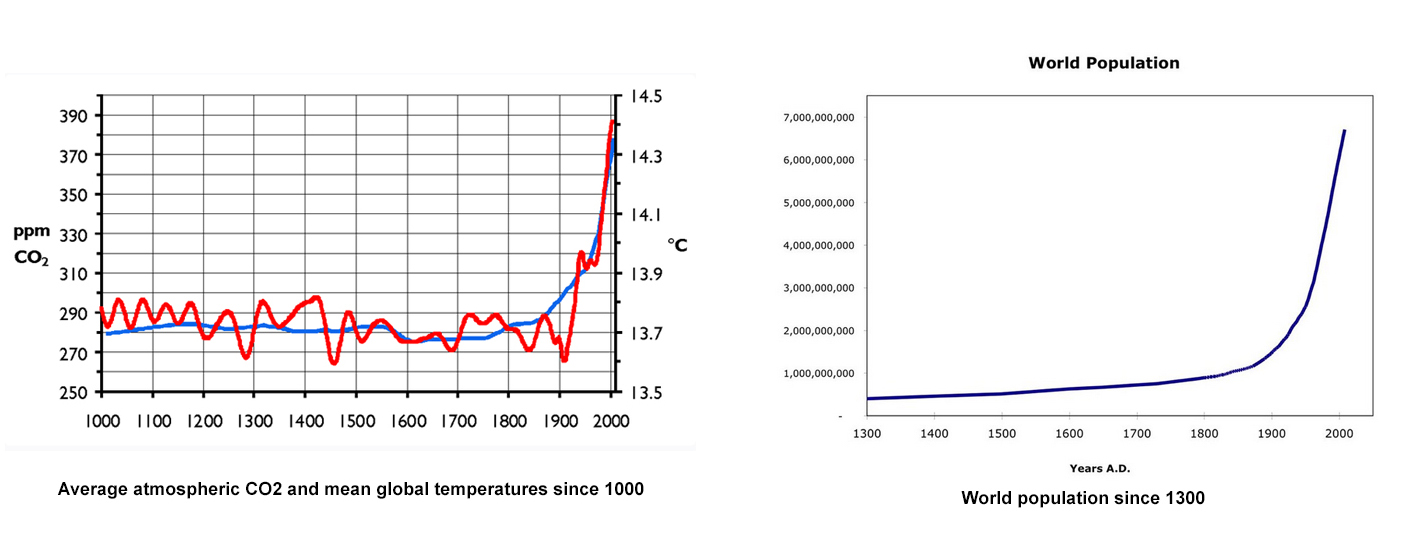
One of the core problems with the dominant global rhetoric around climate change (as expressed particularly in COP27, but also in much popular activist protest) is that it does not sufficiently tackle the fundamental challenge of population growth and increased consumption. The two simplified graphs below illustrate the scale of this basic problem.

The broad similarity in these two curves is striking. More than anything else, it has been the overall global growth in population over the last two centuries, enabled in large part by the enterprise associated with the individualistically based capitalist mode of production that has driven the environmental crisis of which “climate change” is but a part. The controversial film Planet of the Humans (Produced by Michael Moore) makes similar arguments, and it is unfortunate that its many critics have tended to focus more on some of its undoubtedly problematic points of detail rather than the crucial message of its overall argument (see Moore on Rising). The “capture”of the UN system by global corporations, exemplified by the large numbers of business leaders attending COP27, seems to confirm one of Moore’s core arguments that these companies are now driving much of the climate change agenda.

If the world’s peoples really want to “mitigate the effects of climate change”, there needs to be a dramatically more radical change to our social, cultural, political and economic systems than has heretofore been imagined, and this needs to begin with a shift to more communal rather than individualistic systems, a focus on reducing inequalities rather than maximising economic growth, and the crafting of a more holistic approach to environmental issues rather than one primarily focussing on carbon reduction to “solve” “climate change”.

Who benefits most: understanding the interests behind “climate change” rhetoric

Social movements, economic practices, cultural behaviours and political systems do not just happen, they are created by those who have interests in making them happen and the power to do so. This is as true of the “climate change” rhetoric and movement as it is of any other. Five particular groups of people have shaped and sought to take advantage of this. First, have been the scientists who have believed in the importance of this issue and have sought to build their careers around it. Academic careers are not neutral, and the story of how they built coalitions and peer networks, influenced research councils and political groups, and helped to forge a global “climate change” agenda that served their own interests is a fascinating one that remains to be told. Second, have been private sector businesses and corporations big and small who have sought to influence global policy and profit from a shift from hydrocarbons to renewable energy. This has been fuelled by the fetish for innovation, and the idea that technological change can inject a new impetus to economic growth. Their lobbying of governments to subsidise many of the start-up costs of renewable energy technologies, to overturn existing environmental legislation to permit the creation of new industrial landscapes in the name of solving”climate change”, and to enable consumers to afford to purchase them through further subsidising their energy costs, has been hugely successful. The global capitalist system, utterly dependent on economic growth, is ultimately leading ever more rapidly to its own environmental catastrophe. Third have been those who enjoy the thrill and camaraderie of political activism who have found in the simple “climate change” mantra something that will unite many of their common interests. Fourth, has been the UN system with all of its distinct agencies, each of which has found a cause around which to promote its identity as contributing in a worthwhile way for the benefit of humanity. Finally, have been the politicians, eaager to be seen to be doing “good”, and to contribute to a worthy international cause, in the interests of enhancing their own political careers.

The trouble is that it is not “climate change” itself that is the problem. Instead it is these interests, shaping the rhetoric of climate change, that have helped to exacerbate the very real environmental damage that is being caused to this planet. Self-interestedly promoting the rhetoric of “climate change” is of course much easier than it is to tackle the real roots of the problem, which lie in the economic, political, social and cultural processes that they too have crafted over the last half-century.


Part 2 of this trilogy of posts examines how these arguments apply in the context of the digital tech sector, and Part 3 calls for a dramatic new approach to balancing the environmental harms and benefits of the creation and use of such technologies,

3 Comments

Filed under Climate change, digital technologies, ICT4D

Male Attitudes and Behaviours Towards Women and Digital Technologies in Pakistan

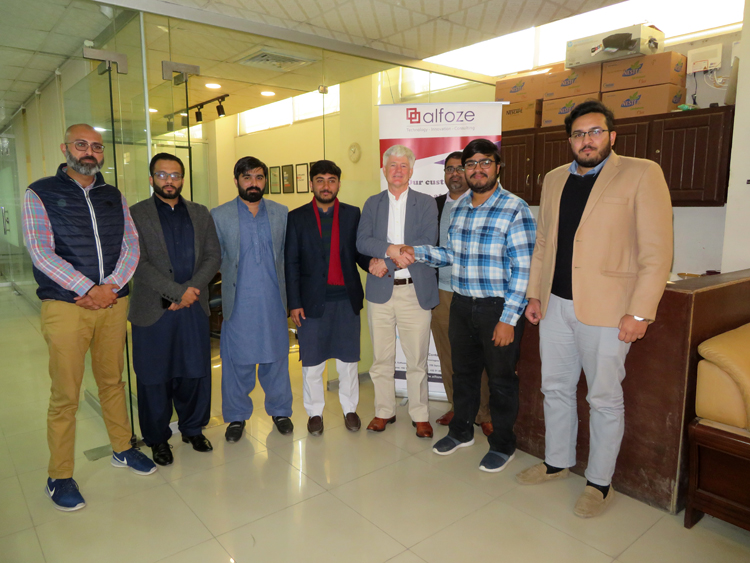
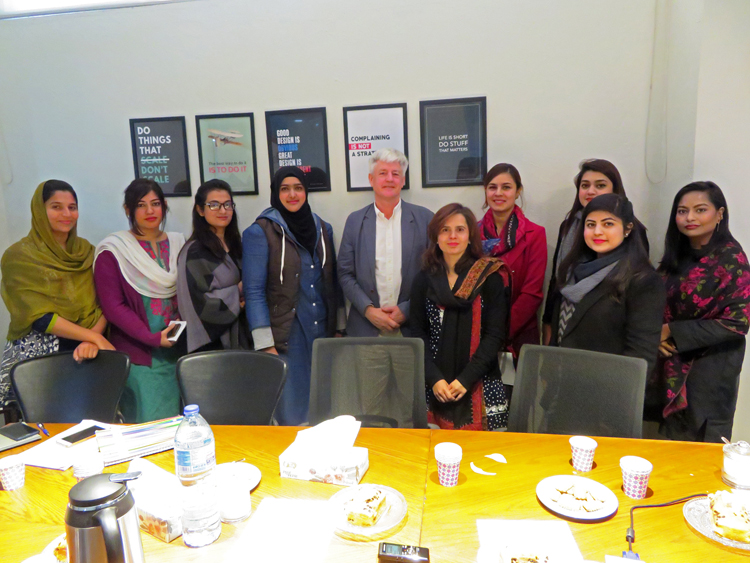
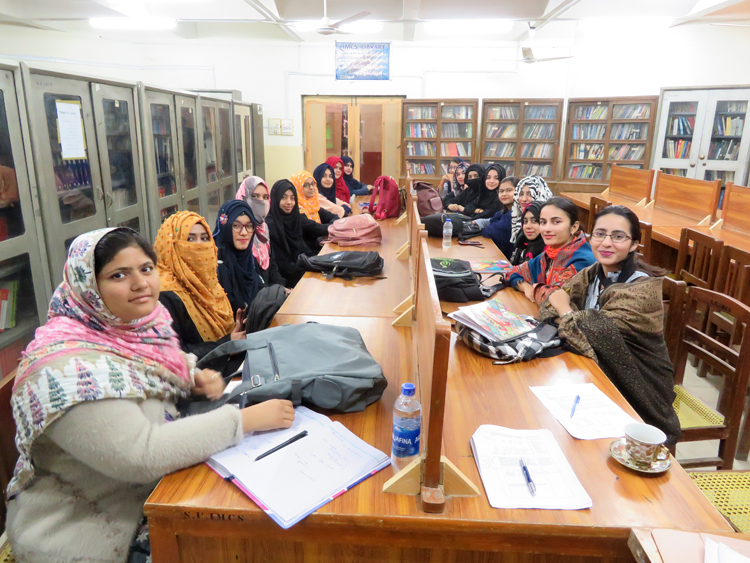
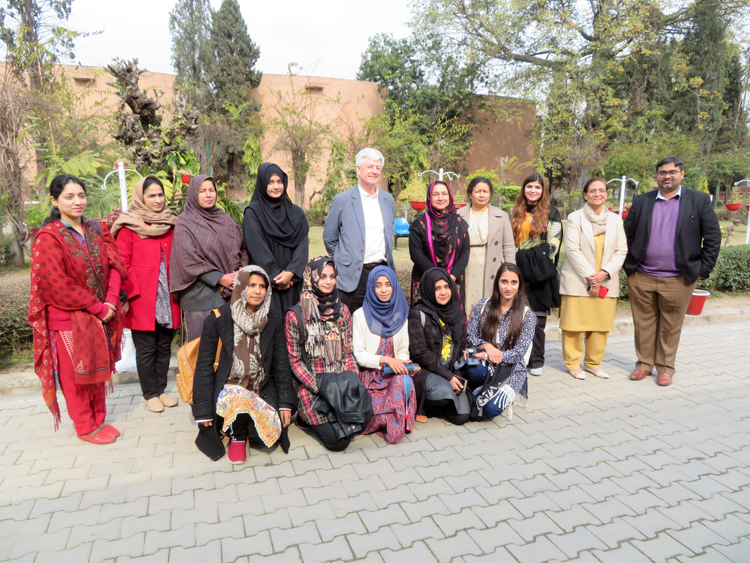
I am delighted to see the research practice paper that I worked on and wrote with my dear friend and colleague Dr. Akber Gardezi has now been made available within the UNESCO Chair in ICT4D working paper series. It is one of the most important pieces of research that I have ever done, but academic journals did not see fit to publish it. Perhaps this is because it is indeed worthless, and we have done a disservice to all those who contributed to our research, but perhaps it may also be because it challenges too many of the taken for granted assumptions about style and content of publishing in ICT4D academic journals in the 2020s. Both Akber and I are immensely grateful to the many people in Pakistan with whom we spoke for this reseach, typified by the group of amazing women illustrated in the photo above from 2020.

I wanted the paper to be published in a good academic journal to help Akber’s career, but in the end after journal rejections we decided that the messages were too important simply to be binned in the rejection folder. I will let readers judge whether it is indeed worthless – but for those of you who think it is, please at least take away some of the important messages contained within it.

Abstract

The full paper is available here, but the abstract reads as follows:

This paper reports on qualitative research undertaken to explore men’s attitudes and behaviours towards women and technology in Pakistan (in Azad Kashmir, Islamabad, Punjab and Sindh) in January-February 2020.  It is premised on a concern that much research and practice on gender digital equality is based on ideas emanating mainly from North America and Europe, and may not be nuanced enough and sufficiently culturally appropriate to be relevant in different contexts, such as an Islamic state in South Asia.  It builds on our previous research on mobile ‘phones and identity, as well as the use of mobiles for sexual harassment in Pakistan.  Four main conclusions are drawn: first, wider aspects of Pakistan’s society and culture would need to be changed before substantial gender digital equality (as conceived in most “Western” literature) is achieved; second, there was considerable diversity in the views expressed by our participants about gender digital equality, and whilst we do draw some general conclusions these should not mask the importance of such diversity; third, despite the challenges, the last decade has seen substantial changes in the use of digital technologies by women, especially in urban areas and among the higher classes, with many more girls now studying STEM subjects and a small but growing number of women taking jobs in the tech sector; and finally, it highlights complex and difficult questions about universal and relativist approaches to gender digital equality.

Acknowledgements

Very many people contributed to this research, and it is their voices that we wanted to reproduce in the paper. Many of them asked to be named in anything we wrote, and so I reproduce the paper acknowledgements here in full:

We are extremely grateful to colleagues in COMSATS University Islamabad (especially Dr. Tahir Naeem), the University of Sindh (especially Dr. Mukesh K. Khatwani) and the International Islamic University Islamabad (Dr. Bushra Hassan) for facilitating and supporting this research.  We are also grateful to those in Riphah International University (especially Dr. Ayesha Butt) and Rawalpindi Women University (especially Prof Ghazala Tabassum), as well as senior management of those companies (Alfoze and Cavalier) who helped with arrangements for convening the focus groups.

This paper is above all, though, an expression of our efforts to share the views of the many people who contributed so passionately and openly to our questions.  These people (listed in alphabetical order of first names) are therefore, in practice, the originators of the views that we have sought to combine and share more widely: Aakash Kumar, Abdul Bari, Abdul Maalik, Abdul Manan, Abdul Rehman, Abdul Saud, Afsheen Altaf, Ahmed Bilal, Ali, Ali Shah, Dr. Alina Zeeshan, Amir Gohar, Amna Anwar, Anam, Andleeb Ismail, Anmol, Anzalna, Arslan Ahmad, Asad Malik, Atia-Tul-Karim, Awais Ahmed, Awais Rahat, Ayesha Kayani, Dr. Azhar Mahmood, Babar Ali, Balaj Chaudary, Bilawal Ali, Bushra Kanwal, Ch. Hussain, Ch. Murtaza, Danish Shoukat, Danyal Malik, Darima Habib, Darshana, Fahad Saleem, Fahim, Faiza Kanwal, Faiza Shah, Faizan Abrar, Fatima Seerat, Ghazala Tabbassum, Heba Mariyam, Habibullah, Hafeez ur Rehman, Hafsa, Hamid Nawaz, Hamza, Hassan, Hina Akram, Humna Ikhlaq, Ihtisham Ijaz, Kainat Aslam, Kainat Malik, Khuda Bux, M. Hamza Tahir, M. Hassan, M. Riaz, M. Wajahat, M. Hassan Zehri, Maira, Manzoor Ali, Maryam Rehmat, Mehmoona Akram, Memoona, Mishkat, Mohsin Tumio, Muhammad Ali, Muhammad Sarwar, Muhammad Zeeshan, Munawar Gul, Muqadas Saleem, Muqaddas Abid, Noman Javed, Noor Nabi, Noor ul Ain Maroof, Osama Osmani,Paras, Qayoum, Rajesh, Ramsha, Rashid Ali, Rashid Shah, Raza Asif Ali, Rehan Arshad, Renuka, Rohit Kumar, Rumaisa Feroz, Saeed Ahmed, Saima Mehar, Dr. Sajjad Manzoor, Saleha Kamal, Sameen Rashid, Saqib Hussain, Sara Shahzad, Sarfraz, Sarmed Javed, Sarwan Nizamani, Shahid Sohail, Dr. Shahwawa, Sharjeel, Shehrol Asmat , Sonia Khan, Sumaira Tariq, Syed Ahmed, Talha, Tasneem, Tehmina Yousaf, Tehreem, Usama Basharat, Usama Nasir Khan, Usama Thakur, Usman Farooq, Waleed Khan, Waqas Masood, Yasir Iqbal, Yousif Khan, and Zahra Ali.  We hope that we have done them justice.  All of them ticked the box indicating that they wished for their names to be recorded in material that we wrote; those few who chose to tick the box saying that they did not want their names recorded are not mentioned here, but we are very grateful to them nonetheless.

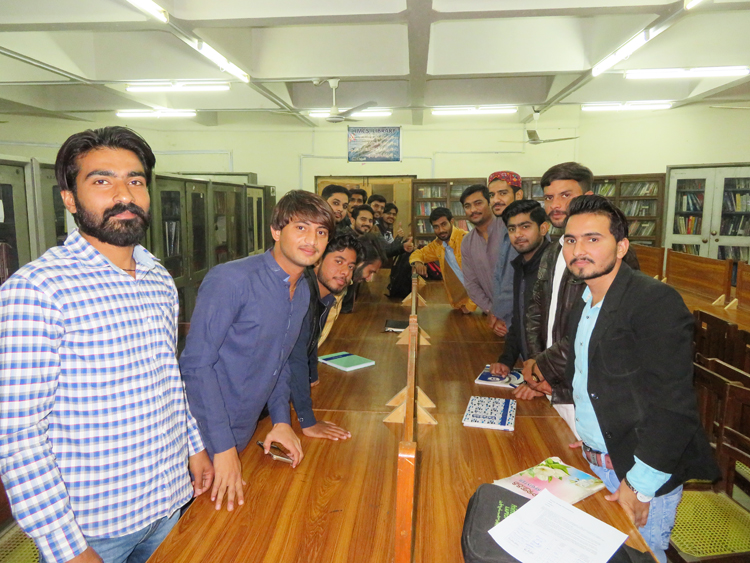
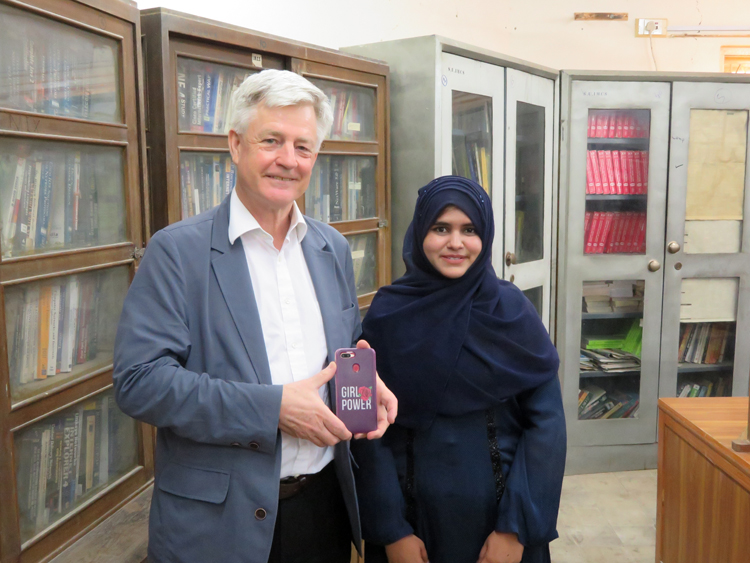
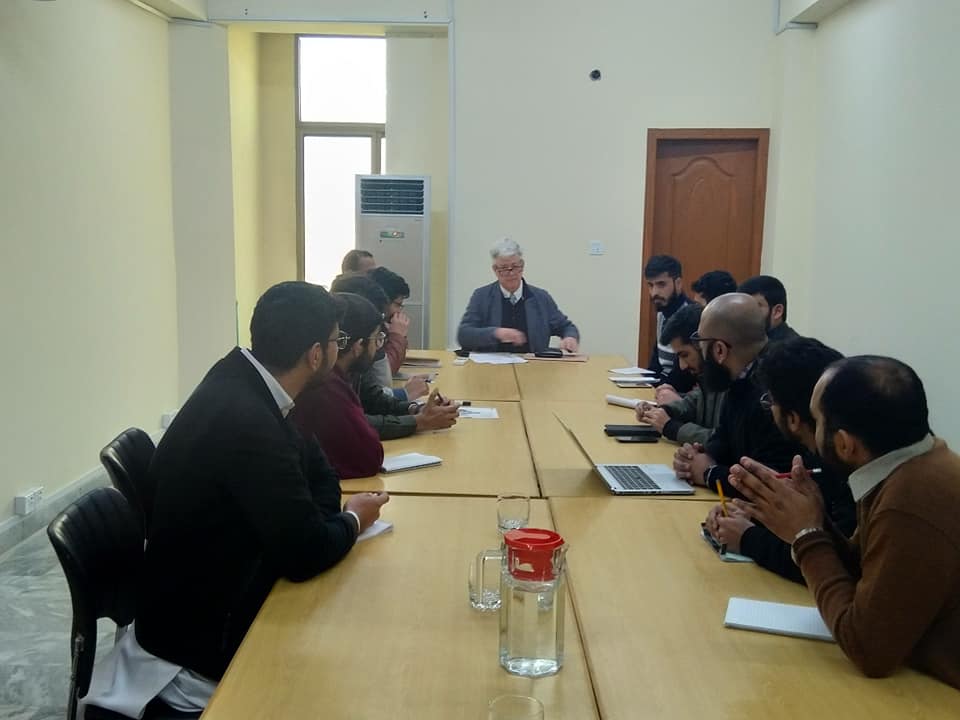
Some of the brilliant people with whom we spoke are illustrated in the images below, and I hope that what Akber and I have written does indeed do justice to the time you spent sharing your thoughts with us, and that together we can indeed begin to change attitudes towards the interactions between women and digital tech.

All of the material resulting from our research is available on the TEQtogether site in the section on our research in Pakistan, including the guidance notes that have subsequently been produced in Urdu and English based on the research.

Leave a comment

Filed under digital technologies, Gender, ICT4D, Inequality, Pakistan

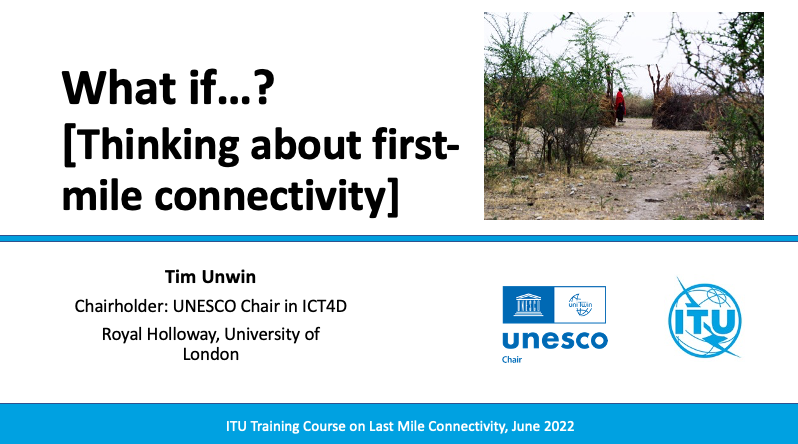
What if…?  [Thinking about first-mile connectivity]

It was great to have been invited by Aminata Amadou Garba to give the final talk in the ITU Academy’s training session on Last Mile Connectivity on 30th June. She was happy for me to be a little bit provocative, and so I returned to one of my long-standing arguments – that by using terms such as “the last mile” or the “last billion” we often denigrate the poorest and the most marginalised. If we really want to ensure that they benefit from the use of digital technologies, we should instead start thinking about them as “the first mile” because they are most important!

The session addressed seven main themes:

  1. The “last” mile in whose eyes?
  2. Parallels with the “next billion”
    • and the “Digital Divide”
  3. Whose perspectives matter most?
  4. The political economy of connectivity
  5. The fundamental role of regulation
  6. Global connectivity initiatives
  7. Environmental implications

I’m so glad that we were able to have quite a lively discussion both during and after the presentation – a copy of which is available here for those who might be interested.

1 Comment

Filed under digital technologies, Education, Environment, ICT4D, inclusion, Inequality, ITU, My Lectures, technology

To app or not to app? How migrants can best benefit from the use of digital tech

This post was first published on the OECD’s Development Matters site on 7th February 2022, and is reproduced here with permission and under a slightly different title

Introductory

UN agencies, donors, and civil society organisations have invested considerable time, money and effort in finding novel ways through which migrants, and especially refugees, can benefit from the use of digital technologies. Frequently this has been through the development of apps specifically designed to provide them with information, advice and support, both during the migration journey and in their destination countries. All too often, though, these initiatives have been short-lived or have failed to gain much traction. The InfoAid app, for example, launched by Migration Aid in Hungary amid considerable publicity in 2015 to make life easier for migrants travelling to Europe, posted a poignant last entry on its Facebook page in 2017: “InfoAid app for refugees is being rehauled, so no posting at the moment. Hopefully we will be back soon in a new and improved form! Thank you all for your support!”

However, new apps continue to be developed, drawing on some lessons from past experience. Among the most interesting are MigApp (followed by 93 668 people on Facebook) developed by the International Organization for Migration (IOM) as a one-stop-shop for the most up-to-date information. Another is RedSafe developed by the International Committee of the Red Cross (ICRC), which enables those affected by conflict, migration and other humanitarian crises to access the services offered by the ICRC and its partners. Other apps seek to be more local and focused, such as Shuvayatra (followed by 114 026 on Facebook), which was developed by the Asia Foundation and its partners to provide Nepali migrant labourers with the tools they need to plan a safer period of travel and work abroad.

Our work with migrants nevertheless suggests that in practice very few migrants in the 12 countries where we are active in Africa, Asia, and Latin America and the Caribbean, ever use apps specifically designed for migrants. Moreover, most of those who claim to use such apps name them as Facebook, Imo, or WhatsApp, which were never originally intended as “migrant apps”. A fine balance therefore needs to be made when developing relevant interventions in combining the professional knowledge (often top-down) of international agencies with the more bottom-up approaches that focus on the digital tech already used by migrants.

Our wider research goes on to highlight four broad areas for action to complement the plethora of activities around app development:

1. Information sharing and collaboration

First, there needs to be much more information sharing and collaboration between international organisations working in this field. While an element of competition between agencies may be seen as positive in encouraging innovation, there remains far too much overlap, duplication and reinventing the wheel. The creation of a global knowledge-sharing platform on digital tech and migration could provide a first port of call that any organisation considering developing a new initiative could go to for ideas or potential collaborative opportunities.

2. No one-size-fits-all: diversity in the use of digital tech by migrants

Second, our research has shown very clearly that use of digital tech by migrants varies considerably in different areas of the world and between different groups of migrants. There is no one-size-fits-all, and context matters. Hence, practitioners should be careful when making generalisations about how “migrants and refugees” use, or want to use, digital tech.

3. Developing digital tech with migrants not for them

Third, it is important to remember that actions and policies are much more likely to succeed if they are developed with rather than for migrants. This fundamental principle is too frequently ignored, with well-meaning “outsiders” too often seeking to develop digital interventions for migrants without fully understanding their needs and aspirations. As our own research has shown, though, it is far from easy to appreciate and understand the underlying needs that different groups of migrants prioritise and how best they can be delivered.

4. Assisting migrants to help each other in using digital tech wisely and safely

Fourth, it sadly remains as true today as it was twenty years ago that many of the poorest and most marginalised still do not know how to use digital technologies effectively, appropriately, securely and safely. Many migrants contributing to our research own a smartphone or have access to one, but frequently they only have a rudimentary knowledge of how to use it optimally. Some aspire to use digital tech to learn and acquire skills, while others wish to enhance their business opportunities; in both cases, many do not know how best to do so. Few also sufficiently appreciate the very significant security, privacy and surveillance issues associated with using digital tech. The development of basic training courses – preferably face-to-face – may be one of the best investments that can be made in assisting migrants to help themselves when using digital tech.

Looking to the future

Looking to the future, the power relationships involved in the migration process mean it is likely that migrants will become increasingly controlled and subject to surveillance through the use of digital tech. In some circumstances, it might even be wiser for migrants to avoid using any form of digital tech at all. However, there are exciting opportunities to develop novel ways through which migrants might benefit further from digital tech. One of the challenges faced by many migrants is the sadness associated with being away from family and friends. While video calls can go some way to mitigate this, new developments in haptics may soon enable us to feel someone’s touch or hug.

Likewise, inserting microchips into our bodies is becoming increasingly widespread, and in the future this practice could offer real potential for migrants for example to have their qualifications and other documents actually within their bodies, or for their families to be able to track them on the often dangerous journey to their destination. Countering this, of course, is the likelihood that most authorities would use such technologies for surveillance purposes that would threaten migrants’ privacy.

As with all digital tech, it is important to remember that it can be used to do good or to harm. Many migrants are especially vulnerable, and it is incumbent on those seeking to support them that migrants are able to make their own informed decisions on how they choose to use digital tech. Often, the best interventions might well be built around improving existing ways through which migrants use apps and other digital technologies, rather than developing entirely new solutions that may never be widely used.


I am particularly grateful to G. Hari Harindranath and Maria Rosa Lorini, as well as the many other people and migrants with whom we are working, for their contributions to the ongoing research practice on which this post is based.

Leave a comment

Filed under Apps, digital technologies, ICT4D, ICT4D general, Migration

The advantages of being unconnected to the Internet: a thought experiment

The 2021 ITU Facts and Figures report highlighted that 2.9 billion people, or 37% of the world’s population, have still never used the Internet. Implict in this, as in almost all UN initiatives relating to digital technology, is the ideal that everyone should be connected to the Internet. Hence, many global initiatives continue to be designed to create multi-stakeholder (or as I prefer, multi-sector – see my Reclaiming Information and Communication Technologies for Development) partnerships to provide connectivity to everyone in the world. But, whose interests does this really serve? Would the unconnected really be better off if they were connected?

Walking in the Swiss mountains last month, and staying in a place where mobile phones and laptops were prohibited, reminded me of the human importance of being embedded in nature – and that of course we don’t really need always to be digitally connected.

Although I have addressed these issues in many of my publications over the last 20 years, I have never articulated in detail the reasons why people might actually be better off remaining unconnected: hence this thought experiment. There are actually many sound reasons why people should consider remaining unconnected, and for those of us who spend our lives overly connected we should think about disconnecting ourselves as much as possible. These are but a few of these reasons:

  • Above all, we were born to be a part of the physical world in which we live. Virtual realities may approximate (or even in some senses enhance) that physical world, but they are fundamentally different. Those who spend all of their time connected miss out on all the joys of living in nature; those who are unconnected have the privilege of experiencing the full richness of that nature.
  • Those who are unconnected do not have to waste time sifting through countless boring e-mails or group chats to find what is worthwhile, or the messages in which they are really interested.
  • The unconnected cannot give away for free their valuable data from which global digital corporations make their fortunes.
  • Being unconnected means not harming the physical environment through the heavy demands digital technologies place on our precious natural world (see the work of the Digital-Environment System Coalition – DESC)
  • Those who are unconnected do not suffer the horrors of online harassment or digital violence.
  • The unconnected are not forced by their managers to self-exploit by doing online training once they are home after a day’s work, or answer e-mails/chat messages sent by their managers at all hours of the day and night.
  • Those who are not online don’t have to run the risk of online scams or phishing attacks that steal their savings – and the poor suffer most when, for example, their small amounts of money are stolen.
  • The unconnected can largely escape much of the digital surveillance now promulgated by governments in the name of “security” and “anti-terrorist” action.
  • The unconnected do not suffer from digital addictions to online games, gambling, or pornography.
  • Ultimately, being connected is akin to being enslaved by the world’s digital barons and their corporations; if you cannot stop using digital tech for a few days, let alone a week, surely you have lost your freedom?

Despite the fine sounding words of those leading global connectivity initiatives, is it really the poorest and most marginalised who are going to benefit most from being connected? Surely, this agenda of global connectivity is being driven mainly in the interests of the global corporations that will be paid to roll out the tech infrastructre, or that will benefit from exploiting the data that we all too willingly give them for nothing? Does not, for example, digital financial inclusion benefit the financial and tech companies and institutions far more than it does the poorest and most marginalised? This is not to deny that digital tech does indeed have many positive uses, but it is to ask fundamental questions about who benefits most.

I remember visiting a village in Africa with colleagues who couldn’t understand why the inhabitants didn’t want mobile phones. Walking over the hills to see their friends was more important to them than the ease of calling them up. This post owes much to that conversation.

We all need to ask the crucial questions about whose interests our often well-intentioned global digital connectivity initiatives really serve. If we wish to serve the interests of the poorest and most marginalised, we must become their servants and not the servants of the world’s rich and powerful; we must be humble, and learn from those we wish to serve.

And the world’s rich and privileged also need to take care of ourselves; if we have difficulty living a day without being connected, surely we have indeed become enslaved? We need to regain our freedom as fully sentient beings, using all of our senses to comprehend and care for the natural world in which we live. May I conclude by encouraging people to think about using the hashtag #1in7offline. Take one day a week away from digital tech to experience the wonders of our world, unmediated by the paltry digital alternative. Or try taking a week away from the digital world every seven weeks. If you cannot do this, ask yourself why!

3 Comments

Filed under Africa, digital technologies, Empowerment, ICT4D, United Nations

“We’ve seen it all before”: sketches about why so many digital tech for development initiatives fail

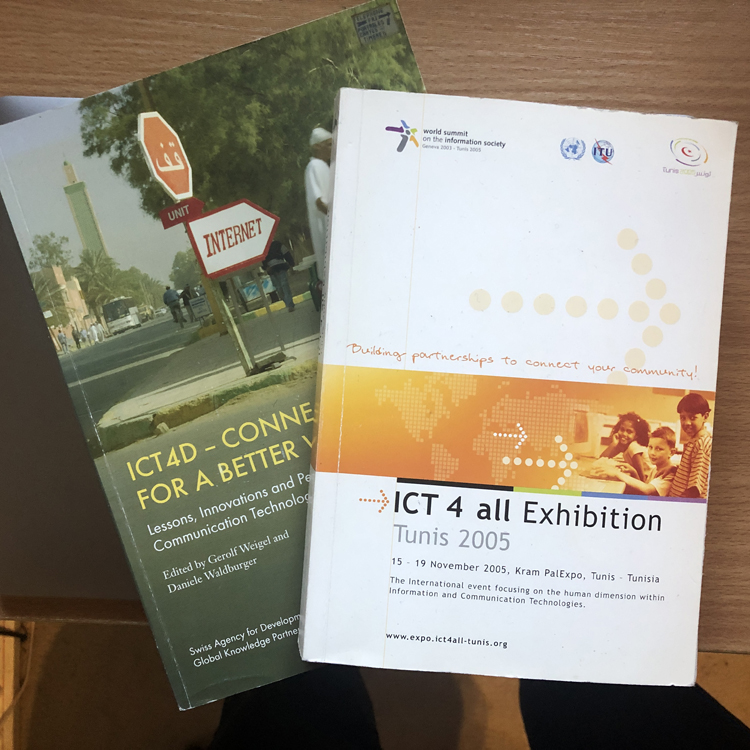
Clearing out boxes of old books and reports recently, I was struck by how many ICT4D (Information and Communication Technologies for Development) initiatives there have been over the last 20 years, many of which have simply repeated the mistakes of their predecessors. Most have failed to make real and significant improvements in the lives of the world’s poorest and most marginalised people. Quick looks at Weigel and Waldburger’s (2004) seminal book, and the ICT4 all Exhibition catalogue for the 2005 WSIS Summit in Tunis, remind us that most of the problems we are addressing in 2021 are broadly similar to those that were being addressed 20 years ago: how to enable the most marginalised to benefit from digital tech; moving from rhetoric to action; how to deliver effective partnerships; the importance of local languages; financing challenges; or how to ensure access…

An invitation to give a lecture at the Aga Khan University in Pakistan as part of a Master’s course on Learning and Teaching with Technology later this week provided me with the opportunity to reflect at some length on this thorny issue, and to come up with some suggestions as to why we continue to reinvent the wheel, and what we need to change if we really want to work with the poorest and most marginalised in delivering effective ICT4D initiatives that will help to empower them.

It also reminded me that even when I first started teaching in universities in the mid-1970s I used multimedia technologies such as slides (diapositives), aerial photos, film clips, overhead transparencies – as well as books. There is very little fundamentally new in the use of ICTs in education; it’s just the detail of the tech that has changed. As long ago as the early 1990s I thus enjoyed delivering lectures to students across London through the University Live-Net TV network, and in the middle of that decade enjoyed participated in the work of the Computers in Teaching Initiative in the UK. Hopefully we had learnt by then many of the challenges and success factors that previous colleagues involved in delivering education at a distance had shared with us.

Why are we failing so badly to learn the lessons of the past?

Reflecting on this simple question, I came up with six main suggestions as to why valuable lessons from previous ICT initiatives, especially in the education sector, do not seem to have been sufficiently learnt:

  • Lack of background research
  • Increased emphasis on innovation
  • The problem with “self”
  • Short-termism
  • Commercialisation and marketisation of education
  • Insufficient intergenerational dialogue

I am sure there are many more, and I look forward to exploring these ideas further with interested colleagues. Each needs to be fleshed out in much more detail, but the following brief notes cover some of the aspects that may be of particular importance.

Lack of background research

  • The Google (or DuckDuckGo) first page syndrome
    • only following up links on the first page (or two)
    • only reading the most recently published material
  • Too many people failing to explore and learn from what has been done before
  • Too much of a hurry?
  • Believing only the latest is best?
  • Nothing old is worthwhile?
  • A strong sense of self-belief, and that there is no need to read (see further below)
  • Past research and practice are inaccessible or unavailable
    • but this isn’t really true – many of us have written at length about our previous experiences

Problems with innovation

  • It is well known that most innovations fail
  • Overcoming failure often seen as being essential for subsequent success
    • But surely it’s best not to make the well known mistakes that others have made before?
  • So why is innovation (scientific and business) usually seen as being such a good thing?
  • Many governments (and donors) are increasingly focusing on funding innovation to drive economic growth – should they use taxpayers’ money to fund failure?
  • Might it not be wiser for donors and governments to spread what we know works, say for 60% of the population, to everyone?
    • Reducing inequalities rather than maximising growth

The problem with “self”

  • Self(ish) individualism
  • The need to be first
  • Overconfidence in own excellence
  • Having great qualifications so must know the truth
    • But perhaps the qualifications are not so great after all!
  • Unwilling to be self-critical
  • Brought up within the power and culture of non-self-critical scientism
  • A self-congratulatory culture (illustrated by awards processes)
  • Competitive rather than communal culture
  • Enjoys making mistakes in the belief that they will learn
    • Very expensive for others, especially in the international development context

Short-termism

  • Short-term job delivery and then move on
    • It’s always good to be seen to be bringing in new ideas
    • You don’t have to pick up the bits because you’ve left by then
  • The world of 140 characters
  • Project cycles often very short
  • It’s important to show success even when you’ve done nothing
  • Those who shout loudest tend to get heard
    • Even when there is little substance behind the claims
  • Short term is much easier than doing something long term
  • Perhaps “Agile” also has something to do with this?

The commercialisation and marketisation of education

  • EdTech is about the technology not the education
  • Everything is about expanding the market
  • Sales driven, with short term targets
  • Pitching to donors
    • A different skill set to delivery
  • Donors have large budgets and also have to show quick gains
  • Unrealistic target setting
  • Pilots where it is easiest
    • Instead they should be done where it is most difficult
  • We are measuring different success factors
    • Connecting a million children
    • But are they the most marginalised, and do they learn anything?

Insufficient intergenerational dialogue

  • “Youth have all the answers”
    • Older people have wrecked the world and so should now listen to young people who have all the good ideas
    • Much political posturing
  • The old have no idea how to use digital tech
    • Really?
  • Little priority given to mentoring
    • Especially 360o
  • Even fewer initiatives specifically designed to be inter-generational
    • Youth political institutions often replicate existing flawed global institutions
    • Especially within the UN system

Moving beyond a sketch

I have frequently been frustrated when I hear exciting new ideas being advocated about ways through which the latest generation of technologies (be it AI, AR, blockchain, or the Metaverse) can transform global education for the better. More often than not, the technology is the easy bit. It’s everything else that’s difficult. As a contribution at least to what governments need to get right, we collectively crafted a report on Education for the most marginalised post-COVID-19: Guidance for governmetns on the use of digital technologies in education (freely available under a CC BY licence at https://ict4d.org.uk/technology-and-education-post-covid-19, and https://edtechhub.org/education-for-the-most-marginalised-post-covid-19) which I hope goes some way to sharing global good practices at least in this area. Perhaps we should do similar reports for the private sector and for civil society, although those in these sectors could still learn much from our report for governments.

The above six sets of suggestions are just a beginning, but I wanted to share them here to provoke discussion. Everyone will have their own list of suggestions. What’s missing from the above? I’d be interested to hear from anyone who might like to explore this theme further! I need to learn more! At the very least, I hope that future colleagues will address these suggestions head on and thereby no longer repeat the same mistakes that so many of us have made in the past.

5 Comments

Filed under digital technologies, Education, ICT4D