I was very privileged that Adrian Godfrey asked me to say a few words to introduce the session on m-education that the GSMA convened earlier today at the Mobile World Congress in Barcelona. It was good to be with a fun group of panelists, and I hope that we gave them some food for thought.
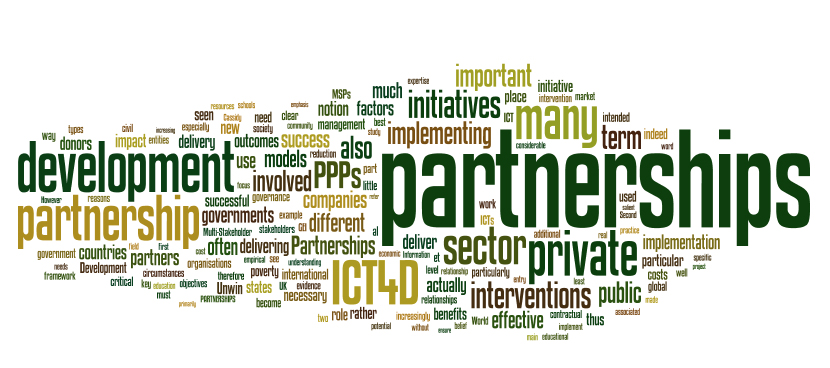
So, this is what I said. It was designed to be provocative, but its intent was to emphasise that there are many different interests in the use of mobile devices for learning, and that if we are going to take advantage of the enormous potential that they can offer for the poorest and most marginalised then we need to recognise these interests, and work together in carefully crafted partnerships to deliver effective learning opportunities.
“If m-learning is the answer, what is the question?
 Less than two weeks ago, I was in northern Tanzania. Walking across the dry savannah, I entered the thorned enclosure of a boma, or small village. I was welcomed by the Maasai chief’s son, who engaged me in conversation. I remembered seeing striking images in the international media around 2007 of Maasai warriors, resplendent in their red, “lion proof” robes, holding mobile ‘phones to their ears, and knowing that I was due to speak a world away, here in Barcelona today, I slowly began to explore the question of mobile telephony. I should not have done so. The conversation left me embarrassed and humbled.
As my friends used their smart-phones to take photos, I asked “Does anyone in the village have a mobile phone?”
“No” he said, in his excellent English.
One of my friends asked “Would a mobile ‘phone not be useful to call your friends in other villages?”
“Why?” he responded, “I can walk two or three hours to see them”.
And I admired his life.
Earlier, he had shown me the small hut where young children were learning the alphabet and counting in English. So I gently sought to explore the benefits of mobile learning: “But if you had a smart-phone, could you not use it to get learning resources for your children?”.
He looked bemused. My question meant little to him. He had asked for chalk and books.
I changed the subject.
Of course, many Maasai – and indeed poor people in rural areas across Africa – do indeed use mobile ‘phones, for a wide range of purposes. But this brief conversation re-emphasised many of the challenges of mobile-learning, and highlights the importance of the question: “if m-learning is the answer, what is the question”.
Let me therefore tease out just four of these questions here in my opening comments:
If m-learning is the answer, what is the question?
“How do we increase our data traffic?” To me, this is one of the most important questions – all too often asked behind the closed doors of the luxurious offices of mobile operators – that is answered by the term “m-learning”. It is nothing to do with education or learning. There is far more data capacity in the world than is currently used. The arrival of the submarine cables across Africa in recent years has transformed connectivity, and much remains unused. Mobile networks are expanding rapidly, but again there is insufficient demand for their use. Hence, it is crucial for operators to encourage the development of more services if they are to generate the profits that they seek. Mobile banking has been one such successful service emanating from Africa; now mobile health services, and mobile-learning are seen as important means of moving beyond the simple data requirements of social media apps.
If m-learning is the answer, what is the question?
“How can we gain external funding from governments and donors so that we can extend our networks?” The costs of putting networks into low-density rural areas, far from the fibre backbones of most countries, greatly outweigh the likely returns, at least in the short term. It is “uneconomic”. In many poorer countries of the world, operators have been able to gain lucrative revenue opportunities from those living in the relatively small dense urban areas, and have been able to circumvent requirements to provide universal coverage, that would benefit all citizens. Hence, operators are always seeking to find sources of co-financing that can help them extend their networks into “marginal” areas. Where they have to pay taxes into Universal Service (or Access) Funds, they naturally want a share back in extending networks. They need a handle to persuade governments, and indeed donor agencies, to provide resources to enable them to extend their infrastructure. How better than to persuade them that by so doing they will enable all of their citizens to benefit from the opportunities that m-learning has to offer. “If you will help fund the networks, you can then use them to ensure that every citizen has access to m-learning, alongside m-health and m-gov”. This makes real sense. With the drive to deliver the Millennium Development Goals, the thirst by the international donor community to ensure that “their” targets are reached, and the aspirations of “enlightened” governments really to deliver valuable services to their citizens, m-learning really is the answer.
If m-learning is the answer, what is the question?
“What is the best market opportunity for our company?” Education is no longer of value largely for its own sake; it is a commodity to be bought and sold; it has become a vibrant market. Hence, there are considerable profits to be made by everyone in the education industry. The company could be an app-developer, eager to find the “killer” education-app. It could be a publisher, eager to extend its sales. It could be a teaching company (often known as schools), eager to grow the market for the services offered by its teachers. Academics in research companies (sometimes still known as universities) are eager to compete to gain prestigious research grants to study, or perhaps more usually to “prove”, the potential of m-learning, and fuel this thriving industry. The explosion of mobile telephony, and the expectation that it will soon become ubiquitous opens up vast new possibilities for companies to extend the reach of their educational “solutions”. We truly can achieve education for all, if only we can ensure that the poorest people can still afford a cheap smartphone, and that we can have universal network coverage. And that is the point, it is education for all. Unlike “health”, which is mainly for those who are ill, learning is something that everyone “must” do. It is institutionalised in our education systems, and now we are all encouraged to partake in lifelong learning. Education is 24 x 7 x 365 x 80 or so, depending on how long we live – the magic multiplier number is 6,384,000 times the number of people in the world! This is a market indeed.
If m-learning is the answer, what is the question?
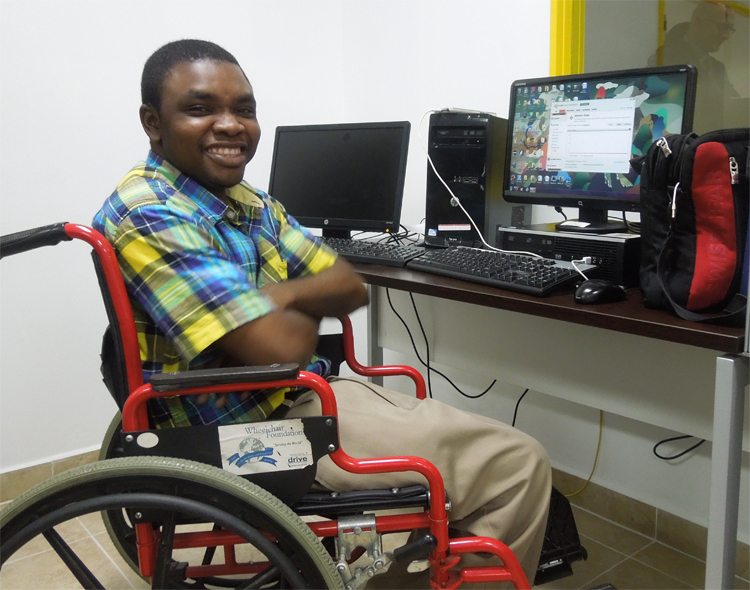
“How can we reach the most marginalised in our societies, and give them the highest possible quality of learning opportunity?” I guess this is the question that most people would have expected me to begin with. Of course m-learning provides a wealth of opportunity for the enlightened, the altruists, those who care about reducing the inequalities that digital technologies otherwise enhance, and hopefully some governments and civil society organisations, who are committed to providing quality learning opportunities for the poorest and most marginalised in our societies – those living in isolated rural areas, street children, people with disabilities. The ubiquity of networks and devices, their mobility – anywhere, anytime – and their simplicity of use, all make mobile devices – be they phones, tablets or laptops, wonderful platforms for learning.
But we still need to work harder to find what works best. We still need high-quality, locally produced content, and above all we still need teachers trained in ways of using these technologies in the best interests of pupils. Perhaps mobile devices may even one day free us completely from what many people see as being the shackles of an outmoded school system…”







 Tim Unwin's Blog