Tag Archives: Internet

Scientism, multistakeholderism and the Global Digital Compact

Recent AI global summit in Geneva: the glitz and glamour of digital tech

The Internet and World Wide Web have been used to bring many benefits across the world, but they have also been used to cause very significant harms. To deny this, is to fall into the trap of scientism, science’s belief in itself. Science is not neutral and value free as many scientists would have us believe. Above all, scientific enquiry and innovation are not inherently “good”, however that is defined. Moreover, science is not necessarily the best or only way of making truth claims about our existence on planet earth.

The recent “Open Letter to the United Nations” by a distinguished group of 37 scientists, notably including Vint Cerf (described in the letter as Internet Pioneer) and Sir Tim Berners-Lee (described as Inventor of the World Wide Web), raises very important issues around the nature of digital technologies and the so-called multistakeholder model. In essence, it seeks to persuade those involved in the Global Digital Compact “to ensure that proposals for digital governance remain consistent with the enormously successful multistakeholder Internet governance practice that has brought us the Internet of today”.

While I profoundly disagree with the agenda and process of the Global Digital Compact, I do so from the other end of the spectrum to the arguments put forward in their Open Letter. I have three fundamental objections to their proposal: that they largely ignore their responsibility for the harms; that their interpretation of multistakeholderism as being bottom up is flawed; and that, in effect, they represent the corporate interests that have for long sought to subvert the UN system in their own interests.

Science and innovation are not necessarily good

The Internet and World Wide Web were originally invented by scientists (“engineers” as they are referred to in the Open Letter), who were caught up in the excitement of what they were doing. As many of their subsequent statements have suggested, I’m sure these engineers believed that they were doing good. Thus, as the letter goes on to state, the success of those involved in the subsequent development of the Internet and the Web “can be measured by where the Internet is today and what it has achieved: global communication has flourished, bringing education, entertainment, information, connectivity and commerce to most of the world’s population”. While they acknowledge later in their letter that there are indeed harms resulting from the use of the the Internet and Web, they say little about the causes of these harms , nor about the structures of power in their design and propagation. By claiming that the basic architecture of the Internet must not be changed, because it is empowering, they fail sufficiently to take into consideration the possibility that it was their original design of that architecture that was flawed and enabled the rise of the very many harms associated with it.

There is nothing inherently “good” about science; it serves particular sets of interests. Scientists are therefore as responsible for the harms, unintended or deliberate, caused by their inventions as they are for any “good” for which they are used. The letter claims that the technical architecture of the Internet and Web cannot on its own address the harms it is used to cause, but offers no evidence in suport of this argument. If the Internet and Web had not been created as they were, if the architecture had been different, might not the harmful outcomes have been avoided? Did the engineers and others involved take the time to consider the full implications of what they were doing? Did they consider the views of philosophers and social scientists who have studied the diffusion of innovations and their potential harms in the past? Or were they caught up in the technical interests of positivist science? I do not know the answer to these questions, but I do know that they are as responsible for the scale of the harms caused through the use of their inventions, as they are for any good.

On multistalkeholderism

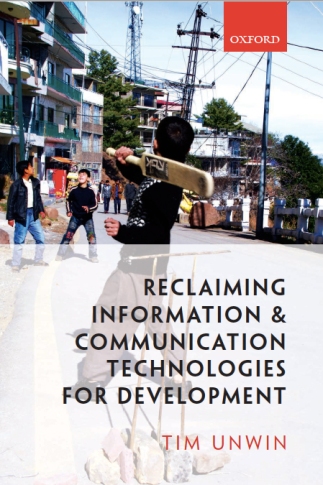
The arguments of the Open Letter are based on the notion that multistakeholder processes have been “enormously successful” in bringing us “the Internet of today”, and that the Global Digital Compact should not damage these by replacing it with “a multilateral process between states”. Accordingly, the authors should also recognise that it is these same multistakeholder processes that have also brought us the harms associated with the Internet and Web. Moreover, the claim that this multistakeholder model of Internet governance is “bottom-up, collaborative and inclusive” is also deeply problematic. Just over a decade ago, I wrote a critique of multistakeholderism (see also my Reclaiming ICT4D) in which I highlighted that despite such aspirations and the efforts of those involved to try to achieve them, the reality is very different. Those arguments apply as much today as they did when I first wrote them. In essence, I argued that there are two fundamental problems in the practice of multistakeholderism: unequal representation, and the decision making process. I challenge the claim that in practice these processes are indeed bottom-up, collaborative and inclusive. The following are just some examples in support of my case:

  • The world’s poorest and most marginalised people and communities do not participate directly in these gatherings.
    • how many people with disabilities or ethnic minorities actually contribute directly?
  • Most of the organisations claiming to represent such minorities sadly usually have their own interests more at heart than they do of those they claim to speak for.
  • There is a very significant power imbalance between those individuals, organisations and states who can afford to participate in these deliberations and those who do not have the financial resources or time to contribute.
    • Small Island states are notable in their absence from many of these processes, simply because of the cost and time involved in such participation.
    • The large, rich global corporations can afford to engage and lobby for their interests, whereas the poorest and most marginalised face almost impossible difficulties in seeking to compete with them.
  • There are enormous linguistic and cultural barriers to full and active engagement.
    • This applies as much to the technical language and processes used in these deliberations as it does to the dominance of a few interrnational languages in the discussions.
  • The processes of consensus decision making are extremely complex, and require considerable experience of participation before people can have the confidence to contribute.
    • Almost by definition, minority voices are unlikely to be heard in such processes of reaching a consensus.

I could highlight many more examples of these challenges from my 25 years of experience in attending international “multistakeholder” gatherings, from the Digital Opportunities Task Force (DOT Force), to the regular cycle of subsequent WSIS, IGF, ICANN, and UN agency gatherings. This is not to deny that many such multistakeholder gatherings do indeed try to support an inclusive approach, but it is to claim that the reality is very different to the aspiration. The image below from the GDC’s page on its consultation process suggests where the power really lies.

It is surely no coincidence that the third of these sub-headings focuses on the $5tn+ represented by the market cap of private sector companies. This need not have been so. They could instead have given a clear breakdown of the exact numbers of submissions from different types of organisation.

The corporate interests underlying the UN digital system and the Global Digital Compact

It is somewhat ironic that this Open Letter is written by “scientists” who in reality largely represent or serve the interests of the digital tech companies, in an effort to roll back what they see as the growing interests of governments represented in the GDC drafts. In stark contrast, I see the entire GDC process as already having been over-influenced by private sector companies (see my 2023 critique of the GDC process). In theory, states should serve the interests of all their citizens, and should rightly be the sector that determines global policy on such issues. It is right that regulation should serve the interests of the many rather than the few.

Here I just briefly focus on three aspects of these challenges: the notion that the Internet is a public good or global commons that serves the interests of all the world’s people; the private sector representation of the scientific community; and the undermining of UN priorities and agendas by the private sector in their own interests. Before I do so, though, I must emphasise that there are many individual scientists who do seek to serve the interests of the poor rather than the rich, and a few of these do also have considerable knowledge and understanding of ethics and philosophy more generally. I also acknowledge the problem of what to do about disfunctional and self-seeking governments.

The Internet as public good

The arguments that the Internet and Web are public (or for some “common”) goods that should be kept free so that everyone can benefit, and at its extreme that access to the Internet should be considered a human right, are fundamentally flawed. People do not benefit equally from such goods (these arguments go back to Aristotle, and can in part be seen in Hardin’s Tragedy of the Commons). Those who benefit the most are the rich and powerful who have the finance, knowledge and ability to do so. This is why digital tech has become such a driver for increased global inequality at all scales. Those who are creating the contemporary digital system are doing so largely in the interests of global capital (for much more detail see my arguments in my Reclaiming ICT4D, Power hierarchies and digital oppression: towards a revolutionary practice of human freedom, and Freedom, enslavement and the digital barons: a thought experiment).

An unhealthy relationship between science and private sector companies

Not all science and innovation are funded or inspired by the interests of private sector corporations, but it is increasingly becoming so, especially in the digital tech sector. Not all scientists or engineers fail to consider the possible unintended consequences of their research and innovation, but many do. All of us have choices to make, and one of those is over whether we seek to serve the interests of the world’s poorest and most marginalised, or the interests of the rich and powerful. Moreover, it is important to recognise that historically it has usually been the rich and powerful who have used technology to serve and reinforce their own interests. There is a strong relationship between power and science (see my The Place of Geography, and Reclaiming ICT4D, both of which draw heavily on Habermas’s Critical Theory, especially Erkenntnis und Interesse). Scientists cannot hide behind their claim that science is neutral or value free.

These challenges are especially problematic in the digital tech sector. Thus, leadership and membership of entities such as the Internet Engineering Steering Group (IESG) of the Internet Engineering Task Force (IETF), the Internet Architecture Board (IAB), and the W3C (Board of Directors) are all heavily dominated by representatives from private sector companies and computer scientists with close links to such companies. It is just such people who have signed the Open Letter.

The private sector subverting the UN system in its own interests

It is entirely apropriate that there should be close dialogues between governments and private sector companies. Likewise, it is important for there to be dialogue between UN agencies and companies. Indeed, international organisations such as the ITU and the Commonwealth Telecommunications Organisation have facilitated such engagements between companies and governments since their origins, to ensure that informed decisions and agreements are reached about telecommunications and digital tech policy and practice across the world. However, despite the neo-liberal hegemony that aspires to roll back the role of government, it is still governments that wield the political power – rightly so.

Recognising this, private sector companies have worked assiduously over the past three decades to increase their influence over the UN system through direct funding, sponsorship, and technical “expert” advice (see my A new UN for a new (and better) global order (Part One): seven challenges and A new UN for a new (and better) global order (Part Two): seven solutions for seven challenges). This has been particularly so with respect to the digital tech sector, and was clearly evident in the origins and evolution of the processes leading up to the creation of the Office of the UN Secretary-General’s Tech Envoy and thus the Global Digital Compact (see my critique of these).

In conclusion

Constructive criticisms of the Global Digital Compact are always welcome. There is, though, a strange irony that representatives of the very interests that played such a strong role in shaping the GDC should now be criticising the way it has developed. My earlier strident criticisms of the GDC were in part that it already reflected too much private sector interest, and that it would do little in practice to mitigate the very considerable harms and digital enslavement caused through the design and use of digital tech (see my Use it or lose it – our freedom). Perhaps I should therefore be grateful that computer scientists and corporate interests are so critical of the draft. This raises some important questions that could be explored in much further detail:

  • Could the architecture of the Internet and Web have been designed differently so as to ensure that it was not used to cause the harms and abuses that are so prevalent today? My hunch is that the answer to this is “yes”, but that it would have been much more difficult, and would have required very considerable more work and thought about its design at that early stage.
  • Are those who designed and created the Internet and Web responsible for these harms? Again my answer to this is “yes”, but I appreciate that not everyone will accept this. In origin, the earliest engineers and computer scientists working in this field were focused primarily on the “science” of these innovative technologies. I have never asked them the extent to which they considered the ethics of what they were doing at that time, or how much they examined the potential unintended consequences. However, almost all these “scientists” were the products of an education system and “scientific community” that was grounded in empirical-analytic science and logical positivism (see my critique in The Place of Geography). Moreover, these scientific communities were always closely engaged with private sector companies (and indeed with the USAn military-industrial complex). There is little doubt that the evolution of the Internet and Web over the last 20 years has been driven primarily by the interests of private sector companies, and they too must be brought to justice with respect to the damage they cause. As for the signatories of this Open Letter, if they claim to be responsible for its positive aspects, then they should also accept that they are responsible for its more reprehensible features.
  • What do we do now about it? This is the really important question, and one that is too complex for those involved in the Gobal Digital Compact to resolve. At best, the GDC can perhaps be seen as a statement of intent by those with interests in promulgating it. It can be ignored or kicked into the long grass. It is impossible to reach a sensible conclusion to these discussions in time for the so-called Summit of the Future in three months’ time. In the meanwhile, all of us who are interested in the evolution of digital technologies in the interests of the world’s poorest and most marginalised must continue to work tirelessely truly to serve their interests. One way we can do this is to work closely with those from diametrically opposed views to try to convict them of their responsibility to craft a fairer, less malevolent digital infrastructure. The geni is out of the box, but it is surely not beyond the realms of human ability to tame and control it. The “scientists” behind the Internet need to step up to their responsibilities to humanity, and start playing a new tune. Some are indeed doing just this, but we need many more to step up to the mark. The so called “bottom up, collaborative and inclusive model of Internet governance” has not well “served the world for the past half century”. It has served some incredibly well, but has largely ignored the interests of the poorest and most marginalised, and has done immeasurable harm to many others. Governments have a fundamental role in helping scientists and companies to make a constructive difference through approproiate regulation and legislation. Whether or not they will choose to do so is another matter entirely.
1 Comment

Filed under digital technologies, ICT4D, Politics, slavery, United Nations

The gendered language of ICTs and ICT4D

I have long pondered about writing on the gendering of language in the field of ICT for Development (ICT4D), but have always hesitated because of the sensitivity of the subject matter.  However, I feel that the time is now right to do so following the recent launch of our initiative designed to change the attitudes and behaviours of men in the ICT/tech sector (TEQtogether).  This post may offend some people, but I hope not.  It is an issue that needs addressing if we are truly to grapple with the complexities of gender in ICT4D.

The way we use language both expresses our underlying cognition of the world, and also shapes that world, especially in the minds of those who read or hear us.  My observation is that in the ICT field most writers and practitioners have been blind to this gendering of language, and thus perpetuate a male-dominated conceptualisation of ICT4D.  Four very different examples can be used to highlight this:

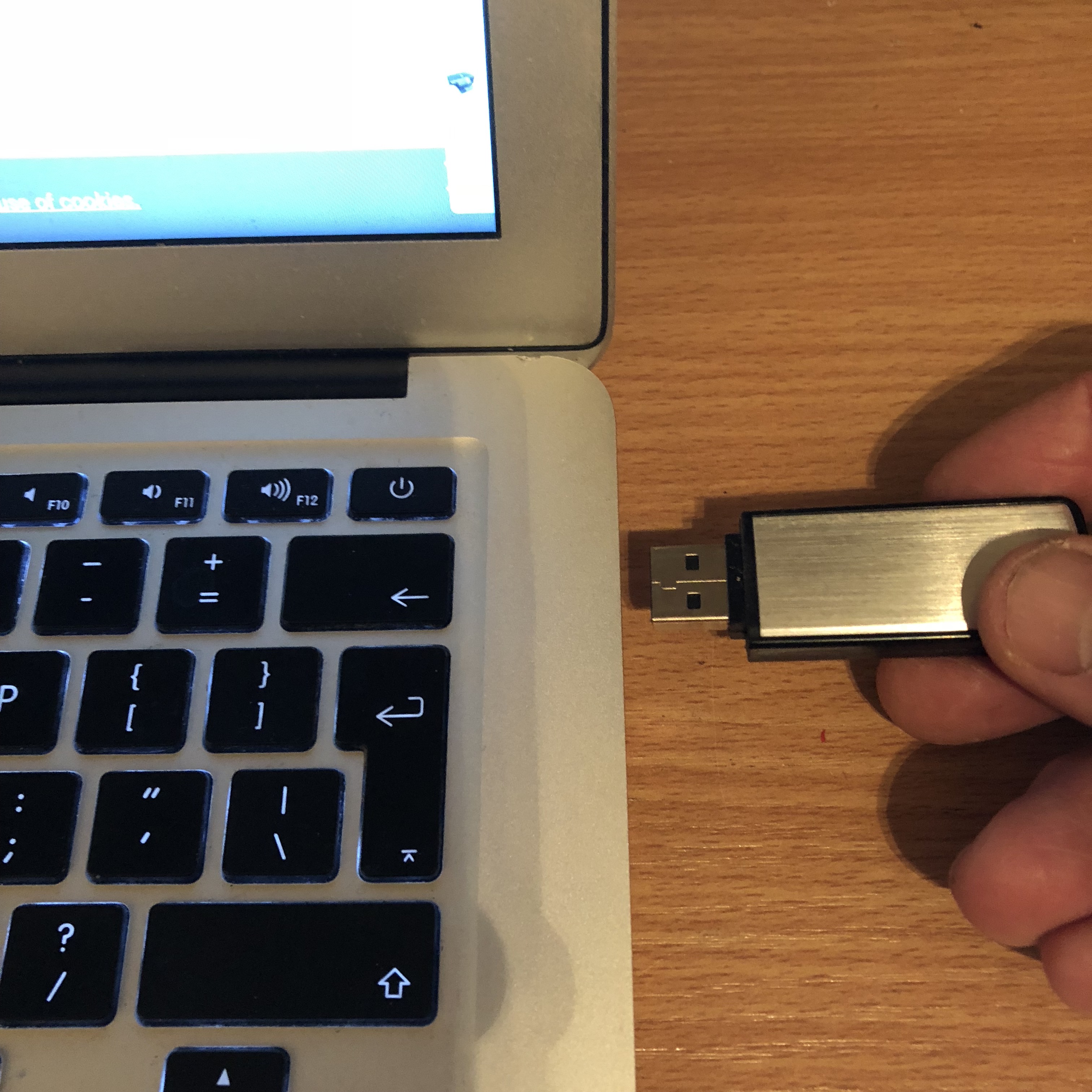
  • The gendering of electronic parts. For a very considerable time, electronic parts have been gendered.  Take, for example, male and female connectors.  This is summarised graphically in the populist but communal Wikipedia entry on the subject: “In electrical and mechanical trades and manufacturing, each half of a pair of mating connectors or fasteners is conventionally assigned the designation male or female. The “female” connector is generally a receptacle that receives and holds the “male” connector … The assignment is a direct analogy with genitalia and heterosexual sex; the part bearing one or more protrusions, or which fits inside the other, being designated male in contrast to the part containing the corresponding indentations, or fitting outside the other, being designated female. Extension of the analogy results in the verb to mate being used to describe the process of connecting two corresponding parts together”.  Not only are different electronic parts gendered, but such gendering leads to an association with heterosexual intercourse – mating.  Interestingly, in digital systems, it is usually the male part that is seen as being “active”: keyboards and mice (male) are the active elements “plugged into” a female socket in a computer.  Yet, in reality it is the processing IMG_3261power of the computer (perhaps female) that is actually most valued.  Moreover, the use of USB “sticks”, often phallic in shape, can be seen as a clear example of this male/female gendering associated with heterosexual sex.  The use of such sticks to infect computers with viruses can also, for example, be likened to the spread of sexually transmitted diseases in humans.  The shift away from the use of such male and female connectors to the increasingly common use of WiFi and Bluetooth can in turn perhaps be seen as one way through which this gendering might be being broken down, although much more research needs to be done to explore the gendering of all aspects of digital technologies.

  • The use of language in ICT4D.  Far too often the language associated with the use of technology in international development carries with it subconscious, and (hopefully) usually unintended, meanings.  In the light of the above discussion, the DIGITAL-IN-2018-003-INTERNET-PENETRATION-MAP-V1.00widely used term “Internet penetration” is, for example, hugely problematic.  The “desire” to increase Internet penetration in poorer parts of the world can thus be interpreted as a largely male, north American and European wish sexually to “penetrate” and “conquer” weaker female countries and cultures.  Whereas normally countries are “seduced” into accepting such Internet penetration, the forceful and violent approach sometimes adopted can be akin to rape, an analogy that is occasionally applied to the entire process of imperialism and its successor international development when considered to be exploitative of “weaker” countries or economies.  The implication of this is  not only that great care is needed in the choice of particular words or phrases, but also that the complex subconscious and gendered structures that underlie our understanding of technology and development need to be better understood.   For those who think this too extreme a view, why don’t we just talk about the spread of the Internet, or Internet distribution?
  • Digital technologies represented by male nouns. At a rather different level, languages that differentiate between male and female nouns often consider ICTs to be male.  Thus, a computer is un ordinateur in French, ein Computer in German, un computer in Italian and un ordenador in Spanish.  Likewise a mobile phone is un téléphone portable in French, ein Handy in German, un cellurlare in Italian, and un celular in Spanish.  Not all ICTs are male (it is, for example, une micropuce for a microchip in French), but it seems that in languages derived from Latin the majority are.  The implications of this for the mental construction of technologies in the minds of different cultures are profound.
  • Computer code: bits and qubits.  Computer code is usually based on a binary number system in which there are only two possible states, off and on, usually represented by 0 and 1.  Binary codes assign patterns of binary digits (or bits) to any character or instruction, and data are encoded into bit strings.  The notions of male and female are similarly a binary distinction.  However, it is now increasingly realised that such a simple binary division of gender and sexuality is inappropriate.  The recognition of LGBTIQ (lesbian, gay, bisexual, transgender, intersex, and questioning) identities challenges the traditional notions of binary distinctions that have long held sway in scientific thinking.  In particular, it can be seen as being closely isomorphic with many concepts of quantum computing, most notably the use of quantum bits (qubits) that can be in superpositions of states, in which any quantum states can be superposed (added together) to produce another valid quantum state.  This fluidity of gender, paralleling new notions in quantum computing, is particularly exciting, and may be one way through which the traditional maleness of ICTs and digital technologies may be fragmented.

These are but four examples of how the language of ICTs can be seen to have been traditionally gendered. They also point to some potential ways through which such gendering might be fragmented, or perhaps changed.  For some this will be unimportant, but let me challenge them.  If a largely male ICT or digital world is being constructed in part through the way that it is being spoken about (even by women), is it surprising that it is difficult to engage and involve women in the tech sector?  If we want to encourage more women into the  sector, for all the undoubted skills and benefits that they can bring, then surely we can all rethink our use of language to make the world of ICT4D less male dominated.

Finally, it is good to see that some of these issues are now being considered seriously by academics in a range of fields.  For those interested in exploring some of these ideas further, I would strongly recommend that they also read papers on gendering robots such as:

See also the following interesting article from a UK civil service (Parliamentary Digital Service) perspective on gender and language:

And thanks to Serge Stinckwich for sharing this interesting link from the BBC:


5 Comments

Filed under Gender, ICT4D, ICTs, Inequality, language

Partnering to protect children and youth online

I am so delighted to have been asked by the ITU and Child Helpline International to moderate their important session on “Partnering to protect children and youth” at the ITU’s Telecom World gathering in Bangkok on 15th November.  The abuse of children online is without question one of the darkest aspects of the use of ICTs, and it is great to see the work that so many child helplines are doing globally to counter and respond to this.

The main objective of the session is to highlight the work done by a range of ICT stakeholders to initiate and support child helplines in various parts of the world.  The session will begin with introductory remarks from Houlin Zhao (the Secretary General of the ITU) and Professor Jaap Doek (Chair of the Board of Child Helpline international).  This will be followed by a short video entitled No child should be left behind, and then Jenny Jones (Director Public Policy, GMSA) will launch new child online protection guidelines for child helplines.  Following this, Doreen Bogdan-Martin (Chief of Strategic Planning and Membership,  ITU) will provide a short overview of the joint campaign being run by the ITU and Child Helpline International to protect children and youth.  She will also outline the process whereby case studies submitted to an online consultation organised by the ITU were selected by a specialist Jury.

I will then moderate what I hope will be a lively and useful panel discussion that brings together the following people and initiatives that were selected through the above process:

  • Anthony Fitzgerald, Kids Helpline Manager, representing Optus from Australia;
  • Ola-jo Tandre, Director and Head of Social Responsibility, Telenor Group;
  • Mofya Chisala, Strategic Analyst, Zambia Information and Communication Technology Authority; and
  • Enkhbat Tserendoo from the Communications Regulatory Commission of Mongolia, Mobicom

As moderator, I hope to be drawing out general conclusions about what works, as well as the pitfalls to avoid, from the experiences of these examples of good practice from many different parts of the world.  I very much hope that this will help those in other countries who are thinking about setting up child helplines, and that these experiences will also help those already running such helplines to improve the services that they offer children and young people.

Working together in partnership, we must do much more to counter the abuse of children online, and child helplines are an important element of the overall package of initiatives that must be implemented to achieve this.

1 Comment

Filed under Development, ICT4D, ICT4D conferences, Inequality

My keynote address at CTO Forum 2013 in Abuja

The Commonwealth Telecommunications Organisation is convening its Annual Forum and Council meeting in Abuja, kindly hosted by the Federal Ministry of Communication Technology and the Nigeria Communications Commission on behalf of the Federal Government of Nigeria, on the theme of Innovation through Broadband.  This is something I care passionately about, and my team permitted me to give a keynote opening address.  Several people have already asked me for the text – and so provide an abbreviated version below, which omits the diplomatic niceties and my heartfelt thanks to all who have made this event possible.

“Over the next few days we address critically important themes, and I specifically wanted to say a few words to challenge us all now, at the beginning of this event.  Quite simply, we cannot deliver on the title of this Forum, “Innovation through Broadband” unless we actually have broadband.  Many of the CTO’s members have less than 5% of their population connected to the Internet; my own country, the UK, still has 17% of its households not connected. For those of you from the corporate sector, this is indeed a great market opportunity!  However, the case I want to put before you is that, more importantly than merely the economic agenda, is a moral agenda.  These technologies are so important, so powerful, so life-changing, that we fail our brothers and sisters if we do not ensure that they too have access to broadband.

There are three simple things I would like you to take away from what I say this morning:

  1. Boy on streetFirst, the expansion of ICTs over the last decade has made the world a more unequal place.  Put simply, these technologies are hugely powerful.  Those who have access to them, and know how to use them, can benefit immensely.  But those who do not have access, who only have an old style mobile ‘phone, who cannot afford the costs of connectivity, are becoming increasingly disadvantaged.  This is not only a moral agenda, but also a very practical social and political one, because sooner or later, the disadvantaged will – and I have no doubt about this – seek to redress the balance by taking action into their own hands, as we see across so many parts of the world today. We must, and again there has to be no doubt about this, ensure that everyone has access to the Internet.  I am delighted to see that we have a session specifically on women and children at this Forum, and that (for a change) we do indeed have a distinguished woman on the platform here at the start.  But this is not enough.  As most of you know, I champion the use of ICTs by people with disabilities – at least 10% of the world’s population; we have to do more for them, so that they too can benefit from the use of ICTs.  Access for all is therefore my first point.
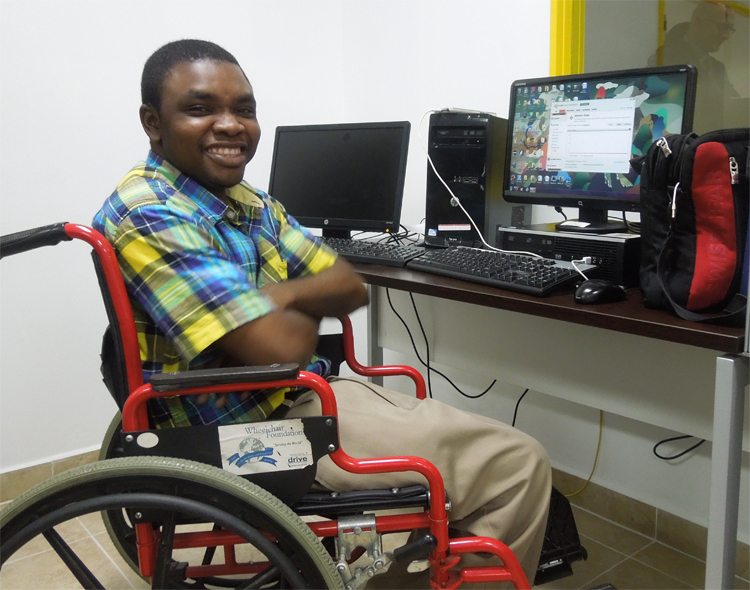
  2. Wheelchair computer technicianSecond, we need to develop new models through which such access can be provided at an affordable price to those who do not currently have access.  This is an immense challenge.  Put simply, the market will deliver solutions for many of our peoples.  We must therefore ensure that regulatory environments enable the market to deliver for the greatest number possible.  Regulators and companies must work together in an environment of trust to ensure that this happens.  However, the market will not deliver for everyone – for those living in the most peripheral rural areas, for the elderly, for those with severe disabilities.  Here, I believe passionately that we need to craft innovative multi-stakeholder partnerships to ensure such delivery.  These need to involve governments, the private sector, civil society, international organisations and bilateral donors in providing solutions that will serve the needs of everyone in our societies.  This is not easy.  Everyone talks ‘partnerships’ but few ICT4D partnerships have truly been successful.  It is here that the CTO can offer much in terms of partnership brokering, and working with all of our members to deliver such partnerships practically on the ground.  As many of you will know, broadband is one of the CTO’s six priority areas, and it is highly appropriate that we are here in Nigeria shortly after they have published their national broadband plan. … This emphasis on partnerships is also why I am so delighted that the CTO has joined the Alliance for Affordable Internet, and that they have privileged us by launching this very important initiative here in Abuja.My second point, is thus the need for carefully crafted multi-stakeholder partnerships to help deliver affordable broadband for all those for whom the market itself will not deliver solutions.
  3. children 2But third, providing broadband connectivity is only a beginning.  If we do not work with the poorest and most marginalised in our societies, truly to understand their needs, and then develop solutions that will be of explicit benefit to them, as much as to the privileged rich and elites, then the divisions within our societies will only increase yet further.  This is why this Forum focuses on “Innovation through Broadband”.  These innovations must not just be concerned with how to make yet greater profits from the telecommunications sector, or for governments to raise yet more revenue through levies and spectrum auctions – however important these are.  No.  This is only part of the story.  We are simply failing in our duties as responsible citizens, and indeed decent human beings, if we do not enable everyone to benefit from broadband: the young orphaned girl, bringing up her younger brother in the slums; the widow, gleaning an existence in the forests far from the capital city; the child soldier who had his arms lopped off and is now begging on the streets…

 My three messages are, I hope clear:

  • Enabling everyone to have access
  • The importance of multi-stakeholder partnerships to serve the most marginalised, and
  • Working with the poor and marginalised to enable them to develop solutions that are fundamentally in their interests

Distinguished colleagues and friends.  My final thanks are to you for being here.  We have a packed programme of inspirational speakers – I often think our events are far too packed!  Take time to talk with each other.  Use Wednesday morning to hold bilateral meetings and engage in productive discussions.  We are the privileged.  We are the elite – whether we like it or not.  We therefore have immense responsibilities.  The CTO has brought us all together.  But this is not enough.  I want every one of you to make a commitment – here and now in this room – not just to listen, not just to speak, but to act.  The time is almost too late.  The inequalities generated by ICTs have almost become too big for us to overcome.  Now is the time to make a difference.  Now is the time to turn rhetoric into reality.”

Leave a comment

Filed under Africa, Commonwealth, ICT4D

The Internet and Development: a critical perspective

9780199589074_140I am delighted to see Bill Dutton’s magisterial edited The Oxford Handbook of Internet Studies (Oxford University Press, 2013) just published.  This is a really excellent and authoritative review of current research on all aspects of the Internet, with some 26 chapters from leading figures in the field.  The 607 page book is divided into five main parts:

  1. Perspectives on the Internet and Web as objects of study
  2. Living in a network society
  3. Creating and working in a global network economy
  4. Communication, power, and influence in a converging media world
  5. Governing and regulating the Internet.

Two of the real strengths of the book as an introduction to the field of Internet studies are the very readable style of most of the chapters, and the comprehensive bibliographies that accompany them.

I was delighted to have been asked to write the chapter on the Internet and Development, which Bill suggested should be sub-titled “a critical perspective”!  As I write in the summary, “This chapter explores research on the complex inter-relationship between the Internet and ‘development’, focusing especially on the effects of the Internet on the lives of some of the poorest people and most marginalised communities.  Much of the literature on Information and Communication Technologies for Development (ICT4D) suggests that the Internet can indeed bring very significant benefits in the ‘fight against poverty’ (see, for example, Weigel and Waldburger 2004; Rao and Raman 2009; Unwin 2009), but other research is marshalled in this synthesis to challenge this assumption.  In essence, I argue that the expansion of the Internet serves very specific capitalist interests, and that unless conscious and explicit attention is paid to designing interventions that will indeed directly serve the needs of the world’s poorest people, then the Internet will only replicate and reinforce existing structures of dominance and control. This argument supports the need for more research that challenges taken-for-granted assumptions about the Internet and development”.

In essence, the Internet is not some benign force for good as is so often supposed.  Instead it is being shaped and reshaped by a relatively small group of people with very specific interests.  It is absolutely essential that those committed to trying to ensure that digital technologies are used to serve the interests of all peoples in the world, and particularly the poorest and most marginalised, do indeed continue to challenge many of the all too often taken for granted assumptions that the Internet is necessarily automatically a force for positive “development”.

1 Comment

Filed under Development, ICT4D

Reflections on the Internet and Development

Just finished writing a chapter about the Internet and Development, and am surprised at the vehemence of my own conclusions:

In conclusion…

Three important and inter-related conclusions can be drawn from this short overview of research on the Internet and development.  First, it must be remembered that the Internet is but one of a number of new digital ICTs.  Whilst many have given it predominance, “Internet use has spread much less rapidly in low-income countries than other ICTs – notably broadcast radio … and television and, more recently, mobile telephony” (Souter 2007: 33).  As Souter (2007: 33) goes on to emphasise, ultimately “the potential of the Internet can only be achieved if effective access is available”, and this requires the availability of the ICT infrastructure and reliable electricity at an affordable price for the poor, and that it provides relevant information that is not available more cheaply through other means.  If the world’s poor are truly to benefit from the Internet, then far more attention needs to be paid explicitly to ways in which they can indeed use it to their real advantage, thereby enabling them to benefit at the expense of the world’s rich. Only then will relative poverty be reduced.

Second, the success of the Internet in delivering development objectives depends very much on how such objectives are defined.  Much research and practice has focused on the hegemonic notion that development is about economic growth, and there are convincing arguments that the Internet can indeed contribute to such an objective.  However, even here, it is evident that the presence of the Internet alone will not in most instances contribute to the economic well-being of the poorest and most marginalised. From a relativist perspective, focusing particularly on social equality, the evidence is far more uncertain.  Numerous studies (Huyer and Hafkin 2007), for example, show how women in patriarchal societies are increasingly marginalised by their exclusion from access to the Internet.  Likewise, if development is seen as being concerned with freedoms, then the ambivalent character of the technology of the Internet is once more revealed.

A final important characteristic of the Internet in the context of development has been its dehumanising and alienating effects.  Just as factory production in the 19th century made humans appendages of machines (Lukács 1923), so too in the 21st century has the Internet made people ever more the appendages of computers.  In so doing, users are becoming further alienated from the physical world of nature and creativity, and ever more constrained by those who design the virtual realities of which we are now part.  What is remarkable about this is that in the name of progress, such virtual worlds are accepted and applauded as being ‘good’ and where the future lies (Carr 2008). Such arguments need to be strongly countered if we are to retain the very essence of what makes us human.  By enabling people to work away from their offices, by dramatically reducing the constraints of time and space on production, consumption and exchange, the Internet has enabled owners of capital to exploit their workforces far more efficiently and effectively than ever before, whilst at the same time making them think that they are enjoying it.  Imagine a world where one was not expected to answer the hundred or so e-mails that arrive every day, and where one actually had time to think, be creative and enjoy the physical experience of being human!  Paradoxically, the poor and marginalised, those without access to the Internet, may ultimately actually be very much richer than the bankers, traders and business executives who have become the new proletariat of the digital age, quite simply because the poor without access to the Internet are not bound by its dehumanising, unspoken and constraining rules.”

I guess it is now time for me to take a digital break!

1 Comment

Filed under ICT4D

Are social networking sites encouraging infantilism?

A recent report in the Guardian has highlighted the lack of research and understanding of the impact of social networking sites such as Facebook, Bebo and Twitter.  The report comments that:

“Social network sites risk infantilising the mid-21st century mind, leaving it characterised by short attention spans, sensationalism, inability to empathise and a shaky sense of identity, according to a leading neuroscientist. The startling warning from Lady Greenfield, professor of synaptic pharmacology at Lincoln college, Oxford, and director of the Royal Institution, has led members of the government to admit their work on internet regulation has not extended to broader issues, such as the psychological impact on children. Greenfield believes ministers have not yet looked at the broad cultural and psychological effect of on-screen friendships via Facebook, Bebo and Twitter. She told the House of Lords that children’s experiences on social networking sites ‘are devoid of cohesive narrative and long-term significance. As a consequence, the mid-21st century mind might almost be infantilised, characterised by short attention spans, sensationalism, inability to empathise and a shaky sense of identity’.”

3 Comments

Filed under Ethics, Social Networking