
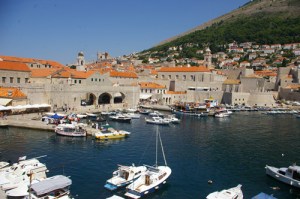
 So, I have been hiding away in the Dalmatian coast of Croatia for the last week – and greatly enjoying the amazing coastal scenery!
Dubrovnik – despite the thousands of tourists – has to be one of the most beautiful cities in Europe. The opportunity to reconstruct it after the Serbian bombings of 1991-92, when an estimated 68% of the buildings in the old city were damaged, has been grasped imaginatively and effectively – the walk around the city walls is truly magnificent.
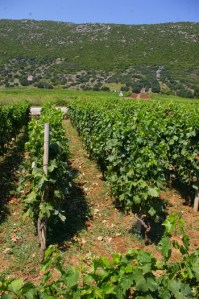 I was hoping to explore some of Croatia’s vineyards and wineries during our stay – but with prices of most of the ‘quality’ wines for sale being between$30 and $50 a bottle, I swiftly changed my mind! To be sure, it is indeed possible to find some reasonable wines at much less than this, but I cannot imagine who is willing to pay such prices – perhaps there are far too many over-rich tourists! If Croatia wants to establish itself as a reputable wine-making country, it needs to start making better value wines!
The food was also, sadly, a bit disapponting – tasty enough, but we did not manage to find any restaurants that really impressed.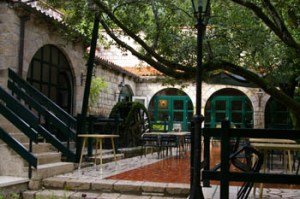 The best – and reasonably priced – was Konavoski Dvori near Gruda to the south of Dubrovnik. The restaurant is in a restored watermill, and on a hot August day the swift-flowing river that runs past the dining tables provides a very welcome cool breeze! Meat is cooked in an iron bell on charcoal – which keeps it succulent and moist. Other restaurants worth visiting include:
- Dubrovnik: Restaurant Orhan (Od Tabakarije 1) – situated at the foot of the Lovrjenac tower on the edge of a small bay some 200m away from the walls of the old city. Good seafood salads and grilled meats
- Trogir: Alka restaurant (Obrov 10) – serving customers in the centre of the old town for 40 years, this restaurant has particularly good tradtional Dalmatian beef pašticada (marinated in vinegar, lemon and rosemary, and then cooked wth carrots, cloves, muscat nuts, red wine and prosciutto)
 Thanks to
  As for wine, Ticino often suffers from rain and dampness in October which has a tendency to cause rot – but sadly not of the noble kind – the Botrytis cineria here in Ticino is far from benevolent! Hence, grape growers have been keen to plant early ripening varieties, most notably Merlot. In recent years, these red grapes have also been used to make the white wine Bianco di Merlot, which can have complexity and subtle flavours – when well-vinified they have a fresh acidity that goes really well with the local food.
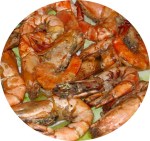 available on the wine lists. Here are just a few of my favourite places to eat in Maputo:
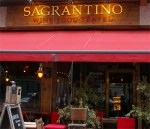 Walking through Berlin, I came across a restaurant named after one of my favourite grape varieties (Sagrantino) and apparently serving wines made by one of my favourite producers (


 Tim Unwin's Blog