
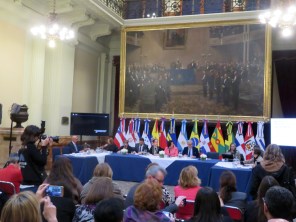
Ministers and Secretaries of Culture Forum
It was a real privilege to have been invited to participate in the International Federation of Library Associations and Institutions (IFLA) Forum of Ministers and Secretaries of Culture of Latin America and the Caribbean on 22nd May, and to give a keynote address at its 2019 President’s meeting which was on the theme of Motors of change: libraries and sustainable development on 23rd May, both in Buenos Aires. These meetings provided a valuable opportunity for those actively involved in the role of libraries in contributing to the development of Latin American and Caribbean countries to share ideas and experiences, and agree on ways through which their work can be further enhanced.
The Forum of Ministers and Secretaries of Culture was held in the very impressive Congress of the Argentine Nation, and provided an excellent opportunity for senior

IFLA President and Secretary General
government officials from across the region to share presentations and discuss the theme of Libraries, Access to Information and the Sustainable Development Goals. Welcoming participants, IFLA President Glòria Pérez-Salmerón reminded them of the theme of her presidency – Motors of Change – and underlined the difference that libraries can make, for so many people, in so many ways. IFLA Secretary-General Gerald Leitner stressed to the ministers of the power they had in their hands, and made the case for ensuring that they – and libraries – are included fully in national development plans. A key outcome of the meeting was the signing of the Buenos Aires Declaration which affirmed participating governments’ commitment to the UN 2030 Agenda, and to the power of libraries and access to information to achieve it. The meeting also saw the launch of the second edition of the Development and Access to Information Report produced by IFLA and the Technology and Social Change Group (TASCHA) at the University of Washington, focusing especially on SDG4 (education), SDG8 (decent work and economic growth), SDG10 (inequalities), SDG13 (climate chage) and SDG16 (peace, justice and strong institutions), and edited by Stephen Wyber and Maria Garrido.
In the evening, there was a Cultural Gala in the Public Hall of the Library of the National Congress, which consisted of three main elements:
-

Nacha Guevara
A dance performance in two parts by the Arte Ballet Compañía: the Don Quijote suite, and Tiempos de Tango, with ideation, choreography and direction by María Fernanda Blanco.
- Music played by the Chamber Orchestra of the Honorable Argentine Chamber of Deputies with a repertoire dedicated to the Argentine composer Astor Piazzolla, featuruing especially the saxophone soloist Jorge Retamoza.
- A wonderful closing sequence of songs by the famous Argentine artist Nacha Guevara.
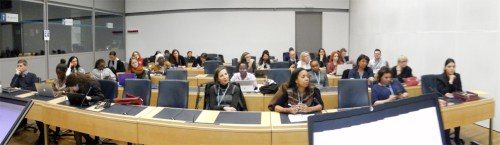
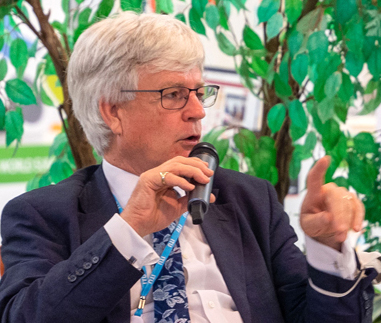
The 2019 President’s Meeting on 23rd May built on the themes of the Development and Access to Information Report, and began with a session of welcoming speeches by IFLA President Glòria Pérez-Salmerón, IFLA Secretary-General Gerald Leitner, Alejandro Lorenzo César Santa (General Coordinating Director, Library of the National Congress), and Rene Mauricio Valdes (United Nations Resident Coordinator, Argentina). This was followed by my keynote on Libraries and Sustainable Development: challenges of inequality in a digital world (.pdf of slide deck), which:
 Challenged those who believe that the SDGs will deliver on their aspirations;
- Highlighted the role of digital technologies in leading to increasing inequalities;
- Explored issues around power, knowledge and content;
- Advocated for the important role that libraries can serve as open places and communal resource centres; and
- Concluded by encouraging participants to have the will to make a difference.
In the afternoon, there were three sets of discussions and presentations by the authors of the Development and Access to Information Report and others on the following themes:
- A Library Response to Global Challenges: What Can Libraries Contribute to International Efforts to Tackle the Issues that Affect the Planet?
- Driving Development at a Local Level: Libraries Making a Difference to People’s Lives
- Improving Decision-Making and Accountability: Libraries as Pillars of Democracy and Good Governance

Our great tango teachers!
These two days of lively and interesting discussion provided a wealth of ideas for all those participating from governments and libraries to implement on return to their own countries. It was also a very valuable opportunity to build a network of people working at the interface between libaries and international development, especially in Latin America and the Caribbean. Very many thanks are due to the hard work and hospitality of colleagues from IFLA and our Argentian hosts. One of my lasting memories will definitely be learning to dance the tango – for which many thanks to our brilliant teachers!
 power of the computer (perhaps female) that is actually most valued. Moreover, the use of USB “sticks”, often phallic in shape, can be seen as a clear example of this male/female gendering associated with heterosexual sex. The use of such sticks to infect computers with viruses can also, for example, be likened to the spread of sexually transmitted diseases in humans. The shift away from the use of such male and female connectors to the increasingly common use of WiFi and Bluetooth can in turn perhaps be seen as one way through which this gendering might be being broken down, although much more research needs to be done to explore the gendering of all aspects of digital technologies.
 It was an enormous privilege to work with David Hollow, Meghan Brugha and Mark Weber last year on a report for Save the Children International about the future of learning and technology in deprived contexts. I am delighted that this has now been published in a slightly abridged version (
 We concluded that nine broad changes in basic education are likely to be apparent by 2025: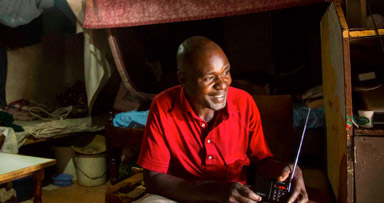
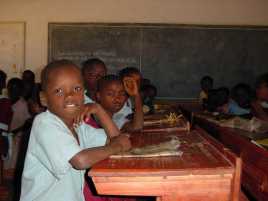 First, the term EdTech places the emphasis on the technology rather than the educational and learning outcomes. Far too many initiatives that have sought to introduce technology systematically into education have failed because they have focused on the technology rather than on the the education. The use of the term EdTech therefore places emphasis on a failed way of thinking. Technology will only be of benefit for poor and marginalized people if it is used to deliver real learning outcomes, and this is the core intended outcome of any initiative. It is the learning that matters, rather than the technology.
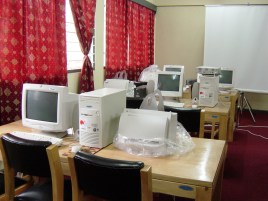 Second, it implies that there is such a thing as Educational Technology. The reality is that most technology that is used in schools or for education more widely has very little to do specifically with education or learning. Word processing and presentational software, spreadsheets, and networking software are nothing specifically to do with education, although they are usually what is taught to teachers in terms of IT skills! Such software is, after all, usually called Office software, as in Microsoft Office, or Open Office. Likewise, on the hardware side, computers, mobile phones and electronic whiteboards are not specifically educational but are rather more general pieces of technology that companies produce to generate a profit. Learning content, be it open or proprietary, is perhaps the nearest specifically educational technology that there is, but people rarely even think of this when they use the term EdTech!
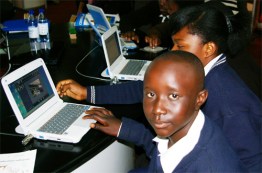 Third, it is fascinating to consider why the term EdTech has been introduced to replace others such as e-learning or ICT for education (ICT4E) which clearly place the emphasis on the learning and the education. The main reason for this is that the terminology largely reflects the interests of private sector technology companies, and especially those from the US. The interests underlying the terminology are a fundamental part of the problem. EdTech is being used and sold as a concept primarily so that companies can sell technology that has little specifically to do with education, and indeed so that researchers can be funded to study its impact!

 Tim Unwin's Blog