Category Archives: Africa

Transform Africa 2013 and a celebration of Rwanda

I had the great privilege – especially as a white Yorkshireman – to be invited to chair the session on Smart Education at Transform Africa 2013 held in Kigali, Rwanda – a conference led by Africans, for Africans.  It is some five year since I was last in Rwanda, and the changes that have been made in the country over this time, especially in the field of ICTs, are palpable.

It was really excellent to hear seven Presidents of east African countries champion the potential of ICTs to transform Africa, whilst also being realistic about the challenges that still remain in using them effectively to contribute to the social, political and economic development of their countries.

It was also good to experience some of the musical heritage of Rwanda – and even to have the chance of learning yet another different style of African dance!  This was especially so at the launch of Rwandapedia this evening – an excellent resource for those wishing to learn more about Rwanda’s turbulent history over the last 20 years or so.  Congratulations, too, to the Panorama Restaurant at the Des Mille Collines for what has to be one of the best dinners I have recently had in Africa!

The photos below catch but a glimpse of some of my experiences here over the last few days.

This slideshow requires JavaScript.

1 Comment

Filed under Africa, Commonwealth, Development, Education, ICT4D

My keynote address at CTO Forum 2013 in Abuja

The Commonwealth Telecommunications Organisation is convening its Annual Forum and Council meeting in Abuja, kindly hosted by the Federal Ministry of Communication Technology and the Nigeria Communications Commission on behalf of the Federal Government of Nigeria, on the theme of Innovation through Broadband.  This is something I care passionately about, and my team permitted me to give a keynote opening address.  Several people have already asked me for the text – and so provide an abbreviated version below, which omits the diplomatic niceties and my heartfelt thanks to all who have made this event possible.

“Over the next few days we address critically important themes, and I specifically wanted to say a few words to challenge us all now, at the beginning of this event.  Quite simply, we cannot deliver on the title of this Forum, “Innovation through Broadband” unless we actually have broadband.  Many of the CTO’s members have less than 5% of their population connected to the Internet; my own country, the UK, still has 17% of its households not connected. For those of you from the corporate sector, this is indeed a great market opportunity!  However, the case I want to put before you is that, more importantly than merely the economic agenda, is a moral agenda.  These technologies are so important, so powerful, so life-changing, that we fail our brothers and sisters if we do not ensure that they too have access to broadband.

There are three simple things I would like you to take away from what I say this morning:

  1. Boy on streetFirst, the expansion of ICTs over the last decade has made the world a more unequal place.  Put simply, these technologies are hugely powerful.  Those who have access to them, and know how to use them, can benefit immensely.  But those who do not have access, who only have an old style mobile ‘phone, who cannot afford the costs of connectivity, are becoming increasingly disadvantaged.  This is not only a moral agenda, but also a very practical social and political one, because sooner or later, the disadvantaged will – and I have no doubt about this – seek to redress the balance by taking action into their own hands, as we see across so many parts of the world today. We must, and again there has to be no doubt about this, ensure that everyone has access to the Internet.  I am delighted to see that we have a session specifically on women and children at this Forum, and that (for a change) we do indeed have a distinguished woman on the platform here at the start.  But this is not enough.  As most of you know, I champion the use of ICTs by people with disabilities – at least 10% of the world’s population; we have to do more for them, so that they too can benefit from the use of ICTs.  Access for all is therefore my first point.
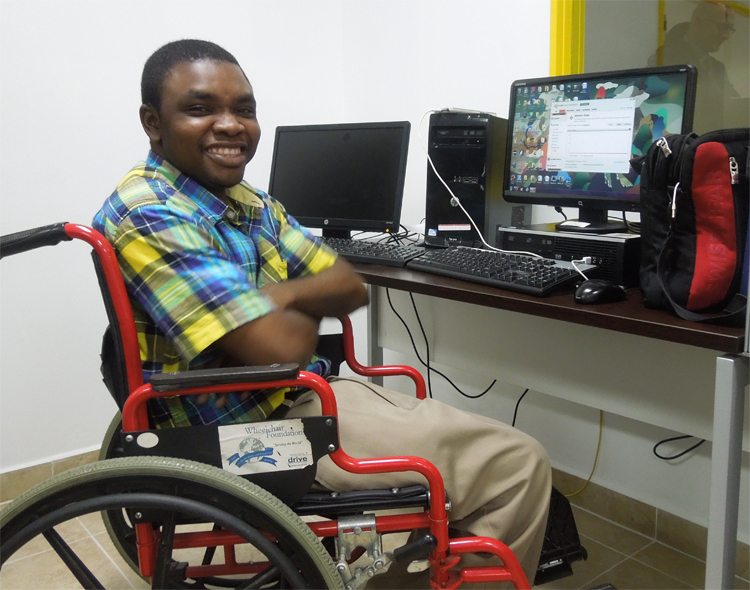
  2. Wheelchair computer technicianSecond, we need to develop new models through which such access can be provided at an affordable price to those who do not currently have access.  This is an immense challenge.  Put simply, the market will deliver solutions for many of our peoples.  We must therefore ensure that regulatory environments enable the market to deliver for the greatest number possible.  Regulators and companies must work together in an environment of trust to ensure that this happens.  However, the market will not deliver for everyone – for those living in the most peripheral rural areas, for the elderly, for those with severe disabilities.  Here, I believe passionately that we need to craft innovative multi-stakeholder partnerships to ensure such delivery.  These need to involve governments, the private sector, civil society, international organisations and bilateral donors in providing solutions that will serve the needs of everyone in our societies.  This is not easy.  Everyone talks ‘partnerships’ but few ICT4D partnerships have truly been successful.  It is here that the CTO can offer much in terms of partnership brokering, and working with all of our members to deliver such partnerships practically on the ground.  As many of you will know, broadband is one of the CTO’s six priority areas, and it is highly appropriate that we are here in Nigeria shortly after they have published their national broadband plan. … This emphasis on partnerships is also why I am so delighted that the CTO has joined the Alliance for Affordable Internet, and that they have privileged us by launching this very important initiative here in Abuja.My second point, is thus the need for carefully crafted multi-stakeholder partnerships to help deliver affordable broadband for all those for whom the market itself will not deliver solutions.
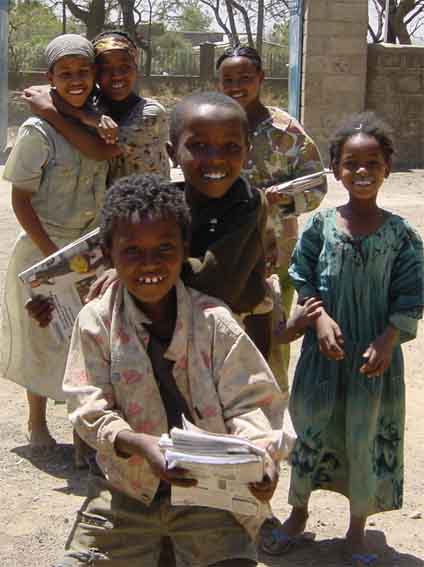
  3. children 2But third, providing broadband connectivity is only a beginning.  If we do not work with the poorest and most marginalised in our societies, truly to understand their needs, and then develop solutions that will be of explicit benefit to them, as much as to the privileged rich and elites, then the divisions within our societies will only increase yet further.  This is why this Forum focuses on “Innovation through Broadband”.  These innovations must not just be concerned with how to make yet greater profits from the telecommunications sector, or for governments to raise yet more revenue through levies and spectrum auctions – however important these are.  No.  This is only part of the story.  We are simply failing in our duties as responsible citizens, and indeed decent human beings, if we do not enable everyone to benefit from broadband: the young orphaned girl, bringing up her younger brother in the slums; the widow, gleaning an existence in the forests far from the capital city; the child soldier who had his arms lopped off and is now begging on the streets…

 My three messages are, I hope clear:

  • Enabling everyone to have access
  • The importance of multi-stakeholder partnerships to serve the most marginalised, and
  • Working with the poor and marginalised to enable them to develop solutions that are fundamentally in their interests

Distinguished colleagues and friends.  My final thanks are to you for being here.  We have a packed programme of inspirational speakers – I often think our events are far too packed!  Take time to talk with each other.  Use Wednesday morning to hold bilateral meetings and engage in productive discussions.  We are the privileged.  We are the elite – whether we like it or not.  We therefore have immense responsibilities.  The CTO has brought us all together.  But this is not enough.  I want every one of you to make a commitment – here and now in this room – not just to listen, not just to speak, but to act.  The time is almost too late.  The inequalities generated by ICTs have almost become too big for us to overcome.  Now is the time to make a difference.  Now is the time to turn rhetoric into reality.”

Leave a comment

Filed under Africa, Commonwealth, ICT4D

Barriers to learning through mobile devices in Africa

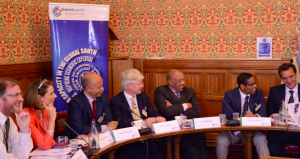
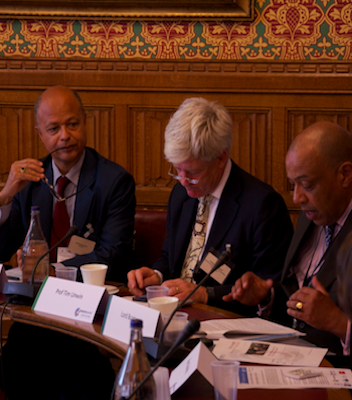
Screen-Shot-2013-06-07-at-17.36.39-300x159I had the pleasure of participating in the Planet Earth Institute‘s discussion on mobile technology for education in Africa, held on 5th June at the House of Lords.  It’s interesting how such occasions, where one has to speak on the spur of the moment about important issues, provide a spur for innovative and creative thinking.  The mix of the people, and the sharing of ideas really can generate new thoughts.

The main point that I tried to convey throughout the event was that it is the learning that matters.  Far too many initiatives are technology-led, rather than needs driven.  Hence, mobile devices are absolutely not the solution for African education, although they can indeed help to deliver certain new kinds of learning opportunity.  After all, as I mentioned, many years ago I engaged in mobile learning when I read books on long car journeys!

Screen-Shot-2013-06-07-at-17.31.05At one point, we were asked to think about the barriers preventing the spread of m-learning in Africa, and I want here to expand a little on the five ‘Cs’ that I came up with.  To be sure, they are a little contrived, but I do think that if these barriers can be overcome, then some real progress can be made:

  1. Connectivity.  To me, this is one of the biggest challenges for any ‘mobile-‘ initiative.  Certainly people have developed simple SMS based learning solutions, and games that can function on basic phones and devices, but the difference between these and what can be done on smart-phones is huge.  Smart-phones enable engagement with the wealth of resources on the web, and offer a completely different learning experience for people of all ages and backgrounds – if they can afford them (Cost!).  So, providing mobile broadband solutions that everyone can access seems to me to be the most important challenge facing those who want to deliver high quality learning experiences through mobile devices.  Hence, initiatives such as the work of the Broadband Commission and the Alliance for the Affordable Internet are of particular importance – but we must turn the rhetoric into reality!  That’s one reason why the Commonwealth Telecommunications Organisation has placed such emphasis on the importance of mobile broadband in its current strategic plan.
  2. Charging (electricity).  By this, I mean the importance of ensuring that it is easy and cheap to charge mobile devices everywhere.  Electricity is absolutely essential for all digital technologies, and is all too often insufficiently considered when developing such initiatives.  For those off the main grid, it is essential that simple, cheap and accessible means of recharging devices are developed and shared widely across the continent. Likewise, developing batteries that last much longer than at present is also an important consideration.  My experiences in 2011 in rural China have given me lots of ideas about how this can be achieved – and where there are supplies of running water I have been very impressed with some of the micro-hydro initiatives that have been developed in south-east Asia.
  3. Communication rather than content.  I have often written about this, but it seems to me that the really innovative thing about mobile-phones is that they enable entirely new ways of communication.  Yet, far too often they are seen primarily as devices to supply/enable content consumption.  I believe passionately that learning should not simply be about learning and regurgitating – yet our education systems seem to focus more and more on encouraging people to take on board accepted ‘truths’.  Learning, should be about thinking for oneself, and coming up with new solutions to old problems!  This is often best achieved through communication and interaction – the debating of ideas – and not just through digesting existing knowledge.  Far too often, digital technologies associated with learning have reinforced regurgitation, rather than encouraging new ways of thinking.  Hence, I want to shift the balance towards using devices for communication – they are, after all, mobile phones – rather than just for content consumption.
  4. Calculating (effective monitoring and evaluation).  This is a bit contrived, but I could not think of a better ‘C’ for ‘monitoring and evaluation’!  By ‘calculating’, I mean that we need to calculate the impact of our initiatives on learning achievements.  Although many people talk about the importance of monitoring and evaluation, there is far too little good and effective work in this area.  If we do not understand the real effects, including the unintended consequences, of the use of mobile devices in learning, then we cannot really determine how best to implement initiatives at scale.  We must also be much more open about our failures so that others can learn from our experiences.  Hence, the lack of quality monitoring and evaluation is a real barrier.
  5. Commitment.  This is hugely important.  There must be real commitment to using mobile devices effectively for learning, rather than simply using content provision as a means of selling more mobile devices!  I fear that all too often, ‘m-‘ initiatives are driven  too much by commercial interests, often in alliance with those who see ICTs as some kind of silver bullet that will transform society for the better, rather than by the real health, learning or governance needs and aspirations of people.

At the end, I was asked by Lord Boateng to sum up my thoughts about barriers, and simply said that the biggest barrier of all was our imagination!  If we really focus on the learning, and develop innovative solutions whereby everyone can use mobile devices to enhance their lives, wherever they are living, then, and only then, can we talk about real m-development.

1 Comment

Filed under Africa, Higher Education, ICT4D

Drought, poverty and famine in East Africa

Am I the only one who feels distinctly uneasy about the rhetoric surrounding the impending famine in East Africa?  Of course, we should do everything we can to sustain those who are starving.  Of course the images in our media of starving mothers and dying children are harrowing, but that it was they are intended to be.

I am minded of discussions that I once participated in at the offices of a major bilateral donor on the subject of their new programme of planned support for Ethiopia.  This was almost a decade ago, but I recall being shocked at how little support was intended for simple things such as the creation of effective small scale irrigation systems and grain storage facilities.  Drought happens.  It always has, and it always will.  Fluctuations in climate occur regardless of any human induced climate change.  Hence, programmes of development assistance should be doing all that they can to ensure that food production in poor countries is increased and that surpluses are retained to enable governments to withstand the droughts that will always come again.

According to DFID’s web-site the current top priorities for  its funding for Ethiopia are:

  • Addressing the underlying causes of poverty and fragility through new support for wealth creation, peace and security and tackling the effects of climate change
  • Ensuring better access to basic services, enabling millions of people to go to school, drink clean water and access basic health care”

Note that there is nothing here about agricultural production or food security.  Other donors are little different.  Might not more attention to sustaining effective agricultural production so that the devastating impact of drought could be mitigated have been sensible, so that the misery and suffering of so many poor people could have been reduced?  If some of the large sums of money now being spent on famine relief had been spent instead on effective drought mitigation methods, the severity of the crisis could have been reduced.

But this is not just the fault of donor policy.  The governments of the affected countries must also take their share of the blame.  Lawlessness, war, violence and high levels of military expenditure do not make for a stable background against which effective rural development programmes can be implemented. Piracy on the high seas is not a particularly good means of encouraging sustained agricultural production that could reduce the impact of drought.  For too long, governments of some poor countries have continued on development strategies that do not sufficiently address the needs of the poor, relying on the richer countries of the world to come to the rescue when their peoples are starving.  There will come a time when taxpayers in countries providing development assistance will start to realise just how inappropriate much so-called development expenditure really is, and ask questions about the continuing sense of helping such governments with continuing ‘aid’.  DFID is spending £331 million a year on average in support of the Ethiopia government until 2015.  This aid has clearly had insufficient impact on the ability of the country to prevent mass hunger.

For how long will people continue to respond to the media images pulling at our heart-strings to persuade us to fund the errors in development policy that mean that so many people in East Africa are now starving? The impending famine is not ultimately caused by drought, but rather by the policies of national governments, both donors and recipients of development assistance alike. The time has come for a radical re-think of such development assistance.  The time has also come for people to demand real and effective change from their governments in poor countries, so that the impact of drought will never again be felt in the way that the poor of East Africa are now suffering.

Leave a comment

Filed under Africa, Development

New ITU report on the role of ICTs in advancing growth in the least developed countries

The ITU has just published a very important report on the role of ICTs in enhancing development in the least developed countries.  I was privileged to have been asked to write the foreword, in which I made the following comments:

  • “This important ITU report focuses explicitly on the experiences of people living in the world’s ‘Least Developed Countries’ (LDCs). It addresses not only how and why ‘outsiders’ have been eager to offer new ICTs as a means to encourage their ‘development’, but also how technical innovation can occur in some of the poorest countries of the world. Above all, it suggests that there is nothing automatic about the potential contribution of ICTs to ‘development’ processes, however these are defined. If marginalised people and poor countries are to take advantage of ICTs in transforming their fortunes, then specific efforts need to be made to address their needs and aspirations. The market by itself will not deliver on the information and communication requirements of the poorest and most marginalised people and communities”, and
  • “This exciting report points in many directions. It highlights both the successes and the failures of ICT initiatives and developments over the last decade, particularly with respect to LDCs. It emphasises the many challenges that still need to be overcome before we can claim that these technologies really have had the equalising benefits that many attendees at WSIS had hoped for. However, above all, it provides suggestions for innovative ways forward through which some of the poorest countries in the world can grasp the potential of ICTs to enhance the lives of their peoples”.

The charts and graphs contained within the volume provide very important evidence that many of the poorest countries and people in the world have not yet benefited from the potential of ICTs, and that very substantial effort is needed to ensure that ICTs do not actually lead to further increases in the differences in access between the world’s richer and poorer people.  This is essential reading for all involved in ICT4D.

2 Comments

Filed under Africa, Development, ICT4D

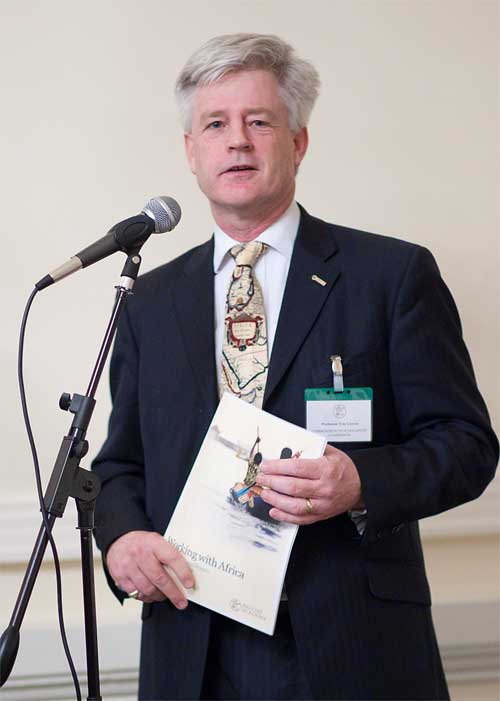
Speech at the launch of the British Academy’s Working with Africa Report

Following Professor Graham Furniss’s opening remarks, I was invited to speak in my role as Chair of the Commonwealth Scholarship Commission in the UK at the launch of the British Academy’s new report entitled “Working with Africa: Human and Social Science Research in Action” on 3rd March 2011.  My  short speech outlined the importance of the British Academy’s funding programmes, the difficulties facing African universities and academics, and the ways through which the Commonwealth Scholarship Commission (CSC) is seeking to support them in partnership with like-minded organisations.

I began by thanking  Graham Furniss, not only for his work at the British Academy in driving forward many of their African initiatives, but also for joining the CSC as a new Commissioner.  I then emphasised the quality of the research featured in Working with Africa and thoroughly recommended it to the audience as a good read.  I highlighted in particular the value of the British Academy’s past small grants programme, noting that small amounts of funding can go a long way in supporting outstanding and innovative research in the humanities and social sciences.  This is particularly true for UK researchers near the beginnings of their careers, but it is also very important for establishing networks and partnerships as exemplified by the Academy’s support for research in Africa.

Despite such funding, I emphasised the many challenges faced by African researchers, and the very difficult financial, infrastructural and capacity issues that African universities had to overcome.  I argued  that years of global emphasis on primary education in Africa had left the higher education sector in a very diminished state.  I also made the point that whilst much international emphasis is placed on support for scientific research designed to reduce poverty, research in the social sciences and humanities is at least as, if not more, important.  Such research helps develop understandings of critical issues concerned with governance, social equality, the law, cultural diversity and economic change.

Finally, I highlighted the critical role of the Commonwealth Scholarship Commission in supporting research and professional development in Africa.  The last decade has seen a transformation in the Commission’s activities, so that far from being a traditional awarder of basic scholarships, it now provides seven different kinds of award, including distance-based studentships as well as professional and academic fellowships.  Moreover, evidence from the CSC’s monitoring and evaluation programme clearly indicates the value that these have in terms of development impact.  The Commission is delighted that it continues to have the strong support of the UK government, and that DFID will be providing some £20 million a year towards its programme of awards in developing countries in the 2011-15 period.  To be effective, though, it is important that we work together in partnership.  I concluded by reiterating my thanks to the British Academy and also emphasising the need for the Commission and the Academy to work closely together in the future to achieve our shared objectives of enhancing scholarship in African universities.

Leave a comment

Filed under Africa, Higher Education, Universities

Social networks, digital technologies and political change in North Africa

Much has been written about the potential of new ICTs, and particularly mobile technologies and social networking software, to transform political and social systems.  A fundamental question that underlies all work in ICT4D is whether new ICTs can indeed be used by the poor to overthrow oppressive regimes, or whether, like other technologies before them, ICTs are used primarily by the rich and powerful to maintain their positions of power.  Until very recently, it seemed that despite the potential of ICTs to undermine dominant political structures, most attempts to do so have been ruthlessly crushed.  The ruling regime in Iran was thus able to suppress the ‘Twitter Revolution’ of 2009-10, and the Burmese government likewise maintained its grip on power despite extensive use of mobile ‘phones and the Internet during protests in 2007.

Recent events in North Africa, with the overthrow of President Ben Ali in Tunisia and the continuing protests against President Mubarak in Egypt, have widely been attributed in considerable part to the agency of mobile ‘phones and the use of social networking environments over the Internet.  Whilst it is too early fully to judge their importance in fueling such political protests, the following reports provide evidence in support of such claims:

Tunisia

Egypt

Wider ramifications

Much research needs to be undertaken on the real role of ICTs in these ongoing political processes.  What seems apparent, though, is that many participants do indeed believe that these technologies are helping them achieve their objectives.

5 Comments

Filed under 'phones, Accessibility, Africa, Development, Ethics, Social Networking

Development as ‘economic growth’ or ‘poverty reduction’

Will economic growth lead to poverty reduction?  I believe passionately that the market will never serve the interests of the poorest and most marginalised.  This seems to me to be so clear and obvious that it scarcely needs defending!  However, I am becoming increasingly worried that such opinions are very much in the minority. The dominant, hegemonic view amongst most of those working in the field of development really does seem to be that economic growth will indeed eliminate poverty.

Following my recent keynote at m4Life on 28th October, at which I argued that we need to develop ways in which mobiles can be used to support marginalised groups, such as people with disabilities, I was very strongly challenged by an African colleague, whose views I respect.  In essence, she accused me of being a typical western academic who does not really understand Africa, and that if I did I would know that most Africans wanted economic growth. By focusing on the poorest, she suggested that my views were tantamount to arguing that Africans should remain poor. I felt deeply hurt by these accusations, and am still smarting from their vehemence some two weeks later! I actually don’t know why, they hurt so much, but perhaps it is because I have elsewhere argued strongly that Africa is indeed rich, and that we need to help build on its richness rather than always describing it as being poor!  The irony is that the paper I have written on this has continually been rejected by academic journals – quite possibly because it too does not conform to accepted dogma!

I clearly need to learn to express my arguments more convincingly.  This is a brief attempt to do so in the form of some basic principles:

  • The potential for inequality to increase is inherent within all economic growth.
  • Economic growth, defined in absolute terms, cannot therefore eliminate poverty (see my critique of Jeffrey Sachs, for example, in ‘No end to poverty’)
  • If economic growth proceeds unchecked, it will inevitably lead to increased inequality that will ultimately fuel social and political unrest at a range of scale
  • A fundamental role of states is thus to intervene in the market to ensure that the poorest and most marginalised are not excessively disadvantaged.
  • Given that the market serves the interests of the majority of people, it is incumbent on those who care about reducing inequalities specifically also to address the needs and interests of the poor.
  • Such an argument can be justified both on moral grounds (that it is just), and also on socio-political grounds (to reduce potential violence)
  • With reference to mobile technologies, therefore, all I was doing in my keynote was to argue that companies, entrepreneurs, app developers, and all those claiming to use ‘mobiles for development’ should seek to address the needs of the poor and marginalised, alongside those of global corporations and their shareholders.
  • This is premised upon a belief that ‘development’ is about rather more than just economic growth, and includes notions of equality of opportunity and social justice.

These arguments are developed more fully in:

15 Comments

Filed under Africa, Development, Ethics, ICT4D, Photographs

ICTs and Special Educational Needs in Ghana

Godfred Bonnah Nkansah and I are delighted that our paper on the contribution of ICTs to the delivery of special educational needs in Ghana has just been published in Information Technology for Development, 16(3), 2010, 191-211. The paper not only provides rich empirical evidence of the usage and potential of ICTs in the special educational needs sector in Ghana, but also argues strongly that much more attention should be paid to the positive benefits that ICTs can bring to the lives of people with disabilities across Africa.

Abstract
This paper explores three main issues in the context of Ghana: constraints on the delivery of effective special educational needs (SEN); the range of information and communication technologies (ICT)-based needs identified by teachers, pupils and organizations involved in the delivery of SEN; and existing practices in the use of ICTs in SEN in the country. It concludes that people with disabilities continue to be highly marginalized, both in terms of policy and practice. Those involved in delivering SEN nevertheless recognize that ICTs can indeed contribute significantly to the learning processes of people with disabilities. Governments across Africa must take positive action to ensure that such experience with ICTs can be used to enable those with SEN to achieve their their full potential, whether in special schools or included within mainstream education.

For media comments on this research see:

  • The Commonwealth Secretariat News

2 Comments

Filed under Accessibility, Africa, Education, Ethics, ICT4D

New guide to good practices in UK-Africa Higher Education partnerships

The Association of Commonwealth Universities’ Africa Unit has just published an excellent short guide on good practices in developing educational partnerships between higher education institutions in Africa and the UK.

As the Africa Unit comments, “The main reason behind the preparation of this Guide … is the lack of knowledge about the scope, nature and depth of partnerships in this area. The Guide does not set out to present a set of universal, objective rules to be followed and which will guarantee success. Instead, it identifies 10 valuable ‘principles of management and good governance’ which have been the driver behind a number of successful and sustainable UK-Africa partnerships, which can inform future partnerships”.

This is a really useful document, full of helpful tips and advice, and anyone considering developing such partnerships should get hold of a copy and read it diligently. The ten key principles that it advocates are:

  1. Shared Ownership
  2. Trust and Transparency
  3. Mutual Understanding of different Cultural and Working Environments
  4. Clear Division of Roles and Responsibilities
  5. Effective and Regular Communication
  6. Joint Strategic Planning and Implementation
  7. Strong Commitment across the board from Staff and Management
  8. Supportive Institutional Infrastructure
  9. Monitoring and Evaluation
  10. Sustainability

As someone who has been actively involved in such partnerships over the last decade, these principles resonate very strongly with my own experiences.  Many thanks to the Africa Unit for expressing them so clearly and succinctly.

1 Comment

Filed under Africa, Higher Education