Category Archives: Africa

Heading to e-Learning Africa, 26th-28th May 2010

This year’s eLearning Africa takes place in Lusaka, Zambia, later this week, and promises to be a great chance to catch up with colleagues working on ICT4D!  I have been lucky enough to participate in all of the four previous eLearning Africa conferences in Ethiopia, Kenya, Ghana and Senegal, and they have always provided a useful opportunity to learn about some of the latest developments in the field.  It is particularly good to meet African academics and activists committed to using ICTs to support the aspirations of poor and marginalised people across the continent.

Thanks to all those at ICWE who have been working so hard in recent months to put on the conference – I hope it’s a great success.

Leave a comment

Filed under Africa, Higher Education, ICT4D conferences

OLPC and the East African Community

A report today by the BBC highlights that a new partnership has been established between One Laptop per Child (OLPC) and the East African Community (EAC) to deliver 30 million laptops in the region by 2015.  As the report goes on to say, the EAC first needs to raise cash for the laptops!  It also comments that “OLPC has had difficulty selling its computers and its alternative vision of education around the world”.

I find such announcements hugely worrying. There have been sufficient critiques published on the OLPC model for governments, donors, and all those involved in education to be aware of the fundamental difficulties associated with its roll out (see for example Bob Kozma‘s comments in 2007, David Hollow‘s 2009 account of their introduction in Ethiopia, Scott Kipp‘s comments in 2009, and Ivan Krstic’s devastating critique of the concept and its implementation at the UOC UNESCO Chair in e-Learning Fifth International Seminar in 2008).

Let me here highlight what I see as being some of the most important issues:

  1. Cost – 30 million laptops at $200 each amounts to $6,000 million.  Might this money not be more effectively spent in other ways, such as providing teachers in East Africa with better training, or even simply remunerating them better so that they do not have to do several jobs at once in order to support their families?
  2. Pedagogic model – is there one? OLPC has claimed to be an educational initiative, but a fundamental problem with most OLPC roll outs has been that they have not been integrated into the existing educational structures.  In the worst instances, the laptops have been given to children but not to their teachers.  The tensions that this causes are immense.
  3. Lack of Content – the OLPC vision is  “To create educational opportunities for the world’s poorest children by providing each child with a rugged, low-cost, low-power, connected laptop with content and software designed for collaborative, joyful, self-empowered learning”. The problem is that there is very little available learning content suitably designed and integrated with the curricula in the countries where the laptops are being introduced.  Simply expecting young people to be able to learn by connecting to the internet is like throwing someone into the sea and expecting them to swim.
  4. Monitoring and Evaluation – there have been too few rigorous monitoring and evaluation studies to be able to say with any certainty what the impact of these computers might be in Africa.  Surely, we should undertake high quality studies of the educational impact before spending such huge amounts of money on rolling them out?
  5. Who gets them? This is a real issue.  In many instances, the choice about where the computers are given reflects social, economic and political interests.  The sampling strategy for the roll outs needs to be thought through extremely carefully, and not just left to some enthusiastic youth volunteers (as in the OLPCorps programme – the selection of participants for which is itself highly problematic and controversial). If XO computers do have a beneficial effect, then why should only some young people (in most cases those who are already privileged in some way) benefit from them?  Will they go to the poorest and most marginalised, those who most need help in isolated rural areas?  Ethiopia alone has an estimated 9 million children out of school.  Will they receive laptops?
  6. External technology-led initiatives – most of the evidence suggests that top-down, externally-driven and technology-led initiatives are much less successful than initiatives that are explicitly designed and tailored to the needs and aspirations of the people for whom they are intended.  It is crucial that we begin with the educational needs of people in East Africa, and then identify the most cost-effective way of delivering on them. As Bob Kozma says, “Is this an education project or merely a laptop project?”.
  7. Sustainability – what happens when the first batch of computers breaks down, or becomes outdated?  Let’s be generous, and estimate that each might last five years.  Can East Africa afford another $6,000 million in five years time?  What will happen to the debris of the old computers?  How will their materials be recycled, or will they just be dumped?
  8. The technology?  There are some great things about the technical achievements in creating the OLPC XO laptops – but anecdotal evidence suggests that actually it is not quite as good and effective as is often claimed.  In particular, there have been numerous issues with the mesh networking and connectivity when actually rolled out into the rural village conditions of Africa.

So, I ask again, why does there remain such euphoria about the OLPC initiative?  Surely, the East African Community has better things to spend its money on?  If only it could find the funds to support good education effectively, that would be a start! Nicholas Negroponte is a charismatic and enthusiastic champion of OLPC, but is it not time that he recognises that his vision is fundamentally flawed? African governments have better things to do than to be beguiled into spending their limited resources on such a delusional concept.

12 Comments

Filed under Africa, Entrepreneurship, ICT4D general

Unleashing the Potential: ICTs for Development

I had the privilege of being a keynote speaker at the SciFest symposium on ICT for development and learning held in association with a meeting of the Computer Science Days of the Finnish Computer Society held at the University of Joensuu on 15th April. Here is a summary of the key issues that I raised:

  • The main question I sought to address was “How can Computer Science contribute to the lives of some of  the poorest and most marginalised people in the world?”
  • Much computer science seems to be very theoretical, and practised by people who prefer to remain in their familiar institutional surroundings
  • However, for those who wish to gain new experiences, insights and intellectual challenges, working in some of the poorest countries of the world offers great opportunities
  • Unfortunately, much so-called ICT4D research and practice tends to be top-down and led by people from Europe and north America
  • All too rarely does such research really address development needs
  • As privileged academics, we ought to listen much more to the stated needs of the poorest and most marginalised in crafting our research agendas
  • The private sector is likely to enable many relatively poor people to benefit from ICTs, but the very poorest – those with disabilities and street children – need interventions by governments and civil society organisations to help them use ICTs to achieve their aspirations
  • For those computer scientists not lured by the interests of capital, there remains the wonderful challenge of working for social agendas that can make a difference – both to their own intellectual benefit, and to the benefit of the world’s poorest people

Leave a comment

Filed under Africa, ICT4D, My Lectures

ICTs, Citizens and the State – seminar at Michigan State University

Thanks to colleagues in the Telecommunication, Information Studies and Media Department at Michigan State University for their valuable critique of some of my thoughts on the ethical dimensions of e-government initiatives following my seminar there today.  My paper examined the moral implications of the use of ICTs in e-government initiatives, focusing especially on national databases, identity cards and surveillance technologies.  It suggested that in resolving debates over these, we need to reach ethical resolutions concerning notions of trust, privacy and the law.  I also drew attention to the ethical problems that emerge in linking the notion of Universal Human Rights with the introduction of ICTs in developing countries.

In terms of general conclusions, the following seem particularly pertinent:

  1. First, there are indeed many complex ethical aspects associated with e-government, and while to date the emphasis among governments of developing countries, international agencies and donors has very largely been on their positive practical benefits, I suggest that we need to pay much more thorough attention  to their ethical grounding, and especially to the balance of rights and interests between citizens and the state.
  2. Second, in so doing, I suggest that three areas warrant particular attention, namely the ethics of trust, privacy and the law.   It is here that Geuss’s (2008) emphasis on existing real political contexts, rather than the imposition of some external ideal ethical solution, needs to reiterated.  The fundamental point I wish to emphasise is that in each country where e-government initiatives are introduced, people need to ask about the rights and wrongs of such proposals in terms of existing ethical understandings of trust, privacy and the law.
  3. I also sought to raise fundamental questions concerning the continuing validity of much of the human rights based policy and legislation that has dominated global agendas during the last 50 years – particularly in the context of e-government initiatives, and their implication for the rights of individuals and the responsibilities of states.  We need to open up for sensible debate the value of the emphasis placed on human rights, criticism of which is all too often seen as being politically incorrect and a taboo subject. However, if people do not actually have ‘rights’ that they can give up to a state, then we need to reconsider the whole edifice upon which such arguments are built.  An idealistic belief that people have universal rights has not been any protection for those who have suffered at the hands of those who do not believe in such rights.  There is therefore a strong argument that we need to shift the balance away from rights, and towards the responsibilities that people and states have for each other.  For example, rather than simply claiming that knowledge is some kind of human right, it might be a much more positive step to argue that states have a responsibility to enable their citizens to gain knowledge.
  4. Capurro (2007) has argued that ‘Western’ concepts of individual privacy are very different from the ‘African’ emphasis on communal traditions.  It may well therefore be that many of the existing models of e-government developed around European and north America notions of individual privacy are inappropriate in an African or Asian context, and that instead Africans and Asians should instead be designing new such initiatives around their own traditions and cultural practices
  5. Whatever the benefits to states, individuals and communities of e-government initiatives, there is no doubt that global corporations developing the hardware and software for such systems have been very great beneficiaries.  One of the difficult ethical questions that arise from this concerns how we judge whether it is better for poor and marginalised communities for such e-government initiatives to have been introduced, or whether they might actually be more advantaged if their governments did not spend vast sums of money on their implementation.  Just because it is possible to implement national citizen databases, to use biodata for ID cards, and to introduce sophisticated digital surveillance mechanisms does not mean that it is right to do so.

2 Comments

Filed under Africa, Ethics, ICT4D, My Lectures

Learning Management Systems in Africa

Our research paper on Learning Management Systems in Africa resulting from the DelPHE funded collaboration with colleagues in the University of Education, Winneba (Ghana), Maseno University (Kenya), and Eduardo Mondlane University (Mozambique) has just been published as

  • Tim Unwin, with Beate Kleessen, David Hollow, James B. Williams, Leonard Mware Oloo, John Alwala, Inocente Mutimucuio, Feliciana Eduardo and Xavier Muianga (2009) Digital learning management systems in Africa: myths and realities, Open Learning: the Journal of Open and Distance Learning, 25(1), 5-23.

In summary, the paper  reports on a survey of 358 respondents across 25 African countries into their usage of learning management systems. It concludes that while there are some enthusiastic advocates of such systems, the reality is that most African educators as yet have little knowledge about, or interest in, their usage. There remain very considerable infrastructural constraints to be overcome before they can be widely adopted for open and distance learning across the continent, and there is still reluctance in many institutions to develop systems that can enable learning resources to be made available in this way. This does not mean that the potential of high-quality digital learning management systems should be ignored in Africa, but rather that much more sustained work needs to be done in human capacity development and infrastructural provision if African learners are truly to benefit from the interactive learning experiences that such systems can deliver.

Leave a comment

Filed under Africa, Education, Higher Education, ICT4D

Emmanuel Jal at Africa Gathering

Emmanuel Jal smallEmmanuel Jal gave a moving rap-rendering and also a more formal account of his life as a child soldier in southern Sudan at today’s Africa Gathering in London.

Amongst his many activities, he is currently actively seeking sponsorship for educational activities in Sudan and Kenya.  The mission of his charity Gua Africa is “to work with individuals, families and communities to help them overcome the effects of war and poverty. Each of our projects focus on providing an education to children and young adults who would otherwise be denied such opportunity. Currently our work is in Kenya and Sudan, however in the future we would like to expand into other areas of Sub-Saharan Africa – working with other experienced partner organisations where ever opportunities arise”.

(video of his recent talk at TED) (Emmanuel Jal on MySpace)

2 Comments

Filed under Africa, Ethics, Music

Street Child World Cup, March 2010

logoBringing the football World Cup to South Africa provides an opportunity to highlight both the good and the not-so-good of that beautiful country.
The Umthombo team who have been working with street children in Durban over the last decade are using this opportunity to draw attention to the plight of street children across the world. More importantly, though, this event highlights the skills and successes of children living and working on the streets, as well as schemes that can really support them to achieve their potentials.

The Street Child World Cup team notes the following: “Street children from eight countries will come together to play football and find their voices through the game they love. The Street Child World Cup will place street children centre stage, celebrating their potential and providing a platform for them to talk about their experiences, rights and ideas. Street children will work with international coaches to express themselves on the football pitch and with specially trained artists, who will enable them to tell their stories and to be heard. They will launch a campaign to win rights for street children all over the world.

  • The Street Child World Cup will use this game, which is loved all over the world, to help give kids a fairer deal. No child should have to be on the streets.
    Gary Lineker, speaking at the Street Child World Cup launch

Leave a comment

Filed under Africa

Hollywood, star brokers and influential charities

This recent article in the UK’s Sunday Times magazine is well worth a read.  In it, Jonathan Foreman provides  insights into the ways in which the power brokers of the talent agencies match influential charities with guilt-ridden celebrities.

I particularly enjoyed the following clips:

  • “Over the last decade and a half, the agency foundations have grown in influence as Hollywood has become obsessed by philanthropy and social activism. It is now all but socially unacceptable for Hollywood big shots ­— and wannabe big shots — not to have a cause. Yet little has been written about the foundations’ existence or the power they wield. Hollywood agencies are famously discreet, even secretive, as they must be for their clients to trust them. It stands to reason that their foundations operate in the same way.”
  • “Such is CAA’s influence that when the agency began to focus on malaria last year, this suddenly became a subject Hollywood people cared about. It was CAA that arranged for FC Barcelona to team up with the Fox soccer channel and to back Malaria No More, a charity that sends thousands of lifesaving $10 mosquito nets to Africa.”
  • “Hollywood’s obsession with philanthropy may also be a sign of deeper cultural shifts in the entertainment industry. The screenwriter Lionel Chetwynd, a prominent conservative, is convinced that it reflects a profound change in the way that actors see themselves. “People become actors because they want adoration and adulation,” he said. “But these days they’re surrounded by MBA types, and it often feels like being an actor is an immature thing to be. Their agents and publicists are better educated than they are. In the old days an agent was a high-school dropout too.”

Who gains most from such celebrity endorsement?  I wish it were really the world’s poorest and most marginalised – but I guess that’s not really going to be the case!

1 Comment

Filed under Africa, Ethics

European Technology Platforms in the field of ICT4D

Oct 2009 smallOne of the interesting things about the latest  EuroAfrica-ICT 7th Concertation Meeting held in Brussels on 1st October was the opportunity that it provided to learn about the large number of overlapping initiatives funded by the European Commission that are exploring ways in which ICTs can be used both to support development initiatives in Africa, and also to facilitate increased collaboration between European and African researchers and organisations.
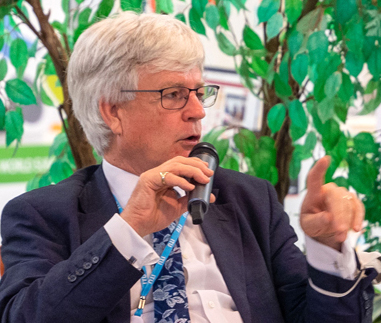
In particular, presentations by four of the European Technology Platforms drew attention to the potential for the work that they are doing in this ‘space’:

1 Comment

Filed under Africa, ICT4D

Obama in Barcelona

ObamaWalking down the Gran Via de les Corts Catalanes in Barcelona last week I came across Obama – well, I guess not the Obama that most people will automatically think of!  What is the significance of “Obama – British Africa – Gin and Rhum”?  Could it be that Obama seeks to recreate a new empire in  the spirit of British Africa?

OK – it’s a bar/restaurant opened in 2008, and it being mid-morning on a trip to buy maps at Altair, I did not have time to check it out – but at least it served as a reminder of what might be behind the US administration’s current global agendas.

Leave a comment

Filed under Africa, Beer, Restaurants