Category Archives: Development

Against “EdTech”…

Sitting in on a recent donor-stakeholder discussion about the use of ICTs to support education for poor people in developing countries, inspired me to formalize my critical thoughts on the increasingly common usage of the term “EdTech”.   There are three main reasons why this terminology is so problematic:

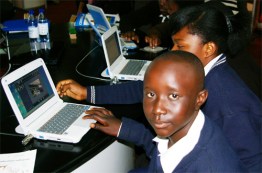
  • children-in-malawi-schoolFirst, the term EdTech places the emphasis on the technology rather than the educational and learning outcomes. Far too many initiatives that have sought to introduce technology systematically into education have failed because they have focused on the technology rather than on the the education.  The use of the term EdTech therefore places emphasis on a failed way of thinking.  Technology will only be of benefit for poor and marginalized people if it is used to deliver real learning outcomes, and this is the core intended outcome of any initiative. It is the learning that matters, rather than the technology.
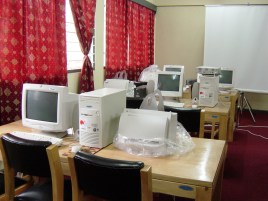
  • jica-stm-ptc-computersSecond, it implies that there is such a thing as Educational Technology. The reality is that most technology that is used in schools or for education more widely has very little to do specifically with education or learning.  Word processing and presentational software, spreadsheets, and networking software are nothing specifically to do with education, although they are usually what is taught to teachers in terms of IT skills! Such software is, after all, usually called Office software, as in Microsoft Office, or Open Office. Likewise, on the hardware side, computers, mobile phones and electronic whiteboards are not specifically educational but are rather more general pieces of technology that companies produce to generate a profit.  Learning content, be it open or proprietary, is perhaps the nearest specifically educational technology that there is, but people rarely even think of this when they use the term EdTech!
  • intel-classmate-zambia-2010Third, it is fascinating to consider why the term EdTech has been introduced to replace others such as e-learning or ICT for education (ICT4E) which clearly place the emphasis on the learning and the education.  The main reason for this is that the terminology largely reflects the interests of private sector technology companies, and especially those from the US. The interests underlying the terminology are a fundamental part of the problem.  EdTech is being used and sold as a concept primarily so that companies can sell technology that has little specifically to do with education, and indeed so that researchers can be funded to study its impact!

1

Those who use the term EdTech are all conspiring to place the emphasis on the technology rather than on the education.  This is often deliberate, but always misguided!  Many of those who use the term are also concerned primarily in generating profits from education rather than delivering effective, life-changing opportunities for people to learn.  If you ever use the word again, please think twice about it, and preferably use something more appropriate!

4 Comments

Filed under Development, Education, ICT4D

Education reform in Pakistan: rhetoric and reality

Shia TretOne of the most interesting aspects of my visit to Pakistan in January this year was the informal, anecdotal information that I gathered about educational change in the Punjab, and in particular DFID’s flagship Punjab Education Support Programme II.  I should declare right at the beginning here that I used to work for DFID (between 2001 and 2004), and I am a member of their Digital Advisory Panel.  I have many friends in the Department, and I admire much of the work that they do.  I was therefore indeed shocked by what I was told and what I summarise below.

When ever the subject of this particular programme came up in conversation in Pakistan, it was always greeting with severe criticism, even derision.  Most of my conversations were with educationalists, academics, landowners, and rural people in the Punjab.  I have not shared these comments before, because they were indeed anecdotal, and I did not see the evidence with my own eyes.  Nevertheless, a report that a colleague recently shared with me by Gethin Chamberlain in the Mail on Sunday (not a paper that I ever usually read!) updated on 14th April 2016,  coincides so strongly with what I was told that I do feel it is worth sharing some of my insights here.

In summary, the Mail on Sunday report commented that:

  • “Department for International Development gives £700m to Pakistan
  • In Punjab, which gets £383m, auditor general uncovered huge corruption
  • 5,000 schools and 40,000 teachers syphoning off cash in other area, Sindh
  • Rana Mashhood is under investigation for corruption”

To be sure, such allegations undoubtedly reflect internal political battles within Pakistan, and continuing complaints about corruption more generally in the administration of agriculture in Punjab (see for example, reports in the local press about matters such as laser land levelling technology, and the widespread corruption in the Agriculture Department of the Punjab Assembly). They are also intended to add fuel to the newspaper’s campaign to “end foreign aid madness”!  However, they nevertheless reflect poorly on the role of DFID and on the implementation of this particular programme.  There is an amazing dissonance between the rhetoric of success, and what I heard on the ground in Punjab.

The DFID programme is ambitious, as highlighted in a report in 2013 by Sir Michael Barber (DFID’s Special Representative on Education in Pakistan, and Chief Education Advisor at Pearson) entitled The Good News from Pakistan: How a revolutionary new approach to education reform shows the way forward for Pakistan and development aid everywhere.  In this, he says “This time it’s going to be different” (p.9).  The work of DFID is wide ranging, and has many elements to it, but one of Barber’s main contributions was to explore ways through which expansion in low-cost private sector educational delivery might spur the government to reform itself (pp.49-50).  The private sector is also involved heavily in other ways, with British Consultancy Firm IMC Worldwide (an International Development and Engineering Consultancy) being the main contractor in rolling out much of the school building programme on the ground, through the Humqadam initiative.  IMC maintains the rhetoric of success, claiming that “In Punjab, the programme is helping the government to meet overall provincial needs, by providing missing facilities in 16,000 schools and providing 27,000 additional classrooms”.  The Humqadam website itself provides further euphoric statements about Britain’s support for education in Pakistan, noting that “Evidence regarding Pakistan’s education opportunities comes from none other than David Cameron, the Prime Minister of Great Britain.  Following a recent visit to Pakistan, he laid the foundations for the initiation of this programme by highlighting the importance of education and Great Britain’s deep commitment, the Department of International Department (DFID), to support education sector reform and the promotion of a quality education for all school age children” (sic).  Humqadam goes on to note that they are working on school construction and rehabilitation using a £184 million allocation of funding from DFID, as well as funding from the Australian DFAT.

Irrigation and peopleThe reality, as it was relayed to me, is very different. Clearly, these are anecdotes, but the following were the main points that my colleagues mentioned:

  • They felt that the project was well behind schedule, and feared that delays would mean that delivery would thus be rushed in an attempt to catch up, leading to poor quality.  The programme was frequently described as a “joke”.  In contrast, DFID’s Development Tracker page suggests that there was a substantial over-spend in 2013/14, and a slight underspend in 2015/16, with 2014/15 being just about on budget.  Moreover, DFID’s most recent review of the project dated January 2016 had provided an overall very positive account of the work done so far, although it did note that “The school infrastructure component has been slow to perform” (p.2).
  • There was also a strong perception that those involved in the design of the project had not grasped the actual realities of the educational challenges on the ground in Punjab.  The truth of this is much more difficult to judge, but there was undoubtedly a feeling that the views of influential “outsiders”, who rarely visited schools and villages on the ground, but spent most of their time talking with senior government officials in offices in Lahore or Islamabad, had been prominent in shaping the programme.  Interestingly, I also overheard a fascinating conversation between two foreign aid workers over breakfast one day in a smart international hotel.  They were absolutely scathing in what they said about the programme in both design and delivery, and seemed to verify the comments that I had previously received from my Pakistani friends.  I so wanted to go over and ask them more, but I had felt guilty about listening to their conversation; in my defence, they were speaking so loudly that it was actually impossible not to hear what they were saying!
  • CowsFor me, though, the most important thing was what people said about the actual delivery of school building on the ground, and how it did little to counter the  power of landlords.  I was, for example, told on several occasions that some landowners used the newly built school buildings as cattle byres, and that the first thing that teachers had to do in the morning was to clean out all of the manure that had accumulated overnight before they could start teaching.  More worryingly, I was given one account whereby my interlocutor assured me that on more than one occasion a landlord’s thugs had beaten teachers and threatened to kill them if they ever returned to their new school buildings.  The reality and threat of rape for women teachers was a common complaint.  Again, I never witnessed this, but the assuredness of those who told me these stories, many of whom I deeply trust, makes me inclined to believe them.  This is the perceived reality of education reform on the ground in Punjab.

Even if these stories are untrue, and are themselves myths designed to undermine DFID’s important work in trying to help deliver better education in the Punjab, they are indeed damaging to DFID’s reputation.  I would love to know more about the reality of these claims, but as was pointed out to me during my time in Pakistan, it is not easy for a white European to spend time in villages, especially overnight, in the parts of Punjab where such things might be happening.

The main thing that persuaded me to write this piece was a Facebook message I received this morning, that then suddenly disappeared.  It read:

“It is true though Tim Unwin.  What is really pathetic is that neither Dfid nor Sindh/Punjab government are made accountable for those children whose education will discontinue after this debacle. Education Fund for Sindh boasted enrolling 100 thousand out of school kids. Overnight the project and project management has vanished, website dysfunctional…Poof and all is gone. There is no way to track those children and see what’s happening to their education”

This is so very sad.  We need to know the truth about educational reform in Pakistan – and indeed the role of donors, the private sector and richly paid consultants – in helping to shape this.   I cannot claim that what I have been told is actually happening on the ground, but I can claim that this is a faithful record of what I was told.


5 Comments

Filed under Development, Education, ICT4D, Pakistan, Uncategorized

On the representation of the poor in international ICT4D forums

I found myself writing today about the ways through which the poor and marginalised are represented in major global ICT4D forums.  What I wrote, shocked me, and I fear that when published it will shock most of the readers of my new book as well! I am therefore sharing it here to try to garner some feedback beforehand that can help me recraft and improve the chapter.  This short piece is only the beginning of the section, and it does go on to suggest ways through which the voices of poor people can indeed be articulated and listened to,  not least through innovative uses of ICTs.  However, I would be fascinated to receive any feedback, preferably polite, on my thoughts below:

WSIS+10 HL Panorama small

“… the voices of the poorest and most marginalised are rarely if ever directly present in international ICT4D forums.  There is therefore a very real challenge of representation in such meetings.  Few participants have anything other than a relatively shallow understanding of what poverty is really like, or have ever engaged deeply trying to understand the needs of the poor, and how these might be delivered through ICTs.  To be sure, much research has been undertaken on ICTs and poverty, and some policy makers may have read a little of this literature, but global ICT4D forums remain forums of the elite and the powerful.  Some civil society representatives, with their supposedly strong involvement with community groups, are most likely to be closest to understanding the needs of the poorest and the most marginalised, but even then their senior representatives at international meetings are often far removed from the grounded reality of poverty.  Theoretically, government officials, with their responsibility for all of their citizens, should be mindful of the needs of their poorest and most marginalised citizens, but all too often government representatives are drawn from ruling elites, in both rich and poor countries alike, and again do not necessarily understand how ICTs might be able to empower poor people.  Their interests are often primarily in being re-elected. Moreover, the increasingly close relationship between governments and the private sector mean that all too often governments favour the interests of the private sector over those of the most marginalised, in the mistaken belief that economic growth will necessarily eliminate poverty.  Additionally, many of the most capable young ICT Ministers in poor countries are themselves drawn from the private sector, thereby reinforcing this private sector view of how to reduce poverty through the use of ICTs.   The private sector itself, including the supposedly munificent founders of Foundations, is primarily interested in driving economic growth and profits, and tends to see the poor and the marginalised largely as customers or an enhanced market. Few representative of the private sector at international ICT4D forums can lay claim to being poor.  To be sure, it is inevitable that international forums are populated by elites, and many people who attend them do like to think that they have the interests of the marginalised at heart.  Nevertheless, it is important that further consideration is given to this issue, and innovative ways are indeed sought through which the balance of conversation and debate is changed.  This short section highlights challenges with three particular areas: the involvement of young people, the highly sexist male-dominated character of the ICT sector itself, and the voices of those with disabilities.”

14 Comments

Filed under Africa, Commonwealth, Development, ICT4D, Story-telling, Uncategorized

On Britain and Europe: why we must stay “in”

I have held off writing about the referendum being held on 23rd June on Britain’s membership of the European Union (EU), in part because it is such a complex issue and difficult to write about succinctly.  However, recent conversations with taxi drivers here in the south-east of England have convinced me that I should indeed respond to my friends across the world who keep asking me what my own thoughts are.  I very much fear that the referendum may indeed result in a majority vote to leave the EU, and this frightens me.

I have many concerns over the way in which the European Union ‘functions’, about the costs of this additional tier of European wide government, about the excesses of its bureaucracy and the lifestyles of its bureaucrats, and the attempts by some politicians to make it a truly federal centralised state.  However, I have absolutely no doubt that we have to remain within the EU and I have great difficulty in understanding the overly simplistic statements, many of which are erroneous, that are being promulgated by those advocating that we should leave the EU.  Quite simply, the UK is part of Europe, and whatever happens in the EU will affect all aspects of our lives whether we remain in or leave.  We must therefore remain ‘on the inside’ where we are able to influence the EU’s decision-making processes.  Britain has much to contribute to the EU, and much to gain from it.  Yes, I voted against our membership of the European Community in 1975, but the conditions were very different then, and more than 40 years of membership have so changed the context that I feel very strongly that we must remain in.

My taxi conversations shocked me because they revealed that many people are going to vote about a single issue that they think is true, and yet that in my view is quite simply wrong.  One taxi driver complained, for example, that we are paying £55 million a day to the EU, and that we could better use this money to support our health services and other government expenditure.  Whilst it is very difficult to measure the precise financial inputs and benefits of EU membership, it is worth noting that in 2015 the UK would have been liable for £18 billion in contributions if it did not have rebate of almost £5 billion.  In practice, the UK therefore paid about £13 billion to the EU last year, but it must be remembered that the EU also provided support for the UK of some £4.5 billion, mainly through payments to farmers and poorer regions in the UK.  Britain’s net contribution was therefore in the region of only £8.5 billion, or  just over £23 million a day, for which we also get many other intangible benefits that it is difficult to measure in precise financial terms.  Moreover, there is no guarantee that any savings  would actually be spent on relevant public services or social welfare, even if the UK were to make a net financial saving by leaving the EU.

Another taxi driver claimed that migrants were mainly living in ghettos and that large numbers were simply here to sponge off the generous British benefits system.  The impact of migrants on the British economy and society is indeed a highly charged subject, with much contrasting evidence being adduced to support particular ideological positions.  My own view is unquestionably that Britain has benefited hugely over many centuries from immigration.  From the arrival of Celtic people, through the Roman occupation (1st century BC – 5th century AD), and then the Anglo-Saxon (5th-7th centuries AD) and Norse (8th-11th centuries) invasions, Britain was born through immigration.  More recently in the 20th century, immigration from South Asia, the Caribbean and Africa has vastly enhanced our cultural diversity, economic vitality, and social distinctiveness.  Immigration from other European countries is but a new dimension of an old tradition.  To be sure, the UK (263 people/sq. km.), and particularly England (410 people/sq. km.), is more densely populated than many other European countries such as Germany (229 people/sq. km.) and France (121 people/sq. km.) (Figures from 2012), and there is undoubtedly pressure on housing as well as urban encroachment in rural areas in the UK.  However, recent migrants from the EU, about whom there has tended to be most criticism, appear to contribute £1.34 to the British economy for every £1 that they have taken out.  While those who migrated before 2000 contributed less, at £1.05, this is still a net financial benefit to the UK.  The bottom line, even if only financial figures are considered and all of their social and cultural contributions are ignored, is that EU migrants contribute more to Britain than they take out.  I very much prefer living in a country to which people want to come than in one from which people want to leave.

These were the conversations that precipitated my desire to write, but I also want to comment briefly on some of the other things that are being said about many of the political, social, economic and cultural dimensions of EU membership.

Political

  • I am amazed that so many people are saying that by leaving the EU we will regain our sovereignty.  Boris Johnson, the Mayor of London, has made numerous statements about this, claiming that Britain will inevitably be led into a superstate if we remain in the EU and would lose its sovereignty yet further as a result.  Much depends on precisely how sovereignty is defined, but few states actually have absolute sovereignty because the world is already so inter-connected.  Not least, countries that sign UN treaties have to abide by them, and numerous trade and other international agreements limit the real freedom of national governments to take truly independent, sovereign decisions.  Moreover, whilst in the past some European politicians have indeed had a vision to create a politically united centralised European state, and I have no doubt that the creation of the Euro was one means of trying to do this through the back door, my judgement is that there is now much less appetite for a centralised vision of Europe than was once the case. Indeed, the voice of Britain in Europe has been one of the factors that has tended to limit some of the wilder tendencies of the centralists.
  • Others argue that Britain can be ‘great’ again only if we leave Europe.  This is complete and utter nonsense!  Whether Britain ever was ‘great’ can be debated (much of our ‘greatness’ was gained at the expense of others, thus belying our claim to greatness), but we are now a post-imperial, small and largely insignificant country on the edge of Europe!  It is amazing that we still retain some respect in the world.  In terms of population we are ranked the 21st largest country in the world, and in terms of size we are the 79th largest country.  We are dwarfed by China and India, which themselves dwarf the USA!  The future lies with countries such as these, and we need to learn to play by the rules that they will determine if we wish to play at the table.  Being part of Europe enables us to have a greater voice than we would otherwise have.  We should also not believe that by leaving Europe we will somehow be able to rekindle other special relationships.  Those who think that it might bring us closer to the USA miss the point that the USA is itself a failing state, and will soon have to grapple with just the same post-imperial trauma that Britain has come to grips with since the middle of the 20th century.

Economic

  • The most important point to note here is that European countries, and especially those in the EU, are Britain’s biggest trading partner as a bloc.  Again, it is possible to choose various trade figures to make different arguments, but I am persuaded by the argument that the EU is the “UK’s major trading-partner, accounting for 45% of exports and 53% of imports of goods and services in 2014”.  Were Britain to leave the EU, there is no guarantee that we would continue to retain a special relationship economically with the EU bloc.  Indeed, I would imagine that governments of other European countries would be so infuriated that they would probably seek to isolate Britain as much as possible in terms of any beneficial trade agreements!
  • I know that bankers are not the most popular people in Britain, and rightly so given their past misdemeanors!  However, the past battles between London and Frankfurt over which city should play the central role in Europe’s banking system testify to what will happen if Britain were to leave the EU.  Frankfurt would undoubtedly become the financial captial of the EU, and would therefore become much stronger in its competitiveness with London.  This is not to say that London’s financial roles would overnight become defunct, but it is to say that it will become very much tougher for London to maintain its strong position in the global financial markets, which would be to the detriment of Britain as a whole.
  • The UK attracts substantial inward investment because foreign investors have traditionally seen us as a strong and stable economy within Europe, and therefor a safe means of accessing wider European markets.  If we were to leave Europe, this incentive for foreign investment would vanish overnight, and we would have difficulty in attracting the further investment that has recently played such an important part in fueling our economy.
  • Further evidence of the likely economic impact of leaving the EU is the effect that the uncertainty has had on the Sterling-Euro exchange rate, which was around € 1.38 to the pound in early December 2015 and had fallen to just over € 1.26 by the end of February 2016.  Although it is very difficult to predict financial markets, most analysts suggest that the pound would fall considerably in value were the referendum to result in a vote to leave the EU.  Goldman Sachs, for example, suggests that “if the UK voted to leave the EU, the UK’s current account deficit would still be a source of vulnerability despite some recent improvement. An abrupt and total interruption to incoming capital flows in response to a ‘Brexit’ could see the pound decline by as much as 15-20%.”

Social

  • The social impact on the UK of  leaving the EU would also be very considerable, not least in terms of social diversity.  Whilst some people undoubtedly see an increase in diversity as being negative, I suggest that the greater social mobility and inter-mixing between European people that has resulted from the existence of the EU over the last half century has unquestionably been positive.  Understanding different societies better through meeting and socialising with different people is of great importance for reducing tensions and misunderstandings between countries, and this still remain of very great importance even though, hopefully, the devastating 19th and 20th century wars across the continent are now a thing of the past.
  • The European Union has also done much to try to ensure a fairer society across Europe, and acts as an important factor in seeking to promote a more communal and less individualistic society than, for example, exists in the USA.  I fundamentally disagree with the European human rights agenda as well as some aspects of European social legislation, but I have no doubt that the tempering social effect of the EU has been beneficial in reducing some of the excesses of rampant capitalism.
  • Another important aspect of social impact has been reflected in comments that I have received from friends across Europe, who simply cannot believe that people in the UK would be selfish enough, and foolish enough, to leave the EU.  This has two particular manifestations: first, the overwhelming reaction of my friends is along the lines of “if people in the UK choose to leave Europe, then we will have little sympathy for them in the future when life gets difficult”; but second, there is a genuine belief that the UK also has much to contribute to Europe, and it will be to Europe’s disadvantage as well if the vote is indeed to leave.  The British would be very much missed from Europe, but our truculence in having a referendum has already seriously dented our reputation.

Cultural

  • Finally, there are clear cultural implications of any decision to leave the EU.  While cultural exchange, and the ebb and flow of ideas, will undoubtedly continue if the UK was outside the EU, the amount of such exchange at many different levels would decline without the support and encouragement provided by the EU.  Not least, the implications for tourist visits are very substantial.  According to the Office for National Statistics, UK residents made 43.8 million visit to the EU in 2014, and EU citizens made just over 23 million visits to the UK in the same year.  For those who like visiting Europe, the thought of possible new visa requirements, and additional border checks, especially if European governments did not take kindly to the UK’s departure, is hardly a pleasant one!

These are just some of the more important reasons I believe without a shadow of doubt that despite problems with the European Union, we should unquestionably vote to stay in, and continue to play a very active role in reformulating the Union so that it better serves all of the people of Europe.  Yes, there are problems with the European bureaucracy, its legal system, and its many excesses, but the people of the UK would be far worse off outside it than remaining within it.  The UK is a small, relatively insignificant island off the north-west coast of Europe.  In a world increasingly dominated by large powerful states who do not necessarily share our values and interests, we need to continue to work together with people and governments from similar minded countries in Europe if we wish our cultural values, our social system, our economic vitality and our political structure to continue to represent the interests of the people of the UK and Europe more widely.

3 Comments

Filed under Development, Politics, UK, Uncategorized

ICTs and the failure of the Sustainable Development Goals

The euphoria associated with the consensus reached by UN member states on 2nd August on the Sustainable Development Agenda to be signed by World Leaders in New York on 25-27 September is fundamentally misplaced, although not unexpected (for process see UN Post-2015 Development Agenda).  The Sustainable Development Goals (SDGs) will do little to reduce poverty, will continue to propagate a world system based on inequality, and will continue primarily to serve the interests of those in the UN system and practitioners in the “development industry”.

I find it difficult to believe how Ban Ki-moon could really believe the words he said when welcoming the agreement, saying it “encompasses a universal, transformative and integrated agenda that heralds an historic turning point for our world … This is the People’s Agenda, a plan of action for ending poverty in all its dimensions, irreversibly, everywhere, and leaving no one behind. It seeks to ensure peace and prosperity, and forge partnerships with people and planet at the core. The integrated, interlinked and indivisible 17 Sustainable Development Goals are the people’s goals and demonstrate the scale, universality and ambition of this new Agenda”.

Here, I wish to focus attention particularly on the almost complete omission of ICTs from the final agreed SDGs, and why this is a very serious failing.  Back in June 2013, I wrote stridently about the paucity of mentions of ICT in the report of the High-Level Panel of Eminent Persons on the Post-2015 Development Agenda, which provided the initial basis for the agreement reached last Sunday.  Little has changed since then. Although my focus is on ICTs, it is important, though, to begin by noting some of the fundamental structural issues that mean the SDG process has been so flawed, and will fail to address the interests of the world’s poorest people:

  • There are far too many goals (17) and targets (169) – this will lead to diffusion of effort and lack of focus, not only within the ‘global system’, but also in individual countries.  It is much better to do a few things well, rather than try to do too many things, and fail to do any of them well.  The reality is that this list is a compromise of everything that those involved in the formal deliberations could think of that might reduce poverty (and serve their own interests)
  • Target setting is hugely problematic in that it can lead to resources being directed too much towards delivering the targets and not enough to other factors that might actually have greater impact.  This would not be so worrying if goals and targets were treated as flexible aspirations, but the reasons for the failure to deliver on many of the original Millennium Development Goals (MDGs) should have sent a much more powerful message to those planning the SDGs.  The UN’s own 2014 report on the MDGs, for example, stated that “Substantial progress has been made in most areas, but much more effort is needed to reach the set targets”.  If the world could not deliver on 8 Goals in 15 years, how is it going to deliver on 17 goals and 169 targets in the next 15 years?
  • The process remains largely concerned with absolute poverty rather than relative poverty.  Claiming that the SDG agenda will end poverty in all of its dimensions is, I’m afraid, crass (see my now very old paper No end to poverty that explores this further).  The SDGs will do little fundamentally to change the structural conditions upon which the present world system is based, which remain primarily concernd with economic growth rather than reducing social and economic inequality (despite claims that the agenda does indeed address inequality, as in Goal 10).
  • These goals and targets represent the interests of those organisations (UN, civil society, private sector) driving the SDG agenda, rather than the poorest and most marginalised; it is these organisations that are actually likely to benefit most from the SDG agenda.  Perhaps more than anything else, the SDGs have become a vehicle through which the UN and its many agencies can try to show their continued relevance in an ever-changing world.
  • The need to monitor progress against the goals/targets will further expand the “development industry”, and consultants and organisations involved in such monitoring and evaluation will undoubtedly benefit hugely.  Small, poor countries simply do not have the capacity to implement, let alone develop the complex monitoring systems required by, the new SDGs and targets.
  • The SDGs reflect a relatively small set of interests (economic growth, agriculture, health, education, gender, environment and climate, justice and security, urban/industrial development), and focus insufficiently on some of the key issues that require attention if we are to create a fairer and more equal world, notably the role of ICTs, and the relative lack of attention paid to people with disabilities.

Each of the above claims (and indeed the many other reasons why the SDGs will fail) needs justifying at much greater length, but the last point brings me directly to the abject failure of the SDG agenda to pay sufficient attention to the critical role of ICTs in shaping contemporary development.  ICTs are not mentioned directly in any of the SDGs, and are only to be found in but four of the 169 targets:

  • 4b) By 2020, substantially expand globally the number of scholarships available to developing countries, in particular least developed countries, small island developing States and African countries, for enrolment in higher education, including vocational training and information and communications technology, technical, engineering and scientific programmes, in developed countries and other developing countries
  • 5b) Enhance the use of enabling technology, in particular information and communications technology, to promote the empowerment of women
  • 9c) Significantly increase access to information and communications technology and strive to provide universal and affordable access to the Internet in least developed countries by 2020
  • 17.8) Fully operationalize the technology bank and science, technology and innovation capacity-building mechanism for least developed countries by 2017 and enhance the use of enabling technology, in particular information and communications technology

Only one of these (9c) has a focus on ICTs as a direct aim.  All of the others merely mention ICTs in an enabling role: for higher education scholarships (4b); to promote the empowerment of women (5b); and for the development of a technology bank and science, technology and innovation capacity-building mechanism (17.8).  In this context, it is quite scandalous that the SDGs, while mentioning the empowerment of women, fail to mention the much more significant use that ICTs can make to the lives of the 10% of the world’s population with disabilities.

There is widespread agreement that ICTs have been one of the major factors that have transformed the world over the 15 years of the MDGs.  They have driven extraordinary economic growth, have opened up entirely news ways of delivering education, health and rural development, have transformed the relationships between governments and citizens, and have created an interconnected world of communication and knowledge sharing.  It is not an exaggeration to say that they have been one of the most significant changes to humanity over the last 20 years.  Yet, those determining the SDG agenda for the next 15 years barely give them any recognition at all.  This would not be so worrying if ICTs had not also created some of the greatest inequalities that the world has ever seen; the differences in life experience between someone connected through mobile broadband to a 4G network, and someone with only 2G connectivity, let alone without a smartphone or equivalent digital device, is extraordinary (for a wider discussion see some of my recent papers).  ICTs have the capacity to be used for great good, and to transform the lives of poor people; but they also have the capacity to be used to create vast inequality, and to do much that is negative.

Hence, those involved in crafting the SDGs should have paid very much greater attention to the transformative role of ICTs.  The single target (9c) “Significantly increase access to information and communications technology and strive to provide universal and affordable access to the Internet in least developed countries by 2020” is indeed to be welcomed, but as one of only 169 targets there is a real danger that it will be lost in the plethora of other competing aspirational targets for governments across the world.  As it is, there is little indication of what “significantly increase” actually means, or indeed of how best this target can be achieved.  The dominant rhetoric in the “global community” is still of how to reach the “next billion”, rather than how to serve the needs of the poorest and most marginalised, what most people call the “bottom billion” but which should better be termed the “first billion” to focus our attention on it being the most important!

The failure of ICTs to be mentioned more substantially within the SDGs provides a salutary example of how such goals are formulated, and the politics of the UN and international development system.  Looking back, it is remarkable that ICTs were mentioned explicitly within the sixth target of Goal 8 of the original MDGs in 2000: “In cooperation with the private sector, make available benefits of new technologies, especially information and communications”.  Yet, from this highpoint the role of ICTs within the SDG agenda of 2015 can be seen to have diminished almost to insignificance.  In large part this reflects the failure of international organisations with interests in ICTs to realise the significance of the SDG agenda early enough, and then to engage sufficiently actively in the discussions surrounding their formulation.  In this context, I was delighted that under my leadership the Commonwealth Telecommunications Organisation (CTO) did indeed reach agreement in 2014 on a statement about the role of ICTs in the SDGs, but sadly this fell on rather deaf ears in the wider international community. Interestingly, during informal discussions with several multilateral and bilateral donors in recent years, during which I have personally sought to promote the crucial role of ICTs in development, I have regularly been told that the relevant UN organisations (such as the ITU) and other donors have insufficiently promoted the need for a goal on ICTs.  This, I am sure, is correct, but it is also important to understand why this might be the case.  At least four reasons seem relevant:

  • First, the UN system is one of strict hierarchy, with some agencies being seen as much more powerful and dominant than others.  Despite dramatic enhancements in the efficacy and role of the ITU in recent years under the leadership of Hamadoun Touré and now Houlin Zhao, it still seems to lack the clout at the wider international table of some of the other more powerful UN organisations and lobbies, for example, in the fields of health, gender and climate change.
  • Second, despite their being some young brilliant Ministers for ICTs/Telecommunciations across the world, more often that not these ministers are relatively low down the national hierarchy of ministerial responsibility, and were therefore unable effectively to influence national delegations who contributed to the crafting of the SDGs about the importance of ICTs.
  • Third, many bilateral and multilateral donors remain unconvinced of the power of ICTs to transform development in the interests of the poor and marginalised. This reflects badly both on the ICT for Development (ICT4D) community who have failed to provide enough evidence of the real development benefits of ICTs, but also on the ignorance, self-interest and bigotry of many of those working for donor agencies.
  • Fourth, when push comes to shove, individuals and institutions will usually focus on their own core areas, rather than on cross-cutting or collaborative initiatives.  Hence, the WHO and the powerful international health lobbies focus primarily on delivering health, UNESCO and the educational industry will focus on education, and the FAO and rural development lobby will focus on agriculture and rural development.  The ICT for Development field is relatively new, and remains insufficiently robust to compete against these powerful existing entities.

Building on this last point, it is highly salient that at the May 2015 WSIS Forum held in Geneva, the UN agencies involved explicitly recognised that the battle had been lost to have one of the SDGs with an explicit focus on ICTs, and instead developed a matrix to show how ICTs as represented in the WSIS Action Lines could contribute to each of the emerging SDGs.  While this goes some way to indicate how different UN agencies can indeed use ICTs to deliver their wider SDG commitments,  it fails comprehensively to tackle the deep structural issues that mean that ICTs are continuing to contribute to greater global inequality.

Without much greater focus on ensuring that the poorest and most marginalised, including people with disabilities, can use ICTs effectively to lead enhanced lives, the SDGs will inevitably lead to a more fractured and unequal world.

21 Comments

Filed under Development, ICT4D

Thoughts on mobile learning for the EFA GMR 2015

GMRI was delighted to have been asked by UNESCO to write an overview of the evolution of mobile devices and their uses in learning (m-learning), focusing especially on the fifteen-year period of the first Millennium Development Goals, as a background paper for the 2015 Education for All Global Monitoring Report, and it is great that this has now been published.

I thought it might be useful to summarise some of the key points here. The paper highlights eight emerging good practices, and six significant policy implications. The emerging good practices are:

  • Focusing on learning outcomes not technology
  • Involving teachers and users at all stages from design to implementation and review
  • Involve participatory approaches in design so as to ensure that adoption of technology is user-centric
  • Consider sustainability, maintenance and financing right at the beginning
  • Think holistically and systemically
  • Ensure that all relevant government departments are involved
  • Ensure equality of access to all learners, especially those who are marginalised
  • Appropriate and rigorous monitoring and evaluation must be in place

The policy implications identified are closely linked to these and can be summarised as:

  • Joined up approaches across Governments
  • Sharing of effective and rigorous monitoring and evaluation findings
  • Ensuring affordability
  • Providing connectivity
  • Effective multi-stakeholder partnerships
  • Development of relevant content

Four case studies drawn from different parts of the world and at different scales were used to illustrate the considerable success that can be achieved through m-learning. These were:

  • BBC Janala in Bangladesh;
  • Red UnX: a mobile learning community for entrepreneurship in Latin America;
  • Learning on the Move in Singapore; and
  • Worldreader: making books available to primary school children in low-income countries

However, the paper also illustrates clearly that unless very considerable efforts are made to ensure that the poorest and most marginalised people and communities have access to appropriate devices, connectivity and electricity, any increased attention on digital technologies is likely to increase inequalities rather than reduce them.

It concludes that to date, great strides have been made in using the very rapid expansion of mobile devices for the benefit of education, and for those companies involved in exploiting this. However, as a review of delivery on the past EFA goals and MDGs, it is apparent that much remains to be done in using such devices to help achieve universal primary education and gender equality in education.  Looking to the future, as more and more people gain possession of, or access to, mobile devices, they will have the opportunity to use the Internet to access an ever more innovative array of learning tools and content. The challenge, particularly for governments, is how to pay for and use this potential to enable universal access, and thus equality of opportunity within the education sector. Given the central role of teachers and administrators within education, an important concluding recommendation is that much more attention should be paid to providing training, resources and support to them in the use of mobile devices. A well-equipped, knowledgeable and inspired cadre of teachers, capable of using mobile ‘phones effectively in their classes, is a crucial first-step towards delivering m-learning for all. Sadly, all too often, even in the richest countries of the world, children are told to switch off their mobile ‘phones before entering the classroom. M-learning has much potential, but we are still a long way from using it to benefit the world’s poorest and most marginalised.

Leave a comment

Filed under 'phones, Development, Education, ICT4D

On deciding to leave after one term of office as Secretary General of the Commonwealth Telecommunications Organisation

The advertisement for my replacement as Secretary General of the Commonwealth Telecommunications Organisation (CTO) has precipitated numerous questions as to why I am leaving.  So, I thought it might be helpful – not least to applicants – if I briefly tried to explain my decision here.  In so doing, I should stress right at the beginning that many members of the CTO’s Council and our Executive Committee were rather surprised by my decision, and did their best to try to persuade me to stay on.  I am immensely grateful to them for their support.  It is a huge privilege to be Secretary General of the CTO, and I have learnt a phenomenal amount doing the job.  I have also met some absolutely outstanding people – and to be sure, some less outstanding ones! The chance to lead an international organisation, committed to using ICTs to support people across the 53 countries of the Commonwealth is absolutely amazing, and I have thoroughly enjoyed the challenges that this has involved. However, there are two fundamental reasons why I have decided  to serve only one four-year term. These are what I have shared with members of our Council:

  • First, it is very important for there to be clarity and certainty over any transition in leadership of an organisation.  Changes of Chief Executives – or Secretary Generals – must be handled with very great care so that there is a smooth hand-over, and that confidence and trust in the organisation remains high.  I am going to be 60 this year (the truth is now out!), and I would like to have the opportunity to be considered for other jobs before I retire!  Sadly, some international organisations still have relatively low upper-age limits, with the UN, for example, having a mandatory age limit of 62!  Hence, I took the view that I should not stand for a second term as Secretary General of the CTO.  I simply felt that it would have been destabilising and damaging to the CTO if I had indeed been appointed for a second term, and then people had heard that I might be applying for various other jobs a year later, whether or not I actually got them.
  • Second, I think that eight years is too long for a single person to head an international organisation such as the CTO.  With such a long term of office, there becomes a real danger that the incumbent can begin to treat the organisation as his or her personal fiefdom, and I do not think that this is a particularly healthy situation.  Having just completed a three-year plus three-year stint as Chair of the Commonwealth Scholarship Commission, I am all the more convinced that six years (in a three plus three format) should be the maximum term of office for heads of organisations.  Fresh ideas, and new ways of doing things are definitely needed after this length of time!  I also think that any organisation should be bigger than its leader.  After a long period at the helm, there is a very real tendency for a leader and ‘their’ organisation to be seen as being very closely associated if not one-and-the-same, and I simply do not think that this is particularly healthy for the organisation.

I know that not everyone agrees with these views, but two of the things that I have sought to bring to the CTO have been trust and transparency, and it seems to me that both of these are absolutely central to the decision I have made. Of course there are other reasons as well.  The strategic plan that we created back in 2012 had at its heart an expansion in membership.  The aim was to bring back countries and organisations that had previously left the CTO, such as India, Australia, Canada and New Zealand.  Without them, the CTO is but a fraction of what it could be!  Not least, the additional membership fees would enable the CTO to expand its staffing and thereby deliver more and better services to all of its members.  Furthermore, since people can only be employed at the CTO if they are nationals of Full Member Countries, the absence of these countries means that the organisation is more restricted in its employment potential than need be the case – and membership is only £20,000 a year! Despite encouraging words, and indeed promises from some countries to rejoin, these have not yet materialised. Having banged my head against a brick wall on this, and one or two other matters, for nearly four years, I think it is time that I moved on and let someone else build on the foundations we have laid. As I began, let me conclude by stressing once again that the post is an amazing one.  It provides an opportunity to work with some fantastic people, to deliver real on-the-ground solutions that can help poor and marginalised communities use ICTs effectively for their development aspirations.  When eventually I leave in September this year, I know that I will have many regrets.  I have done my best to lead the CTO forward, so that it will be in a better position than when I started.  It is now time for someone else to take the CTO forward so that it can indeed achieve its full potential. Oh yes, and the deadline for applications is 26th January!

Leave a comment

Filed under Africa, Caribbean, Commonwealth, Development, ICT4D

The future of communication

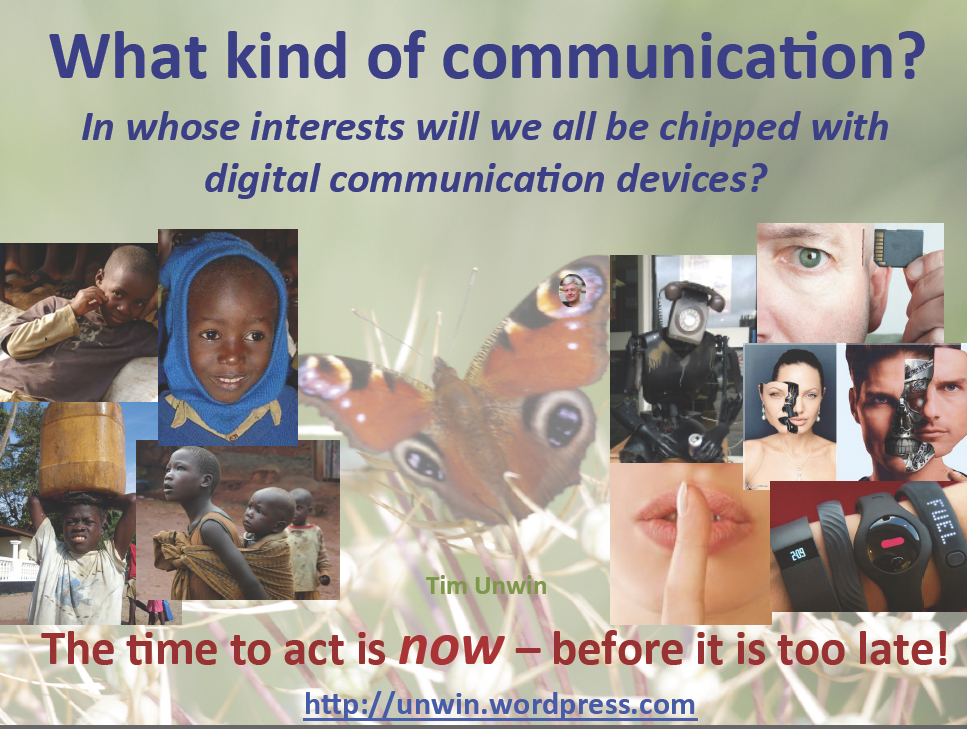
In recent years, I have become increasingly interested in the interface between humans and machines, and thus the world of cyborgs.  This was first formally articulated in my presentation entitled “How will the world communicate in 2113?” given at the Commonwealth Summer School held in Cumberland Lodge on 9th August 2013.  However, as part of the ITU’s ongoing discussion on ICTs in the future, associated with  the Leadership Summit on the Future currently being held during its Telecom World (#ituworld) event in Doha , I was asked to put together a prediction and a single slide summarising some of my thoughts on the future of communication.  So, to give this a little more visibility, I thought I would also post it here:

ITU futures

My actual short quotation was “The future is not so much about the Internet, but rather about the human-machine interface.  Cyborgs are already with us.  If we do not want humans to be mere appendages of machines, we must act now!””

I have to admit that I found the actual ITU session to be much less inspirational than I had expected/hoped it might be – there was very little new in what was discussed!  I was therefore actually rather sad that the presentation that I sent to the ITU for possible inclusion amongst its predictions was seen as being rather too provocative for inclusion!

1 Comment

Filed under Commonwealth, Development, ICT4D

Education Fast Forward’s Eleventh Debate: Mobile Learning for the Masses

LogoEducation Fast Forward (EFF) was co-founded by Jim Wynn, formerly at Promethean and now EFF’s Chief Executive Officer, to bring together some of the world’s leading figures in the word of education to debate key issues facing governments, educators and employers. Its aim is not only just to debate these issues, but more importantly to come up with practical solutions that people can adopt, particularly in ensuring that technology is used appropriately to deliver effective solutions that will make a step change in learning experiences. EFF also ensures that it puts its body where its mouth is, so participants can engage in the debates through a variety of different modalities, including the use of Cisco’s Telepresence and WebEx environments, and also through live webstreaming, Twitter and other social media.

The Eleventh debate on 17th September, chaired by the irrepressible Gavin Dykes, was on the theme of Mobile Learning for the Masses? Realistic Expectations and Success Criteria. It began with two tone-setting presentations by Professor Miguel Nussbaum (Professor at the Computer Science Department of the School of Engineering of Pontificia Universidad Católica de Chile) and David Atchoarena (Director of the Division for Policies and Lifelong Learning Systems at UNESCO).

Miguel-Nussbaum-100Miguel Nussbaum began with a summary of his long career in using technology for learning, ranging from his early experience of using netbooks and tablets in Chile, to more recent work with multiple mice and mobile devices. His main presentation focused on how technology is used in the classroom, addressing three main issues: the way we teach; how we use technology, and how we can integrate technology in the classroom so that teachers make good use of it, and that students can really learn. At the heart of his presentation were the arguments that it is not the technology that matters, but rather we should focus on how technology can be used to deliver on curriculum needs.

Daivd_Profile-100David Atchoarena then followed, emphasising once again that technology must be a means rather than an end. It has to be used to solve specific challenges and needs. Recognising that in 2014 we are nearly at the end of the period set for achieving the Education for All Goals and the Dakar Framework, he noted that whilst progress has been achieved, very real challenges still remain in three areas: literacy, gender equality and teacher shortages. In all of these areas, he argued that mobile technologies can indeed make a significant difference.

The subsequent conversation, bringing together people from across the world explored a wide range of issues related to the implications of these arguments in the context of mobile learning. For me, six main themes emerged:

  1. Relevance for the poorest people in the poorest countries. Without electricity and connectivity, the most marginalised people and communities are not going to benefit from the potential of ICTs, be they mobile or otherwise! While many argued that it is merely a matter of time before everyone everywhere is connected, Adrian Godfrey from the GSMA noted that, although there are more SIM card registrations than there are people in the world, only just under half of the world’s population have their own access to mobile devices. Against this background, David Coltart, the former Minister of Education in Zimbabwe, emphasised the critical financial and infrastructure constraints facing educationalists in many of the world’s poorest countries, especially in Africa.
  2. The need to work closely with teachers. Teachers are central to the learning process and the general consensus was that they have to be involved at the heart of initiatives designed to introduce technology into education. Whilst it was recognised that people can indeed learn using the Internet on their mobile devices without any teacher involvement, it was also argued most strongly that we have to focus on pedagogy and the role of teachers in using technology in the classroom. This is not just to do with the way we teach, but also with what we teach. As Miguel Nussbaum commented, we have to ensure that teachers are trained to be collaborative, interdependent and seeking common goals. The pedagogy has to come before the technology!
  3. The power of assessment and the curriculum. Closely linked to the discussion of the role of teachers and pedagogy were comments about the power of assessment. For some, we need to change the ways in which learning is assessed if we are truly to benefit from the opportunities offered by mobile technologies; as long as we ‘test’ in traditional ways, pupils will not be able to take advantage of all the opportunities for collaboration and interaction offered by mobiles. For others, it was the curriculum that matters most, on the grounds that assessment usually follows the requirements of the curriculum.
  4. The interests underlying the introduction of mobile technologies in the classroom. My main contribution fell largely on deaf ears, but I do believe that in understanding these processes we have to understand the interests underlying the introduction of such technologies into the classroom. This is primarily driven by the interests of capital, and the need for companies to generate the maximum profits from their investments in digital technologies. Operators need to draw traffic through their networks, and if people can be encouraged to use these to gain useful learning resources, and network better with their peers, then this has to be a good thing. For content providers, mobiles offer a huge opportunity for generating additional revenue. Until we understand these interests, and realise that they are not driven primarily by pedagogy and the learning needs of pupils, then we will continue to be bemused by the failure of ICTs to transform the learning outcomes of formal educational systems
  5. Mobile devices can transform the learning experiences of some of the world’s most marginalised people and communities. Despite all of the challenges, it was great to see a small group of participants arguing that mobile devices can have a huge impact on the learning experiences of those living in refugee camps (Eliane Metni from Lebanon) and people with disabilities. We need to do much more to ensure that this work is supported, because otherwise these communities and individuals will become even further distanced from the rich who have access to the latest digital technologies.
  6. A call for action. There is far too much talking, and not enough action! Michelle Selinger, in particular, argued that you will only get effective action through dialogue between teachers policy makers, industry and academics. She also emphasised that, while content is important, it is crucial to remember the potential of mobile devices for crafting new types of collaboration through voice, video and text.

Education Fast Forward does not just finish with the live debate itself, and the EFF website, as well as their Twitter account (see #EFF11) provide ready means through which to continue the discussion. Thanks Jim, Gavin and all of the contributors for a thought-provoking discussion.

Postscript:

There is a huge amount of ongoing work on the use of mobiles for learning, and the International Telecommunication Union’s m-Powering Development initiative has recently produced a useful report on m-learning that is highly pertinent to this debate. This highlights the following eight main conclusions about things that are essential for the success of any m-learning initiative:

  • It is essential to focus on learning outcomes not just the technology;
  • Teachers and users should be involved at all stages in the development and implementation of m-learning initiatives;
  • Sustainability, maintenance and financing should be considered right at the beginning of any initiative;
  • It is important to think holistically and systemically;
  • All relevant government departments must be involved in any m-learning initiative;
  • Equality of access to all learners must be ensured, otherwise m-learning initiatives will lead t greater inequality;
  • Appropriate and rigorous monitoring and evaluation must be in place; and
  • Participatory approaches must be utilised in design.

Some, but not all of these issues were captured in the debate!

Leave a comment

Filed under 'phones, Development, Education, ICT4D

The damaging mythology of “Digital Natives”

The publication of Ofcom’s latest Communications Market Report, which provides interesting information about significant differences in usage of communications media, has led to a plethora of media commentaries perpetuating the mythology around the usage of the term “Digital Natives”.  A Guardian report  thus comments that “The advent of broadband in the year 2000 has created a generation of digital natives, the communication watchdog Ofcom says in its annual study of British consumers. Born in the new millennium, these children have never known the dark ages of dial up internet, and the youngest are learning how to operate smartphones or tablets before they are able to talk.”.

Ofcom summarised its report as follows: “Ofcom carries out research to help understand people’s awareness of technology and communications. Our research on people’s digital aptitude found that:

  • We’re at our most tech savvy between 14 – 15 years old – with an average score of 113
  • Over 60% of people aged over 55 score below average
  • Six-year-olds show the same confidence with technology as 45 year olds”

In this short post, I do three things: first, highlight the damaging effects that over-simplistic usage of terms such as “Digital Natives” can cause;  second, explore why such terms persist, and hence the notion of mythology; and third, point to  problems with the data upon which the Ofcom report’s conclusions are drawn.

Against the notion of “Digital Natives”
I had thought that the mythology surrounding “Digital Natives” had long been debunked, especially by the really excellent arguments propounded by my good friend Mark Weber, in his presentation on “Fear and Awe of the Digital Native“.  For anyone who has not read it, I strongly urge you to do so!  Rather than repeat all of Mark’s arguments, let me merely highlight four of the reasons why he suggests that it is a dangerous concept:

  • “Generational division simplifies picture
  • Assumes that ‘just because’ someone is young they have the necessary skill set to deal with modern economy
  • Presumes a level playing field for the young, ignores economic and social problems & differences
  • Places unwanted pressure on the young”

These are critical issues that must not be ignored, but I would like briefly here to develop four particular points that are in part alluded to by Mark:

  • Not everyone who is young is digitally literate, nor is everyone who is old digitally incompetent! Simply to categorise people in this way can be hugely damaging, not least to their self esteem.  If we wish to encourage older people to use technology, because of its assumed benefits to them, it is decidedly unhelpful to castigate them as being resistant to technology, or unable to learn about it.  Many older people are hugely competent at using digital technologies, and indeed teach younger people how to use them! Using Ofcom’s sample question test, for example, I scored more than 55% above the average score for people my age!!!
  • These differences are in large part structurally determined, rather than merely a factor of age.  Much more research needs to be done on reasons why people use digital technologies in particular ways, but there are very many structural reasons why people in particular age groups might respond to such surveys in particular ways (see below for problems with the actual questions asked in the Ofcom survey).  There are clear reasons why older people might not be as familiar with digital technologies as younger ones, not least because they may consider that they have better things to do with their time!  Moreover, not having access to the technologies, not being able to afford them, or their design being difficult to use can all affect such usage.  Elderly people with visual impairments or motility challenges find small digital devices difficult to use.  Most, although definitely not all, common digital technologies are not designed for use by people with disabilities, and similarly as people become older they too are often actually specifically marginalised by the technologies.
  • It implies that digital technologies are on the whole “good” and “beneficial”; we should all want to be natives! This again is part of the mythology surrounding “Digital Natives”.  However, as needs to be repeated over and over again, digital technologies have both positive and negative effects.  The word “native” is generally seen as being positive, and therefore it focuses attention mainly on the positive aspects of  the use of such technologies.  Sadly, the term “Digital Immigrants”, which is often used to refer to those older people learning how to use the technologies, has become associated with the more widely pejorative usage of the word “Immigrant”.  This is extremely unfortunate, because immigrants are actually often the people who bring in new ideas, and lead to changes for the better in a society! The notion that all digital technologies are definitely good must be debunked.  One need only think of the challenges of cybercrime, child online pornography, or the increased work load cause by e-mails to realise that being a “Digital Native” can actually be hugely damaging and dehumanising!
  • The notion of “Digital Natives” is a simple concept, that is easily remembered, but it is therefore highly dangerous because it implies some kind of causative power. There is nothing necessarily about young people that makes them any more adept at using digital technologies than older people.  The Ofcom report emphasises that, based on their survey, “Six-year-olds show the same confidence with technology as 45 year olds”, but this merely expresses confidence rather than ability.  If six-year-olds regularly play with digital technologies more than do older people, then it is hardly surprising that they have more confidence in their usage.  This does not mean that they are necessarily better at using the technology, or that older people cannot learn how to use it.  Persistence in the use of the term will only encourage older people to think that they are less able to use the technologies than they actually are, and might therefore further limit their potential benefit gains from digital technologies.  This is not to deny the considerable evidence that humans have greater difficulty remembering things, or learning new things as they get older, but it is to decry the arguments that suggest that there is something particularly about digital technologies that makes them harder than other new things for older people to learn.

Why do people still persist in using the term “Digital Native”?
The idea of students as “Digital Natives” and teachers as “Digital Immigrants” as first postulated by Mark Prensky in 2001 is indeed catchy, and it is not surprising that it became popular.  Like many popular concepts, it has an element of truth in it, and it appeals to those who like binary divides and simplicity.  Prensky’s paper concluded, “So if Digital Immigrant educators really want to reach Digital Natives – i.e. all their students – they will have to change. It’s high time for them to stop their grousing, and as the Nike motto of the Digital Native generation says, “Just do it!” They will succeed in the long run – and their successes will come that much sooner if their administrators support them”.  As founder and CEO of a game-based learning company, Prensky was  eager to encourage as many teachers as possible to adopt digital technologies in their learning, and this has been at the heart of the ‘interests’ that have subsequently underlain much use of the terminology.

Those who advocate the use of the term “Digital Natives” do so very specifically, so as to encourage even greater adoption of digital technologies, not only in the field of learning, but also more widely.  “Immigrants” are encouraged to adopt ever more technology so that they can become as proficient and ‘naturalised’ as are the “Digital Natives”.  Hence, a fundamental driver for use of this terminology is the profit motive of global ICT corporations, eager to ensure that as many people as possible are locked in to the new digital world that they are creating.

In the field of e-learning, a fear that teachers often have, especially in some of the poorer countries of the world, is that their role will be usurped by the machine, and that as “Digital Immigrants” they will be left behind by their students, the “Digital Natives”.  The traditional role of the teacher, as someone with knowledge to impart, rather than as someone helping others to learn, is thus seen as being fundamentally undermined by the use of digital technologies such as computers, the Internet and mobile ‘phones.  In such contexts, the use of an overly simple divide between Natives and Immigrants can be hugely damaging.  Instead, a more sophisticated approach to incorporating digital technologies in learning is required, recognising that it is a transformation for both teachers and students, and that only by working together can they develop a shared appreciation of the benefits that such technologies can bring.

Problems with research based on self-reporting
Interestingly, the Ofcom report itself does not actually use the words “Digital Natives”, but it does provide interesting information about how different age groups self-report on technology usage. Herein, though, lies a fundamental problem with the report, which is that the age-related conclusions are largely based on simple self-reporting questions that do not actually provide a reliable basis for the conclusions drawn.  As the sample questions indicate, the responses to one section require the person completing the questionnaire to give one of the following five answers to the question “Thinking about the following gadgets and services – which statement best describes your knowledge and understanding?”:

  • I use them
  • I know a lot about them, but I haven’t used them
  • I know a bit about them, but I haven’t used them
  • I’ve heard of them but don’t know much about them
  • I’ve never heard of them.

This relies on those responding to differentiate between “not much”, “a bit”, and “a lot”; one person’s “not much” could be another’s “a lot”.  Moreover, there is an inbuilt bias in such questions, because the same amount of knowledge abut technology is actually a much smaller percentage of an older person’s overall knowledge than it would be of a child’s knowledge.  This would tend to lead to younger people thinking that their digital knowledge about something was actually “a lot”, whereas an older person might see this as actually being “not much”!  The gadgets chosen are also somewhat problematic, including smart glasses such as Google Glass, smart watches, and 3D printers, not least because very few people actually use them as yet, and so the results will be biased to particular age groups that use them.

Another set of questions requires respondents to answer whether they “agree strongly”, “agree”, “disagree” or “disagree strongly” with a set of statements that include:

  • I like working out how to use different gadgets
  • My friend and family ask what I think about new gadgets
  • I know how to use lots of gadgets
  • I wouldn’t know what to do without technology

These questions are likely to be more comparable and reliable than the first batch discussed above, but similar challenges of interpretation can be found with most of them.  How, for example, does one quantify “lots of gadgets”? Moreover, agreeing strongly with the last of these would presumably lead to a high score, whereas only some reflection is required to suggest that it is actually deeply worrying for anyone to answer anything other than “strongly disagree”!

A further set of questions invites respondents to describe usage in terms of “regularly”, “sometimes”, “hardly ever” and “never” with respect to technologies such as online TV and text messaging:

  • I watch TV shows online (e.g. BBC iPlayer, 4OD)
  • I prefer to contact friends by text message than by phone call (e.g. by SMS, BBM, iMessage)

Again, these assume that all groups of respondents will differentiate between categories in the same way.  “Regularly”, for example, could be interpreted as “regularly, once a week”, whereas it would seem to be meant to mean very frequently!  Likewise, the difference between “sometimes” and “hardly ever” is not easy to define.

The Ofcom report has certainly provided interesting data about the use of communication technologies in Britain today, and it must be stressed once again it did not specifically use the words “Digital Natives”.  However, it must be emphasised that much of the data upon which it is based is somewhat problematic, and focused very much on perceptions rather than actually how people use technologies.  These are, though, clearly related, and there is no question that people from different backgrounds, cultures, ethnicity, gender and age all use devices in different ways.  The way on which journalists have picked up on the term “Digital Native” is, though, disappointing, and continues to promote what I see as a damaging mythology.  It is great to know I am not alone, and that today “The Herald” in Scotland also runs an article called “Myth of the digital native”!


 

12 Comments

Filed under Development, Education, ICT4D, Social Networking