
A week ago, I wrote a post about the potential of crowdsourcing and the use of hashtags for gathering enhanced data on infection rates for Covid-19. Things have moved rapidly since then as companies, civil society organisations, international organisations, academics and donors have all developed countless initiatives to try to respond. Many of these initiatives seem to be more about the profile and profits of the organisations/entities involved than they do about making a real impact on the lives of those who will suffer most from Covid-19. Yesterday, I wrote another post on my fears that donors and governments will waste huge amounts of money, time and effort on Covid-19 to little avail, since they have not yet learnt the lessons of past failures.
I still believe that crowdsourcing could have the potential, along with many other ways of gathering data, to enhance decision making at this critical time. However the dramatic increase in the number of such initiatives gives rise to huge concern. Let us learn from past experience in the use of digital technologies in development, and work together in the interests of those who are likely to suffer the most. Eight issues are paramount when designing a digital tech intervention to help reduce the impact of Covid-19, especially through crowdsourcing type initiatives:
- Don’t duplicate what others are already doing
- Treat privacy and security very carefully
- Don’t detract from official and (hopefully) accurate information
- Keep it simple
- Ask questions that will be helpful to those trying to respond to the pandemic
- Ensure that there are at least some questions that are the same in all surveys if there are multiple initiatives being done by different organisations
- Work with a globally agreed set of terminology and hashtags (#)
- Collaborate and share
Don’t duplicate what others are already doing
As the very partial list of recent initiatives at the end of this post indicates, many crowdsourcing projects have been created across the world to gather data from people about infections and behaviours relating to Covid-19. Most of these are well-intentioned, although there will also be those that are using such means unscrupulously also to gather data for other purposes. Many of these initiatives ask very similar questions. Not only is it a waste of resources to design and build several competing platforms in a country (or globally), but individual citizens will also soon get bored of responding to multiple different platforms and surveys. The value of each initiative will therefore go down, especially if there is no means of aggregating the data. Competition between companies may well be an essential element of the global capitalist system enabling the fittest to accrue huge profits, but it is inappropriate in the present circumstances where there are insufficient resources available to tackle the very immediate responses needed across the world.
Treat privacy and security very carefully
Most digital platforms claim to treat the security of their users very seriously. Yet the reality is that many fail to protect the privacy of much personal information sufficiently, especially when software is developed rapidly by people who may not prioritise this issue and cut corners in their desire to get to market as quickly as possible. Personal information about health status and location is especially sensitive. It can therefore be hugely risky for people to provide information about whether they are infected with a virus that is as easily transmitted as Covid-19, while also providing their location so that this can then be mapped and others can see it. Great care should be taken over the sort of information that is asked and the scale at which responses are expected. It is not really necessary to know the postcode/zipcode of someone, if just the county or province will do.
Don’t detract from official and (hopefully) accurate information
Use of the Internet and digital technologies have led to a plethora of false information being propagated about Covid-19. Not only is this confusing, but it can also be extremely dangerous. Please don’t – even by accident – distract people from gaining the most important and reliable information that could help save their lives. In some countries most people do not trust their governments; in others, governments may not have sufficient resources to provide the best information. In these instances, it might be possible to work with the governments to ehance their capacity to deliver wise advice. Whatever you do, try to point to the most reliable globally accepted infomation in the most appropriate languages (see below for some suggestions).
Keep it simple
Many of the crowdsourcing initiatives currently available or being planned seem to invite respondents to complete a fairly complex and detailed list of questions. Even when people are healthy it could be tough for them to do so, and this could especially be the case for the elderly or digitally inexperienced who are often the most vulnerable. Imagine what it would be like for someone who has a high fever or difficulty in breathing trying to fill it in.
Ask questions that will be helpful to those trying to respond to the pandemic
It is very difficult to ask clear and unambiguous questions. It is even more difficult to ask questions about a field that you may not know much about. Always work with people who might want to use the data that your initiative aims to generate. If you are hoping, for example, to produce data that could be helpful in modelling the pandemic, then it is essential to learn from epidemiologists and those who have much experience in modelling infectious diseases. It is also essential to ensure that the data are in a format that they can actually use. It’s all very well producing beautful maps, but if they use different co-ordinate systems or boundaries from those used by government planners they won’t be much use to policy makers.
Ensure that there are at least some questions that are the same in all surveys if there are multiple initiatives being done by different organisations
When there are many competing surveys being undertaken by different organisations about Covid-19, it is important that they have some identical questions so that these can then be aggregated or compared with the results of other initiatives. It is pointless having multiple initiatives the results of which cannot be combined or compared.
Work with a globally agreed set of terminology and hashtags (#)
The field of data analytics is becoming ever more sophisticated, but if those tackling Covid-19 are to be able readily to use social media data, it would be very helpful if there was some consistency in the use of terminology and hashtags. There remains an important user-generated element to the creation of hashtags (despite the control imposed by those who create and own social media platforms), but it would be very helpful to those working in the field if some consistency could be encouraged or even recommended by global bodies and UN agencies such as the WHO and the ITU.
Collaborate and share
Above all, in these unprecendented times, it is essential for those wishing to make a difference to do so collaboratively rather than competitively. Good practices should be shared rather than used to generate individual profit. The scale of the potential impact, especially in the weakest contexts is immense. As a recent report from the Imperial College MRC Centre for Global Infectious Disease Analysis notes, without interventions Covid-19 “would have resulted in 7.0 billion infections and 40 million deaths globally this year. Mitigation strategies focussing on shielding the elderly (60% reduction in social contacts) and slowing but not interrupting transmission (40% reduction in social contacts for wider population) could reduce this burden by half, saving 20 million lives, but we predict that even in this scenario, health systems in all countries will be quickly overwhelmed. This effect is likely to be most severe in lower income settings where capacity is lowest: our mitigated scenarios lead to peak demand for critical care beds in a typical low-income setting outstripping supply by a factor of 25, in contrast to a typical high-income setting where this factor is 7. As a result, we anticipate that the true burden in low income settings pursuing mitigation strategies could be substantially higher than reflected in these estimates”.
Resources
This concluding section provides quick links to generally agreed reliable and simple recommendations relating to Covid-19 that could be included in any crowdsourcing platform (in the appropriate language), and a listing of just a few of the crowdsourcing initiatives that have recently been developed.
Recommended reliable information on Covid-19
- WHO resources
- Chinese Centre for Disease Control and Prevention
- Africa Centres for Disease Control (very slow to download – can someone urgently please help them get better connectivity)
- European Centre for Disease Prevention and Control
- UK National Health Service Advice for Everyone – and good graphics from the BBC
- Survey instrument questions developed and shared by Imperial College MRC Centre for Global Infectious Disease Analysis (UK)
Remember the key WHO advice adopted in various forms by different governments:
- Wash your hands frequently
- Maintain social distancing
- Avoid touching eyes, nose and mouth
- If you have fever, cough and difficulty breathing, seek medical care early
A sample of crowdsourcing initiatives
Some of the many initiatives using crowdsourcing and similar methods to generate data relating to Covid-19 (many of which have very little usage):
- Global/Generic
- Redaktor (mainly European)
- Folding@Home
- Safecast – an international volunteer driven non-profit organization whose goal is to create useful, accessible, and granular environmental data
- WhatsApp Coronoavirus Information Hub
- Good Judgement Open Platform
- Metaculus
- Argentina
- Coronavirus Argentina (very little usage)
- France
- Coronavirus in Toulouse (very little usage)
- Italy
- India
- Covid-19 in India (press report)
- Kenya
- Madagascar
- MDG – Covid 19 (very little usage)
- Nigeria
- Singapore
- South Africa
- Chatsworth (very litte usage)
- Spain
- Frena La Curva
- coronavirusmakers (very little usage)
- Sweden
- Corona Help (very little usage)
- Switzerland
- UK
- Let’s Beat Covid-19 – a million doctors need your help (anonymous survey)
- Covid Symptom Tracker – Guy’s and St Thomas’ Biomedical Research Centre
- Public Health England – UK Covid-19 update maps
- USA
- Covid 19 Connectus (very little usage)
- Covid Near You
- Opendemic (by students at Harvard and MIT)
Lists by others of relevant initiatives:
- Open Gov Partnership: Collecting open governments approaches to COVID-19
- NESTA: Mobilising collective inetlligence to tackle the COVID-19 threat
- Noel Patel’s (MIT) listing of 10 coronavirus dashboards
Global Covid-19 mapping and recording initiatives
The following are currently three of the best sourcs for global information about Covid-19 – although I do wish that they clarified that “infections” are only “recorded infections”, and that data around deaths should be shown as “deaths per 1000 people” (or similar density measures) and depicted on choropleth maps.
 It is much easier to enjoy change if you treat it in a positive way. Think about all the good things: no need to travel to work; spending time with those you love (hopefully); doing things at home that you have always wanted to! Treat the next few weeks or months as an opportunity to do new and exciting things. Discover your home again! (Although this highlights the huge challenges facing the homeless).
 If at all possible, it is absolutely essential to have separate sleeping and working places so that you remain sane. There is much evidence that trying to sleep in the same place in which you work can confuse the mind, and may tend to make it continue to work when you want to go to sleep – even subconsciously – rather than enabling you to rest. You are likely to be worried about the implications of Covid-19, and so it is essential that you do all you can to ensure a good night’s sleep. This may not be easy for many people, but you should still try not to work in your bedroom! And don’t continue working too late – give your body the time it needs to relax and rest.
 It is incredibly easy to put on weight when working at home, even if you think you are not doing so! This is bad for your health, and bad for morale. It’s easy to understand why this happens: many people commute to work, and even if not cycling, they walk from their transport node to their office; homes are smaller than offices, and so you generally walk more at work than at home; and often you will go out of the office during the daytime, perhaps for lunch, but you can’t do this if you are self-isolating. There are lots of things, though, that you can do to rectify this: walk up and down stairs several times a day (never take the lift); ensure that you go for a short walk every hour (even if it is just 20 times around your home); if you have some outdoor space, take up gardening (it uses lots of muscles you never thought you had!); and even if you don’t decide to buy a stationary bike (actually much cheaper than joining a gym), you can still exercise with a resistance band, or even use bags of sugar as weights!
 When you don’t have to catch public transport, or cycle/drive/walk to work it is terribly easy to be lazy, and let time slip by without focusing on the tasks in hand. Most people like to feel they have achieved something positive every day. One way to ensure this is to plan each day carefully. And don’t forget to give yourself treats when you have achieved something – whatever it is that you enjoy!
 This is closely linked to planning – but don’t just spend all your time relaxing, or doing nothing but work! It’s important to maintain diversity in life. If your boss expects you to work a 10 hour day, then make sure that you do (hopefully s/he won’t). But even then you have 14 hours each day to do other things (please try and get 7 hours of sleep – it will help to keep you fit and well)! I find that having a colour coded diary with a clear schedule helps me manage my life – even though I tend to work far too much! The trouble is I enjoy my work!
 Many people who now have to work at home because of Covid-19 will not have had much experience previously at doing this. It can come as a shock getting to see other aspects of a loved one’s life. Tensions are bound to arise, especially if you are trying to work when your children are at home because school has been closed. It can help to have a thorough and transparent discussion between all members of a household (including the children) to set some ground rules for how you are going to manage the next few weeks and months. This can indeed be challenging, and will frequently require revisiting, but having some shared expectations can help reduce the tensions that are bound to arise. Listening (however difficult it is) often helps to lower tension.
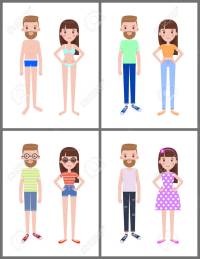 The clothes we wear represent how we feel, but can also help shape those feelings. It is amazing what an effect it can have if you get dressed smartly when you are feeling low. Likewise, most people like to dress in more relaxed clothing when they stop working, and we don’t usually sleep in the same clothes that we have worn during the day. Just because you are working at home, doesn’t necessarily mean that you will work well in your pyjamas (and imagine if you are suddenly asked to join a conference call without time to change!). The simple message is that we should continue to take care of ourselves, just as if we were going out to work or to a party!
 Enjoy the physicality of life. Don’t always feel you have to be online in case “work” wants to get in touch. None of us are that important. The world will get by perfectly well without us! There is a lot of evidence that being online late at night can also disturb our sleep patterns. Remember that although we are increasingly being programmed to believe that digital technology gives us much more freedom in how we work, it is actually mainly used by the owners of capital further to exploit their workforces by making them work longer hours for no extra pay!
 Being self-isolated at home will mean that you have vastly more time on your hands than you can ever imagine (as long as you don’t work all day and night). Use it creatively to do something that you have always thought about doing, but never had the time before. Read those books that you always wanted to. Learn a musical instrument. Learn to speak a new language (Python or Mandarin). Take up painting. Discover how to cook delicious meals with limited resources. Photograph the wildlife in your garden. Grow your own vegetables. Make beer. Even just plan your next (or first) holiday.


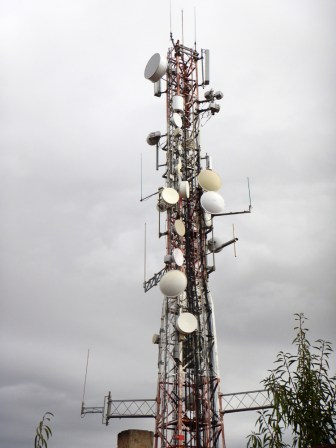 The impact of the large number of new cell towers and antennae that will be needed for 5G networks, as well as the buildings housing server farms and data centres also have a significant environmental impact. It is not just the electricity demands for cooling that matter, but the sheer size of data farms also has a significant physical impact on the environment.



 Tim Unwin's Blog