Category Archives: ICT4D

Opening ceremony of ITU Plenipotentiary 2014 in Busan

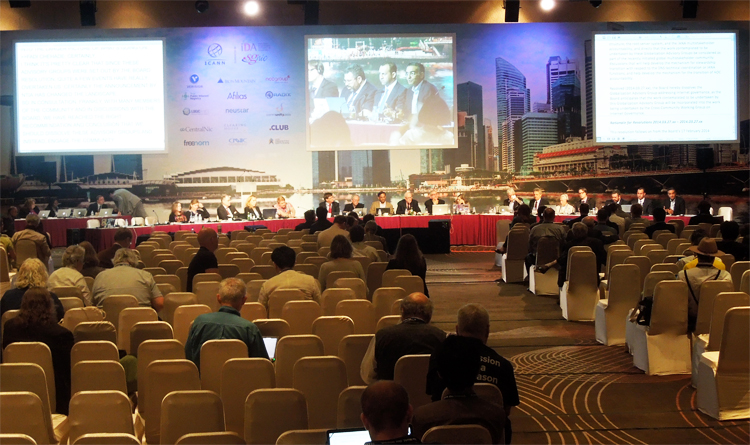
Just thought I would share some images from the recently completed opening ceremony of the ITU’s 2014 Plenipotentiary meeting in Busan.  This featured very sophisticated presentations of the Republic of Korea’s achievements in the field of ICTs, as well as the beauty of its traditional culture and dance.  South Korea is certainly an absolutely fascinating place, in which we have been made to feel most welcome.  It was good to see the emphasis placed on the use of ICTs by people with disabilities, and also Hamadoun Touré’s commitment to finding ways through which ICTs can be used to help resolve the current Ebola crisis in western Africa (see my regularly updated blog post on ways through which ICTs can indeed contribute).

This slideshow requires JavaScript.

Sorry I could not post these live during the event, but the WiFi system was down while President Park Geun-hye was in the room.  Let’s hope we all have a fruitful and productive Plenipot meeting.

Leave a comment

Filed under ICT4D, Photographs

On the contribution of ICTs to overcoming the impact of Ebola

I am regularly updating and revising this post (current update 21st December 2014; originally posted 12th October 2014), so that it brings together some of the most important work being done on ICTs and Ebola.  In recent weeks there have been a plethora of new initiatives, but there is now a very real danger of affected regions and people becoming swamped with far too much digital information, and over-eager digital enthusiasts actually impeding the delivery of effective interventions.

I remember a conversation with a dear friend from Sierra Leone back in May about the growing impact of Ebola in his country.  I remember him saying that it was already far more widespread than was being reported.  I remember sharing this information with many people that I met at that time.  I regret that I only started Tweeting about the seriousness of what was happening in West Africa on June 27th.  However, I have been Tweeting ever since, and have become increasingly appalled about the tardiness of the international response.  If appropriate action had been taken in May and June, if appropriate support had been given to the affected countries at that time, and if appropriate care had been given to communities and individuals affected, then I have absolutely no doubt that thousands of lives could have been saved across the world.

It is simply not good enough to say that we should be concentrating on practical action now rather than laying blame and being critical of the response to date – although there are some really very bizarre things currently being said in the mainstream and social media.  The most important outcome of the current crisis has to be an investigation of why so many organisations and individuals failed to take notice of all of the early signs, and failed to act to prevent the spread of the virus.  I also feel very angry that attention is only really being directed to dealing with the disease now that people are dying of it in Europe and North America. Undoubtedly, in the longer term, it is also essential that we all help build capacity in the health systems of poor countries so as to enable them to respond more effectively and swiftly to the outbreak of such diseases in the future.

In an effort to bring together some of the disparate information about ways through which ICTs can be used effectively to counter the spread of Ebola, I raised this issue among members of the ICT4D group on Facebook in early October 2014.  Surprisingly, there was not an overwhelmoing response.  Hence, I have tried to pull together some of the most interesting ongoing work, in the hope that it can be used as swiftly as possible to make a difference to the lives of people who are already affected and those who will become affected in the weeks and months ahead.  It is great to see that some other organisations such as Telecentre.org and TechChange have also started to do this.  Many, many poor people will die of Ebola before we get it under control collectively.  We must never make the same mistakes again.

Communicating accurate and relevant materials to affected individuals and communities
It is critically important that people know how to respond swiftly and appropriately when a case of Ebola is identified in their communities.  In the absence of an appropriate vaccine or cure, it is absolutely essential that early diagnosis and quarantine takes place.  Changing cultural behaviours, especially surrounding the  emotionally very distressing experience of death from Ebola, is extremely difficult, but if the rapid increase in cases is to be reduced, then this is absolutely essential.  The use of ICTs, in the form of radio broadcasts, television messages, videos and text information in local languages through the Internet and on mobile ‘phones can therefore play a very helpful role.  People can also use mobile devices to report where and when outbreaks occur, so that medical staff can respond more quickly.   An interesting recent development has been the way through which the Sierra Leone government has been providing a hotline through which worried people can contact officials for advice, but as ever there are many challenges with such a service, not least prank calls and the quality of advice given.  At last, though, some useful resources are being developed, and the following is a list of the ones that I have found to be of particular interest, value and importance:

A real challenge now, though, is that so many initiatives are trying to develop digital resources to support the response to Ebola that there is a danger of massive duplication of effort, overlap, and simply overload on the already stretched infrastructure, and indeed people, in the affected countries.  As Wayan Vota has noted in a useful overview at the end of October 2014, there are now more than 200 initiatives that are seeking to provide information relating to Ebola to communities.  Many of these are being developed with little if any real understanding of the practical realities on the ground in west Africa!  What, to me, is even worse, is the way in which many organisations and companies are now using this opportunity to generate income so that they can provide yet further Ebola resources.  The following examples are typical of this:

  • Afrelib’s Ebola Education Campaign – seeking $100,000 to fund Medikidz to develop a digital comic on Ebola for “kids”
  • Ebola Grand Challenge – USAID  partnering with the White House Office of Science and Technology Policy, the Centers for Disease Control and Prevention and the United States Department of Defense to launch open innovation platform, challenge competition and partnerships

These may indeed be ‘worthy’ initiatives, but my fundamental point is that too many people are now using Ebola as an excuse to get funding for their own initiatives and ideas, and this is leading to massive duplication, replication and overlap.  Moreover, by the time most of these initiatives might come on stream, the Ebola outbreak will either have been contained or will have become so out of control that none of these little projects will actually be able to make any difference at all!  We know how to deal with Ebola.  Countries such as the Democratic Republic of Congo have learnt how to manage and control Ebola.  If the world had acted back in May and June, using some of the lessons already learnt, we would not be in the situation we now are.

Communicating with sick relatives without touching them
Mobile ‘phones are excellent devices for communicating at a distance.  Whilst being very afraid of Ebola, family members want to communicate with their sick relatives – at a distance, without touching them.  Hence, the use of mobile devices can provide a really valuable and reassuring mechanism through which family members can communicate, when one or more of them are in isolation wards or quarantine locations.  Very simply, if sick people could be given mobile devices to communicate with their loved ones, then some of the pain and anguish could be alleviated.

Mapping the spread of the disease
ICTs can be used very effectively to map the spread of Ebola, so that medical administrators can respond more quickly.  As noted above, mobile devices can also be used to inform medical staff when a new case is identified.  Crowd-sourcing (such as Ushahidi) could be used effectively to develop such response maps, although we must recognise that many people are very afraid of reporting that a friend or relative may have Ebola. There has also been some reporting on the potential use of call data records – although I retain concerns here about the ethics of such usage.

Information networks for professionals and others dealing with Ebola
A growing amount of information is now available for professionals and those dealing with Ebola and so only a limited amount is noted below:

Funding and crowd-sourcing for resourcing support for Ebola victims and research on the disease
There is an enormous need for funding to support health workers in affected countries, not least by providing enough protective clothing.  Much work could be done on this, but there are few examples available.

Overall, this page is just a starting point.  PLEASE respond and add information to it so that we can all use ICTs more effectively for tackling this outbreak of Ebola which could easily have been curtailed if only we had acted together sooner.

13 Comments

Filed under Africa, ICT4D

Ebola and Security: on entering the USA

I had a weird experience on arriving at Los Angeles Airport yesterday.  For the first time ever, there was almost no queue as I approached the border guards for passport checking.  However, I did notice that they were wearing bright blue gloves.  My mind then starting putting two and two together, and I realised that the US was beginning to put into practice border checks for people with possible Ebola entering the country.  As I read the press this morning, I note increasing anxiety across the more developed countries of the world, especially here in the USA as it is reported that “A Texan health worker who treated Ebola victim Thomas Eric Duncan before he died is also infected with the virus, according to a preliminary test”.

However, as I leant forward to put my fingers on the fingerprint reader I realised just how ridiculous this is.  If someone with Ebola had a cut finger, or was sweating profusely in the queue before me, and I put my fingers where his or hers had been, what was the chance that I too could catch Ebola?  It was probably quite high.  So, by forcing me to have my finger prints checked, the US government could have forced me to catch Ebola, all in the name of border security.  I shared my reflections with the unusually pleasant official checking my passport, and he expressed real shock and worry, pointing out that no-one had raised this previously!

This seems to raise really interesting questions about the use of digital technologies for border security!  An answer, of course, is for any health checks to be done before people pass through passport security checks, but is this actually going to happen, and what  delays could it generate at international airports?

Leave a comment

Filed under Africa, ICT4D

Education Fast Forward’s Eleventh Debate: Mobile Learning for the Masses

LogoEducation Fast Forward (EFF) was co-founded by Jim Wynn, formerly at Promethean and now EFF’s Chief Executive Officer, to bring together some of the world’s leading figures in the word of education to debate key issues facing governments, educators and employers. Its aim is not only just to debate these issues, but more importantly to come up with practical solutions that people can adopt, particularly in ensuring that technology is used appropriately to deliver effective solutions that will make a step change in learning experiences. EFF also ensures that it puts its body where its mouth is, so participants can engage in the debates through a variety of different modalities, including the use of Cisco’s Telepresence and WebEx environments, and also through live webstreaming, Twitter and other social media.

The Eleventh debate on 17th September, chaired by the irrepressible Gavin Dykes, was on the theme of Mobile Learning for the Masses? Realistic Expectations and Success Criteria. It began with two tone-setting presentations by Professor Miguel Nussbaum (Professor at the Computer Science Department of the School of Engineering of Pontificia Universidad Católica de Chile) and David Atchoarena (Director of the Division for Policies and Lifelong Learning Systems at UNESCO).

Miguel-Nussbaum-100Miguel Nussbaum began with a summary of his long career in using technology for learning, ranging from his early experience of using netbooks and tablets in Chile, to more recent work with multiple mice and mobile devices. His main presentation focused on how technology is used in the classroom, addressing three main issues: the way we teach; how we use technology, and how we can integrate technology in the classroom so that teachers make good use of it, and that students can really learn. At the heart of his presentation were the arguments that it is not the technology that matters, but rather we should focus on how technology can be used to deliver on curriculum needs.

Daivd_Profile-100David Atchoarena then followed, emphasising once again that technology must be a means rather than an end. It has to be used to solve specific challenges and needs. Recognising that in 2014 we are nearly at the end of the period set for achieving the Education for All Goals and the Dakar Framework, he noted that whilst progress has been achieved, very real challenges still remain in three areas: literacy, gender equality and teacher shortages. In all of these areas, he argued that mobile technologies can indeed make a significant difference.

The subsequent conversation, bringing together people from across the world explored a wide range of issues related to the implications of these arguments in the context of mobile learning. For me, six main themes emerged:

  1. Relevance for the poorest people in the poorest countries. Without electricity and connectivity, the most marginalised people and communities are not going to benefit from the potential of ICTs, be they mobile or otherwise! While many argued that it is merely a matter of time before everyone everywhere is connected, Adrian Godfrey from the GSMA noted that, although there are more SIM card registrations than there are people in the world, only just under half of the world’s population have their own access to mobile devices. Against this background, David Coltart, the former Minister of Education in Zimbabwe, emphasised the critical financial and infrastructure constraints facing educationalists in many of the world’s poorest countries, especially in Africa.
  2. The need to work closely with teachers. Teachers are central to the learning process and the general consensus was that they have to be involved at the heart of initiatives designed to introduce technology into education. Whilst it was recognised that people can indeed learn using the Internet on their mobile devices without any teacher involvement, it was also argued most strongly that we have to focus on pedagogy and the role of teachers in using technology in the classroom. This is not just to do with the way we teach, but also with what we teach. As Miguel Nussbaum commented, we have to ensure that teachers are trained to be collaborative, interdependent and seeking common goals. The pedagogy has to come before the technology!
  3. The power of assessment and the curriculum. Closely linked to the discussion of the role of teachers and pedagogy were comments about the power of assessment. For some, we need to change the ways in which learning is assessed if we are truly to benefit from the opportunities offered by mobile technologies; as long as we ‘test’ in traditional ways, pupils will not be able to take advantage of all the opportunities for collaboration and interaction offered by mobiles. For others, it was the curriculum that matters most, on the grounds that assessment usually follows the requirements of the curriculum.
  4. The interests underlying the introduction of mobile technologies in the classroom. My main contribution fell largely on deaf ears, but I do believe that in understanding these processes we have to understand the interests underlying the introduction of such technologies into the classroom. This is primarily driven by the interests of capital, and the need for companies to generate the maximum profits from their investments in digital technologies. Operators need to draw traffic through their networks, and if people can be encouraged to use these to gain useful learning resources, and network better with their peers, then this has to be a good thing. For content providers, mobiles offer a huge opportunity for generating additional revenue. Until we understand these interests, and realise that they are not driven primarily by pedagogy and the learning needs of pupils, then we will continue to be bemused by the failure of ICTs to transform the learning outcomes of formal educational systems
  5. Mobile devices can transform the learning experiences of some of the world’s most marginalised people and communities. Despite all of the challenges, it was great to see a small group of participants arguing that mobile devices can have a huge impact on the learning experiences of those living in refugee camps (Eliane Metni from Lebanon) and people with disabilities. We need to do much more to ensure that this work is supported, because otherwise these communities and individuals will become even further distanced from the rich who have access to the latest digital technologies.
  6. A call for action. There is far too much talking, and not enough action! Michelle Selinger, in particular, argued that you will only get effective action through dialogue between teachers policy makers, industry and academics. She also emphasised that, while content is important, it is crucial to remember the potential of mobile devices for crafting new types of collaboration through voice, video and text.

Education Fast Forward does not just finish with the live debate itself, and the EFF website, as well as their Twitter account (see #EFF11) provide ready means through which to continue the discussion. Thanks Jim, Gavin and all of the contributors for a thought-provoking discussion.

Postscript:

There is a huge amount of ongoing work on the use of mobiles for learning, and the International Telecommunication Union’s m-Powering Development initiative has recently produced a useful report on m-learning that is highly pertinent to this debate. This highlights the following eight main conclusions about things that are essential for the success of any m-learning initiative:

  • It is essential to focus on learning outcomes not just the technology;
  • Teachers and users should be involved at all stages in the development and implementation of m-learning initiatives;
  • Sustainability, maintenance and financing should be considered right at the beginning of any initiative;
  • It is important to think holistically and systemically;
  • All relevant government departments must be involved in any m-learning initiative;
  • Equality of access to all learners must be ensured, otherwise m-learning initiatives will lead t greater inequality;
  • Appropriate and rigorous monitoring and evaluation must be in place; and
  • Participatory approaches must be utilised in design.

Some, but not all of these issues were captured in the debate!

Leave a comment

Filed under 'phones, Development, Education, ICT4D

Grameenphone hosted cultural dinner at CTO’s Annual Forum

One of the very real privileges of being Secretary General of the Commonwealth Telecommunications Organisation is the opportunity that it has given me to visit so many different countries and people across the Commonwealth.  It is so important that we celebrate our cultural differences and richness, rather than trying to create a single uniform market across the world! The CTO’s Annual Forum is always an occasion when our host countries share something of their culture, usually in the form of dance and music.  Last night was a very special occasion.  Grameenphone, which started with the Village Phone programme to empower the rural women of Bangladesh in 1997, became the first operator to cover 99% of the country’s people with network, and is now  the leading and largest telecommunications service provider in Bangladesh with more than 48.68 million subscribers as of March 2014.  It was such an honour to meet with Vivek Sood, CEO of Grameen phone and his staff, and I hope that the imagery below captures something of the  excitement, beauty and energy of this wonderful evening. Thank you so much to all of the dancers and musicians who shared so much of their culture with us.


This slideshow requires JavaScript.

1 Comment

Filed under 'phones, Commonwealth, Dance, Photographs

The damaging mythology of “Digital Natives”

The publication of Ofcom’s latest Communications Market Report, which provides interesting information about significant differences in usage of communications media, has led to a plethora of media commentaries perpetuating the mythology around the usage of the term “Digital Natives”.  A Guardian report  thus comments that “The advent of broadband in the year 2000 has created a generation of digital natives, the communication watchdog Ofcom says in its annual study of British consumers. Born in the new millennium, these children have never known the dark ages of dial up internet, and the youngest are learning how to operate smartphones or tablets before they are able to talk.”.

Ofcom summarised its report as follows: “Ofcom carries out research to help understand people’s awareness of technology and communications. Our research on people’s digital aptitude found that:

  • We’re at our most tech savvy between 14 – 15 years old – with an average score of 113
  • Over 60% of people aged over 55 score below average
  • Six-year-olds show the same confidence with technology as 45 year olds”

In this short post, I do three things: first, highlight the damaging effects that over-simplistic usage of terms such as “Digital Natives” can cause;  second, explore why such terms persist, and hence the notion of mythology; and third, point to  problems with the data upon which the Ofcom report’s conclusions are drawn.

Against the notion of “Digital Natives”
I had thought that the mythology surrounding “Digital Natives” had long been debunked, especially by the really excellent arguments propounded by my good friend Mark Weber, in his presentation on “Fear and Awe of the Digital Native“.  For anyone who has not read it, I strongly urge you to do so!  Rather than repeat all of Mark’s arguments, let me merely highlight four of the reasons why he suggests that it is a dangerous concept:

  • “Generational division simplifies picture
  • Assumes that ‘just because’ someone is young they have the necessary skill set to deal with modern economy
  • Presumes a level playing field for the young, ignores economic and social problems & differences
  • Places unwanted pressure on the young”

These are critical issues that must not be ignored, but I would like briefly here to develop four particular points that are in part alluded to by Mark:

  • Not everyone who is young is digitally literate, nor is everyone who is old digitally incompetent! Simply to categorise people in this way can be hugely damaging, not least to their self esteem.  If we wish to encourage older people to use technology, because of its assumed benefits to them, it is decidedly unhelpful to castigate them as being resistant to technology, or unable to learn about it.  Many older people are hugely competent at using digital technologies, and indeed teach younger people how to use them! Using Ofcom’s sample question test, for example, I scored more than 55% above the average score for people my age!!!
  • These differences are in large part structurally determined, rather than merely a factor of age.  Much more research needs to be done on reasons why people use digital technologies in particular ways, but there are very many structural reasons why people in particular age groups might respond to such surveys in particular ways (see below for problems with the actual questions asked in the Ofcom survey).  There are clear reasons why older people might not be as familiar with digital technologies as younger ones, not least because they may consider that they have better things to do with their time!  Moreover, not having access to the technologies, not being able to afford them, or their design being difficult to use can all affect such usage.  Elderly people with visual impairments or motility challenges find small digital devices difficult to use.  Most, although definitely not all, common digital technologies are not designed for use by people with disabilities, and similarly as people become older they too are often actually specifically marginalised by the technologies.
  • It implies that digital technologies are on the whole “good” and “beneficial”; we should all want to be natives! This again is part of the mythology surrounding “Digital Natives”.  However, as needs to be repeated over and over again, digital technologies have both positive and negative effects.  The word “native” is generally seen as being positive, and therefore it focuses attention mainly on the positive aspects of  the use of such technologies.  Sadly, the term “Digital Immigrants”, which is often used to refer to those older people learning how to use the technologies, has become associated with the more widely pejorative usage of the word “Immigrant”.  This is extremely unfortunate, because immigrants are actually often the people who bring in new ideas, and lead to changes for the better in a society! The notion that all digital technologies are definitely good must be debunked.  One need only think of the challenges of cybercrime, child online pornography, or the increased work load cause by e-mails to realise that being a “Digital Native” can actually be hugely damaging and dehumanising!
  • The notion of “Digital Natives” is a simple concept, that is easily remembered, but it is therefore highly dangerous because it implies some kind of causative power. There is nothing necessarily about young people that makes them any more adept at using digital technologies than older people.  The Ofcom report emphasises that, based on their survey, “Six-year-olds show the same confidence with technology as 45 year olds”, but this merely expresses confidence rather than ability.  If six-year-olds regularly play with digital technologies more than do older people, then it is hardly surprising that they have more confidence in their usage.  This does not mean that they are necessarily better at using the technology, or that older people cannot learn how to use it.  Persistence in the use of the term will only encourage older people to think that they are less able to use the technologies than they actually are, and might therefore further limit their potential benefit gains from digital technologies.  This is not to deny the considerable evidence that humans have greater difficulty remembering things, or learning new things as they get older, but it is to decry the arguments that suggest that there is something particularly about digital technologies that makes them harder than other new things for older people to learn.

Why do people still persist in using the term “Digital Native”?
The idea of students as “Digital Natives” and teachers as “Digital Immigrants” as first postulated by Mark Prensky in 2001 is indeed catchy, and it is not surprising that it became popular.  Like many popular concepts, it has an element of truth in it, and it appeals to those who like binary divides and simplicity.  Prensky’s paper concluded, “So if Digital Immigrant educators really want to reach Digital Natives – i.e. all their students – they will have to change. It’s high time for them to stop their grousing, and as the Nike motto of the Digital Native generation says, “Just do it!” They will succeed in the long run – and their successes will come that much sooner if their administrators support them”.  As founder and CEO of a game-based learning company, Prensky was  eager to encourage as many teachers as possible to adopt digital technologies in their learning, and this has been at the heart of the ‘interests’ that have subsequently underlain much use of the terminology.

Those who advocate the use of the term “Digital Natives” do so very specifically, so as to encourage even greater adoption of digital technologies, not only in the field of learning, but also more widely.  “Immigrants” are encouraged to adopt ever more technology so that they can become as proficient and ‘naturalised’ as are the “Digital Natives”.  Hence, a fundamental driver for use of this terminology is the profit motive of global ICT corporations, eager to ensure that as many people as possible are locked in to the new digital world that they are creating.

In the field of e-learning, a fear that teachers often have, especially in some of the poorer countries of the world, is that their role will be usurped by the machine, and that as “Digital Immigrants” they will be left behind by their students, the “Digital Natives”.  The traditional role of the teacher, as someone with knowledge to impart, rather than as someone helping others to learn, is thus seen as being fundamentally undermined by the use of digital technologies such as computers, the Internet and mobile ‘phones.  In such contexts, the use of an overly simple divide between Natives and Immigrants can be hugely damaging.  Instead, a more sophisticated approach to incorporating digital technologies in learning is required, recognising that it is a transformation for both teachers and students, and that only by working together can they develop a shared appreciation of the benefits that such technologies can bring.

Problems with research based on self-reporting
Interestingly, the Ofcom report itself does not actually use the words “Digital Natives”, but it does provide interesting information about how different age groups self-report on technology usage. Herein, though, lies a fundamental problem with the report, which is that the age-related conclusions are largely based on simple self-reporting questions that do not actually provide a reliable basis for the conclusions drawn.  As the sample questions indicate, the responses to one section require the person completing the questionnaire to give one of the following five answers to the question “Thinking about the following gadgets and services – which statement best describes your knowledge and understanding?”:

  • I use them
  • I know a lot about them, but I haven’t used them
  • I know a bit about them, but I haven’t used them
  • I’ve heard of them but don’t know much about them
  • I’ve never heard of them.

This relies on those responding to differentiate between “not much”, “a bit”, and “a lot”; one person’s “not much” could be another’s “a lot”.  Moreover, there is an inbuilt bias in such questions, because the same amount of knowledge abut technology is actually a much smaller percentage of an older person’s overall knowledge than it would be of a child’s knowledge.  This would tend to lead to younger people thinking that their digital knowledge about something was actually “a lot”, whereas an older person might see this as actually being “not much”!  The gadgets chosen are also somewhat problematic, including smart glasses such as Google Glass, smart watches, and 3D printers, not least because very few people actually use them as yet, and so the results will be biased to particular age groups that use them.

Another set of questions requires respondents to answer whether they “agree strongly”, “agree”, “disagree” or “disagree strongly” with a set of statements that include:

  • I like working out how to use different gadgets
  • My friend and family ask what I think about new gadgets
  • I know how to use lots of gadgets
  • I wouldn’t know what to do without technology

These questions are likely to be more comparable and reliable than the first batch discussed above, but similar challenges of interpretation can be found with most of them.  How, for example, does one quantify “lots of gadgets”? Moreover, agreeing strongly with the last of these would presumably lead to a high score, whereas only some reflection is required to suggest that it is actually deeply worrying for anyone to answer anything other than “strongly disagree”!

A further set of questions invites respondents to describe usage in terms of “regularly”, “sometimes”, “hardly ever” and “never” with respect to technologies such as online TV and text messaging:

  • I watch TV shows online (e.g. BBC iPlayer, 4OD)
  • I prefer to contact friends by text message than by phone call (e.g. by SMS, BBM, iMessage)

Again, these assume that all groups of respondents will differentiate between categories in the same way.  “Regularly”, for example, could be interpreted as “regularly, once a week”, whereas it would seem to be meant to mean very frequently!  Likewise, the difference between “sometimes” and “hardly ever” is not easy to define.

The Ofcom report has certainly provided interesting data about the use of communication technologies in Britain today, and it must be stressed once again it did not specifically use the words “Digital Natives”.  However, it must be emphasised that much of the data upon which it is based is somewhat problematic, and focused very much on perceptions rather than actually how people use technologies.  These are, though, clearly related, and there is no question that people from different backgrounds, cultures, ethnicity, gender and age all use devices in different ways.  The way on which journalists have picked up on the term “Digital Native” is, though, disappointing, and continues to promote what I see as a damaging mythology.  It is great to know I am not alone, and that today “The Herald” in Scotland also runs an article called “Myth of the digital native”!


 

12 Comments

Filed under Development, Education, ICT4D, Social Networking

Dissatisfaction with Virgin Media’s advertising and complaints management – eventually with a happy ending

My original post…

Not having had a response to the e-mails I have sent to Virgin Media complaining about their misleading advertisements and poor complaints management, I thought I would share the evidence more widely. I have long been frustrated by the poor quality of Virgin’s service, but wonder actually if any other company is better!  So, to summarise my frustration over the most recent incident:

1. The advertisement – or hook
I received an e-mail from Virgin (below) encouraging me to upgrade to 50Mb broadband – definitely desirable!  It mentioned no extra monthly cost, but did specify a P&P cost of £5.99.  It had also mentioned that I would receive 5 free HD channels for the same monthly charge.

Virgin costs

I should have thought about it, because saying “from £5.99” could mean anything – even £599.00!  I did, though, rather foolishly expect the charge to be £5.99, and so was surprised when my order receipt came back showing that postage and packing was £9.99 (as below).

Virgin order

When I later received a new statement of the cost, they had in reality only charged me £5.99!  So why did they say £9.99 on the above?

2. Delivery date
I should have known there would be problems here!  In their original response, they gave me a delivery date of 10th July.  However, on 11th July they sent me advance notice of the delivery date which was to be on 15th July (“between 8AM and 9PM”) but no mechanism for letting them know whether or not I might be in that day.  As it happened, this was not going to be possible, so I sent them an e-mail asking if I could change the date.  Needless to say there was no reply.  Fortunately, a great neighbour received it for me.

3. Installation – two hours
I guess for most people the installation should be simple – rip out the old, and put in the new.  To be fair, the new hub has four ethernet ports and two bands at 2.4 GHz and 5GHz, and the set-up instructions were clear to use.  So, I got it up and running relatively quickly.  The challenge was that I had previously run my Mac Airport Express from my old hub (without any problems), and once plugged in to my new hub it would no longer work.  OK, you could say that I had no need for it, but I wanted the added security, and everyone’s computers were configured to the old network.  Try as I could, I could not reconfigure the Airport Express, and after exploring various threads about this discovered that I needed to upgrade its firmware.  Next problem, I could not do this running Mavericks!  Eventually, I worked out that using one of our old computers running an archaic version of OSX it might be possible to upgrade the firmware.  Success, but only after 2 hours!

4. No HD TV after all that!
One of the reasons for going with the new package was that it had advertised that it came with 5 free HD channels:

Virgin HDI clearly had not thought this through sufficiently, thinking it meant what it said: “5 amazing HD channels for no extra monthly fee”!  What they did not say was that I needed a new TV set-top box, since I did not already have HD.  However, they knew perfectly well that I did not have this, and so should have tailored the original advert to me accordingly!  Indeed, the real factor why I went for the offer in the first place was that I wanted the HD – and it appeared to be at no extra cost!  The 50Mb/s, although useful, was not really that much faster in practice, and it is only the download speed!  The upload speed is less than 4 MB/s.

5. The complaint
Try finding from their website  how to write to Virgin Media to register a minor dissatisfaction, or complaint.  It is almost impossible!  Eventually, I did find a form to fill in from their site – but it may not have been to the correct department!  I also wrote an e-mail responding to one of those they sent to me.  Needless to say, I have not yet had a reply!

I do just wish that their marketing material was more accurate, and that they provided a better level of personal service in terms of the information provided!

Subsequently – towards a happy ending…

My original post was written on 20th July, and now on 4th August I can report a more-or-less happy ending!  Following my complaint to Vodafone, I did receive a ‘phone call, and after some discussion my helpful and polite interlocutor explained that almost everyone now had a HD set top box, and they had assumed therefore that I had one.  To this, I pointed out that they should have known that I did not have one, and their systems could easily be tailored to provide personalised marketing.  He did, though, kindly agree to send me a new free set top box so that I could indeed benefit from the 5 (!) free HD channels.  Brilliant – or so I thought.  So, on a Sunday, I set about connecting the box – only to find that I could only ‘phone them to make the final connection between Monday and Saturday. Why didn’t I think that might be a problem?  Oh well, missed the Commonwealth Games that evening, but not a big miss in the long run, and I could at least do e-mails instead (mad indeed!).  Come Monday, all connected!  However, the remote controller did not work.  I tried everything – new batteries, re-booting, finding different codes to connect to my TV…  Nothing!  So, yet again, I ‘phoned Vodafone.  The polite interlocutor took me through everything I had tried, but again no success.  So, he agreed to send me a new remote  – taking 4-5 days to arrive.  To be sure, I could use the buttons on the set top box to control it in the meanwhile, but scrolling through channels one by one to find the right one is far from easy.  Come Friday, I came home to find that a new remote had arrived.  Lo and behold, insert the batteries and “wow!” it worked.  Why was it not that simple to start with?

Thank you Vodafone for eventually getting me up and running – but what dreadful marketing and service!

Leave a comment

Filed under ICT4D, UK

Trust, privacy and digital security

The pace with which the UK government is forcing through legislation to permit its security agencies legally to gather information about the use of digital technologies by people living in the UK raises ethical issues of the utmost importance. In the past, I have very much emphasised the significant concerns that citizens should have about the use of their ‘digital lives’ by both global corporations and governments. In so doing, I have sought to emphasise the interesting conjuncture of ideas surrounding the three concepts of trust, privacy and the law that lie at the heart of such discussions (for some early thoughts, see my 2010 paper on ICTs, citizens and states).

One of the most remarkable things about digital technologies, and particularly the extremely rapid expansion of social media, has been the ways that people have been willing to make so much information available for public view that was previously considered to be ‘private’. Why, for example, if people are providing so much of their information on-line for free should they have any concerns about whether or not governments make use of this? Social media companies have benefited hugely from the willingness of people to give for free without thinking too much about the consequences, and so too have those providing search engines and location based digital services.  So why should governments not likewise use this information?

In trying to unravel some of the complexities of these issues, it is useful to contrast two very different perspectives on what privacy actual is:

  • The dominant view would seem to follow Etzioni (2005) in accepting that privacy is in effect a good that can be weighed up against other goods. From this perspective, people are willing to give up some of their ‘privacy’ in return for various perceived benefits. Hence, people seem to be willing to let companies use information about their e-mail or search engine usage, in return for having a ‘free’ e-mail account or the ability to search the Internet for ‘free’ for some information that they want to find. Similarly, it can readily be argued that governments can, and indeed should, be permitted to pry into the lives of individuals in order to protect all citizens, especially if a justification, such as preventing potential ‘terrorist’ action can be provided.
  • An alternative type of definition of privacy, though, is offered by Friedman (2005) who instead sees privacy as a means through which we have power over our own lives. He emphasises the asymmetric power relationships between states and citizen. Few citizens, for example, possess their own tanks or fighter aircraft, and few have the digital analysis technologies that large corporations and governments possess. As he suggests, in referring to the state, ‘limiting its ability to protect us from bad things done to us by ourselves or by other people, may not be such a bad deal’.

In the past, I have very much supported Friedman’s arguments, and on balance still do. However, this is where notions of ‘trust’ become so important. From conversations in many different countries, I have come to the clear view that where people do not trust their governments, then they are much more willing for their digital lives to be known by companies, but where they do trust their governments then the reverse is the case. Governments have the power to do very bad things to their people, and digital technologies have the potential to offer them very large amounts of knowledge indeed in support of such actions.

The interesting observation to be made here is that it is actually the companies, be they ‘phone operators or social media corporations, that actually already collect this information on a regular basis, and indeed use it to generate their profits. Whilst there is much angst against governments for wanting to access some of this information, I am surprised at how little concern there actually is about the uses that companies already make of such information. Again, in part, this comes down to trust, but I think this is only in part. Companies seem to me to be much more circumspect in telling people actually what data they collect and how they use it. They leave the governments to take the flack in wanting to access such information!

The arguments currently being debated as the Data Retention and Investigatory Powers Bill moves through the UK Parliament are ultimately derived from social contract theory. In essence, building on the ideas of Hobbes and Locke in the 17th century, the idea that citizens are willing to give up some of their rights to governments in return for protection of their remaining rights has become central to much of the way in which our governance systems work. Following Etzioni’s line of thought, citizens might therefore consider giving up some of their privacy in return for greater protection from other citizens (or ‘terrorists’) who for whatever reason wish to do them harm. It becomes incumbent for governments therefore to show that there is indeed a very considerable increase in the potential threat to citizens from ‘terrorism’, or indeed any other harmful effects, if they want to pry further into citizens’ privacy.

This is, in effect, what the UK government is seeking to do, without perhaps illustrating the full extent of the threat. As I learn more about these matters, and speaking with many people who I have come to trust over the last couple of years, I am becoming increasingly aware of just what the level of threat is, and I am much more persuaded by the arguments that some greater surveillance might indeed be necessary. However, the challenge for a government is that it is difficult for it to indicate just what these threats are because of the obvious security implications, and so citizens have to place a lot of emphasis on trusting their governments.

How can this be achieved? The most important thing in building trust on such matters is to have as full, open and transparent a debate as possible amongst relevant stakeholders. Rushing legislation through Parliament is therefore unwise, unless the level of threat is very severe indeed. I cannot judge this, but unfortunately recent failures of trust over such things as the UK’s support for the USA in the invasion of Iraq over ‘weapons of mass destruction’, make it very difficult for people to believe a UK government of any political colour on such matters.

MPs would therefore be wise if they are to pass this Bill to insist that immediately in its aftermath a wide-ranging and fully transparent consultation should take place, so that the issues are debated openly and constructively. This will take a considerable amount of time, but will ultimately be worth it, not only in rebuilding trust, but also in reaching a wise decision on how to balance privacy and security.

This does not, though,  resolve the concerns raised by Friedman, with whom my own allegiance really lies. The balance of power between states and their citizens is indeed unequal, and there must be mechanisms whereby governments and their servants can be held to account for their actions and misdemeanours. It is here where I believe the law is so important, and it seems to me that judges have a particularly crucial role to play in determining the appropriate balance. The separation of the judiciary from the executive is another important heritage of the British political system, and one that is shared to a greater or lesser extent in many Commonwealth countries. Whatever outcomes are agreed on in the consultation that I encourage, they must be enshrined in a very carefully constructed legal framework that can indeed insist on the severest of penalties for misuse of the powers that are being discussed in Parliament as I write.


Leave a comment

Filed under Commonwealth, Development, Ethics, ICT4D, Politics, UK

ICT4D Post at University of Cape Town

The University of Cape Town Department of Computer Science is seeking to make a permanent appointment at Professorial level in 2015. The candidate for this position will be a highly-motivated individual with a PhD in Computer Science and an excellent track record in leadership, teaching and research. The successful candidate will be expected to develop and teach Computer Science courses at undergraduate and postgraduate levels, supervise postgraduate students and provide a leadership role in academic strategy, research and innovation. The candidate should also demonstrate the ability to initiate research programmes, secure external funding, and develop industry and academic partnerships.

The Department hosts the UCT interdisciplinary Centre in ICT for Development. A specialist in ICT for Development would be preferred, but candidates with interests in any field of Computer Science are invited to apply. Our BSc Honours degrees are accredited by the British Computer Society and we have a large cohort of MSc and PhD students.

The annual remuneration package for 2014, including benefits, is R887 399 plus a 10% annual scarce skills allowance.

Application process:

To apply, please e-mail the completed UCT Application form (HR201) and all other relevant documentation as indicated on the form, plus a 2-3 page research and teaching statement, with the  subject line “Professor: Computer Science” followed by the reference number, to Ms Edith Graham at recruitment04@uct.ac.za

Address: Staff Recruitment and Selection, University of Cape Town, Private Bag X2, Rondebosch, 7700.
Telephone: +27 21 650 5405 Departmental website: http://www.cs.uct.ac.za

The application form can also be downloaded at http://web.uct.ac.za/depts/sapweb/forms/hr201.doc

An application which does not comply with the above requirements will be regarded as incomplete.

Reference number: SR031 /14 Closing date for applications: 15th September 2014

UCT is committed to the pursuit of excellence, diversity and redress. Our Employment Equity Policy is available at http://www.uct.ac.za/downloads/uct.ac.za/about/policies/eepolicy.pdf

Leave a comment

Filed under ICT4D, Universities

Multistakeholderism and consensus decision making in ICT4D

ICANNOne of the fundamental challenges facing ICANN, and regularly articulated at its recent 49th meeting in Singapore, is how to reach consensus amongst the many different stakeholders with interests in the future of the Internet.  Having been doing research over the last 15 years on how to ensure success in multi-stakeholder partnerships (see for example my recent 2013 post, and an older 2012 post on partnerships in education) as well as working with a range of groups on consensus decision making, I find these discussions fascinating, not least for their theatrical quality but also for the apparent lack of knowledge exhibited on the very extensive research that has already been done on managing multi-stakeholder partnerships.

Two  intersecting themes seem relevant, not only to ICANN, but also more widely to the many other ongoing international debates on global governance, particularly with reference to ICTs. These are hugely complex issues, far too challenging to resolve in a simple blog post, but what I want to do here is summarise what I see as being the main issues that require resolution:

  • Multi-stakeholderism representation.  I have to admit hugely to disliking the term multistakeholderism, despite the fact that I frequently plead for people to use the term “multi-stakeholder” rather than “public-private” to refer to the kinds of partnership that are necessary to deliver effective ICT for development initiatives.  “Multi-stakeholder” is preferable because it emphasises that such initiatives require a more diverse set of stakeholders than just the private and public sectors, and that they particularly need to involve civil society. Most research on multi-stakeholder partnerships has focused on how to bring partners together to deliver particular initiatives at a national or local scale, and far less in the context of reaching international agreements (although see Jens Martens’ important work on the latter). The use of the term “multi-stakeholder” has nevertheless been clearly recognised by ICANN (albeit defining it in a very particular way, as treating “the public sector, the private sector, and technical experts as peers”), but a fundamental challenge is to identify the means through which each group can, or should, be represented in international discussions on critical ICT issues.  Four issues seem particularly problematic and pertinent:
    • Defining multi-stakeholders groupings.  Most work on multi-stakeholder partnerships recognises a triadic typology of  “states”, the “private sector” and “civil society”.  However, there are additional types of entity over and beyond these that might be involved under these headings, including international organisations, foundations, and indeed user groups.  These are sometimes treated as sub-sets of civil society, but on other occasions as distinct entities in their own right that could be grouped into additional categories.
    • Numbers and scale.  In global bodies concerned with international treaties, such as UN bodies including the ITU, governments usually have the dominant say, albeit that this say is increasingly being challenged. It is relatively easy to choose the entities that represent governments – they are, after all, finite in number – but for the private sector and especially civil society it becomes much more problematic.  UNDESA’s integrated Civil Society Organizations (iSCO) System thus currently maintains a database of more than 24,000 entries (see also the UN Global Compact’s list).  How can representation from this diversity of stakeholders be included, especially when it is often unclear who exactly these civil society organisations represent?
    • Representative democracy.  Invariably it is only the larger and richer companies and civil society organisations that are able to participate in major international gatherings – often quite simply because of the cost of so doing – although many UN bodies do indeed welcome civil society participation once they have been recognised in some way as members.  In crafting such partnerships, and in line with the notion of representative democracy, there can be value in seeking to involve some kind of representative mechanism, whereby stakeholders elect from their membership people or institutions to speak on their behalf. This prevents the decision making process becoming too unwieldy, but those not elected onto the “Board” can feel aggrieved and not-represented.
    • Governance structures.  The mechanisms for selecting representatives also depend heavily on the kinds of governance structure that are deemed to be appropriate for the purpose in hand. Even here there are difficulties because someone has to determine these criteria in the first place.  At a simplistic level, it would be possible to imagine a multi-stakeholder decision making body made up of a set number of members from each of the three key sectors of “governments”, “companies” and “civil society”.  Within this, there would then need to be mechanisms for determining how the elections would take place, and what the constituencies should be.  In the ITU, for example, members of the Council and the Radio Regulation Board are elected based upon regional groupings.
  • Consensus decision making and democratic representation.  One of the most fascinating aspects of seeking to reach global agreement on particular issues is the choice of the process that is used to seek consensus. When combined with representative mechanisms, most consensus building models use an aggregative process, whereby agreement is sought at one level (for example the “local”), and then representatives from that level  meet at a higher level (such as the “regional”) to seek wider consensus.  This can be a very effective mechanism for reaching consensus, but the ways in which the governance of such structures operate can lead to very different outcomes.  This is highly pertinent to discussions about governance of the Internet and ICTs. Six main principles and issues seem particularly pertinent here:
    • Consensus building requires good will on behalf of all of those involved.  Put simply, if there is not a desire to reach agreement on the part of some of those involved, then no amount of skilled negotiation will reach a successful outcome.  The first stage of any consensus building process must therefore be the need to convict all participants of the benefits of reaching a consensus.  Ultimately, those not willing to commit to this need to be excluded in the interests of reaching agreement among those who are willing to engage in the process.
    • Generally speaking, it often makes sense to try to reach agreement on the most contentious issues at the lowest/local scale, because most time can usually be devoted to reaching consensus here.  For example, if it is expected that different ethnic groups have very different views on a subject, then it makes sense for the difficult issues to be resolved at the lowest scale that can combine these multiple different ethnic perspectives.  However, this does not always work, since unexpected disagreements can emerge later in the process, which can prevent the final reaching of a consensus.
    • Moderation of the consensus building process requires great skill and patience.  All too often, inexperienced chairs or moderators are charged with seeking to reach agreement among a particular constituency, and this can rapidly lead to dissatisfaction and disenfranchisement with the entire process.
    • The choice of representatives to carry forward the discussion at a higher level is critical.  Such people need to combine excellent negotiation skills with empathy for the different perspectives that they need to represent.  They also need to be trusted by their constituencies.
    • Despite a tendency to wish to return to the lowest level to get final agreement on the principles agreed at a higher level, this often leads to the unraveling of the process.  This is largely because consensus decision making requires skillful bargaining, and not everyone involved at the earliest stages of a process may be aware of the issues that emerge later in the process that require resolution.  It is, though, particularly useful if the higher level discussions are open to participation from anyone who wishes to be an observer from the lower levels in the process, since this can serve as a useful check on the probity of the representatives and negotiators.
    • Ultimately, those involved in building consensus need to adhere to the fundamental negotiating principle that they should focus particularly on “What can’t you live with; what can’t you live without“!

If, and it is a big if, the global Interent governance agenda is seen as being concerned with reaching agreement amongst “governments”, “private sector companies” and “civil society”, then drawing on the above two main alternative model structures can be conceptualised:

  • Model A – initial consensus building at a national level
    • The lowest level discussions take place in national forums that bring together representatives of governments, the private sector and civil society
    • National representatives (not necessarily drawn from governments) then meet to reach regional consensuses, such as for East, North, Southern and West Africa.
    • Finally, representatives from these global regions meet to thrash out global agreements.
  • Model B – initial consensus at a sectoral level
    • The lowest level discussions take place in regional sector-specific global forums one in each region (such as East, North, Southern and West Africa) for representatives of governments, another for the private sector and a third for civil society.
    • Representatives from each of these regional sector meetings (or indeed subdivisions within them) then meet to reach a global consensus.  For example, there would be a global private sector meeting bringing together regional private sector representatives, and similar fora for governments and for civil society.
    • Finally, representative of each of the three main groupings meet at a global meeting to bring together the three broad swathes of governments, the private sector and civil society.

To date, it would seem that Model B has often been the preferred modality of consensus building in discussions about Internet and ICT governance. The ITU, for example, holds regional meetings in advance of its major conferences, where it seeks to reach agreement on key issues.

Significantly, most of the major international bodies working in the field of ICTs and the Internet claim in some way to be multi-stakeholder. However, the driving force for each entity usually tends to be from one or the other sectors, be they governments, the private sector or civil society.  Against this context, broadly speaking, ICANN (a private sector, non-profit corporation) has tended to focus on the interests of the private sector, the IGF as a multi-stakeholder policy dialogue (purportedly supporting the UN Secretary General) is widely seen as being the main vehicle for civil society participation, and the ITU is the UN agency generally accepted as being a predominantly governmental body (although defining itself as a “public-private partnership”).  A real challenge is how to bring these together – or whether indeed there is actually real interest in so doing.  Attempts to create a truly global forum, including the ill-fated Global Alliance for ICTs and Development (GAID) have largely failed, although the WSIS+10 process led by the ITU and involving other UN agencies continues to strive to bring a wide range of participants together.

This post is already too long, and barely scratches the surface of these complex issues!  However, we have to find a way to stop holding the same conversations in different circles, and actually create structures and consensuses that serve the interests of the poorest and most marginalised!


4 Comments

Filed under ICT4D, Politics, Uncategorized