
Category Archives: ICT4D

Google tracking

Why have I never noticed before that Google is really “Go, Ogle” – meaning “Go, stare at impertinently”?

In this context, the following report by Andrew Orlowski in yesterday’s The Register makes interesting reading:

“Google’s roving Street View spycam may blur your face, but it’s got your number. The Street View service is under fire in Germany for scanning private WLAN networks, and recording users’ unique Mac (Media Access Control) addresses, as the car trundles along. Germany’s Federal Commissioner for Data Protection Peter Schaar says he’s “horrified” by the discovery. “I am appalled… I call upon Google to delete previously unlawfully collected personal data on the wireless network immediately and stop the rides for Street View,” according to German broadcaster ARD. Spooks have long desired the ability to cross reference the Mac address of a user’s connection with their real identity and virtual identity, such as their Gmail or Facebook account. Other companies have logged broadcasting WLAN networks and published the information. By contrast Google has not published the WLAN map, or Street View in Germany; Google hopes to launch the service by the end of the year. But Google’s uniquely cavalier approach to privacy, and its potential ability to cross reference the information raises additional concerns. Google CEO Eric Schmidt recently said internet users shouldn’t worry about privacy unless they have something to hide. And when there’s nowhere left to hide…?”.

I have cautioned elsewhere about the implications of Google’s approach to digital information, and the enormous power that this gives the company.  This is yet another example of the lack of transparency, and the secrecy underlying Google’s approach to accessing information about individuals. It may well not be illegal for Google to access Mac addresses – but if the above report is true it raises fundamental questions about Google’s approach to ethics.

I have for a long time refused to have a Gmail account – and try to ensure that they have as little of my data as possible.  Perhaps the time has come for us to launch a global campaign to boycott Google?  How much ogling can we all stand? The trouble is that their search engine is really quite good!
2 Comments

Filed under Ethics

Reflections on the effects of the Eyjafjallajökull volcanic eruption

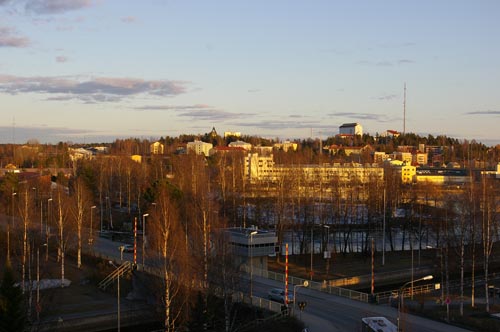
The transport disruption caused by ash from the erupting Eyjafjallajökull volcano has had enormous impact across the world, not only for economic activity but also for individual human lives.  Having been ‘stuck’ in the North Karelian town of Joensuu in eastern Finland for the last week, I have been interested and surprised by the emotional impact that this has had on me:

  • I discovered that eastern Finland is really a long way from anywhere!  Joensuu is four-and-a-half hours by train north-east from Helsinki, and almost at the same latitude as the Eyjafjallajökull volcano in Iceland!
  • Finland itself is amazingly isolated, and very much like an island.  Almost everyone who wanted to leave during the cessation of flights had to get ferries – from Turku or Helsinki to Stockholm, or from Helsinki to Tallinn.  According to travel agents, many of these were fully booked, and so it was difficult to ‘escape’.  The prospects of the Finnair offer of a 34 hour bus journey to Berlin, with two nights and a day on board, were not particularly appealing – especially when other parts of Europe seemed to be opening up their air-space. Most people who left, and took onward trains through Sweden and Denmark, or across Europe from Berlin took three or four days to get back to England!  Being in ‘mainland Europe’ would have been so much easier – a train from Prague to Madrid would, for example, have been simplicity itself compared with leaving Finland!
  • The most disturbing feature of the disruption for me was the uncertainty!  I was surprised how much not knowing when it might be possible to leave affected me – and particularly my ability to concentrate on work.  Might it be worth taking the bus to Berlin – and then the subsequent problems associated with getting a train back to the UK?  Should I go to Turku and hope for the best? When might flights start again?  Should I try to get a train to Helsinki in case the flights from there are going to be a better bet than risking a flight from Joensuu to Helsinki first?
  • It can be really lonely…  Thanks to all those friends who kept in touch on Skype, Facebook and by e-mail!
  • But I also discovered the real value of open-handed friendship.  After I had stayed a couple of extra nights in a hotel, Erkki and Päivi welcomed me into their home, and this transformed things.  Their hospitality enabled me to get on with some work (despite my difficulties in concentrating on it), and provided an enormous warmth of personal support.  They have been absolutely amazing, and I hope one day to be able to return the favour.
  • A real lesson to be learnt from this is therefore that we should all be generously open and welcoming to ‘refugees’ – from wherever they come.  Whilst it is completely inappropriate for those of us caught up in the dislocation caused by the closure of air space to draw comparisons with the experiences of political refugees, I do think I have gained a whole lot more insight into some of the anguish that they must face.
  • One can spend an age trying to rearrange flights!  Many, many calls to Finnair were ‘answered’ with a message saying that their system was overloaded – even at 05.00 in the morning!  Eventually, it took almost an hour of waiting earlier in the week to reschedule my flights for tomorrow  – but who knows now even if that will be leaving!
  • It’s therefore crucially important to take advantage of every opportunity that such chaos can afford!  It was great to visit Koli, and also to spend time participating in academic discussions and teaching at the Computer Science Department at the University of Eastern Finland – thanks for the opportunity.
  • This disruption also, though, shows the huge value of modern ICTs – the ability to hold conference calls with people in many different parts of the world, to receive e-mails (although not necessarily my ability to answer them all), to speak with loved ones ‘dislocated’ elsewhere (providing their ‘phones are charged), to find out information about the latest delays, to give a conference presentation at a distance (not easy – but see #beyond2010) and to find communal means of resolving travel problems (such as stuckineurope.com)! When the fuel runs out for ‘traditional’ air transport, life might become very much more human!

Apologies to everyone whose e-mails I have not responded to, and for the meetings I have missed!  I should have been back in the UK on the 18th – and it is now the 23rd.  Finavia this morning at last announced that “Based on the current forecasts all airports in Finland have been opened for air traffic and operate normally”, although lots of flights in Finland today have still been cancelled!  Hopefully tomorrow will improve, and I will indeed return home.  I intend to take a few days off – just to smell the late spring flowers, to taste some fine wine and to relax!

3 Comments

Filed under Ethics, Higher Education, Photographs

Google publishes details of requests from governments

Google has just published some fascinating data, and a map, showing the numbers of requests from government agencies around the world to remove content from its services, or to provide information about users of its services and products.

According to this, the highest numbers of requests for removals of data between July and December 2009 were from:

  • Brazil 291
  • Germany 188
  • India 142
  • USA 123

Similarly, the highest numbers of data requests were from:

  • Brazil 3663
  • United States 3580
  • United Kingdom 1166
  • India 1061

I was surprised by the high figures for Brazil, but as Google note “For Brazil and India, government requests for content removal are high relative to other countries in part because of the popularity of our social networking website, orkut. The majority of the Brazilian and Indian requests for removal of content from orkut relate to alleged impersonation or defamation”.  Likewise, in commenting on the high figures for Germany, Google comment that “A substantial number of the German removals resulted from court orders that relate to defamation in search results”.

Interesting observations indeed!  It is good to see Google becoming more transparent in such matters.

1 Comment

Filed under Ethics

Unleashing the Potential: ICTs for Development

I had the privilege of being a keynote speaker at the SciFest symposium on ICT for development and learning held in association with a meeting of the Computer Science Days of the Finnish Computer Society held at the University of Joensuu on 15th April. Here is a summary of the key issues that I raised:

  • The main question I sought to address was “How can Computer Science contribute to the lives of some of  the poorest and most marginalised people in the world?”
  • Much computer science seems to be very theoretical, and practised by people who prefer to remain in their familiar institutional surroundings
  • However, for those who wish to gain new experiences, insights and intellectual challenges, working in some of the poorest countries of the world offers great opportunities
  • Unfortunately, much so-called ICT4D research and practice tends to be top-down and led by people from Europe and north America
  • All too rarely does such research really address development needs
  • As privileged academics, we ought to listen much more to the stated needs of the poorest and most marginalised in crafting our research agendas
  • The private sector is likely to enable many relatively poor people to benefit from ICTs, but the very poorest – those with disabilities and street children – need interventions by governments and civil society organisations to help them use ICTs to achieve their aspirations
  • For those computer scientists not lured by the interests of capital, there remains the wonderful challenge of working for social agendas that can make a difference – both to their own intellectual benefit, and to the benefit of the world’s poorest people

Leave a comment

Filed under Africa, ICT4D, My Lectures

Digital databases and political campaigning

Those addicted to the potential benefits of digital databases, identity cards and biometric passports, often berate me for my concerns about  the ethical implications of the introduction of such technologies (see for example, the comments of “James Bond” in response to my blog on the Indian census).

Today’s report in the Sunday Times that the ruling Labour party in Britain has sent personalised cards to cancer sufferers, warning them of the implications of a Conservative victory in the election on May 6th should serve as a salutary reminder.  This is how it was reported:

“LABOUR has become embroiled in a row about the use of personal data after sending cancer patients alarmist mailshots saying their lives could be at risk under a Conservative government. Cards addressed to sufferers by name warn that a Labour guarantee to see a cancer specialist within two weeks would be scrapped by the Tories. Labour claims the Conservatives would also do away with the right to be treated within 18 weeks. Cancer patients who received the personalised cards, sent with a message from a breast cancer survivor praising her treatment under Labour, said they were “disgusted and shocked”, and feared that the party may have had access to confidential health data. Labour sources deny that the party has used any confidential information. However, the sources admit that, in line with other political parties, it uses socio-demographic research that is commercially and publicly available. The postal campaign started last month before the general election was called. This is the first election in which parties have been able to use internet databases and digital printing to personalise their mailshots. Labour has sent out 250,000 “cancer” postcards, each addressed to an individual, asking: “Are the Tories a change you can afford?” Many of those receiving the cards have undergone cancer scans or treatment within the past five years.”

Of course there are real benefits of digital technologies, but we do need to reflect very carefully on who has access to personalised digital records, and on how such information is used.

Leave a comment

Filed under Ethics, ICT4D, Politics

ICT4D Students at World Economic Forum

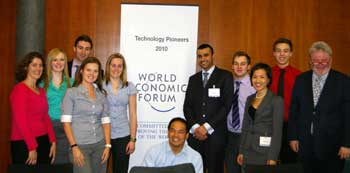
The final year undergraduate students studying ICT4D at Royal Holloway, University of London, have to do a formal presentation on some aspect of the course as part of their assessment (along with annotated bibliographies and a website – this year on Healthy Homes).

For 2010, we had the privilege of being able to convene these presentations at the World Economic Forum‘s offices in Cologny, Geneva on Thursday 8th April, on the themes of:

  • Why have mobile phones become so popular in Africa? (Alex Hamilton)
  • Education in Post-Conflict Zones: Pathways to Peace? (Helen Blamey)
  • Internet Access and Usage in Africa (Michael Hart)
  • What is really innovative about ICT4D? (James Huntley)
  • ICTs, Climate Change and Sustainable Development (Elizabeth Coulter)
  • Freeplay Energy: education and health solutions (Rickesh Patel)

Alex Wong (Senior Director, World Economic Forum), Joanna Gordon (Associate Director responsible for the ICT sector at the World Economic Forum) and Daniel Stauffacher (Chairman ICT4Peace Foundation) also gave short presentations on their work, as well as providing feedback on the student presentations.

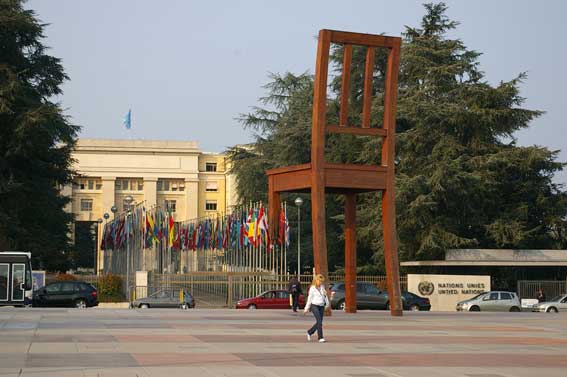
Being in Geneva provided an opportunity to see various UN buildings in the City, and some of the group also went on a six hour walk in the vicinity of Mont Salève (down from the Télépherique du Salève, through the villages of Mounetier and Mornex, and back to Veyrier) – a great opportunity to discuss ICT4D in the French countryside!

This slideshow requires JavaScript.

Leave a comment

Filed under Higher Education, ICT4D, Photographs

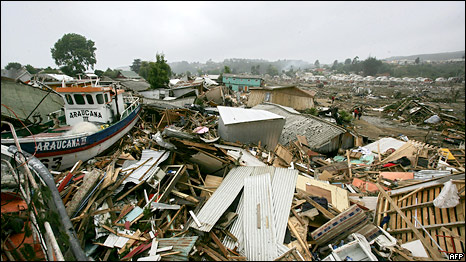
ICTs and educational reconstruction in post-earthquake Chile

How can ICTs best be used to support educational reconstruction in Chile following the devastating earthquake there on 27th February?

The Chilean Ministry of Education has established a task force to design a strategy for using ICTs to help alleviate the educational challenge of having some 500,000 children out of school for weeks, or even months, until new schools are constructed. They  need solutions that are practical, affordable and can be deployed rapidly.

A good friend of mine, Pedro Hepp from TIDE S.A, has been appointed to this task force and is eager to draw down on as much global experience as possible.  Much work has been done on ways in which ICTs can be used in the immediate aftermath of earthquake disasters, such as

However, many of these initiatives focus on the immediate aftermath of earthquake disasters.  Important as these are, the ’emergency’ aspects of Chile’s earthquake are now over, and the government is still facing the long haul of providing basic services to those who have lost so much. Now the spotlight of the international media has turned away from Chile, it is still important for people across the world to offer support and help to the victims of this devastating earthquake.

Please contact Pedro with advice and examples of good practices that have used ICTs in educational reconstruction following earthquakes elsewhere in the world.

[Photo from the BBC‘s site]

Leave a comment

Filed under ICT4D

Indian biometric census – beware of the dangers!

India’s 15th census has just been launched (Times of India, newsy.com video), with the physical count of people due to take place from 9th-28th February 2011.  Over the next year, some 2.5 million census officials will be visiting households across the country, to begin the process of recording information about them.

What is unusual about this census, though, is that every person over the age of 15 will be photographed and will also have all of their fingers fingerprinted, so as to create a national biometric database, information from which will be used to issue identity cards.  The first 16-digit identity number will be issued starting in November 2010 by the Unique Identification Authority, a new state department.

The first person to be listed was President Pratibha Patil, who according to the BBC, “appealed to fellow Indians to follow her example ‘for the good of the nation’.  ‘Everyone must participate and make it successful’, she said in Delhi”.

The government expects this to bring real benefits.  As the Times commented in July 2009, “It is hoped that the ID scheme will close … bureaucratic black holes while also fighting corruption. It may also be put to more controversial ends, such as the identification of illegal immigrants and tackling terrorism. A computer chip in each card will contain personal data and proof of identity, such as fingerprint or iris scans. Criminal records and credit histories may also be included”.

This is deeply worrying, and as with other such schemes fundamentally changes the relationship between citizens and the state. Interestingly, the initiative is being headed up by Nandan Milekani, the co-founder and former CEO of Infosys, who according to the Times has said that “we have the opportunity to give every Indian citizen, for the first time, a unique identity. We can transform the country”. Does he not realise that every Indian citizen already has a unique, and very special identity – in themselves?

Just because it is possible to do this, does not mean it is right to do so.  Not only are there profound ethical concerns about states creating databases of the biometric data of citizens, but there are also real practical problems. The opportunities for identity theft on a massive scale are very real, and should not be underestimated.  More worryingly, though, is the point that this changes the balance of power between individuals and the state, very much in favour of the latter.  If governments change, and people lose trust in them – as often happens – imagine what such governments might do with biometric data on all their citizens.  Imagine if Hitler or Stalin had had access to the biometric identities of all of the people living in Germany and Russia?  Imagine if the USA gained access to biometric data of everyone in the world?

The real winners in the promulgation of such digital initiatives are the companies who promote, design and manage them!  It is no coincidence that it is the co-founder of Infosys who is now chairperson of the Unique Identification Authority of India! Mind you, another group of people who will benefit hugely from the introduction of such technology will be those who make fake fingerprints for sticking onto your fingers – or even the plastic surgeons who alter fingerprints, as in the case of the Chinese woman who entered Japan illegally after having had her fingerprints altered…

5 Comments

Filed under Ethics, ICT4D, Politics

‘Collective’ reflections on plagiarism and the production of knowledges

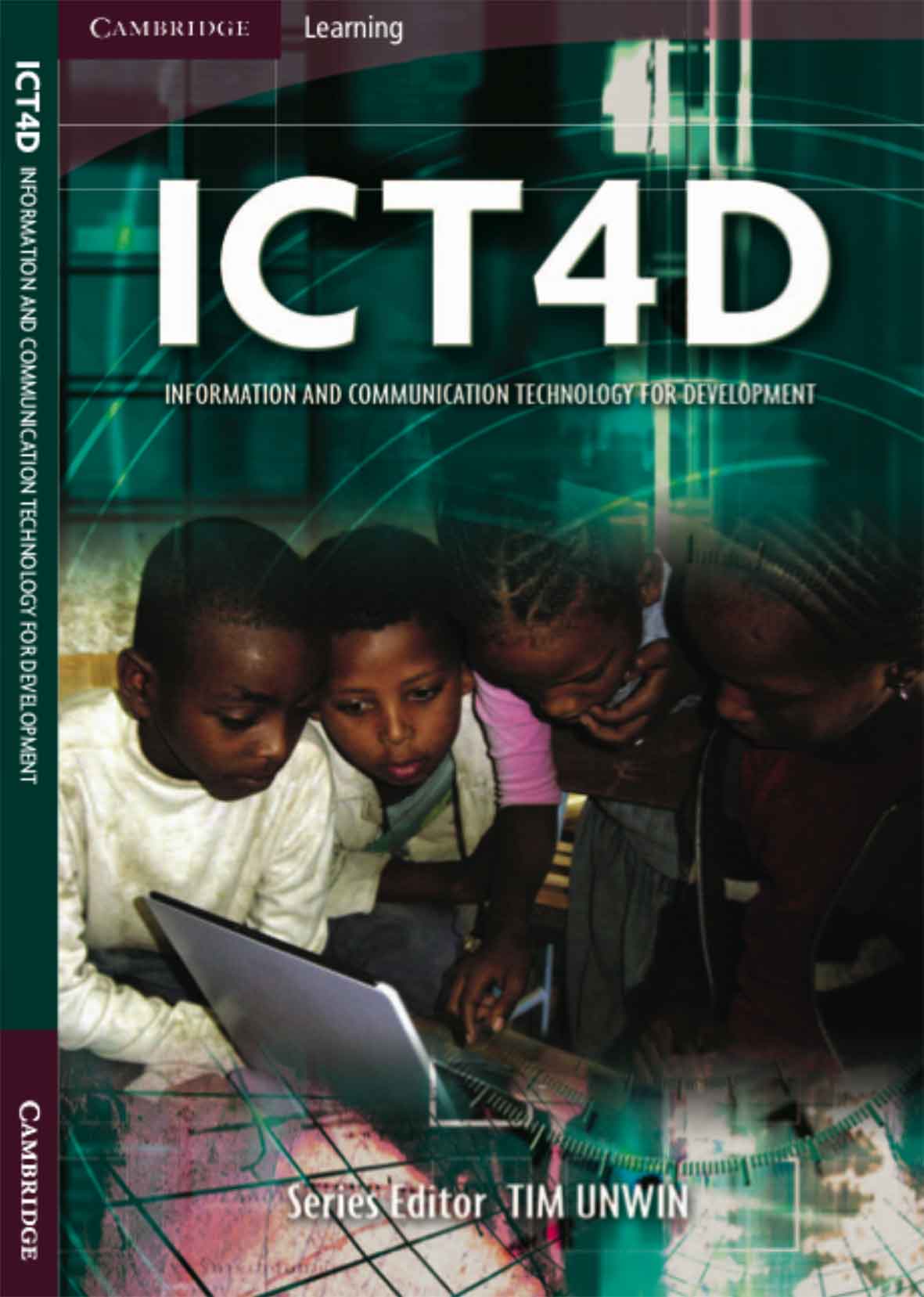
ICT4D BookParticipating today in a very interesting seminar organised by COPE (Committee on Publication Ethics) at Woburn House in London, made me reflect on actually why plagiarism is becoming such a ‘problem’, and on ways in which we might create alternative ideas about this.

The first question I wish to raise is whether ‘scientific ideas’ or ‘individual careers’ matter most?  As a starting point, let me suggest that actually it should be the ideas that are of most importance.  Yet, we always tend to associate ideas with people – hence, we have Nobel prizewinners who are individuals. It is authors’ names that are on articles.

But following my logic, if it is the ideas that are of most importance, then perhaps plagiarism actually becomes less of a ‘problem’.  Plagiarism is generally seen as the passing off of someone else’s ideas as being one’s own.  So, if we do not attribute ideas to people, but let the ideas in a sense speak for themselves, and make them available for public scrutiny through for example the Web, then the ideas that are deemed to be of most importance might, in a sense, float to the top by popular choice.

This is particularly important right now.  In the UK (as in many other countries) governments fund universities – both directly and through research councils.  Governments, very literally, pay academics to produce knowledge.  So, a case could be made for this knowledge to be ‘published’ under the government’s or research council’s ‘name’.  Imagine a world where there were no author(s)’s names on published articles.  Journal articles would just be known by their titles and the funding source.  Would not this be more open and honest?

What does the individual author’s name matter – other than for their own personal careers?  In a world where knowledge has increasingly become a commodity, where individual academic careers depend largely on publication records, where departmental and institutional reputations and thus funding rest on publications and grants, it is of course essential that authors are named.  That is why plagiarism is so important an issue. But if we want to fragment this system, if we believe in knowledge as something so much more valuable than a commodity, if we wish to make this freely available – if we want to be a little less selfish about our own careers – then perhaps, there is some value in my proposal.

After all, as one of my former PhD students regularly reminds me, where do our ideas actually come from?  We can never cite all of the influences on our writing.  I am quite sure that the inspirational lectures that I listened to as an undergraduate in one of the best universities in the world have influenced my subsequent writing.  The beggars I met on the street in Bihar have also influenced my ideas.  I am ashamed that I do not always cite them as influences on my writing – although I do indeed try to mention them in my acknowledgements.  In a sense, almost all of our written work is indeed plagiarised…

4 Comments

Filed under Ethics, Higher Education

Apple iPhone insurance scam – with a happy outcome!

How’s this for an interesting scam?

  • My daughter’s iPhone (in fully functioning order) falls out of her pocket on the kitchen floor.  The screen cracks (despite a rubber cover and a silicone protector on the front) and the ‘phone stops working
  • I ‘phone up our insurance company, and they say “Take it in to an Apple shop and get them to write a report – if it says it is not reparable we will refund, but you will need to pay £50 excess and lose 33% of your no-claims bonus”
  • So, my wife takes it in to an Apple shop in Cambridge, and they confirm in writing that it needs replacement – but they add that there is liquid inside the ‘phone.
  • On reading our insurance policy I note that it says that ‘phones are not covered for liquid damage. However, the ‘phone had never been submerged in liquid and was working fine before the glass broke when it fell on the floor. The reason it had stopped working was nothing at all to do with liquid. But by writing that there was liquid in the iPhone, Apple invalidates our insurance!
  • The Apple shop also notes that they will replace it for £139 since it is out of guarantee – which is VERY much less than a new replacement iPhone would cost (£449).
  • So, if we pay Apple only £89 more than the £50 we would need to pay as excess charge to our insurance company, we can get a new iPhone, and not lose our no claims bonus.  Theoretically we should be happy, and Apple would get the direct benefit of our payment as well as another sale!
  • However, this is completely WRONG.  The ‘phone had never been in contact with liquid (other perhaps than sweat) – possibly some moisture had come in subsequently as a result of the crack in the glass, but any presence of liquid was nothing to do with why the ‘phone was not working!  We should be able to get a new ‘phone simply for the £50 excess on our insurance policy! But Apple invalidated our insurance claim by saying that there was liquid in it!

So, now the bright side of the story:

  • My daughter then took the iPhone into the Apple shop in Southampton – and persuaded them to look at the ‘phone again
  • Guess what?  Yes, they found that the problem was nothing to do with liquid, but as we knew all along was a result of the cracked screen!
  • So, they repaired it (for the magical £139) and we are now sending off their report to our insurance company for the claim!

Thanks Apple Southampton!!

5 Comments

Filed under 'phones