Category Archives: ICT4D

Entourage glitches

I don’t seem to have much luck using Entourage (version 12.2.5) (yes, of course I am a Mac user) with OS 10.6.4 – and connecting to the university’s Exchange server !  So, as I manage to resolve issues I thought it might be helpful to others to post some useful tips.

Problems receiving e-mails:

  • If you can send e-mails OK, and all of your account settings are fine, this is most probably a cache issue
  • Go to the Inbox on Entourage, control click and access Folder Properties
  • Then simply click on Empty Cache [OK – any items that are not synchronised with the Exchange server will be lost, but it’s about your only way to resolve this]
  • But this solution has worked a couple of times recently [thanks to Matthew Convery for discovering it for me!]

When things go really wrong:

  • remember that Time Machine does not really back up your Entourage database effectively
  • about the only solution is to try to rebuild your database
  • In the past, I have been unlucky with this, but recently leaving the rebuild to sort itself out overnight did the trick, and the rebuilt database works
  • Mind you, the best solution is periodically to back up your Entourage database.  This is located in Documents – Microsoft User Data – Office 2008 Identities – Main Identity – Database [Entourage really does not like it when this file gets to around 10 GB!]

Leave a comment

Filed under ICT4D

Who’s watching who at LHR?

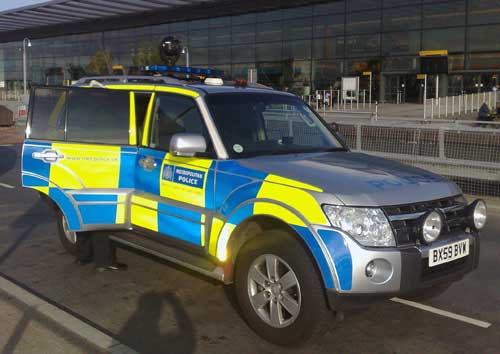
The extent of state surveillance in the UK increases apace. Imagine my surprise when I saw this police car with a surveillance camera on the roof when I was recently passing through London Heathrow!

Perhaps we should all start taking photographs of those who are taking photographs of us while we are going about our day-to-day business!

What happens to all the photographs that the police take of us?  Imagine what would happen if we all asked for copies of such photographs under Freedom of Information legislation! Just because it is possible for the state to photograph its citizens and store this information does not mean that it is right for the state to do so.

Leave a comment

Filed under Ethics, Photographs

IPID annual conference: 9th-10th September in Barcelona

The IPID annual conferences have become one of the major global events for young researchers in the field of ICT4D to share their experiences.  This year’s conference is being hosted by the Open University of Catalonia and the Polytechnic University of Catalonia on 9th and 10th September 201o and will be held at the Universitat Politècnica de Catalunya in Barcelona, Spain:

1 Comment

Filed under ICT4D, ICT4D conferences

Heading to e-Learning Africa, 26th-28th May 2010

This year’s eLearning Africa takes place in Lusaka, Zambia, later this week, and promises to be a great chance to catch up with colleagues working on ICT4D!  I have been lucky enough to participate in all of the four previous eLearning Africa conferences in Ethiopia, Kenya, Ghana and Senegal, and they have always provided a useful opportunity to learn about some of the latest developments in the field.  It is particularly good to meet African academics and activists committed to using ICTs to support the aspirations of poor and marginalised people across the continent.

Thanks to all those at ICWE who have been working so hard in recent months to put on the conference – I hope it’s a great success.

Leave a comment

Filed under Africa, Higher Education, ICT4D conferences

Google admits that its Street View cars collected WiFi information

The Guardian newspaper reported yesterday that “Google has been accidentally gathering extracts of personal web activity from domestic wifi networks through the Street View cars it has used since 2007”.

Can anyone really believe that Google did this by accident? The ‘discovery’ was made because Germany’s data protection authority demanded an audit of Google’s data. As the Guardian report continued “As well as systematically photographing streets and gathering 3D images of cities and towns around the world, Google’s Street View cars are fitted with antennas that scan local wifi networks and use the data for its location services”.

This is a clear invasion of privacy, and is absolutely typical of Google’s cavalier attitude towards the ways in which ICTs have transformed our approaches to what can be deemed ‘public’ and ‘private’ information.

Google’s blog on the 14th May, included a statement by Alan Eustace, Senior VP, Engineering & Research who commented that “Nine days ago the data protection authority (DPA) in Hamburg, Germany asked to audit the WiFi data that our Street View cars collect for use in location-based products like Google Maps for mobile, which enables people to find local restaurants or get directions. His request prompted us to re-examine everything we have been collecting, and during our review we discovered that a statement made in a blog post on April 27 was incorrect. In that blog post, and in a technical note sent to data protection authorities the same day, we said that while Google did collect publicly broadcast SSID information (the WiFi network name) and MAC addresses (the unique number given to a device like a WiFi router) using Street View cars, we did not collect payload data (information sent over the network). But it’s now clear that we have been mistakenly collecting samples of payload data from open (i.e. non-password-protected) WiFi networks, even though we never used that data in any Google products”.

Google went on to say that this was quite simply a mistake: “So how did this happen? Quite simply, it was a mistake. In 2006 an engineer working on an experimental WiFi project wrote a piece of code that sampled all categories of publicly broadcast WiFi data. A year later, when our mobile team started a project to collect basic WiFi network data like SSID information and MAC addresses using Google’s Street View cars, they included that code in their software—although the project leaders did not want, and had no intention of using, payload data”.

The point is that mistakes do happen; no digital system is entirely secure.  This is one of the reasons why they should not be collecting such data in the first place!  If they make mistakes such as this, how can anyone believe them when they say that they are not using the data?  They use all other data that they collect, such as information from searches on Google, and the e-mails people send using Google mail!

Eustace concluded by saying what Google would do about this incident: “Maintaining people’s trust is crucial to everything we do, and in this case we fell short. So we will be:

  • Asking a third party to review the software at issue, how it worked and what data it gathered, as well as to confirm that we deleted the data appropriately; and
  • Internally reviewing our procedures to ensure that our controls are sufficiently robust to address these kinds of problems in the future…

The engineering team at Google works hard to earn your trust—and we are acutely aware that we failed badly here. We are profoundly sorry for this error and are determined to learn all the lessons we can from our mistake”.

Google have not had my trust for a very long time.  Yes, they have a great search engine – but they should stick to that, and stop “ogling” at us in other ways!

It is also a timely reminder for those who do not protect their WiFi networks, that they should indeed do so with robust passwords!

Other reports on this announcement include:

Leave a comment

Filed under Ethics, ICT4D general

UK government cancels identity cards

I have long emphasised the ethical issues associated with the introduction of identity cards, and so it is good to see that one of the first steps that the new UK government has taken is to cancel their introduction.  The Home Office’s Identity and Passport website now carries the following stark statement:

“The Government has stated in the Coalition Agreement that it will cancel Identity Cards and the National Identity Register. We will announce in due course how this will be achieved. Applications can continue to be made for ID cards but we would advise anyone thinking of applying to wait for further announcements.

Until Parliament agrees otherwise, identity cards remain valid and as such can still be used as an identity document and for travel within Europe. We will update you with further information as soon as we have it”.

2 Comments

Filed under Ethics, Politics, Uncategorized

“Seen in Camden” – mobile CCTV

How many ways are there for states to keep an eye on their citizens?

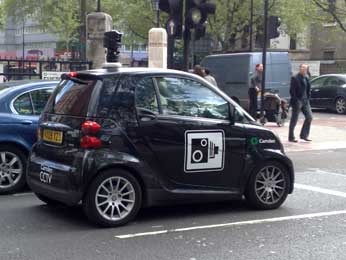
Yesterday, while leaving Euston station, I discovered yet another – mobile close circuit television cameras!  As the photograph on the right shows, Camden Council now uses mobile CCTV cameras as part of its armory to detect wrongdoing – and have apparently been doing so since 2004!

As the Camden Council site comments, these cameras “will be used for surveillance in public areas across the borough.  Operated by specially trained Police officers and Camden Council staff, the mobile cameras will help combat crime and anti-social behaviour, as well as improving road safety. Images of incidents captured by the cameras will be taken back to Camden Council’s CCTV centre in Kentish Town to be processed and passed to the relevant authority.  Unit operators will be able to radio for extra Police help where necessary”.

Mind you, the two men in the car looked quite surprised when they saw me taking a photo of the car!

1 Comment

Filed under Ethics, Photographs

Ash aftermath – Finnair and Vodafone charge exorbitant rates when trying to rebook flights

I’m sure that other people caught up in the air traffic chaos must be finding out now just how much their ‘phone bills have been charged when trying to rebook their flights!

I’m appalled to discover that it has cost me more than £600 in ‘phone charges – as a direct result of Finnair’s policies.  To rebook or try to rearrange flights, Finnair gave a number that people in Finland had to call – +358 600 140 140 .  What they did not say was that users were going to be charged even when their automatic statement that the lines were too busy and so could not even be answered was playing (in multiple languages)!  Yes, the Finnair site did say that there was a small charge per “answered call” – but not even getting in the queue to have a  human answer does not seem to me to count as an “answer”.  So, every time I placed a call and I could not even get into the queue, it cost me £5.50 – even for 6 seconds!  Then, when one passed that hurdle, and actually got into the queue to be answered, they kept charging.  Every time I waited to be able to book a flight home, the call was being charged. And they were so busy, that callers had to wait a very long time. Eventually, waiting for 39 minutes before being answered, and then having a 6 minute and 6 second call cost me £246.53.  At least I did get a flight home….

This is absolutely outrageous.  Vodafone, my ‘phone provider refuse to do anything about it, and likewise Finnair.  Let’s hope my insurers are feeling sympathetic. Under such unusual conditions, Finnair should have provided a freephone number, or at the very least have informed people that they were being charged even when waiting to receive a human answer.  But what else were passengers expected to do?  People who wanted to get rebooked onto another flight had to call that number.  This is unquestionably profiteering at the expense of stranded customers!  Guess I will therefore change my ‘phone supplier and never fly Finnair again.  What have other people been charged by their ‘phone providers and airlines?

…….

Now I am really angry – I wrote to Finnair about this, and this is the e-mail reply I have just received “We have had a lot of customer contacts in recent days, so we regret any delay in responding to your feedback. We will reply to you as soon as possible.The estimated answering time is 2-3 months. All the contacts will be handled in order of arrival. Thank you for your patience”.

Am definitely never flying Finnair again if I can possibly help it!!!!

3 Comments

Filed under Ethics

OLPC and the East African Community

A report today by the BBC highlights that a new partnership has been established between One Laptop per Child (OLPC) and the East African Community (EAC) to deliver 30 million laptops in the region by 2015.  As the report goes on to say, the EAC first needs to raise cash for the laptops!  It also comments that “OLPC has had difficulty selling its computers and its alternative vision of education around the world”.

I find such announcements hugely worrying. There have been sufficient critiques published on the OLPC model for governments, donors, and all those involved in education to be aware of the fundamental difficulties associated with its roll out (see for example Bob Kozma‘s comments in 2007, David Hollow‘s 2009 account of their introduction in Ethiopia, Scott Kipp‘s comments in 2009, and Ivan Krstic’s devastating critique of the concept and its implementation at the UOC UNESCO Chair in e-Learning Fifth International Seminar in 2008).

Let me here highlight what I see as being some of the most important issues:

  1. Cost – 30 million laptops at $200 each amounts to $6,000 million.  Might this money not be more effectively spent in other ways, such as providing teachers in East Africa with better training, or even simply remunerating them better so that they do not have to do several jobs at once in order to support their families?
  2. Pedagogic model – is there one? OLPC has claimed to be an educational initiative, but a fundamental problem with most OLPC roll outs has been that they have not been integrated into the existing educational structures.  In the worst instances, the laptops have been given to children but not to their teachers.  The tensions that this causes are immense.
  3. Lack of Content – the OLPC vision is  “To create educational opportunities for the world’s poorest children by providing each child with a rugged, low-cost, low-power, connected laptop with content and software designed for collaborative, joyful, self-empowered learning”. The problem is that there is very little available learning content suitably designed and integrated with the curricula in the countries where the laptops are being introduced.  Simply expecting young people to be able to learn by connecting to the internet is like throwing someone into the sea and expecting them to swim.
  4. Monitoring and Evaluation – there have been too few rigorous monitoring and evaluation studies to be able to say with any certainty what the impact of these computers might be in Africa.  Surely, we should undertake high quality studies of the educational impact before spending such huge amounts of money on rolling them out?
  5. Who gets them? This is a real issue.  In many instances, the choice about where the computers are given reflects social, economic and political interests.  The sampling strategy for the roll outs needs to be thought through extremely carefully, and not just left to some enthusiastic youth volunteers (as in the OLPCorps programme – the selection of participants for which is itself highly problematic and controversial). If XO computers do have a beneficial effect, then why should only some young people (in most cases those who are already privileged in some way) benefit from them?  Will they go to the poorest and most marginalised, those who most need help in isolated rural areas?  Ethiopia alone has an estimated 9 million children out of school.  Will they receive laptops?
  6. External technology-led initiatives – most of the evidence suggests that top-down, externally-driven and technology-led initiatives are much less successful than initiatives that are explicitly designed and tailored to the needs and aspirations of the people for whom they are intended.  It is crucial that we begin with the educational needs of people in East Africa, and then identify the most cost-effective way of delivering on them. As Bob Kozma says, “Is this an education project or merely a laptop project?”.
  7. Sustainability – what happens when the first batch of computers breaks down, or becomes outdated?  Let’s be generous, and estimate that each might last five years.  Can East Africa afford another $6,000 million in five years time?  What will happen to the debris of the old computers?  How will their materials be recycled, or will they just be dumped?
  8. The technology?  There are some great things about the technical achievements in creating the OLPC XO laptops – but anecdotal evidence suggests that actually it is not quite as good and effective as is often claimed.  In particular, there have been numerous issues with the mesh networking and connectivity when actually rolled out into the rural village conditions of Africa.

So, I ask again, why does there remain such euphoria about the OLPC initiative?  Surely, the East African Community has better things to spend its money on?  If only it could find the funds to support good education effectively, that would be a start! Nicholas Negroponte is a charismatic and enthusiastic champion of OLPC, but is it not time that he recognises that his vision is fundamentally flawed? African governments have better things to do than to be beguiled into spending their limited resources on such a delusional concept.

12 Comments

Filed under Africa, Entrepreneurship, ICT4D general

Go and ogle in Southampton and beyond…

Having just posted my last reflection on “Go, ogle”, I was in Southampton on Sunday and there it was – “Ogle Road”! This must be where the Google camera van/car/snowmobile/tricycles hang out when it’s dark and they cannot take the photos that their ‘masters’ want.

It did, though, also make me reflect further on the ethical issues surrounding Google’s Street View ‘technology’.  Much has already been written about this, but with the advent of Google’s 4th generation cameras that take near-HD quality images, and continuing debate in the EU about privacy issues associated with Street View,  for which we should all be grateful, it is worth once again highlighting some of the issues that this raises.

A recent report by Claudia Rach for Bloomberg Businessweek has some interesting comments from Michael Jones, Google’s chief technology advocate and founder of Google Earth:

  • “I think we would consider whether we want to drive through Europe again, because it would make the expense so draining”
  • “I think that privacy is more important than technology but for privacy people it is only about privacy but for us it is also about technology”

The first of these was partly in response to the suggestion that Google should only keep unblurred images for 6 months instead of a year.  Again, quoting from Rach’s report, Peter Fleischer, a Google lawyer in charge of privacy issues, said  “The need to retain the unblurred images is legitimate and justified — to ensure the quality and accuracy of our maps, to improve our ability to rectify mistakes in blurring, as well as to use the data we have collected to build better maps products for our users”.  This means that Google keep all this information unblurred on their servers – which, of course, means that Google and its relevant employees have access to it.  What happens when someone hacks into this information, or a government asks for it in connection with some important state ‘need’?

Jones’ second comment above is indeed surprising.  There is little evidence that Google has ever put privacy above technology.  Its technological prowess has been at the forefront of raising new ethical questions – one of which is indeed about privacy.

So, just to add to the debate, I thought I would come up with a list of ten interesting uses for Street View:

  • for car thieves wanting to plan where to steal particular brands of car to order – just look on people’s drives
  • for double glazing companies (or for that matter firms offering to redo your drive) to target individual houses that might be ripe for marketing – individualised targeted mailings
  • for revolutionaries (or what governments in capitalist countries call ‘terrorists’) to decide where best to plant explosive devices to cause maximum damage
  • for people wanting to reconstruct buildings on streets that have been destroyed by earthquakes (or other such disasters) – you can see how it looked a year ago
  • for burglars wanting to find the quickest getaway having robbed a property (see Phil Muncaster’s summary on v3.co.uk)
  • for recognising what your friends were doing when the Google car passed – yes, of course you can recognise people even with their faces blurred
  • for checking out those naked sunbathers
  • for finding exactly what that pub that your friends took you to last night looks like in the daylight when you can’t remember where it is
  • for checking out what the holiday villa you are thinking of booking really looks like
  • and as findaproperty says, “With the panoramic street level photographs you can get a feel for the property, its location and neighbourhood, before visiting it – which saves you a lot of time and means you don’t have to decided whether you want to view a property based solely on the description of the area as provided by the estate agents” – ah, isn’t that nice…

1 Comment

Filed under Ethics, Photographs