Category Archives: ICT4D

ICTs, Citizens and the State – seminar at Michigan State University

Thanks to colleagues in the Telecommunication, Information Studies and Media Department at Michigan State University for their valuable critique of some of my thoughts on the ethical dimensions of e-government initiatives following my seminar there today.  My paper examined the moral implications of the use of ICTs in e-government initiatives, focusing especially on national databases, identity cards and surveillance technologies.  It suggested that in resolving debates over these, we need to reach ethical resolutions concerning notions of trust, privacy and the law.  I also drew attention to the ethical problems that emerge in linking the notion of Universal Human Rights with the introduction of ICTs in developing countries.

In terms of general conclusions, the following seem particularly pertinent:

  1. First, there are indeed many complex ethical aspects associated with e-government, and while to date the emphasis among governments of developing countries, international agencies and donors has very largely been on their positive practical benefits, I suggest that we need to pay much more thorough attention  to their ethical grounding, and especially to the balance of rights and interests between citizens and the state.
  2. Second, in so doing, I suggest that three areas warrant particular attention, namely the ethics of trust, privacy and the law.   It is here that Geuss’s (2008) emphasis on existing real political contexts, rather than the imposition of some external ideal ethical solution, needs to reiterated.  The fundamental point I wish to emphasise is that in each country where e-government initiatives are introduced, people need to ask about the rights and wrongs of such proposals in terms of existing ethical understandings of trust, privacy and the law.
  3. I also sought to raise fundamental questions concerning the continuing validity of much of the human rights based policy and legislation that has dominated global agendas during the last 50 years – particularly in the context of e-government initiatives, and their implication for the rights of individuals and the responsibilities of states.  We need to open up for sensible debate the value of the emphasis placed on human rights, criticism of which is all too often seen as being politically incorrect and a taboo subject. However, if people do not actually have ‘rights’ that they can give up to a state, then we need to reconsider the whole edifice upon which such arguments are built.  An idealistic belief that people have universal rights has not been any protection for those who have suffered at the hands of those who do not believe in such rights.  There is therefore a strong argument that we need to shift the balance away from rights, and towards the responsibilities that people and states have for each other.  For example, rather than simply claiming that knowledge is some kind of human right, it might be a much more positive step to argue that states have a responsibility to enable their citizens to gain knowledge.
  4. Capurro (2007) has argued that ‘Western’ concepts of individual privacy are very different from the ‘African’ emphasis on communal traditions.  It may well therefore be that many of the existing models of e-government developed around European and north America notions of individual privacy are inappropriate in an African or Asian context, and that instead Africans and Asians should instead be designing new such initiatives around their own traditions and cultural practices
  5. Whatever the benefits to states, individuals and communities of e-government initiatives, there is no doubt that global corporations developing the hardware and software for such systems have been very great beneficiaries.  One of the difficult ethical questions that arise from this concerns how we judge whether it is better for poor and marginalised communities for such e-government initiatives to have been introduced, or whether they might actually be more advantaged if their governments did not spend vast sums of money on their implementation.  Just because it is possible to implement national citizen databases, to use biodata for ID cards, and to introduce sophisticated digital surveillance mechanisms does not mean that it is right to do so.

2 Comments

Filed under Africa, Ethics, ICT4D, My Lectures

Indian Visa Application Centre, Hayes

PLEASE NOTE THAT THIS POST WAS FIRST WRITTEN IN FEBRUARY 2010 AND SOME OF THE INFORMATION IS NOW OUT OF DATE – from 23rd November 2010 a new online application system was introduced – details are available at http://in.vfsglobal.co.uk/.  However, the information contained below may well still be of interest for those seeking to get to the Hayes office – for which the blog was originally intended!

————————————————————————————————————————

After reading some of the horror stories online about applying for a visa to visit India, I embarked on the process, and thought some tips might be helpful for others – especially about actually getting to the Centre in Hayes!

  • Yes, the online system is a bit clunky – and it crashed on me once without saving what I had done – which was a pain! But by automatically checking for completeness it did save time filling out the forms, perhaps incorrectly, and therefore having to redo them again.
  • Before embarking on completing the forms online, do check you have all the information to hand – down to the level of detail required about the place of both parents’ birth!  Unfortunately, there is not an easy to find guide to completing the visa form available in the drop-down menus!  One solution is to print out a hard-copy form from those available, and then use this as a guide.  The trouble is that not all of the questions asked are unambiguous!
  • The automatic fee charging system did indeed seem to overcharge me – as least compared with the advertised fees for visas! Watch out for this!
  • Make sure that you submit all of the relevant required documents, or have them with you (together with two photographs) when you go to the Centre.
  • For those taking the application form to the Indian Visa Application Centre in Hayes, there are many comments on the Web about how difficult this is to find!  It is actually very simple!  The Centre is accessed on the south side of Uxbridge Road in Hayes, just by the Grand Union Canal.  For those driving from the M4, take the A312 north to its junction with the A4020, and then turn east towards Southall.  Don’t take the first right down Springfield Road, but watch out for the large Currys superstore just before the Fiat car showrooms. That is the best place to park! Walk a short distance (c. 100 yards) towards the canal, and turn right just beyond the Fiat garage. The entrance to the Application Centre is then through some large metal gates  just  after the car park behind the garage. This is just by the A4020 label next to the canal on this map!
  • Once inside, you will receive a numbered ticket, and will then have to wait in the large seated waiting hall.  There are around a dozen service desks, and so the queue moves relatively quickly.  At 08.30 in the morning, I only had to wait about 25 minutes to be ‘processed’.  Opening hours for submission of passports are 08.30-14.30 Monday to Friday; passport pickup (usually withing 2-3 working days) hours are 13.00-16.30 Monday to Friday.

27 Comments

Filed under Higher Education, ICT4D conferences, Politics

Learning Management Systems in Africa

Our research paper on Learning Management Systems in Africa resulting from the DelPHE funded collaboration with colleagues in the University of Education, Winneba (Ghana), Maseno University (Kenya), and Eduardo Mondlane University (Mozambique) has just been published as

  • Tim Unwin, with Beate Kleessen, David Hollow, James B. Williams, Leonard Mware Oloo, John Alwala, Inocente Mutimucuio, Feliciana Eduardo and Xavier Muianga (2009) Digital learning management systems in Africa: myths and realities, Open Learning: the Journal of Open and Distance Learning, 25(1), 5-23.

In summary, the paper  reports on a survey of 358 respondents across 25 African countries into their usage of learning management systems. It concludes that while there are some enthusiastic advocates of such systems, the reality is that most African educators as yet have little knowledge about, or interest in, their usage. There remain very considerable infrastructural constraints to be overcome before they can be widely adopted for open and distance learning across the continent, and there is still reluctance in many institutions to develop systems that can enable learning resources to be made available in this way. This does not mean that the potential of high-quality digital learning management systems should be ignored in Africa, but rather that much more sustained work needs to be done in human capacity development and infrastructural provision if African learners are truly to benefit from the interactive learning experiences that such systems can deliver.

Leave a comment

Filed under Africa, Education, Higher Education, ICT4D

ICTD2010 call for papers and sessions

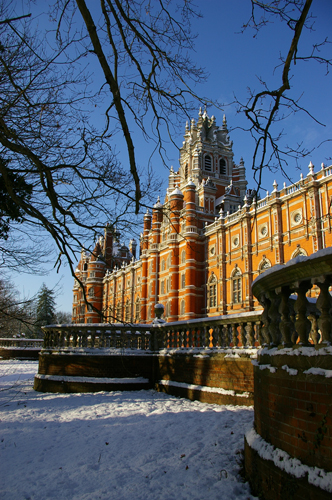
The calls f0r papers and sessions for the major ICTD2010 international conference being held at Royal Holloway, University of London, between 13th and 16th December 2010 have just been released.

The second and third days of ICTD2010 will primarily be for paper and poster presentations, whereas the first and last days will be  for workshops, panels and alternative events which could include open spaces, performances and exhibitions.

The deadline for all proposals and submissions  is 2nd April 2010.

Leave a comment

Filed under ICT4D

… and then the sun came out, Virginia Water, 7th January 2010

Following yesterday’s immense snowfall and dark skies, we awoke this morning to a gorgeous sunrise and freezing conditions.  Yes, the boiler stopped working again, but what does that matter when the weather takes its part in painting England at its best! Below is a selection of photographs of the scenery in Virginia Water, especially in the woodland surrounding the Wentworth golf course.  Enjoy!

For larger versions, just click on the images.

Leave a comment

Filed under Photographs, Story-telling

Snow in Virginia Water, 6th January 2010

Many parts of the world are deep in snow with temperatures well below freezing – Moscow is predicted to have a maximum temperature of -14o C today.  Our weather in the UK palls in comparison!  However, last night saw some of the heaviest snowfalls in southern England for many a year, which somehow creates a sense of exhilaration. Minor roads across the region have not been cleared, leading to many an ‘incident’ with cars sliding all over the place, and not being able to get up even relatively slight inclines.  Early this morning, attempts to help push drivers stuck on the hill outside our house proved surprisingly futile!  Some young people nevertheless managed to ‘enjoy’ themselves, throwing snowballs at passengers waiting to get on to the few trains that were running!  I know that this amount of snow is unusual, but Surrey County Council has done a really bad job of keeping local roads ice and snow free this winter.  To be sure, the weather has been extreme, and main roads should take priority, but in the last 20 years the local roads in north-west Surrey have never been as dangerous as they have been this year.

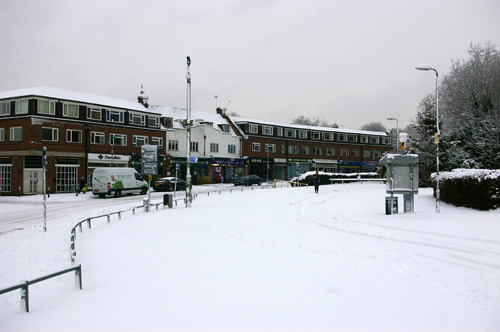
So, please enjoy these images from Virginia Water: snowing last night; at least 6″ of snow in the garden; the postmen had some fun at their depot; local rail bridge, not flooded for a change; Siam restaurant in the snow – a long way from Thailand; well done to South West Trains actually getting some trains to run; Wellington Avenue abandoned cars; the railway line; more abandoned cars; trees in the snow; Trumps Green Road trees; Trumps Green Road shops; and the car park by Station Parade.

1 Comment

Filed under Photographs, Story-telling

Google Dashboard

Readers of my Blog will be well aware of my previous criticisms of the company’s ambitions to gather all of the world’s knowledge on its servers, and my concerns over its infringement of traditional ideas about privacy.

It is therefore of considerable interest that Google has just launched Dashboard.  This is intended to provide users of Google services with a summary of all the information that Google currently lets users know that it stores about them.  This is what Google Dashboard shows when you visit the site:

googleAlways having refused to have a Gmail account, and limiting my use of Google, because I do not want the company to benefit too much from the information that they have about me (yes, of course, I use Google as a search engine  – albeit as little as possible – check out Cuil), I am delighted to see this limited opening up of their secrecy.  But just imagine, they will now be checking up on those who use Dashboard, and how they use it!

Google themselves claim under a heading Transparency and Choice that “At Google, we are keenly aware of the trust you place in us and our responsibility to protect your privacy. As part of this responsibility, we let you know what information we collect when you use our products and services, why we collect it and how we use it to improve your experience. The Privacy Center was created to provide you with easy-to-understand information about our products and policies to help you make more informed choices about which products you use, how to use them, and what information you provide to us”.

Brian Heater on PCMag comments as follows: “That whole ‘don’t be evil’ thing is all well and good, but when a company’s whole goal is cataloging the world’s information, it would–at the very least–be nice to know what Google knows about you. The company has just launched Dashboard, which aggregates the different information its gathered from 20 different Google products, including Gmail, Calendar, Docs, Web History, Orkut, YouTube, Picasa, Talk, Reader, Alerts, and Latitude. You’ll need to sign in to view your own personal information. Users can also edit account information from the page, such as privacy settings. Of course transparency doesn’t mean that you can’t still pat yourself on the back. The scale and level of detail of the Dashboard is unprecedented, and we’re delighted to be the first Internet company to offer this–and we hope it will become the standard,” Google said in a statement”.

So, will this actually make users realise exactly how much information and power they are giving Google, or will they consider that the benefits that they get from using Google’s services are worth it?  Google’s financial success has been based on persuading people to give them information for free from which they can then generate huge revenue. This has undoubtedly been one of the biggest business success stories – or cons, depending on how one looks at it – in recent years.  I watch with interest to see whether Google Dashboard will indeed persuade users that the company is as ‘innocent’ as it would like to appear to be.

1 Comment

Filed under Ethics, ICT4D

Can Miliband really be a serious contender for Europe’s foreign affairs chief?

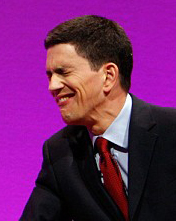
Miliband 3There is no doubt that David Miliband is bright, intelligent – and on occasions charming.  However, becoming Foreign Secretary seems to have gone to his head.  He has made too many accidental gaffes, and too many serious errors of judgement, for him to be considered as being a serious contender for the post of the European foreign affairs chief.

Yet the campaign for him to get this important post is gathering momentum as the front page headline in today’s Sunday Times, “No 10 backs Miliband for Brussels”, seems to suggest. As the article goes on to say, “senior No 10 sources have revealed that Brown believes Miliband is ideally qualified for the job”.  What does this say about Gordon Brown?  What does it say about others in Europe who seem to be supporting his campaign?  Indeed, what does it say about the European Union itself?  While Miliband currently denies that he is a candidate, the Sunday Times has been told that “he has had a series of conversations with senior European politicians about the Brussels job”.

First there was the banana incident – when he was photographed smirking at the Labour Party conference in 2008.  His defence according to the BBC: “Asked about the picture of the banana on the Andrew Marr Show, Mr Miliband said he was holding it because it was his Miliband 1breakfast, adding that worse things could happen and he did not take such things too seriously”.

But then there were also the photographs of him shaking hands with Gordon Brown at the conference – his face looked so pained that, although he avowed that the Prime Minister had his support, many suspected otherwise.

Whatever one thinks of the notion that a single person should represent the European Union’s foreign policy, if such a post is created it is of  critical importance that its incumbent is someone who is widely respected, who has astute political judgement, and is cultured in a deep understanding of foreign diplomacy.  It is here that Miliband seems to have failed so surprisingly in his role as the UK’s Foreign Secretary.  Take, for example, his visit to India at the start of 2009.  Underneath a headline “Miliband’s trip to India ‘a disaster’, after Kashmir gaffe”, the UK’s Indpendent newspaper commented that “David Miliband was beginning to look as accident-prone as Mr Bean last night after yet another adventure backfired. After ruining his chance of the Labour leadership by gurning at the cameras while brandishing a banana, the Foreign Secretary’s visit to India last week was labelled a “disaster” by the country’s leading politicians. He was accused of being “aggressive in tone and manner” in a meeting with the Indian Prime Minister and Foreign Minister, and dismissed as a “young man” by senior officials”.  Typical of comments in India was V. Isvarmurti‘s political blog: “When he was appointed as Britain’s Foreign Minister he was supposed to be the youngest to that post for some thirty years. As such he was looked upon as a man of promise and also a bit too young or too premature to that post. He now proves, once in India, he is both premature and a bit over-excited too. Considering he comes to India with the knowledge that India was Britain’s one-time colony, he must have imagined and as most, it seems, may be still people there in Britian seem to imagine they can take India and the Indians granted. Much more shocking was the conduct of this visiting dignitary. He was both arrogant, aggressive as well as a bit hectoring. He seems to have imagined that he can talk and behave as he is used to, may be at home, back in Britain where such conduct and behaviour might be appreciated and considered as a sign of cleverness. But the young man was not only brash he was also a bit crass in not knowing good manners and etiquette”.

In the light of such comments, I find it difficult to understand why so many eminent people think that he should become Europe’s foreign affairs chief.

5 Comments

Filed under Ethics

Solving the crises facing UK universities

The time has come to ignite a debate about the real purpose of universities in the UK.  I believe passionately that universities should be about the advancement of knowledge, and the pursuit of excellence in research and teaching; they are not just about further education for the masses.  All too often universities in the UK are seen primarily in terms of their contribution to the economy. The incorporation of higher education within the Department for Business, Innovation and Skills during the government reorganisation of 2009 is just one symptom of how such thinking has pervaded not only government, but also the private sector and the public at large. All too often, charging fees for students is justified on the basis that graduates earn on average more than those without degrees.  Yet recent research based on figures from the Higher Education Statistics Agency suggests that many graduates do not actually add to their earning power by going to university (http://www.timesonline.co.uk/tol/life_and_style/education/article6832285.ece).

The OECD has long promoted the myth that there is something magical about a country having 50% of its population participating in higher education for the well being of the economy.  This is largely justified on macro-economic evidence suggesting a correlation between the percentages of a population who have been to university and GDP per capita.  However, the existence of such a correlation does not mean that having larger cohort percentages in higher education actually leads to greater economic growth; far from it, it can equally well mean that higher economic growth enables more people to afford to go to university!

In the late 1980s, the UK graduation rate was around 20%, and the government was eager to increase participation both for social and for economic reasons.  By 2004, the rate had risen to 39%, but government funding had not kept pace, leading to the familiar crisis of funding in UK higher education today. Public spending on university education in Britain is just 0.9% of GDP, which is well below Sweden’s at 1.6% (for a 40% participation rate) and the US’s at 2.9% percent (for a 37% participation rate) (figures from OECD’s Education at a Glance 2009 indicators).

What, though, is the evidence that having such percentages in higher education is indeed of benefit either to the individuals or the country, especially if we cannot afford to fund it properly?  Here, I wish to raise four issues that seem to me to be of particular importance:

  • Charging students fees for higher education is socially divisive and distorts the labour market. UK students already now graduate with an average debt of around £21,000, and this figure is set to rise substantially.  Unless they have affluent parents willing to pay off their debts, graduates are desperate to seek higher paid jobs so that they can start generating a real income.Is the so-called ‘education’ that they get, really worth this debt?
  • The academic abilities of many students entering universities is so low that they cannot achieve the academic excellence that universities should be aspiring to.  Many universities make offers to students equivalent to 2 Ds or 3 Es at A’ level.  The quality of education that such students receive can be good, but most students with A’ levels this low are unlikely to be at the cutting edge of knowledge creation in their later lives. How much intellectual benefit do they really gain from their degrees?
  • Going to university is often a lifestyle decision, and many students do not participate sufficiently actively in the pursuit of academic excellence. It is a scandal that students in the UK spend so little time on their academic studies. A report of the Higher Education Policy Institute surveyed 15,000 1st and 2nd year students in 2007 and found that the average time that they spent being taught and in private study was 26 hours a week (http://news.bbc.co.uk/1/hi/education/7011121.stm).  This is about the same amount of time that they spend in bars on campus!  In Portugal, students on average spend 40 hours a week on their academic work.  In effect, perhaps half of UK university students are doing what amount to part-time degrees, and yet they expect to get the same grades as those who can devote 40 or 50 hours  a week to their studies.
  • Grade inflation applies just as much at universities as it does for A’ levels.  Business leaders regularly bemoan the declining abilities of graduates.  Is this surprising given how little academic work many students do while at university?  Most university league tables include the percentage of upper second and first class degrees awarded as one of their key criteria.  With such an incentive, is it really surprising that many universities have devised intricate mechanisms to ensure that they award high numbers of such degrees?

None of this is to the benefit of the many keen and enthusiastic students from poor or otherwise marginalised backgrounds who aspire to go to a university to achieve academic excellence, and indeed move knowledge forward. Likewise, there are many outstanding and highly committed students who worthily gain excellent degrees – but my point is that there are far too few of these in our universities today.

Lest I am misunderstood, I should emphasise that academic excellence is something very different from elitism.  We must champion excellence through education and training at all costs.  Indeed, the demise of higher education in the UK owes much to a misplaced emphasis on reducing elitism rather than championing excellence.  Excellence and elitism are fundamentally different concepts.

So, how do we get ourselves out of this mess?  My manifesto for the future of UK universities and continuing education contains four key elements:

  • Reduce the number of universities by approximately half, with funding for research and teaching coming primarily from the government.  Universities are meant to be communities of scholars who undertake research and encourage students to think critically thereby leading to the advancement of knowledge.  This reduction in size of the sector will not dramatically reduce research quality, since this is already highly focused, and it will enable those students who attend university to have a much higher quality of learning environment.  Civilised societies must have excellent universities not only to promote innovation but also to act as their moral consciences through critical reflection.
  • Create a raft of continuing learning institutions to provide excellent training and skills acquisition in fields deemed to be valuable by society.  These could, for example, be in fields as diverse as football, IT skills, dance, plumbing, language training, chefs, line repairers, music, welders, and care assistants.  Businesses, civil society organisations and government should play key roles in determining both the areas of specialism and the funding.  Their key attribute would be that they would encourage people to strive for excellence in their chosen field. Courses would be for up to two years (thereby providing a substantial saving of time and funding on current university three year degrees) and people of all ages would be encouraged to use them to gain the skills required for particular jobs.
  • The system would be underpinned by rigorous selection processes to help ensure equality of access based on skills and aptitude, thereby enabling those best able to benefit from different types of post-secondary learning to do so.  At the heart of this new system will be a rigorous evidence-based procedure to ensure that appropriate advice and opportunities are given to people as to the type of post-secondary learning that they embark on.
  • A redefinition of qualification titles. The awards given by the new continuing learning institutes must also be deemed by society to be as valuable as university ‘degrees’.  This will depend greatly on the quality of learning provision, but if they can provide learners with the skills to enable them to gain highly paid jobs, as for example professional footballers or chefs, then their status will be assured.  Indeed, it is even possible  that those wishing to pursue research careers at universities may well find themselves being paid much less in the future than mechanics and plumbers (http://www.thisismoney.co.uk/news/article.html?in_article_id=429176&in_page_id=2).

These are radical proposals, and will be unpopular in many quarters.  However, unless we engage seriously with the crisis facing universities and skills acquisition in the UK, we will continue to muddle along in perpetual mediocrity.  We once had a university system of which to be proud. Let us not be beguiled by recent announcements suggesting that ‘British universities dominate the world Top Ten rankings for the first time this year (http://www.timesonline.co.uk/tol/life_and_style/education/student/article6865260.ece, 8th October 2009).  UK higher education is in crisis, and it needs dramatic surgery to make it excellent.

5 Comments

Filed under Ethics, Higher Education

Emmanuel Jal at Africa Gathering

Emmanuel Jal smallEmmanuel Jal gave a moving rap-rendering and also a more formal account of his life as a child soldier in southern Sudan at today’s Africa Gathering in London.
Amongst his many activities, he is currently actively seeking sponsorship for educational activities in Sudan and Kenya.  The mission of his charity Gua Africa is “to work with individuals, families and communities to help them overcome the effects of war and poverty. Each of our projects focus on providing an education to children and young adults who would otherwise be denied such opportunity. Currently our work is in Kenya and Sudan, however in the future we would like to expand into other areas of Sub-Saharan Africa – working with other experienced partner organisations where ever opportunities arise”.

(video of his recent talk at TED) (Emmanuel Jal on MySpace)

2 Comments

Filed under Africa, Ethics, Music