Category Archives: ICT4D

Google and privacy

A BBC report raises concerns about privacy issues associated with Google’s new tracking service, Latitude.  This uses data from mobile phone masts, GPS, or wi-fi hardware to update a user’s location automatically.  Although it is an opt-in service, there are fears that not everyone may know that their phone is broadcasting their location.

There is, though, huge potential for such a service – not just as a fun way for friends to ‘keep in touch’, but also possibly for people concerned about relatives with dementia, or others who might get ‘lost’.

As ever, Google is pushing the boundaries in terms of how society uses technology, and the ways in which that technology in turn shapes society.

1 Comment

Filed under Ethics, ICT4D general, Uncategorized

Innovative global networking…

How’s this for a story?  Told to me by one of my PhD students…

A colleague in Ethiopia had just bought a MP3 player, but found some data already on it – so guessed it had been stolen! He could not translate the data, so sent it to a friend in the UK. Thinking it might be Korean, this friend then asked a Korean colleague in the UK to see if the owner’s name might be somewhere in the data – and it was! So the name was swiftly dispatched back to Ethiopia, together with the name of a primary school that was mentioned in the files. Armed with this information, the challenge was then to find out whether that person was actually still in Ethiopia. Via the school the Korean owner was tracked down and eventually they were able to meet up in person so that the MP3 player and the original owner could be reunited!

Lots of ideas come out of this: theft, friendship, digital music, linguisitic diversity, space-time and the inteconnected world, the lives of machines…

Leave a comment

Filed under ICT4D general, Postgraduate supervision

Submarine cables for Africa

Does anyone know of a simple one-stop shop to find out more about the progress of submarine cable development around Africa – particularly East Africa?  The following main initiatives are underway:

  • EASSy (The Eastern Africa Submarine Cable System) – MoU signed in December 2003
  • SAFE (South Africa Far East) – Commissioned in 2002 and built by Tyco Submarine Systems of the USA
  • SAT-2 – in service since 1993 linking South Africa with Tenerife
  • SAT-3/WASC (South Atlantic/West Africa Submarine Cable) –  linking Portugal and Spain to South Africa
  • SEACOM (South East Asian Telecommunication Cable) – commercial launch due June 2009 (Update from The Daily  Nation, Kenya)
  • TEAMS (The East African Marine System) – in 2006 the Kenyan government partnered with Etisalat to build its own fibre optic cable; in October 2007 Alcatel-Lucent was awarded the contract to lay the cable linking Mombasa with Fujairah in the United Arab Emirates
  • West Africa Cable System – formed from Infraco AWCC, SAT-4 and Uhurunet
  • MainOne Submarine Cable project from Portugal to Ghana and Nigeria (thanks for the link Jon) – first phase expected to be completed by June 2010 led by the Nigerian Main One Cable Company

Useful links include:

Please do add comments below relating to other sources of useful information about this topic.

17 Comments

Filed under Cable

OECD report on demography and higher education

The OECD has recently (2008 ) published an important monograph entitled Higher education to 2030 (Volume 1): demography (read only version)  In summary, this assumes that:

  • There will be continued expansion of student participation, with majority female participation, greater variation in student profiles and increased emphasis on issues of access and equality.
  • The academic profession is to become more internationally oriented and increasingly mobile. There will also be greater variety in academic employment contracts and a movement away from the traditional concept of a self regulated community of professionals.
  • Society will contain a greater proportion of graduates which will have implications for social well-being and economic growth, the gap between the number of graduates from OECD area and from emerging economies (especially China and India) will be significantly reduced and issues around the social exclusion of those without HE qualifications will rise.

It is a long – but interesting – read, and includes syntheses of much useful data.  It is good to see a chapter by Serge Enersold on ‘Adapting higher education to the needs of disabled students’.

1 Comment

Filed under Accessibility, Higher Education

Refurbished assistive technology hardware

I have long thought that it is close to obscene that ICTs designed to suport who-is-disabled1people with disabilities are often much more expensive than the standard computers and mobile ‘phones that most of us take for granted.  In large part, this is because of relatively low demand for assistive technologies.
However, ICTs can transform the lives of people with serious disabilities much more than they can help those of us who have fewer disabilities.

There is a huge debate about the value (or otherwise) of refurbished computers being sent to the poorer countries of the world – and there are clearly examples of good and bad practices in this field.  Ideally we should strive to bring down prices of assistive technology so that people in poorer countries can afford them – but the reality is that this is unlikely to happen.  It is great to see some companies such as Apple, building its universal access software into every computer it sells – but everyone is not so enlightened.

I am therefore exploring the possibility of working with companies producing assistive technology hardware and existing computer refurbishment organisations to collect and distribute such hardware to people in the poorer countries of the world.  I would be really interested in people’s thoughts on this – and particularly on offers of help.

In the meanwhile, the ICT4D Collective has a page on accessibility/disability which might be of interest to readers of this blog!

Leave a comment

Filed under Accessibility

Grassroots comics

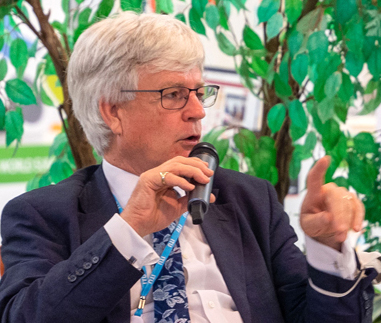
I’ve just come across an excellent small book on how to use comics in grassroots development work, writtencomic2 by Leif Packalen and Sharad Sharma, and published in 2007 by The Ministry of Foreign Afairs of Finland.  Entitled Grassroots Comics – a development communication tool, it includes a wealth of practical guidance about how to use comics in development work, as well as examples  from across the world about ways in which comics have been used to support grassroots development initiatives.
Leave a comment

Filed under Communication

Social networking sites and surveillance

Christian Fuchs has recently published the results of a fascinating survey of the ways in which students in Salburg use and know about the surveillance implications associated with the use of social networking sites.  It presents a balanced critical account of the wider issues surrounding this important subject, as well as empirical evidence of student use.  In essence, they suggest that although students are generaly aware of surveillance issues, they are willing to take the risk because of the value they place on such communication.

Fuchs, Christian. 2009. Social Networking Sites and the Surveillance Society. A Critical Case Study of the Usage of studiVZ, Facebook, and MySpace by Students in Salzburg in the Context of Electronic Surveillance. Salzburg/Vienna: Research Group UTI. ISBN 978-3-200-01428-2.

Leave a comment

Filed under Ethics, ICT4D

ICT4D and Slumdog Millionaire

What’s the connection?

Well, according to a report by Shubhajit Roy in  Express India, Vikas Swarap (whose first novel Q and A provided the basis for the film Slumdog Millionaire) says that he was “was inspired by the hole-in-the-wall project, where a computer with an internet connection was put in a Delhi slum. When the slum was revisited after a month, the children of that slum had learnt how to use the worldwide web. … That got me fascinated and I realised that there’s an innate ability in everyone to do something extraordinary, provided they are given an opportunity. How else do you explain children with no education at all being able to learn to use the Internet. This shows knowledge is not just the preserve of the elite,” Swarup said, while talking about the project, in which NIIT chief scientist Dr Sugata Mitra had carved a ‘hole in the wall’ that separated the NIIT premises from the adjoining slum in Kalkaji in 1999. Through this ‘hole’, a freely accessible computer was put out for use and with no prior experience, the children learnt to use the computer on their own

A similar report, by Vikas Swarup, was also published in the My Week section of the UK’s Sunday Times on 18th January 2009

Leave a comment

Filed under ICT4D general

UK police plan to increase remote searching of home computers

The Sunday Times today reports that the UK’s Home Office has adopted a new plan to allow police across Britain routinely to examine covertly people’s computer hard drives.  As the newspaper comments “material gathered in this way incldues the content of all e-mails, web-browsing habits and instant messaging”.

This, once again, raises huge questions about the changes that ICTs are introducing into the relationships between ‘states’ and ‘peoples’.

The article goes on to note that this is part of an EU wide initiative: “Under the Brussels edict, police across the EU have been given the green light to expand the implementation of a rarely used power involving warrantless intrusive surveillance of private property. The strategy will allow French, German and other EU forces to ask British officers to hack into someone’s UK computer and pass over any material gleaned”.

We should engage in active debate about the morality and ethics of such interventions.  Are claims about ‘international terrorism’ really sufficient to lead to such a fiundamental change into the state-individual relationship?

It is undoubtedly already safer to revert to pen and quill!

Leave a comment

Filed under Ethics

Web Accessibilitiy Initiative’s new standards

Those interested in the use of the Web for and by people with disabilities will be gladdened by the announcement by W3C on 11th December 2008 that it had launched “a new standard that will help Web designers and developers create sites that better meet the needs of users with disabilities and older users. Drawing on extensive experience and community feedback, Web Content Accessibility Guidelines (WCAG) 2.0 improves upon W3C’s groundbreaking initial standard for accessible Web content, applies to more advanced technologies, and is more precisely testable”

Further information is available at:

Leave a comment

Filed under Accessibility