Full drafts of all the 31 vignettes contributed by other leading researchers and practitioners (together witgh ajudio recordings of them reading their contributions)
Digital Inclusion in an Unequal World (Episode 10) – Nick Hughes OBE on “The Power of Micro-Transactions”
This is the tenth episode of our podcast based on the vignettes contributed by friends and colleagues to Tim Unwin’s new book Digital Technologies in an Unequal World: An Empancipatory Manfesto. In it, Nick Hughes argues that “we must use technology to create new economic wealth by either helping someone make money or save money: market-creating innovation“. He then provides insights into how he thinks this can happen, suggesting that “The next phase of development will see digital payments linked to real-time economic output data. The use-cases are multiple, with the following being just a few: clean energy from distributed solar; earnings from tiny retail outlets unlocking working capital; and the lock-up of carbon into biochar rewarding buyers and sellers in the carbon markets”
All audio files relating to the book are also available on our podcast with a new episode every week.
Digital Inclusion in an Unequal World (Episode 9) – Emily Hickson’s contribution to “Nigel Hickson: a digital life well lived for others”
This is the ninth episode of our podcast based on the vignettes contributed by friends and colleagues to Tim Unwin’s new book Digital Technologies in an Unequal World: An Empancipatory Manfesto. Our dear friend and colleague, Nigel Hickson was to have written one of these vignettes based on his wealth of experience working on Internet Governance, especially for the British Government and ICANN, but his untimely death meant that he was unable to complete it. Instead, some of his friends have contributed very short pieces on what it was that made him so special, and a model to follow for anyone wishing to work at the policy level to ensure that the poorest and most marginalised can benefit from the use of digital tech. The full vignette can be read here.
All audio files relating to the book are also available on our podcast with a new episode every week.
Digital Inclusion in an Unequal World (Episode 8) – Judith Hellerstein’s contribution to “Nigel Hickson: a digital life well lived for others”
This is the eighth episode of our podcast based on the vignettes contributed by friends and colleagues to Tim Unwin’s new book Digital Technologies in an Unequal World: An Empancipatory Manfesto. Our dear friend and colleague, Nigel Hickson was to have written one of these vignettes based on his wealth of experience working on Internet Governance, especially for the British Government and ICANN, but his untimely death meant that he was unable to complete it. Instead, some of his friends have contributed very short pieces on what it was that made him so special, and a model to follow for anyone wishing to work at the policy level to ensure that the poorest and most marginalised can benefit from the use of digital tech. The full vignette can be read here.
All audio files relating to the book are also available on our podcast with a new episode every week.
Digital Inclusion in an Unequal World (Episode 7) – G. ‘Hari’ Harindranath – How May Academics Help to Empower Marginalised Communities Through Digital Tech?
This is the seventh episode of our podcast based on the vignettes contributed by friends and colleagues to Tim Unwin’s new book Digital Technologies in an Unequal World: An Empancipatory Manfesto. In it, Hari argues that “Empowering marginalised groups through our work with digital technologies, and striving to make the world a better place as a result may be lofty aspirations, but they are worth pursuing. That will require us all to get out of our comfort zones and find ways to prioritise outcomes, commit time and resources, and engage with communities on the ground, rather than in the ivory towers, to learn and gather evidence of impact and outcomes of using digital tech in the service of the world’s poorest and most marginalised”
The full vignette can be read in English here and all audio files relating to the book are also available on our podcast.
Digital Inclusion in an Unequal World (Episode 4) – Pari Esfandiari’s contribution to “Nigel Hickson: a digital life well lived for others”
This is the fourth episode of our podcast based on the vignettes contributed by friends and colleagues to Tim Unwin’s new book Digital Technologies in an Unequal World: An Empancipatory Manfesto. Our dear friend and colleague, Nigel Hickson was to have written one of these vignettes based on his wealth of experience working on Internet Governance, especially for the British Government and ICANN, but his untimely death meant that he was unable to complete it. Instead, some of his friends have contributed very short pieces on what it was that made him so special, and a model to follow for anyone wishing to work at the policy level to ensure that the poorest and most marginalised can benefit from the use of digital tech. The full vignette can be read here.
Digital Inclusion in an Unequal World (Episode 5) – Domenico Fiormonte on “The Geopolitics of Digital Knowledge”.
This is the fifth episode of our podcast based on the vignettes contributed by friends and colleagues to Tim Unwin’s new book Digital Technologies in an Unequal World: An Empancipatory Manfesto. In it, Domenico asks the important question “So who has the power today to ‘represent’ digitally the world’s languages, the core of human cultures?”. He answers: “It is a group of Western, predominantly English-speaking and U.S.-based corporations”. However, he concludes optimistically that “the real Web is becoming multilingual and multicultural, regardless of all its hegemonic and mainstream representations”
Digital Inclusion in an Unequal World (Episode 6) – Mei Lin Fung on “Learning from Land Rights so Data Rights are Right from the Get Go”.
This is the sixth episode of our podcast based on the vignettes contributed by friends and colleagues to Tim Unwin’s new book Digital Technologies in an Unequal World: An Empancipatory Manfesto. In it, Mei Lin Fung suggests that “The painful history of poorly defined land rights, which in the past led to displacement through lack of formal documentation, offers a crucial lesson for the digital age”. She concludes optimistically that “We still have time to shape the digital future so that it reflects the dignity of everyone it touches — and ensures meaningful participation for anyone, anywhere”
The full vignette can be read in English here, and it can also be watched on video here.
Tendani Mulanga Chimboza on the exploitation of young women: digital tech at the heart of the immoral economy
This is the first episode of our podcast based on the vignettes contributed by friends and colleagues to Tim Unwin’s new book Digital Technologies in an Unequal World: An Empancipatory Manfesto. In it, Tendani highlights how digital tech is being used to exploit young women in southern Africa. The vignette can also be read here.
Marine Al Dahdah on The Digital Privatisation of India’s Administration
This is the second episode of our podcast based on the vignettes contributed by friends and colleagues to Tim Unwin’s new book Digital Technologies in an Unequal World: An Empancipatory Manfesto. In it, Marine focuses critically on aspects of the digital privatisation of India’s administrative systems. The vignette can also be read here.
Ken Banks on Memories of Innovation for the Most Marginalised
This is the third episode of our podcast based on the vignettes contributed by friends and colleagues to Tim Unwin’s new book Digital Technologies in an Unequal World: An Empancipatory Manfesto. In it, Ken focuses perceptively on the reasons why so many digital initiative notionally intended to help the poor often fail to do so. As he says “I worked for 15 years trying to give a voice to, and support, the work of grassroots organisations through digital tech, butmy frustration in a wider development system that didn’t seem to want to do what they knew was best for those they were meant to serve eventually forced me to step away”. The full vignette can be read here.
Many of the authors have contributed audio recordings of their vignettes. These are available here, but are also being shared on a regular basis through the ICT4D blog and podcast over the next six months. Do follow the ICT4D Collective on Apple Podcasts to listen to these inspiring examples of how digital tech can be used constructively by some of the world’s poorest and most marginalised people, but also the reasons why most such initiatives fail sufficiently to serve their interests.
The book can be pre-ordered from Routledge using the link above, and for those who respond quickly there is a 20% reduction if you order before 23rd October 2025.
I have previously written at some length about why the UN Secretary-General’s Global Digital Compact (GDC) is a deeply flawed agenda.[i] I will not repeat those arguments in detail here, but they do provide important context for the comments that follow. The first revision of the GDC text, published on 15 May 2024, provides a useful opportunity to review progress, and assess once again its strengths and fundamental weaknesses. This is timely following the recent WSIS+20 summit in Geneva, where many people I spoke with seemed to be vehemently against the GDC in private, but few were willing to make public statements about it – other than those with a vested interest in its agenda.
In summary
The essence of the GDC – and why it is so flawed – is captured in its scene setting opening paragraph:
1. Digital technologies are dramatically transforming our world. They offer immense potential benefits for the wellbeing and advancement of people, societies, and for our planet. They hold out the promise of accelerating the achievement of the Sustainable Development Goals.
There are three fundamental reasons why this is so problematic:
First it adopts and propounds an instrumental view of digital tech, claiming that these technologies are transforming our world.[ii] There has in contrast been much literature in recent years that emphasises that it is not the technologies that are actually doing this, but rather that these changes are caused, deliberately and also perhaps sometimes unintentionally, by those who conceive, design, produce and sell them.[iii] It is these people, those I often refer to as the Digital Barons,[iv] and their acolytes (or “knights” – not necessarily in shining armour) who are actually the ones changing the world. We must focus on them, rather than the technologies they create, if we wish to gain a sounder understanding of the causes of change, and therefore what we have to do to rectify them.
Second, this opening paragraph’s claim that “They offer immense potential benefits for the wellbeing and advancement of people, societies, and for our planet” tells but half the story. Digital technologies are designed and used to do both harms and positive things, but this scene-setting statement chooses only to focus on the latter. It thereby reinforces the widespread focus by those promoting the view that digital technologies (as well as science and innovation more generally) are inherently “good”. This is nonsense. There is some recognition later in the first revision draft of a small number of potential harms caused by digital tech, but by failing to call this out in the opening paragraph those drafting the document reinforce the view that the harms are somehow an aberration, and that digital tech is inherently good. Harms are central to digital tech.
Third, those drafting the document link the GDC directly to the achievement of the SDGs and Agenda 2030, seeing digital tech as a saviour that will magically accelerate their success. Connecting everyone in the world, even if that were possible, would not necessarily solve the problems of poverty and inequality. It might actually make them worse. The SDGs were fundamentally flawed in their design and very few of them have any hope of being achieved by 2030. Not only is the economic growth agenda underlying them actually causing greater relative poverty in the world, but the use of digital technologies is also at the heart of this accelerating inequality and the increased damage being caused to the natural physical world. It is time to start looking beyond 2030 if we are to have any hope of making the world a better, more equitable, and nature-friendly place for humanity.[v]
The opening paragraph of the GDC did not have to be written in this way. It could have been drafted to reflect a completely different understanding of the use of digital tech in our societies, but that would not have served the coalition of interests between global capital and the UN Secretary-General’s Office that lie at the heart of the GDC.[vi]
These introductory concerns suffuse the whole document and summarise the main reasons why I see the GDC as actually being harmful to the interests of the poor and marginalised. The next sections go on to address in more detail some of the problems associated with GDC in terms of its novelty and claimed necessity, its use of language, and its modality of delivery. The penultimate section then notes some of the more positive attributes of the draft, before the final section highlights its most egregious aspects.
There is little if anything new about the GDC.[viii] We have been discussing these issues for at least a quarter of a century, and there is a wealth of material written about them, not least generated by existing entities such as the WSIS Process, the Internet Governance Forum and ICANN. Yet much of this does not seem to be sufficiently recognised in the GDC first revision.[ix] It is almost as though the UN Secretary-General and those in his Secretariat have recently discovered the importance of digital tech, yet know very little about it, and nevertheless wish to claim leadership over the global digital-development agenda. This revised version of the GDC reads much like a partial synthesis of existing knowledge in the field, rather than a significant proposal to create an innovative, wise and forward looking document.[x]
Moreover, para 70 has the audaciousness to propose that “We recognize the role of the Secretary-General in leading UN system-wide collaboration on digital and emerging technologies”. Why should the UN Secretary-General, who is already very busy, and appears to have little in-depth knowledge about the interface between digital tech and development, be charged with leading this, when there are many other people in the UN system (not least DGs or SGs of UN agencies) who have many years of good experience and understanding in this field and would be better suited to the task?[xi] It is positive that he appears to have recognized the importance of the ways through which digital technologies are being used to create a new type of world, but surely the Secretary-General of the United Nations should be delegating this to someone else more experienced for the task and be focusing instead on the fundamental purposes of the UN, such as those articulated in Article 1, Paragraph 1 of the UN Charter, which emphasises the core purpose of the UN as it relates to peace:
“To maintain international peace and security, and to that end: to take effective collective measures for the prevention and removal of threats to the peace, and for the suppression of acts of aggression or other breaches of the peace, and to bring about by peaceful means, and in conformity with the principles of justice and international law, adjustment or settlement of international disputes or situations which might lead to a breach of the peace”.[xii]
This is to my mind a much more pressing need for the world in the mid-2020s, than is his attempt to take a lead on the global discourse on digital tech.[xiii]
Language and intent
There are also very real issues with the language used in the document, particularly from a legal perspective. Two key issues need further consideration: the distinction between “must” and “will” in the wording; and also who “we” actually refers to.
There are seven uses of the word “must”,[xiv] and 36 uses of “will” in the GDC First Revision. Generally in contractual parlance, “must” is used to impose an obligation, whereas “will” is used to refer to something in the future, but not necessarily to create an obligation, although the context of any such usage has important implications for its meaning.[xv] Although some will see many of the “musts” and indeed the “wills” in the GDC as desirable, it is unrealistic to think, for example, that any government (see below on who “we” are) could agree to a document that requires them to agree to all of the “musts” or even more loosely to all the “wills”. Some may aspire to many of these, but aspiration is fundamentally different from agreeing that they “must” do something.
Even more concerning is that nothing is said in the document about what might happen to a country, UN agency, or other entity that fails to deliver on an obligation relating to a “must” (or even a “will”). Furthermore, none of the “musts” appears to be time-bound in the document, and so are presumably meant to be started, if not completed, forthwith, and certainly by 2030; most of the “wills” are likewise merely aspirational, without any time limit.[xvi] Ten of the paragraphs in the GDC relating to commitments do specify a date, as in “we commit by 2030 to”, but another eight merely say “we commit to”. It is unclear whether this distinction between must and will is a result of loose drafting, or whether a distinction in meaning is indeed intended.
There is also ambiguity in the meaning of the words “commit” and “commitment” in the text. Overall, there are 63 commitments listed under the headings “we commit by 2030 to” and “we commit to”, but the character of these commitments varies from vague aspirations such as “increase the availability of digital technology platforms…:” (para 13b) and “Foster an open, fair, inclusive and non-discriminatory digital environment for all” (para 21a), to much more precise ones such as “Develop, through multistakeholder consultations, effective methodologies to measure, track and counter sexual and gender-based violence which occurs through or is amplified by the use of technology” (para 30e). Most are on the decidedly vague side, and despite a commitment in para 9 to “pursue meaningful and measurable actions”, no clear criteria are given to measure any of the commitments. It is difficult to see how anyone could agree to something that is not clearly defined and has no real means of evaluating whether or not it has been successful.[xvii] Most of the aspirations when looked at in detail are also unattainable.
Second, it remains very unclear as to exactly whom the word “we” refers in the Global Development Compact. The Office of the UN Secretary-General’s Envoy on Technology (OSET) states that “The Common Agenda proposes a Global Digital Compact to be agreed at the Summit of the Future in September 2024 through a technology track involving all stakeholders: governments, the United Nations system, the private sector (including tech companies), civil society, grass-roots organizations, academia, and individuals, including youth”.[xviii] Those attending the Summit are defined as “world leaders”,[xix] which narrows the field a bit, but is noticeably rather in contradiction to the GDC’s claim to include “grass-roots organizations, academia, and individuals, including youth”. In practice, Resolution 76/307 of the UN General Assembly on the modalities for the Summit of the Future makes clear that the action-oriented outcome document of the Summit will be agreed by consensus through intergovernmental negotiations (para 4), and therefore implies that it is governments who will make the final decisions. Given that the Summit is due to be held on 22 and 23 September, only three and a half months away, it is difficult to see how this might be achieved. Moreover, throughout the GDC there is mention of the importance of “multistakeholderism”[xx] (better as “multi-sector approaches”[xxi]) and language as noted above that implies a diversity of stakeholders must be included. This is recognised in Resolution 76/307 para 11 which requests the President of UNGA to draw up a list of relevant others who might participate in the Summit. At one level, it appears that “we” means everyone involved, at another it seems to imply governments, and at another UN agencies with the UN Secretary-General at the helm (as noted above). Reaching agreement amongst governments, the private sector and civil society about the complexity involved around the future governance of digital technologies by the deadlines required for the Summit seems palpably unrealistic. In practice, it is likely to be governments, heavily influenced by the private sector and global corporations, who will make the decisions. There is no guarantee that this will be in the interests of the vast majority of the world’s peoples, and especially of the poor, weak and marginalised.
Practicalities of delivering the GDC
Reaching agreement on the conceptualisation of the GDC is bad enough; putting any agreements into practice would be even worse. Who will serve as its Secretariat and be responsible for delivery ? How will entities actually make their commitments? How will these be monitored and reported? Who will pay for the very significant costs involved?[xxii] What will happen if an entity fails to deliver all the “musts”, “wills” and commitments”?
It is difficult to see how any single body could oversee and deliver all of the 63 GDC commitments, especially by 2030. Although it is not made explicit in the draft, the imprimatur that it gives to the UN Secretary-General would suggest that one option could be that it is intended for it to be delivered by OSET.[xxiii] However, the staffing of this office would seem to be insufficient in both quantity and relevant experience to be able to deliver on such an undertaking. While some people working within the orbit of the Office, mainly in an advisory capacity, do indeed have considerable expertise relevant to “digital and development”, this is by no means true of many of the staff there.[xxiv]
It is therefore good to see that the first revision of the GDC does indeed make reference to “building on” some of the existing UN structures that do indeed address these issues. This is welcome news, and runs counter to some of the earlier talk suggesting that the UN Secretary-General’s office was seeking to take central control over the future of digital tech and development. WSIS is thus mentioned 8 times, and it is reassuring to note that it states explicitly in para 5 that “We remain committed to the outcomes of the World Summit on the Information Society (WSIS) reflected in the Geneva Declaration of Principles and Plan of Action and the Tunis Agenda for the Information Society”. Likewise, the Internet Governance Forum (IGF) is mentioned four times, including the suggestion that “We consider that the Internet Governance Forum has a key role to play in amplifying the Compact’s purpose and objectives to a global multistakeholder constituency through its national and regional networks” (para 73). Such statements though, do not go far enough in challenging the perception that the GDC process is merely reinventing the wheel, is unnecessary, and is making the same mistakes that previous efforts to reach global agreements around digital tech have made in the past. They also still suggest that WSIS, the IGF, and other processes such as the United Nations Commission on Science and Technology for Development (CSTD) should be subservient to the Compact. Why is the Compact needed if it does not actually have the capacity to deliver anything worthwhile and substantive?
On the bright side
The first revision of the GDC does have some elements that many people will find welcome. Not least, this is because it repeats much of what has been said previously in numerous global fora about the governance of digital technology and its interface with international development.
Its five unexceptional main objectives are to:
“Close all digital divides and accelerate progress across the Sustainable Development Goals;
Expand inclusion in and benefits from the digital economy for all;
Foster an inclusive, open, safe and secure digital space that respects, protects and promote human rights;
Advance responsible and equitable international data governance;
Strengthen international governance of emerging technologies, including Artificial Intelligence, for the benefit of humanity”.
Nevertheless, the wording of some of these is deeply problematic for the reasons outlined in my introduction above, and are discussed further in the next section.
There are also numerous, small items of detail that can be welcomed:[xxv]
The potential of new risks to humanity (para 3), although note that these tend to be phrased as exceptions or aberrations, rather than as fundamental characteristics of digital technologies;
Shared responsibilities that are necessary to anticipate and mitigate risks (paras 3 and 63), although little is said about the practicalities and partnerships necessary to deliver this;
The emphasis placed on inclusive, open, safe and secure digital space (Objective 3, paras 14, 22-35), although many of these are aspirational and again fail to recognise sufficiently the explicit and deliberate harms caused by the design and use of much digital tech;
The attention paid to accessibility and affordability (para 8g), although even here the assumption is about full participation (which serves the interests of global capital and surveillance), and ignores the notion of the “right not to be connected”;
Developing and agreeing principles for environmental sustainability (paras 8e and 47), although there is an urgent need to go much further than what is anticipated here in the GDC and Summit of the Future more broadlyt;[xxvi]
The need for robust cyber-security and information integrity standards and capacity (paras 20, 28, 30, 32, 34, 35), although the scale of what is required here is not sufficiently emphasised;[xxvii] it is also especially positive to see the emphasis that is placed on child protection (paras 23c, 31c);
The emphasis on “human rights”, mentioned 32 times will be welcomed by many, but there is also a need for this to be balanced by an equivalent emphasis on “human responsibilities” that redresses the focus away from the individual and towards the community;[xxviii]
The attention paid to the gender-based abuse, and especially to sexual violence (paras 29-30), although this needs to emphasise that it is across the full spectrum of gender identities, and that such violence also occurs to many other minorities who require equal attention and protection;
The protection of privacy (para 38a), although this increasingly seems a lost cause; it is good to see para 38d highlighting that “data collection, access, sharing, transfer, storage and processing practices are transparent, secure and in compliance with international law”; and
The emphasis placed in Objective 5 (paras 47-61) on the governance of emerging technologies; although as discussed further below this is rather limited in scope
Why “into the long grass” is a good option for kicking the GDC[xxix]
If some people enjoy spending time on developing initiatives such as the GDC, think that it serves their own interests, and can find people to fund the process, then who is to stop them? However, no-one should be under any impression that the proposed GDC document and process will make any significant difference to, or improve the lives of the many. Rather, as hinted at the beginning of this piece, it largely reflects an intriguing attempt to include and balance the power between global capital and national governments. It is a document that serves the interests of the rich and powerful against the poor and the weak and the marginalised. The best thing that could happen to it is that governments and UN agencies should reject it outright and condemn the UN Secretary-General and his acolytes for having wasted so much time and money on a vanity project.[xxx] That is hardly likely to happen, and so the second-best option would simply seem to be to kick it into the long grass. The UN has an uncanny knack of being able to do this, and so it is perhaps the optimal outcome that can be expected.
The fundamental problem with the GDC is that it is a product of a global system that has become ever more focused on serving the interests of those with power, especially the digital barons and the countries where they choose to live, at the expense of the world’s poorest and most marginalised people. It is premised on the basic assumption that digital tech is inherently good. This is fundamentally flawed. Most digital tech is developed and designed to enslave as many people as possible, so that profit can be extracted from them. In so doing, it also has devastating negative impacts on the environment. Many people are happy with this, and see it as being positive. I do not see it in this way, and I believe passionately that the global community (if such a thing still exists, or has ever existed) needs a fundamental rethink about digital tech if we are indeed to have a future.
As I argued in my earlier critique on the origins of the Global Digital Compact in April 2023, if it were to exist at all, it should be forward looking and far reaching focusing on three core challenges:
The fundamental changes taking place in the relationship between machines and humans (focusing more on cyborgs than on the latest digital-fetish, AI);
The fundamental implications for the environment as a result of the techno-digital-innovation complex that we are deliberately creating and thus our survival on planet earth; and
The increased enslavement (loss of freedoms) of humans by machines and their designers (I here leave open the option that the machines may one day design themselves).
On a more practical note, many aspects of the present framing of the Global Digital Compact are deeply problematic, and it if were to be adopted would make the matters it claims to want to solve even worse. In addition to the three main problems embedded in the opening paragraph, and summarised at the start of this piece, the most significant of these are (in broadly chronological order as they appear in the first revision document):
Its emphasis on human rights (first in para 5, and then mentioned 31 further times; see also above) is deeply problematic because it fails sufficiently to address the responsibilities or obligations of governments and individuals. Furthermore, it creates a tendency to focus on individual rights rather than communal responsibilities.[xxxi] In essence, the present rapid expansion of the use of digital tech in most people’s lives is deeply threatening to many kinds of “freedom”,[xxxii] and can thus be suggested to be inherently harmful to existing human rights law. It is either näive or deliberately misleading to claim that “Our cooperation will harness digital technologies to advance these rights”.[xxxiii]
The notion of digital divides in para 7(1) (and 7 further times; see especially Objective 1, paras 10-17, and para 22) has long ago been shown to be deeply problematic.[xxxiv] Digital tech is actually being used to increase inequality and thus divides, and so it cannot be claimed that these can simply be closed thrieugh further use of digital tech. We need to recognise that its untrammelled use causes inequalities at all scales.
The claim that the cornerstone of the Compact is inclusivity in para 8(1) (and 18 further mentions of “inclusive) ignores the realty that the poorest and most marginalised do not have a voice in such forums. Despite some efforts by the UN system to include diverse voices, and representation from all states, it remains (and is likely to do so in the future) the case that governments of small and poor states cannot afford (both in terms of time and funding) to participate in many such international gatherings on digital tech.[xxxv] Moreover, it is extremely difficult for most civil society organisations to stand up to the physical and financial weight of private sector companies in participating in such “multistakeholder” gatherings.[xxxvi]
The conceptualisation of development embodied in the SDGs and Agenda 2030, as mentioned in para 8(b), is essentially grounded in an ideology of economic growth that actually increases relative poverty.[xxxvii] The notions of eradicating poverty and leaving no-one behind therefore become unachievable and meaningless. Relative poverty will always be with us; it is an inalienable accompaniment to the ecomomic system that we have created, and will only be made worse through expanding the use of digital tech in its present modality.[xxxviii] Using phrases such as “Emerging technologies offer new opportunities to turbocharge development” (para 8i) are undoubtedly true, but ignore the fact that these will also dramatically increase inequality and exploitation of the poor.
The claims in the Compact over the potential of digital tech to “empower all women and girls” (para 8d) are ill-considered and illusional. Women and girls cannot all be empowered when there are so many men who are hostile to this and do not understand what they need to do to change their mothers’, sisters’ and daughters’ lived experiences. Moreover, digital tech is usually used to accentuate existing socio-economic and cultural characteristics: where there is equality it can help to maintain this, but where there is inequality it is usually used to exaggerate it.[xxxix]
The Compact’s focus on environmental sustainability (first mentioned on para 8e, and then twice afterwards) is at best over-simplistic. It pays insufficient attention to the very significant harms that are caused to nature and the physical environment by the design and use of digital tech. To be sure, digital tech can be used positively to reduce carbon emissions and monitor environmental change, but the UN needs to adopt a very dramatic change of approach to this issue if real environmental sustainability is to be achieved, such as the holistic approach proposed by the Digital-Environment System Coalition (DESC).[xl] The compacrt’s aim, for example, to achieve “net-zero” (presumably meaning net-zero carbon emissions) takes no cognizance of the other environmental harms that will be caused in seeking to do so.
As noted above, private sector interests lie at the heart of the GDC, as evidenced by paragraphs such as the principle 8(j) “Innovation-friendly: Creativity and competition drive digital advances. Our cooperation will foster innovation and the potential for societies and businesses, regardless of size or origin, to reap the benefits of digitalization and thrive in the digital economy”. This is where the true interests behind the GDC are to be found, and do not provide the basis for a better world. Para 11(b) for example, places emphasis on new methods of funding, which in effect are designed to reduce the costs for the private sector in rolling out digital interventions from which they will reap profits.[xli]
The emphasis on capacity building in digital skills (para 13a), especially for women and girls (para 13c), is open to many different interpretations. In the context of the GDC, it seems as if this refers primarily to enabling everyone to have the skills to contribute to the digital economy, thereby increasing economic growth. However, it is essential that it also means training people in the safe wise and secure/private use of digital tech, so that they can limit the very significant harms that can be caused to them through such use. While the Compact does indeed refer to the importance of cyber security, again this seems to be primarily in the importance it has for the digital economy (see, for example, paras 20, 21i, and 13e ), rather than for the life-changing personal harms that its use can cause.[xlii]
The use of the term “best practices” (7 times) persists in the myth that such things exist.[xliii] The term is almost always used by some individual or entity wishing to promote (or more usually sell) their particular approach to as large a market as possible, preferably universally (hence “best”). In reality, there are many good practices that people or governments can choose from and adapt to implement something that works well in their local context.
The proposed commitment by 2030 to “Foster an open, fair, inclusive and non-discriminatory digital environment for all” (para 21a) is deeply problematic. Much depends on how the word “foster” is understood, but it is totally impossible for an open, fair, inclusive and non-discriminatory digital environment for all to be achieved by 2030. Moreover, there is no evidence or proposed mechanism to support how this might be achieved. As argued before in this piece, the digital tech companies thrive on inequality, and have shown little evidence of designing technologies that could deliver on such an aspiration, however desirable it might be.
The commitment to “Refrain from Internet shutdowns and ensure that any restrictions are in full compliance with international law, including with the principles of legality, necessity, proportionality and non-discrimination” (para 28d) may be well-meaning, but it is remarkably naïve to think that all governments and potentially malicious actors would agree to such a constraint.
Para 31 is problematic when it states “Call on digital technology companies and developers to engage with users of all ages and backgrounds to incorporate their perspectives and needs into the life cycle of digital technologies”. It is unclear why tech companies should consult babies (or old people in advanced stages of vascular dementia and Alzheimer’s disease) to understand their perspectives (see para 31a).[xliv] To be sure their interests should be considered, but as with so much of the document the actual wording lacks precision and is open to multiple interpretations.
The suggestion that “we” urgently need to “Call on social media platforms to enhance the transparency and accountability of their systems” (para 35) seems to lack the necessary bite, and avoids difficult questions around regulatory environments that different widely in various parts of the world. Yes, social media companies must be made to be more transparent and accountable, but just “calling on” them is unlikely to make any significant difference. Likewise it also seem far too late to try to “Empower individuals and groups with the ability to consider, give and withdraw their consent to the use of their data and the ability to choose how that data is used” (para 38). Although this is highly desirable, it seems completely unfeasible across every country in the world.
Why do we need yet another scientific panel on AI and emerging technolgies (para 53a), and what does it mean that this should be under the auspices of the UN? There are already countless forums where such issues are discussed, not least within UN agencies such as UNESCO and the ITU; there is no need for yet another one. Moreover, if this actually means that it should be under the auspices of the UN Secretary-General, there is little justification for it, and it would therefore largely seem to represent yet another power-grab by those surrounding him.[xlv] Can the UN affrd the proliferation of such bodies?
Why does para 58 use the inappropriate and divisive terminology “North-South, South-South and triangular collaboration”, when the word “global” would suffice? The use of such terms implies geographical determinism that is innacurate and unhelpful.[xlvi]
Ultimately, much of the document would seem to be based on the requirement for more funding to be made available to those wishing to implement and benefit from the contents of the GDC. This is acknowledged directly in para 65 which is a plea for governments, international financing entities, and companies to make financial pledges in support of the Compact. Such pledges are notoriously hard to monitor, and their precise impact is almost impossible to measure. Some companies may wish to contribute to raise their visibility in apparently “doing good”, and further contributing to the SDGs, but in practice they will also largely be the ultimate beneficiaries.[xlvii]
In conclusion
The processes leading to, and the first revision of the Global Digital Compact text are part of the problem and most definitely not a solution for the future use of digital technologies in the interests of everyone living in the world and those yet to be born. It is an outcome of the processes leading to the global digital crisis that gave rise to its birth. Those involved in crafting it are those resposible for the crisis. They are incapable of shaping a solution that will serve the world’s poorest and most marginalised peoples.
It is time for a fundamental rethink of the role of the UN Secretariat and its Secretary General. The issues that the Global Digtial Compact seeks to resolve are already being discussed by every UN agency, and by the governments of countries across the world. There is no need for this Global Digtial Compact. The document is deeply flawed, and for the reasons discussed above will not achieve its proposed outcomes. It is primarily a product of the coalition of interests between private sector companies and the UN system that serves both at the expense of the world’s poorest and most marginalised people and communities.
Its failure lies above all else in its genesis, and is well summarised by its opening paragraph. If we, the global we, are indeed to move forward, we need to recall that digital technologies have no power of themselves, that they can be used to do much harm as well as good, and that the economic growth model at the heart of the SDG agenda will never serve the interests of the world’s poor.
[v] Note too that the allocation of SDGs to many paragraphs of the GDC often seems to be quite random and rather difficult to justify – although that is in part a fault of the SDGs themselves which are often difficult to differentiate.
[vi] Not least as they are represented in the Office of his Envoy on Technology.
[ix] Although see further below on the GDC’s claims that it aims to build on the work of entitites such as the WSIS Process and the IGF. It is hard to find anything that the GDC actually adds to existing processes.
[x] It would actually be an interesting experiment to use different General Purpose AI systems to draft such a document and see how it differed from that produced through the GDC consultation process. Perhaps all of the submissions could be entered into such a system and a new draft constructed from them.
[xi] To be sure, Guterres graduated in the early 1970s with a degree in engineering, but neither this nor his subsequent career would seem to make him suitable to lead UN system-wide collaboration on digital tech. Having graduated, he worked briefly as a physics instructor and joined the Socialist Party in 1974. In 1976 he was elected to parliament, and became very much more active in national politics and the wider international Socialist movement, eventually becoming Prime Minister in 1995 (serving until 2002). Although focusing particularly on the economy, finance, planning and territorial administration, his time in politics provided him with little experience in digital tech and development. Thereafter, his UN experience from 2005 was likewise almost exclusively as High Commissioner for Refugees (a role he served in until 2015), and again in this capacity he had little real opportunity to become a global specialist in digital tech and development. See Britannica (2024) António Guterres https://www.britannica.com/biography/Antonio-Guterres, and United Nations Secretary-General biography https://www.un.org/sg/en/content/sg/biography (7 June 2024)
[xiii] The revised draft of the Pact for the Future, which is the core document of the UN Secretary General’s Summit of the Future rightly has Peace and Security as one of its key objectives (Section 2), but it is salient to note that the GDC is one of only two banner headings/sections on the summit’s website, the other being the Declaration of Future Generations. More generally, the Pact for the Future also suffers from many of my criticisms of the GDC. Although it claims to focus on the practicalities of how we can together create multilateral solutions for a better tomorrow, most of it is vague and aspirational, with very little chance of having any real impact in terms of improving the lives of the world’s poorest and most marginalised peoples.
[xiv] GDC First Revision, Para 2 “Our cooperation must leave no one behind and increase the potential for all states, communities and individuals to fully harness the benefits of technology”, para 6 “Our cooperation must be agile and adaptable to the rapidly changing digital landscape”, para 8c “All human rights, including civil, political, economic, social and cultural rights, and fundamental freedoms, must be respected, protected and promoted online and offline”, para 8l “Our cooperation must be capable of identifying, assessing, tracking and adapting to emerging technologies”, para 12 “…we must ensure that people can meaningfully use the Internet and safely navigate the digital space”, para 26” We recognize that the Internet is a critical global facility for inclusive and equitable digital transformation. To fully benefit all, it must be stable, secure and unfragmented”, and para 29 “We must urgently prevent and address sexual and gender-based violence which occurs through or is amplified by the use of technology, all forms of hate speech and discrimination, mis- and disinformation, cyberbullying and child sexual exploitation and abuse”.
[xvi] Only four of the “wills” (two in para 11 and two in para 43) are in sections relating to commitments by 2030.
[xvii] The document does make brief mention of the set of targets developed by the ITU and the Office of the UN Secretary-General’s Envoy on Technology developed in 2022 https://www.itu.int/itu-d/meetings/statistics/umc2030/ (although little has yet been heard on the progress that was meant to be achieved on these by 2026), but does so in rather general terms of commitment to “Agree on common targets, indicators, and metrics for universal meaningful and affordable connectivity, building on the work of the ITU, and integrate these into international, regional and national development strategies” (Para 11(a)). Interestingly, targets are only specifically mentioned in two other places in the GDC First Revision.
[xx] There are numerous mentions in the GDC of multistakeholder (10, and one mention of multi-stakeholder) engagement, the private sector (14), civil society (5), and academia (2), and the implications for their potential engagement in the GDC process. A key problem of the GDC is that there is next to nothing about the precise mechanisms for such collaboration and engagement, and nothing about the penalties that those who fail to adhere to its principles will face.
[xxii] Paras 60 and 61 thus refer to the Global Fund AI and Emerging Technologies for Sustainable Development, which “should be put into operation with an initial amount of 100 million US dollars at launch in 2025, financed by voluntary contributions from public, private and philanthropic sources”. This seems largely to be a means of creating extra funding for private sector companies to roll out these new technologies to the poorer countries of the world, thus enhancing their markets and increasing their profits.
[xxiv] It is difficult to identify the exact numbers of staff involved in OSET, and the website of the Office of the Secretary-General’s Envoy on Technology does not provide their details. LinkedIn nevertheless mentions between 11 and 50 staff: https://www.linkedin.com/company/un-tech-envoy (10 June 2024))
[xxv] The paragraph numbers are not exhaustive but merely illustrative.
[xxvii] A strong case can be made for shifting towards an attitude where all digital tech should be considered first as a threat, rather than thinking that it is actually good and that harms are an aberration.
[xxix] Rejecting the GDC outright would save governments and the peoples of the world a great deal of time that could be better spent doing other things, but as with so many global summits and agendas few people want to rock the boat too much, and it is easier simply to kick them into the long grass by agreeing to parts of documents in general terms subject to further revision and discussion.
[xxx] This was not my term for it, but was suggested to me by a good friend and colleague attending the WSIS process in May 2024.
[xxxiii] The commitment to “Establish appropriate safeguards to prevent and address any adverse impact on human rights arising from the use of digital and emerging technologies” (para 23b) is naïve and completely unachievable, and shows little understanding of how and why digital technologies are designed and used. It should be removed, or rephrased to be more realistic of what can actually be delivered.
[xxxv] See also, for example, para 37 calling for “the equal participation of all countries” in international data governance. Although this might be desirable, it is completely unrealistic.
[xxxvi] As noted above the term “multi-sector” is far preferable to “multistakeholder” when collaboration between governments, the private sector and civil society are being referred to. It can also be noted that many civil society organisations have been co-opted by corporations to their agendas, and are no longer realistically an independent voice.
[xxxvii] See also, for example, claims that AI has immense potential “to accelerate progress across all the SDGs”. Little is said about the enormous harms that could be created by so doing.
[xxxviii] It is also salient, and interesting, to note that in the Bible Matthew 26:11 reports Jesus as having said “The poor you will always have with you”. For further on relative and absolute poverty, as well as on economic growth and inequality, see my 2010 piece Development as ‘economic growth’ or ‘poverty reduction’, as well as my 2007 critique of Jeffrey Sachs’ work in “No end to Poverty”, Journal of Development Studies, 45(3), 929-953.
[xxxix] See the work of our TEQtogether initiative which involves men and women working together to transform men’s attitudes to women and technology.
[xl] See, for example, our recent contribution to the WSIS+20 meeting in Geneva in May 2024.
[xli] Typical of these are initiative such as Giga (para 11b) which inter alia make it cheaper for companies to exploit education systems and the data they glean from children and teachers across the world. Expanding the market lies at the heart of the capitalist economic system that underlies such practices.
[xlii] It is good, therefore, to see mention of cyberbullying and child sexual exploitation in para 29, but much more attention could be paid to such harms throughout the document.
[xliv] This para reads: We… “Call on digital technology companies and developers to engage with users of all ages and backgrounds to incorporate their perspectives and needs into the life cycle of digital technologies”.
[xlv] Similar arguments would apply to para 53(b) which commits to the UN creating an an International Contact Group on AI Governance.
[xlvii] The most sensible option would seem to be for no-one to provide any financial support for the Compact, which would be one way of kicking it into the long grass, and then the only wasted money would have been the cost of having drafted and discussed it at the Summit of the Future.
I recently spent three hours completing an online financial expenses claim form for the finance department of our university relating to an overseas research trip. There were only 20 items of expenditure to be entered. However, each of the receipts had to be copied, reduced in size to suit the requirements of the software and uploaded into the system, along with separate details of the credit card payments for them. These had to be matched with numbered explanatory entries on another page of the online form, none of which could be automatically generated, and each of which required separate keyboard entry. On average, it therefore took me nine minutes per entry. I’m sure that anyone who has been forced to use Unit4’s Agresso software will know just what a cumbersome and time-consuming piece of software this is. Of course, it purports to reduce the time spent by staff in the accounts department, thus reducing the university’s expenditure on staffing, but this is at a significant cost in terms of the amount of time that I, as a user, have to spend. In the past, using hard copy receipts and forms, this task would have taken me much less than an hour to complete. My time is precious, and this represents a significant waste of time and money for myself and the university, over and above the costs that the university has incurred in purchasing the software and training staff in its use.
This is but one example of the ways in which digital tech is being designed and used to shift the expenditure of labour from the top downwards, and from the centre to the periphery (see my 2020 post on this for more examples). End users now have to do the work that those at the centre of networks (such as organisations, institutions, or governments) previously had to do; end users produce and upload the data that the centre formerly collected and processed. This is one of the main reasons why workers and citizens are now forced to spend considerably longer time and more effort completing mundane tasks, for the benefit of more powerful centres (and people) who give them no choice, and force them to conform to the digital systems that they control.
Examples of everyday digital oppression
There are many examples of this tendency, but the following currently seem to be most problematic (over and above the ever present challenge of spam, hacking and online fraud; I do not, though, address issues such as digital violence and sexual harassment here because I have written about them elsewhere, and want in this piece to focus instead on the everyday, normal processes through which structural imbalances are designed and enforced in the everyday use of digital tech):
The (ab)use of e-mails, especially when disseminated by the centre to groups of people. It is easy to send e-mails from the centre to many people at the periphery or down the hierarchy, but the total burden of time and effort for all the recipients can be enormous. This is particularly with respect to copy correspondence, which adds considerably to the burden (see my e-mail reflections written in 2010 but still valid!). It is increasingly difficult for many people to do any constructive work, because they are inundated with e-mails.
Being forced to download attachments and print them off for meetings. Some people “at the centre” still require those attending meetings to print off hard copies of documents before attending. This is quite ridiculous, since it vastly increases the total amount of time and effort involved. If hard copy materials are required, these should always be produced and distributed by the centre and not the end user.
Extending the working day through access to and use of digital tech. The above two observations are examples of the general principle that digital tech has been used very widely to extend the working day, without paying staff for this increase. The idea that e-mails can be answered at home after “work”, or personal training done in “spare time”, are but two ways through which this additional expropriation of surplus value is achieved.
Companies requiring users to complete online forms and upload information. This widespread practice is one of the most common ways through which companies reduce their own labour costs and increase the burden on those for whom they are intended to be providing services. Creating online accounts, logging on with passwords, and then filling in online forms has become increasingly onerous for users, especially when the forms and systems are problematic or don’t have options for what the consumer wants to enquire about. Such systems also take little consideration of the needs of people with disabilities or ageing with dementia who often have very great difficulty in interacting with the technology.
Users having to download information, rather than receiving it automatically at their convenience. Centres, be they companies or organisations, now almost universally require users to log on to their systems and go through complex, time-consuming protocols to gain access to the information that centres wish to disseminate (banks, financial organisations, and utility companies are notorious for this). In the past, such material was delivered to users’ letter boxes and could simply be accessed by opening an envelope. Again, this is to the benefit of the centres rather than the users.
Useless Chatbots, FAQs, online Help options and voice options on phone calls. Numerous organisations require consumers/users to go through digital systems that are quite simply not fit for purpose and often take a very considerable amount of users’ time (and indeed costs of connectivity). While some systems do provide basic information reasonably well, the majority do not, and require users to spend ages trying to find out relevant information. Many organisations also now make it very difficult for users to find alternative ways of communicating with them, such as by telephone. Even when one can get through to a telephone number and negotiate the lengthy and confusing numerical or voice recognition options, it frequently takes an extremely long time (often well over 30 minutes, or a 16th of the working day) before it is possible to speak with someone. Sadly, human responders once contacted are also often poorly trained and frequently cannot give accurate answers.
Having to use yet another digital system chosen by centres and leaders to exploit you in their own interests. There are now so many different online cloud systems for communicating with each other at work (or play), such as Microsoft’s Teams, Google’s Workspace, Slack, Trello, Asana, and Basecamp (to name but a few). None of us can expect to be adept at using all of them. However, leaders of organisations and teams generally impose their own preferred software solution (or those ordained by their organisation) on members. Rarely are they willing to change their own preferences to suit those of other team members. Hence, this reinforces power relationships and those lower down the food chain are forced to comply with solutions that may well not suit them.
Filling in forms online that are badly designed, crash on you, and often don’t have a save function for partially completed material. I am finding this to be an increasingly common and very frustrating form of hidden abuse. The number of times I have had to fill in forms online that take far longer than just writing a document or sending an e-mail is becoming ever greater. This is particularly galling when the software freezes or the save function does not work, and everything gets lost, forcing me to start all over again. The hours I have lost in this way (particularly in completing documents for UN agencies) are innumerable.
Time wasted in having to scroll through quantities of inane social media to find a message that someone has sent you and is complaining that you have not yet responded to it. The answer to this is simply not to use social media, and especially groups (see my practices), or to “unfriend” people who do this, but increasingly this is yet another means through which centres seek to control and exploit those at the peripheries or lower down the work hierarchy.
Centres simply failing to respond to digital correspondence, especially with complaints, and forcing users to keep chasing them online. I have lost count of the number of times I have had to fill in an online form, usually about something I have been asked to do by a company or agency, or concerning an appointment or complaint, only for them never to reply. This forces me to waste yet further time trying to contact them about why they haven’t responded!
This list of examples could be added to at great length, and mainly reflects my own current angst (for earlier examples see On managerial control and the tyranny of digital technologies). To be sure, not all digital systems are as appalling as the above would suggest, and credit should be given where due. The UK’s digital service, https://gov.uk is generally a notable positive exception to this generalisation, and I was, for example, very impressed when I recently had to use it to renew a passport. However, to change this situation it is necessary to understand its causes, the most important of which are discussed below.
The rise of digital capitalism and the causes of digital oppression
Five main causes lie at the heart of the above challenges. Underlying them all, though, is the notion that it is right and proper for companies to seek to expand their markets and lower their costs of production in the pursuit of growth. Capital accumulation is one of the defining (and problematic) characteristics of all forms of the capitalist mode of production, and new digital technologies have two key attributes in supporting this process: first, the use of digital tech very rapidly accelerates all forms of human interaction; and second, their use can replace much human labour (thus increasing the human labour productivity of those remaining in employment) . On the assumption that the cost of introducing digital tech is cheaper than the cost of human labour, then digital tech can be used dramatically to increase the rates of capital accumulation and surplus profit acquisition by the owners of the means of production. However, if there is insufficient demand in the market, not least because of falling purchasing power as a result of reduced levels of human labour, then the twin crises of realisation and accumulation will inevitably ultimately cause fundamental problems for the system as a whole. It must also be realised that (as yet) digital tech does not actually have any power of its own. The power lies with those who conceive, design, construct and market these technologies in their own interests. As the apparent AI ethical crisis at the moment clearly indicates, the scientists who support this process are as much to blame for its faults as are the owners of capital who pay them. Five aspects of this underlying principle can be seen at work in leading to the current situation whereby those at the system peripheries or the bottom of hierarchies are being increasingly oppressed through the uses of digital tech (as described in the examples above):
First, labour costs have generally long been perceived as being the critical cost factor in many industrial and commercial sectors. The digital tech sector has therefore been very adept at persuading other companies and organisations to do away with human labour and replace it with technology in the productive process. The labour that is left must be forced to work longer hours while also increasing its productivity. However, companies and organisations have also been persuaded that they can make further significant cost savings by ensuring that consumers and staff lower down the hierarchy do much of the work for themselves by, for example, filling in online forms and using chatbots as discussed above. Digital tech is used to shift the balance of time spent on tasks to the consumers or users. This insidious shift of emphasis is a classic expression of the digital oppression that is now increasing being felt by people across the world.
A second significant feature of capitalist enterprises is their need to create as uniform a market as possible so that they are then able sell as many of the same products or services as they can. This emphasis on uniformity requires users to adjust their previously diverse human behaviours to conform to the uniform digital systems that are imposed on them. It lowers overall costs, and enables markets rapidly to be expanded. We experience this every time we have to choose which of a number of options we are given on a phone call, or fill in an online form, where what we are concerned about does not easily fit in to any of the options we are given. Similarly, we encounter it every time someone wanting us to do something requires us to use their software package or app rather than our preferred one. Again, we encounter a different form of digital oppression.
Third, the increasing emphasis and reliance on digital systems means that the human labour remaining in organisations and companies becomes increasingly overstretched. Without adding to the amount of time that they work, staff having to use digital systems through which they are constantly bombarded with requests and actions become ever more oppressed. Furthermore, the difficulty of finding qualified and knowledgeable staff competent enough to give a good service to clients and customers, means that organisations are increasingly not capable of responding satisfactorily to those who don’t fit into the uniform-demanding digital systems that they now operate. This is why some companies make it as difficult as possible for clients and customers actually to speak with a human being among their staff, and why the quality of service they provide can be so bad. Some turn to call centres overseas, which often provide a dire service on poor quality phone lines staffed by people who cannot competently speak or understand the language of the customers.
Fourth, much of the software and systems that governments, organisations and companies are persuaded to buy by the tech sector is poorly designed, poorly constructed and poorly implemented. As but one example, in 2015 the abandoned NHS patient record system in the UK had “so far cost the taxpayer nearly £10bn, with the final bill for what would have been the world’s largest civilian computer system likely to be several hundreds of millions of pounds higher, according a highly critical report from parliament’s public spending watchdog” (The Guardian, 2015). The quality of design and programming in many apps, especially when outsourced to countries with very different cultures of coding, is often very low, and it is unsurprising that the functionality of many digital systems is so dire. Despite much rhetoric about human-computer interaction and user-centred design, the reality is that much tech is still built by people with little real knowledge and expertise in what users really want and how best to make it happen. All too often, they are themselves brought up within the culture of uniformity that limits real quality innovation.
Finally, the scientism (science’s belief in itself) that has come to dominate the tech sector and its role in human societies has largely served the interests of the rich and powerful, not least through the hope that aspirant digital scientists have to join that elite themselves. Ultimately, this serves the interests of the few rather than the many. Those on the peripheries or at the lower end of hierarchies have instead become increasingly oppressed and enslaved as a result of the propagation of digital tech across all aspects of human life (see my Freedom, enslavement and the digital barons: a thought experiment). It is becoming ever more crucial to challenge scientism, and counter the belief that science in general, and digital tech in particular, has the ability to solve all of the world’s problems.
What’s to be done
None of these challenges and none of the reasons underlying them need to be as they are. There is nothing sacrosanct or inevitable about the design, creation and use of digital tech. We do not need it to be as it is. It is only so because of the interests of the scientists who make it and the owners of the companies who pay them to do so.
There are numerous ways through which we can challenge the increasingly dominant hegemony of the digital tech sector in human society at both an individual and an institutional level. I concentrate here on suggestions for individual actions that can help us regain our humanity, leaving the discussion of the important regulatory transformations that are essential at a structural level for a future post. After all, it is only as individuals in our daily actions that we can ever regain any real power over the structures that oppress our “selves”. Any actions that can help change the underlying structures and practices giving rise to the oppressions exemplified at the start of this post are of value, and they will vary according to our individual space-time conjuctures. I offer the following as an initial step to what might be termed a revolutionary practice of digital freedom:
Create multiple identities for ourselves. As individuals we are much more complex than the uniformity that digital systems wish to impose on us. We are so much more than a single digital identity. Hence, we must do all we can to create multiple identities for ourselves as individuals, and resist in every way possible attempts to control and surveil us through the imposition of such things as single digital identities.
We must resist being forced to use specific digital technologies. We should always refuse to use digital tech when we can do something perfectly well without it. We must likewise very strongly resist attempts by companies, governments and organisations to force us to use a single piece of tech (hardware or software) to do something, and always demand that they provide a solution through our individually preferred technologies. At a banal level, for example, if you are happy with using Zoom and Apple’s Keynote, Mail, Numbers and Pages, you should never be forced by anyone to use Microsoft Teams or Google Workspace. If people or organisations are not willing to adapt to your individual needs they are probably not worth working with (or for) anyway. Many societies now require restaurants to provide details of all possible food preferences and allergies, so why should we accept being oppressed by digital tech companies who only wish us to conform to one uniform system?
We should never accept poor quality digital systems. If you cannot do something you want to through an organisation’s digital systems, then it is always worth complaining about it. Writing a letter of complaint, copied widely to relevant ombudsmen, is not only quicker than trying to use poor quality tech systems, but numerous complaints can cumulatively help to change organisations.
We must always challenge scientism, and emphasise the importance of the humanities in answering the questions that scientists cannot answer. Our particular structure of science primarily serves the interests of scientists, who work in very particular ways. This model of science is overwhelming dominant in the way in which digital tech is created. Although scientists can produce impressive results, they are not the guardians of all knowledge, and they are by no means always right. Almost every theory that has ever been constructed, for example, has at some later time been disproved. We must therefore resist all efforts to make science (or STEM subjects) dominant in our education systems. We must cherish the arts and humanities as being just as valuable for the future health of the societies of which we are parts.
We should identify and challenge the interests underlying a particular digital development. All too often innovations in digital tech are seen as being inevitable and natural. This is quite simply not the case. All developments of new technology serve particular interests, almost always of the rich and powerful. To create a fairer and more equal society this must change. The scientists who have developed generative AI, for example, are completely responsible for its implications, and it is ridiculous that they should now be saying that it has gone too far and should somehow be controlled. They did not have to create it as it is in the first place.
We need to implement our own digital systems to manage emails and social media. It is perfectly possible to reduce the amount of digital bombardment that we receive, but we need to manage this consciously and practically (see my Reflections on e-mails). Simple ways to start doing this are: file all copy correspondence separately; always remove yourself from mailing lists unless you really want to receive messages (you can always rejoin later); limit your participation in social media (especially WhatsApp) group; and keep a record of the time you spend each day doing digital tasks (it will amaze you) and think of how you could use this time more productively!
Take time offline/offgrid to regain our humanity. It is perfectly possible still to live life offline and offgrid. Many of the world’s poorest people have always done so. The more we are offline, the more we realise that we do not need always to be connected digitally. Some time ago I created the hashtag #1in7offline, to encourage us to spend a day a week offline, or, if we cannot do that, an hour every seven hours offline. Not only does this reduce our electricity consumption (and is thus better for the physical environment), but it also gives us time to regain our experience of nature, thereby regaining our humanity. The physical world is still much better than the virtual world, despite the huge amount of pressure from digital tech companies for us to believe otherwise. Remember that if we don’t use physical objects such as banknotes and coins, or physical letters and postcards, we will lose them. Think, for example, of the implications of this, not least in terms of the loss of the physical beauty of the graphics and design on banknotes or stamps, key expressions of our varying national identities (not again that digital leads to bland uniformity). Remember too that every digital transaction that we make provides companies and governments with information about us that they then use to generate further profit or to surveil us ever more precisely. Being offline and offgrid is being truly revolutionary.
I am delighted to see the research practice paper that I worked on and wrote with my dear friend and colleague Dr. Akber Gardezi has now been made available within the UNESCO Chair in ICT4D working paper series. It is one of the most important pieces of research that I have ever done, but academic journals did not see fit to publish it. Perhaps this is because it is indeed worthless, and we have done a disservice to all those who contributed to our research, but perhaps it may also be because it challenges too many of the taken for granted assumptions about style and content of publishing in ICT4D academic journals in the 2020s. Both Akber and I are immensely grateful to the many people in Pakistan with whom we spoke for this reseach, typified by the group of amazing women illustrated in the photo above from 2020.
I wanted the paper to be published in a good academic journal to help Akber’s career, but in the end after journal rejections we decided that the messages were too important simply to be binned in the rejection folder. I will let readers judge whether it is indeed worthless – but for those of you who think it is, please at least take away some of the important messages contained within it.
Abstract
The full paper is available here, but the abstract reads as follows:
This paper reports on qualitative research undertaken to explore men’s attitudes and behaviours towards women and technology in Pakistan (in Azad Kashmir, Islamabad, Punjab and Sindh) in January-February 2020. It is premised on a concern that much research and practice on gender digital equality is based on ideas emanating mainly from North America and Europe, and may not be nuanced enough and sufficiently culturally appropriate to be relevant in different contexts, such as an Islamic state in South Asia. It builds on our previous research on mobile ‘phones and identity, as well as the use of mobiles for sexual harassment in Pakistan. Four main conclusions are drawn: first, wider aspects of Pakistan’s society and culture would need to be changed before substantial gender digital equality (as conceived in most “Western” literature) is achieved; second, there was considerable diversity in the views expressed by our participants about gender digital equality, and whilst we do draw some general conclusions these should not mask the importance of such diversity; third, despite the challenges, the last decade has seen substantial changes in the use of digital technologies by women, especially in urban areas and among the higher classes, with many more girls now studying STEM subjects and a small but growing number of women taking jobs in the tech sector; and finally, it highlights complex and difficult questions about universal and relativist approaches to gender digital equality.
Acknowledgements
Very many people contributed to this research, and it is their voices that we wanted to reproduce in the paper. Many of them asked to be named in anything we wrote, and so I reproduce the paper acknowledgements here in full:
We are extremely grateful to colleagues in COMSATS University Islamabad (especially Dr. Tahir Naeem), the University of Sindh (especially Dr. Mukesh K. Khatwani) and the International Islamic University Islamabad (Dr. Bushra Hassan) for facilitating and supporting this research. We are also grateful to those in Riphah International University (especially Dr. Ayesha Butt) and Rawalpindi Women University (especially Prof Ghazala Tabassum), as well as senior management of those companies (Alfoze and Cavalier) who helped with arrangements for convening the focus groups.
This paper is above all, though, an expression of our efforts to share the views of the many people who contributed so passionately and openly to our questions. These people (listed in alphabetical order of first names) are therefore, in practice, the originators of the views that we have sought to combine and share more widely: Aakash Kumar, Abdul Bari, Abdul Maalik, Abdul Manan, Abdul Rehman, Abdul Saud, Afsheen Altaf, Ahmed Bilal, Ali, Ali Shah, Dr. Alina Zeeshan, Amir Gohar, Amna Anwar, Anam, Andleeb Ismail, Anmol, Anzalna, Arslan Ahmad, Asad Malik, Atia-Tul-Karim, Awais Ahmed, Awais Rahat, Ayesha Kayani, Dr. Azhar Mahmood, Babar Ali, Balaj Chaudary, Bilawal Ali, Bushra Kanwal, Ch. Hussain, Ch. Murtaza, Danish Shoukat, Danyal Malik, Darima Habib, Darshana, Fahad Saleem, Fahim, Faiza Kanwal, Faiza Shah, Faizan Abrar, Fatima Seerat, Ghazala Tabbassum, Heba Mariyam, Habibullah, Hafeez ur Rehman, Hafsa, Hamid Nawaz, Hamza, Hassan, Hina Akram, Humna Ikhlaq, Ihtisham Ijaz, Kainat Aslam, Kainat Malik, Khuda Bux, M. Hamza Tahir, M. Hassan, M. Riaz, M. Wajahat, M. Hassan Zehri, Maira, Manzoor Ali, Maryam Rehmat, Mehmoona Akram, Memoona, Mishkat, Mohsin Tumio, Muhammad Ali, Muhammad Sarwar, Muhammad Zeeshan, Munawar Gul, Muqadas Saleem, Muqaddas Abid, Noman Javed, Noor Nabi, Noor ul Ain Maroof, Osama Osmani,Paras, Qayoum, Rajesh, Ramsha, Rashid Ali, Rashid Shah, Raza Asif Ali, Rehan Arshad, Renuka, Rohit Kumar, Rumaisa Feroz, Saeed Ahmed, Saima Mehar, Dr. Sajjad Manzoor, Saleha Kamal, Sameen Rashid, Saqib Hussain, Sara Shahzad, Sarfraz, Sarmed Javed, Sarwan Nizamani, Shahid Sohail, Dr. Shahwawa, Sharjeel, Shehrol Asmat , Sonia Khan, Sumaira Tariq, Syed Ahmed, Talha, Tasneem, Tehmina Yousaf, Tehreem, Usama Basharat, Usama Nasir Khan, Usama Thakur, Usman Farooq, Waleed Khan, Waqas Masood, Yasir Iqbal, Yousif Khan, and Zahra Ali. We hope that we have done them justice. All of them ticked the box indicating that they wished for their names to be recorded in material that we wrote; those few who chose to tick the box saying that they did not want their names recorded are not mentioned here, but we are very grateful to them nonetheless.
Some of the brilliant people with whom we spoke are illustrated in the images below, and I hope that what Akber and I have written does indeed do justice to the time you spent sharing your thoughts with us, and that together we can indeed begin to change attitudes towards the interactions between women and digital tech.
All of the material resulting from our research is available on the TEQtogether site in the section on our research in Pakistan, including the guidance notes that have subsequently been produced in Urdu and English based on the research.
It was great to have been invited by Aminata Amadou Garba to give the final talk in the ITU Academy’s training session on Last Mile Connectivity on 30th June. She was happy for me to be a little bit provocative, and so I returned to one of my long-standing arguments – that by using terms such as “the last mile” or the “last billion” we often denigrate the poorest and the most marginalised. If we really want to ensure that they benefit from the use of digital technologies, we should instead start thinking about them as “the first mile” because they are most important!
I’m so glad that we were able to have quite a lively discussion both during and after the presentation – a copy of which is available here for those who might be interested.
It was a delight and a challenge to have the opportunity earlier today to present a keynote for this year’s IFIP 9.4 conference on Freedom and Social Inclusion in a Connected World in the form of a thought experiment on the topic of “Freedom, enslavement and the digital barons“.
My main aim was to explore how thinking about the “unfree” can help us better understand the intersection between freedom and digital tech. In particular I focused on five main themes: some of the ways in which academics have previously considered the concept of freedom within the field of Information and Communication Technologies for Development (ICT4D); ways of understanding “unfreedom”; six examples of digital enslavement; the relationships between freedom, rights and responsibilities; and the ways in which people in general and academics in particular can resist enslavement by the digital barons.
The examples of digital enslavement that I briefly explored were:
Digital addiction
We are the data
Governments enforcing use of digital systems for government services
Labour exploitation (through extending the working week)
Digital poverty and education
Digital tech contributing to modern slavery
Time precluded the inclusion of several other forms of enslavement that I might have considered. Drawing on my medievalist backgroung, I was especially interested in the role and interests of the Digital Barons.
In part, this keynote drew on arguments that I have previously addressed in more detail in
I also made it clear that appropriately designed digital tech can be used to great advantage by poor and marginalised communities, although given the theme of the confernce I concentrated exclusively on “digital enslavement” and the role of the “digital barons”.
The full slide deck (in .pdf format) is available here without the transitions and animations. It also omits the subtitles in Spanish that were included for our colleagues in Peru who had originally been planning to host us in person.

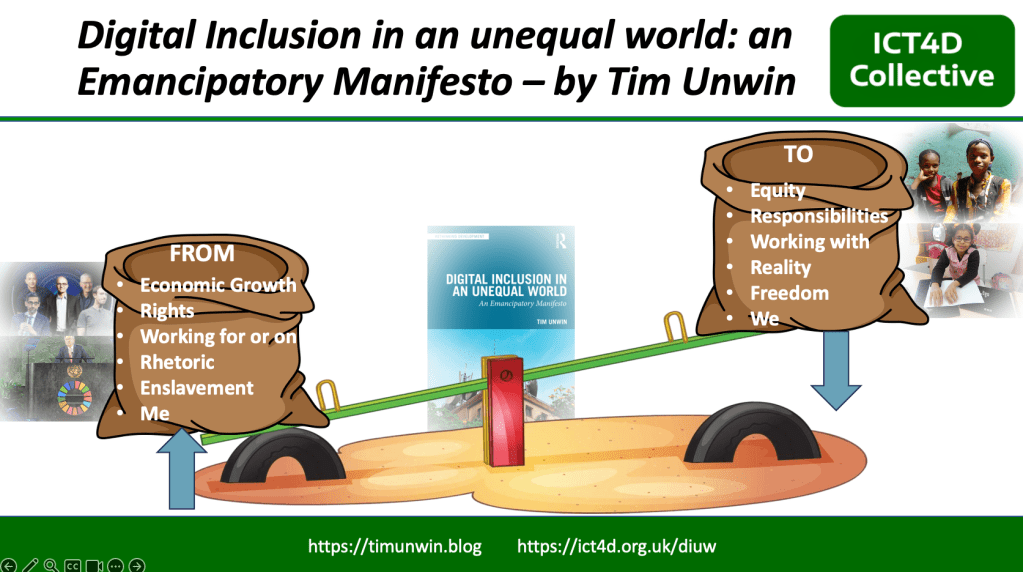














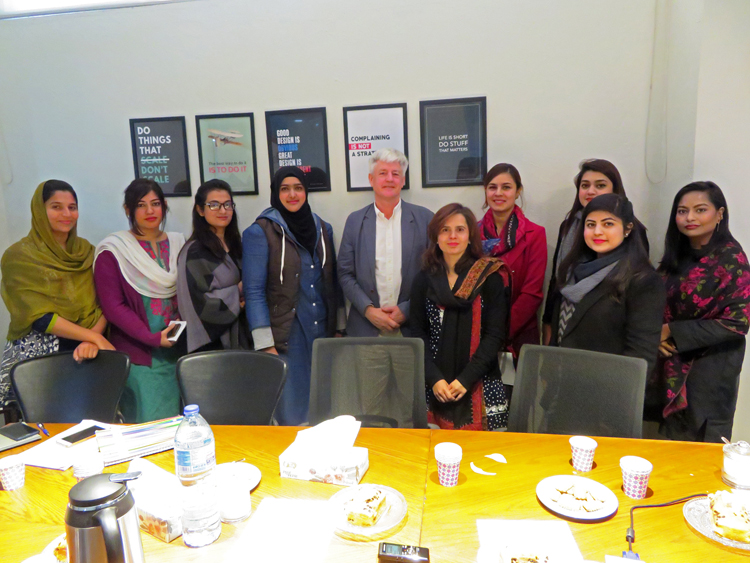
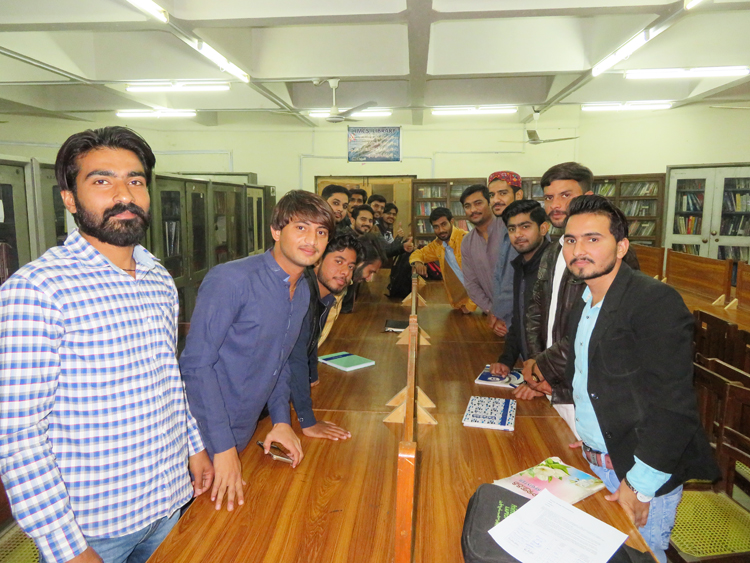
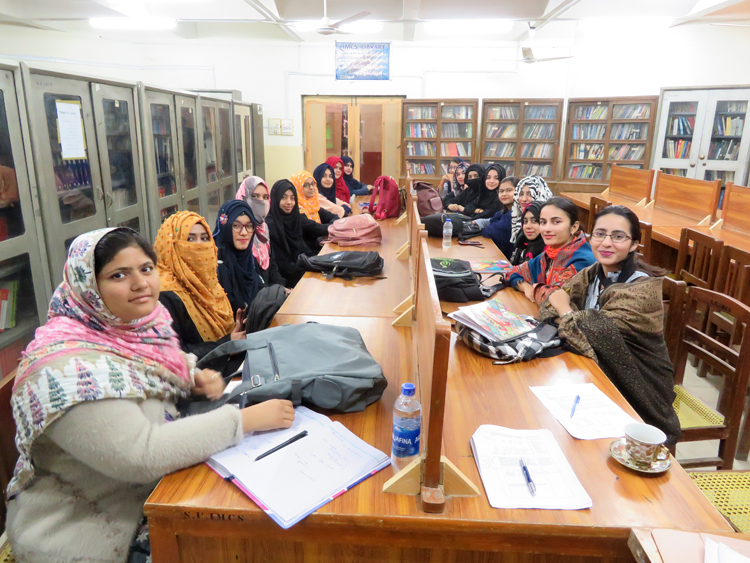
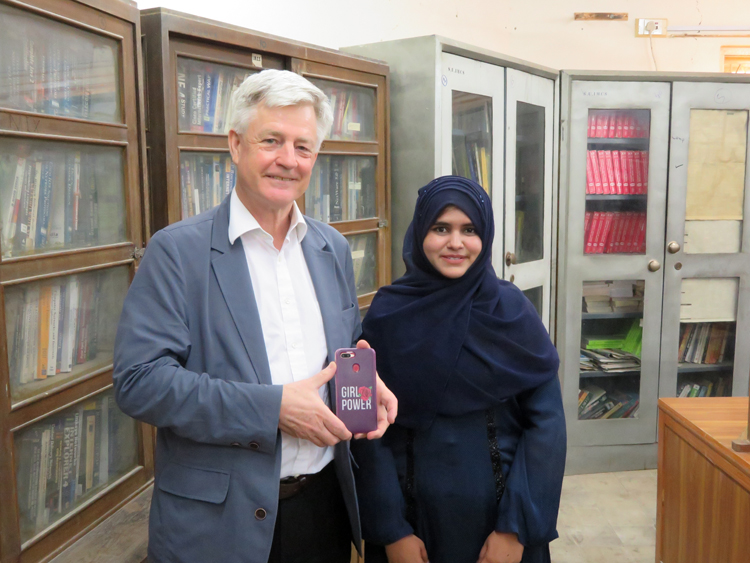
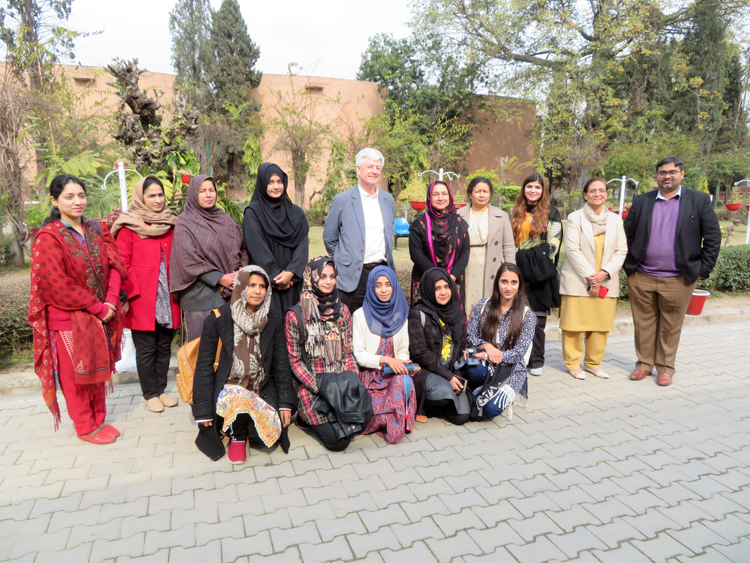
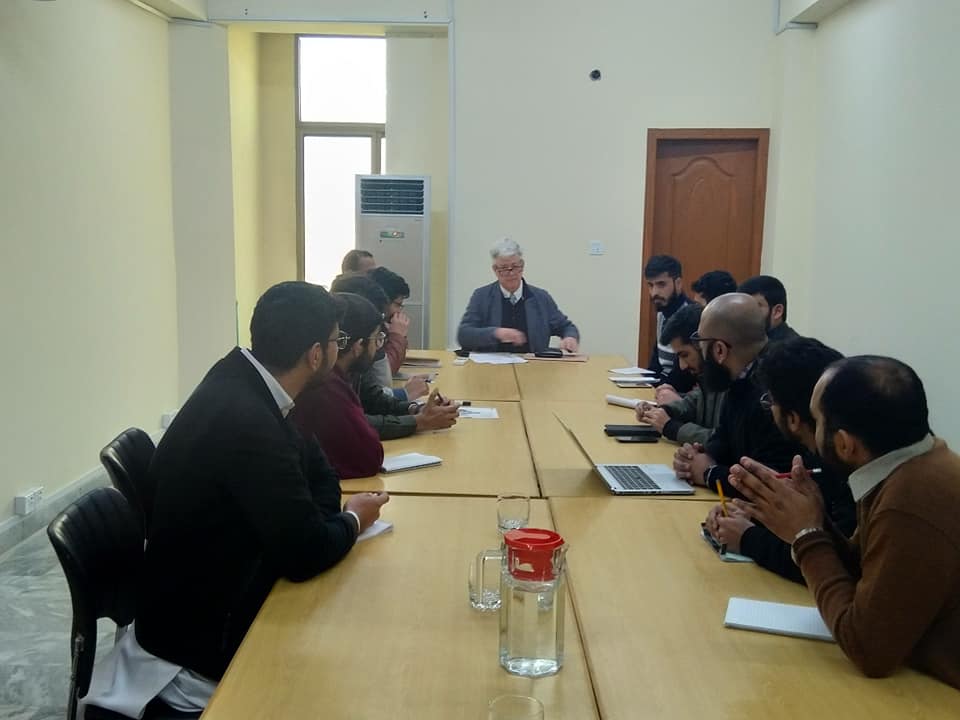


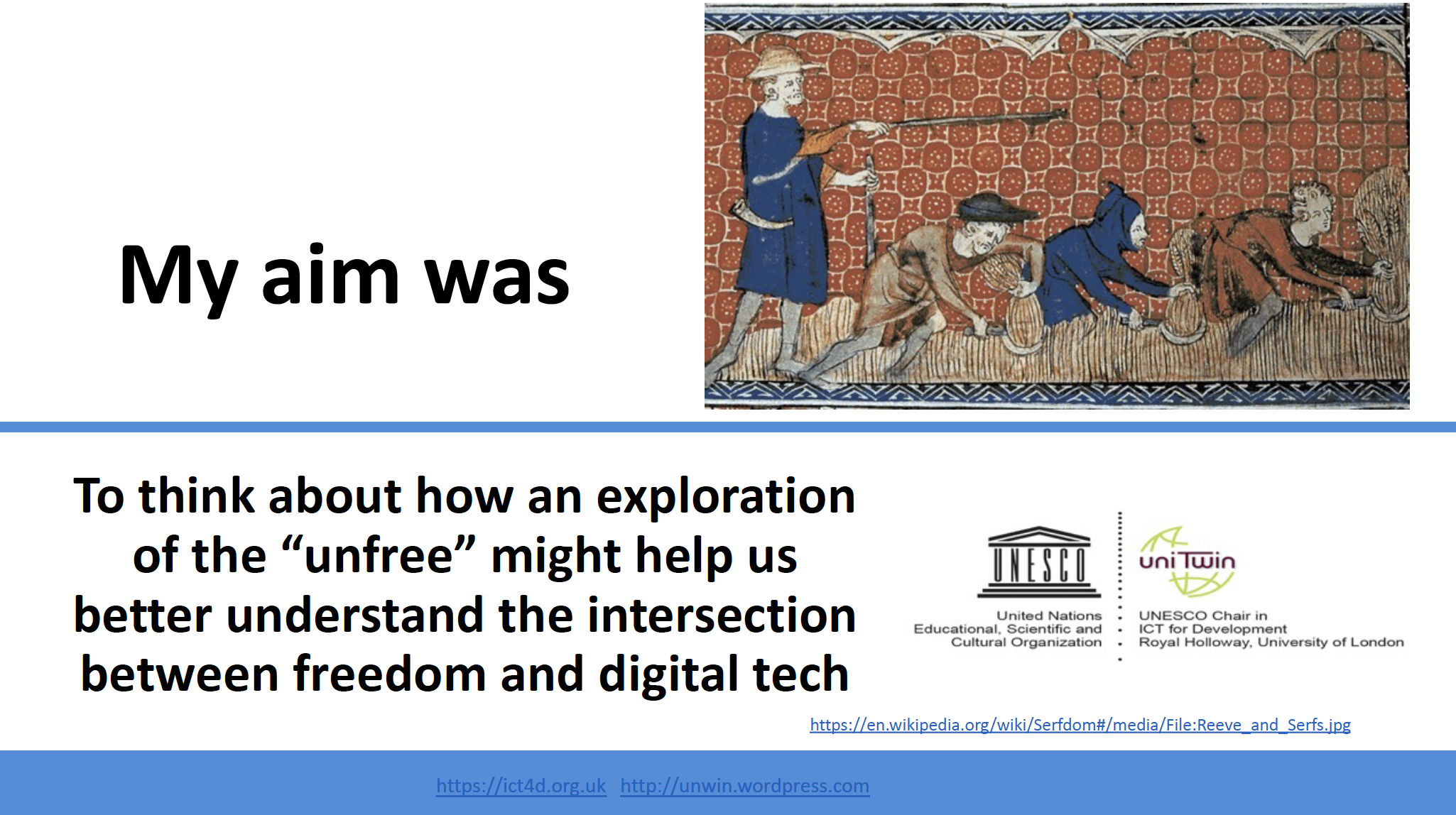




 Tim Unwin's Blog