Category Archives: Photographs

‘Student’ protests and political process in the UK

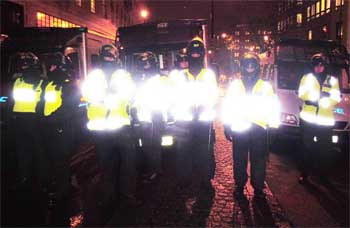
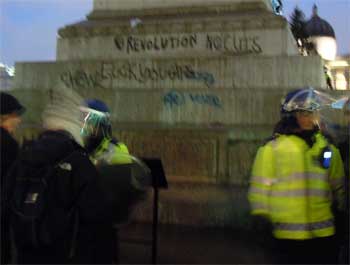
Being at the rally in Trafalgar Square today, supposedly against the proposed cuts in higher education, made me reflect on several aspects of the contemporary political process in the UK:
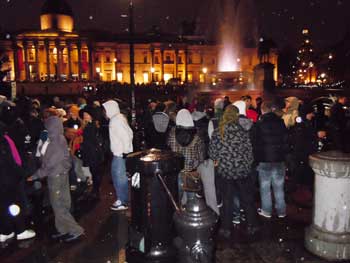
  • First, it is great to see so many UK students for once standing up for something that they see as being a cause worth fighting.  For far too long, many students here, unlike some of their peers elsewhere, seem to have been apathetic and lazy, unwilling to engage in any form of radical political protest, with the majority preferring instead to enjoy the good life associated with undertaking a minimal amount of academic work and a maximum amount of partying.  There is an irony here, though, as a young person on the train sitting next to me on the way home said “They are only looking after their own interests, in’t they. They can afford to!”
  • To gain groundswell political support, it is essential to have a simple message that people can sign up to – even if their own various interpretations of that message are different.  It is easy to unite people around a simple theme of complaining against ‘cuts’ that will affect them, but this hides the complexities surrounding the restructuring of UK universities and higher education.
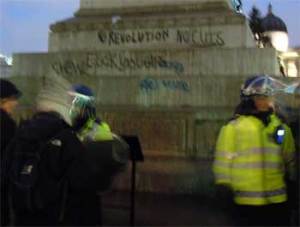
  • At the heart of today’s protests were people intent on challenging the police – seeking to provoke them into violent retaliation.  At least whilst I was there, it was remarkable how calm the police remained against what many of them must have seen as being unprovoked and unfair abuse.  What struck me most about this was that many of those hurling the abuse chose to hide their identities through masks and hooded clothing, whilst individual police officers were fully identifiable by their ‘numbers’.  I do not want to be seen as an apologist for the police, and of course there have been cases where individual police officers have over-stepped the mark, but there is a real irony here in that protestors in the UK are indeed able to protest – peacefully – because, in general, the police have tried to be even handed in maintaining order and permitting people of all political persuasions to express an opinion.
  • I was amazed at how little anyone in the crowd seemed really to care about what, to me, matters most, the destruction of university based research excellence in the UK!  I have written at length elsewhere about this, but the protests convinced me even more of the importance of differentiating between ‘universities’ and higher education.  We need fundamentally to restructure UK higher education, and this should involve a very dramatic reduction in the number of students going to ‘universities’.  Instead, we should provide high quality and appropriate training and ‘education’, to fit all young people for the sorts of employment that they will subsequently enter.  Let’s create outstanding opportunities for young people to gain the skills and education that they need – but let’s not pretend that the institutions in which this takes place are universities.
  • And yes, of course, universities should be free for those able to benefit from the research-led opportunities that they provide, and for students who are committed to exploring the boundaries of knowledge diligently, rigorously and with enthusiasm!
  • Finally, I find it amazing that according to the Guardian, Vince Cable, “the cabinet minister in charge of tuition fees, said today he was prepared to abstain in a key vote on the government’s policy if that was what fellow Liberal Democrat MPs decided to do as a group. The business secretary said he was prepared to take the unprecedented step of not backing his own proposals for the sake of party unity”. How can the Secretary of State responsible for the introduction of increased tuition fees not vote in favour of them?  He should surely resign forthwith if that really is his view.

Leave a comment

Filed under Higher Education, Photographs, UK, Universities

Development as ‘economic growth’ or ‘poverty reduction’

Will economic growth lead to poverty reduction?  I believe passionately that the market will never serve the interests of the poorest and most marginalised.  This seems to me to be so clear and obvious that it scarcely needs defending!  However, I am becoming increasingly worried that such opinions are very much in the minority. The dominant, hegemonic view amongst most of those working in the field of development really does seem to be that economic growth will indeed eliminate poverty.

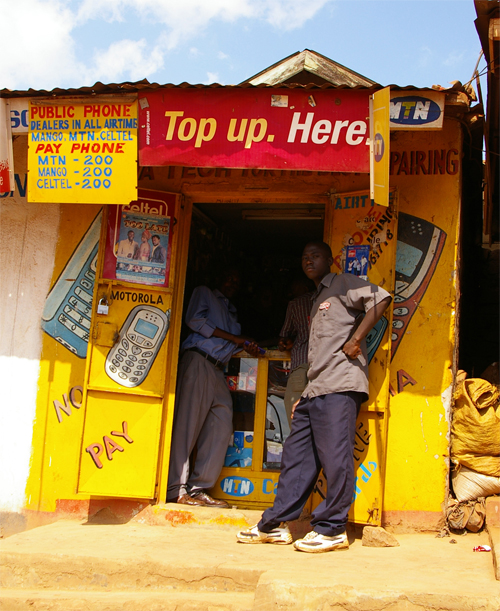
Following my recent keynote at m4Life on 28th October, at which I argued that we need to develop ways in which mobiles can be used to support marginalised groups, such as people with disabilities, I was very strongly challenged by an African colleague, whose views I respect.  In essence, she accused me of being a typical western academic who does not really understand Africa, and that if I did I would know that most Africans wanted economic growth. By focusing on the poorest, she suggested that my views were tantamount to arguing that Africans should remain poor. I felt deeply hurt by these accusations, and am still smarting from their vehemence some two weeks later! I actually don’t know why, they hurt so much, but perhaps it is because I have elsewhere argued strongly that Africa is indeed rich, and that we need to help build on its richness rather than always describing it as being poor!  The irony is that the paper I have written on this has continually been rejected by academic journals – quite possibly because it too does not conform to accepted dogma!

I clearly need to learn to express my arguments more convincingly.  This is a brief attempt to do so in the form of some basic principles:

  • The potential for inequality to increase is inherent within all economic growth.
  • Economic growth, defined in absolute terms, cannot therefore eliminate poverty (see my critique of Jeffrey Sachs, for example, in ‘No end to poverty’)
  • If economic growth proceeds unchecked, it will inevitably lead to increased inequality that will ultimately fuel social and political unrest at a range of scale
  • A fundamental role of states is thus to intervene in the market to ensure that the poorest and most marginalised are not excessively disadvantaged.
  • Given that the market serves the interests of the majority of people, it is incumbent on those who care about reducing inequalities specifically also to address the needs and interests of the poor.
  • Such an argument can be justified both on moral grounds (that it is just), and also on socio-political grounds (to reduce potential violence)
  • With reference to mobile technologies, therefore, all I was doing in my keynote was to argue that companies, entrepreneurs, app developers, and all those claiming to use ‘mobiles for development’ should seek to address the needs of the poor and marginalised, alongside those of global corporations and their shareholders.
  • This is premised upon a belief that ‘development’ is about rather more than just economic growth, and includes notions of equality of opportunity and social justice.

These arguments are developed more fully in:

15 Comments

Filed under Africa, Development, Ethics, ICT4D, Photographs

Watching the watchers watching…

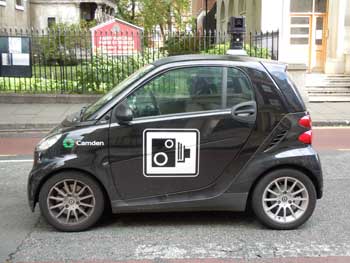
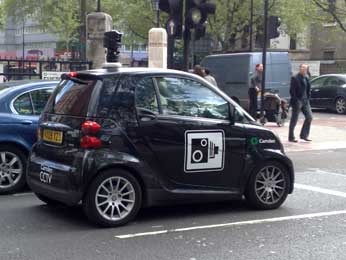
In recent months I seem to have posted several photos of ongoing surveillance, generally by people acting on behalf of the state.  Perhaps I should start a collection of these!  So, here is another one (Camden CCTV again) patrolling the streets near Euston.  I wonder how much footage they take and what they do with the images.

This is what Camden Council’s website has to say on this under the heading of “enforcement”: “We have responsibility for the enforcement of the borough’s parking and moving traffic regulations and this is carried out by Civil Enforcement Officers (CEOs) (formerly known as Parking Attendants) and through the use of CCTV. The scheme is part of the Association of London Government’s (ALG), the Mayor of London and London Borough of Camden’s commitment to the travelling public to keep London moving and ease congestion.”

What an amazing upgrade, Parking Attendants can now be confused with Chief Executive Officers!

Camden’s more detailed account goes on to say that this is done:
  • “to stop traffic congestion
  • alienate inconsiderate motorists
  • free up the bus lane to combat delays for commuters
  • to allow the free flow of traffic
  • improve journey times for bus users”

Am I the only one who finds words such as “enforcement”, “alienate” and “combat” just  a tiny bit worrying?  So, let’s keep watching the watchers…

Leave a comment

Filed under Ethics, Photographs, UK

Rats in Virginia Water

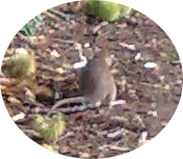
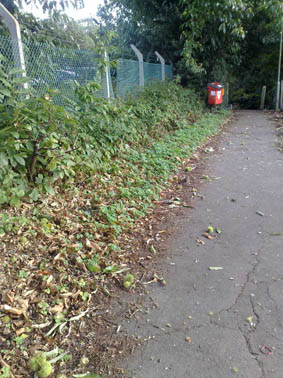
Walking home from the station today, I have to admit to being a little surprised by seeing a rat on the path!  A rat in leafy Virginia Water! A rat not so far from the Wentworth golf club.  The irony was striking.

It was amazing – just sitting there, oblivious to the trains passing by a few yards away, and the car park just nearby. Sadly it scuttled off into the undergrowth before I could get close enough for a better photograph.

I have to say I prefer the deer amongst our local wildlife – even if they do eat the roses and vegetables.  Should rats be seen as pests?  If only hedgehogs were as common as rats perhaps we would have fewer slugs!

It’s amusing to see other mentions of rats in Virginia Water and Wentworth:

  • The Sun recently referred to Peter Crouch (the footballer) in the following terms “Abbey Clancy will forgive love rat fiancé Peter Crouch”, noting on 12th August 2010 that “Crouch looked teed off yesterday during a round of golf at the posh Wentworth course in Virginia Water, Surrey”

Leave a comment

Filed under Photographs, UK

Who’s watching who at LHR?

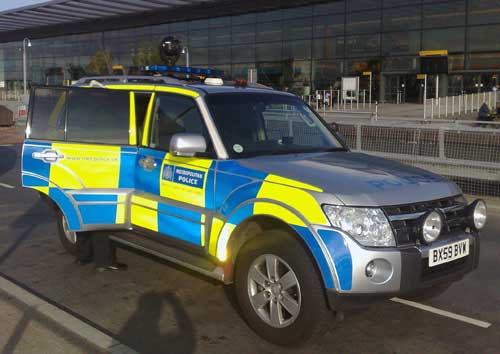
The extent of state surveillance in the UK increases apace. Imagine my surprise when I saw this police car with a surveillance camera on the roof when I was recently passing through London Heathrow!

Perhaps we should all start taking photographs of those who are taking photographs of us while we are going about our day-to-day business!

What happens to all the photographs that the police take of us?  Imagine what would happen if we all asked for copies of such photographs under Freedom of Information legislation! Just because it is possible for the state to photograph its citizens and store this information does not mean that it is right for the state to do so.

Leave a comment

Filed under Ethics, Photographs

Love Arlanda, 6th-19th June 2010

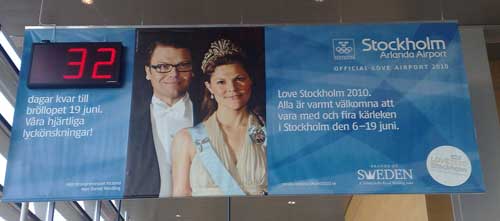
I have long enjoyed landing at Arlanda airport to the north of Stockholm.  Somehow, the pace of life changes as soon as the plane’s wheels touch the ground.  The clean air, the clean lines of the airport, and the pace at which the Swedes manage to live their lives to the full, are just inspirational.

Imagine my surprise earlier this year when the Swedes declared Arlanda as the Official Love Airport to celebrate the wedding on June 19th between HRH Crown Princess Victoria and Mr. Daniel Westling.  Mind you, it seems a bit weird to lay claim to such a title!

Leave a comment

Filed under Photographs

“Seen in Camden” – mobile CCTV

How many ways are there for states to keep an eye on their citizens?

Yesterday, while leaving Euston station, I discovered yet another – mobile close circuit television cameras!  As the photograph on the right shows, Camden Council now uses mobile CCTV cameras as part of its armory to detect wrongdoing – and have apparently been doing so since 2004!

As the Camden Council site comments, these cameras “will be used for surveillance in public areas across the borough.  Operated by specially trained Police officers and Camden Council staff, the mobile cameras will help combat crime and anti-social behaviour, as well as improving road safety. Images of incidents captured by the cameras will be taken back to Camden Council’s CCTV centre in Kentish Town to be processed and passed to the relevant authority.  Unit operators will be able to radio for extra Police help where necessary”.

Mind you, the two men in the car looked quite surprised when they saw me taking a photo of the car!

1 Comment

Filed under Ethics, Photographs

Go and ogle in Southampton and beyond…

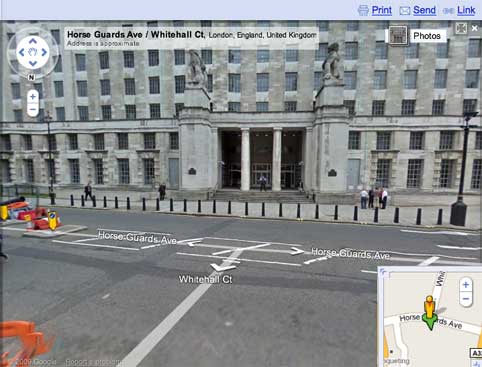
Having just posted my last reflection on “Go, ogle”, I was in Southampton on Sunday and there it was – “Ogle Road”! This must be where the Google camera van/car/snowmobile/tricycles hang out when it’s dark and they cannot take the photos that their ‘masters’ want.

It did, though, also make me reflect further on the ethical issues surrounding Google’s Street View ‘technology’.  Much has already been written about this, but with the advent of Google’s 4th generation cameras that take near-HD quality images, and continuing debate in the EU about privacy issues associated with Street View,  for which we should all be grateful, it is worth once again highlighting some of the issues that this raises.

A recent report by Claudia Rach for Bloomberg Businessweek has some interesting comments from Michael Jones, Google’s chief technology advocate and founder of Google Earth:

  • “I think we would consider whether we want to drive through Europe again, because it would make the expense so draining”
  • “I think that privacy is more important than technology but for privacy people it is only about privacy but for us it is also about technology”

The first of these was partly in response to the suggestion that Google should only keep unblurred images for 6 months instead of a year.  Again, quoting from Rach’s report, Peter Fleischer, a Google lawyer in charge of privacy issues, said  “The need to retain the unblurred images is legitimate and justified — to ensure the quality and accuracy of our maps, to improve our ability to rectify mistakes in blurring, as well as to use the data we have collected to build better maps products for our users”.  This means that Google keep all this information unblurred on their servers – which, of course, means that Google and its relevant employees have access to it.  What happens when someone hacks into this information, or a government asks for it in connection with some important state ‘need’?

Jones’ second comment above is indeed surprising.  There is little evidence that Google has ever put privacy above technology.  Its technological prowess has been at the forefront of raising new ethical questions – one of which is indeed about privacy.

So, just to add to the debate, I thought I would come up with a list of ten interesting uses for Street View:

  • for car thieves wanting to plan where to steal particular brands of car to order – just look on people’s drives
  • for double glazing companies (or for that matter firms offering to redo your drive) to target individual houses that might be ripe for marketing – individualised targeted mailings
  • for revolutionaries (or what governments in capitalist countries call ‘terrorists’) to decide where best to plant explosive devices to cause maximum damage
  • for people wanting to reconstruct buildings on streets that have been destroyed by earthquakes (or other such disasters) – you can see how it looked a year ago
  • for burglars wanting to find the quickest getaway having robbed a property (see Phil Muncaster’s summary on v3.co.uk)
  • for recognising what your friends were doing when the Google car passed – yes, of course you can recognise people even with their faces blurred
  • for checking out those naked sunbathers
  • for finding exactly what that pub that your friends took you to last night looks like in the daylight when you can’t remember where it is
  • for checking out what the holiday villa you are thinking of booking really looks like
  • and as findaproperty says, “With the panoramic street level photographs you can get a feel for the property, its location and neighbourhood, before visiting it – which saves you a lot of time and means you don’t have to decided whether you want to view a property based solely on the description of the area as provided by the estate agents” – ah, isn’t that nice…

1 Comment

Filed under Ethics, Photographs

Reflections on the effects of the Eyjafjallajökull volcanic eruption

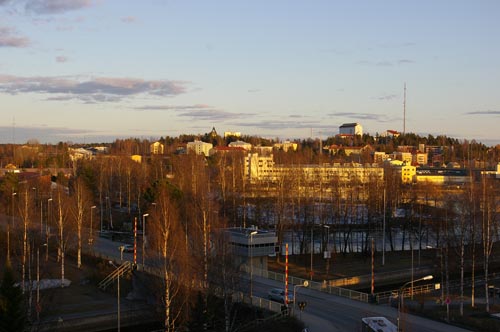
The transport disruption caused by ash from the erupting Eyjafjallajökull volcano has had enormous impact across the world, not only for economic activity but also for individual human lives.  Having been ‘stuck’ in the North Karelian town of Joensuu in eastern Finland for the last week, I have been interested and surprised by the emotional impact that this has had on me:

  • I discovered that eastern Finland is really a long way from anywhere!  Joensuu is four-and-a-half hours by train north-east from Helsinki, and almost at the same latitude as the Eyjafjallajökull volcano in Iceland!
  • Finland itself is amazingly isolated, and very much like an island.  Almost everyone who wanted to leave during the cessation of flights had to get ferries – from Turku or Helsinki to Stockholm, or from Helsinki to Tallinn.  According to travel agents, many of these were fully booked, and so it was difficult to ‘escape’.  The prospects of the Finnair offer of a 34 hour bus journey to Berlin, with two nights and a day on board, were not particularly appealing – especially when other parts of Europe seemed to be opening up their air-space. Most people who left, and took onward trains through Sweden and Denmark, or across Europe from Berlin took three or four days to get back to England!  Being in ‘mainland Europe’ would have been so much easier – a train from Prague to Madrid would, for example, have been simplicity itself compared with leaving Finland!
  • The most disturbing feature of the disruption for me was the uncertainty!  I was surprised how much not knowing when it might be possible to leave affected me – and particularly my ability to concentrate on work.  Might it be worth taking the bus to Berlin – and then the subsequent problems associated with getting a train back to the UK?  Should I go to Turku and hope for the best? When might flights start again?  Should I try to get a train to Helsinki in case the flights from there are going to be a better bet than risking a flight from Joensuu to Helsinki first?
  • It can be really lonely…  Thanks to all those friends who kept in touch on Skype, Facebook and by e-mail!
  • But I also discovered the real value of open-handed friendship.  After I had stayed a couple of extra nights in a hotel, Erkki and Päivi welcomed me into their home, and this transformed things.  Their hospitality enabled me to get on with some work (despite my difficulties in concentrating on it), and provided an enormous warmth of personal support.  They have been absolutely amazing, and I hope one day to be able to return the favour.
  • A real lesson to be learnt from this is therefore that we should all be generously open and welcoming to ‘refugees’ – from wherever they come.  Whilst it is completely inappropriate for those of us caught up in the dislocation caused by the closure of air space to draw comparisons with the experiences of political refugees, I do think I have gained a whole lot more insight into some of the anguish that they must face.
  • One can spend an age trying to rearrange flights!  Many, many calls to Finnair were ‘answered’ with a message saying that their system was overloaded – even at 05.00 in the morning!  Eventually, it took almost an hour of waiting earlier in the week to reschedule my flights for tomorrow  – but who knows now even if that will be leaving!
  • It’s therefore crucially important to take advantage of every opportunity that such chaos can afford!  It was great to visit Koli, and also to spend time participating in academic discussions and teaching at the Computer Science Department at the University of Eastern Finland – thanks for the opportunity.
  • This disruption also, though, shows the huge value of modern ICTs – the ability to hold conference calls with people in many different parts of the world, to receive e-mails (although not necessarily my ability to answer them all), to speak with loved ones ‘dislocated’ elsewhere (providing their ‘phones are charged), to find out information about the latest delays, to give a conference presentation at a distance (not easy – but see #beyond2010) and to find communal means of resolving travel problems (such as stuckineurope.com)! When the fuel runs out for ‘traditional’ air transport, life might become very much more human!

Apologies to everyone whose e-mails I have not responded to, and for the meetings I have missed!  I should have been back in the UK on the 18th – and it is now the 23rd.  Finavia this morning at last announced that “Based on the current forecasts all airports in Finland have been opened for air traffic and operate normally”, although lots of flights in Finland today have still been cancelled!  Hopefully tomorrow will improve, and I will indeed return home.  I intend to take a few days off – just to smell the late spring flowers, to taste some fine wine and to relax!

3 Comments

Filed under Ethics, Higher Education, Photographs

Koli National Park, Finland

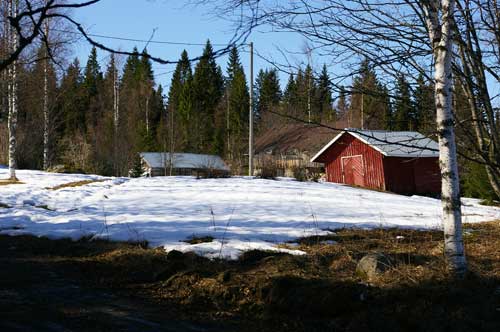
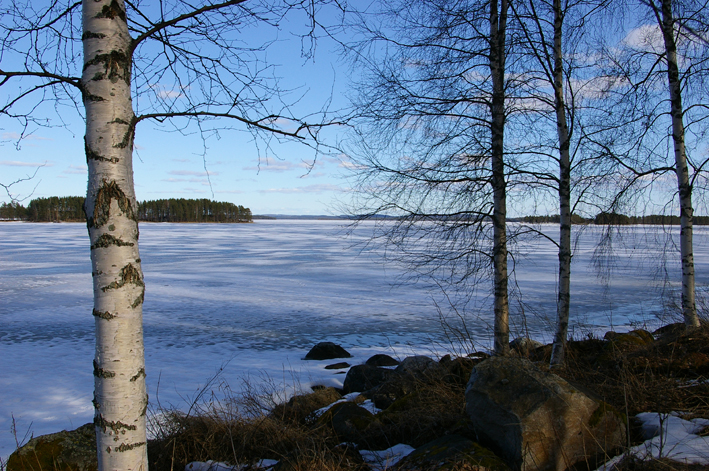
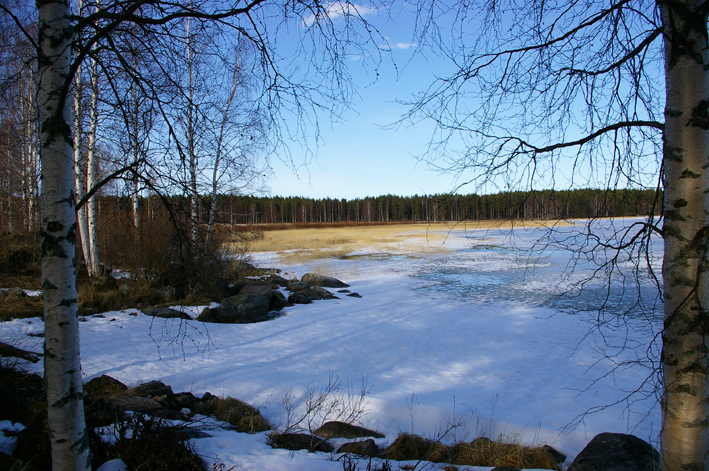
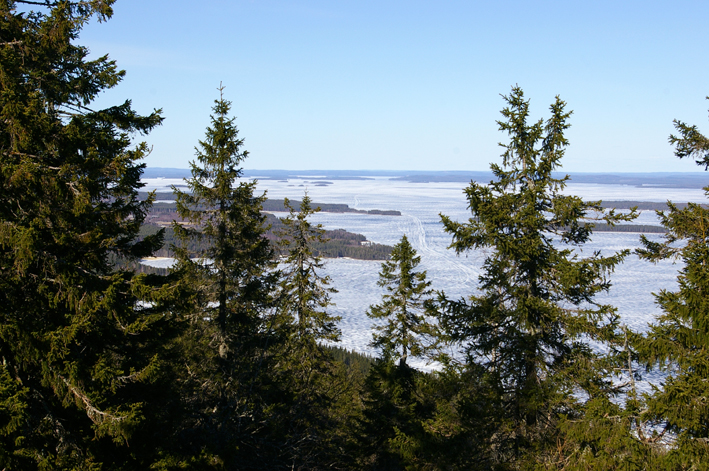
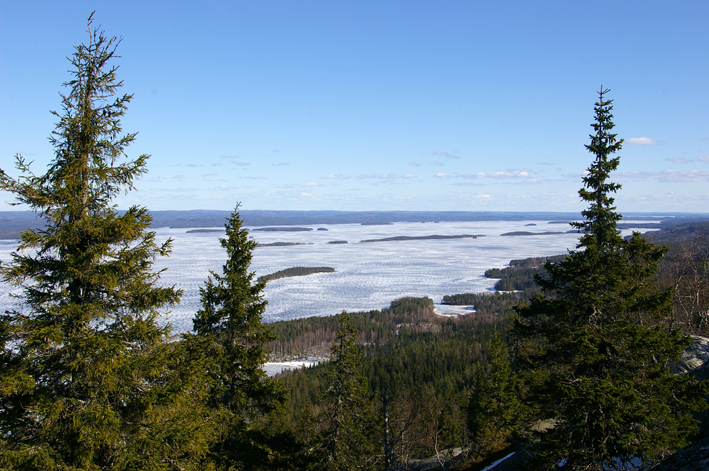
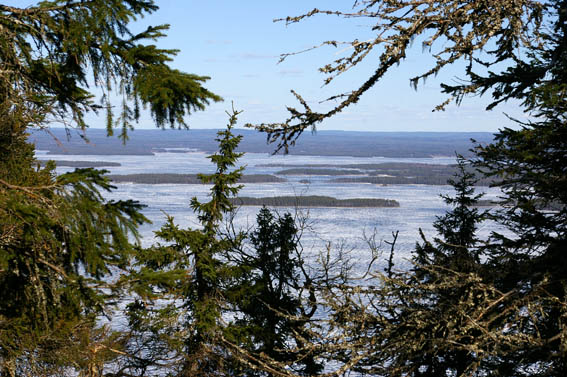
The air traffic disruption caused by the ash plume from the Eyjafjallajökull volcanic eruption has had at least one positive benefit as far as I was concerned – an afternoon’s visit to the beautiful Koli National Park in eastern Finland, made famous in the 19th century by the music and paintings of Jean Sibelius, Juhani Aho and Eero Järnefelt. [Do click on the images below to see larger versions of the photographs]

1 Comment

Filed under Photographs, Uncategorized