
Amazingly, I managed to get one of my Cymbidium orchids into flower on New Year’s Day – first time ever! Definitely pure chance rather than skill, but a great way of welcoming 2013! A gift from ‘nature’ to my blog – they really are beautiful plants…

Amazingly, I managed to get one of my Cymbidium orchids into flower on New Year’s Day – first time ever! Definitely pure chance rather than skill, but a great way of welcoming 2013! A gift from ‘nature’ to my blog – they really are beautiful plants…
Filed under Photographs
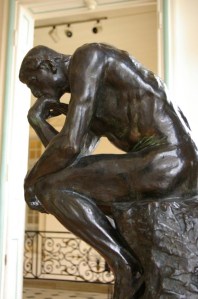 I overheard a strange and depressing conversation about critical thinking at last month’s otherwise excellent Online Educa conference in Berlin. Ever since then it has been nagging away at my mind. So many of those involved in the conversation seemed to have a conceptualisation of critical thinking that is so totally at odds with my own! For many of them, critical thinking seemed to be something destructive, a form of negative criticism of the works of others. Critical thinking, in their views, was all too often damaging, destroying the confidence of young academics, and a means through which supervisors impose and re-enforce power relations over their doctoral students. This is so alarmingly different from my own perspective, that I feel I should share some of my thoughts here, not only to contribute to the debate, but also so that others may perhaps gain some insight into alternative views of critical thinking. Here, then, are my list of the ten most important aspects of critical thinking.
There are, of course, many other aspects of critical thinking, but reflecting on that conversation in Berlin, these seem to me to be the most pertinent responses. Let me conclude, though, with a quotation from Herman Hesse’s Steppenwolf (Penguin, 1966, p.21), “‘Most men will not swim before they are able to.’ Is that not witty? Naturally, they won’t swim! They are born for the solid earth, not for the water. And naturally they wont think. They are made for life, not for thought. Yes, and he who thinks, what’s more, he who makes thought his business, he may go far in it, but he has bartered the solid earth for the water all the same, and one day he will drown”. I used this years ago as the introduction to one of my chapters in The Place of Geography and it still seems as pertinent now as it did then!
Filed under Geography, Higher Education, Postgraduate supervision, Universities
A few days holiday earlier this month provided us with an opportunity to explore a corner of England that we do not know very well, namely the Essex-Suffolk border. My ancestors between the 17th and 19th centuries lived not that far away in Coggeshall and Castle Hedingham, but we have never spent much time in this part of the country.
We chose to explore the Stour Valley and by great good fortune stayed at the Sun Inn at Dedham – what a find! Dedham itself is a picturesque small village on the Stour, with its fine church dating from the 15th century indicating its past affluence as a wool and market town. The village still retains a communal atmosphere, with the church having standing room only for its annual carol service, and it is the only place I know where the chemist and post office are in one and the same shop! For those not wanting to be contacted, some parts of the village also fortunately still remain beyond the access of mobile connectivity!
The Sun is a wonderful, hidden away place to stay. The young staff are efficien t and friendly, without being either intrusive or obsequious. The rooms are each individually designed, with pocket sprung mattress, Egyptian cotton bed linen, goose down pillows and duvets; luxury body products are sourced from Abahna.
The food is locally sourced and delicious, reflecting mainly an Italian style. We particularly enjoyed the five course taster menu, but all of the food was well balanced, tasty, and very nicely presented. Highlights included the duck, saffron pears, pasta dishes and hake. The wine list, too, is unusually impressive both in its content and its value for money! A particular feature is its “desert island cellared wine”, made up of wines purchased by the owners at bin end sales with just a charge of £15 added. So, a 2001 Barolo Vigna Conca, Revello, costs just £54, the same as a 2007 Puligny-Montrachet 1er Cru Les Champs-Gain, Maroslavac-Leger!
Dedham is perhaps best known for being the place where the artist John Constable went to school. It was a strange experience to walk in his footsteps along the valley and across the Stour up to where his home was in the nearby village of East Bergholt. His father was a corn merchant who also owned the nearby Flatford Mill, and the local buildings and landscapes provided the inspiration for many of his famous paintings such as The Hay Wain (1821) and Dedham Vale (1802). Walking along the river bank on a cold frosty December morning was very evocative of England past, and made a wonderful escape from the “business” and turmoil of London, less than 70 miles away!
The Sun Inn and Dedham are most definitely to be recommended by anyone wishing to discover a beautiful hidden away part of England, and enjoy English food (with a touch of Mediterranean influence!) and hospitality at its best.
Thanks to everyone at the Sun who made our stay so enjoyable and relaxing!
Filed under Photographs, UK
The Commonwealth Telecommunications Organisation (CTO) is seeking to appoint a new Head of its Operations Department, managing the delivery of its three operations divisions (research and consultancy, capacity development and training, and events and conferences). This exciting opportunity would suit applicants from diverse backgrounds, including the private sector and the international development community. The appointment will be at Director level with a starting salary in the range £60,000-£66,150. Closing Date 15th February 2013.
The successful applicant will
The successful applicant will have the following proven experiences and characteristics:
Essential
Desirable
Application procedure
The CTO is committed to providing a challenging and stimulating workplace, where all staff can fulfil their career ambitions in a diverse and supportive environment. It places considerable emphasis on the importance of teamwork, alongside its commitment to delivering the best possible value for money services to all of its members. People work for the CTO primarily because they believe in its commitment to using ICTs to help make a difference to the lives of some of the poorest and most marginalised people in the Commonwealth. All employees must be citizens of Full Member Countries of the CTO at the time of employment.
All applications, including a curriculum vitae and a letter of application should be submitted to recruitment@cto.int by 15th February 2013.
Full details are available at http://www.cto.int/about-the-cto/working-with-us/current-vacancies/director-and-head-of-operations-department-full-time/
Filed under ICT4D
The 2013 Commonwealth Essay Competition has just been launched. Run by the Royal Commonwealth Society (RCS) since 1883, the Commonwealth Essay Competition is the world’s oldest and largest schools’ international writing competition. Past winners include Mr Lee Hsien Loong, the Prime Minister of Singapore and Elspeth Huxley.
The competition is free to enter and in 2012 over 8,000 young people, from 400 schools across the Commonwealth took part. The RCS would like to harness the momentum from this Diamond Jubilee year and continue to expand the Essay Competition in 2013.
The theme for 2013 is Opportunity through Enterprise, for more details and to download the 2013 booklet do check out the RCS website.
Filed under Uncategorized
I have always admired Mike Trucano‘s work, and so it was great to hear him speaking this morning at Online Educa Berlin. His theme was understanding failures in e-learning, especially in the countries where the World Bank is working.
This was his list of the ten worst practices in e-learning:
The really sad thing is that all of these known worst practices continue to be replicated across the world. Hopefully, more people will listen to Mike, and then we can develop much better ways through which technology can really be used effectively to enhance learning!
The GSM Association, together with Deloitte and Cisco have recently published a useful report (.pdf 3.4 MB) on the contribution of mobiles to economic growth, and they intend to run their analysis on an annual basis so as to provide a barometer of change in the industry and its impact.
Some of the key findings of the report include:
The Appendices provide much more detail about the precise econometric models used, and it is good to see such detail and transparency. I retain some concerns, though, about the ways in which causality is imputed from what are essentially relationships between economic indicators. This could be the basis of an interesting dialogue about methodologies for undertaking such research, which I guess would depend heavily on ideological premises! However, using this as a starting point, it would be interesting to drill down in more detail to ask what factors need to be in place for the economies of particular countries to follow the general observations noted. From my perspective, we need to learn more about what some of the poorest countries and peoples can do to ensure that they too benefit. In other words, we need to disaggregate the data, and understand in detail about the wider governance structures, infrastructure and social conditions that need to be in place to enable growth. That is, of course, if economic growth is of prime concern!
Following my recently highly critical rant about the appalling customer service that Vodafone ‘provides’, I was delighted at long last to ‘meet’ someone who was not only polite and could speak English that I could understand, but who was also able to resolve the latest problem in our relationship. Her name is Mia. I suggest that anyone calling Vodafone explicitly asks for her by name – I guess she is based in India, and she does speak with a slight US accent, but don’t hold that against her!
I know it is not Mia’s fault, but Vodafone’s website is still not functional for some users – I wonder how many more weeks it will take before I can access my account?
I don’t usually use my blog to illustrate poor customer service, but an e-mail I received this morning has infuriated me so much that I am putting fingers to keyboard! Vodafone has to be one of the very worst companies for customer service in the UK! Why does anyone still use them? For that matter, why do I?!
I renewed my contract with them a couple of weeks ago, and upgraded my phone. Since I could not do the necessary change-over online, because their website was down, I took my new phone in to a Vodafone shop (in Hammersmith) to ask them to activate the SIM and transfer my data across. “Of course”, the assistant said, “It will only be a couple of minutes”. Half an hour later, when the assistant was unable to do it, his manager came over and managed to get most of the issues sorted.
However, not all of the data was transferred, and I could not access WiFi from the hotspots because of a problem with my account, which they said would soon be activated. A week later, nothing had happened, and so began a series of quite bizarre phone calls with ‘customer service staff’. None of theme were able to resolve the problem. Unbelievably, three out of the four staff could barely speak English, and I kept having to ask them to repeat their questions – really simple things like “What is the first line of your address?” were completely unintelligible. Eventually, I was told that I could not access my account because of a problem with their website that they were fixing, but that they would give me a £5 refund on my next bill because of the inconvenience.
Still nothing happened – I could not access my account online, and still could not use the WiFi hotspots because I could not sign into my account! So, I sent an e-mail, and two days later received the message below:
“Thank you for contacting Vodafone Customer Services
I have checked the online account and can see that you are not able to access the online account however if you are unable to access the account; hence I have escalated this to the online escalation department they will look into this matter.
Your patience will be appreciated in this matter
I trust the above information is helpful.
Kind regards,”
This is unbelievable. First, I am appalled that an e-mail can be sent by a company based in the UK that is so illiterate! Second, I am not told that the problem is being fixed, but merely that the matter is being escalated to the escalation department!
I wonder how many more weeks it will take for them to get this fixed?!
Staying with friends in Costa Rica provided a wonderful opportunity to spend Sunday exploring something of the landscapes and wildlife of the country. The photos below, mainly from the Carara National Park on the Pacific coast, provide an interesting comparison with those that I took recently in the tropical rain forests of southern Sri Lanka. At least we avoided the leeches this time!
Filed under Education, Photographs, Wildlife
 BBC technology
 Tim Unwin's Blog