
We took a risk and decided to take an early week’s holiday skiing in Kitzbühel. Despite it being one of the warmest winters so far on record, and with forecasts suggesting that there would not be much snow around we have nevertheless managed to have a great time. The 15th-17th December were cloudy and/or windy, with not much visibility – but runs from the top of the Hahnenkamm, and yesterday from the Hornbahn have been open. Today, the sun came out, and more runs were open – so anyone here over Christmas can look forward to really excellent skiing!
ACU Session at WISE 2011: Doctorates, development and the brain drain
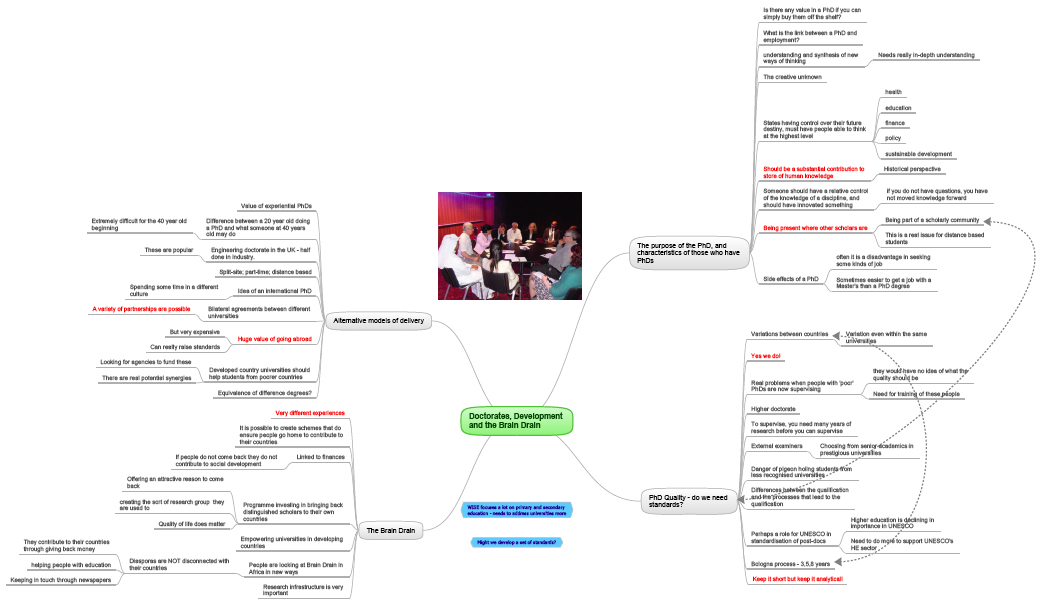
I was delighted to be able to help the Association of Commonwealth Universities run a workshop on “Doctorates, development and and brain drain” at the recent World Innovation Summit for Education (WISE) held in Doha from 1st-3rd November. This focused on four key themes:
- the purposes of a PhD and the characteristics of those who have PhDs
- the quality of a PhD; do we need standards?
- alternative modes of delivery for doctorates
- the brain drain
Although the number of participants was small, the discussion was highly interesting, and the mind map below attempts to capture what we discussed (click WISE 2011 for a .pdf version).
Peking University through the seasons
I have had the privilege of spending a total of around three months this year visiting China on different occasions, and in particular staying on the Peking University (Beida) campus. It has been amazing seeing the changing colours of the landscape through the seasons, and early on during my visits I decided to try to take regular photographs from the same spot near the centre of the campus to capture the different colours and senses of living there. I hope that the photographs below capture something of the differences I experienced. I definitely think I need to return in the midst of winter to see it in the snow. My favourite time has to be when Beijing was covered in blossom for an all too short period in early April!
Filed under China, Photographs, Universities
CHOGM Opening Ceremony
I was privileged to be able to attend the CHOGM Opening Ceremony this morning – and privileged is indeed the right word. It was amazing, and the team that put it together on behalf of the Australian government should be congratulated. It was an incredibly moving experience, bringing together many of the traditions that make up contemporary Australia. What made it work so well was not only the fantastic modern graphics and the use of technology, but also the very human scale of the ceremony. I know I was not the only one moved to tears when an elder spoke on behalf of the land that we were all sharing; the special space and time that made that moment in the Commonwealth’s history. The quality of the dancing was superb – I need to take some breakdancing lessons from the true masters who were performing today; the ballet was breathtaking. My pictures below do not do full justice to the spectacle and the emotion, but I do hope that they give a flavour of what was a memorable experience. Thank you Australia – and Perth!
Filed under Commonwealth
Re-experiencing Bloodwood
Back in 1994, I had the real privilege to undertake a review of the extension services provided by the Australian Wine Research Institute (AWRI) – which, apart from anything else, introduced me to many people who have subsequently become great friends. If only the UK and Australia were a little closer together! Two of these people were (and still are!) Stephen and Rhonda Doyle. I distinctly remember being told by colleagues at the AWRI that I really should go and visit Stephen – not least because of his somewhat unorthodox approaches to the wine industry. Mind you, I still think that many great Australian wine makers are unorthodox!
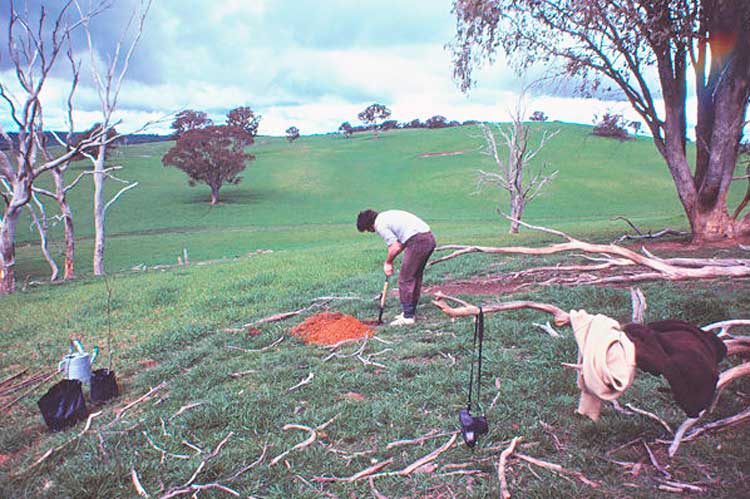 Stephen and Rhonda were the people who identified Orange as being a great place to make wine, planting their first vineyard there back in 1983 (the adjacent picture). They had begun making wine from grapes grown at the Glenfinlass vineyard near Wellington in New South Wales in the mid-1970s, and had subsequently spent the next decade trying to identify the best possible environment for making fine wine in Australia. Eventually, they hit upon Orange, or more specifically as Stephen recalls “those elevated areas to the West and North West of Orange anchored by Middle Ordovician geology of the Orange Shadforth association of soils. These soils are low to moderate in vigour, warm and free draining gravel based soils which hug the northern edge of the Mount Canobolas volcanic red mountain earth plateau. They provide good air drainage for frost control and provide plenty of opportunity with their red clay base to construct hill side dams for irrigation…” To find out more, check out Bloodwood’s history in more detail.
 So, finding myself with a spare weekend in Canberra, I took the opportunity to get in touch with them, and see if they just might be around. Wow – what hospitality! A friend drove me the three-and-a-half hours there – thanks so much Rob! And then Stephen and Rhonda drove me back to Canberra last Sunday. What generosity. It was wonderful to see how they have transformed the place in the last 17 years – I took the photo alongside from almost exactly the same position that the 1983 one above was taken from! Note the tree at the right side, and likewise the one in leaf in the middle left of both photos!
Bloodwood is not only a beautiful vineyard and winery, but it is also one where wildlife – well, most wildlife – is encouraged. Rarely have I been to a vineyard where the annual sacrifice of grapes to the birds is treated with such equanimity – but as the photos of the landscape and Rosellas below indicate, Stephen and Rhonda have managed to achieve a wonderfully colourful balance.
And the wines are brilliant too! Given my love of Burgundy, I have to confess that I like their Chardonnays and Pinot Noirs best. As their latest online list comments:
- 2009 Chardonnay: “Intense stone and grapefruit blossom introduce the delicate, racy palate of this fine Bloodwood Chardonnay. With flinty minerality at its core and purity of fruit across the palate, this is a crisp, refreshing wine to enjoy with pleasure in the medium term.”
- 2009 Pinot Noir: “This perfumed, hand crafted Pinot Noir with its subdued sanguine hues and charming cherry blossom aromas entices you into a beguiling and gently delicious blood plum rich world couched in subtle barrel ferment char. Those ladies old handbags are slinking about the palate again, complementing the delicate tannins and distinguished bouquet of this fine wine”
Bloodwood can be visited by appointment – and, staying with them for a couple of days, it was fascinating to witness first hand how Stephen and Rhonda share their love and passion for wine with all their visitors – no matter how knowledgeable or inexperienced they are!
Bloodwood is a truly special place, crafted with amazing love, care and passion by very special people. It’s scarcely surprising that they make such wonderful wines!
Filed under Photographs, Wine
Trinidad rain and sunshine on the north coast
A Saturday free (apart from those pesky e-mails) in Trinidad provided a great opportunity to get to know the island a little better (e-mails should be for offices, and people with nothing better to do!). Thanks to Clint Ross for taking Marcel and me on pot-holed roads, through torrential rain, and avoiding the snake on the way… It has to be one of the first times I have ever taken a spare day after a conference to go exploring. I must learn to do this more often. Sorry to all of those still wanting a reply to an e-mail – I’m thinking of revising my policy specifically to exclude sending e-mails at the weekend! I will have to find time to come back to the Asa Wright Nature Centre and go for long walks in the hills…
Filed under Commonwealth, Photographs
Findings from research on mobile use amongst marginalised groups in China
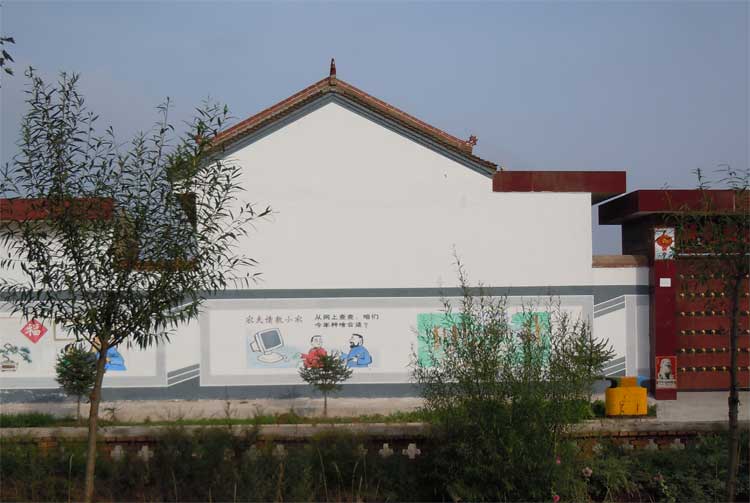 I spent five weeks this summer undertaking research in Beijing and Gansu thanks to a UK-China Fellowship for Excellence from the Department for Business, Innovation and Skills. The central purpose of my research was to explore the information and communication needs of poor and marginalised communities, especially people with disabilities (in Beijing) and farmers in rural areas (in Gansu Province). I learnt so much – and probably more from the informal discussions than I did from the focus groups and interviews that I conducted! Many thanks are due to Professor Ding Wenguang and Chen Fei for all of their help and assistance in arranging meetings, and translating our dialogues.
The premises underlying my research were that:
- all too often, new software and hardware are designed for the mass market, and then need to be ‘adapted’ to suit the ‘needs’ of poor and marginalised people
- frequently, well-intentioned new technologies are developed in some of the richer parts of the world and then ‘applied’ in poorer countries; researchers are then surprised that there is little take up for their products
- hence, we still need to get a much better understanding of the needs of these communities, and focus much more on designing technologies explicitly with their interests in mind
- China has 18% of the world’s population, and so the market size of marginalised communities makes it worth developing products commercially for them
The resultant data are so rich that it is difficult to summarise them in detail. However, the following seem particularly pertinent
Rural areas
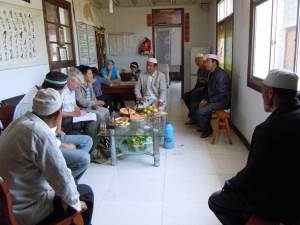 The diversity of people and communities in rural areas of China is replicated in a diversity of needs. ‘One size fits all’ solutions are not appropriate, yet the size of the market for particular groups is nevertheless very large given China’s overall population
- Almost everyone already has at least one mobile ‘phone – mobiles are already widely used for information and communication, even for Internet access. There are real implications for Africa – if electricity and connectivity can be provided
- Economic information is particularly desired – especially on such things as agricultural input prices and market prices – particularly by men. I was surprised at how dominant and significant this was.
- There seem to be important gender differences in usage – women placed greater emphasis on social communication and health information; young male migrant workers in contrast seemed dominated by a desire to use mobile broadband to meet with girls.
- Value for money is important – c. RMB 2-3 per month is all that most people are willing to pay for subscription services
- Trust of source of information is also very important – there seems to be a lot of bogus messaging – and differing views as to what kind of organisation was most trustworthy.
- There is real potential for village level training in effective use of mobiles – especially by women for women
- For many users, the existing functionality of mobiles is more than they can cope with
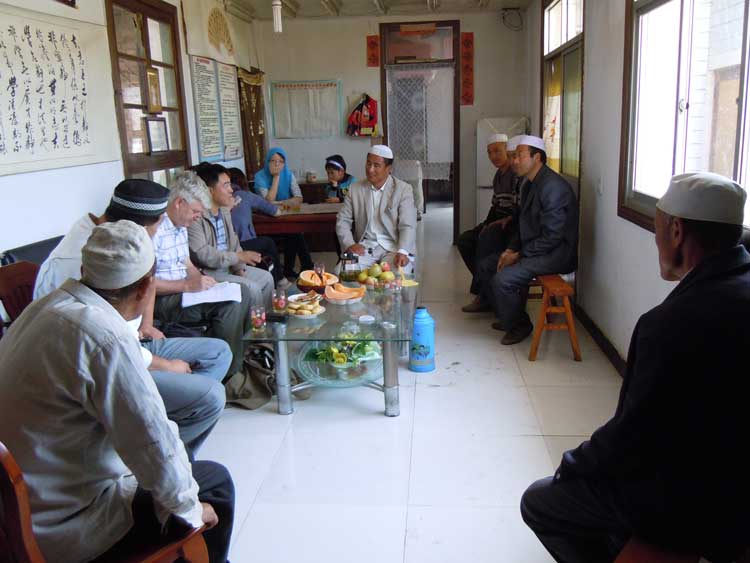
Disabilities
 There is huge potential for innovative hardware and software solutions – many interesting ideas were proposed
- There is therefore a large opportunity for sharing good global practice with colleagues in China in the use of ICTs for people with disabilities in China
- Information about location and direction is crucial for blind people – we need to think more innovatively about how to deliver on this
- Screen size and configuration (not touch screen) are very important for blind people – Blackberry wins out over iPhones here!
- There is an enormous opportunity for audio books (not only for blind people). Perhaps a civil society organisation could develop this, and even market audio books to generate income.
- Security code challenges are important for blind people
- Shopping information – much potential for RFID and 2D bar codes for blind people.
- A powerful text scanner and reader in a mobile phone for blind people would be useful
- Visualisation and touch/vibration of sound could also be developed further
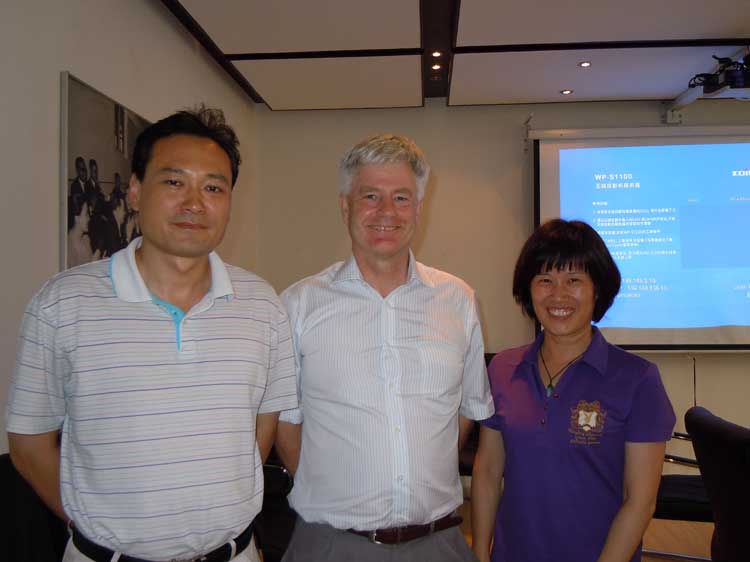
There is a huge agenda ahead, and I am enthusiastic about ways in which we can encourage delivery on some of these exciting opportunities. Thanks so much to BIS, Lanzhou University and Peking University for supporting this research, and to all those who contributed through their wisdom and hospitality
The CTO’s Panyard Experience
The Commonwealth Telecommunications Organisation’s 2011 Forum finished this evening with a wonderful Panyard Experience in Port of Spain hosted by the Ministry of Public Utilities of Trinidad and Tobago. This told through music and dance the history of the steel band, and finished up with an extravagant celebration of Carnival, thanks to Ronnie and Caro’s beautiful 2012 ‘collection’. There was also an amazingly impressive display of limbo dancing – if only my body was 40 years younger!
Filed under Photographs
US poverty: a good example to follow?
Official US date recently released shows that the number of US citizens living in poverty rose to a record 46 million last year. Yet the world is encouraged to believe that the US model of ‘democracy’ and ‘economic growth’ is the one that should be followed to eliminate poverty. Surely there is a contradiction here?
The BBC reports the release of these data as follows: “The number of Americans living in poverty rose to a record 46.2 million last year, official data has shown. This is the highest figure since the US Census Bureau started collecting the data in 1959. In percentage terms, the poverty rate rose to 15.1%, up from 14.3% in 2009. The US definition of poverty is an annual income of $22,314 (£14,129) or less for a family of four and $11,139 for a single person. The number of Americans living below the poverty line has now risen for four years in a row, while the poverty rate is the biggest since 1993. Poverty among black and Hispanic people was much higher than for the overall US population last year, the figures also showed. The Census Bureau data said 25.8% of black people were living in poverty and 25.3% of Hispanic people. Its latest report also showed that the average annual US household income fell 2.3% in 2010 to $49,445. Meanwhile, the number of Americans without health insurance remained about 50 million. The data comes as the US unemployment rate remains above 9%”.
Is it not time that global organisations, aid agencies, and governments across the world stopped pretending that economic growth leads to a reduction of poverty? Capitalism fundamentally depends on the maintenance of inequalities: between rich and poor countries, between rich and poor people. The increase in US poverty revealed in these data reinforces such arguments. The US ‘system’ enables Bill Gates and Warren Buffet to acquire huge wealth, while large numbers of their compatriots are consigned to poverty.
Freedom carries responsibilities. The focus of US capitalism on the freedom of the individual at the expense of the wider public good is surely not a model that the world should be encouraged to follow. As the BBC report notes, 50 million people in the US do not have health insurance. While the rich can have the benefit of the latest medical research, such care is beyond the means of the poor.
These figures should be seen as a wake up call to economists and politicians across the world. Unfettered capitalism, fueled by a self-reinforcing cycle of individual greed, can never lead to a reduction in poverty. Only when governments act explicitly to support the most marginalised in their societies can we begin to redress the balance.
Filed under Development, Politics
Shadow Scholars, plagiarism and academic merceneries
Ages ago a friend, knowing of my interests in the extent of plagiarism in higher education, sent me a link to an article in the Chronicle of Higher Education entitled The Shadow Scholar: the man who writes your students’ papers tells his story. In a nutshell, this tells ‘the story of how he makes a living writing papers for a custom-essay company and to describe the extent of student cheating he has observed’. Although it refers primarily to the US context, it provides a salutary tale for all those involved in helping university students to learn. Above all, it should remind us that such practices are becoming increasingly commonplace. In the month that followed its original publication, the report attracted 640 comments, and these are also well worth a read.
On re-reading it today, I am even more convinced that it should become required reading for academics and students alike!
Filed under Education, Higher Education

 Tim Unwin's Blog