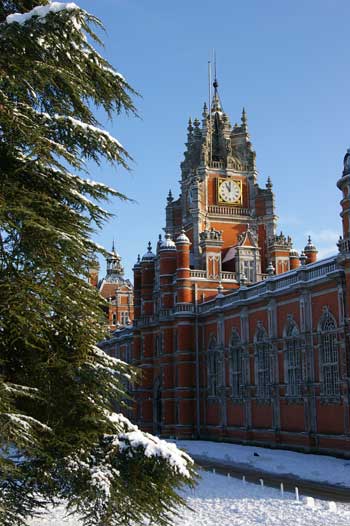
Around 18 months ago, Royal Holloway, University of London offered a severance/early retirement deal for staff, and after much reflection I decided to apply. My application was accepted, and I will therefore be ‘leaving’ the College in the autumn after 30 years working there – although I am delighted that I have been appointed as an Emeritus Professor, and so I will still be retaining very close links involving both teaching and research!
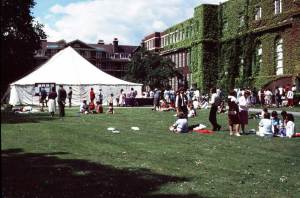 Many friends have asked why I have chosen to leave, and so I thought I would share my reflections here. They say much about the state of British higher education in the 21st century. I was appointed to Bedford College back in 1981, and have many great memories of my times both there and in the merged institution of Royal Holloway and Bedford New College. It has been a wonderful place to teach and do research, and I have had some amazing colleagues. However, UK universities have changed so much in this period that I no longer feel that I can really achieve what I want to do within the confines of this environment. Let me try to explain why. I guess there are five main reasons for my decision:
- a decline in collegiality amongst academics within universities
- changing student attitudes to being at university
- institutional and individual approaches to learning and teaching
- a failure to promote Geography as the important discipline that it is
- institutional leadership
The decline in collegiality
 One of the main reasons I am leaving is quite simply because the sense of collegiality that I participated in as a young academic has been eroded to such an extent that I no longer enjoy the spirit of shared intellectual adventure that lay at the heart of university life when I began my career. Many academics are now so absorbed in advancing their own careers that they have almost no time for their colleagues or their students. Long gone, for example, are the mid-morning and late-afternoon coffee and tea breaks when administrative, technical and academic staff would all come together to share a few minutes of each other’s company.
At the time of the merger of Bedford and Royal Holloway Colleges in the mid-1980s, I explicitly chose to live near the campus so that I could participate fully in its life – and be collegial. Rather few people now do so. Many ‘colleagues’ live far away and seem to spend more of their working lives off campus than they do on it. Colleagues who absent themselves are not there to support the students, are not there to attend seminars, are not there to answer the inevitable minor queries, are not there to share research ideas, and are not there to support each other. What has really saddened me is the way in which some young colleagues claim to be collegial and yet their actions seem to suggest that they have no idea what the word means.
 Perhaps I was foolish not to be more careerist myself, but what I loved was my research and teaching, and all that mattered was that I should earn the respect of my colleagues and students for what I did. When I returned to Holloway in 2004 after my secondment to DFID, I therefore specifically created a ‘Collective’, to try to rekindle that mutual support for colleagues and students that I had valued so much – and still believe in. Ultimately this has not really succeeded in the way I had hoped, in part because it runs counter to the selfish arrogance that drives so many academics today. It also saddens me that some young academics expect me – as a professor – to be hierarchical and cannot understand that I truly believe in the communal values that lie at the heart of sharing knowledge.
As for the causes of this changed mentality, it is clear that the fragmentation of unified pay scales, the introduction of the research assessment exercise, and increased competition between departments and institutions for the ‘best’ academics have all played their part. However, we as academics are also to blame, in that we have not stood up to these changes vehemently enough, and have insufficiently emphasised the critical importance of collegiality in our endeavours. That having been said, I should also say without any hesitation that there are some brilliant young academics in our department, who are indeed collegial. Their life is tough, very tough, and I wish them well in trying to retain their humanity and love for the discipline.
Student attitudes
 Throughout my career, I have vacillated between being angry that many students do not work hard enough, and being sorry for them that our society has shaped them in this way. More often than not, I have sympathised with them, and done my best to enthuse them with my love for Geography, and the crucial importance of rigorous academic enquiry. Perhaps I am retiring in part because I taught second year human geography techniques for too long! Excessive alcoholic indulgence by some students after sports fixtures the previous day, often meant that half the class was absent for my techniques lectures on Thursday morning, and many of those that were there seemed disinterested in participating. Small wonder that they had difficulties doing the practical classes; small wonder that many did poor dissertations.
The average number of hours that students study a week during term time in the UK is somewhere between 25 and 30. My expectation of a minimum 40 hours work a week is thus way beyond this, and I have not found a way of reconciling these figures. I love teaching, but after 30 year of hitting my head against a brick wall, I now want to spend time teaching students who really seem to care about their learning. Having taught at Peking University recently, where many students seem to spend more than 60 hours a week studying, I feel re-invigorated. It is scarcely surprising that the Chinese economy is so much 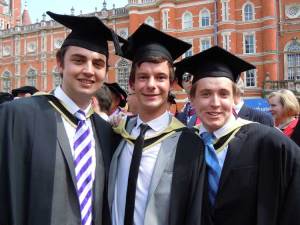 more vibrant than is ours in the UK. All this having been said, we do indeed have some able, keen and enthusiastic students in our department – and I will miss them. They are just too few in number! It was brilliant, though, how some of them responded when I offered to teach an extra-curricula course entitled “Critical Practices: an exploration of ideas in Critical Theory and Revolutionary Practice” more than a year ago now. This was learning and teaching how I wish I could have done it more often. The course was completely outside the normal curriculum, counted for nothing towards their degree assessment, and was based around discussions between us all. I enjoyed it hugely, and think that they too seemed to gain something from it.
Approaches to learning and teaching
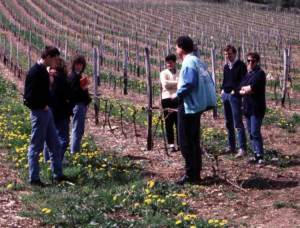 I have always believed that universities should be about sharing ideas at the frontiers of knowledge, that such intellectual enquiry is therefore challenging, that standards of assessment should be maintained, and that it is essential to treat students as human beings if we are to encourage the critical enquiry that I value so much. So many of these values have fallen by the wayside: in order to make courses popular they often take the form of learn and regurgitate; in some courses students are more or less told what questions to expect in the exams; students have to be treated as numbers in the name of fairness; we have to send them to ‘experts’ if they have personal issues, rather than first trying to help them ourselves; and we have devised mechanisms for ensuring that they get higher grades than they would have achieved in the past, so that out institutions climb up the various rankings in terms of results and added value! I am often seen as a harsh marker, but why should I change my expectations in a world that is moving towards mediocrity?
The amount of teaching that academics do has been vastly reduced in large part because hitting the research assessment criteria is seen as being more important. I am probably the only member of staff in our department who gives non-assessed essays to the final year students doing my course. Around two-thirds of the marks for most courses remain as being based on unseen exams at the end of the year, and yet we do not give students time to practise and have feedback. My non-assessed/formative essays are seen by some students purely as being an extra burden of work, rather than as an opportunity for them to learn how to write better essays! I believe that all undergraduates should have to write an essay a week (or produce a similar assignment in subjects where essay writing is not normal practice), and that we should mark them and provide feedback. How else are they going to improve?
 Likewise, I have always expected that undergraduate dissertations should be based on at least a month’s fieldwork. Yet, many years ago I recall a younger colleague saying that given the pressures that students have to earn income during the vacations it was unrealistic for me to expect such high standards. So it has increasingly become acceptable for dissertations to be based on a handful of interviews, rather than the detailed rigorous field research that I once expected. This does not only apply at undergraduate level, but I have also recently been dismayed at the quality of several PhDs that I have examined. Not only have I identified clear plagiarism in some, but also the amount of field research on which others have been based is totally paltry compared with what I expect from my own students.
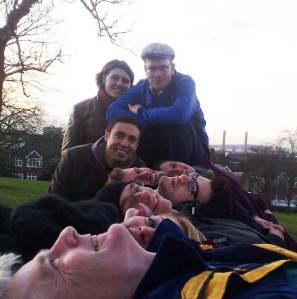
In a different but related vein, I have always sought to entertain students for dinners and BBQs at our home, in part to get to know them better so that I can write honest references about them, but also to show that I am human, and care about them as individuals. Yet, this behaviour is frowned upon by several of my colleagues. I was therefore very deeply honoured that our students should nominate me successfully for an Apple for the Teacher award from our Students Union this year – this is the greatest complement that they could possibly have paid me, and is one of my most treasured achievements in my 30 year career.
The Place of Geography
 I read this morning in an e-mail from our Head of Department that Geography has now dropped out of the top ten subjects in the UK in terms of the number of students studying at A level; numbers have fallen from 32,063 to 31,226 from 2010 to 2011, a drop of 2.6% in a single year. This is incredibly sad, and only reinforces the arguments that I made in a recent publication (The role of Geography and Geographers in policy and government departments, in Agnew, J. and Livingstone, D.N. (eds) (2011) The Sage Handbook of Geographical Knowledge, London: Sage, 271-284) about how academic geographers have largely failed to engage externally with the public, with politicians, and with schools. I have always sought to champion the subject in schools and the wider political arena – as reflected in my early work for the Geographical Association – indeed, that was what my book The Place of Geography was explicitly intended to do!
I am also saddened at the way in which many geographers seem so unwilling to defend what to me lies at the core of our discipline: an engagement with the ways in which humans interact with the physical world, and an understanding of how we thereby construct particular places. By building their careers increasingly on a few tiny areas of intellectual enquiry, geographers have all too often moved away from what I still see as the essence of our discipline. I have always been fascinated by new ideas – often at the interface of disciplines – and enjoy being able to engage across many different intellectual areas. So, having worked for 30 years, I now find myself increasingly at odds with the views being advocated by many, but by no means all, of our disciplinary leaders. Rather than continuing to swim against the tide, I am ‘retiring’ to enable me to do the research, teaching and practical work that I believe in. There is so much still to be done.
Institutional leadership
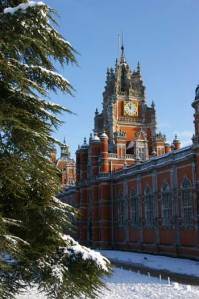 Finally, I decided to retire because I was disappointed in the specific institutional leadership in place at Royal Holloway at the time I took the decision. University Vice Chancellors are a motley crew. Some, but all too few, are outstanding. I do not envy them the task – it is immense and complex – but Vice Chancellors and Principals have to show real leadership qualities, they must champion intellectual excellence above all else, they must be wise, they must be fair and transparent, and they must be collegial. Quite simply, I was no longer convinced that I could achieve the things I wanted to do – especially for the ICT4D Centre – within the confines of the institution where I was. I felt so much more valued by those outside the institution than I did within it! At the time, I did not know that we were about to have a new and dynamic Principal, and I am certain that Holloway is on the way up again, having fallen dramatically in profile and achievement under the previous regime.
It is obviously with regrets that I am retiring from Royal Holloway, University of London. I have a huge number of very fond memories – of some amazing colleagues, and great students. I am indeed therefore delighted to be continuing as an Emeritus Professor, and in this capacity will do all I can to support the institution that I have loved and sought to support for the past 30 years.






 Tim Unwin's Blog