Many popular Android apps share location and unique identifiers with advertisers

A recent report on the BBC website notes a study by researchers from Intel Labs, Penn State and Duke University which shows that “Some of the most popular apps written for Google’s Android phones do not tell users what is done with data they gather… . Half of 30 applications studied share location information and unique identifiers with advertisers”. Two-thirds of these popular third-party apps showed suspicious handling of personal data.

Information from the ‘phones was sent to advertisers without the users being told that data was being shared with them.  As the BBC report goes on to note,  “Some apps gathered and despatched location information even when an application was not running and some sent updates every 30 seconds.”

Whilst users should always be wary of downloading any apps that they do not necessarily trust, this seems to be yet another example of Google not being the fully trustworthy company that it would like people to believe it is.  It would be a relatively simple matter to ensure that all users are automatically warned about this when software is downloaded. As the researchers conclude, “Android’s coarse-grained access control provides insufficient protection against third-party applications seeking to collect sensitive data”.

This is definitely a powerful reason why Android ‘phones should be avoided, and once again raises serious concerns about Google’s lack of ethical probity.

Leave a comment

Filed under Ethics, ICT4D

Scholarships for ICTD2010

Thanks to the generous support of the conference sponsors, the ICTD2010 conference organisers have recently been able to announce a further call for scholarships.  All applications must be on the appropriate form, and need to satisfy at least one of the following criteria:

  1. Have had a paper accepted, or be a speaker in an accepted session (including posters, workshops and demos) at the conference.
  2. Be from a country ranked below 100th on the latest Human Development Index (as at 1st June 2010)
  3. Be studying for a postgraduate degree
  4. Be on a low income (if applying on these grounds, the most recent payslip must be attached as proof of income)

Those who submitted unsuccessful applications in the first round will automatically be reconsidered, and must not submit new applications (otherwise they will be excluded).

More than 60 scholarships were awarded in the first round (from more than 170 applications), and it is hoped that a further 20 scholarships may be offered, covering some or all of the following: registration fee, accommodation and travel.

Leave a comment

Filed under Development, ICT4D

Rats in Virginia Water

Walking home from the station today, I have to admit to being a little surprised by seeing a rat on the path!  A rat in leafy Virginia Water! A rat not so far from the Wentworth golf club.  The irony was striking.

It was amazing – just sitting there, oblivious to the trains passing by a few yards away, and the car park just nearby. Sadly it scuttled off into the undergrowth before I could get close enough for a better photograph.

I have to say I prefer the deer amongst our local wildlife – even if they do eat the roses and vegetables.  Should rats be seen as pests?  If only hedgehogs were as common as rats perhaps we would have fewer slugs!

It’s amusing to see other mentions of rats in Virginia Water and Wentworth:

  • The Sun recently referred to Peter Crouch (the footballer) in the following terms “Abbey Clancy will forgive love rat fiancé Peter Crouch”, noting on 12th August 2010 that “Crouch looked teed off yesterday during a round of golf at the posh Wentworth course in Virginia Water, Surrey”

Leave a comment

Filed under Photographs, UK

Reflections on e-mails

I remember the days when as a young academic I looked forward to receiving perhaps 10 letters a day; now, I receive well over 100 e-mails a day, and there is an expectation that I should respond to them all as soon as possible. How am I expected to be creative and innovative?  E-mails have been one of the most damaging things to productive and innovative work.  I hugely admire colleagues who have resisted the onset of e-mails, and simply invite those who want to contact them to write to them in ‘hard copy’. A colleague in a global organisation recently told me that he had a backlog of more than 6000 unanswered e-mails.  This is completely unacceptable.  We need to take more control over our lives – and our e-mails!

Some of the greatest abuses of e-mail (over and above Spam) include the following:

  • Organisations that send all of the paperwork for meetings as attachments, and then expect attendees to print them off before they attend the meeting.  This is completely unacceptable.  If hard-copy is required, then it is much more efficient and cheaper for the central organisation to print multiple copies and then disseminate these to attendees.  It is of course far easier for organisations simply to send out e-mails, but this passes on the work load of printing out to the attendees!
  • The above is even worse when the convener of a meeting sends the papers out electronically a couple of hours before the meeting starts and still expects recipients to read them beforehand!
  • People who set their preferences to reply to all, and thereby send vast numbers of e-mails to people who really do not want to receive them!
  • People who expect e-mails to be answered almost immediately!  Why should this have become so widely accepted?
  • Excessive use of copy e-mails.  Anyone who has worked in certain kinds of organisation (such as the Civil Service) will be only too familiar with this syndrome! People who are unwilling or unable to take responsibility for their actions always copy their bosses in to an e-mail!  Likewise certain control-freak bosses always want to micro-manage their staff and demand to be copied in!
  • People who send an e-mail to someone in the same room asking them a question, rather than getting up and actually talking with them!  It’s OK if the e-mail is to send an attached document, but otherwise it is much more efficient simply to go and discuss the matter with them.

So, here are some tips on what I think is good e-mail usage that might help reduce such abuses and enable us to retain some sense of our humanity:

  • When on leave, set a rule that files all incoming e-mails in a separate folder, and have an out of office message that tells everyone that their e-mail has been archived and if they want you to read it they should send it again when you return.  Rest assured that this will infuriate people, but just think about it.  If you have only 100 e-mails a day, and go on leave for 10 days that will mean that you will have 1000 e-mails awaiting you on return.  Even if you only spend a minute on each e-mail it would take just under 17 hours to respond to these on return.  You have better things to do.
  • Set a rule that sends all of your copy correspondence to a separate folder, and have an automated response that says something to the effect that you try to read copy correspondence once a week, and if the sender really wants you to read it more urgently than this they should send it to you as a direct respondent.  Again, this can infuriate abusers of copy correspondence, but it certainly cuts down on the number of unwanted e-mails you will receive!
  • A friend told me of a colleague who only responds to 38 e-mails a day – and lets everyone know this.  If you don’t get into the top 38, then tough luck!  I have not yet quite got round to doing this.
  • A variant on this is simply to set an amount of time each day to respond to e-mails – perhaps an hour –  and then just delete all those that have not been answered.
  • Colour code your e-mails into certain categories, and then sort them automatically according to priority.  Just so you know, my list in descending order of priority is as follows: family (red), friends (blue), my postgraduate students (green), Commonwealth Scholarship Commission (orange), ICT4D  colleagues (pale blue), Institute of Masters of Wine (Burgundy), and then others (black).  I don’t always get through all of my high priority e-mails, but it does mean that people know where they stand.
  • Set a rule that automatically deletes all incoming out of office messages before you ever even see them!
  • Always switch off your e-mail software if you are trying to do anything productive – and keep it off for as long as possible.  Never leave it running in the background.
  • Try to read your e-mails at set times of day – such as first thing in the morning – and then simply do as much as you can before switching your e-mail software off and  then start again the next morning.
  • If people are pushy and ask why you have not responded immediately to their e-mails, simply put them lower down in your list of priorities! They will soon learn.
  • Have a standard attempted response rate to important e-mails of 48 hours – and let people know this.  No-one should expect an e-mail to be read or responded to immediately.
  • Never respond to work related e-mails at the weekend.
  • I’m thinking of creating an automated response to all of my e-mails letting people know what my e-mail strategy is and apologising if they don’t receive an answer!

Enough for now….

Oh yes, and I am developing an automated e-mail answering system that learns how I usually respond to certain kinds of e-mail and then does this automatically for me.  It is great fun, but does mean that people don’t always get the messages that they expect to receive….

5 Comments

Filed under ICT4D

ICT4D extracts on Amazon.com

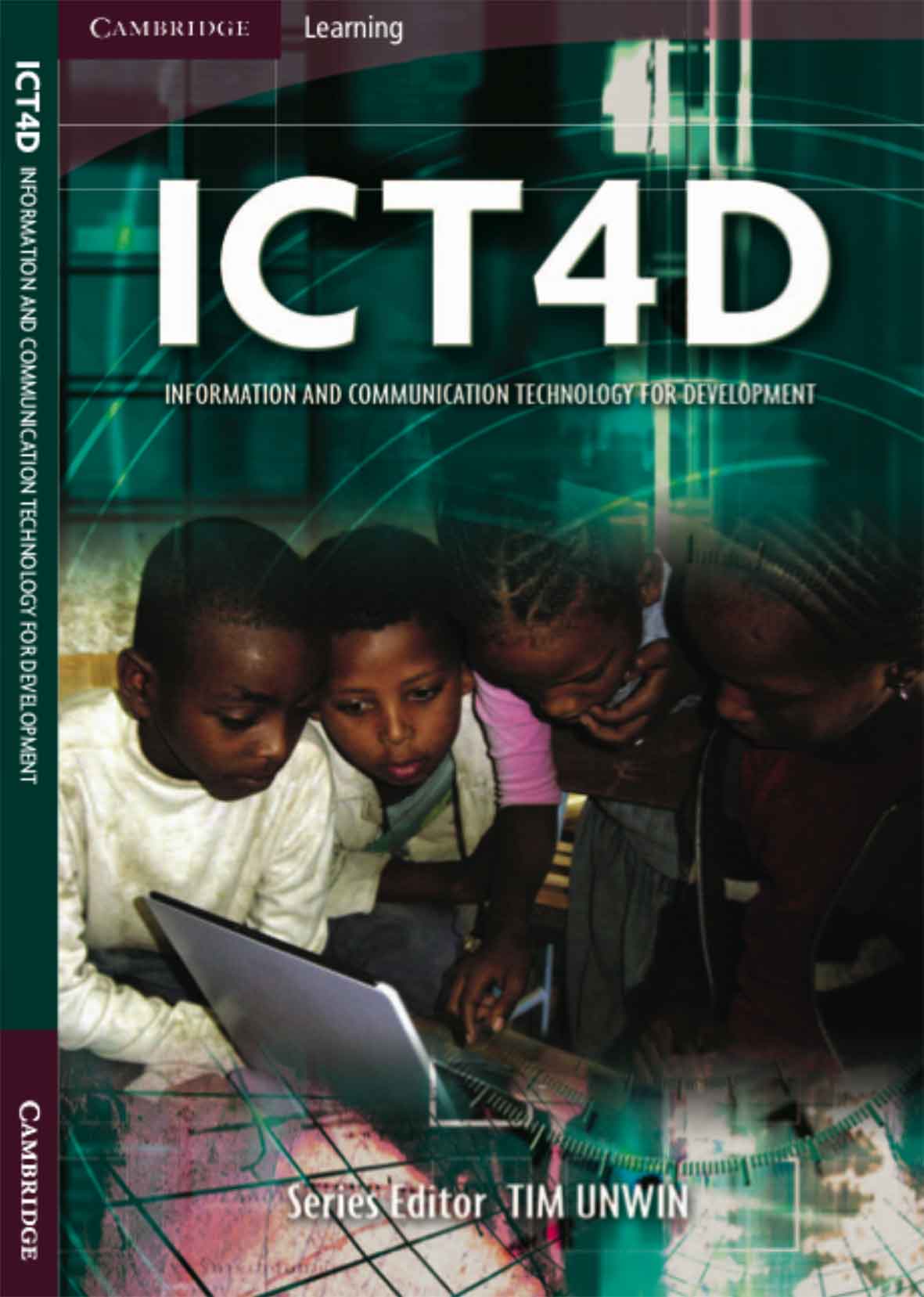
ICT4D BookFor those who cannot afford the (low) price of my edited ICT4D book (published by CUP in 2009), the first chapter as well as the contents page and index can be accessed from Amazon.com!

A summary of the contents is as follows:

  1. Introduction
  2. Development agendas and the place of ICTs
  3. Information and communication in development practices
  4. The technologies: identifying appropriate solutions for development needs
  5. ICT4D implementation: policies and partnerships
  6. ICTs, enterprise and development (Michael Best and Charles Kenny)
  7. ICTs in education: catalyst for development (Michelle Selinger)
  8. e-Health: information and communication technologies for health (Yunkap Kwankam, Ariel Pablos-Mendez and Misha Kay)
  9. e-Government and e-governance (James Guida and Martin Crow)
  10. Information and communication technologies for rural development (Bob Day and Peter Greenwood)
  11. Conclusions

The book itself can readily be ordered directly from Cambridge University Press.

Reviews include:

Leave a comment

Filed under ICT4D

IPID Annual Conference at UPC Barcelona

The International Network for Postgraduate Students working in ICT4D (IPID) is currently (9th-10th September 2010) holding its 5th annual conference at the Universitat Politècnica de Catalunya in Barcelona. A wealth of current postgraduate research in ICT4D is being presented around the following themes:

  • gender
  • e-agriculture
  • rural communities
  • online communities
  • e-government
  • technology
  • ICT in education
  • e-health
  • entrepreneurship
  • networks

The conference is being broadcast live at http://www.canalupc.tv/media/simposium-upc-uoc .

Ismael Peña Lopez’s comprehensive blog on the conference.

Leave a comment

Filed under ICT4D, ICT4D conferences

Reflections on the Internet and Development

Just finished writing a chapter about the Internet and Development, and am surprised at the vehemence of my own conclusions:

In conclusion…

Three important and inter-related conclusions can be drawn from this short overview of research on the Internet and development.  First, it must be remembered that the Internet is but one of a number of new digital ICTs.  Whilst many have given it predominance, “Internet use has spread much less rapidly in low-income countries than other ICTs – notably broadcast radio … and television and, more recently, mobile telephony” (Souter 2007: 33).  As Souter (2007: 33) goes on to emphasise, ultimately “the potential of the Internet can only be achieved if effective access is available”, and this requires the availability of the ICT infrastructure and reliable electricity at an affordable price for the poor, and that it provides relevant information that is not available more cheaply through other means.  If the world’s poor are truly to benefit from the Internet, then far more attention needs to be paid explicitly to ways in which they can indeed use it to their real advantage, thereby enabling them to benefit at the expense of the world’s rich. Only then will relative poverty be reduced.

Second, the success of the Internet in delivering development objectives depends very much on how such objectives are defined.  Much research and practice has focused on the hegemonic notion that development is about economic growth, and there are convincing arguments that the Internet can indeed contribute to such an objective.  However, even here, it is evident that the presence of the Internet alone will not in most instances contribute to the economic well-being of the poorest and most marginalised. From a relativist perspective, focusing particularly on social equality, the evidence is far more uncertain.  Numerous studies (Huyer and Hafkin 2007), for example, show how women in patriarchal societies are increasingly marginalised by their exclusion from access to the Internet.  Likewise, if development is seen as being concerned with freedoms, then the ambivalent character of the technology of the Internet is once more revealed.

A final important characteristic of the Internet in the context of development has been its dehumanising and alienating effects.  Just as factory production in the 19th century made humans appendages of machines (Lukács 1923), so too in the 21st century has the Internet made people ever more the appendages of computers.  In so doing, users are becoming further alienated from the physical world of nature and creativity, and ever more constrained by those who design the virtual realities of which we are now part.  What is remarkable about this is that in the name of progress, such virtual worlds are accepted and applauded as being ‘good’ and where the future lies (Carr 2008). Such arguments need to be strongly countered if we are to retain the very essence of what makes us human.  By enabling people to work away from their offices, by dramatically reducing the constraints of time and space on production, consumption and exchange, the Internet has enabled owners of capital to exploit their workforces far more efficiently and effectively than ever before, whilst at the same time making them think that they are enjoying it.  Imagine a world where one was not expected to answer the hundred or so e-mails that arrive every day, and where one actually had time to think, be creative and enjoy the physical experience of being human!  Paradoxically, the poor and marginalised, those without access to the Internet, may ultimately actually be very much richer than the bankers, traders and business executives who have become the new proletariat of the digital age, quite simply because the poor without access to the Internet are not bound by its dehumanising, unspoken and constraining rules.”

I guess it is now time for me to take a digital break!

1 Comment

Filed under ICT4D

The Commonwealth Youth Orchestra and Choir

The creation of an exciting new orchestra – the Commonwealth Youth Orchestra and Choir – has just been announced.  Its mission is “to bring together young musicians of the 54 countries of the Commonwealth, uniting them in the pursuit of musical excellence while transcending all cultural, political, social and economic boundaries, and promoting, by example, these values of excellence for the benefit of all people throughout the Commonwealth”.

The Orchestra has four aims:

  • To give students of the Commonwealth (aged 18 – 24) the opportunity to perform concerts throughout all the 54 countries of the Commonwealth.
  • To give composers of the Commonwealth international opportunities to have their music performed.
  • To give conductors of the Commonwealth international opportunities to conduct a world-class orchestra.
  • To give young soloists of the Commonwealth international opportunities to perform with a world-class orchestra.

Leave a comment

Filed under Music

Jobs or degrees for young people in the UK

It’s that time of year again: school exam results, and pictures of happy young people getting the results for which they hoped, alongside grim stories of those who have failed to make the grade! “Desperate for a degree?” in the Metro on 28th August, ‘”Carnage’ as pupils scramble for university places“, or “Universities swamped in mad dash for places” in the Times

Much of this reporting is highly misleading, especially concerning the difficult decisions young people are facing when they do not get the results that they had wanted. The Metro, for example, comments that “”Up to 200,000 youngsters were expected to miss out on higher education places despite record A-level results”.  Not a bit of it.  Why should anyone think they are missing out?

To be sure, it is very unfortunate when school leavers do much less well at their A levels than expected.  However, they should always have kept one of their university options as a safety net, in case of this eventuality.  There is absolutely no point in keeping  an offer of AAA and another of AAB, when realistically there is a possibility that you might get BBB.  Moreover, there is a fundamentally misplaced assumption that anyone who gets A levels – even low grades – should automatically be able to go to a university!  Why?  University entry is not an automatic right. It should be reserved for those who can benefit most from it, and can best use the opportunity to enhance their knowledge and understanding.

Although youth (18-24 year olds) unemployment in the UK fell by 16,000 over the last month, it is still 324,000 according to the Centre for Economic and Social Inclusion.  Many young people are therefore choosing to try to go to poor quality universities, rather than entering the ranks of the unemployed.  Even with average student debt around £25,000 after three years, this is seen as being desirable primarily as a lifestyle choice.  The expectation is that graduate salaries will more than enable this debt to be paid off.  Anyway, at this age, who really cares?

There is little point, though, in many young people with poor A levels scrabbling to go to a university.  Many degrees offer few skills that will ever be of relevance in the job market. Indeed, employers regularly complain about the low skill levels of graduates in the UK! These people would be far better off starting on apprenticeships or entering the work environment immediately. They would not saddle themselves with debt, and in many instances their career prospects are just as good as those of graduates.  Moreover, by the time they are 21 they will have three years of income over and above their peers who waste three years simply ‘having a good time’ at university.  Graduate employment is tough – it is currently estimated that there are now some 70 people searching for every graduate job!  So, instead of going to university, those young people who are not really interested in academic studies should turn to the job market (see report in the Sunday Times on the university of life!).

This is really where we are failing young people.  Youth unemployment is far too high.  We need to encourage more apprenticeship schemes, and create opportunities for more young people to be gainfully employed.  It is far better for them to be working productively rather than costing tax payers money simply to enable them to gain increasingly worthless degrees at low quality universities.  Better still, we should close down half of these so-called universities, and instead create training institutes that would enable young people to gain the skills needed  to compete successfully in the global employment market!

So let’s stop fooling ourselves. Very few young people are actually missing out on university places!


Leave a comment

Filed under Higher Education, UK

Vacancies for Two New Members of the Commonwealth Scholarship Commission

The Secretary of State for International Development is looking to appoint two new members to the Commonwealth Scholarship Commission in the UK.

The Commonwealth Scholarship Commission is a non-departmental public body, responsible for delivering the UK’s contribution to the Commonwealth Scholarship and Fellowship Plan. It achieves this through the provision of (mainly postgraduate) scholarships and mid-career fellowships to some 700 individuals from throughout the Commonwealth each year. The Commission also nominates UK candidates to take up awards made by other Commonwealth countries. The Commission receives funding from the Department for International Development, the Department for Business, Innovation and Skills, the Foreign and Commonwealth Office, the Scottish Executive, and most UK universities.

There are 15 Commissioners, drawn from a range of academic, development, diplomatic and private sector backgrounds. Their roles are to:

  • provide policy direction and oversight
  • monitor the effectiveness of awards
  • ensure appropriate structures for governance and accountability
  • through selection committees held in February and March of each year, select recipients of awards

Candidates are also encouraged to find out more about the work of the Commission from its website, from which annual reports and other key documentation can be downloaded.

Full details of these vacancies are available at http://www.cscuk.org.uk/about/vacancies.asp

As Chair of the Commission, I would be very happy to discuss the post with interested applicants.

Applications should arrive by 17.00 (GMT) on 10 September 2010.

All forms should be completed and returned to the following address:

Dr John Kirkland
Executive Secretary
Commonwealth Scholarship Commission in the United Kingdom
c/o The Association of Commonwealth Universities
Woburn House
20-24 Tavistock Square
London
WC1H 9HF

1 Comment

Filed under Higher Education, UK