IPID Annual Conference at UPC Barcelona

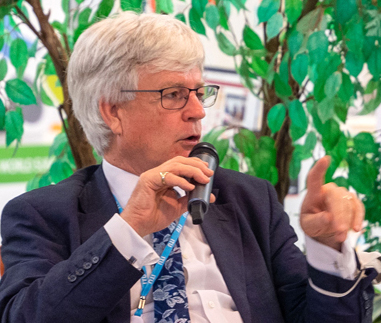
The International Network for Postgraduate Students working in ICT4D (IPID) is currently (9th-10th September 2010) holding its 5th annual conference at the Universitat Politècnica de Catalunya in Barcelona. A wealth of current postgraduate research in ICT4D is being presented around the following themes:

  • gender
  • e-agriculture
  • rural communities
  • online communities
  • e-government
  • technology
  • ICT in education
  • e-health
  • entrepreneurship
  • networks

The conference is being broadcast live at http://www.canalupc.tv/media/simposium-upc-uoc .

Ismael Peña Lopez’s comprehensive blog on the conference.

Leave a comment

Filed under ICT4D, ICT4D conferences

Reflections on the Internet and Development

Just finished writing a chapter about the Internet and Development, and am surprised at the vehemence of my own conclusions:

In conclusion…

Three important and inter-related conclusions can be drawn from this short overview of research on the Internet and development.  First, it must be remembered that the Internet is but one of a number of new digital ICTs.  Whilst many have given it predominance, “Internet use has spread much less rapidly in low-income countries than other ICTs – notably broadcast radio … and television and, more recently, mobile telephony” (Souter 2007: 33).  As Souter (2007: 33) goes on to emphasise, ultimately “the potential of the Internet can only be achieved if effective access is available”, and this requires the availability of the ICT infrastructure and reliable electricity at an affordable price for the poor, and that it provides relevant information that is not available more cheaply through other means.  If the world’s poor are truly to benefit from the Internet, then far more attention needs to be paid explicitly to ways in which they can indeed use it to their real advantage, thereby enabling them to benefit at the expense of the world’s rich. Only then will relative poverty be reduced.

Second, the success of the Internet in delivering development objectives depends very much on how such objectives are defined.  Much research and practice has focused on the hegemonic notion that development is about economic growth, and there are convincing arguments that the Internet can indeed contribute to such an objective.  However, even here, it is evident that the presence of the Internet alone will not in most instances contribute to the economic well-being of the poorest and most marginalised. From a relativist perspective, focusing particularly on social equality, the evidence is far more uncertain.  Numerous studies (Huyer and Hafkin 2007), for example, show how women in patriarchal societies are increasingly marginalised by their exclusion from access to the Internet.  Likewise, if development is seen as being concerned with freedoms, then the ambivalent character of the technology of the Internet is once more revealed.

A final important characteristic of the Internet in the context of development has been its dehumanising and alienating effects.  Just as factory production in the 19th century made humans appendages of machines (Lukács 1923), so too in the 21st century has the Internet made people ever more the appendages of computers.  In so doing, users are becoming further alienated from the physical world of nature and creativity, and ever more constrained by those who design the virtual realities of which we are now part.  What is remarkable about this is that in the name of progress, such virtual worlds are accepted and applauded as being ‘good’ and where the future lies (Carr 2008). Such arguments need to be strongly countered if we are to retain the very essence of what makes us human.  By enabling people to work away from their offices, by dramatically reducing the constraints of time and space on production, consumption and exchange, the Internet has enabled owners of capital to exploit their workforces far more efficiently and effectively than ever before, whilst at the same time making them think that they are enjoying it.  Imagine a world where one was not expected to answer the hundred or so e-mails that arrive every day, and where one actually had time to think, be creative and enjoy the physical experience of being human!  Paradoxically, the poor and marginalised, those without access to the Internet, may ultimately actually be very much richer than the bankers, traders and business executives who have become the new proletariat of the digital age, quite simply because the poor without access to the Internet are not bound by its dehumanising, unspoken and constraining rules.”

I guess it is now time for me to take a digital break!

1 Comment

Filed under ICT4D

The Commonwealth Youth Orchestra and Choir

The creation of an exciting new orchestra – the Commonwealth Youth Orchestra and Choir – has just been announced.  Its mission is “to bring together young musicians of the 54 countries of the Commonwealth, uniting them in the pursuit of musical excellence while transcending all cultural, political, social and economic boundaries, and promoting, by example, these values of excellence for the benefit of all people throughout the Commonwealth”.

The Orchestra has four aims:

  • To give students of the Commonwealth (aged 18 – 24) the opportunity to perform concerts throughout all the 54 countries of the Commonwealth.
  • To give composers of the Commonwealth international opportunities to have their music performed.
  • To give conductors of the Commonwealth international opportunities to conduct a world-class orchestra.
  • To give young soloists of the Commonwealth international opportunities to perform with a world-class orchestra.

Leave a comment

Filed under Music

Jobs or degrees for young people in the UK

It’s that time of year again: school exam results, and pictures of happy young people getting the results for which they hoped, alongside grim stories of those who have failed to make the grade! “Desperate for a degree?” in the Metro on 28th August, ‘”Carnage’ as pupils scramble for university places“, or “Universities swamped in mad dash for places” in the Times

Much of this reporting is highly misleading, especially concerning the difficult decisions young people are facing when they do not get the results that they had wanted. The Metro, for example, comments that “”Up to 200,000 youngsters were expected to miss out on higher education places despite record A-level results”.  Not a bit of it.  Why should anyone think they are missing out?

To be sure, it is very unfortunate when school leavers do much less well at their A levels than expected.  However, they should always have kept one of their university options as a safety net, in case of this eventuality.  There is absolutely no point in keeping  an offer of AAA and another of AAB, when realistically there is a possibility that you might get BBB.  Moreover, there is a fundamentally misplaced assumption that anyone who gets A levels – even low grades – should automatically be able to go to a university!  Why?  University entry is not an automatic right. It should be reserved for those who can benefit most from it, and can best use the opportunity to enhance their knowledge and understanding.

Although youth (18-24 year olds) unemployment in the UK fell by 16,000 over the last month, it is still 324,000 according to the Centre for Economic and Social Inclusion.  Many young people are therefore choosing to try to go to poor quality universities, rather than entering the ranks of the unemployed.  Even with average student debt around £25,000 after three years, this is seen as being desirable primarily as a lifestyle choice.  The expectation is that graduate salaries will more than enable this debt to be paid off.  Anyway, at this age, who really cares?

There is little point, though, in many young people with poor A levels scrabbling to go to a university.  Many degrees offer few skills that will ever be of relevance in the job market. Indeed, employers regularly complain about the low skill levels of graduates in the UK! These people would be far better off starting on apprenticeships or entering the work environment immediately. They would not saddle themselves with debt, and in many instances their career prospects are just as good as those of graduates.  Moreover, by the time they are 21 they will have three years of income over and above their peers who waste three years simply ‘having a good time’ at university.  Graduate employment is tough – it is currently estimated that there are now some 70 people searching for every graduate job!  So, instead of going to university, those young people who are not really interested in academic studies should turn to the job market (see report in the Sunday Times on the university of life!).

This is really where we are failing young people.  Youth unemployment is far too high.  We need to encourage more apprenticeship schemes, and create opportunities for more young people to be gainfully employed.  It is far better for them to be working productively rather than costing tax payers money simply to enable them to gain increasingly worthless degrees at low quality universities.  Better still, we should close down half of these so-called universities, and instead create training institutes that would enable young people to gain the skills needed  to compete successfully in the global employment market!

So let’s stop fooling ourselves. Very few young people are actually missing out on university places!


Leave a comment

Filed under Higher Education, UK

Vacancies for Two New Members of the Commonwealth Scholarship Commission

The Secretary of State for International Development is looking to appoint two new members to the Commonwealth Scholarship Commission in the UK.

The Commonwealth Scholarship Commission is a non-departmental public body, responsible for delivering the UK’s contribution to the Commonwealth Scholarship and Fellowship Plan. It achieves this through the provision of (mainly postgraduate) scholarships and mid-career fellowships to some 700 individuals from throughout the Commonwealth each year. The Commission also nominates UK candidates to take up awards made by other Commonwealth countries. The Commission receives funding from the Department for International Development, the Department for Business, Innovation and Skills, the Foreign and Commonwealth Office, the Scottish Executive, and most UK universities.

There are 15 Commissioners, drawn from a range of academic, development, diplomatic and private sector backgrounds. Their roles are to:

  • provide policy direction and oversight
  • monitor the effectiveness of awards
  • ensure appropriate structures for governance and accountability
  • through selection committees held in February and March of each year, select recipients of awards

Candidates are also encouraged to find out more about the work of the Commission from its website, from which annual reports and other key documentation can be downloaded.

Full details of these vacancies are available at http://www.cscuk.org.uk/about/vacancies.asp

As Chair of the Commission, I would be very happy to discuss the post with interested applicants.

Applications should arrive by 17.00 (GMT) on 10 September 2010.

All forms should be completed and returned to the following address:

Dr John Kirkland
Executive Secretary
Commonwealth Scholarship Commission in the United Kingdom
c/o The Association of Commonwealth Universities
Woburn House
20-24 Tavistock Square
London
WC1H 9HF

1 Comment

Filed under Higher Education, UK

ICTs and Urban Micro-enterprises in Mumbai

P.Vigneswara Ilvarasan and Mark Levy have just made available the final report from their exciting and innovative IDRC funded research on the use of ICTs by urban micro-enterprises in Mumbai, employing fewer than 20 hired workers.  This is one of the most important analyses of ICTs and entrepreneurs that I have recently read.  The methodology is much more rigorous than that of most research in the field of ICT4D, which means that considerable credence can be placed on the reliability of the results. Some 329 male owners or managers of micro-enterprises, and 231 female owners were interviewed between April and June 2009, and a further 102 men and women were surveyed in September and November 2009.

Whilst I might have some quibbles over definitions – surely in general usage, the term micro-enterprise is used to refer to much smaller units than those employing 20 people – this is a really excellent piece of research that deserves widespread citation.  Its key findings are:

  • “Nearly everyone who owned or managed a microenterprise—regardless of sex—had a mobile phone.
  • Many female and male microentrepreneurs who owned or managed microenterprises and who used a mobile for business communication reported that the year-over-year income of their business had risen.
  • Urban microentrepreneurs experience different levels of economic growth depending on how they use their mobiles for business communication.
  • The positive impact of mobile phones on microenterprises might emerge only after two years of use. Microentrepreneurs who owned a mobile for two years or less saw some growth in business income; those who had begun to use their mobile more than two years earlier experienced even greater income growth.
  • Levels of PC ownership and usage at home and work were low.
  • Few microentrepreneurs frequented Internet cafés for business purposes.
  • Only small numbers used their mobiles for the full range of business-enhancing activities.
  • Consideration of a microentrepreneur’s full repertoire of ICT use showed a positive relationship with microenterprise growth, especially when other factors such as gender and motivation were also taken into account.
  • Compared to women-owned microenterprises, microenterprises owned or managed by men had much greater increases in business income, although female owned microenterprises also experience some growth
  • The more positive a female microentrepreneur felt about her status and power because of her business, the more she was motivated to use ICTs in support of her business.
  • The more that a woman entrepreneur used mobile phones, workplace computers, etc., the more her microenterprise grew, especially businesses in the trade sector of the informal economy.”

Thanks Vignesh and Mark for enriching us with this important study.

2 Comments

Filed under Entrepreneurship, ICT4D

Glitch with using Google Mail View – be warned!

Wow – managed to track down an elusive error!  Has anyone else come across this glitch? Guess they must have….

A colleague was transferring data from a large number of .doc forms completed in Microsoft Word into an Excel spreadsheet, and instead of downloading the .doc files, simply opened them in Google Mail’s View function.  However, the data ‘appeared’ different to what was shown when the files were downloaded and opened in Word – so, most of the figures incorporated into the spreadsheet were actually wrong.  Basically, Google View represented the figures  incorrectly.

The problem seems to have been because the forms on the original .doc documents had been completed using drop-down menus, and therefore that the View function did not pick these up correctly.  There was no way of knowing that the figures were wrong, unless the original files were actually opened and checked.  I wonder how many other people have therefore incorporated incorrect data into their work as a result of this glitch?

So, don’t rely on Google Mail’s View function if your document includes such things as drop-down menus!  Just wondering, is this actually a subtle way of Google trying to undermine Microsoft?

1 Comment

Filed under ICT4D

UK Government switches off child database

I have previously raised concerns about the creation of the national ContactPoint database of all children that was put in place in 2009. I’m therefore delighted to note that this is to be shut down.

The BBC  reports that the “£235m government database containing the records of England’s 11 million children has been switched off. … Within two months of the switch-off all the data collected for the system is to be destroyed, although the information will still remain in the social services, education and health departments it had been gathered from. But there have been concerns that there is nothing collating key information centrally in one place. The system, which has been running since January last year, was always controversial and was set to cost a further £41m a year. After successive delays, it was rolled out to only 15,000 users, out of the initial target of 330,000. The system was used by doctors, social workers, schools, charities and other individuals involved in the protection of children. Many said it was useful in tracking children and discovering the truth about the way they are cared for. …  But civil liberties groups criticised it as intrusive and disproportionate.”

While it is of course crucial that we find ways to try to ensure that all those seeking to support “children at risk” can share information efficiently, the creation of a national database of information about all children raised huge ethical issues.  Whilst it seems that the reason for the closure of ContactPoint was largely on cost grounds, it is good to see that this represents at least a small step back from the excessive use of ICTs by the UK state to maintain databases of information so that it can more effectively monitor and control the country’s population.

Leave a comment

Filed under Ethics, ICT4D, UK

Google waves goodbye to Wave

So perhaps Google is not so all-seeing and all-wise after all.  After a year of dismal take-up, Google has decided to stop developing Wave as a stand-alone product according to Urs Hölzle (Senior VP Operations and Google Fellow) in an update on Google’s official blog on 4th August 2010.

Wave was launched in 2009 with a great fanfare – and was described by Google at the time as “how e-mail would look if it were invented today”.  In essence, it combined e-mails with instant messaging and features to allow people to collaborate in real time on documents.

However according to Urs Hölzle on Google’s blog, “Wave has not seen the user adoption we would have liked. We don’t plan to continue developing Wave as a standalone product, but we will maintain the site at least through the end of the year and extend the technology for use in other Google projects”

For other reports:

  • BBC Report on 5th August 2010

Leave a comment

Filed under ICT4D

Putting the USA in its place

Am I the only one who gets infuriated when I hear citizens of the USA referring to themselves as Americans, as though the only Americans in the world are US citizens?  America is a continent, indeed for some two continents: South America and North America.  Guatemalans, Canadians, Argentinians, Brazilians, Peruvians are all Americans.  We therefore need to invent a new word to refer to citizens of the USA, and their language.

Perhaps we should all start referring to USans (as in Jamaicans but from the USA),  USish (as in English or Spanish) and USese (as in Portuguese).  The trouble is that these do not roll easily off the tongue!  However, at least it might begin to stop the rot.  Why do so many US citizens really  think that they have a natural born right to rule the world!  If we stop calling them Americans, it might make them think twice about the real place of the USA.

Britain once imposed its rule over much of the world, but most of us born here now realise the perils of imperialism. By encouraging USans to realise that they  come from a relatively small country lacking in culture and history, we might actually be doing them a huge favour, helping them to find their true place in the world – not as an aggressor seeking to impose one particular vision of so-called democracy on the rest of the world, but instead as a peaceful neighbour seeking to do good.  After all, the USA has merely 4.5% of the world’s population, and is dwarfed by China with 19.5% and India with 17.3%.  When China and India take their rightful places as world leaders, what will poor USans do then? At the very least, the next time you hear a US citizen referring to themselves as an American, do ask whether they come from Ecuador, Venezuela or Costa Rica and see what the reaction is!

6 Comments

Filed under Politics