Towards a free university

I have generally been highly critical of plans by successive UK governments to commodify higher education and create a free market in university degrees that will require students to pay fees of well over £6000 for their degrees.  The review of higher education chaired by Lord Browne published on 12th October thus commented that “We do not in our proposals include a cap on what institutions can charge for the costs of learning. There is no robust way of identifying the right maximum level of investment that there should be in higher education. A cap also distorts charging by institutions” (p.37).  Under these proposals, universities would be able to receive all of the money for charges of up to £6,000 and then pay a levy on the amounts that they charge above this.

So, how feasible might it be for universities in the UK not to charge students fees for the learning that they receive?  The standard reaction amongst most British vice chancellors to the possibility of increasing fees has been one of relief and welcome as they see it as the only way to counter the decline in income that they have faced in recent years, and that is about to get very much more severe if reports of the impending cut of perhaps 79% in funding for undergraduate teaching in the upcoming spending review prove to be true.  It would be a brave vice chancellor who used this as an opportunity to cut student fees, and provide students with a free education.  However, it would be a remarkably astute piece of marketing, and might just prove to be the means to save their institutions.

This, or course, depends a little on how we choose to define a university – and I see universities as something very, very different from the low quality, mass-producing, learn and regurgitate type of higher education institutions that dominate the world today.  A university should be a place of research and learning; it is where leading academics push the frontiers of knowledge forward, and in so doing enable bright students to learn something of value from them.  Universities are exciting places for those who are bright enough to benefit from the opportunities that they provide; they are dreadful for students who simply want to be taught the right answers to regurgitate in exams. The tragedy in the UK is that this distinction has been blurred, and in seeking to provide a higher education system that enables half of our young people to gain degrees, we have dumbed down the quality and created a system that we can no longer afford.

So, how might a university that provides free learning work?  The following are some tentative ideas:

  1. Such universities could focus primarily on gaining high value research funding, both from government research councils and also from external research contracts.  Whilst undertaking research, academics would also be expected to do some ‘teaching’ (for free), but at a much reduced level.
  2. New ICTs can help dramatically to reduce the amount of time academics actually spend in classes.  Filming of standard lectures, for example, which could be used for more than just one year, and the use of digital learning management systems can effectively reduce the time that academics actually need to spend teaching.
  3. Universities could change their employment contracts, only paying staff for nine or ten months a year (thereby leading to an immediate 16.7%-25% cut in salary bills), and expecting them to gain whatever extra income they wished to through external consultancy or contracts for the additional two or three months. This might actually turn out to be much more lucrative for academics in terms of salaries
  4. Once students have left halls of residence in droves (because they can no longer afford both fees and accommodation),  universities could focus on using this vacated space for the conference trade and other external sources of income generation.  This could then be used to subsidise free education to the students living locally
  5. Learning could be provided for free, but students would then be expected to pay something to take examinations if they wanted the external recognition that modern credentialism demands. Oh for the day when students could get a job without showing that they gained a 2:1 from the university of mass production, but rather by simply showing that they had learnt something from being with Dr. Wisdom!
  6. Might we even be able to move to a system whereby students paid academics on a voluntary basis – as with tips in a restaurant?
  7. Academics could write text books, make them available to students online and charge realistic prices for them, thereby gaining some of the profits traditionally made by textbook  publishers.
  8. Traditional styles of teaching could be changed dramatically.  If academics are spending most of their time doing research, perhaps students could learn by being apprentices, working together with the relevant academics and doing some of the simpler research tasks for them.

These are just a few ideas, and they are proposed here simply to show that the notion of a university where people can learn for free – something very different from free higher education for the masses – is not entirely ridiculous.  All it requires is some imagination, vision and passion.

Leave a comment

Filed under Education, Higher Education, UK, Universities

ICT4D Partnerships

I cannot resist the fun of trying to express ICT4D ideas in different ways, and  always enjoy playing with tag clouds when I am writing.  An excuse to revisit the chapter on partnerships in my recent edited book on Information and Communication Technologies for Development, led me to generate this cloud.  I just thought I would share it as a summary statement of my thoughts on the subject of ICT4D policy and partnership!  Thanks to TagCrowd for the crunching!

Leave a comment

Filed under ICT4D

The brave new world of a free market university system in the UK

The Browne review places the final nail in the coffin for the belief that universities are about anything other than economic interest.  From henceforth, university education in the UK has become a commodity to be bought and sold in a free market for individual benefit. Overthrown are beliefs that university education is about intellectual curiosity, about moral judgement, and about communal interest.

The short-sighted stupidity and naïvety of the recommendation that universities should be able to charge market prices for their offerings must, be challenged.  Even for those who see the world purely through an economic lens, the arguments against Browne’s recommendations should be convincing. Imagine a world where:

  • British students increasingly live at home and turn to high quality distance-based courses provided more cheaply by excellent universities, often in other countries;
  • Many students go overseas to study in countries where education is free, thus making a huge cost-saving in gaining a degree and contributing to the local economies of the countries where they study (rather than the UK);
  • Many UK universities shut down, because students realise that the courses they offer are a complete waste of time and do not give them any additional lifetime earning expectations; and
  • Employers, realising even more than they do at present that UK universities do not provide the skills for which they are looking, increasingly employ people without degrees, and give them tailored training courses (often collaboratively with other employers) to ensure that they have the expertise required.

These are just some of the likely economic impacts of the recommendations that are now before government.  The net outcome will be a dramatic reduction in the UK higher education sector, a shift overseas in the amount spent on fees and maintenance by UK born students, an increase in unemployment of former university staff who are unable to gain any other form of employment, and a decline in the wider contribution of the higher education sector to the UK economy.

Even on economic grounds, a decision to let universities charge whatever fees they think the market will stand is fundamentally flawed.  So, even for those who do not care about the social divisiveness, the intellectual sterility, and the communally destructive effects of such policies, these arguments should at least carry some weight!

1 Comment

Filed under Higher Education, UK, Universities

The Browne Review of Higher Education

Can anyone tell me why Lord Mandelson (the former Business Secretary) chose John Browne (Baron Browne of Madingley) to chair the review of higher education in the UK that is due to report on 12th October?  Given his background, and the wider political agenda of which the review is a part, the report’s conclusions can never really have been in question:

  • Browne spent almost his entire career at BP, beginning as an apprentice in 1966 and rising to Group Chief Executive of the combined BP Amoco group in 2007
  • He was one of the most highly paid executives in the UK, with a reported £5.7 million salary in 2004
  • According to some, he was the person most responsible for cost cutting at BP that many attribute to having led to the Texas City refinery explosion in 2005 and most recently the Deepwater Horizon Explosion in 2010.

In short, he is a businessman, who was paid a salary that most people can only dream of, and built his ‘success’ on cuts.  Although he is a Fellow of the Royal Society, a Fellow of the Royal Academy of Engineering, and a Fellow of the Institute of Physics (amongst others), he has shown that he has little real understanding of the purpose of universities, the issues and challenges facing academic and students, and the crucial role that high quality research and teaching must play in Britain’s future.

Surely even he is intelligent enough to understand that increasing fees twofold or threefold will mean that many students will no longer be able to afford to go to university, or will choose instead to go to universities elsewhere in countries  that still believe in the provision of free, high quality university education. A free market in higher education cannot serve the interests of students, of the country, or of university excellence.

Just because Browne was able to earn such a large salary having gained a Physics degree from Cambridge and a Business Master’s degree from Stanford, does not mean that every graduate will be able to do likewise.  Only a few are able to earn the grossly inflated salaries that now seem to be so prevalent amongst senior executives in major corporations and the bankers who brought our financial systems to the point of crisis that has been so damaging to our economy.

A more intelligent and sympathetic Chair might just have led to a more creative and viable future for our once great universities.

Links to my reflections on:

Together, we might just be able to salvage a small number of high quality universities from the impending bonfire of the vanities.

2 Comments

Filed under Higher Education, UK

Religious faith in the UK

A recent report in The Times highlights that almost 80% of people in Britain describe themselves as having a religious faith:

“More than seven out of ten people in Britain describe themselves as Christian, according to government research. Nearly eight in ten have a religious faith. The number of trainee clergy in the Roman Catholic and Church of England is also approaching record levels, according to figures released yesterday. The first Office for National Statistics household survey recorded Christianity at 71.4 per cent, Judaism at 0.6 per cent, Islam at 4.2 per cent and Hinduism at 1.5 per cent. Sikhism was 0.7 per cent and Buddhism 0.4 per cent. Slough is the most religious town in England, where 93 per cent profess a religious belief, while Brighton is the least, with 58 per cent”.

2 Comments

Filed under UK

Many popular Android apps share location and unique identifiers with advertisers

A recent report on the BBC website notes a study by researchers from Intel Labs, Penn State and Duke University which shows that “Some of the most popular apps written for Google’s Android phones do not tell users what is done with data they gather… . Half of 30 applications studied share location information and unique identifiers with advertisers”. Two-thirds of these popular third-party apps showed suspicious handling of personal data.

Information from the ‘phones was sent to advertisers without the users being told that data was being shared with them.  As the BBC report goes on to note,  “Some apps gathered and despatched location information even when an application was not running and some sent updates every 30 seconds.”

Whilst users should always be wary of downloading any apps that they do not necessarily trust, this seems to be yet another example of Google not being the fully trustworthy company that it would like people to believe it is.  It would be a relatively simple matter to ensure that all users are automatically warned about this when software is downloaded. As the researchers conclude, “Android’s coarse-grained access control provides insufficient protection against third-party applications seeking to collect sensitive data”.

This is definitely a powerful reason why Android ‘phones should be avoided, and once again raises serious concerns about Google’s lack of ethical probity.

Leave a comment

Filed under Ethics, ICT4D

Scholarships for ICTD2010

Thanks to the generous support of the conference sponsors, the ICTD2010 conference organisers have recently been able to announce a further call for scholarships.  All applications must be on the appropriate form, and need to satisfy at least one of the following criteria:

  1. Have had a paper accepted, or be a speaker in an accepted session (including posters, workshops and demos) at the conference.
  2. Be from a country ranked below 100th on the latest Human Development Index (as at 1st June 2010)
  3. Be studying for a postgraduate degree
  4. Be on a low income (if applying on these grounds, the most recent payslip must be attached as proof of income)

Those who submitted unsuccessful applications in the first round will automatically be reconsidered, and must not submit new applications (otherwise they will be excluded).

More than 60 scholarships were awarded in the first round (from more than 170 applications), and it is hoped that a further 20 scholarships may be offered, covering some or all of the following: registration fee, accommodation and travel.

Leave a comment

Filed under Development, ICT4D

Rats in Virginia Water

Walking home from the station today, I have to admit to being a little surprised by seeing a rat on the path!  A rat in leafy Virginia Water! A rat not so far from the Wentworth golf club.  The irony was striking.

It was amazing – just sitting there, oblivious to the trains passing by a few yards away, and the car park just nearby. Sadly it scuttled off into the undergrowth before I could get close enough for a better photograph.

I have to say I prefer the deer amongst our local wildlife – even if they do eat the roses and vegetables.  Should rats be seen as pests?  If only hedgehogs were as common as rats perhaps we would have fewer slugs!

It’s amusing to see other mentions of rats in Virginia Water and Wentworth:

  • The Sun recently referred to Peter Crouch (the footballer) in the following terms “Abbey Clancy will forgive love rat fiancé Peter Crouch”, noting on 12th August 2010 that “Crouch looked teed off yesterday during a round of golf at the posh Wentworth course in Virginia Water, Surrey”

Leave a comment

Filed under Photographs, UK

Reflections on e-mails

I remember the days when as a young academic I looked forward to receiving perhaps 10 letters a day; now, I receive well over 100 e-mails a day, and there is an expectation that I should respond to them all as soon as possible. How am I expected to be creative and innovative?  E-mails have been one of the most damaging things to productive and innovative work.  I hugely admire colleagues who have resisted the onset of e-mails, and simply invite those who want to contact them to write to them in ‘hard copy’. A colleague in a global organisation recently told me that he had a backlog of more than 6000 unanswered e-mails.  This is completely unacceptable.  We need to take more control over our lives – and our e-mails!

Some of the greatest abuses of e-mail (over and above Spam) include the following:

  • Organisations that send all of the paperwork for meetings as attachments, and then expect attendees to print them off before they attend the meeting.  This is completely unacceptable.  If hard-copy is required, then it is much more efficient and cheaper for the central organisation to print multiple copies and then disseminate these to attendees.  It is of course far easier for organisations simply to send out e-mails, but this passes on the work load of printing out to the attendees!
  • The above is even worse when the convener of a meeting sends the papers out electronically a couple of hours before the meeting starts and still expects recipients to read them beforehand!
  • People who set their preferences to reply to all, and thereby send vast numbers of e-mails to people who really do not want to receive them!
  • People who expect e-mails to be answered almost immediately!  Why should this have become so widely accepted?
  • Excessive use of copy e-mails.  Anyone who has worked in certain kinds of organisation (such as the Civil Service) will be only too familiar with this syndrome! People who are unwilling or unable to take responsibility for their actions always copy their bosses in to an e-mail!  Likewise certain control-freak bosses always want to micro-manage their staff and demand to be copied in!
  • People who send an e-mail to someone in the same room asking them a question, rather than getting up and actually talking with them!  It’s OK if the e-mail is to send an attached document, but otherwise it is much more efficient simply to go and discuss the matter with them.

So, here are some tips on what I think is good e-mail usage that might help reduce such abuses and enable us to retain some sense of our humanity:

  • When on leave, set a rule that files all incoming e-mails in a separate folder, and have an out of office message that tells everyone that their e-mail has been archived and if they want you to read it they should send it again when you return.  Rest assured that this will infuriate people, but just think about it.  If you have only 100 e-mails a day, and go on leave for 10 days that will mean that you will have 1000 e-mails awaiting you on return.  Even if you only spend a minute on each e-mail it would take just under 17 hours to respond to these on return.  You have better things to do.
  • Set a rule that sends all of your copy correspondence to a separate folder, and have an automated response that says something to the effect that you try to read copy correspondence once a week, and if the sender really wants you to read it more urgently than this they should send it to you as a direct respondent.  Again, this can infuriate abusers of copy correspondence, but it certainly cuts down on the number of unwanted e-mails you will receive!
  • A friend told me of a colleague who only responds to 38 e-mails a day – and lets everyone know this.  If you don’t get into the top 38, then tough luck!  I have not yet quite got round to doing this.
  • A variant on this is simply to set an amount of time each day to respond to e-mails – perhaps an hour –  and then just delete all those that have not been answered.
  • Colour code your e-mails into certain categories, and then sort them automatically according to priority.  Just so you know, my list in descending order of priority is as follows: family (red), friends (blue), my postgraduate students (green), Commonwealth Scholarship Commission (orange), ICT4D  colleagues (pale blue), Institute of Masters of Wine (Burgundy), and then others (black).  I don’t always get through all of my high priority e-mails, but it does mean that people know where they stand.
  • Set a rule that automatically deletes all incoming out of office messages before you ever even see them!
  • Always switch off your e-mail software if you are trying to do anything productive – and keep it off for as long as possible.  Never leave it running in the background.
  • Try to read your e-mails at set times of day – such as first thing in the morning – and then simply do as much as you can before switching your e-mail software off and  then start again the next morning.
  • If people are pushy and ask why you have not responded immediately to their e-mails, simply put them lower down in your list of priorities! They will soon learn.
  • Have a standard attempted response rate to important e-mails of 48 hours – and let people know this.  No-one should expect an e-mail to be read or responded to immediately.
  • Never respond to work related e-mails at the weekend.
  • I’m thinking of creating an automated response to all of my e-mails letting people know what my e-mail strategy is and apologising if they don’t receive an answer!

Enough for now….

Oh yes, and I am developing an automated e-mail answering system that learns how I usually respond to certain kinds of e-mail and then does this automatically for me.  It is great fun, but does mean that people don’t always get the messages that they expect to receive….

5 Comments

Filed under ICT4D

ICT4D extracts on Amazon.com

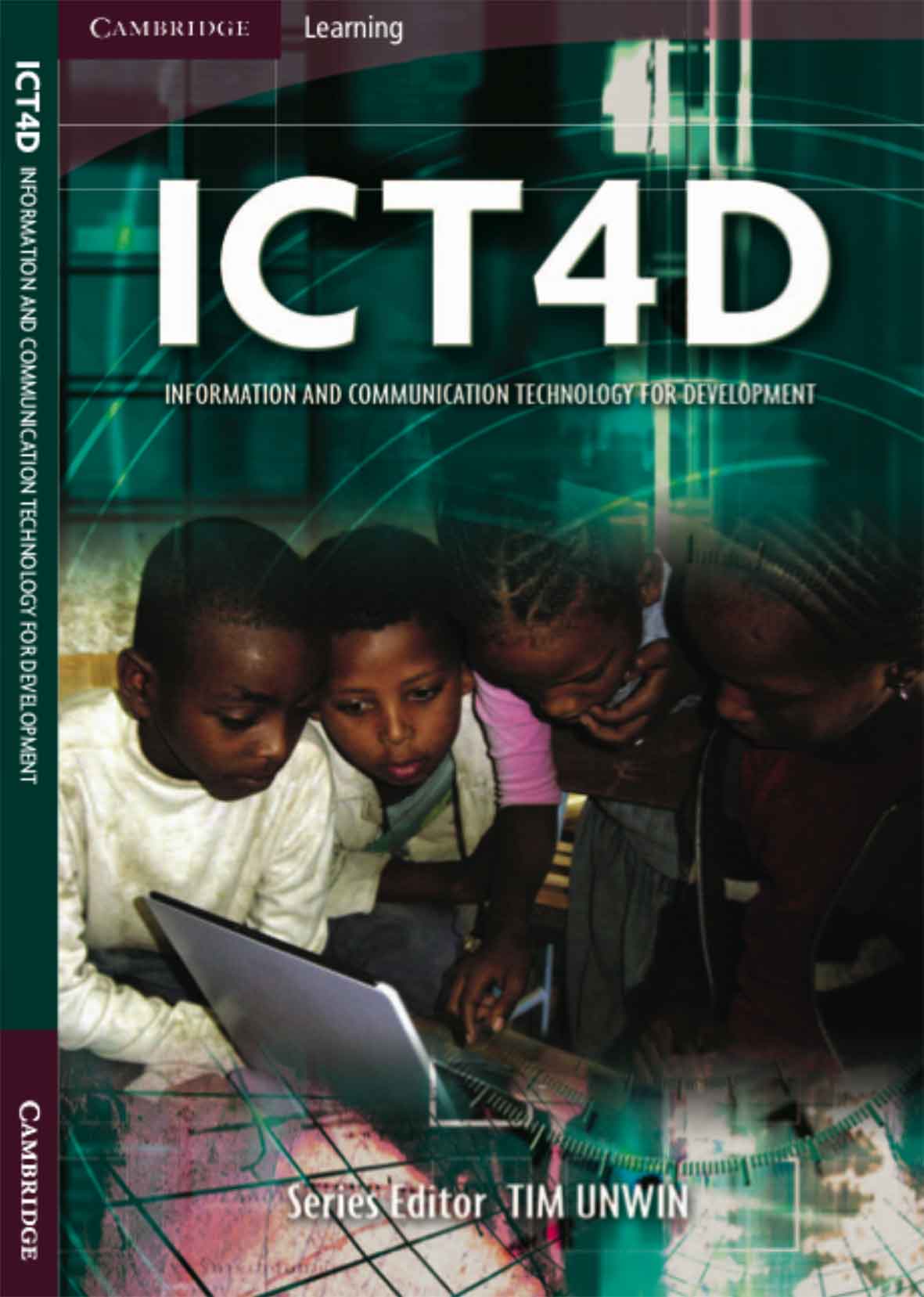
ICT4D BookFor those who cannot afford the (low) price of my edited ICT4D book (published by CUP in 2009), the first chapter as well as the contents page and index can be accessed from Amazon.com!

A summary of the contents is as follows:

  1. Introduction
  2. Development agendas and the place of ICTs
  3. Information and communication in development practices
  4. The technologies: identifying appropriate solutions for development needs
  5. ICT4D implementation: policies and partnerships
  6. ICTs, enterprise and development (Michael Best and Charles Kenny)
  7. ICTs in education: catalyst for development (Michelle Selinger)
  8. e-Health: information and communication technologies for health (Yunkap Kwankam, Ariel Pablos-Mendez and Misha Kay)
  9. e-Government and e-governance (James Guida and Martin Crow)
  10. Information and communication technologies for rural development (Bob Day and Peter Greenwood)
  11. Conclusions

The book itself can readily be ordered directly from Cambridge University Press.

Reviews include:

Leave a comment

Filed under ICT4D