University Funding

The Higher Education Council for England (HEFCE) announced today its provisional funding distribution to universities and colleges in England for 2010-11.  The main decisions by the HEFCE Board were as follows:

  • “£4,727 million recurrent funding for teaching. This represents an increase of 0.4 per cent in cash terms or a decrease of 1.6 per cent in real terms, compared with 2009-10.
  • £1,603 million recurrent funding for research. This represents a £32 million or 2 per cent increase in cash terms (maintained in real terms) on the £1,571 million allocated for the 2009-10 academic year.
  • £562 million in capital funding, which represents a 14.9 per cent reduction in cash terms on the 2009-10 allocation.
  • £294 million in special funding for national programmes and initiatives. This represents a 7 per cent reduction in cash terms on 2009-10.
  • £150 million for the Higher Education Innovation Fund (HEIF), which compares with £134 million in 2009-10. This represents an 11.9 per cent increase”.

Responses from the university sector were not surprisingly highly critical.  As the BBC reported,  this represented a cut of £449 million, with teaching budgets being reduced by £215 million, a cut in real terms of 1.6% on 2009-10 levels, research being frozen, and the buildings budget being cut by 15%.  It is estimated that these cuts will lead to a reduction in student places in England of about 6,000 compared with 2009-10 levels.

Such cuts add fuel to the universities’ demands to be allowed to charge students higher fees.  But in an election year, the student vote may delay such apparently inevitable fee increases.  Again, as the BBC notes, “Students campaigning against an increase in tuition fees are targeting MPs who hold seats in a “hit list” of university cities in England. The National Union of Students says MPs must support their campaign against higher fees – or lose the student vote. Among the MPs identified as targets by students are three ministers – John Denham, Ben Bradshaw and Hilary Benn – and the chief whip, Nick Brown”.

While these cuts are in large part driven by the need for the government to reduce the deficit brought about by its efforts to overcome the financial crisis of 2008-9, they do highlight some important questions:

  • Do we already have too many students going to university?
  • What is so special about the notion that it is healthy to have 50% of our young people going to university?
  • Are universities providing appropriate learning opportunities for those who study there?

I live in hope that these cuts might be used sensibly to help provide responses to these questions.  Rather than trying to support an increasingly second-rate university system that fails not only its students and academics, but also the wider society of which we are all part, surely the time has come for a cull of universities?  Should we not close those that are least effective, and turn them into institutions that would provide the technical skills and expertise that our country so badly needs?  Let us stop pretending that half of our population somehow has a right to go to university, and instead use the limited amounts of funding available to support a truly outstanding research and learning culture in institutions that can properly call themselves universities.

For some practical suggestions on how we might achieve this, see my comment on “Solving the crises facing UK universities

1 Comment

Filed under Higher Education

Problems with the Climate Change mantra

“Climate change” has become one of the dominant rhetorics of the early 21st century.  It is “politically correct”, and is widely seen as the major threat facing human society.  The failure of the UN Climate Change Conference held in Copenhagen last year is thus bemoaned as being a tragedy.  Perhaps, though, it gives us an opportunity to reflect on some of the über-hype associated with the notion of “climate change”.  To be sure, the impact of human occupation of the earth, and our associated despoliation of many aspects of the physical world in which we live, should rightly give cause for concern.  Likewise, we should clearly seek to limit the amount of pollution of all sorts that we generate.  However, I believe strongly that much of the debate and argument, particularly in the popular and populist media, is misplaced.  Six issues seem to me to be highly problematic:

  • First, it is absolutely essential that we differentiate between “human induced climate change” and “climate change”.  The latter has occurred long before hominids walked the earth; the former has existed in some form ever since “humans” began making changes to the environments in which they live.  Yes, the amount of human influence has increased enormously over the last two centuries – but that largely reflects the increasing number of people living on the planet.  The important point to note here is that climate has changed very significantly over recent millennia – even without substantial human interference.  The term “climate change” has generally now become all encompassing, so that in the popular imagination all climate change is seen as being human induced – this is highly problematic.
  • Second, in the past, humans have adapted to changes in the climate in many ways.  The glacial and interglacial periods of the Quaternary have been associated with extensive global changes in flora and fauna, and early humans had to migrate in order to survive.  Indeed, for much of history, periods of climate change have been associated with human movement.  Perhaps the fundamental challenge of contemporary climate change (including both human-induced and natural change) is that our political, social and economic systems are not geared up to cater for the mass population movements that have been the human response to climate change in the past.  We are not going to be able to make substantial changes to the physical aspects of climate change in the short term; let us then adapt our “human” systems better to manage the resultant demographic movements that must happen.  We need to be placing even more research emphasis on these social, political and economic processes, and perhaps less on the physical sciences associated with climate change.  If we do not, the potential for violent conflicts, as vast numbers of people seek to leave lands increasingly subject to flooding or desiccation, will be huge.  We need to plan now for very large populations of people to move from one part of the world to another.
  • Third, far too much of the focus of the climate change debate has been about the adverse effects of climate change.  Yes, it is very concerning that our species is having such an impact on the climate – but just as some parts of the world are going to become less inhabitable, others are going to become more hospitable to human occupation.  Far too little research has yet been done on the potential positive impacts of climate change.  Will vast new areas of the globe become available for food production?  Where will be the most desirable place to live in 200 years time?  There are even those who suggest that human induced global warming over the last millennium may actually have prevented (or delayed) the descent into a very much colder climate when ice sheets would once again have covered many cities nearer the poles.  It is an interesting question to ponder whether we would prefer climate warming or climate cooling?
  • Fourth, I have huge concerns about the amount of money that has been directed towards “scientific” research on climate change, at the expense of other equally (if not more) important research.  Climate change scientists have been very successful in gaining the political limelight, and redirecting enormous sums of money to their institutes.  Indeed, it is often said that during the first decade of the 21st century, you more or less had to mention climate change in any scientific grant application, at least in the field of the earth sciences, if you were to have a hope of getting funded!  This distortion of scientific enquiry has been highly damaging to the interests of other aspects of science.  The recent controversies (e-mail leaks in November 2009, “errors” over Himalayan glaciers, “errors” in Amazon data) over the actual basis of some of the “science”, are just one part of this issue – science is not, and never has been, value free.  Those involved in climate change research have a range of very specific interests and agendas that influence their work.
  • Fifth, there have likewise been numerous interests involved in the agendas of gatherings such as the Copenhagen Summit.  Primarily, these have been driven by those who have something to gain from reaching a “global agreement”.  Fundamentally, most people involved in these discussions want to reach a solution that will not lead to a dramatic change in their lifestyles. They want to find new ways of generating “clean” energy, so that they can continue to consume; they want to reap greater profits from carbon trading.  We have to stop living in this fool’s paradise.  If we are really sincere about reducing “adverse” human impact on the globe, we need a fundamental change of lifestyles.  The voices of radical opposition movements to such global summits do need to be listened to.
  • Sixth, quite simple changes to our lifestyles can have a major impact on the amount of energy we use, and thus in the amount of carbon we pump into the atmosphere. Simply constructing buildings with thicker walls and better ventilation systems could dramatically reduce the energy demands of air conditioners and heating systems, but we continue to build energy inefficient constructions across the world.  Wearing warmer clothes in cool climates, recycling much more of our waste, switching off equipment when not in use…  All of these can make a difference.  But most of us are not prepared to do this.  Why?

I wonder, somewhat paradoxically, if our fetish about human induced climate change may not actually reflect a deep desire in people to be “in control” of “nature”.  If we say that we are responsible for “climate change” that implies we have control over it – but as the tragic earthquake in Haiti so clearly demonstrates, “nature” has a nasty habit of reminding us that actually we may not be as all powerful as some of us may like to think.  Ultimately, does it really matter if the human race goes the way of the dinosaurs?  If so, why, and what should we seek to do about it?

7 Comments

Filed under Higher Education, Politics

Learning Management Systems in Africa

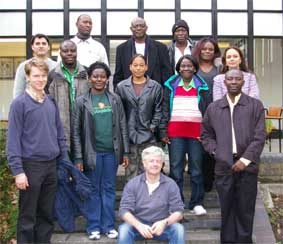
Our research paper on Learning Management Systems in Africa resulting from the DelPHE funded collaboration with colleagues in the University of Education, Winneba (Ghana), Maseno University (Kenya), and Eduardo Mondlane University (Mozambique) has just been published as

  • Tim Unwin, with Beate Kleessen, David Hollow, James B. Williams, Leonard Mware Oloo, John Alwala, Inocente Mutimucuio, Feliciana Eduardo and Xavier Muianga (2009) Digital learning management systems in Africa: myths and realities, Open Learning: the Journal of Open and Distance Learning, 25(1), 5-23.

In summary, the paper  reports on a survey of 358 respondents across 25 African countries into their usage of learning management systems. It concludes that while there are some enthusiastic advocates of such systems, the reality is that most African educators as yet have little knowledge about, or interest in, their usage. There remain very considerable infrastructural constraints to be overcome before they can be widely adopted for open and distance learning across the continent, and there is still reluctance in many institutions to develop systems that can enable learning resources to be made available in this way. This does not mean that the potential of high-quality digital learning management systems should be ignored in Africa, but rather that much more sustained work needs to be done in human capacity development and infrastructural provision if African learners are truly to benefit from the interactive learning experiences that such systems can deliver.

Leave a comment

Filed under Africa, Education, Higher Education, ICT4D

ICTD2010 call for papers and sessions

The calls f0r papers and sessions for the major ICTD2010 international conference being held at Royal Holloway, University of London, between 13th and 16th December 2010 have just been released.

The second and third days of ICTD2010 will primarily be for paper and poster presentations, whereas the first and last days will be  for workshops, panels and alternative events which could include open spaces, performances and exhibitions.

The deadline for all proposals and submissions  is 2nd April 2010.

Leave a comment

Filed under ICT4D

Mandelson at the Learning and Technology World Forum

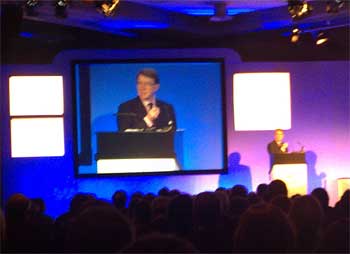
Following Ed Balls and Gordon Brown, Peter Mandelson gave an enthusiastic and committed speech today at the Learning and Technology World Forum held in London at the Queen Elizabeth II Conference Centre.  He argued strongly that the UK Higher Education sector can, and should, play a significant role in helping to expand Britain’s ‘exports’.  Amongst some of the many things he said, were the following:

  • Britain has a very strong higher and further education sector
  • Over the last decade real term funding for research in Britain has doubled
  • There is now a real challenge to develop this resource into one equipped for a digital knowledge economy
  • British higher education needs to pioneer new forms of learning – especially ones that fit around work or distance
  • We need to develop alternatives to the traditional  3 year university degree programmes for students straight out of school
  • We need to build on online and distance based degrees to support people wishing to gain degrees
  • The UK’s higher education sector must diversify and change its models – enabling it to fit into new ways of living to suit the individual ways of students
  • ICTs can make the whole process of learning more efficient – he claimed that efficiencies have saved more than £ 1 billion in HE staff time since 2005 – and this represents a huge area for international collaboration
  • We have to focus on to the fact that what we can do together in collaboration will enable us to get more out of this
  • Britain is a pioneer in online learning
  • He concluded by saying that the key is seeing the digital revolution as an agenda where the benefits of international collaboration are not zero sum

Despite the concerns that I have over much of this agenda (see my previous blogs on Mandelson’s vision for higher education) his comments today provided a clear statement of the government’s commitment to using ICTs innovatively to support alternative forms of higher education.

Leave a comment

Filed under Higher Education

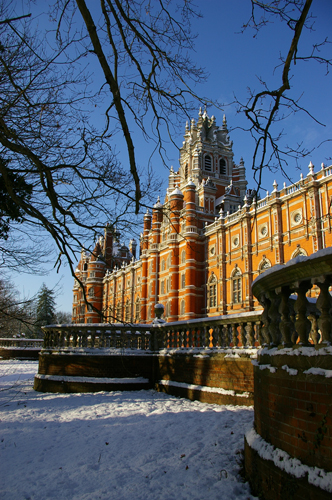
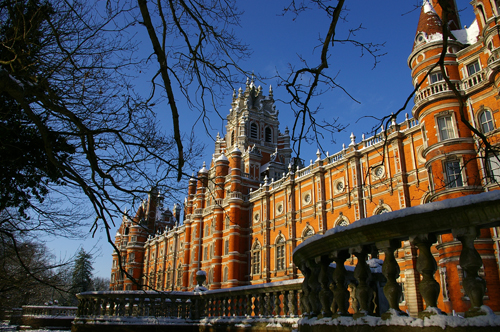
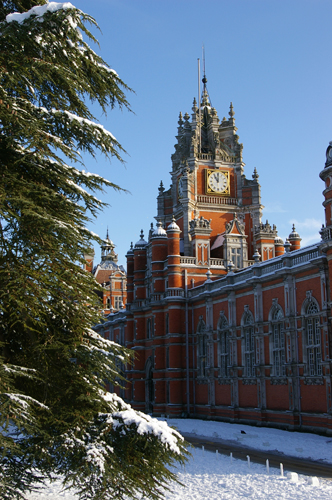
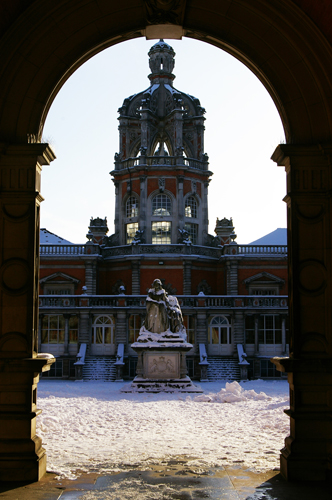
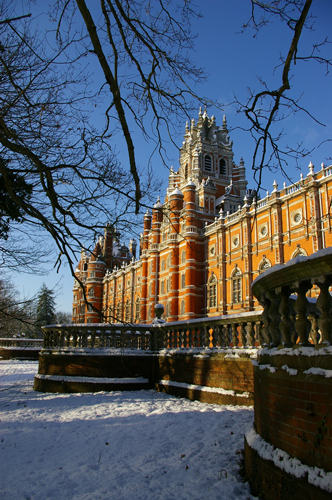
Royal Holloway, University of London in the snow, 9th January 2010

When I first arrived in the mid-1980s at Royal Holloway, University of London, I could not decide whether I actually liked the Founder’s Building, named after the College’s Founder Thomas Holloway.  It was certainly impressive, but it took a long time before its architectural qualities began to influence me for the better – now, after all these years, familiarity has led to friendship! Designed by the architect William Crossland, the Founder’s Building was inspired in part by the Château de Chambord in the Loire.

The unusual amount of snow that fell in the early days of January 2010 shows the building at its very best.  I hope these photographs illustrate why I have indeed come to admire those who conceived and constructed this impressive university building.

Please click on the above thumbnails for larger images

1 Comment

Filed under Higher Education, Photographs

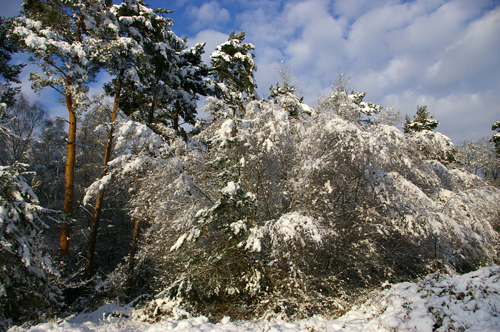
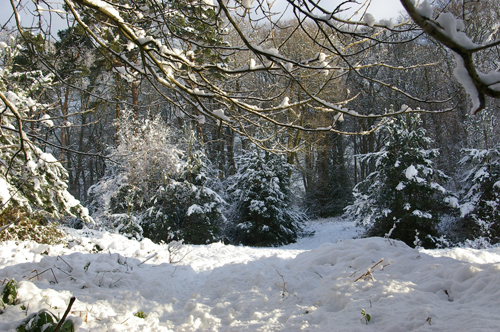
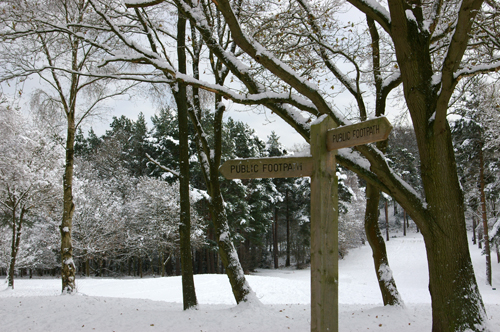
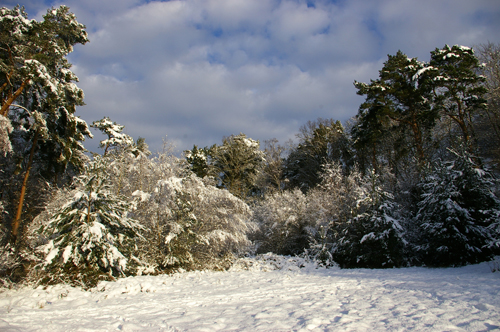
… and then the sun came out, Virginia Water, 7th January 2010

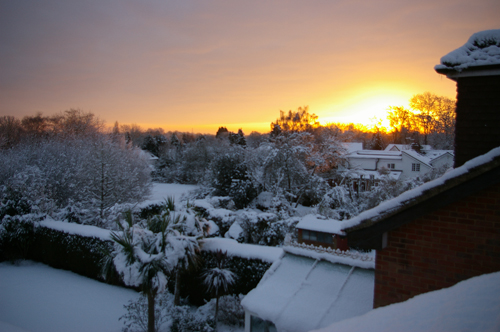
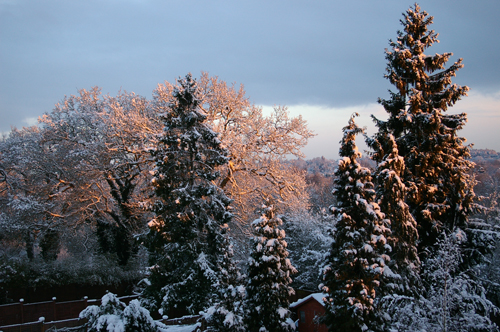
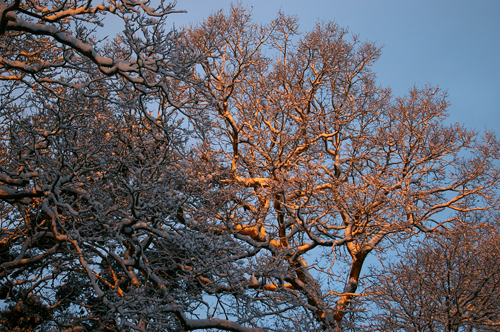
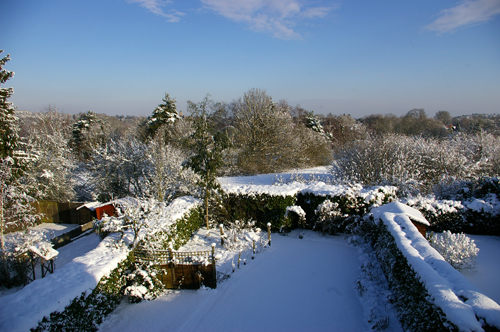
Following yesterday’s immense snowfall and dark skies, we awoke this morning to a gorgeous sunrise and freezing conditions.  Yes, the boiler stopped working again, but what does that matter when the weather takes its part in painting England at its best! Below is a selection of photographs of the scenery in Virginia Water, especially in the woodland surrounding the Wentworth golf course.  Enjoy!

For larger versions, just click on the images.

Leave a comment

Filed under Photographs, Story-telling

Snow in Virginia Water, 6th January 2010

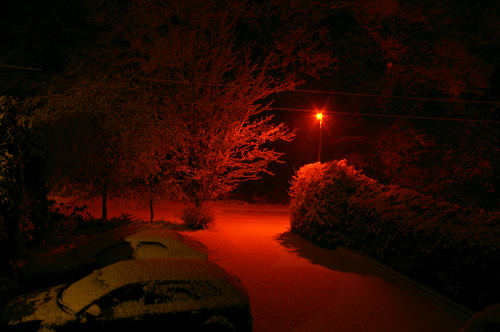
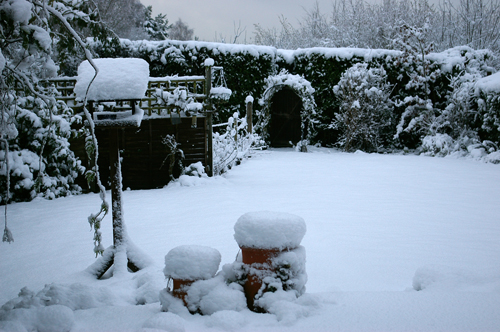
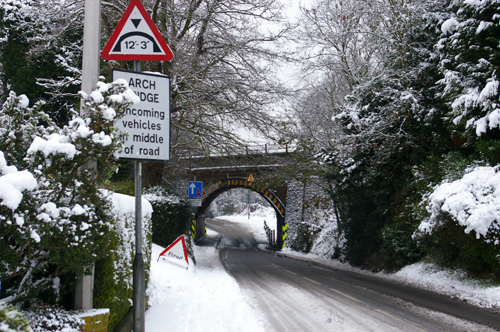
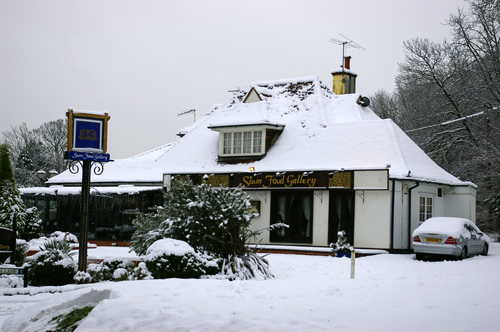
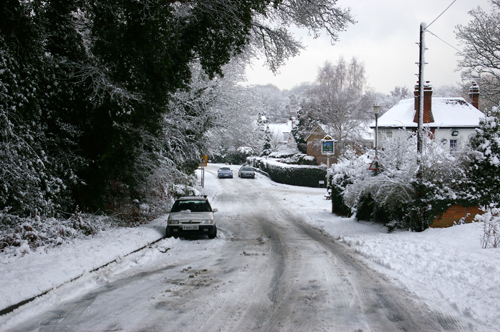
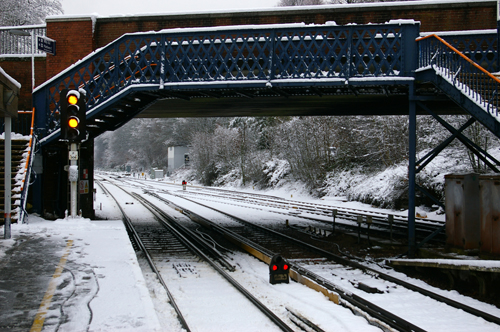
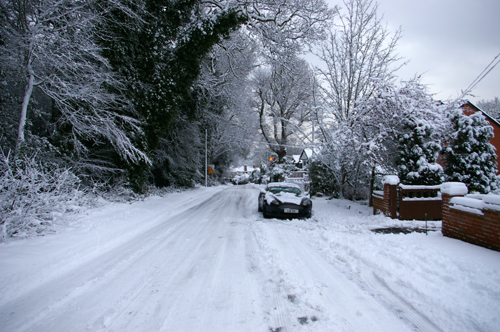
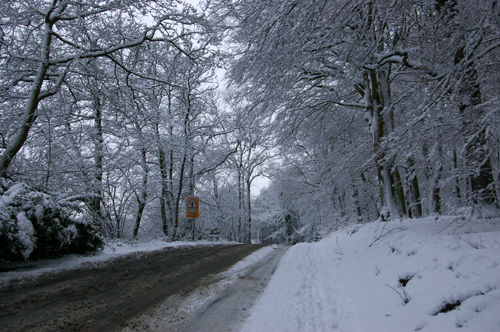
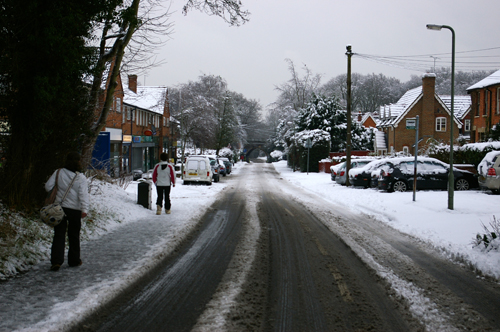
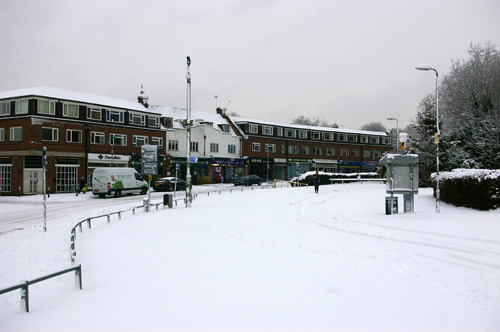
Many parts of the world are deep in snow with temperatures well below freezing – Moscow is predicted to have a maximum temperature of -14o C today.  Our weather in the UK palls in comparison!  However, last night saw some of the heaviest snowfalls in southern England for many a year, which somehow creates a sense of exhilaration. Minor roads across the region have not been cleared, leading to many an ‘incident’ with cars sliding all over the place, and not being able to get up even relatively slight inclines.  Early this morning, attempts to help push drivers stuck on the hill outside our house proved surprisingly futile!  Some young people nevertheless managed to ‘enjoy’ themselves, throwing snowballs at passengers waiting to get on to the few trains that were running!  I know that this amount of snow is unusual, but Surrey County Council has done a really bad job of keeping local roads ice and snow free this winter.  To be sure, the weather has been extreme, and main roads should take priority, but in the last 20 years the local roads in north-west Surrey have never been as dangerous as they have been this year.

So, please enjoy these images from Virginia Water: snowing last night; at least 6″ of snow in the garden; the postmen had some fun at their depot; local rail bridge, not flooded for a change; Siam restaurant in the snow – a long way from Thailand; well done to South West Trains actually getting some trains to run; Wellington Avenue abandoned cars; the railway line; more abandoned cars; trees in the snow; Trumps Green Road trees; Trumps Green Road shops; and the car park by Station Parade.

1 Comment

Filed under Photographs, Story-telling

Voyager Estate, 1995 Cabernet Sauvignon and Merlot

Rarely do I use my blog to comment on a single wine, but exploring my ‘cellar’ over the Christmas period I came across a Voyager Estate Cabernet Sauvignon and Merlot (1995) that I had bought there when I visited the winery a decade ago in February 1999.  I had fully expected it to be past its best, but far from it, this was a rich, delicious wine that was well worth the wait!

The first surprise was the colour – still a surprisingly deep red, without anything like as much browning as I would have expected from a wine of this age.  The nose was very clean, combining the typical blackcurrant aromas I had expected, but with a very distinctive scent of tobacco – a definite touch of Monte Cristo Cuban cigars!

The taste was smooth and complex, with the fine tannins having mellowed and softened – rich, soft blackcurrant fruit with a touch of cedar.  Excellent depth of flavour – and full of subtle complexity that was difficult to describe.

The label had the following account of the wine: “The 1995 season was long and dry.  The vines carried a small crop, with intensely powerful fruit flavours and fine grained tannins.  The resultant red wines represent the ultimate in Margaret River wines. Intense cassis and concentrated mulberry are beautifully integrated with the toasty characters from 24 months maturation in French oak.  Its intense amount of flavour, complexity and abundance of fine tannin augur extremely well for a long and rewarding life.  While it will be drinking well from 1999 it will be at its sublime best in 12 years time and beyond”. [13.9% alc/vol].

So, if you can find a bottle, it is definitely worth buying – and drinking – although I guess there cannot be many bottles left of this really lovely wine!

1 Comment

Filed under Wine

Iran in 2010

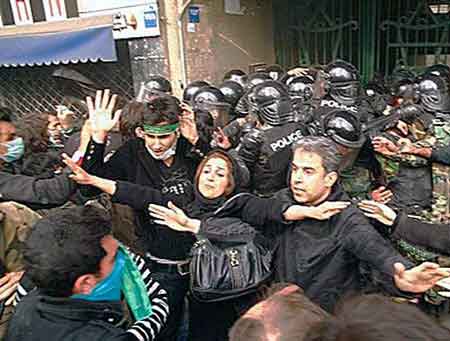
Recent events in Iran have made me think much about my friends there.  The highly respected Grand Ayatollah Hoseyn Ali Montazeri’s death on 19th December led to tens of thousands of people taking part in the procession in Qom that followed his funeral.  On 27th December opposition protests led to the deaths of at least 8 people, including Sayed Ali Mousavi, the nephew of the opposition leader Mir Hossein Mousavi, and today Mousavi  gave his first statement following this personal tragedy.  He sought to outline a five-step resolution to the political instability that has dominated the political scene since the disputed elections in June 2009, in which President Mahmoud Ahmadinejad claimed victory. Mousavi calls for the release of political prisoners, the rights of people to demonstrate, a transparent law for trustworthy elections, and the recognition of press freedoms. The government, though, shows little sign of responding positively or peacefully.

Opposition supporters continue to protest in the face of apparently increasingly violent repression by government forces.  My hope is that this violence can indeed be contained, and that peaceful negotiations may follow. Iran is a country of immense cultural heritage and importance, and it would be good to see its people living peaceful and fulfilled lives once more.

For those wishing to keep up-to-date with current news, the following links may be of interest:

2 Comments

Filed under Politics