Report on using technology to help at-risk youth and people with disabilities gain employment

Researchers at the Technology and Social Change Group in the University of Washington in Seattle (Joyojeet Pal, Jay Freistadt, Michele Frix, and Phil Neff) have recently released an important report on the impact of technology training on the employment prospects of at-risk youth and people with disabilities in five countries in Latin America.

The report’s findings are “broadly divided by the themes that emerged in the coded transcripts of our conversations on the ground. Under environmental factors, we discuss issues around the prevalent discourse of technology that underlines the ways in which the various stakeholders imagine the role of computers and technology training within the larger social and economic ecosystems. An important environmental factor is the aspirational environment, for the role it plays in peoples’ willingness to participate in such training programs. Finally, structural issues around the labor market form the third set of environmental factors that are extremely important, given that both populations discussed here have histories of geographical and institutional exclusion from formal employment opportunities”.

It is good to see these important issues examined in detail; ICTs can indeed make a significant difference to the lived experiences of people with disabilities and at-risk youth

2 Comments

Filed under Education

Reflections on WISE – The World Innovation Summit for Education

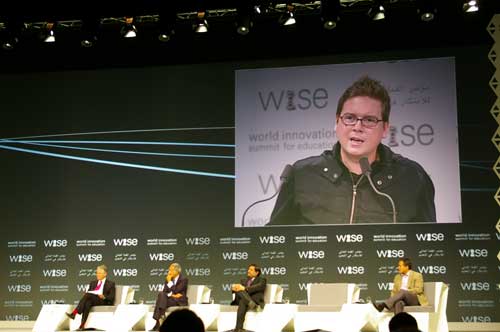
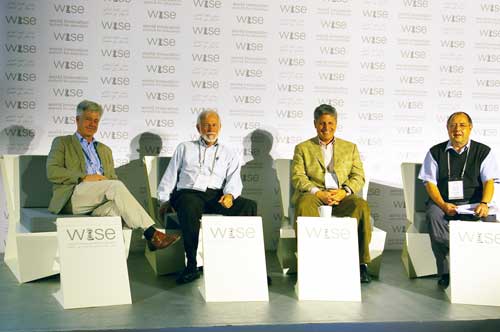
I do not usually like big conferences and summits.  All too often, people read prepared papers or speeches, and rarely inspire or speak from the heart.  However, the World Innovation Summit for Education held in Doha from 16th-18th November was surprisingly different.  Of course there were some fairly tedious presentations, but the Summit nevertheless did have a buzz about it.  People were talking, really talking, about the importance of education, and what we might be able to do enhance its sustainability, pluralism and innovation across the world.  There were also some really inspirational presentations – both by academics and by politicians!

However, the hosting of the conference  by the Qatar Foundation, bringing together 1000 of the world’s leading educationalists, and giving awards to six  outstanding examples of pluralism, sustainability and innovation in education, raised many interesting questions.  Why has so little yet been done globally to deliver on agreed educational targets? As the 2009 Global Monitoring Report summarised, “Progress towards the EFA goals is being undermined by a failure of governments to tackle persistent inequalities based on income, gender, location, ethnicity, language, disability and other markers for disadvantage”.

Three key inter-related issues come to mind:

  • All too often education is now being treated as a private good – people are being encouraged to pay for education in the expectation that it will bring them advantages in their future lives.  However, if we are to create a fairer, more equitable world, it is essential that education should be treated as a common rather than a private good.  An educated population is an integral factor in helping to ensure good governance, equality of opportunity, peaceful co-existence, and innovative solutions to poverty.
  • One of the reasons why governments across the world continue to provide insufficient funding for education, may be because in recent years they have come to believe that education is no longer a common good, but is instead a private one.  This enables governments to argue that people should pay for education themselves, rather than funding it from the common purse. Increasing fees for higher education in the UK are thus regularly justified by government ministers who argue that a degree brings increased lifetime earning capacity, and that individual students should therefore pay for it.  However, such arguments may also underlie the reticence of many governments across the world to fund education sufficiently.  Even though 23 countries contribute more than 7% of their GDP to public expenditure on education, 35 contribute less than 3%.  We need to work through existing global mechanisms more effectively to help ensure that all states fund education appropriately, so that all peoples can have equal and fair access to quality education.
  • How, though, do we do this?  How can we ensure that the enthusiasm and energy generated at events such as WISE is channeled effectively to initiatives that will actually make a difference?  UNESCO has for long sought to promote the importance of education across the world, but has been beset by too high expectations and too low levels of funding to have been able to make the impact that many of its staff would like to see.  How do we turn the energy that the Qatar Foundation released at WISE into systemic change?

Four more quirky observations from WISE:

  • I did not hear anyone publicly thank the French agency \Auditoire who did all of the organisation of the Summit on behalf of the Qatar Foundation. They were quite outstanding, and much of the success of the Summit was undoubtedly due to the experienced and dedicated team that they had in place.  Well done to all involved!
  • Carla Bruni attended – was I the only one who was left decidedly unimpressed?
  • Fidel Castro is alive and well in Doha – and can occasionally be seen in the Habanos bar in the Ritz Carlton – he did, though, look remarkably young – definitely in his prime!  But, it was nevertheless strange to see him there
  • I always thought that the role of a good master/mistress of ceremonies  was to ensure that everything keeps to time, that the speakers and participants are able to shine, and that they should do so by being almost invisible themselves.  It would appear that Nima Abu-Wardeh had been given a different set of instructions – or perhaps she simply had other ideas!

4 Comments

Filed under Education

Putting a value on the UK’s universities

The latest report on the ‘added value’ of universities in this country undertaken by academics at the University of Strathclyde for Universities UK, has found that “Universities in the UK now generate £59 billion for the UK economy putting the higher education sector ahead of the agricultural, advertising, pharmaceutical and postal industries, according to new figures published today”.

In more detail, Universities UK summarised the report’s findings as follows:

  • “The higher education sector spent some £19.5 billion on goods and services produced in the UK.
  • Through both direct and secondary or multiplier effects this generated over £59 billion of output and over 668,500 full time equivalent jobs throughout the economy. The equivalent figure four years ago was nearly £45 billion (25% increase).
  • The total revenue earned by universities amounted to £23.4 billion (compared with £16.87 billion in 2003/04).
  • Gross export earnings for the higher education sector were estimated to be over £5.3 billion.
  • The personal off-campus expenditure of international students and visitors amounted to £2.3 billion”.

These are generally interpreted as being very positive results; UK Universities contribute significantly to our economy. Indeed, the Guardian newspaper picks up on the report’s findings, noting in particular that “Higher education generates 2.3% of the UK’s gross domestic product, making it ‘one of the most effective sectors,’ said Ursula Kelly, another of the report’s authors. ‘As a producer of goods and services alone, the sector makes an evidentially large contribution to the UK economy of £19.5bn.’ Universities brought in £5.3bn from overseas students, international conferences and work conducted for overseas businesses. They provide the equivalent of 314,600 full-time jobs, or 1.2% of all full-time jobs in the UK. Those visiting universities from abroad and overseas students spent £2.3bn off-campus, the study found”.

But amidst all this economic justification, let us never forget what universities should be about.  Above all universities should be moving the research frontiers forward, developing innovative and creative science and scholarship, and engaging students in the challenge of using this knowledge to make the world a better place.  It would be worth doing this even if universities did not make an economic profit.  Their value is worth immeasurably more than these crude economic indicators might suggest. One hallmark of a civilised society is that it has a university sector that is vibrant, pursues excellence, and challenges taken for granted assumptions.  Access to such universities must remain free for the brightest and most able students.  We are in danger of becoming uncivilised.

2 Comments

Filed under Education, Higher Education

Against Mandelson’s view of higher education in Britain

On the 3rd November, Lord Mandelson announced what his Department of Business, Innovation and Skills described as “a new framework for the future success of higher education”.  Perhaps this could lead to a certain kind of success, but it hammers with renewed vigour another nail into the coffin of universities in the UK.

As his Department stated, key measures set out in the framework, along with my responses, are as follows

  • More competition between universities, giving greater priority to programmes that meet the need for high level skills – Universities are not, and should not be seen as being, merely about high level skill provision.  Obviously this depends on how we define ‘high level skills’, but alongside those needed to make a prosperous economy (look how dismally our bankers have delivered over the last couple of years), are those skills associated with critical reflection and an ability to challenge taken for granted assumptions about the ‘good’ of our contemporary capitalist society.  Competition is also most definitely not the answer.  Universities work best when there is collaboration and cooperation rather than competition.
  • Business to be more engaged in the funding and design of programmes, sponsorship of students, and work placements – yes, it is indeed important that universities work closely with the private sector – after all, they benefit hugely from the investment of the state in delivering the cannon fodder of global capitalism.  However, the suggestion that the private sector should increasingly fund higher education smacks of the government trying to find others to pay for its failed commitment to furnish our society with a fit for purpose university system.
  • Creating more part-time, work-based and foundation degrees to make it easier for adults to go to university, with routes from apprenticeships through to Foundation Degrees and other vocational programmes – universities should not fundamentally be about providing foundation degrees – leave these to other types of institution.  The central purpose of a university should be about pushing the boundaries of knowledge forward, through high quality research and the encouragement of able young people to engage in rigorous scientific and scholarly enquiry.
  • Encouraging universities to consider contextual data in admissions, as one way of ensuring that higher education is available to all young people who have the ability to benefit – this is social engineering.  Yes, of course universities should seek to provide outstanding learning opportunities to those most able to benefit, but the simple mechanisms recommended are simply not sophisticated enough to enable the identification of those who can contribute most to the UK’s universities.
  • Universities setting out clearly what students can expect in terms of the nature and quality of courses offered – yes, and the best already do so!  But please, universities are fundamentally about moving the boundaries of research forward, and encouraging the development of enquiring minds in the most able people rather than passing on existing accepted knowledge.
  • Sustaining our world class research base by continuing to focus on excellence, concentrating research funding where needed to secure critical mass and impact – the highest quality research does not necessarily need to be concentrated.  The  most innovative research is often delivered  by individuals working in isolation – indeed, concentrating research activity based on past success criteria, will actually restrict the development of novel and exciting innovation.  Real innovation usually happens ‘at the edges’.
  • Encouraging collaboration between universities on world class research, especially in high cost science – the rationale for this is that we cannot afford high cost science.  But we cannot afford not to!  Furthermore, not all world class research is expensive.  Indeed, many Nobel prize winners actually do low cost research!

As I have argued elsewhere, universities are about far more than providing a second rate ‘education’ for students not really interested in learning.  We can afford a high quality university sector by reducing the number of universities and the number of students wasting their time pretending to study at them.

Why is it that the UK wants to treat universities as businesses when so many countries in the world still provide free higher education to their people – look for example at Finland and many of the German Länder? Why is it that the government persists in destroying a university system that was once the pride of the world? Perhaps most surprisingly of all, why are students and academics not rising up in revolutionary protest as did our comrades in the late 1960s?

The time has come to stand up and be counted.  We must resist this Philistine, ignorant and damaging attempt to destroy what is left of our universities.

4 Comments

Filed under Higher Education

Google Dashboard

Readers of my Blog will be well aware of my previous criticisms of the company’s ambitions to gather all of the world’s knowledge on its servers, and my concerns over its infringement of traditional ideas about privacy.

It is therefore of considerable interest that Google has just launched Dashboard.  This is intended to provide users of Google services with a summary of all the information that Google currently lets users know that it stores about them.  This is what Google Dashboard shows when you visit the site:

googleAlways having refused to have a Gmail account, and limiting my use of Google, because I do not want the company to benefit too much from the information that they have about me (yes, of course, I use Google as a search engine  – albeit as little as possible – check out Cuil), I am delighted to see this limited opening up of their secrecy.  But just imagine, they will now be checking up on those who use Dashboard, and how they use it!

Google themselves claim under a heading Transparency and Choice that “At Google, we are keenly aware of the trust you place in us and our responsibility to protect your privacy. As part of this responsibility, we let you know what information we collect when you use our products and services, why we collect it and how we use it to improve your experience. The Privacy Center was created to provide you with easy-to-understand information about our products and policies to help you make more informed choices about which products you use, how to use them, and what information you provide to us”.

Brian Heater on PCMag comments as follows: “That whole ‘don’t be evil’ thing is all well and good, but when a company’s whole goal is cataloging the world’s information, it would–at the very least–be nice to know what Google knows about you. The company has just launched Dashboard, which aggregates the different information its gathered from 20 different Google products, including Gmail, Calendar, Docs, Web History, Orkut, YouTube, Picasa, Talk, Reader, Alerts, and Latitude. You’ll need to sign in to view your own personal information. Users can also edit account information from the page, such as privacy settings. Of course transparency doesn’t mean that you can’t still pat yourself on the back. The scale and level of detail of the Dashboard is unprecedented, and we’re delighted to be the first Internet company to offer this–and we hope it will become the standard,” Google said in a statement”.

So, will this actually make users realise exactly how much information and power they are giving Google, or will they consider that the benefits that they get from using Google’s services are worth it?  Google’s financial success has been based on persuading people to give them information for free from which they can then generate huge revenue. This has undoubtedly been one of the biggest business success stories – or cons, depending on how one looks at it – in recent years.  I watch with interest to see whether Google Dashboard will indeed persuade users that the company is as ‘innocent’ as it would like to appear to be.

1 Comment

Filed under Ethics, ICT4D

Sagrantino – Berlin

The Sagrantino grape makes one of my favourite wines. It has strong tannins and tends to be low yielding, producing wines that are rich, dark, complex and long-lived. The classic area where it is grown is the small town of Montefalco in Umbria.  The Sagrantino di Montefalco denomination has a maximum yield of 48 hl/ha and needs to be aged for 30 months before being sold, 12 of which must  be in wood.  Traditionally it has been used to make a wonderful passito style wine, made from partly dried grapes, but in recent years a dry secco has been introduced.  The Sagrantino grape is also used in making a cheaper, lighter style of wine, dominated by the Sangiovese grape and usually blended with some Cabernet Sauvignon or Merlot, known as Rosso di Montefalco.

Sagrantino smallSo, when I came across a small restaurant and wine bar called Sagrantino in Berlin in February this year, I was determined to return to see the extent to which it captured the essence of Umbria! Friday evening provided just the opportunity – and I was not disappointed.  Tucked away on Behrenstrasse, just to the south of Unter den Linden and to the east of Friedrichstraße, Sagrantino is certainly worth getting to know.  With several different Rosso di Montefalco wines, as well as the wonderful passito made by Arnaldo Caprai, it is a great place to chill out at the end of a day. Guess this might become one of my favourite places in Berlin!

1 Comment

Filed under Restaurants, Wine

Can Miliband really be a serious contender for Europe’s foreign affairs chief?

Miliband 3There is no doubt that David Miliband is bright, intelligent – and on occasions charming.  However, becoming Foreign Secretary seems to have gone to his head.  He has made too many accidental gaffes, and too many serious errors of judgement, for him to be considered as being a serious contender for the post of the European foreign affairs chief.

Yet the campaign for him to get this important post is gathering momentum as the front page headline in today’s Sunday Times, “No 10 backs Miliband for Brussels”, seems to suggest. As the article goes on to say, “senior No 10 sources have revealed that Brown believes Miliband is ideally qualified for the job”.  What does this say about Gordon Brown?  What does it say about others in Europe who seem to be supporting his campaign?  Indeed, what does it say about the European Union itself?  While Miliband currently denies that he is a candidate, the Sunday Times has been told that “he has had a series of conversations with senior European politicians about the Brussels job”.

First there was the banana incident – when he was photographed smirking at the Labour Party conference in 2008.  His defence according to the BBC: “Asked about the picture of the banana on the Andrew Marr Show, Mr Miliband said he was holding it because it was his Miliband 1breakfast, adding that worse things could happen and he did not take such things too seriously”.

But then there were also the photographs of him shaking hands with Gordon Brown at the conference – his face looked so pained that, although he avowed that the Prime Minister had his support, many suspected otherwise.

Whatever one thinks of the notion that a single person should represent the European Union’s foreign policy, if such a post is created it is of  critical importance that its incumbent is someone who is widely respected, who has astute political judgement, and is cultured in a deep understanding of foreign diplomacy.  It is here that Miliband seems to have failed so surprisingly in his role as the UK’s Foreign Secretary.  Take, for example, his visit to India at the start of 2009.  Underneath a headline “Miliband’s trip to India ‘a disaster’, after Kashmir gaffe”, the UK’s Indpendent newspaper commented that “David Miliband was beginning to look as accident-prone as Mr Bean last night after yet another adventure backfired. After ruining his chance of the Labour leadership by gurning at the cameras while brandishing a banana, the Foreign Secretary’s visit to India last week was labelled a “disaster” by the country’s leading politicians. He was accused of being “aggressive in tone and manner” in a meeting with the Indian Prime Minister and Foreign Minister, and dismissed as a “young man” by senior officials”.  Typical of comments in India was V. Isvarmurti‘s political blog: “When he was appointed as Britain’s Foreign Minister he was supposed to be the youngest to that post for some thirty years. As such he was looked upon as a man of promise and also a bit too young or too premature to that post. He now proves, once in India, he is both premature and a bit over-excited too. Considering he comes to India with the knowledge that India was Britain’s one-time colony, he must have imagined and as most, it seems, may be still people there in Britian seem to imagine they can take India and the Indians granted. Much more shocking was the conduct of this visiting dignitary. He was both arrogant, aggressive as well as a bit hectoring. He seems to have imagined that he can talk and behave as he is used to, may be at home, back in Britain where such conduct and behaviour might be appreciated and considered as a sign of cleverness. But the young man was not only brash he was also a bit crass in not knowing good manners and etiquette”.

In the light of such comments, I find it difficult to understand why so many eminent people think that he should become Europe’s foreign affairs chief.

5 Comments

Filed under Ethics

Analysis in Geographical Research

There are many books that provide students with detailed accounts of the methods that they can use in geographical research, but very few that give much guidance on analysis.  Hence, whilst students – both undergraduate and postgraduate – can often undertake a competent piece of empirical data collection, all too often they come unstuck when it comes to how to analyse the data.  This note is therefore intended to provide a quick checklist of tips to help with analysis in geographical research, and it is derived particularly from my experiences in helping PhD students to grapple with these issues.

  • Do not be beguiled into thinking that there is one definitive way to analyse data – there are many different types of analysis.  Thus, positivist approaches focus on ‘explanation’ and ‘prediction’, whereas hermeneutic approaches focus on ‘understanding’; some critical approaches tend to focus on encouraging ’emancipation’.   Whichever approach one adopts, though, there are certain key principles that can generally help to guide analysis.
  • Analysis is the way in which researchers choose to make sense of the data. All good research will have some kind of analytical framework, which makes clear to the reader how the author has tried to interpret diversity in the empirical data.
  • Analysis must refer back to the conceptual/theoretical framework of the research.  Research is about moving knowledge forward.  Hence, the analytical chapters of a thesis, must show how the empirical data gathered has enabled the author to make sense of questions raised by the literatures examined in the conceptual or theoretical introductory chapters to a thesis.  Analytical chapters must have just as comprehensive a bibliography as the methodological and theoretical chapters.
  • Analysis should focus on the ‘why?’ questions.  All too often, students tend to concentrate on descriptive questions, such as ‘what?’, ‘where?’, ‘who?’ and ‘when?’ when gathering data, without then going on to ask ‘why?’.  Unless ‘why?’ is asked, it becomes very difficult to explain or understand  what is actually going on.  This applies just as much to asking why particular geomorphological structures are shaped as they are, as to asking why people behave in the ways that they do.  ‘How?’ questions fall between these two extremes – they can be used to ‘explain’ ‘how’ something works, but I do still prefer to read about ‘Why?’ as well.
  • It can be helpful to think about ‘dependent’ and ‘independent’ variables when trying to shape an analytical framework.  Particularly when working within a positivist approach, it is useful  to think about one group of variables (the independent ones) explaining the variation and differences in the pattern of the ‘dependent’ ones.
  • It is very important to have a good idea about the analytical framework before going out ‘into the field’ to collect data.  Unless one has some idea in advance about how the data are actually to be analysed, there is a danger that much redundant data could be gathered or that it will not be possible actually to explain or understand it.  Remember the ‘Why?’ questions!  This raises important issues to do with the balance between ‘inductive’ and ‘deductive’ approaches.  Very little research is either purely deductive or inductive, and there is always an exciting interplay between theoretical and empirical work.  Even when the research is heavily inductive, a focus on consistently asking ‘why?’ questions in the field can help to ensure  rigorous analysis.
  • Analysis is about imposing structure.  Very often when one is immersed in exploring the data gathered in empirical fieldwork it is difficult to see any structure in it.  Sometimes it is therefore useful to step back and try to look at it in a different way.  Asking (and answering!) a simple question, such as ‘What are the three main factors that help to explain this?’, can help to impose structure.

I do hope this is all helpful advice.  Please add comments below about the things that you find helpful in undertaking analysis.

Leave a comment

Filed under Education, Higher Education, Postgraduate supervision

Solving the crises facing UK universities

The time has come to ignite a debate about the real purpose of universities in the UK.  I believe passionately that universities should be about the advancement of knowledge, and the pursuit of excellence in research and teaching; they are not just about further education for the masses.  All too often universities in the UK are seen primarily in terms of their contribution to the economy. The incorporation of higher education within the Department for Business, Innovation and Skills during the government reorganisation of 2009 is just one symptom of how such thinking has pervaded not only government, but also the private sector and the public at large. All too often, charging fees for students is justified on the basis that graduates earn on average more than those without degrees.  Yet recent research based on figures from the Higher Education Statistics Agency suggests that many graduates do not actually add to their earning power by going to university (http://www.timesonline.co.uk/tol/life_and_style/education/article6832285.ece).

The OECD has long promoted the myth that there is something magical about a country having 50% of its population participating in higher education for the well being of the economy.  This is largely justified on macro-economic evidence suggesting a correlation between the percentages of a population who have been to university and GDP per capita.  However, the existence of such a correlation does not mean that having larger cohort percentages in higher education actually leads to greater economic growth; far from it, it can equally well mean that higher economic growth enables more people to afford to go to university!

In the late 1980s, the UK graduation rate was around 20%, and the government was eager to increase participation both for social and for economic reasons.  By 2004, the rate had risen to 39%, but government funding had not kept pace, leading to the familiar crisis of funding in UK higher education today. Public spending on university education in Britain is just 0.9% of GDP, which is well below Sweden’s at 1.6% (for a 40% participation rate) and the US’s at 2.9% percent (for a 37% participation rate) (figures from OECD’s Education at a Glance 2009 indicators).

What, though, is the evidence that having such percentages in higher education is indeed of benefit either to the individuals or the country, especially if we cannot afford to fund it properly?  Here, I wish to raise four issues that seem to me to be of particular importance:

  • Charging students fees for higher education is socially divisive and distorts the labour market. UK students already now graduate with an average debt of around £21,000, and this figure is set to rise substantially.  Unless they have affluent parents willing to pay off their debts, graduates are desperate to seek higher paid jobs so that they can start generating a real income.Is the so-called ‘education’ that they get, really worth this debt?
  • The academic abilities of many students entering universities is so low that they cannot achieve the academic excellence that universities should be aspiring to.  Many universities make offers to students equivalent to 2 Ds or 3 Es at A’ level.  The quality of education that such students receive can be good, but most students with A’ levels this low are unlikely to be at the cutting edge of knowledge creation in their later lives. How much intellectual benefit do they really gain from their degrees?
  • Going to university is often a lifestyle decision, and many students do not participate sufficiently actively in the pursuit of academic excellence. It is a scandal that students in the UK spend so little time on their academic studies. A report of the Higher Education Policy Institute surveyed 15,000 1st and 2nd year students in 2007 and found that the average time that they spent being taught and in private study was 26 hours a week (http://news.bbc.co.uk/1/hi/education/7011121.stm).  This is about the same amount of time that they spend in bars on campus!  In Portugal, students on average spend 40 hours a week on their academic work.  In effect, perhaps half of UK university students are doing what amount to part-time degrees, and yet they expect to get the same grades as those who can devote 40 or 50 hours  a week to their studies.
  • Grade inflation applies just as much at universities as it does for A’ levels.  Business leaders regularly bemoan the declining abilities of graduates.  Is this surprising given how little academic work many students do while at university?  Most university league tables include the percentage of upper second and first class degrees awarded as one of their key criteria.  With such an incentive, is it really surprising that many universities have devised intricate mechanisms to ensure that they award high numbers of such degrees?

None of this is to the benefit of the many keen and enthusiastic students from poor or otherwise marginalised backgrounds who aspire to go to a university to achieve academic excellence, and indeed move knowledge forward. Likewise, there are many outstanding and highly committed students who worthily gain excellent degrees – but my point is that there are far too few of these in our universities today.

Lest I am misunderstood, I should emphasise that academic excellence is something very different from elitism.  We must champion excellence through education and training at all costs.  Indeed, the demise of higher education in the UK owes much to a misplaced emphasis on reducing elitism rather than championing excellence.  Excellence and elitism are fundamentally different concepts.

So, how do we get ourselves out of this mess?  My manifesto for the future of UK universities and continuing education contains four key elements:

  • Reduce the number of universities by approximately half, with funding for research and teaching coming primarily from the government.  Universities are meant to be communities of scholars who undertake research and encourage students to think critically thereby leading to the advancement of knowledge.  This reduction in size of the sector will not dramatically reduce research quality, since this is already highly focused, and it will enable those students who attend university to have a much higher quality of learning environment.  Civilised societies must have excellent universities not only to promote innovation but also to act as their moral consciences through critical reflection.
  • Create a raft of continuing learning institutions to provide excellent training and skills acquisition in fields deemed to be valuable by society.  These could, for example, be in fields as diverse as football, IT skills, dance, plumbing, language training, chefs, line repairers, music, welders, and care assistants.  Businesses, civil society organisations and government should play key roles in determining both the areas of specialism and the funding.  Their key attribute would be that they would encourage people to strive for excellence in their chosen field. Courses would be for up to two years (thereby providing a substantial saving of time and funding on current university three year degrees) and people of all ages would be encouraged to use them to gain the skills required for particular jobs.
  • The system would be underpinned by rigorous selection processes to help ensure equality of access based on skills and aptitude, thereby enabling those best able to benefit from different types of post-secondary learning to do so.  At the heart of this new system will be a rigorous evidence-based procedure to ensure that appropriate advice and opportunities are given to people as to the type of post-secondary learning that they embark on.
  • A redefinition of qualification titles. The awards given by the new continuing learning institutes must also be deemed by society to be as valuable as university ‘degrees’.  This will depend greatly on the quality of learning provision, but if they can provide learners with the skills to enable them to gain highly paid jobs, as for example professional footballers or chefs, then their status will be assured.  Indeed, it is even possible  that those wishing to pursue research careers at universities may well find themselves being paid much less in the future than mechanics and plumbers (http://www.thisismoney.co.uk/news/article.html?in_article_id=429176&in_page_id=2).

These are radical proposals, and will be unpopular in many quarters.  However, unless we engage seriously with the crisis facing universities and skills acquisition in the UK, we will continue to muddle along in perpetual mediocrity.  We once had a university system of which to be proud. Let us not be beguiled by recent announcements suggesting that ‘British universities dominate the world Top Ten rankings for the first time this year (http://www.timesonline.co.uk/tol/life_and_style/education/student/article6865260.ece, 8th October 2009).  UK higher education is in crisis, and it needs dramatic surgery to make it excellent.

5 Comments

Filed under Ethics, Higher Education

Emmanuel Jal at Africa Gathering

Emmanuel Jal smallEmmanuel Jal gave a moving rap-rendering and also a more formal account of his life as a child soldier in southern Sudan at today’s Africa Gathering in London.
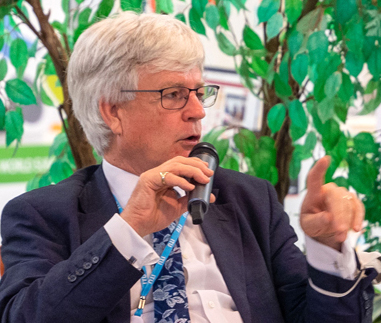
Amongst his many activities, he is currently actively seeking sponsorship for educational activities in Sudan and Kenya.  The mission of his charity Gua Africa is “to work with individuals, families and communities to help them overcome the effects of war and poverty. Each of our projects focus on providing an education to children and young adults who would otherwise be denied such opportunity. Currently our work is in Kenya and Sudan, however in the future we would like to expand into other areas of Sub-Saharan Africa – working with other experienced partner organisations where ever opportunities arise”.

(video of his recent talk at TED) (Emmanuel Jal on MySpace)

2 Comments

Filed under Africa, Ethics, Music