Analysis in Geographical Research

There are many books that provide students with detailed accounts of the methods that they can use in geographical research, but very few that give much guidance on analysis.  Hence, whilst students – both undergraduate and postgraduate – can often undertake a competent piece of empirical data collection, all too often they come unstuck when it comes to how to analyse the data.  This note is therefore intended to provide a quick checklist of tips to help with analysis in geographical research, and it is derived particularly from my experiences in helping PhD students to grapple with these issues.

  • Do not be beguiled into thinking that there is one definitive way to analyse data – there are many different types of analysis.  Thus, positivist approaches focus on ‘explanation’ and ‘prediction’, whereas hermeneutic approaches focus on ‘understanding’; some critical approaches tend to focus on encouraging ’emancipation’.   Whichever approach one adopts, though, there are certain key principles that can generally help to guide analysis.
  • Analysis is the way in which researchers choose to make sense of the data. All good research will have some kind of analytical framework, which makes clear to the reader how the author has tried to interpret diversity in the empirical data.
  • Analysis must refer back to the conceptual/theoretical framework of the research.  Research is about moving knowledge forward.  Hence, the analytical chapters of a thesis, must show how the empirical data gathered has enabled the author to make sense of questions raised by the literatures examined in the conceptual or theoretical introductory chapters to a thesis.  Analytical chapters must have just as comprehensive a bibliography as the methodological and theoretical chapters.
  • Analysis should focus on the ‘why?’ questions.  All too often, students tend to concentrate on descriptive questions, such as ‘what?’, ‘where?’, ‘who?’ and ‘when?’ when gathering data, without then going on to ask ‘why?’.  Unless ‘why?’ is asked, it becomes very difficult to explain or understand  what is actually going on.  This applies just as much to asking why particular geomorphological structures are shaped as they are, as to asking why people behave in the ways that they do.  ‘How?’ questions fall between these two extremes – they can be used to ‘explain’ ‘how’ something works, but I do still prefer to read about ‘Why?’ as well.
  • It can be helpful to think about ‘dependent’ and ‘independent’ variables when trying to shape an analytical framework.  Particularly when working within a positivist approach, it is useful  to think about one group of variables (the independent ones) explaining the variation and differences in the pattern of the ‘dependent’ ones.
  • It is very important to have a good idea about the analytical framework before going out ‘into the field’ to collect data.  Unless one has some idea in advance about how the data are actually to be analysed, there is a danger that much redundant data could be gathered or that it will not be possible actually to explain or understand it.  Remember the ‘Why?’ questions!  This raises important issues to do with the balance between ‘inductive’ and ‘deductive’ approaches.  Very little research is either purely deductive or inductive, and there is always an exciting interplay between theoretical and empirical work.  Even when the research is heavily inductive, a focus on consistently asking ‘why?’ questions in the field can help to ensure  rigorous analysis.
  • Analysis is about imposing structure.  Very often when one is immersed in exploring the data gathered in empirical fieldwork it is difficult to see any structure in it.  Sometimes it is therefore useful to step back and try to look at it in a different way.  Asking (and answering!) a simple question, such as ‘What are the three main factors that help to explain this?’, can help to impose structure.

I do hope this is all helpful advice.  Please add comments below about the things that you find helpful in undertaking analysis.

Leave a comment

Filed under Education, Higher Education, Postgraduate supervision

Solving the crises facing UK universities

The time has come to ignite a debate about the real purpose of universities in the UK.  I believe passionately that universities should be about the advancement of knowledge, and the pursuit of excellence in research and teaching; they are not just about further education for the masses.  All too often universities in the UK are seen primarily in terms of their contribution to the economy. The incorporation of higher education within the Department for Business, Innovation and Skills during the government reorganisation of 2009 is just one symptom of how such thinking has pervaded not only government, but also the private sector and the public at large. All too often, charging fees for students is justified on the basis that graduates earn on average more than those without degrees.  Yet recent research based on figures from the Higher Education Statistics Agency suggests that many graduates do not actually add to their earning power by going to university (http://www.timesonline.co.uk/tol/life_and_style/education/article6832285.ece).

The OECD has long promoted the myth that there is something magical about a country having 50% of its population participating in higher education for the well being of the economy.  This is largely justified on macro-economic evidence suggesting a correlation between the percentages of a population who have been to university and GDP per capita.  However, the existence of such a correlation does not mean that having larger cohort percentages in higher education actually leads to greater economic growth; far from it, it can equally well mean that higher economic growth enables more people to afford to go to university!

In the late 1980s, the UK graduation rate was around 20%, and the government was eager to increase participation both for social and for economic reasons.  By 2004, the rate had risen to 39%, but government funding had not kept pace, leading to the familiar crisis of funding in UK higher education today. Public spending on university education in Britain is just 0.9% of GDP, which is well below Sweden’s at 1.6% (for a 40% participation rate) and the US’s at 2.9% percent (for a 37% participation rate) (figures from OECD’s Education at a Glance 2009 indicators).

What, though, is the evidence that having such percentages in higher education is indeed of benefit either to the individuals or the country, especially if we cannot afford to fund it properly?  Here, I wish to raise four issues that seem to me to be of particular importance:

  • Charging students fees for higher education is socially divisive and distorts the labour market. UK students already now graduate with an average debt of around £21,000, and this figure is set to rise substantially.  Unless they have affluent parents willing to pay off their debts, graduates are desperate to seek higher paid jobs so that they can start generating a real income.Is the so-called ‘education’ that they get, really worth this debt?
  • The academic abilities of many students entering universities is so low that they cannot achieve the academic excellence that universities should be aspiring to.  Many universities make offers to students equivalent to 2 Ds or 3 Es at A’ level.  The quality of education that such students receive can be good, but most students with A’ levels this low are unlikely to be at the cutting edge of knowledge creation in their later lives. How much intellectual benefit do they really gain from their degrees?
  • Going to university is often a lifestyle decision, and many students do not participate sufficiently actively in the pursuit of academic excellence. It is a scandal that students in the UK spend so little time on their academic studies. A report of the Higher Education Policy Institute surveyed 15,000 1st and 2nd year students in 2007 and found that the average time that they spent being taught and in private study was 26 hours a week (http://news.bbc.co.uk/1/hi/education/7011121.stm).  This is about the same amount of time that they spend in bars on campus!  In Portugal, students on average spend 40 hours a week on their academic work.  In effect, perhaps half of UK university students are doing what amount to part-time degrees, and yet they expect to get the same grades as those who can devote 40 or 50 hours  a week to their studies.
  • Grade inflation applies just as much at universities as it does for A’ levels.  Business leaders regularly bemoan the declining abilities of graduates.  Is this surprising given how little academic work many students do while at university?  Most university league tables include the percentage of upper second and first class degrees awarded as one of their key criteria.  With such an incentive, is it really surprising that many universities have devised intricate mechanisms to ensure that they award high numbers of such degrees?

None of this is to the benefit of the many keen and enthusiastic students from poor or otherwise marginalised backgrounds who aspire to go to a university to achieve academic excellence, and indeed move knowledge forward. Likewise, there are many outstanding and highly committed students who worthily gain excellent degrees – but my point is that there are far too few of these in our universities today.

Lest I am misunderstood, I should emphasise that academic excellence is something very different from elitism.  We must champion excellence through education and training at all costs.  Indeed, the demise of higher education in the UK owes much to a misplaced emphasis on reducing elitism rather than championing excellence.  Excellence and elitism are fundamentally different concepts.

So, how do we get ourselves out of this mess?  My manifesto for the future of UK universities and continuing education contains four key elements:

  • Reduce the number of universities by approximately half, with funding for research and teaching coming primarily from the government.  Universities are meant to be communities of scholars who undertake research and encourage students to think critically thereby leading to the advancement of knowledge.  This reduction in size of the sector will not dramatically reduce research quality, since this is already highly focused, and it will enable those students who attend university to have a much higher quality of learning environment.  Civilised societies must have excellent universities not only to promote innovation but also to act as their moral consciences through critical reflection.
  • Create a raft of continuing learning institutions to provide excellent training and skills acquisition in fields deemed to be valuable by society.  These could, for example, be in fields as diverse as football, IT skills, dance, plumbing, language training, chefs, line repairers, music, welders, and care assistants.  Businesses, civil society organisations and government should play key roles in determining both the areas of specialism and the funding.  Their key attribute would be that they would encourage people to strive for excellence in their chosen field. Courses would be for up to two years (thereby providing a substantial saving of time and funding on current university three year degrees) and people of all ages would be encouraged to use them to gain the skills required for particular jobs.
  • The system would be underpinned by rigorous selection processes to help ensure equality of access based on skills and aptitude, thereby enabling those best able to benefit from different types of post-secondary learning to do so.  At the heart of this new system will be a rigorous evidence-based procedure to ensure that appropriate advice and opportunities are given to people as to the type of post-secondary learning that they embark on.
  • A redefinition of qualification titles. The awards given by the new continuing learning institutes must also be deemed by society to be as valuable as university ‘degrees’.  This will depend greatly on the quality of learning provision, but if they can provide learners with the skills to enable them to gain highly paid jobs, as for example professional footballers or chefs, then their status will be assured.  Indeed, it is even possible  that those wishing to pursue research careers at universities may well find themselves being paid much less in the future than mechanics and plumbers (http://www.thisismoney.co.uk/news/article.html?in_article_id=429176&in_page_id=2).

These are radical proposals, and will be unpopular in many quarters.  However, unless we engage seriously with the crisis facing universities and skills acquisition in the UK, we will continue to muddle along in perpetual mediocrity.  We once had a university system of which to be proud. Let us not be beguiled by recent announcements suggesting that ‘British universities dominate the world Top Ten rankings for the first time this year (http://www.timesonline.co.uk/tol/life_and_style/education/student/article6865260.ece, 8th October 2009).  UK higher education is in crisis, and it needs dramatic surgery to make it excellent.

5 Comments

Filed under Ethics, Higher Education

Emmanuel Jal at Africa Gathering

Emmanuel Jal smallEmmanuel Jal gave a moving rap-rendering and also a more formal account of his life as a child soldier in southern Sudan at today’s Africa Gathering in London.

Amongst his many activities, he is currently actively seeking sponsorship for educational activities in Sudan and Kenya.  The mission of his charity Gua Africa is “to work with individuals, families and communities to help them overcome the effects of war and poverty. Each of our projects focus on providing an education to children and young adults who would otherwise be denied such opportunity. Currently our work is in Kenya and Sudan, however in the future we would like to expand into other areas of Sub-Saharan Africa – working with other experienced partner organisations where ever opportunities arise”.

(video of his recent talk at TED) (Emmanuel Jal on MySpace)

2 Comments

Filed under Africa, Ethics, Music

Street Child World Cup, March 2010

logoBringing the football World Cup to South Africa provides an opportunity to highlight both the good and the not-so-good of that beautiful country.
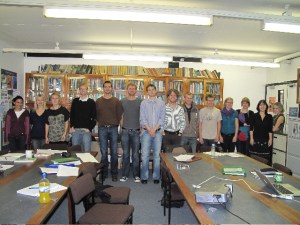
The Umthombo team who have been working with street children in Durban over the last decade are using this opportunity to draw attention to the plight of street children across the world. More importantly, though, this event highlights the skills and successes of children living and working on the streets, as well as schemes that can really support them to achieve their potentials.

The Street Child World Cup team notes the following: “Street children from eight countries will come together to play football and find their voices through the game they love. The Street Child World Cup will place street children centre stage, celebrating their potential and providing a platform for them to talk about their experiences, rights and ideas. Street children will work with international coaches to express themselves on the football pitch and with specially trained artists, who will enable them to tell their stories and to be heard. They will launch a campaign to win rights for street children all over the world.

  • The Street Child World Cup will use this game, which is loved all over the world, to help give kids a fairer deal. No child should have to be on the streets.
    Gary Lineker, speaking at the Street Child World Cup launch

Leave a comment

Filed under Africa

Obama wins Nobel Peace Prize

I saw this headline and could not believe it – the Nobel Peace Prize this year has been awarded to Barack Obama “for his extraordinary efforts to strengthen international diplomacy and cooperation between peoples”!

How could someone who kept on saying in his election speeches that he would change a particular state, he would change America and then he would change the world if elected receive such a prize? What is this brave new world going to be like? Under his ‘leadership’ so far the USA is continuing to try to impose its authority on Iraq and Afghanistan, imposing ‘democracy’ by military force? Do people in the USA not realise that most of the world does not actually want to be changed by them, but would much prefer to have greater self-determination without US interference?  If Obama’s policies led to a substantial reduction in the size of the USA’s armed forces and their rapid withdrawal from parts of the world where they are seeking to impose their military power, then perhaps he would indeed be a worthy recipient. Such awards should surely be for achievement?  What evidence is there that Obama has yet made any serious impact on peace in the world?  As the UK’s Times notes, he “has yet to deliver on any of the major foreign policy initiatives upon which he has embarked”

Hamas, for example, according to the Xinhua News Agency has been outspoken in its criticism of this award: “Islamic Hamas movement said Friday that U.S. President Barack Obama does not deserve a Noble Peace Prize since he failed to give the Palestinian people their legitimate rights. Fawzi Barhoum, Gaza Hamas spokesman told Xinhua that “Obama does not deserve this prize,” after the Norwegian Nobel Committee announced Obama was awarded the 2009 Nobel Peace Prize.”We believe that there are lots of things needed from Obama to be presented to the Palestinian people in order to deserve this reward. Obama should change his manner and be fair,” said Barhoum”

This decision devalues the Nobel Peace Prize.  It may well be that Obama will indeed help to shape a more humble and peaceful USA, and in time therefore be a worthy recipient of a peace prize, but until then we should not be so full of sycophantic praise.  If Obama is as great as so many claim, then he will have the humility to decline this award.

6 Comments

Filed under Uncategorized

Waitrose, Fox News and Barack Obama

I enjoyed the following report from the Guardian illustrating just how seriously some UK companies consider comments on US news channels in determining their advertising spending:

“His last-minute Olympic sprint to back Chicago may have come to nothing, the Afghan quagmire may be bubbling away and Sarah Palin may be topping the bestseller list, but Barack Obama can at least take comfort from the fact that Britain’s most upmarket supermarket chain is on his side. Waitrose, which prides itself more on its “quality food, honestly priced” than staring down rightwing attack dogs, has become the latest firm to pull its ads from Fox News after presenter Glenn Beck’s remarks about the US president. In July, Beck called Obama “a racist” with “a deep-seated hatred for white people or the white culture” after the president said that police in Cambridge, Massachusetts, had “acted stupidly” in arresting the distinguished professor Henry Louis Gates as he entered his own home. Beck’s outburst prompted dozens of companies – among them Wal-Mart, Best Buy and Travelocity – to withdraw their adverts from his show for fear that their businesses might become tainted by association. Now Waitrose, which advertises on the channel carried by Sky in Britain, has followed suit after customers complained about the Glenn Beck Show”

It made me wonder what Barack Obama might do for Waitrose in return?

Leave a comment

Filed under Communication

Is this a normal distribution?

Stats 2009One of the challenges I have taken on is that of trying to make statistics and quantitative methods interesting to Master’s students, most of whom are highly committed to qualitative and ethnographic approaches.  This must imply that either senility, or madness, has taken hold a little early…
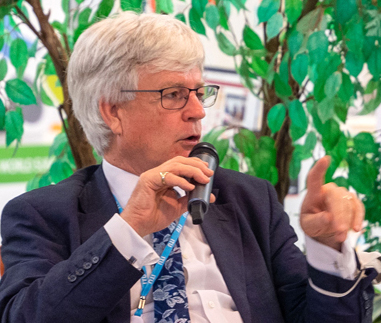
So, in an effort to enliven things today, I thought that we would use ourselves to illustrate a frequency distribution…

Judge whether this is normal or not – and then pick out who is enrolled in the Master’s course on Practising Sustainable Development, and who on the Course on Cultural Geography!

Thanks Bjorn for the photo…

1 Comment

Filed under Higher Education

London Centre for Arts and Cultural Exchange – The Inside Out Festival

The London Centre for Arts and Cultural Exchange (LCACE) is organising a one week festival – the Inside Out Festival – from 19th-25th October, highlighting the contribution made by nine London university institutions to the arts and to culture.

The Festival will showcase the exciting, unexpected and sometimes unsung contribution made by nine London universities to the arts and culture. A packed programme of public events will include film, music, theatre and visual art, exhibitions and screenings, workshops and debates, with great thinkers of the day, high-profile figures and well-known academics, as well as up-and-coming undergraduate and postgraduate students. The events will take place all over the city both on university campuses and at leading cultural venues such as Kings Place, the National Portrait Gallery and Somerset House.

Highlights of the Inside Out Festival will include

  • a hard-hitting and controversial debate Art: What’s it good for? chaired by Michael Portillo at Kings Place with panellists including Evelyn Welch (Dean of Arts at Queen Mary, University of London), The Guardian’s Economics Editor Larry Elliott and contemporary artist Nasser Azam
  • ‘Colour, The Big Draw’ a fun, free, family drawing event at Goldsmiths, University of London
  • a performance by the improvising ensemble the Laptop Orchestra with experimental musician and sound curator David Toop from the London College of Communication

There are currently some 41 events listed in the programme, including student film screenings, Tudor and Stuart Southwark, a series of concerts on the theme of Impressions of Spain, a Gamelan concert, Andrew Motion in conversation, a creative writing workshop, and lots more

LCACE is a collaboration promoting the exchange of knowledge and expertise with the capital’s arts and cultural scholars. The partners are: University of the Arts London; Birkbeck, University of London; City University; Courtauld Institute of Art; Goldsmiths, University of London; King’s College London; the Guildhall School of Music & Drama; Queen Mary, University of London; and Royal Holloway, University of London.

Leave a comment

Filed under Education, Higher Education, Music

Bill & Melinda Gates Foundation’s 2010 Access to Learning Award

Perhaps an unusual theme for my blog, but this seems a worthy cause to support:

The deadline for applications to the Bill & Melinda Gates Foundation’s 2010 Access to Learning Award is October 31, 2009. Applications must be submitted via an online submission process that can be accessed at www.gatesfoundation.org/ATLA. Please contact the Administrator at atla@gatesfoundation.org if you have any questions or concerns.

About the Award:

  • The Bill & Melinda Gates Foundation is currently accepting applications to its annual Access to Learning Award (ATLA), which recognizes the innovative efforts of public libraries and similar institutions outside the United States to connect people to information and opportunities through free access to computers and the Internet. The award is given by Global Libraries, a special initiative of the foundation’s Global Development Program. The recipient of the Access to Learning Award will receive US$1 million.
  • Computers and the Internet are powerful tools that provide opportunities for people to improve their social and economic well-being. Worldwide, just one person in six has access to the Internet. This means that more than five billion people miss out on chances to pursue education and employment, access government services, learn about valuable health information, conduct business online, and exchange information and ideas. The Access to Learning Award encourages new, innovative ways to provide computer and Internet services to people without access, and promotes greater development of public access technology programs around the world.
  • The Access to Learning Award honors innovative organizations that are opening a world of online information to people in need. The foundation’s Global Libraries initiative invites applications from libraries and similar organizations outside the United States that have created new ways to offer these key services:
  • Free public access to computers and the Internet.
  • Public training to assist users in accessing online information that can help improve their lives.
  • Technology training for library staff.
  • Outreach to underserved communities.

Please note:

  • Applications are open to institutions outside the United States that are working with disadvantaged communities.
  • To be eligible, the applying institution must allow all members of the public to use computers and the Internet free of charge in a community space.

Applications for the 2010 Access to Learning Award must be submitted via an online submission process by October 31, 2009. The application form is available only in English and must be completed in English to be eligible for consideration. However, while applications must be submitted in English, the foundation does offer informational brochures in Arabic, Chinese, English, French, Russian, and Spanish. You may find these and additional information on eligibility requirements and the process of selection at:
http://www.gatesfoundation.org/ATLA

Leave a comment

Filed under ICT4D

ICTs and Nobel Prizes

The 2009 Nobel Prize for Physics has a decided ICT theme to it!  Congratulations to the following:

  • Half of the prize goes to Charles K. Kao (Standard Telecommunication Laboratories Harlow, United Kingdom; Chinese University of Hong Kong, Hong Kong, China) “for groundbreaking achievements concerning the transmission of light in fibers for optical communication”; and
  • Half of the prize is shared by William S. Boyle and George E. Smith (both from the Bell Laboratories, Murray Hill, NJ, USA) “for the invention of an imaging semiconductor circuit – the CCD sensor”

Video of the announcement

Leave a comment

Filed under ICT4D