
 I couldn’t resist posting this – seen on the way back from a meeting this afternoon: the middle of a bendy bus caught around a traffic light near Euston station! Which ever way the driver tried to move, the traffic light remained enwrapped by the bus! And the poor motorbike policewoman couldn’t do much to help! I’ve no idea how the situation was resolved, but I guess that the traffic light came off worse! Have sympathy for the driver!
What happens when a bendy bus meets a traffic light?
Filed under Uncategorized
The proposed High Mosel bridge
Approval has apparently recently been given for the building of a 4-lane 160 metre high concrete road bridge, the B50 High Mosel Bridge. Campaigners note that this will have a severe impact on the vineyards and villages of Ürzig, Zeltingen-Rachtig and Wehlen, which make some great wines (visual impression). Where the road is planned to continue on above Graach, it also threatens the stability of the vineyard, and disregards the landscape integrity of the Graacher Schanzen hillfort. For an open letter written to Angel Merkel about this by Sarah Washington, see http://mobile-radio.net/bridge.html .
UK Government announces that it has no plans to create a central database for storing communications data
The UK’s Home Office has recently announced that it no longer has any plans to create a centralised database to store all communciations data. In its consultation paper presented to Parliament in April 2009, and entitled “Protecting the Public in a Changing Communications Environment“, the Home Secretary Jacqui Smith commented that “this consultation explicitly rules out the option of setting up a single store of information for use in relation to communications data”. This is excellent news for all those concerned that the government was indeed considering establishing such a centralised database of all digital communication (see my comments in February about this). The consultation paper is a very important document, and lays out clearly the various options facing a government eager to get the balance right between privacy and security.
The consultation paper asserts that “The Government has no plans for a centralised database for storing all communications data. An approach of this kind would require communications service providers to collect all the data required by the public authorities, and not only the data required for their business needs. All of this communications data would then be passed to, retained in, and retrieved from, a single data store. This could be the most effective technical solution to the challenges we face and would go furthest towards maintaining the current capability; but the Government recognises the privacy implications of a single store of communications data and does not, therefore, intend to pursue this approach”.
With reference to third party data, two approaches are identified as possible ways forward:
- “The responsibility for collecting and retaining this additional third party data would fall on those communications providers such as the fixed line, mobile and WiFi operators, who own the network infrastructure”
- “A further step would be for the communications service providers to process the third party communications data and match it with their own business data where it has elements in common; this would make easier the interpretation of that data if and when it were to be accessed by the public authorities”.
In the light of this, the government intends to legislate “to ensure that all data that public authorities might need, including third party data, is collected and retained by communication service providers; and that the retained data is further processed by communications service providers enabling specific requests by public authorities to be processed quickly and comprehensively”.
The government is particularly eager to receive responses on four main questions:
- Q1 On the basis of this evidence and subject to current safeguards and oversight arrangements, do you agree that communications data is vital for law enforcement, security and intelligence agencies and emergency services in tackling serious crime, preventing terrorism and protecting the public? Found on page 22
- Q2 Is it right for Government to maintain this capability by responding to the new communications environment? Found on page 22
- Q3 Do you support the Government’s approach to maintaining our capabilities? Which of the solutions should it adopt? Found on page 30
- Q4 Do you believe that the safeguards outlined are sufficient for communications data in the future? Found on page 30
As the consultation paper concludes, “The challenge is to find a model which strikes the right balance between maximising public protection and the ability of the law enforcement and other authorities to do their jobs to prevent and detect crime and protect the public, and minimising the intrusion into our private lives”.
Filed under Communication, Ethics, Uncategorized
Reflections on ICT4D @ The British Council, Manchester
A visit to the British Council’s offices in Manchester today, and an invitation to give a ‘brown bag’ lunch update on current issues in ICT4D that might be of interest to staff there, provided an opportunity for the following reflections:
- There are important differences between ICTD and ICT4D – quite simply the “4”. Much work in this arena has tended to be top-down and supply-led – be it by the private sector or academics who have great ideas and want to try them out in ‘developing countries’. But the “4” can be of very different kinds – either in support of economic growth agendas, or to empower poor and marginalised communities. Yes, these are NOT the same thing. As I have argued many a time elsewhere, economic growth will not, indeed cannot, reduce poverty – at least when the latter is defined in relative terms.
- Much of my own work has tried to explore the needs of poor and marginalised people, and then to identify how ICTs might be used to help them achieve their aspirations. However, I am very conscious that this approach runs up against difficulties, especially when confronted with “rights-based” arguments. Much development literature has shifted from “needs” to “rights”. I guess I have problems with this – although my argument is not as yet well articulated. First, it is all very well talking about human rights, but when people are continuing to be marginalised whilst this discussion is ongoing, I do believe we should also be trying to address the immediate needs of the poorest. Second, I fear that the human rights agenda is actually part of a wider “individualistic” agenda. Yes, of course human rights are important – but we must not forget “collective” and “communal” responsibilities in the rush to ensure that individual human rights are upheld.
- The technologies – there are some great innovations out there – I am very impressed with work being done by the TIER group in Berkeley: robust low cost wifi for healthcare; small microscopes that can be attached to mobile ‘phones; and long distance wifi (WILDNet). Yet, for many of the poorest people in the world, more traditional solutions have to be, at least in the short term, the most sensible. Radio remains hugely important in much of Africa. I remain unconvinced about the claims made for m-learning – a real issue that needs to be addressed remains the screen size. But, the explosion of mobile services across rural Africa provides huge opportunities for innovation. One thing is for certain, within a decade we will look back on desktop computers – and, dare I say it, even my beloved Mac laptops – as being very archaic. The future is small, connected and mobile!
- This brings me on to infrastructure. If Africa is to gain any benefit at all from the potential of ICTs, we must pay more attention to two ‘ simple’ things: electricity and connectivity. If all the aid that has been poured into Africa in the last half century had simply enabled most Africans to have electricity, just think of the changes that would have been enabled! One of China’s great successes has been its ability to bring electricity to something like 95% of all the country’s population. Without electricity modern digital technologies cannot function. The costs of digital connectivity across Africa are likewise scandalous. ICTs cannot in any way be seen as having any potential to contribute to poverty reduction until the prices of digital connectivity (be it by ‘phone, cable, or satellite) are dramatically reduced. Perhaps the arrival of the submarine cable in east Africa later this year will begin to make a difference, but we have yet to see whether the poor will really benefit
- Likewise, we must have rigorous regulatory environments if the poor are to benefit from ICTs. At the very least, these must ensure universal access. The challenge is that it is not cheap to provide connectivity in rural areas of Africa, and this is not something that the private sector is readily geared up to deliver. Across much of Africa, it has been those who are relatively better off who have benefited most from deregulation of the telecommunications sector. We need to find cost effective ways through which dispersed rural populations can gain access to the ‘content’ and ‘interaction’ that modern digital technologies permit.
- This in turn makes us confront entirely new kinds of business model. The extraordinarily rapid expansion of mobile technologies in much of Africa is an indication of the willingness of relatively poor people to pay for services that they see as being valuable. This has opened up huge possibilities for the provision of new services, especially branchless or mobile banking. The potential to deliver large-volume low-margin services across mobile platforms is one that we need to encourage. Traditionally most ICT companies have focused on the top-end of the markets; the potential for bottom-of-the-pyramid models in contrast offers real opportunities for ICTs to be used by poor people to their advantage.
- The challenges of content provision – finally, we need to address the pressing question of why there is so little indigenous quality content development in many of the poorer countries of the world. I have been involved in several collaborative attempts to help develop local content, and have clearly not yet learnt how to do this effectively! In part, the reasons must be related to the costs of developing such content, and the lack of skills to do so. But these factors alone cannot explain the relative dearth of quality digital resources developed within most of sub-Saharan Africa (South Africa being an exception). There is huge potential for the shared development of locally relevant content, but this has yet to be realised.
In conclusion, the above thoughts perhaps reflect an overly pessimistic and sceptical picture of the field of ICT4D, and I am quite sure that many people will be able to point to their favourite success stories. Of course there are some! However, I am utterly fed up with the ways in which small-scale pilot projects are continuously claimed as being huge successes, when they have little chance of ever going to scale, because they were only ever designed to be effective as pilots! We must get real and admit to our failures. Rather than implementing countless small ‘computers in schools’ projects, for example, let’s just try and roll out a single programme at the national scale in Africa to train teachers in the effective use of a full range of ICTs to enhance the quality of the learning that they help children gain. Only when we do so, and when we turn our attention to ways in which ICTs can really be used cost effectively and sustainably to support the world’s poorest peoples, notably street children and those with disabilities, will be able to make any claims that ICTs have had an impact on ‘development’ – at least in the ways that I choose to conceptualise it.
Educating the next wave of entrepreneurs
Colleagues with whom I am have been working at the World Economic Forum have recently launched an interesting new report on Educating the next wave of entrepreneurs.
The Forum’s Global Education Initiative (GEI), in announcing this report, commented that “With its groundbreaking report: “Educating the Next Wave of Entrepreneurs”, the GEI wants to consolidate existing global knowledge and good practices in entrepreneurship education around three focus areas that cover the lifelong learning process of an individual: Youth (with a focus on disadvantaged youth), Higher Education (focusing on high growth entrepreneurship) and Social Inclusion (with a focus on marginalized communities). This is the first time entrepreneurship education has been considered in such a comprehensive manner. The report also outlines specific approaches that are needed for each one of these areas, as well as opportunities, challenges and practical recommendations for key stakeholders. The report will be further discussed in sessions at the Forum’s 2009 regional summits in Latin America, the Middle East, Africa and India. Key education decision-makers and meeting participants will review the report’s recommendations specifically as they apply in their region’s context”.
It’s an interesting read for all those concerned with entrpreneurshiup education
Filed under Entrepreneurship
@Africa Gathering

A rainy Saturday morning in London – Ed Scotcher has brought us all together to explore the interface between ICTs and African development in the first Africa Gathering. He kindly asked me to say a few words of introduction – why is this Africa Gathering important?
- A joined up approach – it brings together people from many different backgrounds and contrasting experiences – and is therefore a marvellous opportunity for us to identify how we can work better together to help African people implement effective and lasting ICT4D solutions. There has been so much wasted energy (and finance) in trying to implement ICT4D projects across Africa – so many of which have failed. Africa cannot afford such failure. We must stop reinventing the wheel! Working together in a joined up approach, we can perhaps begin to make a real difference.
- To learn – there are so many exciting initiatives ongoing in the field of ICT4D in Africa – and it is difficult to keep track of them all. I am so conscious that my recent book on ICT4D is now horribly out of date – and so it is great to be able to learn from the fantastic group of people that Ed has brought together here today! This, though, raises some huge questions about how we actually synthesise this knowledge. There are so many ongoing initiatives and even repositories of information (or should this be knowledge?) already ‘out there’ – and yet we continue to make the same mistakes! If we think we know all the answers, we have already died intellectually! We must keep learning and sharing what we have learnt. We must also seek to be more humble, and to listen to the silent voices of Africa.
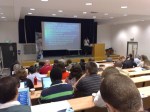
- Cool things happen at the edges – one of the most exciting things about ICT4D for me is that it brings people together from a wide range of backgrounds – we need to have computer scientists, philosophers, social scientists, anthropologists, mathematicians, chemists, physicists…. and yes, even geographers involved! We need to keep this diversity. I fear a little about the way in which some people would seem to be trying to define a standard curriculum for ICT4D – to me, this is frightening. Once we say that “this is what ICT4D should be about” we put up walls that keep some people in and prevent others from entering. We must keep the multidisciplinarity of ICT4D alive – I so hope that those of us here today will keep the energy of difference alive – and that we will continue to hang on to the edges!
- African needs and voices – we are largely a white male audience today! This makes me reflect once more on one of the things I keep on saying – far too many ICT4D projects are top-down and externally led. Entrepreneurs and innovators in Europe and North America all too often come up with great ideas that are then ‘imposed’ on African people! Instead, we need to get to know the needs of some of the poorest and most-marginalised people in Africa much better than we do at present. As many people know, my own personal focus is on how we can use these technologies to help street children and people with disabilities to lead more fulfilled and enjoyable lives – if only more of our work would address the needs of some of these most marginalised peoples. Others of course have other priorities – but rather than imposing our possibly unwanted solutions for problems that may not exist, let’s simply spend more time listening to what Africa’s poorest people want us to do for them.
Finally, I was going to begin by saying “Welcome Africa Gatherers”! But that made me think about what gathering  is about – bringing together things that already exist. Perhaps we should instead be “African Hunters” – after all, African peoples have great hunting traditions – along with my friend the cheetah. My hope for today is that we will indeed become hunters – hunters for ways in which we can use ICTs more effectively to empower the marginalised and poor, hunters for truth and wisdom, hunters for humility…
Thanks Ed for bringing us together!
Filed under ICT4D, ICT4D conferences
Reflections on the young researchers’ workshop at ICTD2009, Doha
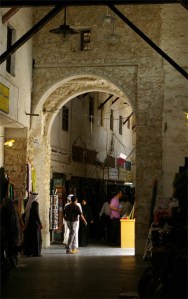 Sitting in the young researchers’ workshop here in Doha, amidst the splendour of the new Carnegie Mellon University campus, brings together a random series of unconnected thoughts about ICT4D:
- much academic discourse plays to the tunes of conductors who are not necessarily particularly interested in the needs of the poorest and most marginalised
- we need to break free from the shackles of traditional disciplinary frameworks
- please let’s not try to create a single ICT4D ‘discipline’ – the exciting things happen at the edges, where we bring together contrasting ideas and arguments!
- a huge amount of literature has already been published on ICT4D – let’s stop trying to reinvent the intellectual wheel. Let’s engage with the really exciting ideas and arguments that are already there – and take them forward. Let’s bring theory and practice together in innovative ways. Let’s try to make a difference!
- as I get older, the more I realise how little I know. Academic ICT4D could do with a huge dose of humility!
- there really is a difference between ICT4D and ICTD – which is why I believe so passionately in the ‘4’
- we need to work much harder at learning each other’s languages – both culturally and academically
- I am reminded about the line in Michael Moore’s film SiCKO, which commented that America is about ‘me’ whereas Europe is about ‘we’. I think there is an important truth somewhere in this, although certainly Europe is becoming more about ‘me’ than ‘we’, and there are huge dangers in essentialist arguments such as this! If ICT4D is to move forward, we do need to do it collaboratively – hence why I believe so strongly in the importance of our work being part of a Collective adventure
- there is a real contrast between sitting here in the plush air-conditioned lecture theatre, and the harsh reality of life for out of school youth on the streets of Addis Ababa or the amputees in camps in Sierra Leone – how can ICTs be used to support these people in their life aspirations?
Filed under ICT4D
ContactPoint – the UK State is creating a database of all children
Along with many other parents across the UK, I have recently received a letter from one of my children’s schools informing me that legislation has just been passed “requiring Local Authorities to set up and run a nationwide database, known as ContactPoint, which will contain basic details about every child and young person under the age of 18 who is ordinarily resident in England”.
Why should this legislation have been passed? Why is it compulsory? Why should everyone have to be registered? In effect, as young people grow older, this database will eventually record information about everyone “normally resident” in the UK. It will provide yet another means through which the State collects private information about individuals, thereby enabling it to impose greater control over its citizens.
The ContactPoint website claims that ” ContactPoint will be the quick way for a practitioner to find out who else is working with the same child or young person, making it easier to deliver more coordinated support. ContactPoint is an online directory, available to authorised staff who need it to do their jobs, enabling the delivery of coordinated support for children and young people. It is also a vital tool to help safeguard children, helping to ensure that the right agencies are involved at the right time and children do not slip through the net”.
But does this require details on EVERY child in the UK to be recorded on a central database? The passing of this legislation on 26th January gives rise to very great concern:
- Why should every child need to be registered? Why does the state need to gain information about the name, address, date of birth, and contact details of all parents to be registered centrally?
- Given the inability of the UK government to keep such data secure in the past, there are high risks that this personal information will become accessible to a wide range of people in the future. Children will therefore be put at risk.
- There is no evidence that such a database will make any difference to early interventions when children really do need the State to intervene to protect them
- Who really benefits from this? Is it not the companies who have persuaded the Government to introduce such very expensive digital systems?
- What gives the State any right at all to collect such individual private information.
We must resist this ever great control by the state over its citizens – just because digital technologies enable us to do this, does not mean it is right.
Tim
Google’s brush with the mole men of Broughton
Those interested in the implications of ‘private’ information being made accessible to ‘others’ via the World Wide Web, might be amused by Rod Liddle’s article in the Sunday Times today entitled “The mole men of Broughton put the brakes on Google“.
As he says, “And we should worry a bit about Google, too. It has a suspiciously smiling facade for one of the most powerful and wealthy companies in the world. “Don’t be evil” is its rather cringy message to employees; everybody wears casual clothing, they have days of the week when they can work on stuff which interests them and there’s probably a Red Nose Day every afternoon. At least, in the good old days, with Rio Tinto-Zinc and Lonrho, you knew where you stood; these big corporations didn’t pretend to be nice. Google, however, tells everyone not to be evil and then connives with the authoritarian Chinese authorities in the creation of a firewall to keep out all sorts of stuff that might annoy them. Meanwhile, the company knows more about you than any intelligence agency could dream of. Use any of Google’s services and, like it or not, as a consequence of the much-criticised cookies, your every internet movement will be logged. All that’s missing, one critic said five years ago, is it doesn’t know precisely where you live . . .”.
This raises very important issues about:
- the rights that companies, or indeed governments, have to information about individual citizens
- the amount of information people have about the uses to which such information is put
- whose interests are best served by making this information available
- the rights that individuals have to protect information about them being used without their explicit permission
An earlier article in The Times of 3rd April entitled “Village mob thwarts Google Street view car” is also worth reading for background to the story
Brussels restaurants
Continuing my periodic restaurant commentaries, last week in Brussels provided a great opportunity to listen to advice from friends who live there, and explore hidden away restaurants. While I am tempted to keep these to myself, I enjoyed them so much that I thought I would share them here in the hope that these excellent restaurants will benefit from additional business. Just don’t be there when I am!
- La Quincaillerie – Rue du Page 45, B-1050 Brussels. As one of the first restaurants to set up in the trendy Chatelain neighbourhood, La Quincaillerie stands out among the many fashion boutiques and purveyors of upmarket knick-knacks. It has an excellent wine list, and particularly good seafood and chicken; I really enjoyed the Tartare de boeuf au parmesan et à la roquette. To drink, I would recommend the 2005 Gewürztraminer from Louis Sipp à Ribeauvillé in Alsace
- La Canne en Ville – Rue de la Réforme 22, B-1050 Brussels. Exceptional! Try the Duo de coquilles Saint Jacques rôties et filet de sole farci à la mousseline d’écrevisses, beurre fouetté au citron. And to drink, be adventurous and taste the Bourgogne rosé Marsannay Regis Bouvier 2005.
Filed under Restaurants, Uncategorized, Wine

 Tim Unwin's Blog