Tag Archives: Covid-19

Data and the scandal of the UK’s Covid-19 survival rate

Govt CovidI have held off writing much that is overtly critical of the UK government’s handling of the Covid-19 pandemic, but can do so no longer. We have known for a long time that data published by governments across the world about infections is highly unreliable, although figures on deaths are somewhat more representative of reality.  The UK governments’s lack of transparency, though, about its Covid-19 data is deeply worrying, and suggests deliberate deceipt.  The following observations may be noted about the figures that are currently being published, and the ways in which official (and social) media use them.

  • Official infection rates are very unreliable and largely reflect the number of tests being done.  These figures are so meaningless that they should be ignored in public announcements and media coverage because they give the public completely the wrong impression.  Countries such as Germany are believed to be able to produce up to 500,000 tests a week (although their aim is to do 200,000 tests a day), whereas by 7th April there had only been 218,500 tests in total in the UK since the start of January. The UK government aims to achieve 100,000 tests a day by the end of April, but seems highly unlikely to meet this target; a figure of more than 10,000 tests per day in the UK was only first achieved on 1st April.  The official reported number of infected cases in Germany at 119,624 on 10th April is  likely to be somewhat nearer reality than the paltry 73,758 reported cases in the UK (Source: thebaselab, 10th April).  In practice, it seems that most of the UK figures actually refer to those who are tested in hospital as suspected cases, since there is negligible testing of the public in general to get an idea of how extensive the spread really is.  By keeping this figure apparently low, the UK government seems to be deceiving the population into believing that Covid-19 might be less extensive than in reality it is.
  • Figures for the number of deaths should be more reliable, but are also opaque.  Even with figures for deaths there is increasing cause for doubt, not least because of differences between countries reporting whether someone has died “from” or “with” Covid-19.  In practice, it is even more complex than this, since some countries (such as the UK), are publishing immediate data only on those who die in hospital.  Those who die in the community are only added into the total official figures at a later date.  By manipulating when these figures are officially added, governments can again deceive their citizens that the deaths may in the short-term be lower than they are in reality.  A good analysis of the situation in the UK has recently (8th April) been produced by Jason Oke and Carl Heneghan for The Centre for Evidence-Based Medicine (CEBM), which highlights the considerable discrepancies between data made available by the National Health Service (NHS) and Public Health England (PHE).  Not only does this make it difficult in the short-term for modellers and policy makers to know what is really happening, but it also gives a distorted picture to the public.  As this report also concludes “The media should be wary of reporting daily deaths without understanding the limitations and variations in different sources”.
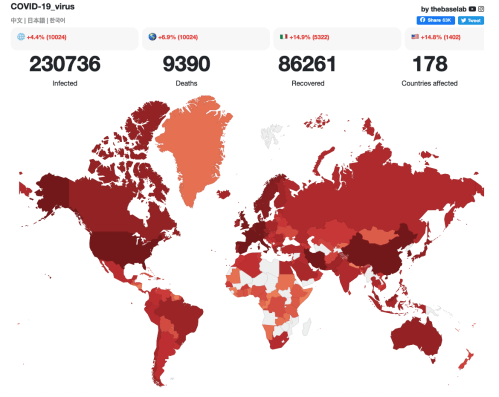
  • Hugely unreliable mortality rates.  Combining published figures for infections and deaths gives rise to figures for mortality rates.  These figures are also therefore very unreliable.  Because of the low levels of testing, and yet the high number of deaths in the UK (8,958; Source: thebaselab, 10th April), the UK mortality rate is reportedly the second highest in the world at 12.15%.  This can be compared with Germany’s 2.18% (undoubtedly a much more accurate figure), Italy’s 12.77% (the highest in the world), and a global average of 6.06%.  As I have argued previously, though, these figures are largely meaningless, and the figures that really matter are the total number of deaths divided by the total population of a country.  Accordingly, to date, China has had only 0.23 deaths per 100,000 people, whereas Spain has had 33.88, Italy 30.23, France 18.80 and the UK currently 11.75 deaths per 100,000 (Source: derived from thebaselab, 10th April).  Put another way, the UK figure is 51 times more than the Chinese figure.  Such figures are far more meaningful than official mortality rates, and should always be used by the media (preferably using choropleth maps rather than proportional circles for total deaths).
  • Extraordinarily depressing recovery rates.  The UK’s current “recovery rate” is by any standards appalling.  As of 9th April reported figures for the number of people who have recovered from Covid-19 in the UK were between 135 (by the baselab, and worldometers) and 351 (by Johns Hopkins University).   This suggests a “recovery rate” of possibly only 0.18% in the UK (Source:  thebaselab, 10th April), in contrast with China’s 94.56%, Spain’s 35.45% and a global average of 22.2%.  In part this is again a result of data problems.  We simply don’t know how many people have been infected mildly, and how many have survived without even knowing they have had it.  It also reflects the fact that it takes time to recover, and many people are still in hospital who may yet recover.  However, the UK’s figures is the worst in the world for countries where there have been more than 50 cases of Covid-19.

Such figures raise huge questions for the British government and people:

  • Why are UK reported survival rates so low? Surely the government should want to do all it can to show the success of the NHS in treating patients and it should therefore publish the real figures?  That is unless, of course, these figures are truly bad.
  • What is the balance of numbers between those dying in hospital from Covid-19 and those leaving having recovered?  The rare euphoria that greets those who leave hospital having recovered (as with 101-year-old Keith Watson who was recently discharged from a hospital in Worcestershire) suggests that very few people have actually left hospital alive having been admitted with Covid-19.  Is the government trying to hide this?  Is the grim truth that you are likely to die if you go into hospital with Covid-19?  Does this mean that people are being admitted to hospital far too late because of the advice given by the NHS and its 111 service?  Should the NHS simply stop trying to treat patients with Covid-19? (An update noted below suggests that more than half of the people going into intensive care in UK hospitals with Covid-19 die).
  • Why did the government not act sooner?  Some of us had argued back in January of the threat posed by the then un-named new coronavirus (I first raised concerns on 20th January, and first posted about its extent in China on social media on 27th January).  It was very clear then (and not only with hindsight) that this posed a global threat.  Undoubtedly the WHO failed in its warnings, and did not act quickly enough to declare a pandemic, but many governments did act to get in supplies of Personal Protective Equipment (PPE), testing equipment, and ventilators.  The UK government has failed its people.  One quarter of my close family have probably already had Covid-19; many of my friends have also had it – some very seriously.  I guess therefore that between a quarter and a third of those living in the UK may already been ill with the pandemic (Update 13th April: this must be an exaggeration, as news media over Easter suggest that experts think the current figure of infections is only 10%; Update 26th April, the MRC-IDE at Imperial College modelling back from actual deaths, suggest that only some 4.36% of the UK population is infected).  They are individual human beings, and not just statistics.

These questions are hugely important now, and not just when a future review is done, because it is still not too late to act together wisely to try to limit the impact of Covid-19 in the UK.  The fact that the government has not yet been transparent and open about these issues is deeply worrying.  In trying to explain them the following scenarios seem likely.  I very much hope they are not true, and that the government can provide clear evidence that I am wrong:

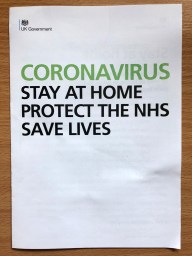
1. Throughout, the government knew that the NHS would be overwhelmed by Covid-19, and has been doing all it can to cover up its own failings and to protect the NHS.  In 2016, a review called Exercise Cygnus was undertaken to simulate the impact of a major flu pandemic in the UK. The full conclusions have never been published, but sufficient evidence is in the public domain to suggest that it showed that the NHS was woefully unprepreard, with there being significant predicted shortages of intensive care beds, necessary equipment, and mortuary space.  In December 2016 the then excellent Chief Medical Officer Dame Sally Davies, conceded that “a lot of things need improving”.  It is now apparent that the government (largely including people who are still leading it) did nothing to rectify the situation, and must therefore be held in part responsible for the very high death rate in the UK.  Its failure to fund the NHS appropriately in recent years is but a wider symptom of this lack of care and attention to the needs of our health system.  I therefore find it very depressing that this government is now so adamant in asking us to protect the NHS; as shown on the cover of the document sent to all households in the UK (illustrated above), it seems to be more concerned with protecting the NHS (listed second) above saving lives (listed third).

2. The government has consigned those least likely to survive Covid-19 to death in their homes.  Despite claims that the government is caring for the most vulnerable, it seems probable that its advice to the elderly and those most at risk to stay at home was not intended primarily for their own good, but was rather to prevent the NHS from being flooded with people who were likely to die.  This is callous, calculating and contemptable.  On March 22nd, The Sunday Times published an article that stated that “At a private engagement at the end of February, Cummings [the Prime Minister’s Chief Advisor] outlined the government’s strategy. Those present say it was “herd immunity, protect the economy and if that means some pensioners die, too bad”. Downing Street swiftly denounced this report, but it remains widely accepted that even if these were not the exact words Cummings used, this was indeed the view of some of those at the top of the UK government at that time.  Subsequent evidence would support this.  Some, perhaps many, hospital trusts, for example, have clearly told their staff not to accept people who are very old and fall into the most vulnerable category.  Likewise, Care Homes have been told to care for Covid-19 patients themselves, since they may not be accepted in hospital. The British Geriatrics Society thus notes (30th March) that:

  • “Care homes should work with General Practitioners, community healthcare staff and community geriatricians to review Advance Care Plans as a matter of urgency with care home residents. This should include discussions about how COVID-19 may cause residents to become critically unwell, and a clear decision about whether hospital admission would be considered in this circumstance”
  • “Care homes should be aware that escalation decisions to hospital will be taken in discussion with paramedics, general practitioners and other healthcare support staff. They should be aware that transfer to hospital may not be offered if it is not likely to benefit the resident and if palliative or conservative care within the home is deemed more appropriate. Care Homes should work with healthcare providers to support families and residents through this”

This  policy incidentally (and also helpfully for the government) lowers the daily reporting death rate because such people are not counted as “dying in hospital”.

3. The use of digital technologies may be used to identify those unlikely to be given hospital treatment.  The government quite swiftly introduced online methods by which people who think that they fall into the extremely vulnerable category could register themselves, so that they might receive help and such things as food deliveries.  Whilst aspects of this can indeed be seen as positive, it also seems likely that this register could be used to deny people access to hospital services, since they are most likely to die even with hospital treatment.  If true (and I hope it is not), this would be a very deeply worrying use of digital technologies.  Nevertheless, care homes are being forced to hold difficult discussions with those they are meant to be caring for about end-of-life wishes, and all doctors and medical professionals are increasingly having to make complex ethical decisions about who to treat (see Tim Cook’s useful 23rd March article in The Guardian).

4. The government has tried to pass the blame onto the scientists. Early on in the crisis I was appalled to see and hear government spokespeople (including the Chief Medical Officer – so beloving of systematic reviews) saying that they were acting on scientific advice.  As some of us pointed out at the time, there is no such things as unanimity in science, and so it was ridiculous for them to claim this.  However, they seem to have been doing so, and in such a co-ordinated manner, because they were seeking to shift the blame in case their policies went wrong.  Leading a country is a very tough job, and those who aspire to do so have to make tough decisions and stand by them.  Fortunately, this position by the government is no longer tenable, especially now that academics are competing visciously in trying to prove that they are right, so that they can take the credit. Nevertheless, there remains good science and bad science, and it is frightening how many academics seem to be pandering to what governments and the public might want to hear.  Tom Pike (from Imperial College), for example, predicted (against most of the prevailing evidence) in a pre-print paper with Vikas Saini on 25th March that if the UK followed China (which it clearly wasn’t doing) the total number of deaths in the UK would be around 5,700, with there being a peak of between 210 and 330 people, possibly on 3th April.  Although he retracted this a few days later when it was blatantly obvious that his model was deeply flawed, news media who wanted a good news story had been very eager to publish his suggestion that the pandemic would not be as bad as others had predicted (he certainly got lots of pictures published of himself in his lab coat).  Likewise, at the other end of the scale, the IHME in the USA predicted that the UK would have 66,314 deaths in total by 4th August, rising to a peak of 2,932 deaths a day on 17th April.  This  might have been wishful thinking, because on 7th April, UK reported deaths were only 786, which was substantially below their model prediction of around 1250.  By then, though, their research had already hit the news headlines with lots of publicity.  Subsequently (as at 11th April), they revised their predictions to a peak of “only” 1,674 deaths a day (estimated range 651-4,143) with a cumulated total of 37,494 deaths.  These differences are very substantial, and emphasise that scientists often get it wrong.  Put simply, the UK government cannot hide behind science.  They can try to take the credit, but government leaders must also admit it openly when they have been wrong with the policies that they make based on the evidence.

In conclusion, by sharing these thoughts I have sought to:

  • Ask the UK government to be more open and transparent in the information that it provides about Covid-19;
  • Plead with media of all sorts to use data responsibly, and to be critical of claims by governments and scientists who all have their own interests in saying what they do; and
  • Encourage everyone to work together for the common good, openly and honestly in trying to respond to the Covid-19 pandemic.

Above all, I write with huge respect for the many people in our NHS who have been working in the most difficult of circumstances to try to stem the tide of Covid-19.  Too many of them have already died; too many of them have become sick.

[Update 12th April: A report in The Times notes that “The death rate of Covid-19 patients admitted to intensive care now stands at more than 51 per cent, according to a study on a sample of coronavirus patients”.  The original report is by ICNARC, which showed that “Of the 3883 patients, 871 patients have died, 818 patients have been discharged alive from critical care and 2194 patients were last reported as still receiving critical care”. I should add that this is despite the very valiant efforts of our NHS staff]

[Update 14th April: Great to see that the BBC is at last reporting more responsibly about government reported deaths (based on those in hospital) being a serious underestimate of total deaths, and comparing trends of deaths with previous years – two useful graphs included and copied herewith below
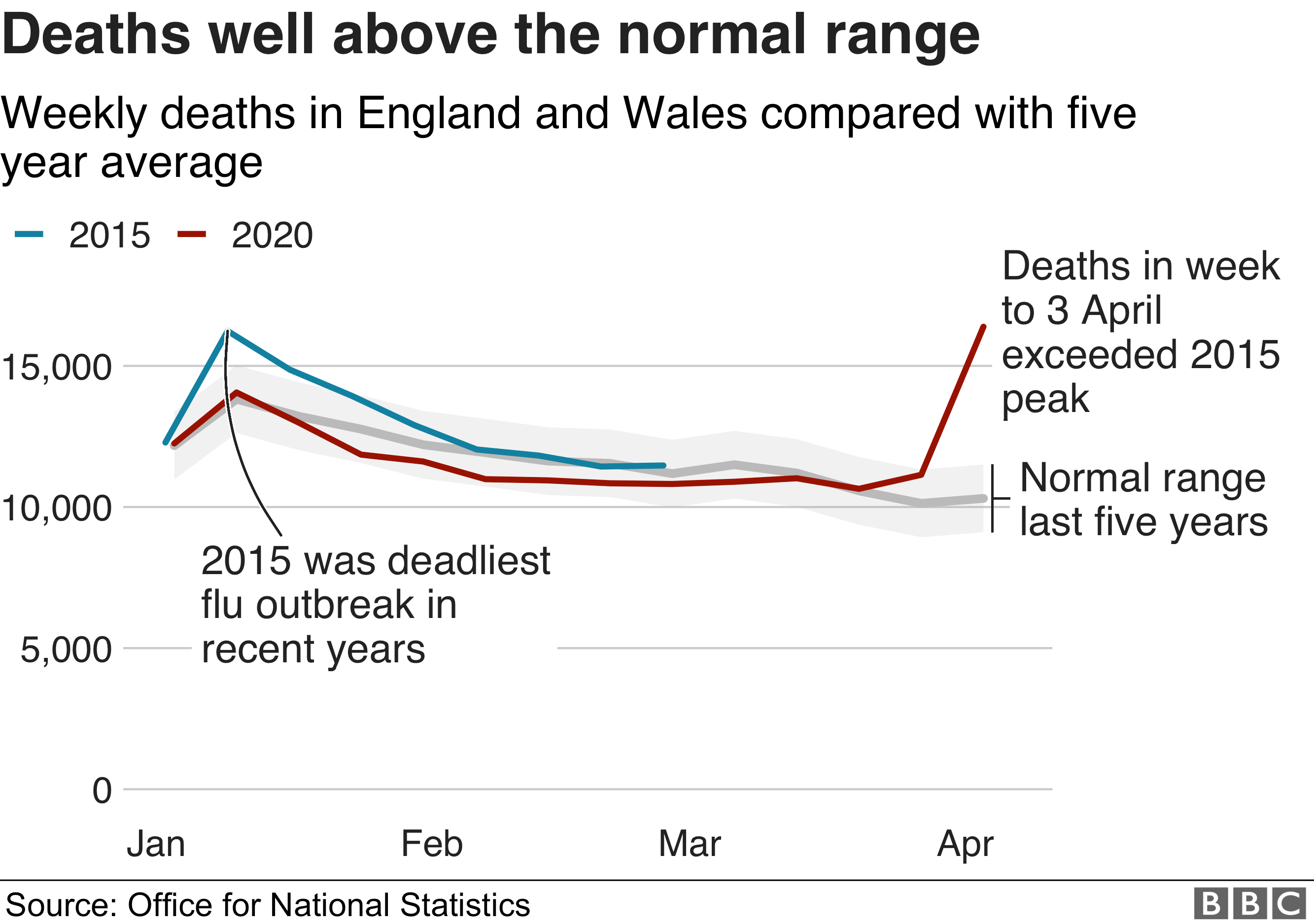
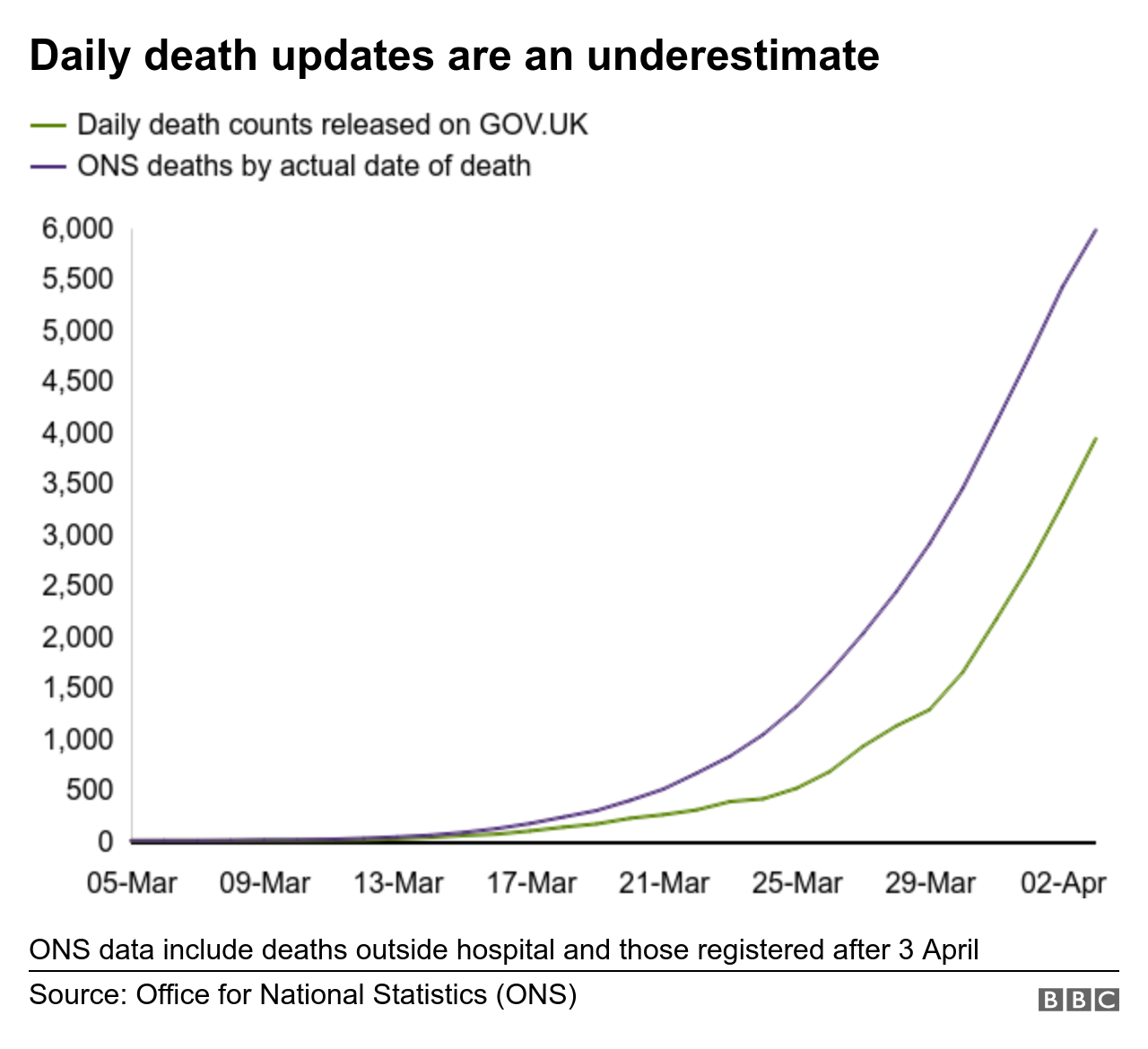
deaths well above normal range - line chart      daily death updates are an underestimate since they exclude deaths outside hospital and are subject to reporting delays

Thanks BBC]

Updated 14th April

7 Comments

Filed under Covid-19, digital technologies, UK, Uncategorized

Face masks and Covid-19: communal not individual relevance

face-masks-coronavirus-china-afpOne of the starkest differences between East Asian and European/North American responses to the Covid-19 pandemic has been in their differing attitudes towards face masks (used here generically, and differentiated from FFP3, also known as N95, respirators) : they are common in East Asian countries such as China, South Korea, Singapore and Japan, and yet are rarely to be seen in other parts of the world.  They have been part of the package of solutions recommended in East Asia, where infection and mortality rates have generally been quite low; yet they are absent in Europe and North America where rates are much higher.
World Health Organisation advice, followed assiduously by European governments and the U.S. Centers for Disease Control and Prevention (CDC) is clear:

  • If you are healthy, you only need to wear a mask if you are taking care of a person with suspected 2019-nCoV infection.
  • Wear a mask if you are coughing or sneezing.
  • Masks are effective only when used in combination with frequent hand-cleaning with alcohol-based hand rub or soap and water.
  • If you wear a mask, then you must know how to use it and dispose of it properly.

This is frequently interepreted in an abbreviated form, as by the BBC, to imply that “Only two types of people should wear masks: those who are sick and show symptoms, and those who are caring for people who are suspected to have the coronavirus”.

The case against wearing face masks comes down essentially to the argument that they will do little to protect someone from getting infected.  This is fundamentally an individualistic argument: “If I wear a mask it won’t be much good to me”.  However, from a communal perspective that is absolutely not the point; what matters is that if you wear a mask and are unknowingly infected it may help to prevent you spreading the infection to many other people.  Wearing a mask is about others not yourself.

A growing body of evidence is now suggesting that masks can indeed help to slow the spread of Covid-19:

  • The markedly different histories of infection between countries where masks are encouraged/enforced as part of a package of measures, and those where they are discouraged, is forcing researchers and policy makers to try to explain why.  Masks are an obvious possible answer.
  • It is increasingly being suggested that many Covid-19 carriers are asymptomatic.  They therefore don’t know that they might infect people, and so are going about their daily lives doing just that.  If they had been wearing masks, it is argued, this could reduce the number of people that they infect.
  • Dentists and healthcare workers in many parts of the world are encouraged or required to use masks both to provide some protection from patients, but also to protect patients from any infections that a dentist may have.  If such masks are seen to be offering patients some protection, then it seems strange to suggest that they offer no protection against a coronavirus such as Covid-19 (see reviews of surgical masks and N95 masks by Loeb et al., 2009, and more recently by Long et al., 2020)
  • Chinese doctors and scientists are increasingly confident that masks do make a difference.  In a recent interview, George Gao (Head of the Chinese Center for Disease Control and Prevention) has thus suggested that “The big mistake in the U.S. and Europe, in my opinion, is that people aren’t wearing masks. This virus is transmitted by droplets and close contact. Droplets play a very important role—you’ve got to wear a mask, because when you speak, there are always droplets coming out of your mouth. Many people have asymptomatic or presymptomatic infections. If they are wearing face masks, it can prevent droplets that carry the virus from escaping and infecting others”.

In societies such as the USA and much of Europe where the focus tends to be more on the “self” rather than the “community” it is scarcely surprising that individuals and their politicians see little value in masks; but in more communal societies, where there is  perhaps more care for others, then masks are seen as an important part of the armour against Covid-19.

Many governments fear that encouraging citizens to wear face masks would mean that there would be insufficient left for medical professionals to wear.   This, however, is rather a lame excuse.  Such governments could readily have put in place systems in early February to prepare to expand production of protective clothing.  It is not too late for them urgently to do so.  The BBC thus reports that “UK clothes makers say the government has wasted time in ordering personal protective equipment for NHS staff.  Fashion and textile firms believe they could have begun making gowns and masks for front-line workers 10 days ago”.

However, for those who do care about their neighbours and don’t want to disrupt the official production of masks for healthcare providers, an increasing amount of guidance is now available for making your own masks, as at:

These are clearly not going to be as good as masks made by companies to stringent regulatory standards (for UK see Regulatory status of equipment being used to help prevent coronavirus (COVID-19)), but they may well offer at least some protection to reduce the communal spread of Covid-19.  Pressure on demand is likely to become very much worse than it is at present, especially when imported masks are low in supply and often fail to satisfy these standards: recent reports (see for example Business Insider, 29th March) thus suggest that 600,000 masks imported from China have had to be recalled by the Dutch government because they are faulty.  In countries unable even to import masks from elsewhere, domestic production in line with international standards (see Wong, A. and Wilkinson, A., 2020) can be recommended.

Above all, the discussion should not so much be about “will I be protected?” but instead “how can I protect others?“.  It rather depends on what kind of society we wish to live in – especially for those who are left after this pandemic has run its course.

[Update 30th March – it is great to see that Austria has announced today, the day after I wrote the above, that it is to make wearing masks compulsory, and will distribute basic masks for free at the entrances to all supermarkets]

[Update 31st March – Tom Whipple in The Times notes comments from Prof Cheng at Birmingham University and Prof Cowling at University of Hong Kong in favour of wearing masks, although Prof McNally, also from Birmingham, expressed concern that this would be counterproductive since people would think they could still go out]

[Update 2nd April – David Shukman on the BBC News site: Coronavirus: Expert panel to assess face mask use by public.  The WHO should have acted much more quickly on changing its advice]

[Update 7th April – Link to Lydia Bourouiba’s important study on turbulent gas clouds and respiratory pathogen emission: coughs and sneezes can spread #Covid19 7-8 m; CDC guidance is only 2 m; masks might help https://jamanetwork.com/journals/jama/fullarticle/2763852. We really need to rethink social distancing…]

[Update 7th JulyBBC Coronavirus: Don’t leave home without a face covering, says science body – why has it taken so long for people in the UK to argue vociferously for this?]

[Update 15th DecemberScientists say masks could stop coronavirus spreading in busy streets – nothing much has changed, apart from many thousands having died unnecessarily!  Just goes to show what an individualistic and selfish society we live in – as many of us have said for months, masks can help protect other people.  Every life saved matters]

6 Comments

Filed under Covid-19, Health, poverty, United Nations

Collaboration and competition in Covid-19 response

A week ago, I wrote a post about the potential of crowdsourcing and the use of hashtags for gathering enhanced data on infection rates for Covid-19.  Things have moved rapidly since then as companies, civil society organisations, international organisations, academics and donors have all developed countless initiatives to try to respond.  Many of these initiatives seem to be more about the profile and profits of the organisations/entities involved than they do about making a real impact on the lives of those who will suffer most from Covid-19.  Yesterday, I wrote another post on my fears that donors and governments will waste huge amounts of money, time and effort on Covid-19 to little avail, since they have not yet learnt the lessons of past failures.

I still believe that crowdsourcing could have the potential, along with many other ways of gathering data, to enhance decision making at this critical time. However the dramatic increase in the number of such initiatives gives rise to huge concern.  Let us learn from past experience in the use of digital technologies in development, and work together in the interests of those who are likely to suffer the most.  Eight issues are paramount when designing a digital tech intervention to help reduce the impact of Covid-19, especially through crowdsourcing type initiatives:

  • Don’t duplicate what others are already doing
  • Treat privacy and security very carefully
  • Don’t detract from official and (hopefully) accurate information
  • Keep it simple
  • Ask questions that will be helpful to those trying to respond to the pandemic
  • Ensure that there are at least some questions that are the same in all surveys if there are multiple initiatives being done by different organisations
  • Work with a globally agreed set of terminology and hashtags (#)
  • Collaborate and share

Don’t duplicate what others are already doing

As the very partial list of recent initiatives at the end of this post indicates, many crowdsourcing projects have been created across the world to gather data from people about infections and behaviours relating to Covid-19.  Most of these are well-intentioned, although there will also be those that are using such means unscrupulously also to gather data for other purposes.  Many of these initiatives ask very similar questions.  Not only is it a waste of resources to design and build several competing platforms in a country (or globally), but individual citizens will also soon get bored of responding to multiple different platforms and surveys.  The value of each initiative will therefore go down, especially if there is no means of aggregating the data.  Competition between companies may well be an essential element of the global capitalist system enabling the fittest  to accrue huge profits, but it is inappropriate in the present circumstances where there are insufficient resources available to tackle the very immediate responses needed across the world.

Treat privacy and security very carefully

Most digital platforms claim to treat the security of their users very seriously.  Yet the reality is that many fail to protect the privacy of much personal information sufficiently, especially when software is developed rapidly by people who may not prioritise this issue and cut corners in their desire to get to market as quickly as possible.  Personal information about health status and location is especially sensitive.  It can therefore be hugely risky for people to provide information about whether they are infected with a virus that is as easily transmitted as Covid-19, while also providing their location so that this can then be mapped and others can see it.  Great care should be taken over the sort of information that is asked and the scale at which responses are expected.  It is not really necessary to know the postcode/zipcode of someone, if just the county or province will do.

Don’t detract from official and (hopefully) accurate information

Use of the Internet and digital technologies have led to a plethora of false information being propagated about Covid-19.  Not only is this confusing, but it can also be extremely dangerous.  Please don’t – even by accident – distract people from gaining the most important and reliable information that could help save their lives.  In some countries most people do not trust their governments; in others, governments may not have sufficient resources to provide the best information.  In these instances, it might be possible to work with the governments to ehance their capacity to deliver wise advice.  Whatever you do, try to point to the most reliable globally accepted infomation in the most appropriate languages (see below for some suggestions).

Keep it simple

Many of the crowdsourcing initiatives currently available or being planned seem to invite respondents to complete a fairly complex and detailed list of questions.  Even when people are healthy it could be tough for them to do so, and this could especially be the case for the elderly or digitally inexperienced who are often the most vulnerable.  Imagine what it would be like for someone who has a high fever or difficulty in breathing trying to fill it in.

Ask questions that will be helpful to those trying to respond to the pandemic

It is very difficult to ask clear and unambiguous questions.  It is even more difficult to ask questions about a field that you may not know much about.  Always work with people who might want to use the data that your initiative aims to generate.  If you are hoping, for example, to produce data that could be helpful in modelling the pandemic, then it is essential to learn from epidemiologists and those who have much experience in modelling infectious diseases.  It is also essential to ensure that the data are in a format that they can actually use.  It’s all very well producing beautful maps, but if they use different co-ordinate systems or boundaries from those used by government planners they won’t be much use to policy makers.

Ensure that there are at least some questions that are the same in all surveys if there are multiple initiatives being done by different organisations

When there are many competing surveys being undertaken by different organisations about Covid-19, it is important that they have some identical questions so that these can then be aggregated or compared with the results of other initiatives.   It is pointless having multiple initiatives the results of which cannot be combined or compared.

Work with a globally agreed set of terminology and hashtags (#)

The field of data analytics is becoming ever more sophisticated, but if those tackling Covid-19 are to be able readily to use social media data, it would be very helpful if there was some consistency in the use of terminology and hashtags.  There remains an important user-generated element to the creation of hashtags (despite the control imposed by those who create and own social media platforms), but it would be very helpful to those working in the field if some consistency could be encouraged or even recommended by global bodies and UN agencies such as the WHO and the ITU.

Collaborate and share

Above all, in these unprecendented times, it is essential for those wishing to make a difference to do so collaboratively rather than competitively.  Good practices should be shared rather than used to generate individual profit.  The scale of the potential impact, especially in the weakest contexts is immense.  As a recent report from the Imperial College MRC Centre for Global Infectious Disease Analysis notes, without interventions Covid-19 “would have resulted in 7.0 billion infections and 40 million deaths globally this year. Mitigation strategies focussing on shielding the elderly (60% reduction in social contacts) and slowing but not interrupting transmission (40% reduction in social contacts for wider population) could reduce this burden by half, saving 20 million lives, but we predict that even in this scenario, health systems in all countries will be quickly overwhelmed. This effect is likely to be most severe in lower income settings where capacity is lowest: our mitigated scenarios lead to peak demand for critical care beds in a typical low-income setting outstripping supply by a factor of 25, in contrast to a typical high-income setting where this factor is 7. As a result, we anticipate that the true burden in low income settings pursuing mitigation strategies could be substantially higher than reflected in these estimates”.


Resources

This concluding section provides quick links to generally agreed reliable and simple recommendations relating to Covid-19 that could be included in any crowdsourcing platform (in the appropriate language), and a listing of just a few of the crowdsourcing initiatives that have recently been developed.

Recommended reliable information on Covid-19

Remember the key WHO advice adopted in various forms by different governments:

  • Wash your hands frequently
  • Maintain social distancing
  • Avoid touching eyes, nose and mouth
  • If you have fever, cough and difficulty breathing, seek medical care early

A sample of crowdsourcing initiatives

Some of the many initiatives using crowdsourcing and similar methods to generate data relating to Covid-19 (many of which have very little usage):

Lists by others of relevant initiatives:


Global Covid-19 mapping and recording initiatives

The following are currently three of the best sourcs for global information about Covid-19 – although I do wish that they clarified that “infections” are only “recorded infections”, and that data around deaths should be shown as “deaths per 1000 people” (or similar density measures) and depicted on choropleth maps.


2 Comments

Filed under Africa, AI, Asia, capitalism, cybersecurity, Development, digital technologies, Education, Empowerment, ICT4D, ICTs, inclusion, India, ITU, Latin America, mobile phones, Pakistan, Sustainability, technology

Donor and government funding of Covid-19 digital initiatives

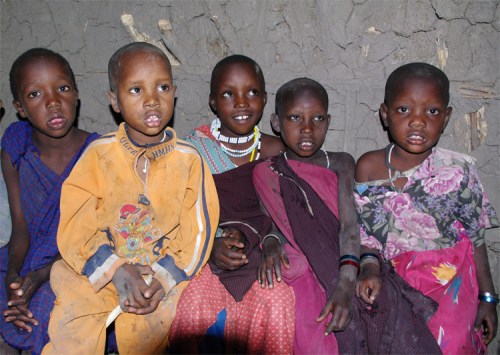
Masai children 2We are all going to be affected by Covid-19, and we must work together across the world if we are going to come out of the next year peacefully and coherently.  The world in a year’s time will be fundamentally different from how it is now; now is the time to start planning for that future. The countries that will be most adversely affected by Covid-19 are not the rich and powerful, but those that are the weakest and that have the least developed healthcare systems.  Across the world, many well-intentioned people are struggling to do what they can to make a difference in the short-term, but many of these initiatives will fail; most of them are duplicating ongoing activity elsewhere; many of them will do more harm than good.

This is a plea for us all to learn from our past mistakes, and work collaboratively in the interests of the world’s poorest and most marginalised rather than competitively and selfishly for ourselves.

Past mistakes

Bilateral donors and international organisations are always eager to use their resources at times of crisis both to try to do good, but also to be seen to be trying to do good.  Companies and civil society organisations also often try to use such crises to generate revenue and raise their own profiles.  As a result many crises tend to benefit the companies and NGOs more than they do the purportedly intended beneficiaries.

This was classically, and sadly, demonstrated in the Ebola outbreak in West Africa in 2014, especially with the funding of numerous Internet-based initiatives – at a time when only a small fraction of the population in the infected countries was actually connected to the Internet.  At that time, I wrote a short piece that highlighted the many initiatives ongoing in the continent.  Amongst other things this noted that:

  • “A real challenge now, though, is that so many initiatives are trying to develop digital resources to support the response to Ebola that there is a danger of massive duplication of effort, overlap, and simply overload on the already stretched infrastructure, and indeed people, in the affected countries”, and
  • “Many, many poor people will die of Ebola before we get it under control collectively. We must never make the same mistakes again”.

I have not subsequently found any rigorous monitoring and evaluation reports about the efficacy of most of the initiatives that I then listed, nor of the countless other digital technology projects that were funded and implemented at the time.  However, many such projects hadn’t produced anything of value before the crisis ended, and most failed to many any significant impact on mortality rates or on the lives of those people affected.

In the hope of trying not to make these same mistakes again, might I suggest the following short-term and longer-term things to bear in mind as we seek to reduce the deaths and disruption caused by Covid-19.

Short-term responses

The following five short-term issues strike me as being particularly important for governments and donors to bear in mind, especially in the context of the use of digital technologies:

  • Support and use existing technologies.  In most (but not all) instances the development and production of new technological solutions will take longer than the immediate outbreak that they are designed to respond to.  Only fund initiatives that will still be relevant after the immediate crisis is over, or that will enable better responses to be made to similar crises in the future.  Support solutions that are already proven to work.
  • Co-ordinate and collaborate rather than compete. Countless initiatives are being developed to try to resolves certain aspects of the Covid-19 crisis, such as lack of ventilators or the development of effective testing kits (see below).  This is often because of factors such as national pride and the competitive advantage that many companies (and NGOs) are seeking to achieve.  As a result, there is wasteful duplication of effort, insufficient sharing of good practice, and the poor and marginalised usually do not receive the optimal treatment.  It is essential for international organisations to share widely accepted good practices and technological designs that can be used across the world in the interests of the least powerful.
  • Ensure that what you fund does more good than harm.  Many initiatives are rushed onto the market without having been sufficiently tried and tested in clinical contexts.  Already, we have seen a plethora of false information being published about Covid-19, some out of ignorance and some deliberate falsification.  It is essential that governments and donors support reliable initiatives, and that possible unintended consequences are thorouighly considered.
  • Remember that science is a contested field.  Value-free science does not exisit.  Scientists are generally as interested in their own careers as anyone else.  There is also little universal scientific agreement on anything.  Hence, it is important for politicians and decision makers carefully to evaluate different ideas and proposed solutions, and never to resort to claiming that they are acting on scientific advice.  If you are a leader you have to make some tough decisions.
  • Ensure that funding goes to where it is most needed.  In many such crises funding that is made available is inappropriately used, and it is therefore essential for governments and donors to put in place effective and robus measures to ensure transparency and probity in funding.  A recent letter from Transparency International to the US Congress, for example, recommends 25 anti-corruption measures that it believes are necessary to ” help protect against self-interested parties taking advantage of this emergency for their own benefit and thereby undermining the safety of our communities”.

In the medium term…

Immediate action on Covid-19 is urgent, but a well thought-through and rigorous medium-term response by governments and donors is even more important, especially in the context of the use of digital technologies:

  • We must start planning now for what the world will be like in 18 months time.  Two things about Covid-19 are certain: many people will die, and it will change the world forever.  Already it is clear that one outcome will be vastly greater global use  of digital technologies.  This, for example, is likely dramatically to change the ways in which people shop: as they get used to buying more of their requirements online, traditional suppliers will have to adapt their practices very much more rapipdly than they have been able to do to date.  Those with access to digital technologies will become even more advantaged compared with those who cannot afford them, do not know how to use them, or do not have access to them.
  • Planning for fundamental changes to infrastructure and government services: education and health.  The impact of Covid-19 on the provision of basic government services is likely to be dramatic, and particularly so in countries with weak infrastructures and limited provision of fundamental services.  Large numbers of teachers, doctors and nurses are likely to die across the world, and we need to find ways to help ensure that education and health services can be not only restored but also revitalised.  Indeed, we should see this as an opportunity to introduce new and better systems to enable people to live healthier and more fulfilled lives.  The development of carefully thought through recommendations on these issues, involving widespread representative consultation, in the months ahead will be very important if governments, especially in the poorest countries, are to be able to make wise use of the opportunities that Covid-19 is creating.  There is a very significant role for all donors in supporting such initiatives.
  • Communities, collaboration and co-operation.  Covid-19 offers an opportunity for fundamentally different types of economy and society to be shaped.  New forms of communal activity are already emerging in countries that have been hardest hit by Covid-19.  Already, there are numerous reports of the dramatic impact of self-isolation and reduction of transport pollution on air quality and weather in different parts of the world (see The Independent, NPR, CarbonBrief).  Challenges with obtaining food and other resources are also forcing many people to lead more frugal lives.  However, those who wish to see more communal and collaborative social formations in the future will need to work hard to ensure that the individualistic, profit-oriented, greedy and selfish societies in which we live today do not become ever more entrenched.  We need to grasp this opportunity together to help build a better future, especially in the interests of the poor and marginalised.

Examples of wasteful duplication of effort

Already a plethora of wasteful (in terms of both time and money), competitive and duplicative initiatives to tackle various aspects of the Covid-19 pandemic have been set in motion.  These reflect not only commercial interests, but also national pride – and in some instances quite blatant racism. Many are also very ambitious, planning to deliver products in only a few weeks.  Of course critical care ventilators, test kits, vaccines and ways of identifying antibodies are incredibly important, but greater global collaboration and sharing would help to guarantee both quantity and quality of recommended solutions.  International Organisations have a key role to play in establishing appropriate standards for such resources, and for sharing Open Source (or other forms of communal) templates and designs.  Just a very few of the vast number of ongoing initiatives are given in the reports below:

Critical care ventilators

Testing kits

Despite criticisms of the replicative and wasteful nature of many such initiatives, there are a few initiatives at a global scale that do offer hope.  Prime among these must be Jack Ma’s donation of 20,000 testing kits to each of 54 African countries, which will go some way to reducing the need for these to be domestically produced across the continent.  But this is sadly only a small shower of rain on an otherwise parched continent.  Working together, we have much more to be achieved, both now and in the months ahead.

6 Comments

Filed under Africa, Asia, Australia, Health, ICT4D, poverty, research, technology, United Nations

Crowdsourcing Covid-19 infection rates

Covid-19, 19 March 2020, Source: https://coronavirus.thebaselab.com/

Covid-19, 19 March 2020, Source: https://coronavirus.thebaselab.com/

I have become increasingly frustrated by the continued global reporting of highly misleading figures for the number of Covid-19 infections in different countries.  Such “official” figures are collected in very different ways by governments and can therefore not simply be compared with each other.  Moreover, when they are used to calculate death rates they become much more problematic.  At the very least, everyone who cites such figures should refer to them as “Officially reported Infections”

As I write (19th March 2020, 17.10 UK time), the otherwise excellent thebaselab‘s documentation of the coronavirus’s evolution and spread gives mortality rates (based on deaths as a percentage of infected cases) for China as 4.01%, Italy as 8.34% and the UK as 5.09%.  However, as countries are being overwhelmed by Covid-19, most no longer have the capacity to test all those who fear that they might be infected.  Hence, as the numbers of tests as a percentage of total cases go down, the death rates will appear to go up.  It is fortunately widely suggested that most people who become infected with Covid-19 will only have a mild illness (and they are not being tested in most countries), but the numbers of deaths become staggering if these mortality rates are extrapolated.  Even if only 50% of people are infected (UK estimates are currently between 60% and 80% – see the Imperial College Report of 16th March that estimates that 81% of the UK and US populations will be infected), and such mortality rates are used, the figures (at present rates) become frightening:

  • In Italy, with a total population of 60.48 m, this would mean that 30.24 m people would be infected, which with a mortality rate of 8.34% would imply that 2.52 m people would die;
  • In the UK, with a total population of 66.34 m, this would mean that 33.17 m people would be infected, which with a mortality rate of 5.09% would imply that 1.69 m people would die.

These figures are unrealistic, because only a fraction of the total number of infected people are being tested, and so the reported infection rates are much lower than in reality.  In order to stop such speculations, and to reduce widespread panic, it is essential that all reporting of “Infected Cases” is therefore clarified, or preferably stopped.  Nevertheless, the most likely impact of Covid-19 is still much greater than most people realise or can fully appreciate.  The Imperial College Report (p.16) thus suggests that even if all patients were to be treated, there would still be around 250,000 deaths in Great Britain and 1.1-1.2 m in the USA; doing nothing, means that more than half a million people might die in the UK.

Having accurate data on infection rates is essential for effective policy making and disease management.  Globally, there are simply not enough testing kits or expertise to be able to get even an approximately accurate figure for real infections rates.  Hence, many surrogate measures have been used, all of which have to make complex assumptions about the sample populations from which they are drawn.  An alternative that is fortunately beginning to be considered is the use of digital technologies and social media.  Whilst by no means everyone has access to digital technologies or Internet connectivity, very large samples can be generated.  It is estimated that on average 2.26 billion people use one of the Facebook family of services every day; 30% of the world’s population is a large sample.  Existing crowdsourcing and social media platforms could therefore be used to provide valuable data that might help improve the modelling, and thus the management of this pandemic.

Crowdsourcing

[Great to see that since I first wrote this, Liquid Telecom has used Ushahidi to develop a crowd sourced Covid-19 data gathering initiative]

The violence in Kenya following the disputed Presidential elections in 2007, provided the cradle for the development of the Open Source crowdmapping platform, Ushahidi, which has subsequently been used in responding to disasters such as the earthquakes in Haiti and Nepal, and valuable lessons have been learnt from these experiences.  While there are many challenges in using such technologies, the announcement on 18th March that Ushahidi is waiving its Basic Plan fees for 90 days is very much to be welcomed, and provides an excellent opportunity to use such technologies better to understand (and therefore hopefully help to control) the spread of Covid-19.  However, there is a huge danger that such an opportunity may be missed.

The following (at a bare minimum) would seem to be necessary to maximise the opportunity for such crowdsourcing to be successful:

  • We must act urgently. The failure of countries across the world to act in January, once the likely impact of events in Wuhan unravelled was staggering. If we are to do anything, we have to act now, not least to help protect the poorest countries in the world with the weakest medical services.  Waiting even a fortnight will be too late.
  • Some kind of co-ordination and sharing of good practices is necessary. Whilst a global initiative might be feasible, it would seem more practicable for national initiatives to be created, led and inspired by local activists.  However, for data to be comparable (thereby enabling better modelling to take place) it is crucial for these national initiatives to co-operate and use similar methods and approaches.  There must also be close collaboration with the leading researchers in global infectious disease analysis to identify what the most meaningful indicators might be, as well as international organisations such as the WHO to help disseminate practical findings..
  • An agreed classification. For this to be effective there needs to be a simple agreed classification that people across the world could easily enter into a platform.  Perhaps something along these lines might be appropriate: #CovidS (I think I might have symptoms), #Covid7 (I have had symptoms for 7 days), #Covid14 (I have had symptoms for 14 days), #CovidT (I have been tested and I have it), #Covid0 (I have been tested and I don’t have it), #CovidH (I have been hospitalised), #CovidX (a person has died from it).
  • Practical dissemination.  Were such a platform (or national platforms) to be created, there would need to be widespread publicity, preferably by governments and mobile operators, to encourage as many people as possible to enter their information.  Mutiple languages would need to be incorporated, and the interfaces would have to be as appealing and simple as possible so as to encourage maximum submission of information.

Ushahidi as a platform is particularly appealing, since it enables people to submit information in multiple ways, not only using the internet (such as e-mail and Twitter), but also through SMS messages.  These data can then readily be displayed spatially in real time, so that planners and modellers can see the visual spread of the coronavirus.  There are certainly problems with such an approach, not least concerning how many people would use it and thus how large a sample would be generated, but it is definitely something that we should be exploring collectively further.

Social media

An alternative approach that is hopefully also already being explored by global corporations (but I have not yet read of any such definite projects underway) could be the use of existing social media platforms, such as Facebook/WhatsApp, WeChat or Twitter to collate information about people’s infection with Covid-19. Indeed, I hope that these major corporations have already been exploring innovative and beneficial uses to which their technologies could be put.  However, if this if going to be of any real practical use we must act very quickly.

In essence, all that would be needed would be for there to be an agreed global classification of hashtags (as tentatively suggested above), and then a very widespread marketing programme to encourage everyone who uses these platforms simply to post their status, and any subsequent changes.  The data would need to be released to those undertaking the modelling, and carefully curated information shared with the public.

Whilst such suggestions are not intended to replace existing methods of estimating the spread of infectious diseases, they could provide a valuable additional source of data that could enable modelling to be more accurate.  Not only could this reduce the number of deaths from Covid-19, but it could also help reassure the billions of people who will live through the pandemic.  Of course, such methods also have their sampling challenges, and the data would still need to be carefully interpreted, but this could indeed be a worthwhile initiative that would not be particularly difficult or expensive to initiate if global corporations had the will to do so.

Some final reflections

Already there are numerous new initiatives being set up across the world to find ways through which the latest digital technologies might be used in efforts to minimise the impact of Covid-19. The usual suspects are already there as headlines such as these attest: Blockchain Cures COVID-19 Related Issues in China, AI vs. Coronavirus: How artificial intelligence is now helping in the fight against COVID-19, or Using the Internet of Things To Fight Virus Outbreaks. While some of these may have potential in the future when the next pandemic strikes, it is unlikely that they will have much significant impact  on Covid-19.  If we are going to do anything about it, we must act now with existing well known, easy to use, and reliable digital technologies.

I fear that this will not happen.  I fear that we will see numerous companies and civil society organisations approaching donors with brilliant new innovative “solutions” that will require much funding and will take a year to implement.  By then it will be too late, and they will be forgotten and out of date by the time the next pandemic arrives.  Donors should resist the temptation to fund these.  We need to learn from what happened in West Africa with the spread of Ebola in 2014, when more than 200 digital initiatives seeking to provide information relating to the virus were initiated and funded (see my post On the contribution of ICTs to overcoming the impact of Ebola).  Most (although not all) failed to make any significant impact on the lives and deaths of those affected, and the only people who really benefitted were the companies and the staff working in the civil society organisations who proposed the “innovations”.

This is just a plea for those of us interested in these things to work together collaboratively, collectively and quickly to use what technologies we have at our fingertips to begin to make an impact.  Next week it will probably be too late…

5 Comments

Filed under Africa, AI, Asia, Empowerment, Health, ICT4D

Ten tips for working at home and self-isolating

I have always worked in part from home, on the road overseas in hotels, alone in strange places…  However, when I left full-time salaried work in 2015, and shifted primarily to working from home, I swiftly discovered the need substantially to readjust my habits.  For those without such experiences, who are being forced to self-isolate or work at home as a result of Covid-19 there are likely to be many challenges – but there are now plenty of guides available for things to do to help manage the rapid change of lifestyle (see below). Most of these are very sensible, but do not necessarily coincide with my own experiences.  So here are just a few tips that might be useful (in approximate order of importance):

1. Be positive and treat it as an adventure

positiveIt is much easier to enjoy change if you treat it in a positive way.  Think about all the good things: no need to travel to work; spending time with those you love (hopefully); doing things at home that you have always wanted to!  Treat the next few weeks or months as an opportunity to do new and exciting things.  Discover your home again! (Although this highlights the huge challenges facing the homeless).

2. Try to keep your  work place separate from your sleeping place

Clipart of woman sleeping at work image in Cliparts category at pixy.orgIf at all possible, it is absolutely essential to have separate sleeping and working places so that you remain sane.  There is much evidence that trying to sleep in the same place in which you work can confuse the mind, and may tend to make it continue to work when you want to go to sleep – even subconsciously – rather than enabling you to rest.  You are likely to be worried about the implications of Covid-19, and so it is essential that you do all you can to ensure a good night’s sleep.  This may not be easy for many people, but you should still try not to work in your bedroom!  And don’t continue working too late – give your body the time it needs to relax and rest.

3. Take as much exercise as possible

stairs-stairs-clipart_500-500It is incredibly easy to put on weight when working at home, even if you think you are not doing so!  This is bad for your health, and bad for morale.  It’s easy to understand why this happens: many people commute to work, and even if not cycling, they walk from their transport node to their office; homes are smaller than offices, and so you generally walk more at work than at home; and often you will go out of the office during the daytime, perhaps for lunch, but you can’t do this if you are self-isolating.  There are lots of things, though, that you can do to rectify this: walk up and down stairs several times a day (never take the lift); ensure that you go for a short walk every hour (even if it is just 20 times around your home); if you have some outdoor space, take up gardening (it uses lots of muscles you never thought you had!); and even if you don’t decide to buy a stationary bike (actually much cheaper than joining a gym), you can still exercise with a resistance band, or even use bags of sugar as weights!


4. Let everyone in the household have their own nest for working in

nestYou may well already have done this!  However, if not, remember that we all construct different kinds of places for working in.  I know I am one of the most antisocial people in the world when I am thinking and writing;  my home office looks a complete mess, but I know exactly where everything is, and woe betide anyone who moves something!  So, if there are several of you working at home, try to create your own spaces for working in.  Your husband, wife, partner, or children will all work in different ways, so try to ensure that everyone has a separate working place.  You will all be more productive – and get on better after you’ve finished working!

5. Plan your day – and give yourself treats

PLanWhen you don’t have to catch public transport, or cycle/drive/walk to work it is terribly easy to be lazy, and let time slip by without focusing on the tasks in hand.  Most people like to feel they have achieved something positive every day.  One way to ensure this is to plan each day carefully.  And don’t forget to give yourself treats when you have achieved something – whatever it is that you enjoy!

6. Keep a balance to your life

balanceThis is closely linked to planning – but don’t just spend all your time relaxing, or doing nothing but work!  It’s important to maintain diversity in life.  If your boss expects you to work a 10 hour day, then make sure that you do (hopefully s/he won’t).   But even then you  have 14 hours each day to do other things (please try and get 7 hours of sleep – it will help to keep you fit and well)!  I find that having a colour coded diary with a clear schedule helps me manage my life – even though I tend to work far too much!  The trouble is I enjoy my work!

7. Create agreed ground rules and expectations to reduce tensions

rulesMany people who now have to work at home because of Covid-19 will not have had much experience previously at doing this.  It can come as a shock getting to see other aspects of a loved one’s life.  Tensions are bound to arise, especially if you are trying to work when your children are at home because school has been closed.  It can help to have a thorough and transparent discussion between all members of a household (including the children) to set some ground rules for how you are going to manage the next few weeks and months.  This can indeed be challenging, and will frequently require revisiting, but having some shared expectations can help reduce the tensions that are bound to arise.  Listening (however difficult it is) often helps to lower tension.
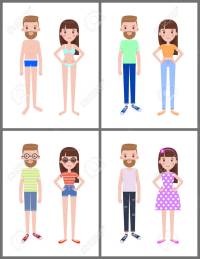
8. Wear different clothes just as you would if you went out to work (and play)

Man and Woman Collection, Vector IllustrationThe clothes we wear represent how we feel, but can also help shape those feelings.  It is amazing what an effect it can have if you get dressed smartly when you are feeling low.  Likewise, most people like to dress in more relaxed clothing when they stop working, and we don’t usually sleep in the same clothes that we have worn during the day.  Just because you are working at home, doesn’t necessarily mean that you will work well in your pyjamas (and imagine if you are suddenly asked to join a conference call without time to change!).  The simple message is that we should continue to take care of ourselves, just as if we were going out to work or to a party!

9. Switch off your digital devices (at least some of the time)

digitalEnjoy the physicality of life.  Don’t always feel you have to be online in case “work” wants to get in touch.  None of us are that important.  The world will get by perfectly well without us!  There is a lot of evidence that being online late at night can also disturb our sleep patterns. Remember that although we are increasingly being programmed to believe that digital technology gives us much more freedom in how we work,  it is actually mainly used by the owners of capital further to exploit their workforces by making them work longer hours for no extra pay!

10. Use the time creatively to do something that you have always wanted to do

veg-vegetables-clipart-8-clipart-station_650-400Being self-isolated at home will mean that you have vastly more time on your hands than you can ever imagine (as long as you don’t work all day and night).  Use it creatively to do something that you have always thought about doing,  but never had the time before.  Read those books that you always wanted to. Learn a musical instrument.  Learn to speak a new language (Python or Mandarin).  Take up painting.  Discover how to cook delicious meals with limited resources.  Photograph the wildlife in your garden. Grow your own vegetables.  Make beer.  Even just plan your next (or first) holiday.

Other useful resources (with a mainly UK focus) include:

I very much hope that some of these ideas will help to get you through the next few months, and that we will all emerge from the Covid-19 pandemic as being more considerate for others, and less concerned about ourselves.  Thinking more about how you can help others rather than what you want yourself is a good way to start planning for self-isolation.

4 Comments

Filed under Books, capitalism, China, digital technologies, Education, Empowerment, language, Learning, Music