I recently spent three hours completing an online financial expenses claim form for the finance department of our university relating to an overseas research trip. There were only 20 items of expenditure to be entered. However, each of the receipts had to be copied, reduced in size to suit the requirements of the software and uploaded into the system, along with separate details of the credit card payments for them. These had to be matched with numbered explanatory entries on another page of the online form, none of which could be automatically generated, and each of which required separate keyboard entry. On average, it therefore took me nine minutes per entry. I’m sure that anyone who has been forced to use Unit4’s Agresso software will know just what a cumbersome and time-consuming piece of software this is. Of course, it purports to reduce the time spent by staff in the accounts department, thus reducing the university’s expenditure on staffing, but this is at a significant cost in terms of the amount of time that I, as a user, have to spend. In the past, using hard copy receipts and forms, this task would have taken me much less than an hour to complete. My time is precious, and this represents a significant waste of time and money for myself and the university, over and above the costs that the university has incurred in purchasing the software and training staff in its use.
This is but one example of the ways in which digital tech is being designed and used to shift the expenditure of labour from the top downwards, and from the centre to the periphery (see my 2020 post on this for more examples). End users now have to do the work that those at the centre of networks (such as organisations, institutions, or governments) previously had to do; end users produce and upload the data that the centre formerly collected and processed. This is one of the main reasons why workers and citizens are now forced to spend considerably longer time and more effort completing mundane tasks, for the benefit of more powerful centres (and people) who give them no choice, and force them to conform to the digital systems that they control.
Examples of everyday digital oppression
There are many examples of this tendency, but the following currently seem to be most problematic (over and above the ever present challenge of spam, hacking and online fraud; I do not, though, address issues such as digital violence and sexual harassment here because I have written about them elsewhere, and want in this piece to focus instead on the everyday, normal processes through which structural imbalances are designed and enforced in the everyday use of digital tech):
The (ab)use of e-mails, especially when disseminated by the centre to groups of people. It is easy to send e-mails from the centre to many people at the periphery or down the hierarchy, but the total burden of time and effort for all the recipients can be enormous. This is particularly with respect to copy correspondence, which adds considerably to the burden (see my e-mail reflections written in 2010 but still valid!). It is increasingly difficult for many people to do any constructive work, because they are inundated with e-mails.
Being forced to download attachments and print them off for meetings. Some people “at the centre” still require those attending meetings to print off hard copies of documents before attending. This is quite ridiculous, since it vastly increases the total amount of time and effort involved. If hard copy materials are required, these should always be produced and distributed by the centre and not the end user.
Extending the working day through access to and use of digital tech. The above two observations are examples of the general principle that digital tech has been used very widely to extend the working day, without paying staff for this increase. The idea that e-mails can be answered at home after “work”, or personal training done in “spare time”, are but two ways through which this additional expropriation of surplus value is achieved.
Companies requiring users to complete online forms and upload information. This widespread practice is one of the most common ways through which companies reduce their own labour costs and increase the burden on those for whom they are intended to be providing services. Creating online accounts, logging on with passwords, and then filling in online forms has become increasingly onerous for users, especially when the forms and systems are problematic or don’t have options for what the consumer wants to enquire about. Such systems also take little consideration of the needs of people with disabilities or ageing with dementia who often have very great difficulty in interacting with the technology.
Users having to download information, rather than receiving it automatically at their convenience. Centres, be they companies or organisations, now almost universally require users to log on to their systems and go through complex, time-consuming protocols to gain access to the information that centres wish to disseminate (banks, financial organisations, and utility companies are notorious for this). In the past, such material was delivered to users’ letter boxes and could simply be accessed by opening an envelope. Again, this is to the benefit of the centres rather than the users.
Useless Chatbots, FAQs, online Help options and voice options on phone calls. Numerous organisations require consumers/users to go through digital systems that are quite simply not fit for purpose and often take a very considerable amount of users’ time (and indeed costs of connectivity). While some systems do provide basic information reasonably well, the majority do not, and require users to spend ages trying to find out relevant information. Many organisations also now make it very difficult for users to find alternative ways of communicating with them, such as by telephone. Even when one can get through to a telephone number and negotiate the lengthy and confusing numerical or voice recognition options, it frequently takes an extremely long time (often well over 30 minutes, or a 16th of the working day) before it is possible to speak with someone. Sadly, human responders once contacted are also often poorly trained and frequently cannot give accurate answers.
Having to use yet another digital system chosen by centres and leaders to exploit you in their own interests. There are now so many different online cloud systems for communicating with each other at work (or play), such as Microsoft’s Teams, Google’s Workspace, Slack, Trello, Asana, and Basecamp (to name but a few). None of us can expect to be adept at using all of them. However, leaders of organisations and teams generally impose their own preferred software solution (or those ordained by their organisation) on members. Rarely are they willing to change their own preferences to suit those of other team members. Hence, this reinforces power relationships and those lower down the food chain are forced to comply with solutions that may well not suit them.
Filling in forms online that are badly designed, crash on you, and often don’t have a save function for partially completed material. I am finding this to be an increasingly common and very frustrating form of hidden abuse. The number of times I have had to fill in forms online that take far longer than just writing a document or sending an e-mail is becoming ever greater. This is particularly galling when the software freezes or the save function does not work, and everything gets lost, forcing me to start all over again. The hours I have lost in this way (particularly in completing documents for UN agencies) are innumerable.
Time wasted in having to scroll through quantities of inane social media to find a message that someone has sent you and is complaining that you have not yet responded to it. The answer to this is simply not to use social media, and especially groups (see my practices), or to “unfriend” people who do this, but increasingly this is yet another means through which centres seek to control and exploit those at the peripheries or lower down the work hierarchy.
Centres simply failing to respond to digital correspondence, especially with complaints, and forcing users to keep chasing them online. I have lost count of the number of times I have had to fill in an online form, usually about something I have been asked to do by a company or agency, or concerning an appointment or complaint, only for them never to reply. This forces me to waste yet further time trying to contact them about why they haven’t responded!
This list of examples could be added to at great length, and mainly reflects my own current angst (for earlier examples see On managerial control and the tyranny of digital technologies). To be sure, not all digital systems are as appalling as the above would suggest, and credit should be given where due. The UK’s digital service, https://gov.uk is generally a notable positive exception to this generalisation, and I was, for example, very impressed when I recently had to use it to renew a passport. However, to change this situation it is necessary to understand its causes, the most important of which are discussed below.
The rise of digital capitalism and the causes of digital oppression
Five main causes lie at the heart of the above challenges. Underlying them all, though, is the notion that it is right and proper for companies to seek to expand their markets and lower their costs of production in the pursuit of growth. Capital accumulation is one of the defining (and problematic) characteristics of all forms of the capitalist mode of production, and new digital technologies have two key attributes in supporting this process: first, the use of digital tech very rapidly accelerates all forms of human interaction; and second, their use can replace much human labour (thus increasing the human labour productivity of those remaining in employment) . On the assumption that the cost of introducing digital tech is cheaper than the cost of human labour, then digital tech can be used dramatically to increase the rates of capital accumulation and surplus profit acquisition by the owners of the means of production. However, if there is insufficient demand in the market, not least because of falling purchasing power as a result of reduced levels of human labour, then the twin crises of realisation and accumulation will inevitably ultimately cause fundamental problems for the system as a whole. It must also be realised that (as yet) digital tech does not actually have any power of its own. The power lies with those who conceive, design, construct and market these technologies in their own interests. As the apparent AI ethical crisis at the moment clearly indicates, the scientists who support this process are as much to blame for its faults as are the owners of capital who pay them. Five aspects of this underlying principle can be seen at work in leading to the current situation whereby those at the system peripheries or the bottom of hierarchies are being increasingly oppressed through the uses of digital tech (as described in the examples above):
First, labour costs have generally long been perceived as being the critical cost factor in many industrial and commercial sectors. The digital tech sector has therefore been very adept at persuading other companies and organisations to do away with human labour and replace it with technology in the productive process. The labour that is left must be forced to work longer hours while also increasing its productivity. However, companies and organisations have also been persuaded that they can make further significant cost savings by ensuring that consumers and staff lower down the hierarchy do much of the work for themselves by, for example, filling in online forms and using chatbots as discussed above. Digital tech is used to shift the balance of time spent on tasks to the consumers or users. This insidious shift of emphasis is a classic expression of the digital oppression that is now increasing being felt by people across the world.
A second significant feature of capitalist enterprises is their need to create as uniform a market as possible so that they are then able sell as many of the same products or services as they can. This emphasis on uniformity requires users to adjust their previously diverse human behaviours to conform to the uniform digital systems that are imposed on them. It lowers overall costs, and enables markets rapidly to be expanded. We experience this every time we have to choose which of a number of options we are given on a phone call, or fill in an online form, where what we are concerned about does not easily fit in to any of the options we are given. Similarly, we encounter it every time someone wanting us to do something requires us to use their software package or app rather than our preferred one. Again, we encounter a different form of digital oppression.
Third, the increasing emphasis and reliance on digital systems means that the human labour remaining in organisations and companies becomes increasingly overstretched. Without adding to the amount of time that they work, staff having to use digital systems through which they are constantly bombarded with requests and actions become ever more oppressed. Furthermore, the difficulty of finding qualified and knowledgeable staff competent enough to give a good service to clients and customers, means that organisations are increasingly not capable of responding satisfactorily to those who don’t fit into the uniform-demanding digital systems that they now operate. This is why some companies make it as difficult as possible for clients and customers actually to speak with a human being among their staff, and why the quality of service they provide can be so bad. Some turn to call centres overseas, which often provide a dire service on poor quality phone lines staffed by people who cannot competently speak or understand the language of the customers.
Fourth, much of the software and systems that governments, organisations and companies are persuaded to buy by the tech sector is poorly designed, poorly constructed and poorly implemented. As but one example, in 2015 the abandoned NHS patient record system in the UK had “so far cost the taxpayer nearly £10bn, with the final bill for what would have been the world’s largest civilian computer system likely to be several hundreds of millions of pounds higher, according a highly critical report from parliament’s public spending watchdog” (The Guardian, 2015). The quality of design and programming in many apps, especially when outsourced to countries with very different cultures of coding, is often very low, and it is unsurprising that the functionality of many digital systems is so dire. Despite much rhetoric about human-computer interaction and user-centred design, the reality is that much tech is still built by people with little real knowledge and expertise in what users really want and how best to make it happen. All too often, they are themselves brought up within the culture of uniformity that limits real quality innovation.
Finally, the scientism (science’s belief in itself) that has come to dominate the tech sector and its role in human societies has largely served the interests of the rich and powerful, not least through the hope that aspirant digital scientists have to join that elite themselves. Ultimately, this serves the interests of the few rather than the many. Those on the peripheries or at the lower end of hierarchies have instead become increasingly oppressed and enslaved as a result of the propagation of digital tech across all aspects of human life (see my Freedom, enslavement and the digital barons: a thought experiment). It is becoming ever more crucial to challenge scientism, and counter the belief that science in general, and digital tech in particular, has the ability to solve all of the world’s problems.
What’s to be done
None of these challenges and none of the reasons underlying them need to be as they are. There is nothing sacrosanct or inevitable about the design, creation and use of digital tech. We do not need it to be as it is. It is only so because of the interests of the scientists who make it and the owners of the companies who pay them to do so.
There are numerous ways through which we can challenge the increasingly dominant hegemony of the digital tech sector in human society at both an individual and an institutional level. I concentrate here on suggestions for individual actions that can help us regain our humanity, leaving the discussion of the important regulatory transformations that are essential at a structural level for a future post. After all, it is only as individuals in our daily actions that we can ever regain any real power over the structures that oppress our “selves”. Any actions that can help change the underlying structures and practices giving rise to the oppressions exemplified at the start of this post are of value, and they will vary according to our individual space-time conjuctures. I offer the following as an initial step to what might be termed a revolutionary practice of digital freedom:
Create multiple identities for ourselves. As individuals we are much more complex than the uniformity that digital systems wish to impose on us. We are so much more than a single digital identity. Hence, we must do all we can to create multiple identities for ourselves as individuals, and resist in every way possible attempts to control and surveil us through the imposition of such things as single digital identities.
We must resist being forced to use specific digital technologies. We should always refuse to use digital tech when we can do something perfectly well without it. We must likewise very strongly resist attempts by companies, governments and organisations to force us to use a single piece of tech (hardware or software) to do something, and always demand that they provide a solution through our individually preferred technologies. At a banal level, for example, if you are happy with using Zoom and Apple’s Keynote, Mail, Numbers and Pages, you should never be forced by anyone to use Microsoft Teams or Google Workspace. If people or organisations are not willing to adapt to your individual needs they are probably not worth working with (or for) anyway. Many societies now require restaurants to provide details of all possible food preferences and allergies, so why should we accept being oppressed by digital tech companies who only wish us to conform to one uniform system?
We should never accept poor quality digital systems. If you cannot do something you want to through an organisation’s digital systems, then it is always worth complaining about it. Writing a letter of complaint, copied widely to relevant ombudsmen, is not only quicker than trying to use poor quality tech systems, but numerous complaints can cumulatively help to change organisations.
We must always challenge scientism, and emphasise the importance of the humanities in answering the questions that scientists cannot answer. Our particular structure of science primarily serves the interests of scientists, who work in very particular ways. This model of science is overwhelming dominant in the way in which digital tech is created. Although scientists can produce impressive results, they are not the guardians of all knowledge, and they are by no means always right. Almost every theory that has ever been constructed, for example, has at some later time been disproved. We must therefore resist all efforts to make science (or STEM subjects) dominant in our education systems. We must cherish the arts and humanities as being just as valuable for the future health of the societies of which we are parts.
We should identify and challenge the interests underlying a particular digital development. All too often innovations in digital tech are seen as being inevitable and natural. This is quite simply not the case. All developments of new technology serve particular interests, almost always of the rich and powerful. To create a fairer and more equal society this must change. The scientists who have developed generative AI, for example, are completely responsible for its implications, and it is ridiculous that they should now be saying that it has gone too far and should somehow be controlled. They did not have to create it as it is in the first place.
We need to implement our own digital systems to manage emails and social media. It is perfectly possible to reduce the amount of digital bombardment that we receive, but we need to manage this consciously and practically (see my Reflections on e-mails). Simple ways to start doing this are: file all copy correspondence separately; always remove yourself from mailing lists unless you really want to receive messages (you can always rejoin later); limit your participation in social media (especially WhatsApp) group; and keep a record of the time you spend each day doing digital tasks (it will amaze you) and think of how you could use this time more productively!
Take time offline/offgrid to regain our humanity. It is perfectly possible still to live life offline and offgrid. Many of the world’s poorest people have always done so. The more we are offline, the more we realise that we do not need always to be connected digitally. Some time ago I created the hashtag #1in7offline, to encourage us to spend a day a week offline, or, if we cannot do that, an hour every seven hours offline. Not only does this reduce our electricity consumption (and is thus better for the physical environment), but it also gives us time to regain our experience of nature, thereby regaining our humanity. The physical world is still much better than the virtual world, despite the huge amount of pressure from digital tech companies for us to believe otherwise. Remember that if we don’t use physical objects such as banknotes and coins, or physical letters and postcards, we will lose them. Think, for example, of the implications of this, not least in terms of the loss of the physical beauty of the graphics and design on banknotes or stamps, key expressions of our varying national identities (not again that digital leads to bland uniformity). Remember too that every digital transaction that we make provides companies and governments with information about us that they then use to generate further profit or to surveil us ever more precisely. Being offline and offgrid is being truly revolutionary.
This post argues that a coalition of interests around economic and demographic growth has not only created significant inequalities across the world, but has also been the main factor driving global environmental degradation. It is demographic growth in combination with a particular form of tech-led capitalist economic growth that has been the main driver of global environmental change, of which climate change is but a small part.
Economic Growth
Economic growth has for many decades been seen by economists and international organisations alike as the key means through which poverty can be eliminated, especially in the economically poorer countries of the world. This powerful mantra lay at the heart of the Millennium Development Goals (MDGs, 2000-2015) and has more recently been central to aspirations for the achievement of the Sustainable Development Goals (SDGs, 2015-2030). Yet, as I have frequently argued elsewhere,[i] these aspirations have never been achieved, they focus on absolute poverty rather than relative poverty, and the resultant unfettered economic growth has almost always been associated with an increase in inequalities. For those concerned with equity and who define “development” primarily as the reduction of inequalities, policies designed to increase growth alone are doomed to failure and need to be replaced.
National policies and international frameworks focused on growth primarily support the interests of those private sector companies and global corporations that have worked so assiduously to shape the UN rhetoric around economic growth and innovation. Digital tech companies have long been at the forefront of this, not only driving growth, but also reaping the benefits of so doing.[ii] Economic growth is deemed to be essential both to expand markets and also to increase labour productivity, whereby owners of the means of production can extract surplus value.
In trying to consider alternative models of socio-economic activity, I have often used the notion a “no-growth” economy as a heuristic device, encouraging audiences to consider how economic activity might be organised if growth was somehow prohibited. Although there are many potential outcomes, one of the most interesting is the thought that the pressures to achieve a reduction in inequalities might increase under such conditions, thus leading to a fairer and more equitable society. I have also found the work of the Post-Autistic Economics Network to be a helpful source of inspiration, challenging as it does many of the usually taken for granted assumptions of neo-classical (and indeed neo-liberal) economics.[iii]
Demographic growth
Recent debates about the balance between the positive and negative impacts of demographic growth on the economy have highlighted their inextricable intertwining with the rhetorics of economic growth.[iv] On the one hand there are those who argue that ageing populations with few young and economically productive people are deeply problematic for economic growth, and that policies to encourage higher birth rates or immigration are essential to enable economic viability. Years ago, I thus well remember the French advertising campaign to encourage families to have more children, beautifully encapsulated in this postcard:
On the other, are those who point to a demographic dividend in Africa, through which increasing numbers of young people are going to drive the economy forward, fuelled especially by the potential of digital tech. See for example, this image below from Invest Africa in an article entitled How can Africa harness its demographic dividend (and note its emphasis on digital tech).
Both arguments are deeply problematic. In the African case, this naïve dream is only going to be possible if young people are well educated and jobs are available for them; it seems more likely that this will actually be a demographic millstone rather than a dividend. The “problem” of an ageing population likewise only becomes serious if systems are put in place to extend human life at high cost for long periods of time, or if labour productivity stagnates or declines.[v]
Much of the international debate concerning demographic change has been articulated around its interconnectedness with economic growth. Put simply, the interests underlying the continued drive for economic growth are frequently the same as those that advocate for population increase as being positive and that technology can continue to ensure a healthy lifestyle for a very much larger human population. Rather less interest has surprisingly been devoted to what human experiences of such changes might be. This is especially so when the twin mantras of economic growth and demographic growth are confronted by their combined impact on the environment. This is particularly evident in the reactions over the last 50 years to The Club of Rome’s 1972 report on Limits to Growth,[vi] and to the much more recent and controversial film Planet of the Humans, produced by Michael Moore in 2019.
Limits to Growth, Planet of the Humans and the legacy of Thomas Malthus
In 1972, the Club of Rome published its prescient report entitled Limits to Growth, which argued that if the then growth trends in population, industrialisation, resource use and pollution continued unchecked, then the carrying capacity of the earth would be reached some time within the following century.[vii] I remember distinctly the wake-up call that this provided for me as an undergraduate, and thinking back to those days have been fascinated by how its message seemed increasingly to be ignored in the ensuing decades. Few countries apart from China (see below) really responded to this message, although some such as India made tentative efforts to address it. I distinctly remember, for example, being in Sonua market in what was then South Bihar (now Jharkhand) in 1976 and seeing this painted slogan of two parents and two children that formed part of the government’s 20 point programme during the 21 month state of emergency declared by Indira Gandhi.
India’s population was then 637.45 million; in 2023 it is 1,428.63 million. The policy was not a success.
Interestingly, 30 years after the Club of Rome report, the authors published an update, in which they concluded that “it is a sad fact that humanity has largely squandered the past 30 years in futile debates and well intentioned, but halfhearted, responses to the global ecological challenge”. This is an overly generous observation, largely because of the very specific interests that have underlain economic and demographic change in subsequent years. In essence, as noted above, the owners of the world’s major companies, supported by many economists have argued convincingly that both economic and demographic growth are essential for the future success of humanity, that the new SDGs are indeed sustainable,[viii] and that technology can continue to provide innovative solutions to the increasing problems caused by the pressure of people on the planet. I find it extraordinary to think that in my lifetime the world’s population has risen by 288% from 2.77 billion people to 8 billion people. What I find more frightening, though, is that there is nothing in the UN’s development goals really about population growth,[ix] and there was almost universal condemnation in the world’s capitalist countries when China adopted its 1 child per family policy when it was introduced in 1980.[x] Widespread criticism of the Club of Rome’s report and others who held their views was based primarily on the grounds that they were neo-Malthusian,[xi] and that the world was coping perfectly well, in large part through technological advances that were overcoming the challenges of an increasing population. Indeed, the observation that very much higher levels of population have been able to live on the planet over the last 50 years would seem to support such a view. However, this fails to recognise that very many of those people live in abject poverty and misery, and that the environmental impact of such growth has been very significant indeed. Unfortunately, much of the focus of the international community has been captured by the rhetoric around climate change, which has served to reduce emphasis on the wider environmental impact caused by the double mantra of economic and demographic growth. Climate change causes nothing; it is the factors giving rise to changes in the climate that are the ultimate cause and the real problem that needs addressing.
These issues were brought to the fore by the film Planet of the Humans produced by Michael Moore, and directed by Jeff Gibbs in 2019. This has been very widely criticised by those within the so-called environmental and green lobbies on the grounds that it was outdated and misleading, especially concerning the scientific evidence and more recent developments in renewable energy. However, many of these criticisms miss the fundamental point of the film, which was that our economic system, based on the present model of capitalist growth is fundamentally unsustainable, particularly in the context of continued demographic growth.[xii]
Many of these arguments might appear to smack of neo-Malthusianism which has been almost universally condemned from a wide range of angles, as were the criticisms of Malthus’ original works.[xiii] Engels, writing in 1844,[xiv] put it this way: technological and scientific “progress is as unlimited and at least as rapid as that of population”. Many continue to agree with Engels’ proposition, or at least hope that he was right. However, the scale of human impact on the environment today is vastly different from when Malthus first wrote his Essay on the Principle of Population at the end of the 18th century, and the world’s population is now more than twice as much as it was when Limits to Growth was first published. People are seriously talking about and investing in the colonisation of outer space to provide continued sustenance for the world; technology once again to the fore. My emphasis in this piece, though, is not so much to take issue with the many diverse arguments of those who challenge neo-Malthusianism, but rather, and much more simply, to suggest that the dominant global focus on climate alone is hugely damaging because it fails to address the wider environmental impacts of our thirst for growth.
Environmental implications
“Climate change” has become a popular focus of concern and political protest, but as I have argued extensively elsewhere[xv] it is a deeply problematic notion conceptually, especially when abbreviated to just these two words “climate” and “change”, ignoring the words “human” and “induced”. All too often, it is used in a way that externalises it as being somehow separate from the human actions that cause weather patterns to change, while at the same time also implying that humans can somehow solve it without addressing the deeper structural problems facing the world. Likewise, all too frequently, the answer to the problem of “climate change” is naïvely deemed to be an over-simplified reduction in carbon emissions. Leaders of the digital tech sector, with their voracious appetite for growth and innovation are eager to comply with this agenda, while failing almost completely to recognise the enormous harms that they are causing to other aspects of the environment. By focusing largely on “climate change” they can feel good whilst also maintaining their life blood of economic and demographic growth that drives their creation of profit.
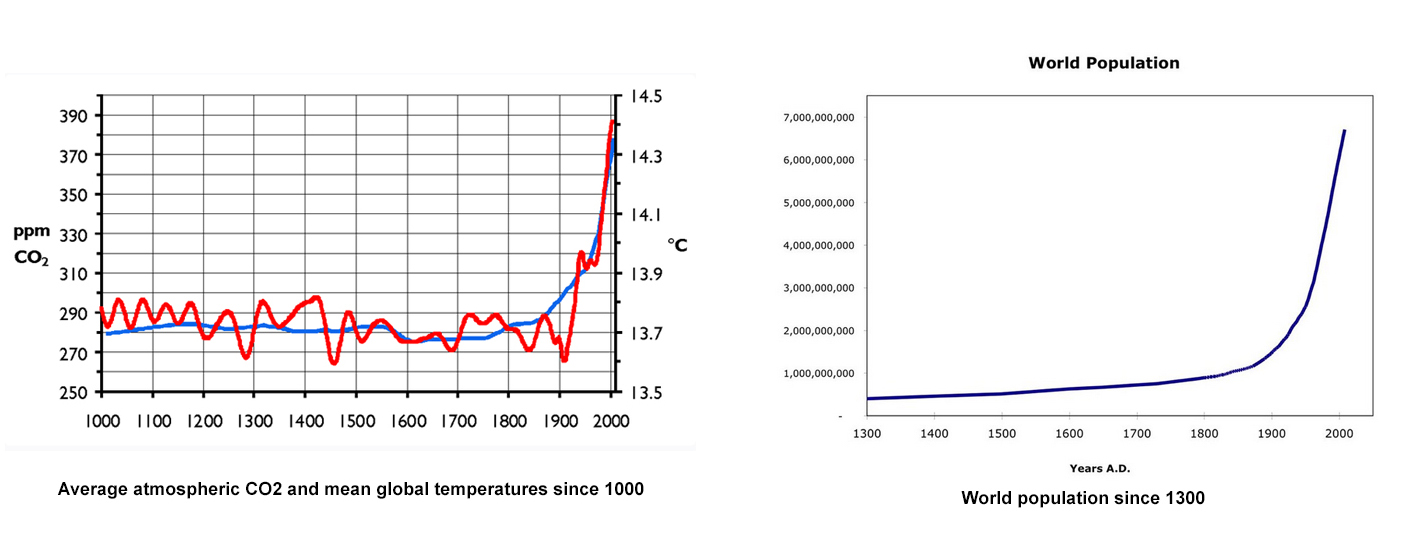
This is most definitely not to suggest that changes in temperature, rainfall, and wind patterns are unimportant; very far from it. But it is to argue that these are caused fundamentally by the twin mantras of economic and demographic growth that have increasingly dominated the world over the last century, rather than by some exogenous notion of climate change. More worryingly, these mantras have been fuelled still further by the unachievable and unsustainable Sustainable Development Goals that have become part of the problem rather than a solution. Contrary to much popular rhetoric, the very dramatic increases in global carbon emissions do not appear to have begun until the beginning of the 20th century, and coincide very closely with increases in world population.[xvi] Put another way, had global population not increased as dramatically as it has done over the last century, then those living here would not have been faced with the impending crisis that we now urgently need to address.
Moreover, and I would suggest more importantly, the emphasis on “climate change” has largely distracted attention from the crucial effort that must be placed on the wider environmental impacts of economic-demographic growth. Climate is but a small part of the physical environment, which includes the lithosphere, biosphere and hydrosphere, alongside the atmosphere. By focusing so heavily on climate, and ways that digital tech can be used to reduce carbon emissions, activists, academics, politicians, business leaders, civil society organisations and citizens alike are missing the bigger picture. The design and use of digital tech is causing significant environmental harms that tend to be ignored in the search for a solution to climate change.[xvii]
In conclusion: a new beginning
This post has contributed to my previous body of work by articulating five main inter-related propositions:
There has been a coalition of interests between those advocating economic and demographic growth, largely reflecting the determinant structures of contemporary global capitalism.[xviii]
This is archetypically reflected in the power of the digital tech sector, which has permeated the UN system.[xix]
The dramatic impact of the digital tech sector on the wider physical environment has been largely hidden by an overwhelming global emphasis on climate change, and ways through which digital tech can reduce carbon emissions.
It is important to understand climate change as a result and not a cause, and therefore focus on doing something about the real causes of climate change (the economic-demographic growth mantra) rather than primarily addressing carbon emissions.
It is essential to understand changes to the climate as but a part of the much wider negative environmental impacts of the coalition of interests underlying the economic-demographic growth mantra.
Are we facing a new era of increasing mass-migration, famine, disease and warfare? Is the economic growth model that has dominated the last century going to consume itself in a falò delle vanità? Might there be less inequality and poverty in the world if there were fewer people and the wealth that was created was shared more equally? Can we imagine a beautiful physical environment that could be created out of the desolate and scourged world we are currently creating? How might digital tech be used to serve the interests of the poorest and most marginalised more than those of the rich and powerful? These questions are all inter-related, and we need to find answers to them before it is too late.
[iii] For a brief history, see http://www.paecon.net/HistoryPAE.html; see also Stiglitz, J.E. (2019) People, Power and Profits: Progressive Capitalism for an Age of Discontent, Allen Lane, and Stiglitz, J.E. (2002) Globalization and its discontents, New York: W.W. Norton & Company
[v] Efforts by the Digital Barons (leaders of major US digital corporations) to extend human life far beyond its present span, such as those by Zuckerberg (see CNET, 2013), Larry Page (founding Calico, an Alphabet subsidiary, in 2013), Jeff Bezos (with his investment in Altos Labs, MIT Technology Review in 2021) and Larry Ellison (founder of Oracle, investing in ageing research, see Time, 2017) to name it a few are deeply worrying, both because only the rich will be able to afford such treatments, but also because they will inevitably mean an even greater population load on the planet; Elon Musk’s reported criticism of such practices (The Independent) is about the only occasion I have ever agreed with him about something!
[vii] See also the raft of activities undertaken by the Club of Rome in 2022 to celebrate the 50th anniversary of the report, https://www.clubofrome.org/ltg50/.
[viii] Which, in case it is unclear from the thrust of my argument, most of them definitely are not.
[xi] See further below on Thomas Malthus; in essence, critics of neo-Malthusianism have suggested that these arguments were overstated and premature, and that technology would enabled very much higher population levels to be sustained.
[xvii] See http://desc.global which is attempting to understand the relative balance between environmental harms and benefits of digital tech.
[xviii] In essence, demographic growth has been co-opted to serve the interests of the private sector (capitalism) in seeking to overcome the tendency towards a falling rate of profit. Put simply, population must grow to provide both an expanded market and more labour to ensure economic growth.
I have frequently been asked in recent weeks about my thoughts on the UN Secretary General’s Global Digital Compact (GDC). It is far from easy to summarise these, not least because the actual compact is not due to be agreed until the “Summit of the Future” in September 2024. Any such comments can therefore only be about its overall objectives and the process so far. However, I am deeply sceptical of both, and consider the compact to be fundamentally flawed in concept, design and practice. In essence, it largely reflects an elitist view, dominated heavily by the corporate tech sector, focused on a technologically deterministic ideology, that will do little or nothing to serve the interests of the poorest and most marginalised.[i]
For those who don’t have time to read this entire post, it argues in essence that:
The Global Digital Compact is a result of the ways in which the ideologies and practices of digital tech companies have come to dominate UN rhetoric arounddigital tech;
The issues it addresses, the questions it asks, and the ways in which the consultation is constructed, largely serve the interests of those companies, rather than those of the world’s poorest and most marginalised individuals and communities; and
It fails to address the most significant issues pertaining to the role of digital tech and the science underlying it, notably the future relationships between machines and humans, the environmental harms caused by the design and use of digital tech, and the increasing enslavement (loss of freedoms) of the majority of the world’s people through and by the activities of digital tech companiesof all sizes.
For the long read, read on… (also available as a .pdf here).
Context of the Global Digital Compact.
As the Digital Watch Observatory has so accurately commented, “The GDC is the latest step in a lengthy policy journey to have, at least, a shared understanding of key digital principles globally and, at most, common rules that will guide the development of our digital future”. Like all such initiatives, however, it reflects a very specific set of interests, and it is helpful to begin by briefly trying to unravel these.
There has been concern for a long time about the increasingly large number of overlapping international multi-stakeholder gatherings that have been created by different interest groups to discuss the interlinkages between digital tech and human life (for a detailed discussion of the origins of these, see my Reclaiming ICT4D, OU, 2017). Three are particularly interesting: ICANN, WSIS, and the IGF. The Internet Corporation for assigned Names and Numbers (ICANN) created in 1998 was initially designed as a mechanism to transfer the policy and technical management of the DNS to a non-profit organisation based in the USA, and largely reflects private sector interests in the Internet. The World Summit on the Information Society (WSIS) process began with Summits in Geneva and Tunis in 2003 and 2005, that brought together UN agencies, governments and the private sector, and has since evolved to discuss and report on 14 action lines relating to the “information society”. In large part it serves the interests of UN agencies responsible for delivering on these in the context of the SDGs. The claim that WSIS initially placed insufficient emphasis on the needs and interests of civil society led to the foundation of the Internet Governance Forum (IGF) first convened in 2006 essentially as a discussion forum without any direct decision-making authority.
WSIS, Geneva, 2003
All of these processes and institutions make claims to multi-stakeholderism (but define these in rather different ways), and all frequently discuss very similar themes and topics, again largely reflecting the varied interests of those participating. Many of the same people (or those who can afford it) are to be found at all three gatherings, discussing similar issues in similar cavernous conference centres. In addition to these three main international gatherings, countless other more focused series of gatherings and events are held, such as those convened by ISOC and IEEE, alongside the regular series of digital events convened by different UN agencies such as the ITU, UNCTAD and UNESCO, as well as specific conferences such as the ICT4D series or the GCCS London Process (Global Conference on Cyber Space) meetings between 2011 and 2017 that initially focused on cybersecurity. Again each of these represents and serves the interests and agendas of different interest groups.
A fundamental problem with the sheer quantity and frequency of these gatherings is that only large, powerful and rich entities are really able to participate in them all. Despite the efforts of many convenors to make some of these events more open and accessible, online and hybrid events have not yet really made a significant positive impact into opening up international discourse on digital tech and the Internet, so that small states and economically poorer entities can participate fully and effectively. Frustration with the proliferation of such meetings, and the urgency of the issues relating to digital tech for the planet and its human inhabitants has therefore precipitated calls for there to be a single, overarching framework for coordination. At first sight, this may seem to be a reasonable proposition, but it is essential to dig beneath the surface to understand the interests underlying the formulation of the Global Digital Compact, and its likely impact and conclusions. It is these interests that have shaped the new discourse, and especially the questions being asked in the ongoing global consultation due to close at the end of April 2023 These reflect a particular agenda, that will not serve the interests of the mass of the world’s population, and especially the poorest and most marginalised.
ICANN meeting in Singapore, 2014
Origins
I remember about a decade ago talking with a young and enthusiastic member of the UN’s Office of Information and Communication (OICT) who surprised me by saying that they intended to take over all co-ordination of digital tech within the UN system. He came from a technical background, and appeared to know little about the vast amount of work that had been done in recent years by those of us working at the interface between technology and “international development”. In origin, the OICT was essentially the entity providing UN personnel with appropriate digital tools and processes to collaborate effectively, and in my understanding at that time it was nothing to do with the UN’s support for global policy making or programme/project implementation relating to digital tech on the ground.[ii] Other UN bodies such as the ITU, UNESCO, UNDP, and UNDESA had years of experience in supporting global digital policy and practice. This conversation nevertheless reflected four crucial features: competition within the UN system; the power and ambition of people within the UN Secretariat based in New York (USA); the dominance of a technical and scientistic perspective; and the energy and arrogance of youth. I thought little more of this conversation, unwisely dismissing it as mere aspiration, that could not possibly succeed, especially given the good work being done on digital tech for development (or ICT4D) by my many good friends in other UN agencies. Little did I know then about some of the ways in which the UN system operates, and the interests that it serves.[iii]
At about the same time, there was widespread ongoing discussion within the UN system and beyond about the post-2015 development goals. I had personally argued vehemently that the world needed some very clear statements, and perhaps targets, relating to digital tech in the proposed new goals, but there seemed little appetite for this among most of those involved in shaping them.[iv] In my role as Secretary General of the Commonwealth Telecommunications Organisation (CTO), I nevertheless co-ordinated a statement on the role of ICTs in the post-2015 Development Goals by all of our members (mainly governments but also companies), which was published on 7 October 2014 laying out 8 principles, and proposing one goal and three targets. The document concluded that “For ICTs to be used effectively for development interventions, there must be affordable and universal access”. Ironically, it took the UN system (The Office of the United Nations Secretary-General’s Envoy on Technology and the International Telecommunication Union) until April 2022 to create a set of 15 aspirational targets for 2030 that were intended to achieve “universal and meaningful digital connectivity in the decade of action” (see further below). I cannot help but think that I should have pushed even harder for the proposal that we crafted eight years earlier within the CTO. If we had been able to achieve what we then proposed, much of the subsequent turmoil and wasteful infighting represented by the recent actions of the UN Secretariat could have been avoided.
In July 2018, the UN Secretary General’s office then announced the convening of a High-Level Panel on Digital Cooperation (HLPDC) “to advance proposals to strengthen cooperation in the digital space among Governments, the private sector, civil society, international organisations, academia, the technical community and other relevant stakeholders”.[v] It is not easy to identify exactly how and why this process was initiated, especially when reasonably good co-ordinating mechanisms already exist within the UN system, notably the Chief Executive’s Board (CEB) and the High-Level Committee on Programmes (HLCP).[vi] However, the composition of the Panel would seem to support the persistent rumours that a former President and CEO of ICANN might have persuaded the government of an Arab Gulf state, both with strong private sector connections, to lobby the UN Secretary General’s Office to create such a panel. The panel itself had 20 members, who according to its terms of reference were meant to be “eminent leaders from Governments, private sector, academia, the technical community, and civil society led by two co-chairs”.[vii] The two co-chairs (Melinda Gates and Jack Ma) were both heavily involved in successful private sector entities and had little prior engagement in implementing programmes that might beneficially impact the world’s poorest and most marginalised through digital tech. Although half of the panel were women, and there was indeed also some “youth” representation, the overall panel was almost exclusively made up of individuals from the private sector, rich countries, and academics with interests in innovation and the latest advanced technologies. Only three people had any substantial involvement with civil society, and the voices of the poor and marginalised, especially from small island developing states (SIDS) were largely absent. I would even venture to suggest that almost none of the panel had any real practical engagement on the ground with, or substantial understanding of, the use of digital technologies in international development, other than from a top-down, corporate or scientistic perspective (see more below). However, the small secretariat was led by two people, one of whom did indeed have substantial expertise and understanding of many of the crucial issues around the use of digital tech in development.
Once created the panel did then consult quite widely. As the Geneva Internet Platform (digwatch) summarised, “Between June 2018 and June 2019 the Panel organised several in person meetings, discussions, workshops, international visits to the Silicon Valley, China, India, Kenya, Belgium and Israel as well as online meetings”. This led to the publication in June 2019 of the panel’s short report The Age of Digital Interdependence.[viii]Many of the people participating in these meetings did indeed have good experience of the interface between digital tech and international development, and a considerable number of civil society organisations also participated in the discussions. However, I was struck by three things: first, the questions being asked mainly reflected the interests of the UN Secretariat and those on the panel; second there was very little new being said; and third the choice of countries visited excluded many of the poorest and most marginalised.[ix] Many, if not most, of the participants in the consultations were regular attendees at global gatherings such as the IGF, WSIS annual forums and ICANN meetings, and their collective knowledge already existed in the global community. It was fun to meet up with them again in a new virtual space, although many of us reflected during the process that we were just repeating what we had long been saying many times previously. There was absolutely no need to go to the expense and complexity of creating a panel of “experts” who actually had little real knowledge themselves of the key issues.
The outcome of these deliberations was nevertheless presented in June 2020 as the Secretary-General’s Roadmap for Digital Cooperation. In large part this reflects some fine work by the HLPDC secretariat in trying to mesh these discussions with existing and well-established principles of good practice in the field. The roadmap highlighted eight key areas for action:
Achieving universal connectivity by 2030—everyone should have safe and affordable access to the internet.
Promoting digital public goods to unlock a more equitable world—the internet’s open source, public origins should be embraced and supported.
Ensuring digital inclusion for all, including the most vulnerable—under-served groups need equal access to digital tools to accelerate development.
Strengthening digital capacity building—skills development and training are needed around the world.
Ensuring the protection of human rights in the digital era—human rights apply both online and offline.
Supporting global cooperation on artificial intelligence that is trustworthy, human-rights based, safe and sustainable and promotes peace.
Promoting digital trust and security— calling for a global dialogue to advance the Sustainable Development Goals.
Building a more effective architecture for digital cooperation—make digital governance a priority and focus the United Nation’s approach.
It is scarcely surprising that all of these had featured prominently in the WSIS Action Lines that were developed during and following the summits in 2003 and 2005. There was very little at all new in them, although of course they were presented as being novel and important.[x] Moreover, the roadmap also included the rather bizarre statement that “the United Nations is ready to serve as a platform for multi-stakeholder policy dialogue on…emerging technologies”.[xi] Somehow, the entire effort of UN agencies over the last decade, when the UN was already providing platforms for such dialogue seemed to have been quietly ignored. I have long puzzled over this, but on reflection it is only really intelligible in the context of my earlier discussion with staff at OICT. What it really seems to have meant was that the UN Secretariat under the Office of the Secretary General was now going to take central stage in providing that platform. This was reiterated in the UN General Assembly’s assertion in 2020 (GA resolution 75/1) that “the United Nations can provide a platform for all stakeholders to participate in such deliberations.” This only makes sense if it refers to the central Secretariat of the UN providing the platform.
The UN Secretary General then proceeded with establishing the office of his Envoy on Technology, and in January 2021 appointed the former Chilean diplomat and long-term UN official Fabrizio Hochschild[xii] to the role, despite being aware that complaints had previously been raised about his behaviour. If that was not worrying enough, immediately on his appointment Hochschild acknowledged on Twitter that he did not know much about the interface between digital tech and international development:
Five days after his appointment, Hochschild was placed on leave, pending an investigation into his behaviour, and a year later it was reported that he was no longer employed by the UN. It is very hard to understand how the UN Secretary General could have appointed someone with so little knowledge of the field, and with such a dubious track record of behaviour in the UN to such an important role.[xiv] Either it reflects incompetence, ignorance, or once again the effect of specific interests working behind the scenes within the UN system to achieve both individual and organisational goals.
The Office of the Tech Envoy nevertheless continued its work under the interim leadership of the Assistant Secretary-General for Policy Coordination and Inter-Agency Affairs. In September 2021 the UN Secretary General then produced his next report, Our Common Agenda, which followed on from GA resolution 75/1 a year earlier. This rambling (wide-ranging) and aspirational document was in part an attempt to salvage something from the impending wreckage of Agenda 2030 and the SDGs. As its summary states, “Our Common Agenda is, above all, an agenda of action designed to accelerate the implementation of existing agreements, including the Sustainable Development Goals”.[xv] The seventh of its twelve commitments was on improving digital cooperation, and slimmed down the earlier list of issues in the Roadmap… to seven key proposals forming an agenda for the new Global Digital Compact:
Connect all people to the internet, including all schools
Avoid internet fragmentation
Protect data
Apply human rights online
Introduce accountability criteria for discrimination and misleading content
Promote regulation of artificial intelligence
Digital commons as a global public good
However, Our Common Agenda says little as to how these are to be achieved. It has been fascinating to watch the activity of senior UN officials and their staff in different agencies scurrying to position themselves in response to these proposals, seeking to protect their existing portfolios of activities and gain advantage over others in delivering these agendas. The initiative has, though, in some instances also led to increased dialogue and positive collaboration between like-minded individuals and agencies.
Our Common Agenda thus provided the foundations for the Global Digital Compact which will be agreed at the ambitiously titled Summit of the Future in September 2024. The important thing to remember about this is the interests that underlie its creation as outlined above. These are primarily global capital, the advocates of neo-liberalism, and the rich and powerful states and para-statal entities, as well as the UN and its agencies. This is all too evident in the language used in Our Common Agenda. Some examples of this include statement such as:
“The Fourth Industrial Revolution has changed the world” (p.62). This is a damaging myth. The so-called 4IR is just a construct developed by those promoting a heroic vision of technological scientism, and it ignores the argument that the current rapid expansion of digital tech is merely a product of the existing logic of capitalism.[xvi]
“The Internet has provided access to information for billions, thereby fostering collaboration, connection and sustainable development” (p.62), largely ignoring the fact that it is also a means through which people are increasingly exploited and harmed (although see below).
The Internet “is a global public good that should benefit everyone, everywhere” (p.62), without recognising that the notion of global public goods is frequently used by those companies that can afford it to extract surplus profit and exploit users for their own corporate gain.
“Reaffirming the fundamental commitment to connecting the unconnected”, without acknowledging the rights of people to remain unconnected.
There are, though, importantly also some positive signs of a more nuanced and balanced approach to these issues in Our Common Agenda, including recognition that
“Currently the potential harms of the digital domain risk overshadowing its benefits” (p.62), although these harms are all too often ignored by those advocating a belief that digital tech is a solution to all the world’s problems, especially those relating to the SDGs.
“Serious and urgent ethical, social and regulatory questions confront us, including… the emergence of large technology companies as geopolitical actors and arbiters of difficult social questions without the responsibilities commensurate with their outsized profits” (pp.62-63). I would agree with this observation, although it is 20 years too late, and the horse has already bolted.
As well as driving the GDC forward, the Office of the Secretary General’s Envoy on Technology has over the last year also developed its nine areas of ongoing work, based largely on the Roadmap, and working with the ITU produced in April 2022 the new set of targets for universal and meaningful connectivity by 2030 referred to above. In June 2022, The UN Secretary General eventually appointed a new Tech Envoy who was none other than the Executive Director and Co-Lead of his High-Level Panel on Digital Cooperation, an Indian diplomat with a recent tech background in AI and lethal autonomous weapons systems.[xvii] Several months later in October 2022 Sweden and Rwanda were appointed as co-facilitators to lead the intergovernmental process on the Global Digital Compact,[xviii] and in January 2023 the process of consultation on the Compact began in earnest.[xix] Informal discussions were held with member states, observes and stakeholders in January and February 2023, and stakeholders have been invited to contribute to the online consultation to be concluded at the end of April 2023.[xx] In parallel, a series of eight thematic “deep dives” are being held between March and June 2023 based on the seven GDC proposal areas and a concluding “dive” on accelerating progress on the SDGs. Great emphasis is being placed on an open and inclusive process.
Still image from recording of UN informal consultation with Member States and observers, 30 January 2023 (video at https://media.un.org/en/asset/k15/k15tc09dqf). Interestingly, the opening statement by Ambassador Claver Gatete from Rwanda emphasised the need “To consider all that science can offer”. How many representative of SIDS and the least deveoped countries are participating?
However, the fundamental problem with the Global Digital Compact is in the way that its consultation process is structured. Although respondents can submit supplementary information, the main survey invites comment specifically on the seven proposal areas or themes, focusing on two aspects: core principles that should be adhered to, and commitment to bring about these principles. The focus on these seven themes is deeply problematic because they do not necessarily represent the most important issues that need to be discussed around the future of digital tech and humanity, and largely reflect the interests of those who shaped the lengthy process giving rise to the compact as described in the section above. The entire structure of the GDC thus mainly serves the interests of ambitious (and/or rich) individuals, organisations and countries, that often have little real understanding of, or care for, the lives of the world’s poorest and most marginalised people. Responses within this framing will thus serve to reinforce the power of those interests rather than changing them fundamentally. Every one of the seven areas listed for comment is presented as a positive assertion, and all could be contested. For example,
Why should internet fragmentation be avoided? Whose interests does this mainly serve?
Why should the focus be on the application of human rights online? Surely this should also be matched by a focus on responsibilities?[xxi]
Whose interests does the notion of digital commons as a global common good really serve? Is it not a mechanism through which the rich can access and exploit something that is claimed as a common good, as with the exploitation of space by satellite companies.
Why is there no thematic question about the environmental impact of digital tech? Digital tech causes immense harm to the environment, alongside the positive benefits that its advocates claim it provides.
Why does the theme around connecting people to the Internet only emphasise education? Surely the seven “basic needs” of air, water, food, shelter, sanitation, touch, sleep and personal space are at least as important, as too more simply are health and security?
Why is there no question focusing on the implications of increasing integration between humans and machines that threatens the very nature of human life?
The example of the way in which the interface between digital tech and education is presented in the GDC agenda mirrors the account thereof in Our Common Agenda which provides a classic example of the ways in which very specific interests coalesce:
“Summit preparations will involve governments, students, teachers and leading United Nations entities, including the United Nations Educational, Scientific and Cultural Organization (UNESCO), the United Nations Children’s Fund (UNICEF) and the International Telecommunication Union (ITU). They will also draw on the private sector and major technology companies, which can contribute to the digital transformation of education systems”.[xxii]
This quotation for example clearly indicates the interest of three UN agencies. It is also aspirational in thinking that it is actually feasible to bring together not only the views of governments but also of students and teachers in any comprehensive, representative and rigorous way. Above all, though, it makes very explicit the positive role of the private sector and especially technology companies. No mention is made of civil society organisations, or other important stakeholders. It represents a vision where the involvement of the private sector is seen as being overwhelmingly positive. It fails to acknowledge that connecting every school will enable private sector companies to expand their markets, to extract huge amounts of data from schoolchildren and teachers to improve their systems, and to increase their profits dramatically.
The growth agenda, innovation and science
Underlying these issues with the GDC is a fundamental problem with UN agendas around international development and the SDGs more widely. This is the belief that economic growth will eliminate poverty. In recent years, this is turn has been supplemented by what I call the “innovation fetish”, whereby governments and UN agencies alike have become beguiled by the idea of innovation, and particularly innovation in the digital tech sector, to deliver on their economic growth ideology.
In essence, most mainstream development agendas over at least the last 25 years have been driven by the obsession that economic growth is the solution to poverty reduction. This is based largely on a conceptualisation of poverty as being absolute, and that economic growth will necessarily reduce or, as is often claimed, eliminate it. However, economic growth raises the potential for relative poverty actually to increase; the rich get richer and the poorest stay where they are, or are even further immiserated.[xxiii] Aligned with the dominant agenda of neo-liberalism, this has encouraged governments across the world to find ways of fostering economic growth driven primarily by the private sector. In the telecommunication sector, for example, this is expressed clearly in the way in which most regulators focus more on the interests of the telecom companies as drivers of growth than they do on equity issues in terms of delivering services to the most marginalised. The innovation fetish that emerged during the 2010s was conceptualised and implemented largely as an accelerator of this trend, bringing renewed vitality to the idea that science and innovation are crucial for increasing economic growth and thus improving human well-being. This applies as much at the national or local scale as it does at the international. The UK’s Department for International Development (DFID) thus produced a new strategy in 2012 for innovation and evidence-based approaches to humanitarian crises,[xxiv] and later in the decade considerably expanded its emphasis on innovation, particularly with respect to digital tech. As DFID’s senior innovation advisor commented in 2019, “We need to acknowledge the increasingly digital world that we live in. It’s not that innovation is synonymous with digital, but it’s making the most of new technologies and the digital economy”.[xxv] Within the UN system, the latter part of the 2010s also saw a dramatic increase in emphasis on innovation, for example through the creation of the UN Innovation Network in 2015. I distinctly remember sitting in a meeting of the HLCP when innovation was being discussed, and almost everyone in the room appeared hugely impressed by it! Perhaps this was in part because the UN leadership was strongly advocating it; perhaps too it was in part because few of them actually understood what was being said. Innovation is inherently associated with good things, even though most innovations fail. Above all, though, it almost inevitably serve the interests of those involved in innovation, especially scientists and the wider system of private sector companies and corporations, particularly in the tech sector.
These interests, full of the optimism of entrepreneurship, have convincingly beguiled governments, civil society organisations and UN agencies more widely that they have the means to solve all of the world’s problems, particularly with respect to economic growth and international development. Yet, all too often they turn out to be solutions in search of a problem, as has classically been the case with blockchain. They are grounded in the widespread belief that “Science” and the dominant current scientific method are not only the best, but also the only way that truth about the world can be conceptualised and expressed. However, while such scientism has proved to be very good at explaining in great detail how things work and how they can be developed, it has led to the creation of a “Science” that does not have the ability to reflect on its own construction.[xxvi] It lacks a moral compass. It is completely unable to address the thought that just because something can be done does not mean that it should be done. With its emphasis on what is (the “positive”) it does not have the ability to address what should be (the “normative). Scientists are fully responsible for the science that they do, both for its potential benefits, but also for its unintended negative consequences. They have a choice. They can serve the interests of global capital, or they can instead address issues of equity and equality, and work to create a fairer and more equal society.
A fundamental problem with the Global Digital Compact is thus that it is based on this flawed belief that trying technically to resolve challenges with detailed aspects of how the digital economy operates effectively will actually improve the life experiences of the majority of the world’s people. The seven issues it raises are all concerned with making the digital tech sector more efficient within a neo-liberal framework, so that the owners and shareholders of private sector companies can extract yet further profit and surplus value as more and more people are enslaved within their virtual worlds. It does not address the fundamental questions about the role of science, about the innovation fetish, about the kind of world that most people want to live in, or the false consciousness that has been woven about the good of science and technology,
The co-option of the UN by digital global capital
The last 25 years have seen the gradual permeation (or subversion) of international discourse within the UN system by global capital. This is nowhere clearer than in discussions and practices around the role of digital tech within international development. Having had the privilege of leading one of the early development partnerships between governments, private sector companies, civil society organisations and international organisations specifically using digital tech to achieve development outcomes, I have long been conscious that some of what we did may have contributed to this process. However, I still consider that we had checks and balances in place to ensure that the ultimate beneficiaries were indeed some of Africa’s poorest and most marginalised children.[xxvii] I also like to believe that most of our partners were well-intentioned and altruistic. Nevertheless, it has been remarkable to think back to the end of last century and compare the relatively low extent to which private sector companies were engaged in and with the UN system then, and the very considerable extent to which they are now involved. As I argue above, the entire process leading to the creation of the Global Digital Compact, and especially the Secretary General’s HLPDC, has been very heavily influenced by the private sector. Indeed, it is possible to suggest that it represents one of the very best examples of the co-option of the UN by global capital.[xxviii]
There are at least six main reasons why private sector digital tech companies have become so influential within the UN system:
The UN has insufficient funds to fulfil its ambitions, and is therefore eager to attract external sources of funding for its work, either through donations or partnerships.
Telecommunication companies have been involved in international agencies such as the ITU and the CTO since their foundations in the 19th and early 20th centuries. Close relationships between companies and governments were central to the emergence and growth of the sector, and international agreements were necessary to enable efficient communication between different parts of the world.[xxix]
Most UN agencies do not have the relevant technical and scientific expertise possessed by the private sector to be able sufficiently to understand the creation and use of digital tech to develop appropriate policy guidance and programme implementation.
Digital tech companies feature very prominently in driving forward the economic growth agenda that the UN system has deemed essential for delivering the SDGs.[xxx]
Digital tech has also been pitched by these companies as a highly effective technical solution to many of the most pressing issues facing humankind.
These companies, driven by an apparently inexhaustible desire to expand their markets and develop new ways to extract ever greater surplus value, have identified UN agencies and the Secretariat as a perfect vehicle for achieving these ambitions.
However, In a prescient paper published in 2007, Jens Martens identified eight important risks and negative side effects associated with partnerships between the UN and the private sector:[xxxi]
Growing influence of the business sector in the political discourse and agenda setting.
Risks to reputation: choosing the wrong partner
Distorting competition and the pretence of representativeness
Proliferation of partnership initiatives and fragmentation of global governance
Unstable financing – a threat to the sufficient provision of public goods
Selectivity in partnerships – governance gaps remain
Trends toward elite models of global governance – weakening of representative democracy
All of these have come to pass to a greater or lesser extent. There is no excuse for anyone in the UN not to have been aware of them. The leadership of the UN has therefore been complicit in this process whereby global governance has been co-opted by the private sector. Many might have done so in the belief that this was the only way to deliver the MDGs and the SDGs, but these agendas have failed.
This is not to say that the private sector cannot contribute hugely to international development, and that close relationships between governments and the private sector are not essential for the development of wise policies and practices especially relating to the creation and use of digital tech. However, it is to argue that the balance of power and influence has shifted far too far towards the tech companies and global corporations, whose fundamental interest is to make profits for their owners, staff and shareholders. Companies go bust if they cannot make profits. This is fine, but using digital tech to serve the interests of the poor can never be led by the profit motive. There needs to be a fundamental realignment towards wise government and a streamlined UN system[xxxii] so that the profit-focused drive to rapid economic growth and expansion can be moderated by citizen-focused policies and practices in the interests of all. To be fair, Our Common Agenda does indeed briefly emphasise a commitment to renewing the social contract between governments and their people, and to using measures other than GDP to measure development outcomes, but it is extremely unclear how these ambitions will be delivered, and as long as the private sector (and economists!) retain their power within the UN system this seems unlikely to change substantially in the near future.
A final point that also needs to be made is that although some of the intended outcomes of the GDC may be desirable for many stakeholders, they will be very complex to deliver, and there is little evidence that the UN Secretary General or the Office of his Envoy on Technology have the capacity or support to be able to deliver them sufficiently comprehensively and rigorously in the time scale envisaged. The Summit of the Future is only 17 months away. The Russian invasion of Ukraine is still continuing, tensions between the USA and both China and Russia are increasing, and new political configurations are emerging in the eastern Mediterranean and South-West Asia. This makes it extremely difficult to imagine global agreement on the issues that the GDC aspires to address. Moreover, discussions on subjects such as whether we should have multiple Internets or a single global internet, how to ensure good ethical use of new technologies such as AI, or how to get the balance right over digital privacy concerns have been ongoing for many years and involve fairly intractable positions. Now does not seem to be a good time to try to resolve them.
Constructive alternatives: a ten point plan
As mentioned earlier, I am surprised that so many people and organisation seem to be signing up to the UN Secretary General’s Global Digital Compact Agenda (or at least the agenda that staff in the UN Secretariat have given him to front up), especially when so many conversations I have had in private with individuals in government, the private sector, civil society and various parts of the UN over the last year seem to consider it to be deeply problematic. Clearly, part of the agenda for UN agencies is that they need to be seen to be being supportive of the Secretary General, and this is entirely understandable, especially when they have strong interests in the outcomes. However, national governments, companies, and civil society organisations can indeed opt out. If, as I surmise, the GDC process is not going to produce anything new or of value – it simply cannot do so in the time available – then there is little to lose by not participating. To be sure, there is a natural fear of being left out of the decision making process (but most of the world’s population is already left out), and of not being able to influence something that could perhaps have some value, but if enough entities indeed choose not to contribute then this would not only be a reflection of what they really think about the process, but it would help to ensure that it cannot be seen to have legitimacy as a representation of global opinion.
It is easy to be critical, but much harder to implement wise policies and practices. To conclude constructively, though, I offer the following as an alternative set of propositions about how we can move towards a more substantial and sustainable future for global deliberations around the future of digital tech:
First, it is much better to try to do a few things well, than to fail in trying to do too much. Few of the 169 SDG targets and 232 unique indicators,[xxxiii] for example, seem likely to be achieved by 2030, not least because there are just too many for them to be realistically addressed.[xxxiv] Likewise, the recently agreed digital targets[xxxv] already seem to be unachievable; it is no excuse that they are merely called “aspirational targets”. Instead we need to identify two or three of the most important issues relating to digital tech, and ensure that they are appropriately considered, that binding wise agreements are reached about them, and that practices are implemented to deliver on them.
Second, for me, the most important issue is how to achieve equity in the impact of digital tech, so that rather than increasing inequalities digital tech can be appropriately used by the poorest and most marginalised to enhance their lives. My views on this have changed little since I helped to draft the paper on the role of ICTs in the post-2015 development agenda agreed by the CTO’s members in 2014. Yet the untied world community has made little headway over the last decade in achieving this.
Third, there are enormous chasms of trust between governments in different parts of the world, between governments and UN agencies, and between UN agencies (including the UN Secretariat) themselves.[xxxvi] One way in which this can be reduced is to begin with areas where agreement is most likely to be achieved, and then move on to more intractable areas. The example most often given about an area of common agreement concerning digital tech is on the harms caused by child online pornography. Yet despite numerous global initiatives, and the work of individual organisations such as the Internet Watch Foundation,[xxxvii] the scale of this problem seems to have become worse rather than better. If we cannot make progress on this small area of deep concern, how can the UN Secretary General’s ambitious GDC be expected to have an impact.
Fourth, it needs to be realised that some of the most difficult issues around the future of digital tech require many long discussions held privately and confidentially between the most powerful global players, be they governments or corporations.[xxxviii] People of good will – and they exist in most governments and companies that I have worked with – must be given the time and space to build trust, and work collaboratively to achieve outcomes in the interest of us all. It might be that these need to take place between representatives of the leadership of regional groupings of states rather than trying to reach agreement between every state within the UN. However, realistically, it is the most powerful players who will have to commit to resolving these issues in the interests of all.
Fifth, those engaged in these global deliberations around the future of digital tech need to be realistic rather than idealistic. There is far too much posturing and over-ambitious rhetoric in much of the present work of the UN Secretary General and those working most closely with him on this issue. Naïve gestures help no-one, least alone the world’s poorest and most marginalised people.
Sixth, those involved in these discussions must stop trying to reinvent the wheel, and instead learn from the wealth of existing knowledge that has been built up in the 20 years since the first gathering of the World Summit on the Information Society held in Geneva. The ongoing GDC consultation is highly unlikely to add anything new, and what matters most is the process through which agreement can be gained on what needs to be done collectively to address the future of the machine-human interface.
Seventh it is crucial that we abandon the naïve belief in technological determinism that dominates so much rhetoric and practice in the GDC discourse. Digital tech is not a solution to the world’s problems, but their use is often the cause of many of them. It is essential to shift the balance of discussion to one which recognises that the design, construction and use of digital tech serves very specific interests, and that they cause both negative harms and positive benefits. Emphasis needs to be on identifying and mitigating the harms so that the benefits can be enjoyed by all.
Eighth, there needs to be a fundamental restructuring of the UN system, so that its decisions are informed by, but less influenced by, the private sector.[xxxix] As this paper has suggested, the GDC process is part of the problem not its solution.
Ninth, rather than centralising control of the digital dialogue within the central UN Secretariat, and a specific office for a Tech Envoy,[xl] it would seem to make far more sense to situate discussion and debate within and through existing UN mechanisms and agencies that have very real and well established expertise.[xli] This would require resourcing them appropriately to deliver sensible outcomes. Surely the CEB and HLCP, with appropriate resourcing, could have been tasked with taking this agenda forward? After all, the HLCP was established to be responsible to the CEB specifically “for fostering coherence, cooperation and coordination on the programme dimensions of strategic issues facing the United Nations system”.[xlii] Furthermore, the UN should seek to reduce the plethora of its events and conferences around digital tech, to reduce the very considerable overlap and duplication of effort.
Finally, everyone involved in these processes needs to place much more emphasis on learning from the past rather than failing through adherence to the innovation fetish. There is a vast wealth of collective knowledge about the interface between technology and human society, and increasing amounts of relevant research are being produced at an ever increasing pace. All we really need is the will actually to do something wise about it, in the interests of the many rather than the few.
[i] Throughout this piece, I have deliberately avoided naming individuals partly because I am more concerned in the structural aspects of the processes surrounding the emergence of the Global Digital Compact, but also because some of what I write is conjecture and I do not want to appear in any way to be criticising the actions of individuals, some of whom remain good friends.
[ii] Interestingly, the remit and role of the Chief Information Technology Officer today is summarised as follows on the OICT site: “All Secretariat entities report to Mr. Bernardo Mariano Jr., Chief Information Technology Officer, Assistant Secretary-General, on issues relating to all ICT-related activities, resource management, standards, security, architecture, policies, and guidance. The Office is headquartered in New York City”.
[vi] Although the CEB and HLCP are often criticised, my own experience of working with them suggests that they have huge potential to support effective collaboration between UN agencies.
[x] I cannot help but wonder how many of the panel had attended the original WSIS Summit Meetings in Geneva and Tunis, or had followed the existing processes noted earlier in this paper.
[xi] See https://www.un.org/techenvoy/content/about: “The United Nations Secretary-General’s Roadmap for Digital Cooperation responds to the report of the High-Level Panel, setting out the Secretary-General’s vision and noting that ”the United Nations is ready to serve as a platform for multi-stakeholder policy dialogue on…emerging technologies”.”
[xv] Our Common Agenda, p.3 https://www.un.org/en/content/common-agenda-report/assets/pdf/Common_Agenda_Report_English.pdf. Note my strong belief that the failure of the SDGs was built into their creation, and that they have significantly harmed the lives of the world’s poorest and most marginalised by their emphasis on economic growth rather than equality and equity. To be more positive, Our Common Agenda does address some of these issues, and to that extent its commitment to renewing the social contract between governments and their people, and to using measures other than GDP to measure development outcomes are to be welcomed.
[xxvi] See Unwin, T. (1992) The Place of Geography, Longman which draws heavily on the work of the German social theorist Jürgen Habermas, and especially his books Theory and Practice and Knowledge and Human Interests (English translation titles).
[xxix] The ITU, for example, highlights that “Today, ITU is unique among United Nations agencies in bringing together not just 193 Member States, but also over 800 private sector companies and international and regional organizations, as well as more than 150 academic institutions” https://www.itu.int/en/mediacentre/backgrounders/Pages/itus-evolving-membership.aspx.
[xxxi] Martens, J. (2007). Multistakeholder partnerships: Future models of multilateralism? Berlin, Germany: Friedrich Ebert Stiftung; see also Unwin, T. (2005) Partnerships in Development Practice: Evidence from Multi-Stakeholder ICT4D Partnership Practice in Africa, Paris: UNESCO for the World Summit on the Information Society (93 pp.)
[xxxvi] But one indication of the moribund state of the UN is the observation that the Presidency of the UN Security Council is currently held by a country that has invaded another sovereign state and in so doing has committed heinous atrocities at a scale not often witnessed in recent years.
[xxxviii] Note the wording here, focusing on “powerful” rather than “important”. We need to recognise existing power structures, and work within them while at the same time trying to change them for the better.
[xl] The Tech Envoy, Amandeep Singh Gill’s personal background is primarily as an Indian diplomat (having joined the Indian Foreign Service in 1992, and serving thrice at headquarters in New Delhi in the Disarmament and International Security Affairs Division, 1998-2001, 2006-2010 and 2013-2016; https://www.crunchbase.com/person/amandeep-singh-gill). Although his bio on the Office of the Secretary-General’s Envy on Technology says that he is “A thought leader on digital technology” (https://www.un.org/techenvoy/content/about), the experience he has in this field is primarily in digital health and AI, alongside his interests in nuclear disarmament. His role as Project Director and CEO of I-DAIR only began in 2021, and built on his work as one of the two co-leads of the HLPDC process (2018-19). Furthermore in November 2023 Renata Dwan, someone with very considerable experience in disarmamenet and peace, as well as experience of management in international organisations, was appointed as Special Adviser to the UN Secretary-General’s Envoy on Technology. Her experience and undertstanding of digital tech and international development remains unclear.
[xli] In the interests of transparency, it would be useful to know how much the UN Secretary General’s entire digital exploration has cost, and how this money might have been spent better to achieve more desirable outcomes..
Note: The UN SG’s new publication “Our Common Agenda Policy Brief 5 A Global Digital Compact — an Open, Free and Secure Digital Future for All” was published in May 2023 and is available at https://www.un.org/…/our-common-agenda-policy-brief… – much of the content is deeply worrying (for the reasons outlined above) – and indeed some of it harmful to the interests of the world’s poorest and most marginalised.
“Climate change” causes nothing! Yes, read that again, “climate change” causes nothing. It is a result, not a cause. Yet, as delegates at COP27 continue to bemoan the impacts of climate change, promote ways of limiting carbon emissions, and redress the global balance of power and responsibility – as well as enjoying themselves, feeling important, serving their own interests, and basking in the glory of greenwashing (at last there is something on which I can agree with Greta Thunberg about!) – the adverse environmental impacts of digital technologies go almost un-noticed.
This series of three posts seeks to redress this balance, and argues for a fundamentally new approach to understanding and trying to improve the impacts of digital technologies on the environment. It situates the climate change rhetoric within the wider context of human impact on the environment (of which climate is but one element). The first of these posts provides a critique of much of the rhetoric concerning climate change, the second articulates the case for a new approach to understanding the relationships between digital tech and the environment, and the third provides positive suggestions for the next steps that need to be taken if we are indeed to use digital tech wisely to help manage our human relationships with the environment. Throughout it emphasises the need to understand the interests underlying the present rhetoric and practice around the interactions between digital tech, climate change and the environment.
The rhetoric of climate change: itself part of the problem
Changes in the earth’s climate are very real, and have existed since long before humans could appreciate them. The dramatic impact of humans on the world’s weather patterns and climate that have occurred over the last century, though, have only really been recognised and appreciated more widely in the last 40 years, in large part as a result of the dramatic increase in funding given to scientists working in this field. Climate activism and the UN’s interest in appearing to try to do something about it are relatively recent phenomena (the first COP meeting was held as late as 1995). It is fascinating to recall that ground-breaking works in the 1960s and early 1970s about human impact on the environment, such as Rachel Carson’s (1962) Silent Spring, and the Club of Rome’s (1972) Limits to Growth report, focused on a much more holistic view that paid surprisingly little explicit attention to climate. Five key inter-related concerns with the current dominant rhetoric about “climate change” can be teased out from these basic observations.
Over-simplified rhetoric of “Climate change” hides the significance of human impact
The term “climate change” has become so bowdlerized that is has lost any real value. At best, in common parlance it can be interpreted as being a shortened form of “human induced climate change”, but this shortening hides the fundamental importance of “people” as being the main cause of the changes in climate and weather patterns that are being experienced across the world. The expression “climate change” is actually just a collective observation of a series of aggregated changes in weather patterns across the world. It has no explanatory or causative power of its own. It is we humans who are causing fundamental changes to the environment, and these go far beyond just climate. We still know far too little about the complex interactions between different aspects of the world’s ecosystems to be able to predict how these will evolve with any real certainty. “Keep it Simple Stupid”(KISS) quite simply does not work when discussing human induced climate change.
Externalising “climate change”
The use of the term “climate change” also has much more subtle and malign implications, because it externalises our understanding of impacts and thus the actions that the global community (and every one of us living on this planet) need to take. Rather than human actions being seen as the fundamental cause that they are, externalising the idea of “climate change” as a cause means that the focus is subtly turned to finding ways to limit “climate change” rather than actually to change our underlying human behaviours. The classic instance of this is the focus on reducing carbon emissions by developing renewable energy sources – without actually changing our consumption patterns. The very considerable emphasis within the digital tech community on reducing its own carbon emissions and inventing ways through which digital tech can be used to contribute to “green energy” (typified by the ITU’s emphasis thereon) is but one example of this (see further in Part 2). Moreover, at a very basic level, the emphasis on carbon although important, has tended to reduce the attention paid to other contributors to global warming, such as Nitrous Oxide (N2O) which has a Global Warming Potential (GWP) 273 times that of CO2, or Methane (CH4) which has a GWP of 27-30 times, for a 100-year timescale (USA EPA, 2022).
The focus on climate means that wider environmental impacts tend to be ignored
Focusing on “climate change” in general, and rising temperatures (global warming) in particular, has had a very serious negative impact on the ways in which other environmental parameters are considered and affected. In essence, “climate impact” often trumps most other environmental considerations, even when at a local scale other environmental impacts may actually be very much more serious. In reality, climate is but a part of the wider interconnected world in which we live, and for a more sustainable future it is essential to adopt a comprehensive ecosystem approach to understanding the full environmental impacts of any intervention. But one example of this is the way that batteries are now required to store “renewable” energy from solar panels or wind turbines, and the resultant serious environmental degradation caused by mining for lithium in Chile, Australia, Argentina and China (note too that total global reserves of lithium in 2018 were only 165 times the annual production volume, and demand is increasing rapidly).
Sustainable development, climate change and economic growth.
I have long argued that the term “sustainable development” is a contradiction in terms, and that the Sustainable Development Goals (SDGs) alongside the UN’s Agenda 2030 are deeply flawed, not only in implementation but also in design (see Unwin, 2015, 2016, 2017, 2018, 2021 and 2022). In essence, while development is largely defined in terms of economic growth, it is difficult to see how it can be compatible with sustainability when defined as the maintenance of valued entities. A deep flaw in much of the global “climate change” rhetoric about the use of renewable technologies to replace energy based on hydrocarbons is that it still tends to be combined with an economic growth agenda based on technical innovation. It does little, if anything at all, about changing global consumption patterns, the “perpetual growth” model, and the underlying capitalist mode of production (see Unwin, 2019). Indeed, elsewhere, I have often reflected on what a “no-growth” model of society might look like.
One of the core problems with the dominant global rhetoric around climate change (as expressed particularly in COP27, but also in much popular activist protest) is that it does not sufficiently tackle the fundamental challenge of population growth and increased consumption. The two simplified graphs below illustrate the scale of this basic problem.
The broad similarity in these two curves is striking. More than anything else, it has been the overall global growth in population over the last two centuries, enabled in large part by the enterprise associated with the individualistically based capitalist mode of production that has driven the environmental crisis of which “climate change” is but a part. The controversial film Planet of the Humans (Produced by Michael Moore) makes similar arguments, and it is unfortunate that its many critics have tended to focus more on some of its undoubtedly problematic points of detail rather than the crucial message of its overall argument (see Moore on Rising). The “capture”of the UN system by global corporations, exemplified by the large numbers of business leaders attending COP27, seems to confirm one of Moore’s core arguments that these companies are now driving much of the climate change agenda.
If the world’s peoples really want to “mitigate the effects of climate change”, there needs to be a dramatically more radical change to our social, cultural, political and economic systems than has heretofore been imagined, and this needs to begin with a shift to more communal rather than individualistic systems, a focus on reducing inequalities rather than maximising economic growth, and the crafting of a more holistic approach to environmental issues rather than one primarily focussing on carbon reduction to “solve” “climate change”.
Who benefits most: understanding the interests behind “climate change” rhetoric
Social movements, economic practices, cultural behaviours and political systems do not just happen, they are created by those who have interests in making them happen and the power to do so. This is as true of the “climate change” rhetoric and movement as it is of any other. Five particular groups of people have shaped and sought to take advantage of this. First, have been the scientists who have believed in the importance of this issue and have sought to build their careers around it. Academic careers are not neutral, and the story of how they built coalitions and peer networks, influenced research councils and political groups, and helped to forge a global “climate change” agenda that served their own interests is a fascinating one that remains to be told. Second, have been private sector businesses and corporations big and small who have sought to influence global policy and profit from a shift from hydrocarbons to renewable energy. This has been fuelled by the fetish for innovation, and the idea that technological change can inject a new impetus to economic growth. Their lobbying of governments to subsidise many of the start-up costs of renewable energy technologies, to overturn existing environmental legislation to permit the creation of new industrial landscapes in the name of solving”climate change”, and to enable consumers to afford to purchase them through further subsidising their energy costs, has been hugely successful. The global capitalist system, utterly dependent on economic growth, is ultimately leading ever more rapidly to its own environmental catastrophe. Third have been those who enjoy the thrill and camaraderie of political activism who have found in the simple “climate change” mantra something that will unite many of their common interests. Fourth, has been the UN system with all of its distinct agencies, each of which has found a cause around which to promote its identity as contributing in a worthwhile way for the benefit of humanity. Finally, have been the politicians, eaager to be seen to be doing “good”, and to contribute to a worthy international cause, in the interests of enhancing their own political careers.
The trouble is that it is not “climate change” itself that is the problem. Instead it is these interests, shaping the rhetoric of climate change, that have helped to exacerbate the very real environmental damage that is being caused to this planet. Self-interestedly promoting the rhetoric of “climate change” is of course much easier than it is to tackle the real roots of the problem, which lie in the economic, political, social and cultural processes that they too have crafted over the last half-century.
Part 2 of this trilogy of posts examines how these arguments apply in the context of the digital tech sector, and Part 3 calls for a dramatic new approach to balancing the environmental harms and benefits of the creation and use of such technologies,
It was great to have been invited by Aminata Amadou Garba to give the final talk in the ITU Academy’s training session on Last Mile Connectivity on 30th June. She was happy for me to be a little bit provocative, and so I returned to one of my long-standing arguments – that by using terms such as “the last mile” or the “last billion” we often denigrate the poorest and the most marginalised. If we really want to ensure that they benefit from the use of digital technologies, we should instead start thinking about them as “the first mile” because they are most important!
I’m so glad that we were able to have quite a lively discussion both during and after the presentation – a copy of which is available here for those who might be interested.
It was a great pleasure to have been invited to contribute as a panellist to Session 406 of the WSIS Annual Forum on 2nd June 2022 on the theme of “Academic perspectives on WSIS and the SDGs”. This was a hybrid event, and as the picture below shows it was sadly not attended by very many people actually in Geneva! (Follow this link for my short, full presentation.)
However there was active participation online, and it was good to share some reflections on the theme. As ever, I tried to be diplomatically provocative, reflecting on my participation in the original World Summit on the Information Society in Geneva (2003) and Tunisia (2005)…
… as well as on many occasions since at the WSIS annual forums, especially when in 2019 I changed WSIS to MISS in front of my good friend Houlin Zhao the Secretary General of the ITU:
My presentation in particular emphasised the important need for the UN system to stop replicating and duplicating its efforts to use ICTs for “development” (or should this read “to serve the interests of the rich and powerful” especially the “digital barons“?); it is striking and sad, for example, that the UN Secretary General’s Roadmap for digital cooperation and Our Common Agenda make no mentions at all of the WSIS process.
My main argument was that with only eight years to go, it is essential that we start planning now for what will replace the SDGs, especially with respect to the uses of digital tech.
I did, though, also address to other themes: how academics can indeed benefit from the WSIS process (see below) as well as a short introduction to the work that we are now doing as part of the Digital-Environment System Coalition (DESC).
It was a delight and a challenge to have the opportunity earlier today to present a keynote for this year’s IFIP 9.4 conference on Freedom and Social Inclusion in a Connected World in the form of a thought experiment on the topic of “Freedom, enslavement and the digital barons“.
My main aim was to explore how thinking about the “unfree” can help us better understand the intersection between freedom and digital tech. In particular I focused on five main themes: some of the ways in which academics have previously considered the concept of freedom within the field of Information and Communication Technologies for Development (ICT4D); ways of understanding “unfreedom”; six examples of digital enslavement; the relationships between freedom, rights and responsibilities; and the ways in which people in general and academics in particular can resist enslavement by the digital barons.
The examples of digital enslavement that I briefly explored were:
Digital addiction
We are the data
Governments enforcing use of digital systems for government services
Labour exploitation (through extending the working week)
Digital poverty and education
Digital tech contributing to modern slavery
Time precluded the inclusion of several other forms of enslavement that I might have considered. Drawing on my medievalist backgroung, I was especially interested in the role and interests of the Digital Barons.
In part, this keynote drew on arguments that I have previously addressed in more detail in
I also made it clear that appropriately designed digital tech can be used to great advantage by poor and marginalised communities, although given the theme of the confernce I concentrated exclusively on “digital enslavement” and the role of the “digital barons”.
The full slide deck (in .pdf format) is available here without the transitions and animations. It also omits the subtitles in Spanish that were included for our colleagues in Peru who had originally been planning to host us in person.
The short chapter is divided into two parts. The first on language, gender and digital tech is based on the premise that in the broad field of digital technologies, most practitioners have been blind to the gendering of language and thus perpetuate a male-dominated conceptualization of ICT4D. It addresses: the gendering of electronic parts, the use of language in ICT4D, digital technologies represented by male nouns, and computer code: bits and qubits. The second part explores some of my thoughts on the use of the term “frontier technologies”, building on another 2018 blog post.
I’m delighted that the publishers have now shared a copy of this with me, and have also given me permission to share it here. The chapter is only seven pages long, but I hope that readers may find that it challenges some of their existing thoughts about aspects of gender and digital tech. I would be delighted to carry on the conversation with anyone who mght be interested…
This post was first published on the OECD’s Development Matters site on 7th February 2022, and is reproduced here with permission and under a slightly different title
Introductory
UN agencies, donors, and civil society organisations have invested considerable time, money and effort in finding novel ways through which migrants, and especially refugees, can benefit from the use of digital technologies. Frequently this has been through the development of apps specifically designed to provide them with information, advice and support, both during the migration journey and in their destination countries. All too often, though, these initiatives have been short-lived or have failed to gain much traction. The InfoAid app, for example, launched by Migration Aid in Hungary amid considerable publicity in 2015 to make life easier for migrants travelling to Europe, posted a poignant last entry on its Facebook page in 2017: “InfoAid app for refugees is being rehauled, so no posting at the moment. Hopefully we will be back soon in a new and improved form! Thank you all for your support!”
However, new apps continue to be developed, drawing on some lessons from past experience. Among the most interesting are MigApp (followed by 93 668 people on Facebook) developed by the International Organization for Migration (IOM) as a one-stop-shop for the most up-to-date information. Another is RedSafe developed by the International Committee of the Red Cross (ICRC), which enables those affected by conflict, migration and other humanitarian crises to access the services offered by the ICRC and its partners. Other apps seek to be more local and focused, such as Shuvayatra (followed by 114 026 on Facebook), which was developed by the Asia Foundation and its partners to provide Nepali migrant labourers with the tools they need to plan a safer period of travel and work abroad.
Our work with migrants nevertheless suggests that in practice very few migrants in the 12 countries where we are active in Africa, Asia, and Latin America and the Caribbean, ever use apps specifically designed for migrants. Moreover, most of those who claim to use such apps name them as Facebook, Imo, or WhatsApp, which were never originally intended as “migrant apps”. A fine balance therefore needs to be made when developing relevant interventions in combining the professional knowledge (often top-down) of international agencies with the more bottom-up approaches that focus on the digital tech already used by migrants.
Our wider research goes on to highlight four broad areas for action to complement the plethora of activities around app development:
1. Information sharing and collaboration
First, there needs to be much more information sharing and collaboration between international organisations working in this field. While an element of competition between agencies may be seen as positive in encouraging innovation, there remains far too much overlap, duplication and reinventing the wheel. The creation of a global knowledge-sharing platform on digital tech and migration could provide a first port of call that any organisation considering developing a new initiative could go to for ideas or potential collaborative opportunities.
2. No one-size-fits-all: diversity in the use of digital tech by migrants
Second, our research has shown very clearly that use of digital tech by migrants varies considerably in different areas of the world and between different groups of migrants. There is no one-size-fits-all, and context matters. Hence, practitioners should be careful when making generalisations about how “migrants and refugees” use, or want to use, digital tech.
3. Developing digital tech with migrants not for them
Third, it is important to remember that actions and policies are much more likely to succeed if they are developed with rather than for migrants. This fundamental principle is too frequently ignored, with well-meaning “outsiders” too often seeking to develop digital interventions for migrants without fully understanding their needs and aspirations. As our own research has shown, though, it is far from easy to appreciate and understand the underlying needs that different groups of migrants prioritise and how best they can be delivered.
4. Assisting migrants to help each other in using digital tech wisely and safely
Fourth, it sadly remains as true today as it was twenty years ago that many of the poorest and most marginalised still do not know how to use digital technologies effectively, appropriately, securely and safely. Many migrants contributing to our research own a smartphone or have access to one, but frequently they only have a rudimentary knowledge of how to use it optimally. Some aspire to use digital tech to learn and acquire skills, while others wish to enhance their business opportunities; in both cases, many do not know how best to do so. Few also sufficiently appreciate the very significant security, privacy and surveillance issues associated with using digital tech. The development of basic training courses – preferably face-to-face – may be one of the best investments that can be made in assisting migrants to help themselves when using digital tech.
Looking to the future
Looking to the future, the power relationships involved in the migration process mean it is likely that migrants will become increasingly controlled and subject to surveillance through the use of digital tech. In some circumstances, it might even be wiser for migrants to avoid using any form of digital tech at all. However, there are exciting opportunities to develop novel ways through which migrants might benefit further from digital tech. One of the challenges faced by many migrants is the sadness associated with being away from family and friends. While video calls can go some way to mitigate this, new developments in haptics may soon enable us to feel someone’s touch or hug.
Likewise, inserting microchips into our bodies is becoming increasingly widespread, and in the future this practice could offer real potential for migrants for example to have their qualifications and other documents actually within their bodies, or for their families to be able to track them on the often dangerous journey to their destination. Countering this, of course, is the likelihood that most authorities would use such technologies for surveillance purposes that would threaten migrants’ privacy.
As with all digital tech, it is important to remember that it can be used to do good or to harm. Many migrants are especially vulnerable, and it is incumbent on those seeking to support them that migrants are able to make their own informed decisions on how they choose to use digital tech. Often, the best interventions might well be built around improving existing ways through which migrants use apps and other digital technologies, rather than developing entirely new solutions that may never be widely used.
I am particularly grateful to G. Hari Harindranath and Maria Rosa Lorini, as well as the many other people and migrants with whom we are working, for their contributions to the ongoing research practice on which this post is based.
This is a response to my post in July 2021, which identified seven main challenges and problems facing the UN system. While it is easy to criticise, it is much more difficult to recommend and deliver change. Hence, this short piece offers a set of suggestions for fundamental reform across the UN system in response to the challenges identified in my earlier post. These are grounded in a belief that the UN needs to be smaller, leaner and fitter for purpose in serving the needs of national governments across the world. In so doing it should therefore primarily serve the interests of citizens rather than of itself and the global corporations that have subverted its high ideals.
Context
The seven main inter-related problems and challenges identified in my previous post were:
The UN largely serves the neo-liberal political interests of the USA and its allies.
The UN does not appoint the most capable and appropriate people to senior leadership positions.
There is disagreement about the size that the UN should be; should its agencies aspire to be implementers of development interventions themselves, or should they instead mainly provide guidance and good practices for governments to implement?
The SDGs have already failed, but the UN persists in their propagation primarily in its own interests, so that UN agencies can claim they are doing something worthwhile
The UN system is beset by duplication of effort, overlap, and reinvention of the wheel between agencies, between the Secretariat and the agencies, and even in larger agencies between the various silos within them.
The UN’s ambitions go well beyond the budget available to fund them.
The SDG agenda, the lack of UN funding, and the opportunistic behaviour of many global corporations mean that the private sector has been able to subvert the UN’s global governance structures in its own interest
Responses to each of these are addressed in turn, outlining potential ways in which these problems might be overcome. As with my previous post, it draws largely on my experience in working with UN agencies over the last two decades primarily on aspects associated with the use of digital technologies in international development, and it also draws comparisons with my experiences from working with a diversity of organisations within The Commonwealth.
The UN has indeed begun to recognise the importance of some of these issues, and the Secretary General’s (SG’s) recent Our Common Agenda report in 2021[i] does emphasise two important requirements with which I largely concur:
The need to renew the social contract between governments and their people (see Section II);[ii] and
The introduction of new measures to complement GDP to assist people in understanding the impacts of business activities and the true costs of economic growth.[iii]
However, much of the SG’s report is wishful thinking, highly problematic, and not grounded sufficiently in the harsh reality of the interests underlying global geopolitics and economic systems. It also clearly represents the interests of those within the UN system, and especially in the central Secretariat, as expressed succinctly in its assertion that “now is the time for a stronger, more networked and inclusive multilateral system, anchored within the United Nations” [my emphasis].[iv] The fundamental challenge is that the UN system and its leadership are part of the problem and not the solution.
Seven proposals
1. Increasing diversity and changing the power relationships within the UN
The UN and its agencies have generally sought to be broadly representative of the cultural diversity of the world’s peoples. They have also recently made important strides to increase gender diversity amongst staff. Nevertheless, huge efforts still need to be made to achieve greater diversity both among the staff and in the interests that the UN promotes. Remarkably few staff within the UN system, for example, are drawn from those with recognised disabilities, and the interests of many economically poorer or smaller countries, as well as minority ethnic groups remain under-represented. Rather than serving the rich and the powerful (as well as itself), the UN truly needs to serve all of the world’s peoples, including the stateless.
The fundamental issue here, though, is the need to change the UN’s ideological balance away from the primacy that it gives to neo-liberal democracy (in large part derived from the heavy influence of the USA and its allies), towards a recognition that there are many competing political-economic ideologies currently being promoted globally. One of the UN’s roles is to help weaker countries negotiate these ideological power struggles, and if it is allied too closely with any one of them the UN is doomed either to increasing irrelevance or failure. It must above all serve its role wisely in delivering the first paragraph of Article 1 of its founding charter: “To maintain international peace and security”.[v] This is becoming an ever more pressing issue at a time when the fortunes of the USA and its previously dominant ideology are waning and those of China are waxing.[vi] It is thus crucial for the UN to have the means whereby it can retain a level of oversight, while also serving as a neutral forum where conflict can be resolved through negotiation and mediation.
Three practical recommendations could help resolve this issue:
First the UN Security Council[vii] needs to be fundamentally restructured. Its permanent membership seems anachronistic, and at the very least France and the UK should no longer be included, perhaps to be replaced by a rotating representation from countries within the European Union.[viii] There are many options: the idea of permanent membership itself should be revisited; membership could be linked to population size, whilst also providing some guarantees for small states; the more than 50 countries that have never been members could be prioritised; and better means should be found to enforce its resolutions.
Second, new locations should be identified for the headquarters of UN agencies and the central Secretariat. It would be a massive and expensive undertaking to move the entire Secretariat from New York to an alternative location. However, this is ultimately likely to be necessary for the long-term viability of the UN system, not only for symbolic reasons, but also because of the bias that a US location causes in terms of the number of US citizens employed and also the subtle ideological influences that it creates in the minds of those working there from other countries. More realistically, there should at the very least be a substantial reduction in the overall UN presence in New York. The use of new generations of digital technologies could greatly facilitate this. As experiences during the COVID-19 pandemic have shown, it is no longer necessary to hold as many face-to-face meetings within the UN system as has heretofore been the case. A very strong argument can be made for the UN headquarters to be located in a clearly neutral country,[ix] as is already the case with those UN agencies located in Geneva. However, at the very least it would make sense for it to be situated somewhere other than in one of the major, and potentially conflicting, states such as China, the USA, Russia and India.
Third, considerably more attention and resourcing need to be given to those UN agencies concerned with reducing conflict and maintaining peace, notably the Department of Peace Operations (DPO),[x] but also those with experience of mediation, conflict reduction and peace building such as UNODA (Office for Disarmament Affairs), OHCHR (Office of the High Commissioner for Human Rights), UNODC (Office on Drugs and Crime), and possibly even UNOOSA (Office for Outer Space Affairs) as territorial and strategic interests of nations and corporations now spread beyond planet earth.
2. Improving the quality and diversity of the UN’s leadership and senior management
There are undoubtedly some capable and well qualified people in senior leadership positions[xi] within the UN system, but they are the exception. Far too many do not have the qualifications or experience to be able to deliver their roles effectively. There therefore needs to be a fundamental restructuring of the processes used to elect or appoint them.[xii]
At least two tensions make it difficult to resolve this issue: the perceived need to balance appropriate national representation with quality and expertise of leadership; and the varying challenges associated with election and/or appointment to senior roles. However, despite such challenges it is completely unacceptable that a UN Under-Secretary General on appointment to a new post within the UN should as recently as 2021 tweet that he was “a relatively newcomer to the field”.[xiii]
One way to resolve these issues would be for a small review and appointments office to be created to provide guidance to all entities within the UN system relating to senior leadership positions. Two of its key roles could be:
to review all short-listed or nominated applicants against the criteria required for the specific post, ensuring that they have the experience and expertise to fulfil the role; and
to serve as a search facility that could identify additional people who might be appropriate for upcoming appointments.
Where elections are the means of appointment to such positions, countries could nominate as at present, but all such nominations would be subject to approval by this review office. For both appointments and elections, the unit could also encourage specific countries to nominate one of their nationals highlighted in any of its searches. Furthermore, this would provide a mechanism whereby the unit could specifically seek to find people who would be suitable to fill appointments from under-represented communities and countries, thereby helping to respond to commitments to diversity.[xiv]
Additionally, it is very important that all UN officials once appointed should undergo regular and appropriate training so that they can improve their relevant expertise. Given the importance of mediation and consensus building, it is critically important that these should also feature prominently in all staff UN training. It would not be too much to suggest that all staff in any UN entity should be required to spend 5% of their time in various forms of training. Far too many UN officials are overly confident of their own abilities, and do not pay enough attention to the critical importance of staff training, either for themselves or for those who report to them. Just because someone has been a government Minister, for example, does not mean that they have any understanding of international diplomacy or subject matter expertise. It is essential that the UN as a whole including all of its agencies should become learning organisations, so that they are better fit for purpose. This will be a major undertaking and require a fundamental shift of thinking within many such agencies.
The UN System Staff College (UNSSC) might be a possible home for this unit, although the highly critical 2020 report by the Joint Inspection Unit[xv]does not inspire confidence that it has the capacity to do so. It would, though, be wise for the unit to be situated outside the central UN Secretariat so that it can be seen to have some independence from the highly politicised and some would say over-bloated headquarters operations. If, though, it was felt that it had to be in the Secretariat headquarters, it might be created as a division within the Office of Internal Oversight Services.
3. Towards a smaller, more focused UN
The UN has grown haphazardly and surreptitiously largely in its own interests so that it is now far too big and ambitious, but has neither the funding nor the capacity to deliver its agendas effectively. A central issue that must therefore be addressed concerns how big the UN and its agencies should be. I suggest that it is already far too big, in part as a result of the neo-liberal hegemony it has embraced. Its agencies seek to do too much by themselves. Instead its basic role should be as the servant of all member governments, empowering them to serve the best interests of their citizens. It should not be the servant of private sector corporations, as it increasingly seems to be becoming.
One of the main ways in which this could be achieved would simply be through eliminating most of the work that UN agencies do in trying to implement their own development initiatives, and replace this with a clearer focus on delivering appropriate training and support for governments so that they can deliver relevant development programmes within their our countries. Most UN agencies are neither well designed or appropriately staffed actually to implement effective on-the-ground development interventions, yet huge sums of money are wasted on attempts to implement their own development projects, and this situation has got far worse through the creation of the Sustainable Development Goals (SDGs) in support of Agenda 2030 (see Section 4 below). Many other civil society organisations, bilateral and multilateral donors, foundations, and private sector enterprises are already implementing high quality development programmes. There is absolutely no need for the UN to try to do so as well. Indeed, external reviews highlight the poor quality of the development work done by many (although certainly not all) UN agencies. The UK Department for International Development’s (DFID)[xvi] Multilateral Aid review in 2016 thus noted that the organisational strengths of UNAIDS, UNESCO, UNHCR, UNOCHA, the UN Peacebuilding Fund, UN Women, and the WHO were all weak or only adequate, and this excludes the agencies that DFID was not already funding because it did not even consider it worth so doing.[xvii]
This is not to say that the UN should cease trying to improve the important humanitarian and peacebuilding initiatives in which it is already engaged. As noted above (Section 1) the UN has a crucial role to play in global peacebuilding, and it could also do much more effectively to help co-ordinate global responses to physical disasters and humanitarian crises, providing relief assistance rapidly and efficiently where needed. However, its current implementation processes need to be considerably improved, and this requires both appropriate financial resourcing and increased global commitment to deliver them. Some will, no doubt, claim that such humanitarian interventions are often caused by wider failures in “development” and therefore that the UN must also be involved in these. However, the track record of many such interventions by UN agencies is poor and the existence of so many other agencies delivering better interventions suggests that the UN should concentrate on doing what it does best, rather than proliferating failure.
There are many other ways in which the UN could reduce its size and expenditure, such as employing fewer external consultants, producing fewer reports that have little real impact, limiting the number of wasteful meetings and events that it holds, and reducing the number of staff that it employs. The bottom line, though, is that we need to move away from a large poorly co-ordinated self-important system that is far too big, to a much smaller, leaner organisation that truly delivers effectively on the needs of governments and their citizens.
4. Abandoning the Sustainable Development Goals (SDGs) and Agenda 2030, and planning for a new futurefor the UN
Many of the above comments relate directly to the development agenda that the UN has embarked on, first with the Millennium Development Goals (MDGs), and since 2015 with the SDGs. These still have their supporters, often mainly on the grounds that they are the best things we currently have to help co-ordinate global development agendas, and any criticism thereof is potentially damaging. However, the strength of criticism of the SDGs has grown considerably in recent years, reinforcing the views of those of us who were critical of them from the beginning, and were well captured by William Easterly in 2015 when he described SDGs as standing for “Senseless, Dreamy, Garbled”.[xviii]
Now is the time to recognise that the SDGs really are a failed agenda, and that, as noted in Section 3 above, the UN should replace most of its attempted practice in international development with clear, focused and high-quality support and training for governments in delivering their own interventions to improve the lives of their citizens. It will take considerable time to make this shift, but 2030 is only eight years away. We all need to be brave in acknowledging that the SDGs have failed, and start working urgently instead to create a better system that can serve the global community more fairly from 2030 onwards.
Three things are key for the success of such a new agenda: the abandonment of attempts to make neo-liberal democracy the global religion that its advocates would like to see; the replacement of the economic growth agenda with a more balanced view that places the reduction of inequalities at its heart;[xix] and a shift away from the dogma of the primacy of universal human rights to a recognition that these need to be balanced by individual and governmental responsibilities.[xx] None of these will be easy to achieve, but there are indeed at last some signs that the second of them is gaining traction. As noted in the introduction to this post, Our Common Agenda has at last signalled recognition at the highest level within the UN that there is an urgent need to redress the focus on untrammelled economic growth as a solution to poverty with one that recognises that economic growth has a propensity to cause further inequalities, and that seeks to redress this by placing primacy on redistribution and equity. This is nowhere more true than in the vast wealth accrued by the digital barons from their exploitation of the world’s poor and marginalised.
Put simply, it is time to abandon the economic growth agenda of the SDGs, and replace it with a more caring and human approach that gives primacy to redistribution, equity, and a reduction in inequalities.
5. Removing duplication, overlap and reinventing the wheel
It is widely recognised that there is enormous waste within the UN system, driven in large part by competition and a lack of co-ordination between agencies. This is further enhanced by the aspiration of senior managers to gain ever higher positions within the UN by championing their own highly visible projects, a lack of understanding about what other agencies are actually doing, and inward looking and self-serving career structures within many such agencies.
An increasingly worrying tendency in recent years, at least in the digital tech sector, has also been the growing power of the UN Secretariat and its staff in wanting to lead by creating new initiatives that overlap with other existing global initiatives, and frequently reinvent the wheel.[xxi] This is nowhere more true than in the bizarre history of the formation of the UN SG’s High-Level Panel on Digital Cooperation,[xxii] and the subsequent development of his Roadmap for Digital Cooperation in 2020.[xxiii]
Moving towards a smaller, more focused UN will require the creation of much tighter and precise mandates for its central Secretariat and each of its agencies. This in turn will require the strengthening of existing structures designed to enable effective cooperation and collaboration, not least since many of the world’s most pressing challenges require multi-sector and holistic approaches to their resolution. However, this should most certainly not be done by the UN SG setting up new initiatives within the Secretariat that frequently serve the personal interests of the senior leadership within it. One such mechanism that seems to be undervalued and insufficiently utilised is the UN System Chief Executives Board for Co-ordination (CEB) which “provides broad guidance, co-ordination and strategic direction for the UN system in the areas under the responsibility of Executive Heads. Focus is placed on inter-agency priorities and initiatives while ensuring that the independent mandates of organizations are maintained”.[xxiv] Much of its practical work is undertaken through the High-Level Committee on Programmes (HLCP),[xxv] and based on my own experience of working with this committee I have no doubt that its mechanisms can indeed lead to the production of valuable recommendations and actions.[xxvi] The challenge is that such initiatives can easily be overtaken by events, and the creation of new priorities, either by the UN SG (representing the collective interests of the Secretariat) or by individual agencies whose leaders want to drive forward their own agendas.
Another undoubted challenge is that decision making in most UN agencies is based on the collective views of their members, and ultimately these represent the interests of individual Ministers (or equivalent) in all the member countries of the world. Hence, the WHO is meant to represent the collectivity of Health Ministries, UNESCO the Education Ministries, and the ITU the Telecommunication and/or Digital Technology Ministries. Often, the lack of co-ordination at the UN level mirrors the lack of policy integration at the national level. This implies that if real progress is to be made there need to be ambitious approaches that seek to improve internal co-ordination within both national and global systems of government and governance. Unfortunately, the ambitions and aspirations of individual Ministers as much as the senior leadership of specific UN agencies therefore conspire effectively to constrain the potential for effective co-ordination systems to be put in place.
There would also be much to be gained from more effective collaboration between the UN and existing regional organisations which often have a much better understanding of regional issues than do UN agencies. Rather than competing with them or duplicating what they are already doing, it would make far more sense to pool resources and work together to achieve desirable outcomes for specific countries and groups of people.
In summary, the senior leadership of the UN system as a whole needs to give much greater attention to delivering effective co-ordination in policy and practice, but this should be done through existing mechanisms rather than by increasing the power of the UN Secretary General and his close colleagues.[xxvii]
6. Rebalancing the budget for a leaner UN
The problem of systemic funding shortages for much of the work of the UN Secretariat and its many agencies and offices is closely related to the scale of its activities. Not least, many poorer countries cannot provide sufficient resources for delivering its remit, especially when it comes to implementing development interventions. The funding arrangements for the UN Secretariat and its many funds, programmes and specialist agencies are separate, but most consist of a combinations of assessed and voluntary combinations, that enable funding countries to choose how much they support different agencies. The core budget for the UN Secretariat in 2020 was only US$ 3.1 billion,[xxviii]excluding additional donations and peacekeeping activities for which the budget is currently around twice as much.[xxix] One third of the 2019 core budget was provided by the USA (22%) and China (12%), with Japan providing 8.5%, Germany 6%, and the UK 5.4%.[xxx] The top 25 countries contribute about 88% of the total core budget. The percentage national contributions to specific UN agencies and programmes vary considerably with respect to the funding by different countries, but they do emphasise once again the striking overall power wielded by the USA. As noted above (Section 1), this is not healthy for the UN, and it is absolutely essential for many other countries to step up to the mark and fund the UN appropriately. However, the observation that they do not provide more funding could imply that they do not see sufficient value in supporting the UN system. If that is really true then fundamental restructuring of the UN and its agencies is long overdue. Having led a small intergovernmental agency, I know only too well the crucial importance of ensuring that such entities deliver on the wishes of all of their members so that funding can be guaranteed to maintain their activities. If members see no value in an agency then it should be shut down.
Two further important observations can be made about the UN’s funding situation. The first is that a smaller UN that is able to reduce the amount of duplication and overlap in its activities, as advocated above, would require less funding, and would therefore be able to live within its means more effectively. If countries are not willing to support the work of specific agencies or activities these should be closed. However, second, the most worrying trend with respect to funding is the way in which many UN agencies have instead sought to establish closer relationships with the private sector as funders of the ambitions of their leadership for expansion of their programmes and raising their own individual profiles through eye-catching initiatives. This is extremely worrying because it changes the role of UN agencies that have embarked on this approach away from being inter-governmental agencies supporting the needs of governments and their citizens, to being vehicles through which private sector corporations seek to shape global policy and implement activities across the world in their own interests of increasing market share, corporate profits and the benefit accruing to their owners and shareholders. As UNESCO states on its short private sector partnership page, “Over these last two decades, the Private sector has become an increasingly valuable partner for UNESCO – contributing its core business expertise, creativity, innovative technological solutions, social media outreach, financial and in-kind contributions to achieve shared objectives in the area of Education, Culture, the Sciences and Communication and Information”.[xxxi] There is, though, little that is innocent or altruistic about the corporate sector’s involvement in such partnerships. The UN yet again becomes diminished to being merely a vehicle that serves the interests of neo-liberalism and the free market – or to call it by a less popular name, global capitalism.
7. The restructuring of global governance and the establishment of multi-sector partnerships on a rigorous basis
The increasing embeddedness of the private sector in UN activities (Section 6) is seriously worrying since it detracts from the core role of its agencies as inter-governmental organisations. In a richly prescient argument, Jens Martens summarised the potential dangers of such partnerships some 15 years ago,[xxxii] and most of his concerns have since come to pass. Anyone in the UN who has sought to implement such partnerships since then, and has failed to read his work, as well as some of the other detailed recommendations concerning the dos and don’ts of partnership building by other authors is directly culpable for their failure.[xxxiii]
The private sector does indeed have much to contribute to effective development interventions, bringing technical knowledge, appropriate management skills, and additional specific resources, but far too often UN agencies seek to engage with the private sector primarily for the additional funding that may be provided. Most people in UN agencies have little real idea about how to forge effective partnerships with the private sector that are built on a rigorous assessment of needs and a transparent mutual benefits framework. Far too many agencies have therefore become subverted by global corporations, and are often viewed with suspicion by those in other UN agencies who have deliberately chosen to have less direct collaboration with companies.
Many UN agencies resort to the UN’s Global Compact established in 2000 as a means through which to engage with the private sector. The Compact itself is based on CEOs’ commitments to ten principles relating to Human Rights, Labour, Environment, and Anti-Corruption; with 15,268 companies having signed up, it now claims to be the world’s largest corporate sustainability initiative. However, it actually has rather little to say in detail about about partnership, or with the mechanisms through which effective mutually beneficial partnerships can indeed be established between companies, governments and UN agencies, in the interests of the many rather than the few.[xxxiv] Sadly, the consequent loosely defined “partnerships” that have been constructed, often subvert the UN’s governance structures and have increasingly led it to serve the interests of the rich and powerful against the poorest and most marginalised.
Unlike some of the other recommendations above, it is relatively easy to implement effective multi-sector partnerships, with much guidance having been written on the subject.[xxxv] Key success factors for development-oriented partnerships that serve the interests of the many rather than the few include
having a clear partnership framework in place from the beginning,
ensuring that civil society is also engaged (and thus also avoiding the term Public-Private Partnerships),
recognising that there is no one-size-fits-all (partnerships work best when they are attuned to local context),
establishing an appropriately skilled partnership management office,
building in scale and sustainability at the very beginning (not as an afterthought),
ensuring the continuity of participation among key individuals,
creating a clear and coherent communication strategy, and
ensuring that they are based on mutual trust, transparency, honesty and respect.
More generally, such partnerships should become less important for UN agencies if they focus more on delivering effective training for governments to be able to implement their own development interventions, rather than the UN agencies trying to deliver such interventions themselves. At present, though, I would not recommend that governments turn to most UN agencies for advice on how to craft appropriate partnerships.
In conclusion
In summary, many of the current problems facing the UN (both the Secretariat and its specialist agencies) could be resolved by:
Focusing on doing a few things well, rather than taking on too many activities and failing with most of them (recognising that this will lead to a smaller, but more effective UN);
Rejecting neo-liberalism, and instead seeking to serve as a mediator and consensus builder between the many different existing global views around political economy and development;
Improving the quality of its leadership (possibly through a specialised unit with such responsibilities), and requiring significant amounts of good quality and relevant training for all of its staff;
Accepting that the SDGs were a mistake, and starting to plan now for a new framework for the UN in 2030;
Focusing primarily on serving the needs of governments through training and advice, rather than by the UN implementing its own development interventions;
Limiting its partnerships with private sectorcompanies, but where these are essential ensuring that they are based on sound partnership mechanisms;
Developing effective co-ordination mechanisms for limiting the increasing amount of replication and duplication of effort within the UN system (which could be facilitated through enhancing the roles of the CEB and HLCP); and
Ensuring that more countries commit to funding the UN appropriately, so that no country ever provides more than 10% of its budget.
Implementing such changes will not be easy, but that is no excuse for not trying to undertake them. If progress on these agendas is not made soon, the UN and its agencies will become even less significant than they are at present, and it will forever fail to deliver the ambitious intentions laid out in the four paragraphs of Article 1 of its Charter.
Two final issues require some comment: the balance between the UN Secretariat and the UN’s specialised agencies; and the involvement of governments that are unwilling to engage peacefully and constructively. On the first of these, my close engagement in various Commonwealth organisations over the last two decades has made me very aware of a tendency for the “centre” to try to take control over as many areas as possible, even when it does not have the competence to do so and there are already existing specialised agencies capable of so doing. This clearly also applies within the UN, and particularly in the field of digital tech. Competition between entities within the UN system is both wasteful and damaging (to organisations and individuals), and must be reduced. There is little within Our Common Agenda that gives rise to the hope that the present leadership of the UN is capable of achieving this. Clarity of mandates and reducing mission creep are essential for the organisation as a whole to be effective.
Second, though, I am conscious that my arguments rely on a positive view about the role of governments in serving the real needs of their citizens. In part this is based on my experience that even within governments (in the broadest sense, including civil servants as well as politicians) that some might describe (generously) as unsavoury, I have almost always been able to find people that I can like and trust. It is these people that we need to foster and support. The private sector, with its fundamental remit of generating profit, will never be able to serve the interests of the poorest and the most marginalised. Only governments (at a structural level) and civil society organisations (generally at an individual level) have this theoretically within their remit. To achieve fairer, less unequal societies, we must therefore work primarily with governments, to help them deliver a better and safer world for all of their citizens. If princes (or governments) do not serve the interests of their citizens, I follow John Locke in maintaining that they have a right and a duty to replace them.[xxxvi]
[ii] But even this is hugely problematic, grounded as it is in traditional UN understandings of human rights, and paying insufficient attention to the responsibilities that are necessary for them to be assured.
[iii] Although highlighted as the fourth main point in the summary of Our Common Agenda, it is only treated relatively briefly in paras 38 and 39 of the report.
[iv] UN (2021) Our Common Agenda – Report of the Secretary General, New York: UN, p.4.
[viii] This could in effect be rotational among countries within the European Union, since UN membership is based on nation states rather than regional blocs.
[ix] Perhaps even somewhere like Costa Rica, which has not had any armed forces since 1949.
[x] Although this was only created in 2019 following restructuring of the UN’s peace and security operations.
[xi] For the present purposes taken to be D1, D2, ASG, USG, DSG and SG.
[xiv] I am not inclined to quota systems, which are very difficult to administer and often lead to a diminution in quality of appointments if there are insufficient people with the necessary skills. However, I appreciate that there are those who see such quotas as being the only way to achive scuh goals.
[xv] Dumitriu, P. (2020) Policies and platforms in support of learning: towards more coherence, co-ordination and convergence, Report of the Joint Inspection Unit, Geneva: United Nations.
[xix] Much of my work addresses this issue, but see in particular Unwin, T. (2017) Reclaiming Information and Communication Technologies for Development, Oxford: OUP.
[xxi] I regret that I have found it difficult to fathom out quite what the reason for this is, and whether it reflects a strong UN Secretary General (in which case he is very often wrong) or a weak one (also not exactly good) who is being manipulated by career-minded staff in the Secretariat. Perhaps he simply has too much on his plate, and is not prioritising the right things.
[xxii] This history, some of which I know about in considerable detail, remains to be told publicly by those who really know the full murky background.
[xxvii]Innovative uses of technology could effectively support the necessary decentralised co-ordination, although as yet most such consultative and collaborative systems have tended in practice to increase rather than reduce the ultimate control of those at the centre (or top) at whatever scale is being considered.
[xxxiii] See, for example, Martens continued work as Executive Director of the Global Policy Forum
[xxxiv] Much can be learnt about these from the extensive and long-established work of the World Economic Forum, https://www.weforum.org/.
[xxxv] See, for example, some of my own work on effective multi-sector partnership building, including Unwin, T. (2005) Partnerships in Development Practice: Evidence from Multi-Stakeholder ICT4D Partnership Practice in Africa, Paris: UNESCO for the World Summit on the Information Society, Unwin, T. and Wong, A. (2012) Global Education Initiative: Retrospective on Partnerships for Education Development 2003-2011, Geneva: World Economic Forum, and Unwin, T. (2015) MultiStakeholder Partnerships in Information and Communication for Development Interventions, in International Encyclopedia of Digital Communication and Society, Chichester: Wiley, 634-44.
[xxxvi] Locke, J. (ed. by Laslett, P. (1988) Locke: Two Treatises of Government, Cambridge: Cambridge University Press.