Full drafts of all the 31 vignettes contributed by other leading researchers and practitioners (together witgh ajudio recordings of them reading their contributions)
Many of the authors have contributed audio recordings of their vignettes. These are available here, but are also being shared on a regular basis through the ICT4D blog and podcast over the next six months. Do follow the ICT4D Collective on Apple Podcasts to listen to these inspiring examples of how digital tech can be used constructively by some of the world’s poorest and most marginalised people, but also the reasons why most such initiatives fail sufficiently to serve their interests.
The book can be pre-ordered from Routledge using the link above, and for those who respond quickly there is a 20% reduction if you order before 23rd October 2025.
Recent AI global summit in Geneva: the glitz and glamour of digital tech
The Internet and World Wide Web have been used to bring many benefits across the world, but they have also been used to cause very significant harms. To deny this, is to fall into the trap of scientism, science’s belief in itself. Science is not neutral and value free as many scientists would have us believe. Above all, scientific enquiry and innovation are not inherently “good”, however that is defined. Moreover, science is not necessarily the best or only way of making truth claims about our existence on planet earth.
The recent “Open Letter to the United Nations” by a distinguished group of 37 scientists, notably including Vint Cerf (described in the letter as Internet Pioneer) and Sir Tim Berners-Lee (described as Inventor of the World Wide Web), raises very important issues around the nature of digital technologies and the so-called multistakeholder model. In essence, it seeks to persuade those involved in the Global Digital Compact “to ensure that proposals for digital governance remain consistent with the enormously successful multistakeholder Internet governance practice that has brought us the Internet of today”.
While I profoundly disagree with the agenda and process of the Global Digital Compact, I do so from the other end of the spectrum to the arguments put forward in their Open Letter. I have three fundamental objections to their proposal: that they largely ignore their responsibility for the harms; that their interpretation of multistakeholderism as being bottom up is flawed; and that, in effect, they represent the corporate interests that have for long sought to subvert the UN system in their own interests.
Science and innovation are not necessarily good
The Internet and World Wide Web were originally invented by scientists (“engineers” as they are referred to in the Open Letter), who were caught up in the excitement of what they were doing. As many of their subsequent statements have suggested, I’m sure these engineers believed that they were doing good. Thus, as the letter goes on to state, the success of those involved in the subsequent development of the Internet and the Web “can be measured by where the Internet is today and what it has achieved: global communication has flourished, bringing education, entertainment, information, connectivity and commerce to most of the world’s population”. While they acknowledge later in their letter that there are indeed harms resulting from the use of the the Internet and Web, they say little about the causes of these harms , nor about the structures of power in their design and propagation. By claiming that the basic architecture of the Internet must not be changed, because it is empowering, they fail sufficiently to take into consideration the possibility that it was their original design of that architecture that was flawed and enabled the rise of the very many harms associated with it.
There is nothing inherently “good” about science; it serves particular sets of interests. Scientists are therefore as responsible for the harms, unintended or deliberate, caused by their inventions as they are for any “good” for which they are used. The letter claims that the technical architecture of the Internet and Web cannot on its own address the harms it is used to cause, but offers no evidence in suport of this argument. If the Internet and Web had not been created as they were, if the architecture had been different, might not the harmful outcomes have been avoided? Did the engineers and others involved take the time to consider the full implications of what they were doing? Did they consider the views of philosophers and social scientists who have studied the diffusion of innovations and their potential harms in the past? Or were they caught up in the technical interests of positivist science? I do not know the answer to these questions, but I do know that they are as responsible for the scale of the harms caused through the use of their inventions, as they are for any good.
On multistalkeholderism
The arguments of the Open Letter are based on the notion that multistakeholder processes have been “enormously successful” in bringing us “the Internet of today”, and that the Global Digital Compact should not damage these by replacing it with “a multilateral process between states”. Accordingly, the authors should also recognise that it is these same multistakeholder processes that have also brought us the harms associated with the Internet and Web. Moreover, the claim that this multistakeholder model of Internet governance is “bottom-up, collaborative and inclusive” is also deeply problematic. Just over a decade ago, I wrote a critique of multistakeholderism (see also my Reclaiming ICT4D) in which I highlighted that despite such aspirations and the efforts of those involved to try to achieve them, the reality is very different. Those arguments apply as much today as they did when I first wrote them. In essence, I argued that there are two fundamental problems in the practice of multistakeholderism: unequal representation, and the decision making process. I challenge the claim that in practice these processes are indeed bottom-up, collaborative and inclusive. The following are just some examples in support of my case:
The world’s poorest and most marginalised people and communities do not participate directly in these gatherings.
how many people with disabilities or ethnic minorities actually contribute directly?
Most of the organisations claiming to represent such minorities sadly usually have their own interests more at heart than they do of those they claim to speak for.
There is a very significant power imbalance between those individuals, organisations and states who can afford to participate in these deliberations and those who do not have the financial resources or time to contribute.
Small Island states are notable in their absence from many of these processes, simply because of the cost and time involved in such participation.
The large, rich global corporations can afford to engage and lobby for their interests, whereas the poorest and most marginalised face almost impossible difficulties in seeking to compete with them.
There are enormous linguistic and cultural barriers to full and active engagement.
This applies as much to the technical language and processes used in these deliberations as it does to the dominance of a few interrnational languages in the discussions.
The processes of consensus decision making are extremely complex, and require considerable experience of participation before people can have the confidence to contribute.
Almost by definition, minority voices are unlikely to be heard in such processes of reaching a consensus.
I could highlight many more examples of these challenges from my 25 years of experience in attending international “multistakeholder” gatherings, from the Digital Opportunities Task Force (DOT Force), to the regular cycle of subsequent WSIS, IGF, ICANN, and UN agency gatherings. This is not to deny that many such multistakeholder gatherings do indeed try to support an inclusive approach, but it is to claim that the reality is very different to the aspiration. The image below from the GDC’s page on its consultation process suggests where the power really lies.
It is surely no coincidence that the third of these sub-headings focuses on the $5tn+ represented by the market cap of private sector companies. This need not have been so. They could instead have given a clear breakdown of the exact numbers of submissions from different types of organisation.
The corporate interests underlying the UN digital system and the Global Digital Compact
It is somewhat ironic that this Open Letter is written by “scientists” who in reality largely represent or serve the interests of the digital tech companies, in an effort to roll back what they see as the growing interests of governments represented in the GDC drafts. In stark contrast, I see the entire GDC process as already having been over-influenced by private sector companies (see my 2023 critique of the GDC process). In theory, states should serve the interests of all their citizens, and should rightly be the sector that determines global policy on such issues. It is right that regulation should serve the interests of the many rather than the few.
Here I just briefly focus on three aspects of these challenges: the notion that the Internet is a public good or global commons that serves the interests of all the world’s people; the private sector representation of the scientific community; and the undermining of UN priorities and agendas by the private sector in their own interests. Before I do so, though, I must emphasise that there are many individual scientists who do seek to serve the interests of the poor rather than the rich, and a few of these do also have considerable knowledge and understanding of ethics and philosophy more generally. I also acknowledge the problem of what to do about disfunctional and self-seeking governments.
The Internet as public good
The arguments that the Internet and Web are public (or for some “common”) goods that should be kept free so that everyone can benefit, and at its extreme that access to the Internet should be considered a human right, are fundamentally flawed. People do not benefit equally from such goods (these arguments go back to Aristotle, and can in part be seen in Hardin’s Tragedy of the Commons). Those who benefit the most are the rich and powerful who have the finance, knowledge and ability to do so. This is why digital tech has become such a driver for increased global inequality at all scales. Those who are creating the contemporary digital system are doing so largely in the interests of global capital (for much more detail see my arguments in my Reclaiming ICT4D, Power hierarchies and digital oppression: towards a revolutionary practice of human freedom, and Freedom, enslavement and the digital barons: a thought experiment).
An unhealthy relationship between science and private sector companies
Not all science and innovation are funded or inspired by the interests of private sector corporations, but it is increasingly becoming so, especially in the digital tech sector. Not all scientists or engineers fail to consider the possible unintended consequences of their research and innovation, but many do. All of us have choices to make, and one of those is over whether we seek to serve the interests of the world’s poorest and most marginalised, or the interests of the rich and powerful. Moreover, it is important to recognise that historically it has usually been the rich and powerful who have used technology to serve and reinforce their own interests. There is a strong relationship between power and science (see my The Place of Geography, and Reclaiming ICT4D, both of which draw heavily on Habermas’s Critical Theory, especially Erkenntnis und Interesse). Scientists cannot hide behind their claim that science is neutral or value free.
These challenges are especially problematic in the digital tech sector. Thus, leadership and membership of entities such as the Internet Engineering Steering Group (IESG) of the Internet Engineering Task Force (IETF), the Internet Architecture Board (IAB), and the W3C (Board of Directors) are all heavily dominated by representatives from private sector companies and computer scientists with close links to such companies. It is just such people who have signed the Open Letter.
The private sector subverting the UN system in its own interests
It is entirely apropriate that there should be close dialogues between governments and private sector companies. Likewise, it is important for there to be dialogue between UN agencies and companies. Indeed, international organisations such as the ITU and the Commonwealth Telecommunications Organisation have facilitated such engagements between companies and governments since their origins, to ensure that informed decisions and agreements are reached about telecommunications and digital tech policy and practice across the world. However, despite the neo-liberal hegemony that aspires to roll back the role of government, it is still governments that wield the political power – rightly so.
Constructive criticisms of the Global Digital Compact are always welcome. There is, though, a strange irony that representatives of the very interests that played such a strong role in shaping the GDC should now be criticising the way it has developed. My earlier strident criticisms of the GDC were in part that it already reflected too much private sector interest, and that it would do little in practice to mitigate the very considerable harms and digital enslavement caused through the design and use of digital tech (see my Use it or lose it – our freedom). Perhaps I should therefore be grateful that computer scientists and corporate interests are so critical of the draft. This raises some important questions that could be explored in much further detail:
Could the architecture of the Internet and Web have been designed differently so as to ensure that it was not used to cause the harms and abuses that are so prevalent today? My hunch is that the answer to this is “yes”, but that it would have been much more difficult, and would have required very considerable more work and thought about its design at that early stage.
Are those who designed and created the Internet and Web responsible for these harms? Again my answer to this is “yes”, but I appreciate that not everyone will accept this. In origin, the earliest engineers and computer scientists working in this field were focused primarily on the “science” of these innovative technologies. I have never asked them the extent to which they considered the ethics of what they were doing at that time, or how much they examined the potential unintended consequences. However, almost all these “scientists” were the products of an education system and “scientific community” that was grounded in empirical-analytic science and logical positivism (see my critique in The Place of Geography). Moreover, these scientific communities were always closely engaged with private sector companies (and indeed with the USAn military-industrial complex). There is little doubt that the evolution of the Internet and Web over the last 20 years has been driven primarily by the interests of private sector companies, and they too must be brought to justice with respect to the damage they cause. As for the signatories of this Open Letter, if they claim to be responsible for its positive aspects, then they should also accept that they are responsible for its more reprehensible features.
What do we do now about it? This is the really important question, and one that is too complex for those involved in the Gobal Digital Compact to resolve. At best, the GDC can perhaps be seen as a statement of intent by those with interests in promulgating it. It can be ignored or kicked into the long grass. It is impossible to reach a sensible conclusion to these discussions in time for the so-called Summit of the Future in three months’ time. In the meanwhile, all of us who are interested in the evolution of digital technologies in the interests of the world’s poorest and most marginalised must continue to work tirelessely truly to serve their interests. One way we can do this is to work closely with those from diametrically opposed views to try to convict them of their responsibility to craft a fairer, less malevolent digital infrastructure. The geni is out of the box, but it is surely not beyond the realms of human ability to tame and control it. The “scientists” behind the Internet need to step up to their responsibilities to humanity, and start playing a new tune. Some are indeed doing just this, but we need many more to step up to the mark. The so called “bottom up, collaborative and inclusive model of Internet governance” has notwell “served the world for the past half century”. It has served some incredibly well, but has largely ignored the interests of the poorest and most marginalised, and has done immeasurable harm to many others. Governments have a fundamental role in helping scientists and companies to make a constructive difference through approproiate regulation and legislation. Whether or not they will choose to do so is another matter entirely.
I have previously written at some length about why the UN Secretary-General’s Global Digital Compact (GDC) is a deeply flawed agenda.[i] I will not repeat those arguments in detail here, but they do provide important context for the comments that follow. The first revision of the GDC text, published on 15 May 2024, provides a useful opportunity to review progress, and assess once again its strengths and fundamental weaknesses. This is timely following the recent WSIS+20 summit in Geneva, where many people I spoke with seemed to be vehemently against the GDC in private, but few were willing to make public statements about it – other than those with a vested interest in its agenda.
In summary
The essence of the GDC – and why it is so flawed – is captured in its scene setting opening paragraph:
1. Digital technologies are dramatically transforming our world. They offer immense potential benefits for the wellbeing and advancement of people, societies, and for our planet. They hold out the promise of accelerating the achievement of the Sustainable Development Goals.
There are three fundamental reasons why this is so problematic:
First it adopts and propounds an instrumental view of digital tech, claiming that these technologies are transforming our world.[ii] There has in contrast been much literature in recent years that emphasises that it is not the technologies that are actually doing this, but rather that these changes are caused, deliberately and also perhaps sometimes unintentionally, by those who conceive, design, produce and sell them.[iii] It is these people, those I often refer to as the Digital Barons,[iv] and their acolytes (or “knights” – not necessarily in shining armour) who are actually the ones changing the world. We must focus on them, rather than the technologies they create, if we wish to gain a sounder understanding of the causes of change, and therefore what we have to do to rectify them.
Second, this opening paragraph’s claim that “They offer immense potential benefits for the wellbeing and advancement of people, societies, and for our planet” tells but half the story. Digital technologies are designed and used to do both harms and positive things, but this scene-setting statement chooses only to focus on the latter. It thereby reinforces the widespread focus by those promoting the view that digital technologies (as well as science and innovation more generally) are inherently “good”. This is nonsense. There is some recognition later in the first revision draft of a small number of potential harms caused by digital tech, but by failing to call this out in the opening paragraph those drafting the document reinforce the view that the harms are somehow an aberration, and that digital tech is inherently good. Harms are central to digital tech.
Third, those drafting the document link the GDC directly to the achievement of the SDGs and Agenda 2030, seeing digital tech as a saviour that will magically accelerate their success. Connecting everyone in the world, even if that were possible, would not necessarily solve the problems of poverty and inequality. It might actually make them worse. The SDGs were fundamentally flawed in their design and very few of them have any hope of being achieved by 2030. Not only is the economic growth agenda underlying them actually causing greater relative poverty in the world, but the use of digital technologies is also at the heart of this accelerating inequality and the increased damage being caused to the natural physical world. It is time to start looking beyond 2030 if we are to have any hope of making the world a better, more equitable, and nature-friendly place for humanity.[v]
The opening paragraph of the GDC did not have to be written in this way. It could have been drafted to reflect a completely different understanding of the use of digital tech in our societies, but that would not have served the coalition of interests between global capital and the UN Secretary-General’s Office that lie at the heart of the GDC.[vi]
These introductory concerns suffuse the whole document and summarise the main reasons why I see the GDC as actually being harmful to the interests of the poor and marginalised. The next sections go on to address in more detail some of the problems associated with GDC in terms of its novelty and claimed necessity, its use of language, and its modality of delivery. The penultimate section then notes some of the more positive attributes of the draft, before the final section highlights its most egregious aspects.
There is little if anything new about the GDC.[viii] We have been discussing these issues for at least a quarter of a century, and there is a wealth of material written about them, not least generated by existing entities such as the WSIS Process, the Internet Governance Forum and ICANN. Yet much of this does not seem to be sufficiently recognised in the GDC first revision.[ix] It is almost as though the UN Secretary-General and those in his Secretariat have recently discovered the importance of digital tech, yet know very little about it, and nevertheless wish to claim leadership over the global digital-development agenda. This revised version of the GDC reads much like a partial synthesis of existing knowledge in the field, rather than a significant proposal to create an innovative, wise and forward looking document.[x]
Moreover, para 70 has the audaciousness to propose that “We recognize the role of the Secretary-General in leading UN system-wide collaboration on digital and emerging technologies”. Why should the UN Secretary-General, who is already very busy, and appears to have little in-depth knowledge about the interface between digital tech and development, be charged with leading this, when there are many other people in the UN system (not least DGs or SGs of UN agencies) who have many years of good experience and understanding in this field and would be better suited to the task?[xi] It is positive that he appears to have recognized the importance of the ways through which digital technologies are being used to create a new type of world, but surely the Secretary-General of the United Nations should be delegating this to someone else more experienced for the task and be focusing instead on the fundamental purposes of the UN, such as those articulated in Article 1, Paragraph 1 of the UN Charter, which emphasises the core purpose of the UN as it relates to peace:
“To maintain international peace and security, and to that end: to take effective collective measures for the prevention and removal of threats to the peace, and for the suppression of acts of aggression or other breaches of the peace, and to bring about by peaceful means, and in conformity with the principles of justice and international law, adjustment or settlement of international disputes or situations which might lead to a breach of the peace”.[xii]
This is to my mind a much more pressing need for the world in the mid-2020s, than is his attempt to take a lead on the global discourse on digital tech.[xiii]
Language and intent
There are also very real issues with the language used in the document, particularly from a legal perspective. Two key issues need further consideration: the distinction between “must” and “will” in the wording; and also who “we” actually refers to.
There are seven uses of the word “must”,[xiv] and 36 uses of “will” in the GDC First Revision. Generally in contractual parlance, “must” is used to impose an obligation, whereas “will” is used to refer to something in the future, but not necessarily to create an obligation, although the context of any such usage has important implications for its meaning.[xv] Although some will see many of the “musts” and indeed the “wills” in the GDC as desirable, it is unrealistic to think, for example, that any government (see below on who “we” are) could agree to a document that requires them to agree to all of the “musts” or even more loosely to all the “wills”. Some may aspire to many of these, but aspiration is fundamentally different from agreeing that they “must” do something.
Even more concerning is that nothing is said in the document about what might happen to a country, UN agency, or other entity that fails to deliver on an obligation relating to a “must” (or even a “will”). Furthermore, none of the “musts” appears to be time-bound in the document, and so are presumably meant to be started, if not completed, forthwith, and certainly by 2030; most of the “wills” are likewise merely aspirational, without any time limit.[xvi] Ten of the paragraphs in the GDC relating to commitments do specify a date, as in “we commit by 2030 to”, but another eight merely say “we commit to”. It is unclear whether this distinction between must and will is a result of loose drafting, or whether a distinction in meaning is indeed intended.
There is also ambiguity in the meaning of the words “commit” and “commitment” in the text. Overall, there are 63 commitments listed under the headings “we commit by 2030 to” and “we commit to”, but the character of these commitments varies from vague aspirations such as “increase the availability of digital technology platforms…:” (para 13b) and “Foster an open, fair, inclusive and non-discriminatory digital environment for all” (para 21a), to much more precise ones such as “Develop, through multistakeholder consultations, effective methodologies to measure, track and counter sexual and gender-based violence which occurs through or is amplified by the use of technology” (para 30e). Most are on the decidedly vague side, and despite a commitment in para 9 to “pursue meaningful and measurable actions”, no clear criteria are given to measure any of the commitments. It is difficult to see how anyone could agree to something that is not clearly defined and has no real means of evaluating whether or not it has been successful.[xvii] Most of the aspirations when looked at in detail are also unattainable.
Second, it remains very unclear as to exactly whom the word “we” refers in the Global Development Compact. The Office of the UN Secretary-General’s Envoy on Technology (OSET) states that “The Common Agenda proposes a Global Digital Compact to be agreed at the Summit of the Future in September 2024 through a technology track involving all stakeholders: governments, the United Nations system, the private sector (including tech companies), civil society, grass-roots organizations, academia, and individuals, including youth”.[xviii] Those attending the Summit are defined as “world leaders”,[xix] which narrows the field a bit, but is noticeably rather in contradiction to the GDC’s claim to include “grass-roots organizations, academia, and individuals, including youth”. In practice, Resolution 76/307 of the UN General Assembly on the modalities for the Summit of the Future makes clear that the action-oriented outcome document of the Summit will be agreed by consensus through intergovernmental negotiations (para 4), and therefore implies that it is governments who will make the final decisions. Given that the Summit is due to be held on 22 and 23 September, only three and a half months away, it is difficult to see how this might be achieved. Moreover, throughout the GDC there is mention of the importance of “multistakeholderism”[xx] (better as “multi-sector approaches”[xxi]) and language as noted above that implies a diversity of stakeholders must be included. This is recognised in Resolution 76/307 para 11 which requests the President of UNGA to draw up a list of relevant others who might participate in the Summit. At one level, it appears that “we” means everyone involved, at another it seems to imply governments, and at another UN agencies with the UN Secretary-General at the helm (as noted above). Reaching agreement amongst governments, the private sector and civil society about the complexity involved around the future governance of digital technologies by the deadlines required for the Summit seems palpably unrealistic. In practice, it is likely to be governments, heavily influenced by the private sector and global corporations, who will make the decisions. There is no guarantee that this will be in the interests of the vast majority of the world’s peoples, and especially of the poor, weak and marginalised.
Practicalities of delivering the GDC
Reaching agreement on the conceptualisation of the GDC is bad enough; putting any agreements into practice would be even worse. Who will serve as its Secretariat and be responsible for delivery ? How will entities actually make their commitments? How will these be monitored and reported? Who will pay for the very significant costs involved?[xxii] What will happen if an entity fails to deliver all the “musts”, “wills” and commitments”?
It is difficult to see how any single body could oversee and deliver all of the 63 GDC commitments, especially by 2030. Although it is not made explicit in the draft, the imprimatur that it gives to the UN Secretary-General would suggest that one option could be that it is intended for it to be delivered by OSET.[xxiii] However, the staffing of this office would seem to be insufficient in both quantity and relevant experience to be able to deliver on such an undertaking. While some people working within the orbit of the Office, mainly in an advisory capacity, do indeed have considerable expertise relevant to “digital and development”, this is by no means true of many of the staff there.[xxiv]
It is therefore good to see that the first revision of the GDC does indeed make reference to “building on” some of the existing UN structures that do indeed address these issues. This is welcome news, and runs counter to some of the earlier talk suggesting that the UN Secretary-General’s office was seeking to take central control over the future of digital tech and development. WSIS is thus mentioned 8 times, and it is reassuring to note that it states explicitly in para 5 that “We remain committed to the outcomes of the World Summit on the Information Society (WSIS) reflected in the Geneva Declaration of Principles and Plan of Action and the Tunis Agenda for the Information Society”. Likewise, the Internet Governance Forum (IGF) is mentioned four times, including the suggestion that “We consider that the Internet Governance Forum has a key role to play in amplifying the Compact’s purpose and objectives to a global multistakeholder constituency through its national and regional networks” (para 73). Such statements though, do not go far enough in challenging the perception that the GDC process is merely reinventing the wheel, is unnecessary, and is making the same mistakes that previous efforts to reach global agreements around digital tech have made in the past. They also still suggest that WSIS, the IGF, and other processes such as the United Nations Commission on Science and Technology for Development (CSTD) should be subservient to the Compact. Why is the Compact needed if it does not actually have the capacity to deliver anything worthwhile and substantive?
On the bright side
The first revision of the GDC does have some elements that many people will find welcome. Not least, this is because it repeats much of what has been said previously in numerous global fora about the governance of digital technology and its interface with international development.
Its five unexceptional main objectives are to:
“Close all digital divides and accelerate progress across the Sustainable Development Goals;
Expand inclusion in and benefits from the digital economy for all;
Foster an inclusive, open, safe and secure digital space that respects, protects and promote human rights;
Advance responsible and equitable international data governance;
Strengthen international governance of emerging technologies, including Artificial Intelligence, for the benefit of humanity”.
Nevertheless, the wording of some of these is deeply problematic for the reasons outlined in my introduction above, and are discussed further in the next section.
There are also numerous, small items of detail that can be welcomed:[xxv]
The potential of new risks to humanity (para 3), although note that these tend to be phrased as exceptions or aberrations, rather than as fundamental characteristics of digital technologies;
Shared responsibilities that are necessary to anticipate and mitigate risks (paras 3 and 63), although little is said about the practicalities and partnerships necessary to deliver this;
The emphasis placed on inclusive, open, safe and secure digital space (Objective 3, paras 14, 22-35), although many of these are aspirational and again fail to recognise sufficiently the explicit and deliberate harms caused by the design and use of much digital tech;
The attention paid to accessibility and affordability (para 8g), although even here the assumption is about full participation (which serves the interests of global capital and surveillance), and ignores the notion of the “right not to be connected”;
Developing and agreeing principles for environmental sustainability (paras 8e and 47), although there is an urgent need to go much further than what is anticipated here in the GDC and Summit of the Future more broadlyt;[xxvi]
The need for robust cyber-security and information integrity standards and capacity (paras 20, 28, 30, 32, 34, 35), although the scale of what is required here is not sufficiently emphasised;[xxvii] it is also especially positive to see the emphasis that is placed on child protection (paras 23c, 31c);
The emphasis on “human rights”, mentioned 32 times will be welcomed by many, but there is also a need for this to be balanced by an equivalent emphasis on “human responsibilities” that redresses the focus away from the individual and towards the community;[xxviii]
The attention paid to the gender-based abuse, and especially to sexual violence (paras 29-30), although this needs to emphasise that it is across the full spectrum of gender identities, and that such violence also occurs to many other minorities who require equal attention and protection;
The protection of privacy (para 38a), although this increasingly seems a lost cause; it is good to see para 38d highlighting that “data collection, access, sharing, transfer, storage and processing practices are transparent, secure and in compliance with international law”; and
The emphasis placed in Objective 5 (paras 47-61) on the governance of emerging technologies; although as discussed further below this is rather limited in scope
Why “into the long grass” is a good option for kicking the GDC[xxix]
If some people enjoy spending time on developing initiatives such as the GDC, think that it serves their own interests, and can find people to fund the process, then who is to stop them? However, no-one should be under any impression that the proposed GDC document and process will make any significant difference to, or improve the lives of the many. Rather, as hinted at the beginning of this piece, it largely reflects an intriguing attempt to include and balance the power between global capital and national governments. It is a document that serves the interests of the rich and powerful against the poor and the weak and the marginalised. The best thing that could happen to it is that governments and UN agencies should reject it outright and condemn the UN Secretary-General and his acolytes for having wasted so much time and money on a vanity project.[xxx] That is hardly likely to happen, and so the second-best option would simply seem to be to kick it into the long grass. The UN has an uncanny knack of being able to do this, and so it is perhaps the optimal outcome that can be expected.
The fundamental problem with the GDC is that it is a product of a global system that has become ever more focused on serving the interests of those with power, especially the digital barons and the countries where they choose to live, at the expense of the world’s poorest and most marginalised people. It is premised on the basic assumption that digital tech is inherently good. This is fundamentally flawed. Most digital tech is developed and designed to enslave as many people as possible, so that profit can be extracted from them. In so doing, it also has devastating negative impacts on the environment. Many people are happy with this, and see it as being positive. I do not see it in this way, and I believe passionately that the global community (if such a thing still exists, or has ever existed) needs a fundamental rethink about digital tech if we are indeed to have a future.
As I argued in my earlier critique on the origins of the Global Digital Compact in April 2023, if it were to exist at all, it should be forward looking and far reaching focusing on three core challenges:
The fundamental changes taking place in the relationship between machines and humans (focusing more on cyborgs than on the latest digital-fetish, AI);
The fundamental implications for the environment as a result of the techno-digital-innovation complex that we are deliberately creating and thus our survival on planet earth; and
The increased enslavement (loss of freedoms) of humans by machines and their designers (I here leave open the option that the machines may one day design themselves).
On a more practical note, many aspects of the present framing of the Global Digital Compact are deeply problematic, and it if were to be adopted would make the matters it claims to want to solve even worse. In addition to the three main problems embedded in the opening paragraph, and summarised at the start of this piece, the most significant of these are (in broadly chronological order as they appear in the first revision document):
Its emphasis on human rights (first in para 5, and then mentioned 31 further times; see also above) is deeply problematic because it fails sufficiently to address the responsibilities or obligations of governments and individuals. Furthermore, it creates a tendency to focus on individual rights rather than communal responsibilities.[xxxi] In essence, the present rapid expansion of the use of digital tech in most people’s lives is deeply threatening to many kinds of “freedom”,[xxxii] and can thus be suggested to be inherently harmful to existing human rights law. It is either näive or deliberately misleading to claim that “Our cooperation will harness digital technologies to advance these rights”.[xxxiii]
The notion of digital divides in para 7(1) (and 7 further times; see especially Objective 1, paras 10-17, and para 22) has long ago been shown to be deeply problematic.[xxxiv] Digital tech is actually being used to increase inequality and thus divides, and so it cannot be claimed that these can simply be closed thrieugh further use of digital tech. We need to recognise that its untrammelled use causes inequalities at all scales.
The claim that the cornerstone of the Compact is inclusivity in para 8(1) (and 18 further mentions of “inclusive) ignores the realty that the poorest and most marginalised do not have a voice in such forums. Despite some efforts by the UN system to include diverse voices, and representation from all states, it remains (and is likely to do so in the future) the case that governments of small and poor states cannot afford (both in terms of time and funding) to participate in many such international gatherings on digital tech.[xxxv] Moreover, it is extremely difficult for most civil society organisations to stand up to the physical and financial weight of private sector companies in participating in such “multistakeholder” gatherings.[xxxvi]
The conceptualisation of development embodied in the SDGs and Agenda 2030, as mentioned in para 8(b), is essentially grounded in an ideology of economic growth that actually increases relative poverty.[xxxvii] The notions of eradicating poverty and leaving no-one behind therefore become unachievable and meaningless. Relative poverty will always be with us; it is an inalienable accompaniment to the ecomomic system that we have created, and will only be made worse through expanding the use of digital tech in its present modality.[xxxviii] Using phrases such as “Emerging technologies offer new opportunities to turbocharge development” (para 8i) are undoubtedly true, but ignore the fact that these will also dramatically increase inequality and exploitation of the poor.
The claims in the Compact over the potential of digital tech to “empower all women and girls” (para 8d) are ill-considered and illusional. Women and girls cannot all be empowered when there are so many men who are hostile to this and do not understand what they need to do to change their mothers’, sisters’ and daughters’ lived experiences. Moreover, digital tech is usually used to accentuate existing socio-economic and cultural characteristics: where there is equality it can help to maintain this, but where there is inequality it is usually used to exaggerate it.[xxxix]
The Compact’s focus on environmental sustainability (first mentioned on para 8e, and then twice afterwards) is at best over-simplistic. It pays insufficient attention to the very significant harms that are caused to nature and the physical environment by the design and use of digital tech. To be sure, digital tech can be used positively to reduce carbon emissions and monitor environmental change, but the UN needs to adopt a very dramatic change of approach to this issue if real environmental sustainability is to be achieved, such as the holistic approach proposed by the Digital-Environment System Coalition (DESC).[xl] The compacrt’s aim, for example, to achieve “net-zero” (presumably meaning net-zero carbon emissions) takes no cognizance of the other environmental harms that will be caused in seeking to do so.
As noted above, private sector interests lie at the heart of the GDC, as evidenced by paragraphs such as the principle 8(j) “Innovation-friendly: Creativity and competition drive digital advances. Our cooperation will foster innovation and the potential for societies and businesses, regardless of size or origin, to reap the benefits of digitalization and thrive in the digital economy”. This is where the true interests behind the GDC are to be found, and do not provide the basis for a better world. Para 11(b) for example, places emphasis on new methods of funding, which in effect are designed to reduce the costs for the private sector in rolling out digital interventions from which they will reap profits.[xli]
The emphasis on capacity building in digital skills (para 13a), especially for women and girls (para 13c), is open to many different interpretations. In the context of the GDC, it seems as if this refers primarily to enabling everyone to have the skills to contribute to the digital economy, thereby increasing economic growth. However, it is essential that it also means training people in the safe wise and secure/private use of digital tech, so that they can limit the very significant harms that can be caused to them through such use. While the Compact does indeed refer to the importance of cyber security, again this seems to be primarily in the importance it has for the digital economy (see, for example, paras 20, 21i, and 13e ), rather than for the life-changing personal harms that its use can cause.[xlii]
The use of the term “best practices” (7 times) persists in the myth that such things exist.[xliii] The term is almost always used by some individual or entity wishing to promote (or more usually sell) their particular approach to as large a market as possible, preferably universally (hence “best”). In reality, there are many good practices that people or governments can choose from and adapt to implement something that works well in their local context.
The proposed commitment by 2030 to “Foster an open, fair, inclusive and non-discriminatory digital environment for all” (para 21a) is deeply problematic. Much depends on how the word “foster” is understood, but it is totally impossible for an open, fair, inclusive and non-discriminatory digital environment for all to be achieved by 2030. Moreover, there is no evidence or proposed mechanism to support how this might be achieved. As argued before in this piece, the digital tech companies thrive on inequality, and have shown little evidence of designing technologies that could deliver on such an aspiration, however desirable it might be.
The commitment to “Refrain from Internet shutdowns and ensure that any restrictions are in full compliance with international law, including with the principles of legality, necessity, proportionality and non-discrimination” (para 28d) may be well-meaning, but it is remarkably naïve to think that all governments and potentially malicious actors would agree to such a constraint.
Para 31 is problematic when it states “Call on digital technology companies and developers to engage with users of all ages and backgrounds to incorporate their perspectives and needs into the life cycle of digital technologies”. It is unclear why tech companies should consult babies (or old people in advanced stages of vascular dementia and Alzheimer’s disease) to understand their perspectives (see para 31a).[xliv] To be sure their interests should be considered, but as with so much of the document the actual wording lacks precision and is open to multiple interpretations.
The suggestion that “we” urgently need to “Call on social media platforms to enhance the transparency and accountability of their systems” (para 35) seems to lack the necessary bite, and avoids difficult questions around regulatory environments that different widely in various parts of the world. Yes, social media companies must be made to be more transparent and accountable, but just “calling on” them is unlikely to make any significant difference. Likewise it also seem far too late to try to “Empower individuals and groups with the ability to consider, give and withdraw their consent to the use of their data and the ability to choose how that data is used” (para 38). Although this is highly desirable, it seems completely unfeasible across every country in the world.
Why do we need yet another scientific panel on AI and emerging technolgies (para 53a), and what does it mean that this should be under the auspices of the UN? There are already countless forums where such issues are discussed, not least within UN agencies such as UNESCO and the ITU; there is no need for yet another one. Moreover, if this actually means that it should be under the auspices of the UN Secretary-General, there is little justification for it, and it would therefore largely seem to represent yet another power-grab by those surrounding him.[xlv] Can the UN affrd the proliferation of such bodies?
Why does para 58 use the inappropriate and divisive terminology “North-South, South-South and triangular collaboration”, when the word “global” would suffice? The use of such terms implies geographical determinism that is innacurate and unhelpful.[xlvi]
Ultimately, much of the document would seem to be based on the requirement for more funding to be made available to those wishing to implement and benefit from the contents of the GDC. This is acknowledged directly in para 65 which is a plea for governments, international financing entities, and companies to make financial pledges in support of the Compact. Such pledges are notoriously hard to monitor, and their precise impact is almost impossible to measure. Some companies may wish to contribute to raise their visibility in apparently “doing good”, and further contributing to the SDGs, but in practice they will also largely be the ultimate beneficiaries.[xlvii]
In conclusion
The processes leading to, and the first revision of the Global Digital Compact text are part of the problem and most definitely not a solution for the future use of digital technologies in the interests of everyone living in the world and those yet to be born. It is an outcome of the processes leading to the global digital crisis that gave rise to its birth. Those involved in crafting it are those resposible for the crisis. They are incapable of shaping a solution that will serve the world’s poorest and most marginalised peoples.
It is time for a fundamental rethink of the role of the UN Secretariat and its Secretary General. The issues that the Global Digtial Compact seeks to resolve are already being discussed by every UN agency, and by the governments of countries across the world. There is no need for this Global Digtial Compact. The document is deeply flawed, and for the reasons discussed above will not achieve its proposed outcomes. It is primarily a product of the coalition of interests between private sector companies and the UN system that serves both at the expense of the world’s poorest and most marginalised people and communities.
Its failure lies above all else in its genesis, and is well summarised by its opening paragraph. If we, the global we, are indeed to move forward, we need to recall that digital technologies have no power of themselves, that they can be used to do much harm as well as good, and that the economic growth model at the heart of the SDG agenda will never serve the interests of the world’s poor.
[v] Note too that the allocation of SDGs to many paragraphs of the GDC often seems to be quite random and rather difficult to justify – although that is in part a fault of the SDGs themselves which are often difficult to differentiate.
[vi] Not least as they are represented in the Office of his Envoy on Technology.
[ix] Although see further below on the GDC’s claims that it aims to build on the work of entitites such as the WSIS Process and the IGF. It is hard to find anything that the GDC actually adds to existing processes.
[x] It would actually be an interesting experiment to use different General Purpose AI systems to draft such a document and see how it differed from that produced through the GDC consultation process. Perhaps all of the submissions could be entered into such a system and a new draft constructed from them.
[xi] To be sure, Guterres graduated in the early 1970s with a degree in engineering, but neither this nor his subsequent career would seem to make him suitable to lead UN system-wide collaboration on digital tech. Having graduated, he worked briefly as a physics instructor and joined the Socialist Party in 1974. In 1976 he was elected to parliament, and became very much more active in national politics and the wider international Socialist movement, eventually becoming Prime Minister in 1995 (serving until 2002). Although focusing particularly on the economy, finance, planning and territorial administration, his time in politics provided him with little experience in digital tech and development. Thereafter, his UN experience from 2005 was likewise almost exclusively as High Commissioner for Refugees (a role he served in until 2015), and again in this capacity he had little real opportunity to become a global specialist in digital tech and development. See Britannica (2024) António Guterres https://www.britannica.com/biography/Antonio-Guterres, and United Nations Secretary-General biography https://www.un.org/sg/en/content/sg/biography (7 June 2024)
[xiii] The revised draft of the Pact for the Future, which is the core document of the UN Secretary General’s Summit of the Future rightly has Peace and Security as one of its key objectives (Section 2), but it is salient to note that the GDC is one of only two banner headings/sections on the summit’s website, the other being the Declaration of Future Generations. More generally, the Pact for the Future also suffers from many of my criticisms of the GDC. Although it claims to focus on the practicalities of how we can together create multilateral solutions for a better tomorrow, most of it is vague and aspirational, with very little chance of having any real impact in terms of improving the lives of the world’s poorest and most marginalised peoples.
[xiv] GDC First Revision, Para 2 “Our cooperation must leave no one behind and increase the potential for all states, communities and individuals to fully harness the benefits of technology”, para 6 “Our cooperation must be agile and adaptable to the rapidly changing digital landscape”, para 8c “All human rights, including civil, political, economic, social and cultural rights, and fundamental freedoms, must be respected, protected and promoted online and offline”, para 8l “Our cooperation must be capable of identifying, assessing, tracking and adapting to emerging technologies”, para 12 “…we must ensure that people can meaningfully use the Internet and safely navigate the digital space”, para 26” We recognize that the Internet is a critical global facility for inclusive and equitable digital transformation. To fully benefit all, it must be stable, secure and unfragmented”, and para 29 “We must urgently prevent and address sexual and gender-based violence which occurs through or is amplified by the use of technology, all forms of hate speech and discrimination, mis- and disinformation, cyberbullying and child sexual exploitation and abuse”.
[xvi] Only four of the “wills” (two in para 11 and two in para 43) are in sections relating to commitments by 2030.
[xvii] The document does make brief mention of the set of targets developed by the ITU and the Office of the UN Secretary-General’s Envoy on Technology developed in 2022 https://www.itu.int/itu-d/meetings/statistics/umc2030/ (although little has yet been heard on the progress that was meant to be achieved on these by 2026), but does so in rather general terms of commitment to “Agree on common targets, indicators, and metrics for universal meaningful and affordable connectivity, building on the work of the ITU, and integrate these into international, regional and national development strategies” (Para 11(a)). Interestingly, targets are only specifically mentioned in two other places in the GDC First Revision.
[xx] There are numerous mentions in the GDC of multistakeholder (10, and one mention of multi-stakeholder) engagement, the private sector (14), civil society (5), and academia (2), and the implications for their potential engagement in the GDC process. A key problem of the GDC is that there is next to nothing about the precise mechanisms for such collaboration and engagement, and nothing about the penalties that those who fail to adhere to its principles will face.
[xxii] Paras 60 and 61 thus refer to the Global Fund AI and Emerging Technologies for Sustainable Development, which “should be put into operation with an initial amount of 100 million US dollars at launch in 2025, financed by voluntary contributions from public, private and philanthropic sources”. This seems largely to be a means of creating extra funding for private sector companies to roll out these new technologies to the poorer countries of the world, thus enhancing their markets and increasing their profits.
[xxiv] It is difficult to identify the exact numbers of staff involved in OSET, and the website of the Office of the Secretary-General’s Envoy on Technology does not provide their details. LinkedIn nevertheless mentions between 11 and 50 staff: https://www.linkedin.com/company/un-tech-envoy (10 June 2024))
[xxv] The paragraph numbers are not exhaustive but merely illustrative.
[xxvii] A strong case can be made for shifting towards an attitude where all digital tech should be considered first as a threat, rather than thinking that it is actually good and that harms are an aberration.
[xxix] Rejecting the GDC outright would save governments and the peoples of the world a great deal of time that could be better spent doing other things, but as with so many global summits and agendas few people want to rock the boat too much, and it is easier simply to kick them into the long grass by agreeing to parts of documents in general terms subject to further revision and discussion.
[xxx] This was not my term for it, but was suggested to me by a good friend and colleague attending the WSIS process in May 2024.
[xxxiii] The commitment to “Establish appropriate safeguards to prevent and address any adverse impact on human rights arising from the use of digital and emerging technologies” (para 23b) is naïve and completely unachievable, and shows little understanding of how and why digital technologies are designed and used. It should be removed, or rephrased to be more realistic of what can actually be delivered.
[xxxv] See also, for example, para 37 calling for “the equal participation of all countries” in international data governance. Although this might be desirable, it is completely unrealistic.
[xxxvi] As noted above the term “multi-sector” is far preferable to “multistakeholder” when collaboration between governments, the private sector and civil society are being referred to. It can also be noted that many civil society organisations have been co-opted by corporations to their agendas, and are no longer realistically an independent voice.
[xxxvii] See also, for example, claims that AI has immense potential “to accelerate progress across all the SDGs”. Little is said about the enormous harms that could be created by so doing.
[xxxviii] It is also salient, and interesting, to note that in the Bible Matthew 26:11 reports Jesus as having said “The poor you will always have with you”. For further on relative and absolute poverty, as well as on economic growth and inequality, see my 2010 piece Development as ‘economic growth’ or ‘poverty reduction’, as well as my 2007 critique of Jeffrey Sachs’ work in “No end to Poverty”, Journal of Development Studies, 45(3), 929-953.
[xxxix] See the work of our TEQtogether initiative which involves men and women working together to transform men’s attitudes to women and technology.
[xl] See, for example, our recent contribution to the WSIS+20 meeting in Geneva in May 2024.
[xli] Typical of these are initiative such as Giga (para 11b) which inter alia make it cheaper for companies to exploit education systems and the data they glean from children and teachers across the world. Expanding the market lies at the heart of the capitalist economic system that underlies such practices.
[xlii] It is good, therefore, to see mention of cyberbullying and child sexual exploitation in para 29, but much more attention could be paid to such harms throughout the document.
[xliv] This para reads: We… “Call on digital technology companies and developers to engage with users of all ages and backgrounds to incorporate their perspectives and needs into the life cycle of digital technologies”.
[xlv] Similar arguments would apply to para 53(b) which commits to the UN creating an an International Contact Group on AI Governance.
[xlvii] The most sensible option would seem to be for no-one to provide any financial support for the Compact, which would be one way of kicking it into the long grass, and then the only wasted money would have been the cost of having drafted and discussed it at the Summit of the Future.
In summary, I sought to challenge some existing taken for granted (and politically correct) assumptions and rhetoric around digital tech and sustainable development, building around the following outline:
On sustainable development and the UN system
The dominant global rhetoric on climate change and sustainability
Towards a more holistic model of understanding the interface between digital tech and the environment
On growth and innovation
Examples of unsustainable digital development
Many business models
Space and the global commons
Spectrum environmental efficiency
Illustration by Vilhelm Pedersen of Hans Christian Andersen’s Kejserens nye klæder
This post argues that a coalition of interests around economic and demographic growth has not only created significant inequalities across the world, but has also been the main factor driving global environmental degradation. It is demographic growth in combination with a particular form of tech-led capitalist economic growth that has been the main driver of global environmental change, of which climate change is but a small part.
Economic Growth
Economic growth has for many decades been seen by economists and international organisations alike as the key means through which poverty can be eliminated, especially in the economically poorer countries of the world. This powerful mantra lay at the heart of the Millennium Development Goals (MDGs, 2000-2015) and has more recently been central to aspirations for the achievement of the Sustainable Development Goals (SDGs, 2015-2030). Yet, as I have frequently argued elsewhere,[i] these aspirations have never been achieved, they focus on absolute poverty rather than relative poverty, and the resultant unfettered economic growth has almost always been associated with an increase in inequalities. For those concerned with equity and who define “development” primarily as the reduction of inequalities, policies designed to increase growth alone are doomed to failure and need to be replaced.
National policies and international frameworks focused on growth primarily support the interests of those private sector companies and global corporations that have worked so assiduously to shape the UN rhetoric around economic growth and innovation. Digital tech companies have long been at the forefront of this, not only driving growth, but also reaping the benefits of so doing.[ii] Economic growth is deemed to be essential both to expand markets and also to increase labour productivity, whereby owners of the means of production can extract surplus value.
In trying to consider alternative models of socio-economic activity, I have often used the notion a “no-growth” economy as a heuristic device, encouraging audiences to consider how economic activity might be organised if growth was somehow prohibited. Although there are many potential outcomes, one of the most interesting is the thought that the pressures to achieve a reduction in inequalities might increase under such conditions, thus leading to a fairer and more equitable society. I have also found the work of the Post-Autistic Economics Network to be a helpful source of inspiration, challenging as it does many of the usually taken for granted assumptions of neo-classical (and indeed neo-liberal) economics.[iii]
Demographic growth
Recent debates about the balance between the positive and negative impacts of demographic growth on the economy have highlighted their inextricable intertwining with the rhetorics of economic growth.[iv] On the one hand there are those who argue that ageing populations with few young and economically productive people are deeply problematic for economic growth, and that policies to encourage higher birth rates or immigration are essential to enable economic viability. Years ago, I thus well remember the French advertising campaign to encourage families to have more children, beautifully encapsulated in this postcard:
On the other, are those who point to a demographic dividend in Africa, through which increasing numbers of young people are going to drive the economy forward, fuelled especially by the potential of digital tech. See for example, this image below from Invest Africa in an article entitled How can Africa harness its demographic dividend (and note its emphasis on digital tech).
Both arguments are deeply problematic. In the African case, this naïve dream is only going to be possible if young people are well educated and jobs are available for them; it seems more likely that this will actually be a demographic millstone rather than a dividend. The “problem” of an ageing population likewise only becomes serious if systems are put in place to extend human life at high cost for long periods of time, or if labour productivity stagnates or declines.[v]
Much of the international debate concerning demographic change has been articulated around its interconnectedness with economic growth. Put simply, the interests underlying the continued drive for economic growth are frequently the same as those that advocate for population increase as being positive and that technology can continue to ensure a healthy lifestyle for a very much larger human population. Rather less interest has surprisingly been devoted to what human experiences of such changes might be. This is especially so when the twin mantras of economic growth and demographic growth are confronted by their combined impact on the environment. This is particularly evident in the reactions over the last 50 years to The Club of Rome’s 1972 report on Limits to Growth,[vi] and to the much more recent and controversial film Planet of the Humans, produced by Michael Moore in 2019.
Limits to Growth, Planet of the Humans and the legacy of Thomas Malthus
In 1972, the Club of Rome published its prescient report entitled Limits to Growth, which argued that if the then growth trends in population, industrialisation, resource use and pollution continued unchecked, then the carrying capacity of the earth would be reached some time within the following century.[vii] I remember distinctly the wake-up call that this provided for me as an undergraduate, and thinking back to those days have been fascinated by how its message seemed increasingly to be ignored in the ensuing decades. Few countries apart from China (see below) really responded to this message, although some such as India made tentative efforts to address it. I distinctly remember, for example, being in Sonua market in what was then South Bihar (now Jharkhand) in 1976 and seeing this painted slogan of two parents and two children that formed part of the government’s 20 point programme during the 21 month state of emergency declared by Indira Gandhi.
India’s population was then 637.45 million; in 2023 it is 1,428.63 million. The policy was not a success.
Interestingly, 30 years after the Club of Rome report, the authors published an update, in which they concluded that “it is a sad fact that humanity has largely squandered the past 30 years in futile debates and well intentioned, but halfhearted, responses to the global ecological challenge”. This is an overly generous observation, largely because of the very specific interests that have underlain economic and demographic change in subsequent years. In essence, as noted above, the owners of the world’s major companies, supported by many economists have argued convincingly that both economic and demographic growth are essential for the future success of humanity, that the new SDGs are indeed sustainable,[viii] and that technology can continue to provide innovative solutions to the increasing problems caused by the pressure of people on the planet. I find it extraordinary to think that in my lifetime the world’s population has risen by 288% from 2.77 billion people to 8 billion people. What I find more frightening, though, is that there is nothing in the UN’s development goals really about population growth,[ix] and there was almost universal condemnation in the world’s capitalist countries when China adopted its 1 child per family policy when it was introduced in 1980.[x] Widespread criticism of the Club of Rome’s report and others who held their views was based primarily on the grounds that they were neo-Malthusian,[xi] and that the world was coping perfectly well, in large part through technological advances that were overcoming the challenges of an increasing population. Indeed, the observation that very much higher levels of population have been able to live on the planet over the last 50 years would seem to support such a view. However, this fails to recognise that very many of those people live in abject poverty and misery, and that the environmental impact of such growth has been very significant indeed. Unfortunately, much of the focus of the international community has been captured by the rhetoric around climate change, which has served to reduce emphasis on the wider environmental impact caused by the double mantra of economic and demographic growth. Climate change causes nothing; it is the factors giving rise to changes in the climate that are the ultimate cause and the real problem that needs addressing.
These issues were brought to the fore by the film Planet of the Humans produced by Michael Moore, and directed by Jeff Gibbs in 2019. This has been very widely criticised by those within the so-called environmental and green lobbies on the grounds that it was outdated and misleading, especially concerning the scientific evidence and more recent developments in renewable energy. However, many of these criticisms miss the fundamental point of the film, which was that our economic system, based on the present model of capitalist growth is fundamentally unsustainable, particularly in the context of continued demographic growth.[xii]
Many of these arguments might appear to smack of neo-Malthusianism which has been almost universally condemned from a wide range of angles, as were the criticisms of Malthus’ original works.[xiii] Engels, writing in 1844,[xiv] put it this way: technological and scientific “progress is as unlimited and at least as rapid as that of population”. Many continue to agree with Engels’ proposition, or at least hope that he was right. However, the scale of human impact on the environment today is vastly different from when Malthus first wrote his Essay on the Principle of Population at the end of the 18th century, and the world’s population is now more than twice as much as it was when Limits to Growth was first published. People are seriously talking about and investing in the colonisation of outer space to provide continued sustenance for the world; technology once again to the fore. My emphasis in this piece, though, is not so much to take issue with the many diverse arguments of those who challenge neo-Malthusianism, but rather, and much more simply, to suggest that the dominant global focus on climate alone is hugely damaging because it fails to address the wider environmental impacts of our thirst for growth.
Environmental implications
“Climate change” has become a popular focus of concern and political protest, but as I have argued extensively elsewhere[xv] it is a deeply problematic notion conceptually, especially when abbreviated to just these two words “climate” and “change”, ignoring the words “human” and “induced”. All too often, it is used in a way that externalises it as being somehow separate from the human actions that cause weather patterns to change, while at the same time also implying that humans can somehow solve it without addressing the deeper structural problems facing the world. Likewise, all too frequently, the answer to the problem of “climate change” is naïvely deemed to be an over-simplified reduction in carbon emissions. Leaders of the digital tech sector, with their voracious appetite for growth and innovation are eager to comply with this agenda, while failing almost completely to recognise the enormous harms that they are causing to other aspects of the environment. By focusing largely on “climate change” they can feel good whilst also maintaining their life blood of economic and demographic growth that drives their creation of profit.
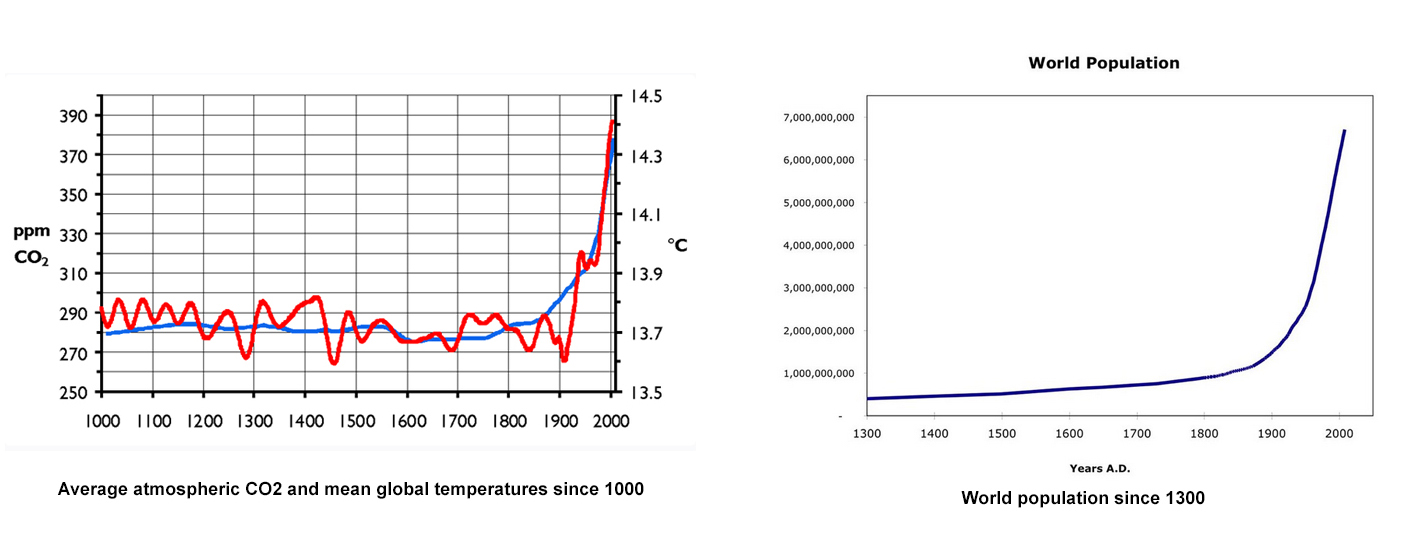
This is most definitely not to suggest that changes in temperature, rainfall, and wind patterns are unimportant; very far from it. But it is to argue that these are caused fundamentally by the twin mantras of economic and demographic growth that have increasingly dominated the world over the last century, rather than by some exogenous notion of climate change. More worryingly, these mantras have been fuelled still further by the unachievable and unsustainable Sustainable Development Goals that have become part of the problem rather than a solution. Contrary to much popular rhetoric, the very dramatic increases in global carbon emissions do not appear to have begun until the beginning of the 20th century, and coincide very closely with increases in world population.[xvi] Put another way, had global population not increased as dramatically as it has done over the last century, then those living here would not have been faced with the impending crisis that we now urgently need to address.
Moreover, and I would suggest more importantly, the emphasis on “climate change” has largely distracted attention from the crucial effort that must be placed on the wider environmental impacts of economic-demographic growth. Climate is but a small part of the physical environment, which includes the lithosphere, biosphere and hydrosphere, alongside the atmosphere. By focusing so heavily on climate, and ways that digital tech can be used to reduce carbon emissions, activists, academics, politicians, business leaders, civil society organisations and citizens alike are missing the bigger picture. The design and use of digital tech is causing significant environmental harms that tend to be ignored in the search for a solution to climate change.[xvii]
In conclusion: a new beginning
This post has contributed to my previous body of work by articulating five main inter-related propositions:
There has been a coalition of interests between those advocating economic and demographic growth, largely reflecting the determinant structures of contemporary global capitalism.[xviii]
This is archetypically reflected in the power of the digital tech sector, which has permeated the UN system.[xix]
The dramatic impact of the digital tech sector on the wider physical environment has been largely hidden by an overwhelming global emphasis on climate change, and ways through which digital tech can reduce carbon emissions.
It is important to understand climate change as a result and not a cause, and therefore focus on doing something about the real causes of climate change (the economic-demographic growth mantra) rather than primarily addressing carbon emissions.
It is essential to understand changes to the climate as but a part of the much wider negative environmental impacts of the coalition of interests underlying the economic-demographic growth mantra.
Are we facing a new era of increasing mass-migration, famine, disease and warfare? Is the economic growth model that has dominated the last century going to consume itself in a falò delle vanità? Might there be less inequality and poverty in the world if there were fewer people and the wealth that was created was shared more equally? Can we imagine a beautiful physical environment that could be created out of the desolate and scourged world we are currently creating? How might digital tech be used to serve the interests of the poorest and most marginalised more than those of the rich and powerful? These questions are all inter-related, and we need to find answers to them before it is too late.
[iii] For a brief history, see http://www.paecon.net/HistoryPAE.html; see also Stiglitz, J.E. (2019) People, Power and Profits: Progressive Capitalism for an Age of Discontent, Allen Lane, and Stiglitz, J.E. (2002) Globalization and its discontents, New York: W.W. Norton & Company
[v] Efforts by the Digital Barons (leaders of major US digital corporations) to extend human life far beyond its present span, such as those by Zuckerberg (see CNET, 2013), Larry Page (founding Calico, an Alphabet subsidiary, in 2013), Jeff Bezos (with his investment in Altos Labs, MIT Technology Review in 2021) and Larry Ellison (founder of Oracle, investing in ageing research, see Time, 2017) to name it a few are deeply worrying, both because only the rich will be able to afford such treatments, but also because they will inevitably mean an even greater population load on the planet; Elon Musk’s reported criticism of such practices (The Independent) is about the only occasion I have ever agreed with him about something!
[vii] See also the raft of activities undertaken by the Club of Rome in 2022 to celebrate the 50th anniversary of the report, https://www.clubofrome.org/ltg50/.
[viii] Which, in case it is unclear from the thrust of my argument, most of them definitely are not.
[xi] See further below on Thomas Malthus; in essence, critics of neo-Malthusianism have suggested that these arguments were overstated and premature, and that technology would enabled very much higher population levels to be sustained.
[xvii] See http://desc.global which is attempting to understand the relative balance between environmental harms and benefits of digital tech.
[xviii] In essence, demographic growth has been co-opted to serve the interests of the private sector (capitalism) in seeking to overcome the tendency towards a falling rate of profit. Put simply, population must grow to provide both an expanded market and more labour to ensure economic growth.
The soundbites from the widely acclaimed success of COP 27, especially around the creation of a loss and damage fund (see UNCC Introduction to loss and damage), made me look once more at the realities of global CO2 emissions to see which countries are actually generating the most CO2, which are improving their performance, and which are suffering most. Sadly, this only made me appreciate yet again that the over-simplifications that occur during so many UN gatherings such as COP appear to be more about political correctness and claiming success than they do about developing real solutions to some of the most difficult challenges facing the world.
The UN Climate Press Release on 20 November summarised the outcomes relating to the fund as follows: “Governments took the ground-breaking decision to establish new funding arrangements, as well as a dedicated fund, to assist developing countries in responding to loss and damage… Parties also agreed on the institutional arrangements to operationalize the Santiago Network for Loss and Damage, to catalyze technical assistance to developing countries that are particularly vulnerable to the adverse effects of climate change”.
Unfortunately, it is not quite as easy as it might seem to validate the claim underlying this that it is the rich countries who do most of the pollution and should therefore compensate the poor countries where the most harmful damages from CO2 occur (see, for example, ThePrint, India; UN News, noting that “Developing countries made strong and repeated appeals for the establishment of a loss and damage fund, to compensate the countries that are the most vulnerable to climate disasters, yet who have contributed little to the climate crisis”; and BBC News, “A historic deal has been struck at the UN’s COP27 summit that will see rich nations pay poorer countries for the damage and economic losses caused by climate change”). How should it be decided, for example, which countries should be donors to this fund, and which should be beneficiaries from it? Pakistan, which led much of the discussion around the need for richer countries to fund the poorer ones, was actually the 27th largest global emitter of CO2 in 2019; China was the largest contributor, and India the 3rd largest.
The Table below, drawing on World Bank data (2022), gives the various rankings of the top 30 countries in terms of CO2 emissions per capita in 2019, and CO2 total emissions in 1990 and 2019, as well as the change in ranking of the latter two columns.
Rank
Country
CO2 metric tons per capita 2019
Country
CO2 total emissions kt 1990
Country
CO2 total emissions kt 2019
Change in rank 1990-2019
1
Qatar
32.474
United States
4844520
China
10707219.7
+1
2
Kuwait
22.022
China
2173360
United States
4817720.21
-1
3
Bahrain
20.266
Russian Federation
2163530
India
2456300.05
+4
4
United Arab Emirates
19.330
Japan
1090530
Russian Federation
1703589.97
-1
5
Brunei Darussalam
16.132
Germany
955310
Japan
1081569.95
-1
6
Canada
15.431
Ukraine
688620
Germany
657400.024
-1
7
Luxembourg
15.306
India
563580
Iran, Islamic Rep.
630010.01
+12
8
Saudi Arabia
15.285
United Kingdom
561770
Indonesia
619840.027
+16
9
Oman
15.282
Canada
538661
Korea, Rep.
610789.978
+6
10
Australia
15.238
Italy
532860
Canada
580210.022
-1
11
United States
14.673
France
356240
Saudi Arabia
523780.029
+11
12
Palau
13.888
Poland
350210
Mexico
449269.989
+2
13
Trinidad and Tobago
12.323
Mexico
269580
South Africa
439640.015
+3
14
Turkmenistan
12.263
Australia
263630
Brazil
434299.988
+6
15
Korea, Rep.
11.799
Korea, Rep.
247680
Turkiye
396839.996
+11
16
Russian Federation
11.797
South Africa
247660
Australia
386529.999
-2
17
Kazakhstan
11.457
Kazakhstan
237250
United Kingdom
348920.013
-9
18
Czechia
9.820
Spain
214950
Vietnam
336489.99
+59
19
Japan
8.541
Iran, Islamic Rep.
198470
Italy
317239.99
-8
20
Netherlands
8.504
Brazil
197900
France
300519.989
-9
21
Libya
8.381
Romania
172630
Poland
295130.005
-9
22
Singapore
8.307
Saudi Arabia
171410
Thailand
267089.996
+11
23
Belgium
8.096
Czechia
150200
Malaysia
253270.004
+23
24
Malaysia
7.927
Indonesia
148530
Egypt, Arab Rep.
249369.995
+10
25
Germany
7.912
Netherlands
148380
Spain
239979.996
-7
26
Poland
7.774
Turkiye
139200
Kazakhstan
212110.001
-9
27
Estonia
7.672
Korea, DPR
123330
Pakistan
190570.007
+15
28
China
7.606
Uzbekistan
117770
United Arab Emirates
188860.001
+16
29
Iran, Islamic Rep.
7.598
Belgium
109310
Ukraine
174729.996
-22
30
South Africa
7.508
Venezuela, RB
101630
Iraq
174559.998
+9
Many important observations can be made from these figures, and I highlight just a few below:
Per capita emissions
The highest per capita emitters are generally those in countries with recently developed hydrocarbon-based economies, such as Qatar, Kuwait, Bahrain, the UAE and Brunei Darussalam, and generally not in the old rich industrial economies of Europe.
Surprisingly, quite a few European countries such as the UK, Denmark and Spain (ranked 52nd-54th) actually lie well outside the top 30 highest emitters
The twelve lowest per capita emitters for which data are available (not shown here) are all African countries.
There are many fewer countries above the world average, at 4.47 metric tons per capita (which would rank 61st) and many more ranked beneath it, implying that the highest emitters are much higher than the lowest are low: Qatar at 32.47, has 28 metric tons per person more than the average; yet, 55 countries have emissions per capita of <1 metric ton.
Total emissions
60% of total CO2 emission are generated by people living in five countries (China, 31.18%, the United States 14.03%, India 7.15%, the Russian Federation 7.15%, and Japan 3.15%). Eleven further countries, all producing more than 350,000 kt CO2 annually account for a further 16.68% of emissions. More than three-quarters of emissions in 2019 were therefore from people in just 16 countries.
Those countries with the lowest total emissions are nearly all small island states (SIDS; not shown in the Table), but note that these were not necessarily the lowest per capita emitters.
The changes in total emissions since 1990 are also very interesting. The highest increases within the top 30 were Indonesia (+16) and Iran (+12), although much higher risers came into the top 30 from below, including Vietnam (+59), Malaysia (+23), UAE (+16) and Pakistan (+15).
These data do not make easy reading for policy makers, campaigners and the UN system as a whole, all of whom like to have simple answers and short soundbites. The world is unfortunately too complex and messy for these. As the world’s popultion passes 8 billion (2.8 times what it was when I was born), population growth is the dominant factor in determining total country-based emissions, but economic growth (following the US-led carbon-based capitalist mode of production) has also played a significant part. The big risers in total emissions are countries with large populations and/or with high economic growth rates over the last 30 years. Neither of these should be surprising. Poor countries, with low economic growth and relatively small populations are never likely to be amongst the largest consumers of energy. Overall, the biggest factor determining total CO2 emissions over the last century, and especially in the last 50 years, has been human population growth (see my recent post on “climate change”). Moreover, there has for long been an intricate and complex relationships between humans and carbon: the carbon cycle and the production of oxygen are essential for human life, and our economic systems have also been driven by carbon as a fuelfor centuries. These complexities make it extremely difficult, if not impossible, to argue that we need to create two groups of countries: one being the recipients of funding (from a loss and damage financial facility), and the other being contributors to it. Instead, we need to work collaboratively together to transform the underying factors causing environmental change, of which CO2 emissions are actually only but a small part.
That is not, though, to say that there should not be much greater global effort to work together to resolve the environmental problems caused by our centuries old carbon-based economy (as well as those caused by so-called renewable energy). It is also completely separate from moral arguments suggesting that there should be a shift in wealth distribution from the rich to the poor. However, these should not be conflated into over-simplistic statements and assertions about responsibililty for climate change, such as those being promoted by UN agencies and mainstream media at the end of COP 27. It is also to reassert that we need to work together with renewed vigour collaboratively across sectors and disciplines to understand better the complex interactions that humans have with the environments in which we live, and then to make wise decisions how to implement them in the interests of all the world’s peoples and not just those of the rich and privileged parts of the world.
The above draft was written on 21 November 2022 (and has been revised slightly subsequently)
In response to the above, Olof Hesselmark kindly asked why I had not added further details also about the spatial distribution of CO2 emissions – something that as a geographer I care greatly about! I responded that I hadn’t wanted to complicate matters further, but also that I guess it was because I am aware in my own mind of these spatial distributions, and the country names (and sizes) are in-built into my consciousness! However, they do add an important additional element of complexity to the discussion, and I am delighted that he has agreed for me to add his slightly cropped map of CO2 emissions per sq km below:
I’m not entirely sure which projection this is, but my preference for such maps is Eckert IV, or other equal area projections such as Gall-Peters or Mollweide that place less visual emphasis on the apparent size of countries in high latitudes. This map nevertheless highlights the varying densities of emissions, with China, Europe and the USA being high, and Africa and Latin America being low. It should also be emphasised that there are enormous differences within countries, as well as between them, with urban-industrial environments generally being much higher in their CO2 emissions than sparsely settled rural ones.
A different perspective once again is thus from the Smithsonian Magazine‘s 2009s map below (carbon emissions from 1997-2010), which does indeed show how a very few areas contribute the largest amount of CO2 emissions.
Side entrance to the UN in Geneva (slightly altered)
COVID-19 has accelerated the restructuring of the global world order that was already underway in the late 2010s.[i] If anyone remains in doubt about this, they might ponder the differences between the ways in which China and the USA were able to respond to the pandemic. They could also reflect on the map of China’s expanding economic reach recently published by the World Government Summit.[ii] This does not mean that one regime is “right” and the other “wrong”; what it does imply, though, is that this is the reality with which individuals and states need to come to grips.
This post explores the extent to which the UN remains fit for purpose, and whether it has the capacity to adjust appropriately to this evolving political economy in the 2020s. An earlier draft was shared with people whose views on these matters I respect, and it has been revised substantially in the light of their recommendations.[iii] A second post will follow focusing on suggestions for how to resolve the issues raised here.[iv]
Context
It is often said that if the UN didn’t exist, the world community would have to create such an organisation, but that it would be very different from the UN we have today.[v] Although established in the aftermath of the global 1939-45 war, with a commitment to maintain “international peace and security, developing friendly relations among nations and promoting social progress, better living standards and human rights”,[vi] today’s UN is largely a product of the neo-liberal,[vii] free-market political and economic establishment that has sought to impose its ideologies, will, and “best practices”[viii] on the world since the 1970s. Few would agree that the (hopefully) noble ambitions of the first 50[ix] countries to sign its Charter on 26 June 1945 have been achieved. There remains an absence of peace and security in many parts of the world, numerous nations are far from friendly with their neighbours, and global inequalities remain hugely divisive.
Despite the efforts of large numbers of very committed and able individuals working within UN agencies, it is time for a fundamental rethink of the structures, agendas, practices and rationale of the UN system.[x] This needs to go well beyond the limited United to Reform agenda launched by the present Secretary General in 2017.[xi] With nine years to go until the end of the UN’s Agenda 2030, now is the time to consider putting in place very substantial structural changes that can make the UN fit for purpose for the middle of the 21st century.
This reflection addresses seven of the most important interconnected challenges facing the UN. These vary in relevance across different UN agencies, but they are especially apparent in the context of the promotion of ICTs as a solution to the world’s “development” challenges.[xii] It is written very much from the perspective of a “critical friend”.[xiii] The comments that follow apply equally to the UN system and Secretariat as a whole, as well as to the practices of its specific specialised organisations, agencies and funds.
Seven Challenges
1. Diversity and power: who runs the UN?
The problem: the UN largely serves the neo-liberal political interests of the USA and its allies.
There has long been a commitment within the UN to appointing officials and staff at all levels from as diverse a range of countries and backgrounds as possible. Nevertheless, challenges remain in the range of countries from whom senior officials are engaged.[xiv] Those with senior roles in the UN do not satisfactorily represent the existing balance of national power or population size in different countries of the world; India and China are considerably under-represented.
It is difficult to gain overall figures for the nationalities of senior officials across the UN system, but data concerning the nationality of those whose duty station is New York starkly illustrates the scale of this problem.[xv] Not only is the UN Headquarters located in the USA (New York), but the number of US citizens employed in these roles vastly overwhelms those from other countries.[xvi] The US has 6.34 places per hundred million people, whereas India has 0.72 and China 0.28. To be sure, China now has four citizens as heads of specialised organisations and agencies (FAO, ICAO, ITU, and UNIDO) and one research and training institute (ITCILO) based outside New York, but the majority of agency heads and senior staff still represent the policies and practices of the neo-liberal free-market governments that have dominated their home countries over the last 50 years. Some UN agencies have also been criticised overtly for being essentially vehicles for the implementation of US policy. The President of the World Bank has thus traditionally always been a US citizen nominated by the US government, and UNICEF has also been subject to such criticisms, [xvii] despite the crucially important work that it does, and the strong commitment of many of its staff to improving the lives of the world’s children.[xviii]
In the face of such US dominance, China has been quietly working behind the scenes to increase its representation and influence within the UN, and its contribution to the overall budget had risen to 12% of the total in 2020.[xix] Feltman has thus suggested that this growing influence of China within the UN is inevitable, and that the US needs to compete actively if it wishes to retain its position as the UN’s most powerful member. [xx] Xi Jinping’s The Governance of China makes striking reference to China’s role as a “major country” and what it needs to do to ensure that it does indeed serve in this capacity globally.[xxi]
2. Leadership: quality and diversity
The problem: the UN does not appoint the most capable and appropriate people to senior leadership positions
There are very capable and well-intentioned people working within the UN system; many of these are committed to using its reach primarily to make the world a better place. However, as in any large organisation, this is by no means true of everyone, and both the processes through which people are elected or appointed into positions of leadership, and the calibre of many of them to provide the vision, energy and management required are often lacking.
Processes of election and appointment to high-level roles in the UN vary between agencies, but when elections are involved they are often hot-beds of political intrigue and reflect the complexities of block-voting and garnering international support for candidates. Whereas some states hold lavish events to support their candidates, others consider that such activities are inappropriate. I have often felt hugely sorry for very able candidates who have worked hard to try to get elected, but fail through no fault of their own – and often in large part through the failure of their own national governments sufficiently to promote them. The net result is that the most competent candidates are not always elected or appointed to the top positions in the UN.
A second challenge is that many candidates do not have the appropriate skills or experience for the roles to which they are appointed. Many are politicians or officials who have not reached the highest positions in their own countries, and yet are still eager to be selected for UN roles so as to find an alternative lucrative way of concluding their own careers. UN posts at most levels are very well-remunerated, and for those who want the opportunity to travel internationally and build high-level personal networks they are indeed an attractive proposition. Whilst the level of scandals of the past within the UN has diminished, as when the head of WIPO was forced to step down early in 2008,[xxii] the UN appointments process still does not always get it right. A classic recent case was the appointment of the first UN tech envoy at the start of 2021. Not only did he admit in one of his first tweets after he had been appointed that he was “a relative newcomer to the field”,[xxiii] but he was placed on leave almost immediately on appointment following complaints about his personal behaviour while previously serving as a UN Under Secretary-General and Special Advisor.[xxiv] Regardless of the rights or wrongs of this specific case, it is surprising that the UN could proceed with such an appointment when it was already known within the system that unresolved complaints had been made against him.
3. Scale and role: a big UN or a small UN?
The problem(s): what size should the UN be; should its agencies aspire to be implementers of development interventions themselves, or should they instead provide guidance and good practices for governments to implement?
The UN was not originally created to “rule the world” or to be a body that implemented “international development”. It was rather intended primarily to maintain peace and security and to enhance friendly relations between nations and their governments. Over time, it has become ever larger, accreting numerous additional activities to its portfolio, and particularly taking on a very wide range of “development” activities, intended to improve living standard and to promote human rights. As its catalogue of failures has increased, particularly with respect to peace and security,[xxv] it has sought to create for itself an even greater role in implementing “development” interventions (see section 4 on the SDGs below).
As the UN continues to grow at a time of increasing financial exigency, its core role must be re-examined and justified.[xxvi] A fundamental question is whether UN agencies should be trying to implement initiatives and projects themselves at scale (a “big UN”), or instead be giving guidance, advice and support to governments so that they can better craft initiatives in the interests of their own people (a “small UN”)? To put it very simply, does the share of the taxes paid by citizens across the world to their own governments and then given to the UN represent value for money, and is it used wisely in their overall interests.[xxvii] Are the transaction costs too high in supporting development interventions through the UN system? In democracies, people can elect new governments; but global citizens cannot elect new UN officials.
A challenge, though, with recommending that the UN should primarily seek to support governments in implementing their own initiatives, rather than UN agencies delivering such initiatives themselves, is that not all governments are trusted by their citizens.[xxviii] Here, I adopt Locke’s principle that people have both a right and a duty to overthrow governments that do not serve their interests. I see the UN’s role therefore as primarily being to help governments indeed improve the services that they offer their people, because neither the private sector nor civil society theoretically have the interests of all of the citizens as their responsibility. It has to be governments who above all have the responsiblilty for reducing inequalities in the countries that they govern.
The UN and its agencies are mandated to undertake activities recommended and agreed by the governments comprising their membership. In some instances there are clear needs for global agreements between multiple countries that will hopefully provide potential benefits for all, as with the international maritime regulations (IMO), the treatment of refugees (UNHCR), managing the world’s radio-frequency spectrum (ITU) or reducing changes to the environment resulting from human activities (UNEP). However, in many other contexts there is not a strong or clear-cut argument for global agreements, and it is not always easy to justify a role for the UN, especially in terms of the implementation of “development” agendas (see section 4 below). It is fundamentally important, for example, to consider whether UN agencies should themselves design, fund and implement programmes such as teaching girls to code across the world, or should they instead use their resources to help governments to design and implement relevant programmes in their own contexts? Should UN agencies run capacity development programmes to train any- and every-one in digital skills, or should they instead use their limited resources to train governments (both politicians and civil servants) to design and implement their own such national or regional programmes more effectively? Answers to these questions are in part dependent on ideological positions, but it would seem that UN-designed and implemented approaches tend to lead to (i) greater dependency of governments and thus peoples on the UN, (ii) less contextually relevant initiatives, and (iii) less value for money than were the UN to focus primarily on helping governments develop better programmes of their own.
4. The failed Sustainable Development Goals (SDGs) and Agenda 2030
The problem: the SDGs have already failed, but the UN persists in their propagation primarily in its own interests, so that UN agencies can claim they are doing something worthwhile.
I have written at length since 2015 about the reasons why the SDGs have already failed, especially in the context of digital technologies,[xxix] and many others are increasingly challenging their rationale and effectiveness. Three issues are particularly important for this critique of the UN system.
First, the SDGs largely serve the interests of those organisations that have designed and promoted them, rather than the voiceless poor and marginalised. In particular, they serve to enable as many UN agencies as possible to have a clear role in their implementation, either individually or collaboratively. Since 2015, most UN agencies have thus prioritised these agendas, and have sought very clearly in their rhetoric to show how they are delivering on specific goals and targets. This has meant that in some contexts attention has shifted away from very important areas that were considered in insufficient detail, or not at all, in the SDGs. The SDGs (and SDG17 in particular) have also become a rallying call through which the private sector can contribute to, and some would say subvert, the global development sector. Once again, the neo-liberal hegemony is serving its own interests in retaining power and influence.
Second, the SDGs focus primarily on increasing economic growth rather than reducing inequalities. They have therefore served the interests of private sector companies, especially large global corporations, more than they have most of the world’s poorest and most marginalised people and communities. The recent increased attention being paid to inequalities, especially during the COVID-19 pandemic is to be welcomed, but it is too little and has not led to a major realignment of the SDGs themselves. Moreover, at least half of the 10 SDG10 (inequality) targets have at best tenuous links with actually reducing inequalities.
Third, the SDGs have spawned yet another industry in terms of the data required to be able to tell whether they have succeeded or not.[xxx] The companies, organisations (including UN agencies) and individual consultants who have developed these tools, created the data, and written numerous reports thereon have certainly benefited from the SDGs. Whether the poor and marginalised in whose name this work is supposedly being done have benefited as much remains to be seen.
5. Duplication, overlap and reinventing the wheel
The problem: the UN system is beset by duplication of effort, overlap, and reinvention of the wheel between agencies, and even in larger agencies between the various silos within them.
Despite the opportunities provided by the SDGs for collaboration, all too often agencies compete with each other for “ownership” thereof, and the central UN Secretariat is also increasingly competing with the agencies mandated with specific responsibilities. In summary, the UN suffer from three man challenges around these issues: it is riven by competition and overlap of effort between agencies, in part driven by the personal agendas of their leaders; there is increasing competition in certain fields between the aspirations of the central UN Secretariat and the UN’s many separate agencies;[xxxi] and all too often these agencies themselves seek to take on activities that others outside the UN system are already doing, often actually much better than the UN could ever do in its present format.
A classic example of this was the work of the UN Chief Executives Board for Co-ordination (CEB) and the High Level Committee on Programmes in 2018 and 2019 to develop and reach agreement between agencies on system-wide strategies for the future of AI, the future of work, and the future of education. UNICEF and UNESCO brought together 21 UN agencies to develop a cogent approach to what the UN needed to do at a system-wide level to enhance the delivery of appropriate and relevant learning and education, and their report was welcomed by the CEB in May 2019.[xxxii] Very shortly thereafter, though, the relatively new DG of UNESCO launched a high-profile initiative on the Futures of Education: Learning to Become, with a “distinguished” Commission to consider inputs received from the various consultation processes.[xxxiii] This was a clear attempt to place the organisation once again very much at the centre of UN work in education, and made no mention of the recent UN system-wide efforts to co-ordinate efforts between agencies more closely. Most of the effort and good will generated in trying to reach a UN system wide approach to the future of learning was dissipated and lost. One cannot but ask “what was the point” of the HLCP and CEB’s work to this end?
Another classic case of duplication and re-inventing the wheel was the creation in 2018 by the UN Secretary General on the High-Level Panel of Digital Cooperation, co-chaired by Melinda Gates and Jack Ma, whose recommendations ultimately led to “his” Roadmap for Digital Cooperation.[xxxiv] The full stories of the machinations behind the creation of the panel and roadmap, as well as the subsequent bizarre appointment process of the Secretary General’s Digital Champion remain to be told (see also section 2 above). Despite the best efforts of the panel’s Secretariat, though, many of the consultations largely repeated discussions that had been held many times before by those involved and added little new to global understanding. Much of the report contains well-known platitudes, and although civil society was involved in the consultations upon which the recommendations were based, the dominant voices were largely those of governments, UN agencies and the private sector. Paradoxically, whilst its overt aim was to enhance digital co-operation, in practice it also served as a means through which different UN agencies could claim primacy in various areas of the digital agenda, not least as expressed through their roles as “Champions” in the Roundtable discussion (as with the ITU and UNICEF on global connectivity, UNICEF and UN Global Pulse on Digital Public Goods, UN Women on digital inclusion and data, or OHCHR on digital human rights). It remains to be seen whether the emerging architecture of this agenda will indeed enable greater co-operation or instead lead to greater division within the UN system on matters digital, but six months after the newly appointed technology envoy was put on administrative leave there remains little leadership and direction. Perhaps its main outcome will have been its efforts to revitalise the Internet Governance Forum (IGF) as something other than merely the talking shop that it was originally designed to be.
6. Scale and Finance
The problem: the UN’s ambitions go well beyond the budget available to fund them.
The increasing aspirations of UN agencies come at a time when budgets are tight and many donors are reluctant to increase funding because they believe that other organisations can deliver better results, especially with respect to development outcomes. The UK Multilateral Development (formerly Aid) Review thus warned in 2016 that funding for the FAO, IOM and UNESCO was at risk unless their performance improved, having already ceased core funding to UNIDO, ILO, UNISDR and UN Habitat as an outcome of its previous review in 2011.[xxxv]
Consequently, UN agencies have increasingly turned to other sources of funding, particularly from private sector companies and global corporations, but also in some instances from individual donations, as with UNICEF. Some of the implications of this are addressed in section 7 on partnerships, but it is important here to note that all too often staff in UN agencies see the private sector primarily as a source of funding the initiatives that the agency wants to implement, rather than truly benefitting from a company’s specific industrial or technological expertise, their business acumen, or their management strengths. This is particularly so in initiatives linked to digital technologies. If a company’s business model is not sustainable, then it will go bust; companies therefore have much to contribute to an understanding of sustainability within the context of the SDGs. The private sector of course has immense value in driving economic activity, and can contribute hugely to appropriate development interventions. It is just that its real strengths are rarely appreciated by most of those working in and for UN agencies.
The increasing need for funding to boost the aspirations of the leadership of UN agencies, linked in part to their own personal ambitions, but also the mandates that they negotiate with their member states, gives rise to potential conflicts of interest for the UN. Many governments also see the involvement of private sector companies in their own countries that have been developed through liaison with UN agencies as a way to deliver their own agendas, which are not always exclusively in the interests of their people, and especially the poorest and most marginalised. Governments also do not always fully appreciate or account for the financial risks in taking on large loans for “development” projects be they from China, the World Bank, or the USA.
It must therefore be asked whether the UN and its specialised agencies should actively be seeking to increase funding through sources other than national government regular member contributions, or whether they should cut their coats to suit their cloth? After all most UN agencies were never intended in origin to be implementers of development interventions. A strong argument can therefore be made that if UN agencies were indeed truly serving the needs of member states, then members should indeed fund them to deliver those needs.
7. Partnerships and the restructuring of global governance
The problem: the SDG agenda, the lack of UN funding, and the opportunistic behaviour of many global corporations mean that the private sector has been able to subvert the UN’s global governance structures in its own interest.
I have written much previously about the potential and challenges of partnerships with the private sector and civil society in international development,[xxxvi] and I remain committed to their positive potential. The reality, though, is all too often that they work primarily in the interests of private sector companies, despite their usual claims that they are intended to benefit the poor and marginalised.
In a comprehensive and hugely prescient 2007 review of the potential of partnerships in the context of the UN, Jens Martens highlighted seven governance concerns relating to its growing trend of partnerships with the private sector:[xxxvii]
These predictions have all come to pass to a greater or lesser extent, and what is of most concern is that few global leaders seem to consider any of them to be a real problem. The advocates of neo-liberalism and those promoting the ever-increasing role of the private sector in national and international governance, at the expense of states, seem to have achieved their objectives, subtly and surreptitiously behind the scenes. The rise to power of the private sector within the UN system over the last 20 years is quite remarkable, and this is especially so with respect to digital technologies and the pharmaceutical sectors.
The prominent emphasis on partnerships within the UN system has also had practical problems, notably the lack of transparent and effective partnership structures, and confusion over the concept of mutistakeholderism. On the first of these, it is remarkable how many, often widely-acclaimed “partnerships” or coalitions within the UN are based on at best flimsy partnerships structures. The UN Global Compact[xxxviii] can claim to provide a mechanism through which companies can support the UN, but it remains voluntary, and few individual agencies have their own internal structures and agreements about how they should engage systematically and rigorously with partners. It is well known, not least through some of the excellent work of the World Economic Forum,[xxxix] that a rigorous and comprehensive framework must be created early on for a partnership to have any chance of success. Sadly, failure to design such comprehensive frameworks beforehand means that all too often UN partnership do not achieve what they set out to do, and even sometimes what they claim to have done.
There are also fundamental problems with the notion of multistakeholderism,[xl] since different people and organisations define it in varying ways. While it is usually taken to mean partnerships that in some way involve governments, the private sector and civil society, the word itself only really means that many stakeholders are involved. Frequently, this is little more than subterfuge, moving away from the increasingly discredited notion of Public-Private Partnerships (PPPs), but still focusing mainly on the interactions between the private sector and governments, through co-opting favourable others (from civil society or academia)[xli] within them. Partnerships that combine civil society on equal terms with governments and companies, are much better termed “multi-sector” (reflecting the three sectors).[xlii]
In conclusion
Most people in the world have little if any understanding of what the UN is, have never heard of most of its agencies, and are completely unaffected by its actions.[xliii] The arguments for a small, efficient and highly focused UN system would seem to be powerful in the face of such criticisms.[xliv] The diversity of interests represented by national states and regional blocks requires a competent, and highly professional organisation for mediation and the sharing of good practices in the interests of global peace, harmony and well-being.
This reflection has highlighted seven of the most pressing and interconnected challenges affecting the ability of the UN system to function effectively, especially in serving the interests of the vast majority of the world’s people, and also particularly in the context of the use of digital technologies. In summary, these are:
The UN does not serve the interests of the majority of the world’s people, and needs to be restructured so that it does.
It has grown haphazardly and surreptitiously in its own interests so that it is now far too big and ambitious, but has neither the funding nor the capacity to deliver its agendas effectively.
The SDG project and Agenda 2030 largely serve the UN’s own interests, has already failed, and will achieve little in reducing the inequalities that are all too prevalent across the world.
There is an immense amount of waste within the UN system, with an excess of duplication, overlap and reinvention of the wheel; the world’s poor can ill-afford such excess.
A large UN is living beyond its means, and has thus increasingly had to turn to other sources, and especially the private sector, for funding.
The consequent loosely defined “partnerships” that have been constructed, subvert the UN’s governance structures and have increasingly led it to serve the interests of the rich and powerful against the poorest and most marginalised.
Finally, with some notable exceptions, the quality, experience, expertise and diversity of leadership within the UN system are not appropriate for the tasks that it has taken upon itself.
In essence, the neo-liberal hijacking of the UN system has made the UN part of the problem rather than part of the solution. It is time for change. Part Two suggests some of the radical changes that need to be made for the UN to become the sort of organisation that many of its employees hoped that it could be when they joined it, and that the 7.9 billion people of the world urgently need to avoid the many crises that continue to beset us all.
[iii] Among the many piece of helpful advice were suggestions: to shorten it; to tighten the argument around fewer key issues; to refer overtly to “corruption” (a word with which I have problems as discussed in this piece); to tone down some of the language, so that the audiences it is intended for may be more prepared to listen (my earlier suggestion that the UN was bloated did not go down too well; however, I had not even referred to the USA as being neo-imperial in the first draft); to clarify use of terms such as “neo-liberal”; and to justify the focus on governments, when many of these are seen to be problematic. I have tried to do all of these, and remain grateful for everyone’s comments.
[iv] Parts one and two will be available to download separately in.pdf format once completed.
[vii] By the term neo-liberalism, I refer to market-oriented reform intended to enhance free-market capitalism and the reduction of state influence in the economy and society. While this is a term that I deliberately continue to use to refer to changes that took place initially in the USA and Europe from the 1970s onwards, I recognise that it is less popular among many academics and politicians in the USA. I use the term explicitly to argue that neo-liberalism should be replaced by greater state control and regulation in the interests of the poorest and most marginalised, so that global inequalities fostered by neo-liberalism can be reduced.
[x] I have many hugely able and committed friends who work within the UN system, and have great admiration for the work that they do. This commentary should in no way be seen as a personal criticism of them, but is rather an account of the structural challenges that they face in trying to fulfil their aspirations of a better world.
[xii] My observations are all grounded in practice, and friends and colleagues will recognise the details of some of our shared experiences, although they are presented here in a generalised form so that specific institutions or individuals can usually not be identified. I hope that they are taken in the constructive sense in which they are intended. Where relevant, references to other works that have referred to the matters addressed are also included in footnotes.
[xiii] Although, as although as Chairholder of a UNESCO Chair some might say that I have indeed been within the system since 2007!
[xiv] While some recent progress has been made with respect to gender, the UN is also poor in terms of the inclusion of people with disabilities within its constituent bodies. It was thus a very real pleasure to meet some years ago with W Aubrey Watson, who was appointed in 2014 as Antigua and Barbuda’s Permanent Representative to the UN, the first ever person with a declared disability to hold such a role. See https://www.who.int/bulletin/volumes/94/2/16-030216/en/.
[xvi] The scale of this problem is reinforced when countries with smaller populations are also included, and it is salient to note that many European countries such as France, Germany, Italy and Norway each have four such officials, with Sweden having five and the UK seven; Canada has ten such officials.
[xxv] Some might seek to claim otherwise, but the continuation of widespread war and violence into the 21st century, from the Gulf Wars, to Afghanistan, Syria, North Africa, Yemen, Mozambique and Ethiopia suggests that whilst there have indeed been no major global wars to compare with the 1939-45 war, the UN has failed to bring peace and security to many millions of people.
[xxviii] I dislike using the word “corruption”, which commentators on an early draft suggested I should raise here. Often, the word “corruption” seems to be used to disparage others, when actually it refers merely to a different moral framework to that of the person using the word. Many bankers and government officials in north America and Europe are in this sense as corrupt as officials in other parts of the world who believe it is right to give their family members jobs once they are in positions of power. This probably reflects my antipathy towards universalism, and my celebration of diversity and relativism.
[xxxi] This is also a notable problem within the Commonwealth, where the Commonwealth Secretariat instead of collaborating constructively with the leading Commonwealth Associated Organisations, often seeks to compete with them, frequently reflecting the personal agendas of staff in the Secretariat.
[xxxvi] See,for example, Unwin, T. (2015) Multistakeholder partnerships, in: Mansell, R, and Ang, P.H. (eds) The International Encyclopedia of Digital Communication and Society, Chichester: John Wiley & Sons, and Unwin,T. (2017) Reclaiming Information and Communication Technologies for Development, Oxford: OUP.
[xxxix] Unwin, T. and Wong, A. (2012) Global Education Initiative: Retrospective on Partnerships for Education Development 2003-2011, Geneva: World Economic Forum
[xli] Given that most universities are now in effect businesses, I prefer to see them as falling within the private sector rather than as separate sector.
[xlii] Although within the UN system (such as UNESCO) the term sector is often used to describe the different parts of an agency and is thus deemed to be inappropriate to be used to refer to partnerships.
[xliii] With reference to the UN’s flagship SDGs for example, a 2020 survey by YouGov in the UK suggested that 56% of people in Britain were not at all aware of the targets, while 27% had heard of them but were unfamiliar with what they involve.
[xliv] The UN’s own survey in 2020 for UN75 (https://www.un.org/sites/un2.un.org/files/un75report_september_final_english.pdf) suggested that 60% of respondents believed the UN has made the world a better place, but more than half see is as remote from their lives. Although more than a million people across the world contributed, the survey design itself was problematic.

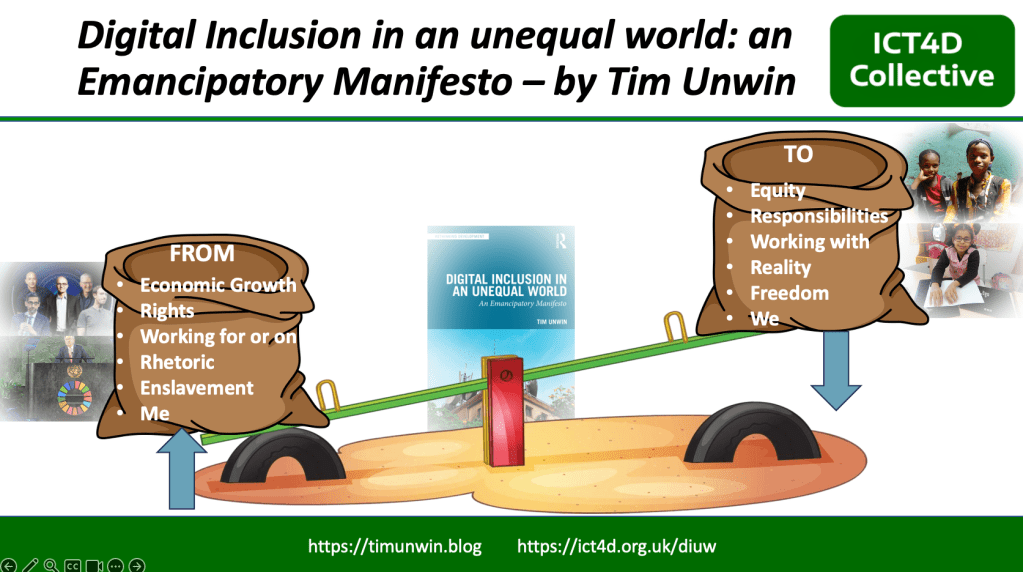















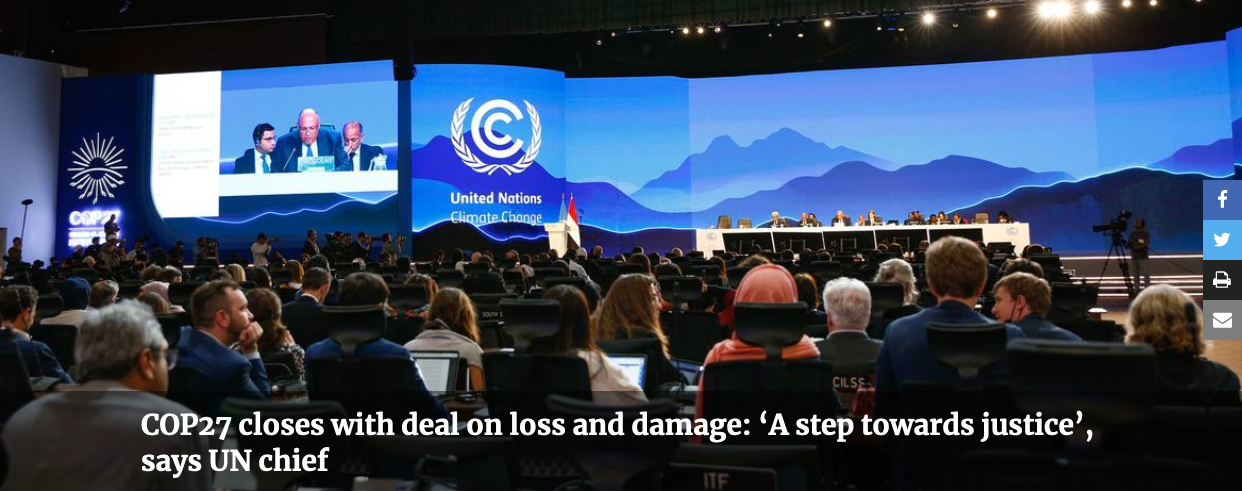

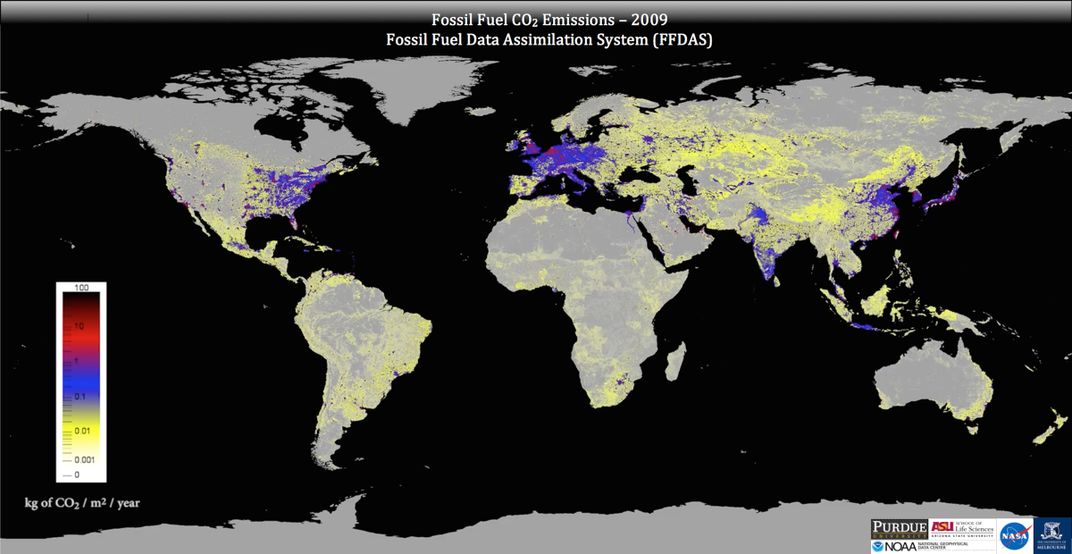

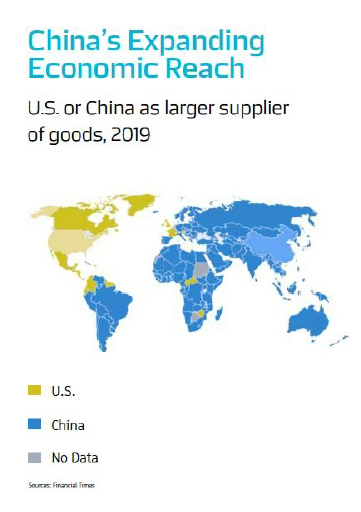

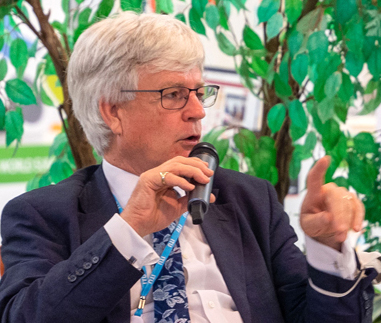

 Tim Unwin's Blog