Category Archives: capitalism

Digital Inclusion in an Unequal World: An Emancipatory Manifesto

I’m delighted to announce the launch of the web-pages for my new book, entitled Digital Inclusion in an Unequal World: An Emancipatory Manifesto, being published by Routledge in 2026. These contain:

Podcasts and audio

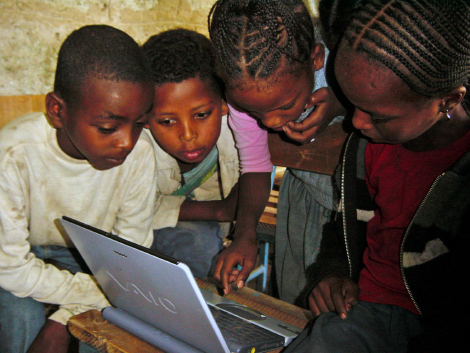
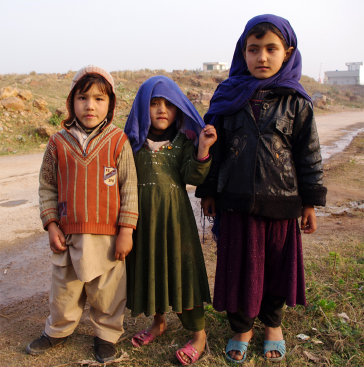
Many of the authors have contributed audio recordings of their vignettes. These are available here, but are also being shared on a regular basis through the ICT4D blog and podcast over the next six months. Do follow the ICT4D Collective on Apple Podcasts to listen to these inspiring examples of how digital tech can be used constructively by some of the world’s poorest and most marginalised people, but also the reasons why most such initiatives fail sufficiently to serve their interests.

Pre-order

The book can be pre-ordered from Routledge using the link above, and for those who respond quickly there is a 20% reduction if you order before 23rd October 2025.

2 Comments

Filed under capitalism, digital technologies, emancipation, Empowerment, ICT4D, inclusion, Inequality, United Nations

“The Bill Gates Problem…” by Tim Schwab

Whenever I mention my criticisms of Bill Gates and the Bill & Melinda Gates Foundation, I am usually met with quizzical looks, and in some instances by downright disbelief. Now I know I am not alone. Tim Schwab’s really excellent new book The Bill Gates Problem: Reckoning with the Myth of the Good Billionaire (Penguin Business, 2023) provides a detailed and rigorous account of why we all need to be concerned about the harm caused by Gates, and others like him (those I frequently refer to as The Digital Barons). It is essential reading for anyone who has received, or is considering applying for, funding from the Gates Foundation. Although the book is not without its problems, and it should be noted that the right wing (and digital) press has been far less generous than I am about it (see, for example, reviews by Ben Wright and David Enrich), it is a timely and salutary account of why Gates’ work has been so hugely problematic for “international development” and in particular for the lives of the world’s poorest and most marginalised communities.

I have long been critical of Gates, but have only occasionally written or spoken in any detail about the reasons for this. The publication of Schwab’s book provides a catalyst for me to articulate my own concerns, and compare them briefly with some of Schwab’s very apposite observations.

A problem with Microsoft

I confess that I have never particularly liked Microsoft’s products, and ever since the mid-1980s I have always purchased Apple devices and software (apart from also using Linux and Open Office). Originally, I think this was probably because I was beguiled by the slightly anarchic image of Apple’s products at that time, and because they just seemed easier and more intuitive to use. I have so often found Microsoft’s products (especially software such as Excel, Sharepoint and Teams) to be so clunky and counter-intuitive! To be fair, I increasingly now also have serious concerns over Apple’s business model, especially with respect to their environmental impact, right to repair issues, and cost, but I must be open about my early bias against Microsoft. That having been noted, I nevertheless retain some very good friends who have worked, or are indeed still working, within Microsoft.

My main criticisms of Microsoft in the 1980s and 1990s tended to be at quite an abstract level: that it seemed to be trying to create a global monopoly of operating systems and generic “office” software; that it was proprietary and “closed”; that it was too expensive for the world’s poorest to use (which is why there were so many pirated versions of its software in circulation across the world); that it was primarily a sales-led company; and that it was generating very large profits, often at the expense of those who could little afford it. These profits provided the foundation for Gates’ enormous wealth. To put this into perspective, Gates’ total net worth according to Forbes in 2023 was around $134 billion, although the actual amount he has earnt from Microsoft is impossible to calculate. According to the World Bank, only 60 countries in the world in 2022 had an annual GDP of more than this. Gates’ total wealth was about the same as the annual GDP produced by Morocco in 2022, and was more than that of countries such as Ethiopia ($127 billion) and the Slovak Republic ($115 billion), let alone the remaining 140 countries of the world who generated very much less.

At a more theoretical level, my intellectual background in Marxist theory, the Critical Theory of the Frankfurt School (especially that of Jürgen Habermas – see my The Place of Geography, 1992), my commitment to reducing global inequalities, and my concerns with the increasingly dominant power of US Imperialism (and “American Exceptionalism”) all no doubt also helped to shape my opinions about Microsoft.

In the early 2000s, I had the privilege to lead Tony Blair’s Imfundo initiative based with the UK’s Department for International Development (DFID), which was charged with creating partnerships to use ICTs for education in Africa. This brought me face to face in a very practical way with the harsh realities of the enormous inequalities that exist across the world, and how digital technologies might be used to reduce these. Microsoft’s business model did not sit well with our practice, and guided especially by my colleagues Bas Kotterink and Jason Monty we became proud advocates of Open Source “solutions” and the use of thin client Linux systems in Africa. I fondly recall the energy and enthusiasm of people such as Ed Holcroft (NetDay) and Shafika Isaacs (SchoolNet Africa) who contributed so passionately to this work, and also the commitment of private sector companies such as Cisco, Virgin and Marconi who seconded staff to work with us. Since my earliest research in rural India in the mid-1970s I had argued that “development” should be more about reducing inequalities than about increasing economic growth. My work with Imfundo convinced me even more of this “truth” (see my No end to poverty, 2007).

Working in DFID at that time also made me acutely aware of changes taking place in the global structuring of Official Development Assistance (ODA), particularly the role of Poverty Reduction Strategy Papers (PRSPs; see IMF and World Bank, 2001), and the Paris Declaration, (2005) and Accra Agenda for Action (2008) (see OECD). I felt that things were beginning to change, and that the global donor community was at last repositioning itself to try to work collaboratively with, and more in the interests of the world’s poorest countries. I have absolutely no doubt that many of the then senior leadership team within DFID believed in this agenda. Hence, I could not help but feel that private foundations that could do what they wanted undermined the ongoing global efforts towards responding to the real needs of poor people and countries, rather than imposing our own ideologies and practices on them. The Bill & Melinda Gates Foundation (created in 2000 from the merger of the William H Gates Foundation formed in 1994 and the Gates Learning Foundation) was thus hugely problematic to me in its conceptualisation. Whilst I can understand the founders’ desire to do something different about poverty and try to overcome many of the long-standing problems of “aid”, it struck me that to create what seemed to be a parallel system was only going to make matters worse. From talking with colleagues at DFID working in the health sector, I also became all the more convinced of these distortions through the negative impacts of Gavi, the Vaccine Alliance, that had been created in 2000 with substantial support from Gates.

Meeting Bill Gates

In 2009 I had the opportunity as part of a small group of people working in the field of ICTs and development to meet with Bill Gates. I remember greatly looking forward to this opportunity to discuss some of my experiences with him, to explore why he had not yet really supported the use of digital tech in “development”, and to try to persuade him of the potential for Microsoft to use its considerable expertise to do “good” in the world through digital tech. Most of the people at the meeting seemed to be completely in awe of Gates. Perhaps my own enthusiasm at this opportunity served to fuel the sense of disillusionment and disappointement that I felt afterwards. 

He was so arrogant; he did not brook any real discussion. He swiftly closed down any attempt to engage in critique. He just wanted us to accept what he said as being “the truth”. He conveyed the impression that because he had been successful in business it was only right and proper that he should know how to solve poverty. He seemed to know very little about the actuality of the lives of the world’s poor. He implied that he had a right to try to change the world in his own image because of his success and wealth. He appeared to have no comprehension at all that digital tech drives global inequalities and its use can cause immense harm. In short, I found the brief meeting to be extraordinary and disappointing. 

Despite this, having heard that he was an avid reader, I remember arranging for my recent edited book on ICT4D to be sent to him in the naïve expectation that he might read it and learn something. Unsurprisingly, I never heard back…

I have often thought about this encounter, not least because it fundamentally influenced my subsequent attitudes to both him and his Foundation. At the centre of my concerns was that Bill Gates is funding development practices based primarily on his own (flawed) vision of the economic growth model, with apparently little understanding of the impacts that this has on inequality and its negative effects on the lives of many of the world’s poorest people – especially with respect to the use of digital tech. I was therefore delighted to read such similar thoughts in Tim Schwab’s critique in The Bill Gates Problem (pagination from 2023 Penguin Business edition):

  • The Foundation is “… an institution that thrives on the grotesque economic inequalities that govern the globe, that counts on the rest of us to be too poor or too stupid to say no to its largesse” (p.18).
  • “Why have we allowed Bill Gates to take so much power from us for so long”? (p.19).
  • “The simple fact is Bill Gates doesn’t have expertise, training, or education in most of the topics where he asserts it” (p.127).
  • “While Bill Gates is widely celebrated as the most generous man on earth, during his tenure as the world’s leading philanthropic donor, he has managed to nearly double his personal wealth” (p.178).
  • “Bill Gates’s public persona is very much wrapped up in his identity, as a businessman and then as a philanthropist. But underpinning his success, in Gates’s own mind, is his superior intelligence” and “most journalists have embraced the Gates-as-genius narrative” (p.202).
  • “Giving away money is not supposed to magnify the asymmetries in power that govern society, but to collapse them. And this is precisely why, in many respects, Bill Gates mght be better described as a misanthrope – if he does not hate his fellow man, then he certainly views himself as superior” (pp.242-3).

These are just a tiny sample of the content and style of Schwab’s critique, but based on my brief conversation with Bill Gates, and listening to some of Gates’ wider rhetoric, they resonate completely with my own experience and understanding. To be sure, Schwab does not sufficiently justify his own position, and has been widely criticised for his anti-capitalist stance, for his claims around neo-colonialism, for over-generalising based on scant evidence (despite the book’s 104 pages of detailed supporting notes), and above all for not proffering an alternative vision for the future. I would also add to these criticisms that the book is written very much from a USA’n perspective in which the voices of the world’s poor are largely, although not completely, absent. However, this was not his point in writing the book, which was above all else to lay bare some of the evidence and contradictions concerning Gates’ life, his business tactics, his political influence, his philanthropy and his exercise of power without accountability.

And the Bill & Melinda Gates Foundation

The Gates Foundation has been built largely on Bill Gates’ own ideology, experience and practice, and it closely reflects his own approach to business and power. I have always found it difficult to accept the comments from people I have spoken with who work in or near to the Foundation who deny this, and who claim that Gates only provides the funding and lets them get on with delivering the development. It was therefore very refreshing to read Schwab’s detailed account of the ways through which Gates does indeed influence the policies and practices of the Foundation. At the most basic level, people who are critical of the approach and style of Gates and his Foundation are unlikely to apply to work there, let alone be appointed. However, even I was surprised at the extent of Schwab’s revelations about the levels of secrecy and control that pervade the Foundation for those who are indeed employed there. A real problem for anyone wanting to find out about the Foundation is that so few people are willing to speak truthfully on the record about it, and it may be that not everything Schwab suggests is therefore recognisable to its employees, or to those who are so eager to accept its funding. However, the overall thrust of his argument again seems to accord with my own experiences and those of people I know who have worked with the Gates Foundation.

The most important issue for me is the way that the Gates Foundation seeks to provide direction, or control, over the individuals and organisations that it funds. However, it is not a sine qua non that all foundations should necessarily behave in the same way. One of the potentially valuable things about non-governmental funding (be it through foundations or charitable trusts) is that it can be a bit anarchic and its recipients need not necessarily be tied by the parameters and reporting mechanisms required through tradiutional bilateral aid systems. Mackenzie Scott (former wife of Jeff Bezos of Amazon fame), for example, has a notoriously hands-off, trust-based approach that has raised many eyebrows amongst traditional philanthropists, in part because of her aversion to micromanagement (Candid, 2023; the Chronicle of Philanthropy). Her style is very far removed from that of Bill Gates.

I have often thought that the Gates Foundation is a bit like like a virus that gets inside an organisation in which is it interested, and then seeks to control it. This comparison has always struck me as being appropriate, not least because of the Gates Foundation’s strong support for vaccines and several of the large pharmaceutical companies. I have never therefore sought funding from Gates, and one of the reasons why I resigned from my role as Chair of the Intellectual Leadership Team and Non-Executive Director of the DFID and World Bank funded EdTech Hub in 2019 was because the Gates Foundation was also about to become one of its funders. I saw the writing on the wall, and was not willing to be party to this decision.

In conclusion: please never accept funding from the Bill & Melinda Gates Foundation

I have written this post for two main reasons: first to encourage others to read Tim Schwab’s accomplished book to help them make up their own minds as to whether or not Gates is indeed a “good billionaire”; and second to try to encourage anyone thinking of applying for funding from the Gates Foundation to think again. In a very practical sense, the best way to decompose and decapacitate the Gates Foundation is to refuse knowingly to accept its funding. I add the word “knowingly” because it is often difficult to tell exactly where research funding comes from. This will be difficult for many organisations and researchers because of the extent that they already rely upon the Foundation for support. But is not that itself an indication of how dangerous the Foundation actually is? The Foundation will cease to exist in its present form if no-one is willing to accept its tarnished money. Do we really want a world built in the image of Bill Gates? If not, we need to work consciously and assiduously to undermine what the Foundation is trying to do, and take apart the power structures that it has created. Above all we need to forge a new development discourse built around reducing inequalities rather than maximising economic growth.

Let me leave the last word to Tim Schwab with the closing words of his book:

Billionaire philanthropy, as practiced by someone like Gates, preys on our cultural biases to disguise its influence. It makes us believe that a billionaire’s giving away his vast fortune is an unimpeachable act of charity that must be exalted, rather than a tool of power and control that must be challenged.

Tim Schwab (2023) The Bill Gates Problem: Reckoning with the Myth of the Good Billionaire (Penguin Business) p.362.

9 Comments

Filed under capitalism, Development, ICT4D, ICT4D conferences

Reflections on slavery: past, present and future

This reflection[i] has three main purposes:

  • to emphasise the long and diverse history of slavery across the world, and to highlight its differing historical expressions and complexities;
  • to recognise that we cannot change the past nor know the future with certainty, and can only act in the immediacy of the present; and
  • above all, in the light of the above, to encourage us all to do much more now to eliminate the scourge of modern slavery.

Context

It is easy to say or write that slavery is fundamentally wrong because of the loss of freedoms and violence usually[ii] associated with it.  It is far more difficult, though, actually to do something constructive about eliminating slavery at the only time over which we have any control, the present.

Source: https://www.reuters.com/world/uk/uk-blm-protesters-acquitted-over-pulling-down-slave-trader-statue-2022-01-05/

The Black Lives Matter and associated anti-slavery protests in the UK in 2020 raised many questions (see image above). I was particularly challenged, for example, by the emphasis of those protesting on the past rather than on contemporary slavery.  The majority of banners likewise seemed to highlight the wrongs of past slavery more than they did the wrongs of present slavery.  My reflections here seek to grapple with why this was, and why it remains so.[iii]  In the years since, there has been much more visible concern in Britain over reparations for past slavery, especially relating to the 18th and 19th centuries, than there has been real action to eliminate contemporary slavery: statues of people who had once been slave-owners have been torn down; streets have been renamed; universities, such as Manchester  and Cambridge that have benefitted from donations from people who gained from the  slave trade have undertaken enslavement inquiries; and institutions such as the National Trust have published reports on their links with historic slavery. 

In part this is because of the overlapping interests between the Black Lives Matter movement and those protesting against slavery.[iv]  However, slavery matters in its own right; it is not just a racial matter.  In this piece I therefore seek to disentangle the issues of slavery and racism.[v]  I want to focus primarily on slavery rather than race.  I fully recognise that the two are often intertwined, and there are good reasons why people feel strongly about this intersection, but here I focus on broader issues relating specifically to slavery, and how we respond to the past.  I begin with some personal reflections on the origins of my own interest in slavery, and then provide a short conceptual framework that includes a note on definitions of slavery, before highlighting what I see as some of the most difficult and problematic issues concerning slavery past, present and future.  My purpose is to encourage us to shift our focus from the past about which we can change nothing, to the present where we do have the option to do something.

My interests in slavery

I have long been interested in slavery, from my days as a boy reading the Bible about the unfairness of Joseph being sold into slavery (Genesis 37) and my difficulty in trying to reconcile my own emerging moral views about slavery with some of Paul’s comments on slaves being obedient to their masters (Ephesians 6, Colossians 3, 1 Timothy 6, and Titus 2).  However, I have taken a much more serious and academic interest in slavery since the mid-1970s.  Three factors have been particularly important in helping to shape my current understanding of these issues. 

  • First, my doctoral thesis in historical geography written in the second half of the 1970s focused in large part on the changing economic and social structures of medieval Midland England.  I was fascinated to learn that slaves could sometimes have had better lifestyles than villeins within feudal society.  In this I was heavily influenced by the writings of Marc Bloch (both his seminal La Société Féodale first published in 1939, but also in essays that have recently been collated under the title Slavery and Serfdom in the Middle Ages) and in the historical records with which I was working.
  • Second, some 20 years ago I encountered modern slavery in England for the first time as I sought to support someone who was trying to rescue a person who had been forced into slavery on their arrival to work in our country.  This opened my eyes to the widespread existence of modern slavery in many parts of the UK, and it continues to haunt me as I continue to see such slavery within the country that I call home. 
  • Third, my experiences working in Africa during the last 20 years have inevitably forced me to confront issues of colonial history and slavery, especially in Sierra Leone and Ghana.  Despite its fraught history both as a Crown Colony until 1961 and then as an independent state since, Freetown and Sierra Leone always cause me to think about the potential for freedom in the human mind and the abolition of slavery;[vi] it is also salutary to recall that it is the home of Fourah Bay College which was founded in 1827 as the first western style university built in Sub-Saharan Africa.[vii]  I like to think that there is a connection between freedom and knowledge.

Freetown, 2009

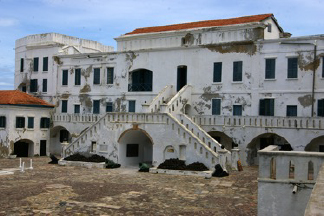
Likewise, I have many fond memories of working in Ghana.  A visit to Cape Coast Castle in 2008, though, remains etched in my mind because of one very specific conversation that I had there while visiting the Castle and Dungeon.  Initially the castle had been established as a small fort by the Swedish Africa Company in the middle of the 17th century, and it later became one of the most important “slave castles” along the former Gold Coast.  Watching a group of European women who were very upset by what they saw, one of my close Ghanaian friends commented that he never quite understood why many Europeans became so emotionally distressed when visiting the castle.  I was initially perplexed, but he went on to say that, after all, it was the African people living in the surrounding areas who had sold their awkward cousins and uncles, or people captured in conflicts as slaves to the Europeans in return for guns and other items that they wanted. Slavery had long been a way of life in the region, and had most definitely not been introduced by the Europeans.  His matter of fact comments challenged much of what I had previously rather taken for granted about the Triangular trans-Atlantic slave trade.[viii]  This trade was undoubtedly coercive, violent and exploitative, but its transactional character and the collaboration of African communities who were willing to sell other Africans for a price to European slavers needs to be recognised in any discussion of this particular expression of slavery.[ix] 

Cape Coast Castle, 2008 (as rebuilt by the British in the 18th century)

On concepts and definitions

I have long enjoyed reading Onora O’Neill’s inspirational philosophical writings (see especially the collection of essays published as Justice Across Boundaries, 2016), and have found that many of my own ideas coincide quite closely with hers, especially around obligations, rights and justice (although I have tended to focus on the notion of “responsibilities” rather than “obligations”).  In particular, she highlights the difficulties that arise in discussing the rights to compensation for actions in the distant past that are widely considered to be wrong today. Her work is well worth reading at length on this topic; I frequently return to it for clarity on these difficult issues.  What follows is in part sparked by reflections on slavery in the contexts of these wider philosophical and conceptual debates.  Three challenges seem particularly important.

  • First, no individual has any effective power over what her or his distant ancestors did in the past.  If they have no power to change the past, what are their responsibilities? We might have had some influence on our own parents’ actions, and those who have known their grandparents might also have had a little influence on their lives.  However, we cannot have had any actual influence on the lives and actions of those we never knew.  If we have had no such influence, can we have any responsibility for their actions in the past?  If we have no responsibility for those actions, why should we be criticised and condemned by others for the actions of our ancestors (individually and collectively)?  These are real challenges in the context of slavery.  It is not easy to clarify the logical reasons why the descendants of slave owners (and institutions they benefitted) should have received the opprobrium that has been cast on them by many of those today condemning slavery.  This is regardless of how one might “judge” (itself a very problematic notion) those who were children of slave owners, but who argued vehemently for abolition in the 18th and 19th centuries, or even those who had owned slaves but then championed abolition.[x]  Even John Locke, widely seen as being one of the founders of liberal democracy, has recently been savaged by historians and others because of his role in administering the British colonies in North America in the 17th century where slavery was widely practised.[xi]
  • Second, there are profound difficulties in “judging” the past by the standards of the present.  As Hartley wrote in The Go-Between (1953), “The past is a foreign country: they do things differently there”.  All societies evolve and change, but they all have mechanisms through which the few rich and/or privileged extract a surplus from the many poor and exploited (Karl Marx’s modes of production remain a powerful theoretical model of such change; for Marx and Engels, slave society was the earliest form of class society).  There are, though, many conundrums within the idea of “criticising” past societies, not least because our present societies have emerged from them, and would be different if they had not existed. There is nothing we can do about changing past societies.  Hopefully our present societies have evolved positively and are better than those of the past, although this is by no means always so!  The key thing is that we need to learn the lessons of history; we need to understand the past so that we do not make the same mistakes our ancestors made then and there (at least as “judged” by our own societies).  “Now” is the only time when we can actually do anything, and the choices we make in the present need to be made in the light of the past so as to help make a better future.  As Tolstoy (1903) wrote in his short essay Three Questions, “Remember then: there is only one time that is important – now! It is the most important time because it is the only time when we have any power”.  Such reflections also force us to consider how future generations will perceive our own actions.  How, for example, will they consider our ineffectual efforts to abolish modern slavery?  Might they see our enforced addiction to digital tech as but another, les immediately brutal, form of slavery, and today’s digital barons as equivalent to the slave masters of the past?
  • Third, these considerations also make it important to try to define what exactly slavery is.  It is, though, very problematic to provide a clear and all-encompassing definition of slavery, not least because of the ways in which the notion and practices have varied and evolved over time (and may continue to do so in the future).  Two key elements are central to any definition: a lack of “freedom”, and being under the absolute control of another person.  Exactly what types of freedom and control are necessary to be considered as slavery are disputed and have changed over time.  One way of addressing this is to define certain practices as being indicative of slavery, as with chattel slavery (treating someone as the personal property of another), bonded labour (where someone pledges themselves to work for another to pay off a debt), or forced labour or marriage (where someone is forced in some way to work or marry against their will).  Another approach has been to adopt legal definitions agreed by conventions.  The 1926 UN Slavery Convention, thus defines slavery as ”the status or condition of a person over whom any or all of the powers attaching the right of ownership are exercised”.  In practice, it may be best to consider a spectrum of characteristics that comprise slavery, recognising that different people may choose to include some or all of these in their definitions.  “Servitude” is thus considered by some to have many of the characteristics of, but to be less severe than, “slavery”. The European Court of Human Rights (2022), for example, has recently argued that servitude “is a particularly serious form of denial of freedom”, although it should be considered as an aggravated form of forced labour, and therefore although related to slavery it is not to be confused with it. “It includes, in addition to the obligation to provide certain services to another, the obligation on the “serf” to live on the other’s property and the impossibility of changing his status”.[xii]  The relationship between “slavery” and “serfdom” has, though, also evolved over time.  In origin, the words “serf” and “slave” come from the same root, namely the Latin servus (meaning slave; and from which the word servitude is also derived).  However, serfs and slaves have generally been seen, at least from medieval times onwards, to be rather different categories.  For some, the word “serfs” is a generic term to describe the group of people originally known as coloni, or tenant farmers in the late Roman period onwards, and whose status had generally become increasingly degraded.  For others, it is even broader, and is often equated with the word “peasants” to refer to the mass of people at the bottom of the emerging class system in medieval and early-modern times, but above the status of slaves.[xiii]

These three conceptual framings underlie the ensuing sections on slavery in the past, in the present and in the future.

Roman collared slaves (Ashmolean Museum https://en.wikipedia.org/wiki/File:Roman_collared_slaves_-_Ashmolean_Museum.jpg)

Slavery: the past

Four important observations about past slavery are all too frequently ignored or downplayed in contemporary public discourse, but I suggest should be considered in any reasoned discussion of slavery:

  • First, slavery was a normal and accepted aspect of society in many parts of the world for well over six millennia, whereas the abolitionist movement in Europe only really began in the mid-18th century, less than three centuries ago.[xiv]  It must have been as unthinkable for the majority of people for most of history (and indeed pre-history) to have challenged slavery as it is now for someone to try to promote slavery.
  • Second, slavery was practised at some time in the past in most parts of the world.  Slavery existed in most ancient civilizations as in the Babylonian and Persian Empires.  It was common throughout the Roman world; slaves from what is now the UK were paraded in Rome.  In the early Islamic states in West and North Africa it has been estimated that about one-third of the population were slaves; in East Africa, Zanzibar was the main port for slave trading to the Arabian peninsula.  Slavery was widely practised in the Pre-Columbian cultures of Middle and South America.  It formed a crucial element of the Ottoman Empire; in the 17th century it is estimated that a fifth of the population of Constantinople was probably slaves. Slaves remained fundamentally important throughout the Ottoman Empire until the 19th century, notably as the much feared Janissaries (elite infantry soldiers). Slavery was widespread for centuries in China, and was only abolished in 1909.  The Triangular trade between Europe, Western Africa and North America, which features so prominently in current popular discourse on slavery was thus only one example of the very widespread pattern of global slavery.  It is often forgotten that between the 15th and 18th centuries white Europeans from Italy, Spain, Portugal, France and England had also been sold into slavery by North Africans. Frequently slaves were captured as a result of warfare, sometimes there were regular expeditions to capture slaves, and often people sold themselves into slavery to pay off debts.  This ubiquitous character of slavery raises interesting questions about the payment of reparations.  Should Italy pay England for taking slaves during the period of Roman occupation?  Should Turkey pay countries in the Balkans for the devşirme (blood tax) through which Christian boys were taken to become Janissaires? Should the rulers of states in the Arabian peninsula pay reparations to the countries of eastern Africa?  Should Israel pay reparations to the surrounding countries from whence their ancestors took Canaanite slaves?  The usual response to such questions is “No”, on the grounds that such reparations only apply to the recent past.  But when is the past recent?[xv] 
  • Third, it must be recognised that everyone in societies where slave ownership was practised benefitted to some extent from slavery, and it is not possible just to attribute blame to slave owners or traders and their descendants.[xvi]  The butcher, the baker and the candlestick maker all benefitted from the wealth gained by those who invested in estates that used slave labour.  All societies, past and present, have mechanisms and legitimation systems through which the rich can exploit the poor, and can thereby afford to live “better” lives and purchase luxuries.  Slavery is just one mechanism through which such surplus extraction and exploitation occurs. Indeed, life for the poor in 18th and 19th century Britain was unbelievably harsh by modern standards.  However, everyone (apart from the slaves) takes a share of the trickle-down financial benefit.  The elite pay architects, artists and jewellers to produce what many societies now cherish as their cultural heritage, but this enabled these craftsmen to afford to buy paints, or beer, or clothing, which in turn benefitted the brewers, merchants and clothiers.  Ultimately, almost everyone in the past, and not just slave owners or institutions that received gifts derived from slave ownership, benefitted in some way from slavery.  It therefore seems highly problematic to pick out certain slave owners or institutions (and their descendants) in certain societies for retribution.
  • Fourth, it is likely that in most cases slavery did not generally collapse purely for moral grounds, but rather also for economic ones. The ultimate reason that slavery collapsed was often because it became too expensive to obtain and maintain slaves.  We like to think that it resulted exclusively from some kind of enlightened belief, or a rise of moral virtue in the 19th century, and this may indeed have helped in some cases (as with the abolitionist movement in Britain), but there is little evidence to support the argument that a sudden rise in moral concern was usually the primary reason that slavery ended.   As conflicts and wars reduced in frequency, it became less easy to capture people and enslave them.  Moreover, the costs of feeding slaves could become prohibitive, especially at times of rising basic staple prices. Forcing slaves to cultivate land to feed themselves was also problematic since it took land and labour away from other forms of production, and yields were in any case often not high.  Most importantly, new more efficient forms of labour exploitation (such as the factory system in the 19th century) and the mechanisation of agriculture, reduced the economic benefits of slave production.

Slavery: the present

As noted in the quotation from Tolstoy cited above, the present is a very special time, because it is the only time when we have any power.   How we act in the present, though, depends very much on our understanding of the past.  Four problematic issues seem worthy of reflection here about how we are acting in the present with respect to slavery.

  • First, it must be recognised and acknowledged that slavery still exists.  It was not eliminated by the abolutionist movement in the 19th century.  According to the latest Global Estimates of Modern Slavery, there are about 49.6 million people living in modern slavery, mostly in forced labour and forced marriage.[xvii]  Roughly a quarter of these are children.  To be sure, definitions of slavery have changed over time, but these figures compare with best estimates for the number of slaves transported from Africa to the Americas of around 12.5 million.[xviii]  Modern slavery is real and present at a very large scale.  We can choose to do something real and practical about it.  It is as violent and horrendous as are most forms of past slavery.  While much current media attention and political activity focuses on black slavery, colonialism and issues around restitution and reparations, we also need to focus on the reality of modern slavery across the world and do something to bring it to an end.
  • Second, the timing of the sudden upswelling of interest in slavery, the recent actions taken by many people and organisations to try to atone for the past, and the vehemence of commitment of many of those campaigning for reparations and against past slavery seem in part to represent a collective failure to understand and appreciate the impact of slavery, both in the past and at present.  Having learnt about slavery as a child, and written and taught about slavery through much of my career,[xix] I find it hard to believe that so many people in Britain seem to have been unaware of the impact of slavery on our economy.[xx]  Why did they not protest before 2020? The apparent sudden discovery of our role in the Triangular Trade, seems in part to reflect a failure in our education system to address the complexity of history, and especially to consider slavery in a global and holistic framework.  In a society increasingly dominated by scientism (science’s belief in itself) it becomes more and more important for young people to study the disciplines of history and geography which play such a crucial role in shaping their sense of time and place.  A good historical understanding of slavery throughout history and across the world would also help people have a much more nuanced and sensitive approach to understanding its complexities, and the reasons why we need to respond urgently to the continued existence of modern slavery. 
  • Third, it is always easier to criticise people who cannot respond, especially in the past, than it is to act wisely in the present.  As any political leader knows, it is much easier to criticise others, than it is actually to deliver policies that have positive outcomes.  In the context of slavery, it is easy to stand up and protest, it is easy to adopt slick slogans, it is easy to blame people in the past, and it is easy to post critical comments on social media.  This is especially so when those who lived through those times are completely unable to respond or tell their side of the story.  It is very much more difficult to change existing practices, such as modern slavery, because that takes considerable time and effort, it is tough to do, it is expensive, and it is not easy to understand what really needs to be done.  However, given now is the only time when we can influence things for the better, we should surely concentrate on what we can actually do something about, rather than spend so much time bemoaning something that we can never change.  We can learn from the past to change the present.
  • Fourth, it is difficult to justify criticising people in the past, because we were not there and have no way of knowing how we would have behaved ourselves at that time.  We might like to think that we would have acted in the past in accordance with our present moral compasses (if we recognise that we have such things), but the reality is that it is highly unlikely that we would have done so.  We simply have no real way of knowing what we would have done if we had been living during past epochs when slavery was rife.  Perhaps our biggest fear would have been the chance of being captured and sold into slavery ourselves.  If we cannot guarantee that we would have opposed slavery then, it seems difficult to justify the opprobrium that we cast on those who benefitted from slavery in the past, especially if we are doing little to prevent it in the present.

In short, the logic of the above comments seems to point to a conclusion that we should focus our attention more on trying to stop modern slavery, because we can indeed do something about this, rather than spending most of our time criticising the actions of people in the past about which we can do nothing.

Slavery: the future

Such arguments have interesting implications when slavery in the future is considered.  Again, four comments seem appropriate.

  • First, we might be able to reduce the extent of slavery in the future if we take action to do so now, and at the very least those who do indeed believe that slavery is wrong would then be acting according to their moral principles.  This in itself raises many further difficult issues.  Given that slavery still exists, and has therefore probably done so ever since human “civilizations” first emerged, is it somehow a “natural” human condition?  Will slavery always exist?  Even if this is the case, though, those of us who believe it is wrong can nevertheless still seek to take action now to reduce its extent in the hope that this will happen in the future. 
  • Second, how will those in the future look back and see our actions today with respect to slavery?  Just as we cannot influence the past, we will not be living when those in the future think about us. At one level, this question will not really matter, because we will be long dead and the thoughts of people in the distant future can have no real influence over us.  Nevertheless, many people do wish to be remembered kindly. For those who do care how history will see them, if only the near history of their children and grandchildren, taking action now at a time over which we do have some control or power, would seem to be wise (although of course many people may not wish to be wise). How will our offspring and descendants judge us most positively: for acting to reduce the slavery that does exist and we can do something about, or for merely protesting about a past over which we could never do anything to change.
  • Third, if we do nothing about slavery today, there is a chance that those nearest and dearest to us might be forced into slavery in the future.  This may be an unlikely scenario for many reading this post, but it is at least a logical possibility.  Every one of the nearly 50 million people currently in slavery has parents, and possibly grandparents who may still be alive and know them.  At least some, perhaps most, of these relatives will grieve that their offspring are enslaved.  By acting today, we can reduce the chances of our children and further descendants becoming enslaved.
  • Finally, it is worth asking what future generations may consider about the nature of freedom and slavery in our societies today?  I have recently spent much time pondering this question, and writing and speaking about digital enslavement as a new mode of production.  Put simply, if we cannot live without using digital tech, have we become enslaved by the owners of the companies and governments who force us to use such technologies?  If we cannot spend a day, let alone a week, without using digital tech, have we not become enslaved by those who make it?[xxi]  Have we not willingly become “unfree”?  The new slave masters expropriate a vast surplus from our data and everything that they know about us, and we seem unable to escape from giving this to them at no charge.  Indeed, we have to pay significant amounts to be connected to the internet, just so as to enable them to exploit us further.   What will future generations think?  Will the likes of Bill Gates, Elon Musk, Mark Zuckerberg, Larry Page, Sergey Brin, and Jeff Bezos also have the work of their foundations and donations castigated, their virtual statues torn down, their reputations smashed, and their children’s children hated for the actions of their ancestors?[xxii]

In conclusion

It is difficult to draw firm conclusions from the above reflections, and everyone will have somewhat differing views about them.  They are intended to raise difficult questions and encourage open debate on them.  I have tried to focus on slavery alone, although clearly this intersects, especially at this time in history, with other categories of contemporary interest such as race and colonialism.  However, these reflections are explicitly not intended to address either of these other two categories in any detail.  Slavery has existed between and within many different races; it has transcended most modes of socio-economic, political and cultural formation.  It is not unique to the Triangular Trans-Atlantic slave trade. There has been a considerable amount of research done on the history of slavery and very much more that needs to be done.  However, history alone is not enough.  It is the moral questions that we ask, and how we use them to shape the futures of the societies in which we live that, to me, matter most.

The above arguments suggest to me that it is more important to focus on trying to reduce contemporary slavery (and its possible variants in the future) than it is only to protest about the horrors and injustices of past slavery.  Both are important, and this is not to belittle the value of highlighting the undoubted injustices of slavery in the past.  However, we cannot change what has happened in the past, and it is surely therefore our responsibility to past slaves that we act now, when we can, to prevent slavery continuing into the future.   Protesting is the easy bit; changing the future is when the going gets really tough. Others may well feel differently, and I certainly accept that we need a sound understanding of the past if we are to act wisely in the present.  I began by reflecting on my surprise at how few of the anti-slavery and anti-racism protests that I saw in 2020 and 2021 focused on modern slavery. My hope is that those who read and engage with what I have written here may turn their anger at what they cannot change into energy to reduce the extent of slavery that remains all about us today.  I also hope that they will strive to maintain the perceived freedoms that so many now cherish and take for granted, and yet are in very real danger of being taken away from us through the increasingly all-pervasiveness of digital enslavement. 


[i] I am immensely grateful to several friends and colleagues who took time to comment on an earlier version of this draft and have undoubtedly helped me to improve it.  I know that the issues it addresses are sensitive, but I hope that this final version strikes an appropriate balance as I seek to encourage us all to refocus our attention on how we eliminate the modern slavery (and especially violence against women) that continues to exist across the world.

[ii] I have deliberately used this word here because I remain struck by the reality that the lives of some slaves in the past were in many ways better than the lives of the poorest agricultural labourers.

[iii] There were indeed some banners relating to modern slavery, but from the protests and images that I saw these were in a minority.

[iv] This was also associated with transfers of ideology and practice from the US to the rather different context of the UK. 

[v] This is not in any way to downplay the horrors of the slave trade between Africa and the Americas between the 17th and 19th centuries, but it is to try to explore fundamental principles associated with slavery per se rather than racism.

[vi] See for example, Abraham Farfán and María del Pilar López-Uribe (2020) The British founding of Sierra Leone was never a ‘Province of Freedom, https://blogs.lse.ac.uk/africaatlse/2020/06/27/british-founding-sierra-leone-slave-trade/. It is also important to note here that it was actually in the UK, a colonial and later imperial power, where the abolutionist movement first gained considerable traction, initially in the late 18th century and then especially from the 1830s onwards.

[vii] The Province of Freedom in what became Sierra Leone was first settled in 1787 by formerly enslaved black people, but this early settlement collapsed, and it was not until 1792 with an influx of more than a thousand former slaves from North America that the settlement of Freetown was firmly established through the agency of the Sierra Leone Company.

[viii] See also Trevor Phillips’ important essay in The Times (18 September 2020 https://www.thetimes.co.uk/article/trevor-phillips-when-you-erase-a-nations-past-you-threaten-its-future-xx9rqzqh9) entitled “When you erase a nation’s past, you threaten its future”, in which he suggests that “Those who have African heritage might do well, before they denounce long-dead British slave owners, to find out which side of the vile transactions in West Africa’s slave ports their own ancestors stood”.  See also his review “Colonialism by Nigel Biggar: don’t be ashamed of empire”, in The Sunday Times, 5th February 2023, https://www.thetimes.co.uk/article/colonialism-by-nigel-biggar-dont-be-ashamed-of-empire-lp83ptqtd. More research needs to be done on the origins of slaves from West Africa in the Caribbean and North America, and how they were enslaved.

[ix] This also reminds me of the continuing African slave trade across the Sahara today.  See for example https://edition.cnn.com/2018/06/07/africa/un-sanctions-migrant-traffickers-intl/index.html, https://www.aljazeera.com/news/2017/11/29/african-refugees-bought-sold-and-murdered-in-libya/, and https://www.aljazeera.com/news/2017/11/29/african-refugees-bought-sold-and-murdered-in-libya/.

[x] See for example the life of John Newton who had been a slave, a captain of slave ships, and then championed abolitionism, as well as writing the famous hymns Amazing Grace and Glorious things of Thee are spoken

[xi] See Brewer, 2018.

[xii] https://www.echr.coe.int/documents/guide_art_4_eng.pdf, p.8.

[xiii] In my own work on medieval society, I found it helpful to avoid the generic word “serf” and stick to the terms actually in use at the time, such as villeins, cottars and bordars.  In very general terms, in 11th century England there were two broad groups of rural people beneath the level of knights and lords: the free peasantry (freemen and sokemen) who comprised about 12% of the population recorded in Domesday Book of 1066; and the unfree (villeins representing about 40% of the population, alongside the poorer cottars and bordars) who worked the land in return for onerous obligations and services to the Lord.  Beneath them all were the slaves, comprising perhaps 10% of the population, who had no property rights and could be bought and sold.

[xiv] Although Louis X of France published a decree in 1315 declaring that any slave arriving on French soil should be declared free, the widespread rise of abolitionism is usually dated to the emergence of The Enlightenment in the mid-18th century, and the activities of the Quakers in England and North America in the latter part of that century.  Interestingly, although slavery was abolished during the French revolution, Napoleon restored it in 1802 as one means to try to retain sovereignty over France’s colonies.

[xv] Complex legal debates around statutes of limitations are one way on which attempts have been made to answer this question.  See for example the UN’s OHCHR “Basic Principles and Guidelines on the Right to a Remedy and Reparation for Victims of Gross Violations of International Human Rights Law and Serious Violations of International Humanitarian Law” https://www.ohchr.org/en/instruments-mechanisms/instruments/basic-principles-and-guidelines-right-remedy-and-reparation.  See also Shelton, D. (2002) Reparations for human rights violations: how far back?, Amicus Curiae, 44, 3-7

[xvi] I have deliberately concentrated here on slavery in a global context, and not just on the current emphasis in European and North American societies on the trans-Atlantic slave trade.  The horrors, misery and death associated with slavery in the context of European colonialism should not be trivialised, but at the same time their needs to be open and honest discussion about the existence of slavery in Africa long before the arrival of white Europeans.

[xvii] See ILO, Walk Free and IOM (2022) Global Estimates of Modern Slavery: Forced Labour and Forced Marriage, Geneva: ILO, Walk Free and IOM. See also https://www.antislavery.org/slavery-today/modern-slavery/.

[xviii] See https://www.slavevoyages.org/, as well as extensive other research by Franz Binder, Ernst van den Boogart, Henk den Heijer and Johannes Postma, James Pritchard, Andrea Weindl, Antonio de Almeida Mendes, Manuel Barcia Paz, Alexandre Ribeiro, David Wheat and José Capela.

[xix] especially in the context of my teaching of Marxist theory between the mid-1970s and the end of the 1990s.  See also the work of the UCL Centre for the Study of the Legacies of British Slavery.

[xx] There has been very substantial research on slavery in the past, and the extent to which British society and the economy were shaped by it in the 18th and 19th centuries has long been well known.  See for example the work of the Centre for the Study of the Legacies of British Slavery at UCL https://www.ucl.ac.uk/lbs/ which emerged from earlier funded research projects in the 2000s and 2010s, and also the useful short  note by John Oldfield (2021) on abolition of the slave trade and slavery in Britain, https://www.bl.uk/restoration-18th-century-literature/articles/abolition-of-the-slave-trade-and-slavery-in-britain, which draws heavily on research dating back to the 1930s.

[xxi] Do consider using #1in7offline to promote the practice of having a day a week offline.

[xxii] See my 2022 piece on Freedom, enslavement and the digital barons: a thought experiment.

1 Comment

Filed under Africa, capitalism, Caribbean, Commonwealth, Development, Education, Empowerment, Europe, Geography, Historical Geography, Migration

Digital-political-economy in a post-Covid-19 world: implications for the most marginalised

Now is the time to be thinking seriously about the kind of world that we wish to live in once Covid-19 has finished its rampage across Europe and North America.[i] Although its potential direct health impact in Africa and South Asia remains uncertain at the time of writing, countries within these continents have already seen dramatic disruption and much hardship as well as numerous deaths having been caused by the measures introduced by governments to restrict its spread.  It is already clear that it is the poorest and most marginalised who suffer most, as witnessed, for example, by the impact of Modi’s lockdown in India on migrant workers.[ii]

This post highlights five likely global impacts that will be hastened by Covid-19, and argues that we need to use this disruption constructively to shape a better world in the future, rather than succumb to the potential and substantial damage that will be caused, especially to the lives of the world’s poorest and most marginalised.  It may be that for many countries in the world, the impact of Covid-19 will be even more significant than was the impact of the 1939-45 war.  Digital technologies are above all accelerators, and most of those leading the world’s major global corporations are already taking full advantage of Covid-19 to increase their reach and their profits.[iii]

The inexorable rise of China and the demise of the USA
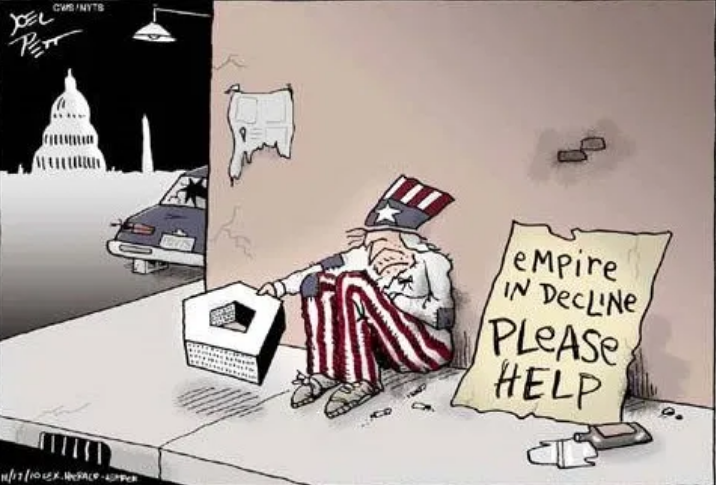
http://hiram1555.com/2016/10/21/presidential-debates-indicate-end-of-us-empire-analyst/

Source: Hiram1555.com

I have written previously about the waxing of China and the waning of the USA; China is the global political-economic powerhouse of the present, not just of the future.[iv]  One very significant impact of Covid-19 will be to increase the speed of this major shift in global power.  Just as 1945 saw the beginning of the final end of the British Empire, so 2020 is likely to see the beginning of the end of the USA as the dominant global (imperial) power.  Already, even in influential USAn publications, there is now much more frequent support for the view that the US is a failing state.[v] This transition is likely to be painful, and it will require world leaders of great wisdom to ensure that it is less violent than may well be the case.

The differences between the ways in which the USA and China have responded to Covid-19 have been marked, and have very significant implications for the political, social and economic futures of these states.  Whilst little trust should be placed on the precise accuracy of reported Covid-19 mortality rate figures throughout the world, China has so far reported a loss of 3.2 people per million to the disease (as of 17 April, and thus including the 1290 uplift announced that day), whereas the USA has reported deaths of 8.38 per 100,000 (as of that date); moreover, China’s figures seem to have stabilised, whereas those for the USA continue to increase rapidly.[vi]  These differences are not only very significant in human terms, but they also reflect a fundamental challenge in the relative significance of the individual and the community in US and Chinese society.

Few apart from hardline Republicans in the USA now doubt the failure of the Trump regime politically, socially, economically and culturally. This has been exacerbated by the US government’s failure to manage Covid-19 effectively (even worse than the UK government’s performance), and its insistent antagonism towards China through its deeply problematic trade-war[vii] even before the outbreak of the present coronavirus. Anti-Chinese rhetoric in the USA is but a symptom of the realisation of the country’s fundamental economic and policial weaknesses in the 21st century.   President Trump’s persistent use of the term “Chinese virus” instead of Covid-19[viii] is also just a symptom of a far deeper malaise.   Trump is sadly not the problem; the problem is the people and system that enabled him to come to power and in whose interests he is trying to serve (alongside his own).  China seems likely to come out of the Covid-19 crisis much stronger than will the USA.[ix]

Whether people like it or not, and despite cries from the western bourgeoisie that it is unfair, and that the Chinese have lied about the extent of Covid-19 in their own country in its early stages, this is the reality.  China is the dominant world power today, let alone tomorrow.

An ever more digital world

https://www.forbes.com/sites/columbiabusinessschool/2020/04/21/how-covid-19-will-accelerate-a-digital-therapeutics-revolution/

Source: Forbes.com

The digital technology sector is already the biggest winner from Covid-19.  Everyone with access, knowledge and ability to pay for connectivity and digital devices has turned to digital technologies to continue with their work, maintain social contacts, and find entertainment during the lockdowns that have covered about one-third of the world’s population by mid-April.[x]  Those who previously rarely used such technologies, have overnight been forced to use them for everything from buying food online, to maintaining contacts with relatives and friends.

There is little evidence that the tech sector was prepared for such a windfall in the latter part of 2019,[xi] but major corporations and start-ups alike have all sought to exploit its benefits as quickly as possible in the first few months of 2020, as testified by the plethora of announcements claiming how various technologies can win the fight against Covid-19.[xii]

One particularly problematic outcome has been the way in which digital tech champions and activists have all sought to develop new solutions to combat Covid-19.  While sometimes this is indeed well intended, more often than not it is primarily so that they can benefit from funding that is made available for such activities by governments and donors, or primarily to raise the individual or corporate profile of those involved.  For them, Covid-19 is a wonderful business opportunity.  Sadly, many such initiatives will fail to deliver appropriate solutions, will be implemented after Covid-19 has dissipated, and on some occasions will even do more harm than good.[xiii]

There are many paradoxes and tensions in this dramatically increased role of digital technology after Covid-19. Two are of particular interest.  First, many people who are self-isolating or social distancing are beginning to crave real, physical human contact, and are realising that communicating only over the Internet is insufficiently fulfilling.  This might offer some hope for the future of those who still believe in the importance of non-digitally mediated human interaction, although I suspect that such concerns may only temporarily delay our demise into a world of cyborgs.[xiv] Second, despite the ultimate decline in the US economy and political power noted above, US corporations have been very well placed to benefit from the immediate impact of Covid-19, featuring in prominent initiatives such as UNESCO’s Global Education Coalition,[xv] or the coalition of pharmaceutical companies brought together by the Gates Foundation.[xvi]

Whatever the precise details, it is an absolute certainty that the dominance of digital technologies in everyone’s lives will increase very dramatically following Covid-19 and this will be exploited by those intent on reaping the profits from such expansion in their own interests.

Increasing acceptance of surveillance by states and companies: the end of privacy as we know it.
https://www.wired.com/story/phones-track-spread-covid19-good-idea/

Source: Wired.com

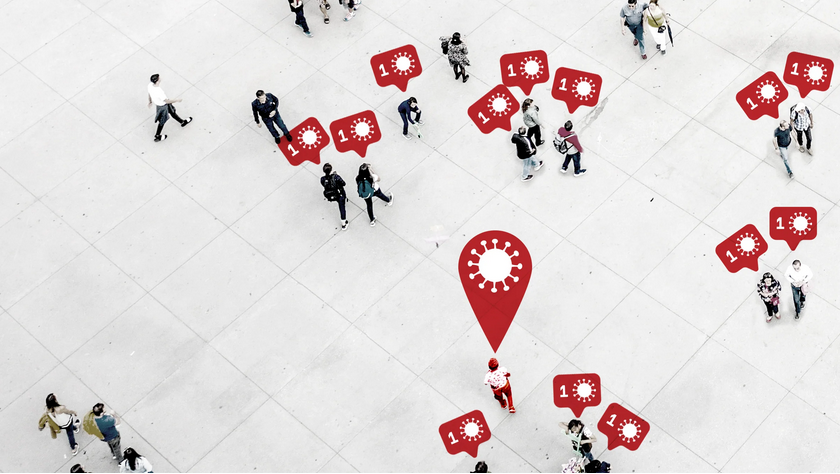
A third, related, global impact of Covid-19 will be widely increased global acceptance of the roles of states and companies in digital surveillance.  Already, before 2020, there was a growing, albeit insufficient, debate about the ethics of digital surveillance by states over issues such as crime and “terrorism”, and its implications for privacy.[xvii]  However, some states, such as China, South Korea, Singapore and Israel, have already used digital technologies and big data analytics extensively and apparently successfully in monitoring and tracking the spread of Covid-19,[xviii] and other coalitions of states and the private sector are planning to encourage citizens to sign up to having fundamental aspects of what has previously been considered to be their private and personal health information made available to unknown others.[xix]

One problem with such technologies is that they require substantial numbers of people to sign up to and then use them.  In more authoritarian states where governments can make such adherence obligatory by imposing severe penalties for failure to do so, they do indeed appear to be able to contribute to reduction in the spread of Covid-19 in the interests of the wider community.  However, in more liberal democratic societies, which place the individual about the community in importance, it seems less likely that they will be acceptable.

Despite such concerns, the growing evidence promoted by the companies that are developing them that such digital technologies can indeed contribute to enhanced public health will serve as an important factor in breaking down public resistance to the use of surveillance technologies and big data analytics.  Once again, this will ultimately serve the interest of those who already have greater political and economic power than it will the interests of the most marginalised.

Online shopping and the redesign of urban centres.

https://www.independent.co.uk/life-style/health-and-families/coronavirus-herd-immunity-meaning-definition-what-vaccine-immune-covid-19-a9397871.html

Source: Independent.co.uk

Self-isolation and social distancing have led to the dramatic emptying of towns and cities across the world.  Businesses that have been unable to adapt to online trading have overnight been pushed into a critical survival situation, with governments in many of the richer countries of the world being “forced” to offer them financial bail-outs to help them weather the storm.  Unfortunately, most of this money is going to be completely wasted and will merely create huge national debts for years into the future.  People who rarely before used online shopping are now doing so because they believe that no other method of purchasing goods is truly safe.

The new reality will be that most people will have become so used to online shopping that they are unlikely to return in the future to traditional shopping outlets. Companies that have been unable to adjust to the new reality will fail.  The character of our inner-city areas will change beyond recognition.  This is a huge opportunity for the re-design of urban areas in creative, safe and innovative ways.  Already, the environmental impact of a reduction in transport and pollution has been widely seen; wildlife is enjoying a bonanza; people are realising that their old working and socialising patterns may not have been as good as they once thought.[xx]  Unfortunately, it is likely that this opportunity may not be fully grasped, and instead governments that lack leadership and vision will instead seek to prop up backward-looking institutions, companies and organisations, intent on preserving infrastructure and economic activities that are unfit for purpose in the post-pandemic world.  Such a mentality will lead to urban decay and ghettoization, where people will fear to tread, and there is a real danger of a downward spiral of urban deprivation.

There are, though, many bright signs of innovation and creativity for those willing to do things differently.  Shops and restaurants that have been able to find efficient trustworthy drivers are now offering new delivery services; students are able to draw on the plethora of online courses now available; new forms of communal activity are flourishing; and most companies are realising that they don’t actually need to spend money on huge office spaces, but can exploit their labour even more effectively by enabling them to work from home.

We must see the changes brought about by responses to Covid-19 as important opportunities to build for the future, and to create human-centred urban places that are also sensitive to the natural environments in which they are located.

Increasing global inequalities
https://gulfnews.com/photos/news/indian-migrants-forced-to-walk-home-amid-covid-19-lockdown-1.1585394226024?slide=2

Source: Gulfnews.com

The net outcome of the above four trends will lead inexorably to a fifth, and deeply concerning issue: the world will become an even more unequal place, where those who can adapt and survive will flourish, but where the most vulnerable and marginalised will become even more immiserated.

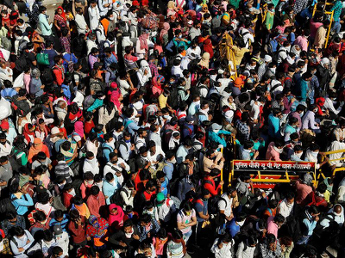
This is already all too visible.  Migrant workers are being ostracised, and further marginalised.[xxi]  In India, tens of thousands of labourers are reported to have left the cities, many of them walking home hundreds of kilometres to their villages.[xxii] In China, Africans are reported as being subjected to racist prejudice, being refused service in shops and evicted from their residences.[xxiii]  In the UK, many food banks have had to close and it is reported that about 1.5. million people a day are going without food.[xxiv]  The World Bank is reporting that an extra 40-50 million people across the world will be forced into poverty by Covid-19, especially in Africa.[xxv]  People with disabilities have become even more forgotten and isolated.[xxvi]  The list of immediate crises grows by the day.

More worrying still is that there is no certainty that these short-term impacts will immediately bounce-back once the pandemic has passed.  It seems at least as likely that many of the changes will have become so entrenched that aspects of living under Covid-19 will become the new norm.  Once again, those able to benefit from the changes will flourish, but the uneducated, those with disabilities, the ethnic minorities, people living in isolated areas, refugees, and women in patriarchal societies are all likely to find life much tougher in 2021 and 2022 even than they do at present.   Much of this rising inequality is being caused, as noted above, by the increasing role that digital technologies are playing in people’s lives.  Those who have access and can afford to use the Internet can use it for shopping, employment, entertainment, learning, and indeed most aspects of their lives.  Yet only 59% of the world’s population are active Internet users.[xxvii]

Looking positively to the future.

People will respond in different ways to these likely trends over the next few years, but we will all need to learn to live together in a world where:

  • China is the global political economic power,
  • Our lives will become ever more rapidly experienced and mediated through digital technology,
  • Our traditional views of privacy are replaced by a world of surveillance,
  • Our towns and cities have completely different functions and designs, and
  • There is very much greater inequality in terms of opportunities and life experiences.

In dealing with these changes, it is essential to remain positive; to see Covid-19 as an opportunity to make the world a better place for everyone to live in, rather than just as a threat of further pain, misery and death, or an opportunity for a few to gain unexpected windfall opportunities to become even richer.  Six elements would seem to be important in seeking to ensure that as many people as possible can indeed flourish once the immediate Covid-19 pandemic has dissipated:

  • First, these predictions should encourage all of us to prioritise more on enhancing the lives of the poorest and the most marginalised, than on ensuring economic growth that mainly benefits the rich and privileged. This applies at all scales, from designing national health and education services, to providing local, community level care provision.
  • This requires an increased focus on negotiating communal oriented initiatives and activities rather than letting the greed and selfishness of individualism continue to rule the roost.
  • Third, it is essential that we use this as an opportunity to regain our physical sentient humanity, and reject the aspirations of those who wish to create a world that is only experienced and mediated through digital technology. We need to regain our very real experiences of each other and the world in which we live through our tastes, smells, the sounds we hear, the touches we feel, and the sights we see.
  • Fourth, it seems incredibly important that we create a new global political order safely to manage a world in which China replaces the USA as the dominant global power. The emergence of new political counterbalances, at a regional level as with Europe, South Asia, Africa and Latin America seems to be a very important objective that remains to be realised.  Small states that choose to remain isolated, however arrogant they are about the “Great”ness of their country, will become ever more vulnerable to the vagaries of economic, political and demographic crisis.
  • Fifth, we need to capitalise on the environmental impact of Covid-19 rapidly to shape a world of which we are but a part, and in which we care for and co-operate with the rich diversity of plant and animal life that enjoys the physical richness of our planet. This will require a comprehensive and rigorous evaluation of the harm caused to our world by the design and use of digital technologies.[xxviii]
  • Finally, we need to agree communally on the extent to which individual privacy matters, and whether we are happy to live in a world of omnipresent surveillance by companies (enabling them to reap huge profits from our selves as data) and governments (to maintain their positions of power, authority and dominance). This must not be imposed on us by powerful others.  It is of paramount importance that there is widespread informed public and communal discussion about the future of surveillance in a post-Covid-19 era.

I trust that these comments will serve to provoke and challenge much accepted dogma and practice.  Above all, let’s try to think of others more than we do ourselves, let’s promote the reduction of inequality over increases in economic growth, and let’s enjoy  an integral, real and care-filled engagement with the non-human natural world.


Notes:

[i] For current figures see https://coronavirus.thebaselab.com/ and https://gisanddata.maps.arcgis.com/apps/opsdashboard/index.html#/bda7594740fd40299423467b48e9ecf6, although all data related with this coronavirus must be treated with great caution; see https://unwin.wordpress.com/2020/04/11/data-and-the-scandal-of-the-uks-covid-19-survival-rate/

[ii] Modi’s hasty coronavirus lockdown of India leaves many fearful for what comes next, https://time.com/5812394/india-coronavirus-lockdown-modi/

[iii] Jack Dorsey, the founder of Twitter and Square, might well be an exception with his $1 billion donation to support Covid-19 relief and other charities; see https://www.theverge.com/2020/4/7/21212766/jack-dorsey-coronavirus-covid-19-donate-relief-fund-square-twitter

[iv] See, for example, discussion in Unwin, T. (2017) Reclaiming ICT4D, Oxford: Oxford University Press.  I appreciate that such arguments infuriate many people living in the USA,

[v] See, for example, George Parker’s, We Are Living in a Failed State: The coronavirus didn’t break America. It revealed what was already broken, The Atlantic, June 2020 (preview) https://www.theatlantic.com/magazine/archive/2020/06/underlying-conditions/610261/.

[vi] Based on figures from https://coronavirus.thebaselab.com/ on 15th April 2020.  For comparison, Spain had 39.74 reported deaths per 100,000, Italy 35.80, and the UK 18.96.

[vii] There are many commentaries on this, but The Wall Street Journal’s account on 9 February 2020 https://www.wsj.com/articles/u-s-china-trade-war-reshaped-global-commerce-11581244201 is useful, as is the Pietersen Institute’s timeline https://www.piie.com/blogs/trade-investment-policy-watch/trump-trade-war-china-date-guide.

[viii] For a good account of his use of language see Eren Orbey’s comment in The New Yorker, Trump’s “Chinese virus” and what’s at stake in the coronovirus’s name,  https://www.newyorker.com/culture/cultural-comment/whats-at-stake-in-a-viruss-name

[ix] China’s massive long-term strategic investments across the world, not least through its 一带一路 (Belt and Road) initiative, have placed it in an extremely strong position to reap the benefits of its revitalised economy from 2021 onwards (for a good summary of this initiative written in January 2020 see https://www.cfr.org/backgrounder/chinas-massive-belt-and-road-initiative)

[x] Kaplan, J., Frias, L. and McFall-Johnsen, M., A third of the global population is on coronavirus lockdown…, https://www.businessinsider.com/countries-on-lockdown-coronavirus-italy-2020-3?r=DE&IR=T

[xi] This is despite conspiracy theorists arguing that those who were going to gain most from Covid-19 especially in the digital tech and pharmaceutical industry had been active in promoting global fear of the coronavirus, or worse still had actually engineered it for their advantage.  See, for example, The New York Times, https://www.nytimes.com/2020/04/17/technology/bill-gates-virus-conspiracy-theories.html, or Thomas Ricker, Bill Gates is now the leading target for Coronavirus falsehoods, says report, https://www.theverge.com/2020/4/17/21224728/bill-gates-coronavirus-lies-5g-covid-19 .

[xii] See, for example, Shah, H. and Kumar, K., Ten digital technologies helping humans in the fight against Covid-19, Frost and Sullivan, https://ww2.frost.com/frost-perspectives/ten-digital-technologies-helping-humans-in-the-fight-against-covid-19/, Gergios Petropolous, Artificial interlligence in the fight against COVID-19, Bruegel, https://www.bruegel.org/2020/03/artificial-intelligence-in-the-fight-against-covid-19/, or Beech, P., These new gadgets were designed to fight COVID-19, World Economic Forum, https://www.weforum.org/agenda/2020/04/coronavirus-covid19-pandemic-gadgets-innovation-technology/. It is also important to note that the notion of “fighting” the coronavirus is also deeply problematic.

[xiii] For my much more detailed analysis of these issues, see Tim Unwin (26 March 2020), collaboration-and-competition-in-covid-19-response, https://unwin.wordpress.com/2020/03/26/collaboration-and-competition-in-covid-19-response/

[xiv] For more on this see Tim Unwin (2017) Reclaiming ICT4D, Oxford: Oxford University Press, and for a brief comment https://unwin.wordpress.com/2016/08/03/dehumanization-cyborgs-and-the-internet-of-things/.

[xv] Although, significantly, Chinese companies are also involved; see https://en.unesco.org/covid19/educationresponse/globalcoalition

[xvi] For the work of the Gates Foundation and US pharmaceutical companies in fighting Covid-19 https://www.outsourcing-pharma.com/Article/2020/03/27/Bill-Gates-big-pharma-collaborate-on-COVID-19-treatments

[xvii] There is a huge literature, both academic and policy related, on this, but see for example OCHCR (2014) Online mass-surveillance: “Protect right to privacy even when countering terrorism” – UN expert, https://www.ohchr.org/SP/NewsEvents/Pages/DisplayNews.aspx?NewsID=15200&LangID=E; Privacy International, Scrutinising the global counter-terrorism agenda, https://privacyinternational.org/campaigns/scrutinising-global-counter-terrorism-agenda; Simon Hale-Ross (2018) Digital Privacy, Terrorism and Law Enforcement: the UK’s Response to Terrorist Communication, London: Routledge; and Lomas, N. (2020) Mass surveillance for national security does conflict with EU privacy rights, court advisor suggests, TechCrunch, https://techcrunch.com/2020/01/15/mass-surveillance-for-national-security-does-conflict-with-eu-privacy-rights-court-advisor-suggests/.

[xviii] Kharpal, A. (26 March 2020) Use of surveillance to fight coronavirus raised c oncenrs about government power after pandemic ends, CNBC, https://www.cnbc.com/2020/03/27/coronavirus-surveillance-used-by-governments-to-fight-pandemic-privacy-concerns.html; but see also more critical comments about the efficacy of such systems as by Vaughan, A. (17 April 2020) There are many reasons why Covid-19 contact-tracing apps may not work, NewScientist, https://www.newscientist.com/article/2241041-there-are-many-reasons-why-covid-19-contact-tracing-apps-may-not-work/

[xix] There are widely differing views as to the ethics of this.  See, for example, Article 19 (2 April 2020) Coronavirus: states use of digital surveillance technologies to fight pandemic must respect human rights, https://www.article19.org/resources/covid-19-states-use-of-digital-surveillance-technologies-to-fight-pandemic-must-respect-human-rights/ ; McDonald, S. (30 March 2020) The digital response to the outbreak of Covid-19, https://www.cigionline.org/articles/digital-response-outbreak-covid-19. See also useful piece by Arcila (2020) for ICT4Peace on “A human-centric framework to evaluate the risks raised by contact-tracing applications” https://mcusercontent.com/e58ea7be12fb998fa30bac7ac/files/07a9cd66-0689-44ff-8c4f-6251508e1e48/Beatriz_Botero_A_Human_Rights_Centric_Framework_to_Evaluate_the_Security_Risks_Raised_by_Contact_Tracing_Applications_FINAL_BUA_6.pdf.pdf

[xx] See, for example, https://www.bbc.com/future/article/20200326-covid-19-the-impact-of-coronavirus-on-the-environment, https://www.msn.com/en-gb/news/world/the-environmental-impact-of-covid-19/ss-BB11JxGv?li=BBoPWjQ, https://www.theguardian.com/world/2020/mar/26/life-after-coronavirus-pandemic-change-world, and https://www.scientificamerican.com/article/how-the-coronavirus-pandemic-is-affecting-co2-emissions/.

[xxi] See The Guardian (23 April 2020) ‘We’re in a prison’: Singapore’s million migrant workers suffer as Covid-19 surges back, https://www.theguardian.com/world/2020/apr/23/singapore-million-migrant-workers-suffer-as-covid-19-surges-back

[xxii] Al Jazeera (6 April 2020) India: Coronavirus lockdown sees exodus from cities, https://www.aljazeera.com/programmes/newsfeed/2020/04/india-coronavirus-lockdown-sees-exodus-cities-200406104405477.html.

[xxiii] Financial Times (13th April) China-Africa relations rocked by alleged racism over Covid-19, https://www.ft.com/content/48f199b0-9054-4ab6-aaad-a326163c9285

[xxiv] Global Citizen (22 April 2020) Covid-19 Lockdowns are sparking a hunger crisis in the UK, https://www.globalcitizen.org/en/content/covid-19-food-poverty-rising-in-uk/

[xxv] Mahler, D.G., Lakner, C., Aguilar, R.A.C. and Wu, H. (20 April 2020) The impact of Covid-19 (Coronavirus) on global poverty: why Sub-Saharan Africa might be the region hardest hit, World Bank Blogs, https://blogs.worldbank.org/opendata/impact-covid-19-coronavirus-global-poverty-why-sub-saharan-africa-might-be-region-hardest

[xxvi] Bridging the Gap (2020) The impact of Covid-19 on persons with disabilities, https://bridgingthegap-project.eu/the-impact-of-covid-19-on-people-with-disabilities/

[xxvii] Statista (Januarv 2020) https://www.statista.com/statistics/269329/penetration-rate-of-the-internet-by-region/

[xxviii] For a wider discussion of the negative environmental impacts of climate change see https://unwin.wordpress.com/2020/01/16/digital-technologies-and-climate-change/.

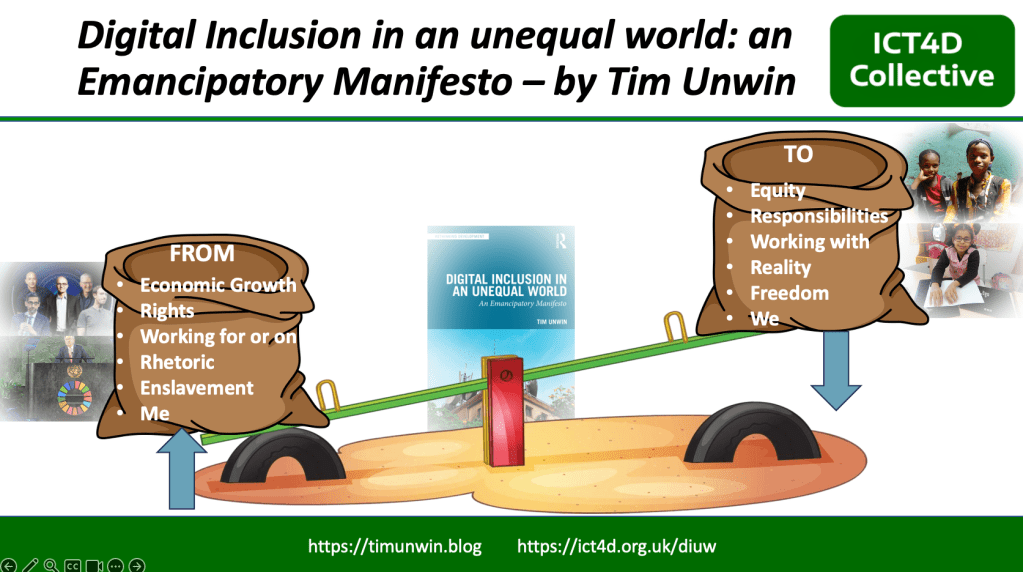
3 Comments

Filed under Africa, AI, Asia, capitalism, China, Climate change, Commonwealth, Covid-19, cybersecurity, Development, digital technologies, Disability, Education, Empowerment, Environment, Europe, Gender, Geography, ICT4D, ICTs, inclusion, India, Inequality, Internet, Latin America, Learning, poverty, Restaurants, Rural, SDGs, Sustainability, UK, United Nations

Collaboration and competition in Covid-19 response

A week ago, I wrote a post about the potential of crowdsourcing and the use of hashtags for gathering enhanced data on infection rates for Covid-19.  Things have moved rapidly since then as companies, civil society organisations, international organisations, academics and donors have all developed countless initiatives to try to respond.  Many of these initiatives seem to be more about the profile and profits of the organisations/entities involved than they do about making a real impact on the lives of those who will suffer most from Covid-19.  Yesterday, I wrote another post on my fears that donors and governments will waste huge amounts of money, time and effort on Covid-19 to little avail, since they have not yet learnt the lessons of past failures.

I still believe that crowdsourcing could have the potential, along with many other ways of gathering data, to enhance decision making at this critical time. However the dramatic increase in the number of such initiatives gives rise to huge concern.  Let us learn from past experience in the use of digital technologies in development, and work together in the interests of those who are likely to suffer the most.  Eight issues are paramount when designing a digital tech intervention to help reduce the impact of Covid-19, especially through crowdsourcing type initiatives:

  • Don’t duplicate what others are already doing
  • Treat privacy and security very carefully
  • Don’t detract from official and (hopefully) accurate information
  • Keep it simple
  • Ask questions that will be helpful to those trying to respond to the pandemic
  • Ensure that there are at least some questions that are the same in all surveys if there are multiple initiatives being done by different organisations
  • Work with a globally agreed set of terminology and hashtags (#)
  • Collaborate and share

Don’t duplicate what others are already doing

As the very partial list of recent initiatives at the end of this post indicates, many crowdsourcing projects have been created across the world to gather data from people about infections and behaviours relating to Covid-19.  Most of these are well-intentioned, although there will also be those that are using such means unscrupulously also to gather data for other purposes.  Many of these initiatives ask very similar questions.  Not only is it a waste of resources to design and build several competing platforms in a country (or globally), but individual citizens will also soon get bored of responding to multiple different platforms and surveys.  The value of each initiative will therefore go down, especially if there is no means of aggregating the data.  Competition between companies may well be an essential element of the global capitalist system enabling the fittest  to accrue huge profits, but it is inappropriate in the present circumstances where there are insufficient resources available to tackle the very immediate responses needed across the world.

Treat privacy and security very carefully

Most digital platforms claim to treat the security of their users very seriously.  Yet the reality is that many fail to protect the privacy of much personal information sufficiently, especially when software is developed rapidly by people who may not prioritise this issue and cut corners in their desire to get to market as quickly as possible.  Personal information about health status and location is especially sensitive.  It can therefore be hugely risky for people to provide information about whether they are infected with a virus that is as easily transmitted as Covid-19, while also providing their location so that this can then be mapped and others can see it.  Great care should be taken over the sort of information that is asked and the scale at which responses are expected.  It is not really necessary to know the postcode/zipcode of someone, if just the county or province will do.

Don’t detract from official and (hopefully) accurate information

Use of the Internet and digital technologies have led to a plethora of false information being propagated about Covid-19.  Not only is this confusing, but it can also be extremely dangerous.  Please don’t – even by accident – distract people from gaining the most important and reliable information that could help save their lives.  In some countries most people do not trust their governments; in others, governments may not have sufficient resources to provide the best information.  In these instances, it might be possible to work with the governments to ehance their capacity to deliver wise advice.  Whatever you do, try to point to the most reliable globally accepted infomation in the most appropriate languages (see below for some suggestions).

Keep it simple

Many of the crowdsourcing initiatives currently available or being planned seem to invite respondents to complete a fairly complex and detailed list of questions.  Even when people are healthy it could be tough for them to do so, and this could especially be the case for the elderly or digitally inexperienced who are often the most vulnerable.  Imagine what it would be like for someone who has a high fever or difficulty in breathing trying to fill it in.

Ask questions that will be helpful to those trying to respond to the pandemic

It is very difficult to ask clear and unambiguous questions.  It is even more difficult to ask questions about a field that you may not know much about.  Always work with people who might want to use the data that your initiative aims to generate.  If you are hoping, for example, to produce data that could be helpful in modelling the pandemic, then it is essential to learn from epidemiologists and those who have much experience in modelling infectious diseases.  It is also essential to ensure that the data are in a format that they can actually use.  It’s all very well producing beautful maps, but if they use different co-ordinate systems or boundaries from those used by government planners they won’t be much use to policy makers.

Ensure that there are at least some questions that are the same in all surveys if there are multiple initiatives being done by different organisations

When there are many competing surveys being undertaken by different organisations about Covid-19, it is important that they have some identical questions so that these can then be aggregated or compared with the results of other initiatives.   It is pointless having multiple initiatives the results of which cannot be combined or compared.

Work with a globally agreed set of terminology and hashtags (#)

The field of data analytics is becoming ever more sophisticated, but if those tackling Covid-19 are to be able readily to use social media data, it would be very helpful if there was some consistency in the use of terminology and hashtags.  There remains an important user-generated element to the creation of hashtags (despite the control imposed by those who create and own social media platforms), but it would be very helpful to those working in the field if some consistency could be encouraged or even recommended by global bodies and UN agencies such as the WHO and the ITU.

Collaborate and share

Above all, in these unprecendented times, it is essential for those wishing to make a difference to do so collaboratively rather than competitively.  Good practices should be shared rather than used to generate individual profit.  The scale of the potential impact, especially in the weakest contexts is immense.  As a recent report from the Imperial College MRC Centre for Global Infectious Disease Analysis notes, without interventions Covid-19 “would have resulted in 7.0 billion infections and 40 million deaths globally this year. Mitigation strategies focussing on shielding the elderly (60% reduction in social contacts) and slowing but not interrupting transmission (40% reduction in social contacts for wider population) could reduce this burden by half, saving 20 million lives, but we predict that even in this scenario, health systems in all countries will be quickly overwhelmed. This effect is likely to be most severe in lower income settings where capacity is lowest: our mitigated scenarios lead to peak demand for critical care beds in a typical low-income setting outstripping supply by a factor of 25, in contrast to a typical high-income setting where this factor is 7. As a result, we anticipate that the true burden in low income settings pursuing mitigation strategies could be substantially higher than reflected in these estimates”.


Resources

This concluding section provides quick links to generally agreed reliable and simple recommendations relating to Covid-19 that could be included in any crowdsourcing platform (in the appropriate language), and a listing of just a few of the crowdsourcing initiatives that have recently been developed.

Recommended reliable information on Covid-19

Remember the key WHO advice adopted in various forms by different governments:

  • Wash your hands frequently
  • Maintain social distancing
  • Avoid touching eyes, nose and mouth
  • If you have fever, cough and difficulty breathing, seek medical care early

A sample of crowdsourcing initiatives

Some of the many initiatives using crowdsourcing and similar methods to generate data relating to Covid-19 (many of which have very little usage):

Lists by others of relevant initiatives:


Global Covid-19 mapping and recording initiatives

The following are currently three of the best sourcs for global information about Covid-19 – although I do wish that they clarified that “infections” are only “recorded infections”, and that data around deaths should be shown as “deaths per 1000 people” (or similar density measures) and depicted on choropleth maps.


2 Comments

Filed under Africa, AI, Asia, capitalism, cybersecurity, Development, digital technologies, Education, Empowerment, ICT4D, ICTs, inclusion, India, ITU, Latin America, mobile phones, Pakistan, Sustainability, technology

Ten tips for working at home and self-isolating

I have always worked in part from home, on the road overseas in hotels, alone in strange places…  However, when I left full-time salaried work in 2015, and shifted primarily to working from home, I swiftly discovered the need substantially to readjust my habits.  For those without such experiences, who are being forced to self-isolate or work at home as a result of Covid-19 there are likely to be many challenges – but there are now plenty of guides available for things to do to help manage the rapid change of lifestyle (see below). Most of these are very sensible, but do not necessarily coincide with my own experiences.  So here are just a few tips that might be useful (in approximate order of importance):

1. Be positive and treat it as an adventure

positiveIt is much easier to enjoy change if you treat it in a positive way.  Think about all the good things: no need to travel to work; spending time with those you love (hopefully); doing things at home that you have always wanted to!  Treat the next few weeks or months as an opportunity to do new and exciting things.  Discover your home again! (Although this highlights the huge challenges facing the homeless).

2. Try to keep your  work place separate from your sleeping place

Clipart of woman sleeping at work image in Cliparts category at pixy.orgIf at all possible, it is absolutely essential to have separate sleeping and working places so that you remain sane.  There is much evidence that trying to sleep in the same place in which you work can confuse the mind, and may tend to make it continue to work when you want to go to sleep – even subconsciously – rather than enabling you to rest.  You are likely to be worried about the implications of Covid-19, and so it is essential that you do all you can to ensure a good night’s sleep.  This may not be easy for many people, but you should still try not to work in your bedroom!  And don’t continue working too late – give your body the time it needs to relax and rest.

3. Take as much exercise as possible

stairs-stairs-clipart_500-500It is incredibly easy to put on weight when working at home, even if you think you are not doing so!  This is bad for your health, and bad for morale.  It’s easy to understand why this happens: many people commute to work, and even if not cycling, they walk from their transport node to their office; homes are smaller than offices, and so you generally walk more at work than at home; and often you will go out of the office during the daytime, perhaps for lunch, but you can’t do this if you are self-isolating.  There are lots of things, though, that you can do to rectify this: walk up and down stairs several times a day (never take the lift); ensure that you go for a short walk every hour (even if it is just 20 times around your home); if you have some outdoor space, take up gardening (it uses lots of muscles you never thought you had!); and even if you don’t decide to buy a stationary bike (actually much cheaper than joining a gym), you can still exercise with a resistance band, or even use bags of sugar as weights!

4. Let everyone in the household have their own nest for working in

nestYou may well already have done this!  However, if not, remember that we all construct different kinds of places for working in.  I know I am one of the most antisocial people in the world when I am thinking and writing;  my home office looks a complete mess, but I know exactly where everything is, and woe betide anyone who moves something!  So, if there are several of you working at home, try to create your own spaces for working in.  Your husband, wife, partner, or children will all work in different ways, so try to ensure that everyone has a separate working place.  You will all be more productive – and get on better after you’ve finished working!

5. Plan your day – and give yourself treats

PLanWhen you don’t have to catch public transport, or cycle/drive/walk to work it is terribly easy to be lazy, and let time slip by without focusing on the tasks in hand.  Most people like to feel they have achieved something positive every day.  One way to ensure this is to plan each day carefully.  And don’t forget to give yourself treats when you have achieved something – whatever it is that you enjoy!

6. Keep a balance to your life

balanceThis is closely linked to planning – but don’t just spend all your time relaxing, or doing nothing but work!  It’s important to maintain diversity in life.  If your boss expects you to work a 10 hour day, then make sure that you do (hopefully s/he won’t).   But even then you  have 14 hours each day to do other things (please try and get 7 hours of sleep – it will help to keep you fit and well)!  I find that having a colour coded diary with a clear schedule helps me manage my life – even though I tend to work far too much!  The trouble is I enjoy my work!

7. Create agreed ground rules and expectations to reduce tensions

rulesMany people who now have to work at home because of Covid-19 will not have had much experience previously at doing this.  It can come as a shock getting to see other aspects of a loved one’s life.  Tensions are bound to arise, especially if you are trying to work when your children are at home because school has been closed.  It can help to have a thorough and transparent discussion between all members of a household (including the children) to set some ground rules for how you are going to manage the next few weeks and months.  This can indeed be challenging, and will frequently require revisiting, but having some shared expectations can help reduce the tensions that are bound to arise.  Listening (however difficult it is) often helps to lower tension.
8. Wear different clothes just as you would if you went out to work (and play)

Man and Woman Collection, Vector IllustrationThe clothes we wear represent how we feel, but can also help shape those feelings.  It is amazing what an effect it can have if you get dressed smartly when you are feeling low.  Likewise, most people like to dress in more relaxed clothing when they stop working, and we don’t usually sleep in the same clothes that we have worn during the day.  Just because you are working at home, doesn’t necessarily mean that you will work well in your pyjamas (and imagine if you are suddenly asked to join a conference call without time to change!).  The simple message is that we should continue to take care of ourselves, just as if we were going out to work or to a party!

9. Switch off your digital devices (at least some of the time)

digitalEnjoy the physicality of life.  Don’t always feel you have to be online in case “work” wants to get in touch.  None of us are that important.  The world will get by perfectly well without us!  There is a lot of evidence that being online late at night can also disturb our sleep patterns. Remember that although we are increasingly being programmed to believe that digital technology gives us much more freedom in how we work,  it is actually mainly used by the owners of capital further to exploit their workforces by making them work longer hours for no extra pay!

10. Use the time creatively to do something that you have always wanted to do

veg-vegetables-clipart-8-clipart-station_650-400Being self-isolated at home will mean that you have vastly more time on your hands than you can ever imagine (as long as you don’t work all day and night).  Use it creatively to do something that you have always thought about doing,  but never had the time before.  Read those books that you always wanted to. Learn a musical instrument.  Learn to speak a new language (Python or Mandarin).  Take up painting.  Discover how to cook delicious meals with limited resources.  Photograph the wildlife in your garden. Grow your own vegetables.  Make beer.  Even just plan your next (or first) holiday.

Other useful resources (with a mainly UK focus) include:

I very much hope that some of these ideas will help to get you through the next few months, and that we will all emerge from the Covid-19 pandemic as being more considerate for others, and less concerned about ourselves.  Thinking more about how you can help others rather than what you want yourself is a good way to start planning for self-isolation.

4 Comments

Filed under Books, capitalism, China, digital technologies, Education, Empowerment, language, Learning, Music

Reflections on Buenos Aires

The invitation to give a Keynote Address at the International Federation of Library Associations and Institutions’ (IFLA) excellent President’s meeting last month, provided me with a wonderful opportunity to spend a little bit of time exploring the fascinating city of Buenos Aires.  I had never been there before, and I left with many contradictory memories in my mind.  I hope that the pictures and reflections below capture something of these.

This slideshow requires JavaScript.

My lasting memory, is of the diversity yet uniformity of the city.  Laid out on its grid plan from the 19th century, blocks are dominated mostly by 6-10 storey grey buildings, in various states of dilapidation, with a wide range of different commercial uses on the ground floor.  There seemed to be little attempt at commercial zoning; shoe shops were next to ones selling fruit and vegetables on one side and mobile phones on the other.

It is hard for people living in Europe or North America to appreciate that in the early 20th century Argentina was among the 10 richest countries in the world in terms of per capita income; it was richer than either France or Germany, and had outgrown Canada and Australia in population, total income, and per capita income.  This huge wealth is still visible in the moumental buildings spread widely apart across the city: the theatres, mansions, and buildings of state.  Yet its subsequent economic decline and political turmoil also remains all too visible.

The city’s large size, and the dispersed character of its monuments, made me feel that it had little obvious centre.  Yes, people point to the Obelisco at the crossing between Av. 9 de Julho and Av. Corrientes as its centre; others emphasise the importance of the Plaza de Mayo and the Av. de Mayo leading west towards the Congreso de la Nación Argentina from the Casa Rosada.  However, for me it still lacks a central throbbing heart.  New growth and development is scattered apparently haphazardly through the city, in parts of Palermo or to the east by the old harbour.

It is also amazingly ethnically and culturally diverse; hugely European, yet little like Europe.  Somehow there remains the sense of an indigenous undercurrent from before the Spanish conquests of the 16th century, but this has been almost completely obliterated by the waves of European settlements; mainly Spanish, Italians, and Germans.  By the early 20th centry it is estimated that just under a third of the population had been born overseas.  This European identity of the 19th and early 20th centuries remains very visible in the built landscape and in the culture of the city.  The grand opera house, the Teatro Colon, is reputed to be one of the five best concert venues in the world in terms of acoustics.  Nearby are other theatres, such as the impressive Teatro Nacional Cervantes; the Teatro Gran Splendid to the north-west opened in 1919, and a century later the bookshop that now fills its balconies has been described by National Geographic as the most beautiful in the world.

This European culture is embedded in its music; it helped me understand why the cultural evening generously laid on for us included, surprisingly for me, classical ballet and music, alongside the challenging songs of Nacha Guevara, and the stunning beauty and passion of the tango.

And the wealth of a growing middle class is increasingly visible in the plush shopping malls of the Galerias Pacifico or in the old railway arches of Distrito Arcos in Palermo; gated communities nearby enable the rich to watch out over the city, in which poor beggars sleep on the streets underneath any shelter they can find.

I have never been anywhere in the world where there have been so many people calling out “Cambio”, “Cambio”, wanting to change your money on the streets; scarcely surprising when it is so difficult to change it legally elsewhere, and the cashpoint machines charge almost 20% for transactions!

Many people like the old cemetery at Recoleta; I found it depressing, and an omnipresent reminder of the faded past of the city.  But the white brightness of the adjacent Iglesia Nuestra Señora del Pilar next door was a reminder of the vital present, and the neighbouring Centro Cultural Recoleta a vibrant, colour-filled explosion of life.  The lively market nearby provided me with the opportunity to purchase a much-wanted multi-coloured gaucho belt.

Thanks to all those in Buenos Aires, for this wonderful opportunity; and I haven’t even started on the huge steaks and the delicious Malbec wines…


1 Comment

Filed under capitalism, Conferences, Dance, Inequality, Latin America, Photographs, Politics

Servants of the poor – WSIS TalkX

TalkXIt was a great honour to have been invited – a few hours beforehand – to give one of the inaugural WSIS TalkX presentations last Thursday evening as WSIS 2019 drew towards its close.  Seven of us had been asked if we would like to talk about our lives in technology for around 5 minutes. I opted to go last – just before the closing cocktail party.  Several colleagues had to leave before the end to get to other commitments and so they spoke first; I knew I would be remaining to enjoy the wine.  Before me there were some amazing, inspirational speakers: Stephenie Rodriguez, Joel Radvanyi, Gloria Kimbwala, Ayanna T Samuels, Sebastian Behaghel and Ted Chen

With little time to prepare it was difficult to know quite what to say.  We had been asked to tell our own stories, and so I chose five images as five “scenes” around which to tell my tale.  Posting the images on social media, I had hoped that people might be able to see them as I spoke…

1 2 3 4 5


In reality, I’m not sure that many people actually saw the pictures, and I know many were rather confused when I began and introduced myself in the persona of one of my aliases.  I had, though, been introduced by the Master of Ceremonies as someone learning from the life of Hassan-i Sabbah…

Screenshot 2019-04-15 at 20.29.34

To see and hear what I had to say, click on the image above (or here).  Fully to understand it, though, you would need to listen to the other six talks, because I tried hard to link it to what the speakers had to say – especially, for example, about the best university in the world, and the SDGs!

The basic message is simple – if we really believe in empowering the poor and the marginalised through digital technologies we must become their servants…

Leave a comment

Filed under Africa, agriculture, Asia, capitalism, Commonwealth, Development, Disability, Education, Empowerment, Geography, Higher Education, ICT4D, Photographs, research, South Bihar

Why the notion of a Fourth Industrial Revolution is so problematic

Watching a video last Wednesday at UNESCO’s Mobile Learning Week produced by Huawei on the Fourth Industrial Revolution reminded me of everything that is problematic and wrong with the notion: it was heroic, it was glitzy, women were almost invisible, and above all it implied that technology was, and still is, fundamentally changing the world.  It annoyed and frustrated me because it was so flawed, and it made me think back to when Klaus Schwab first gave me a copy of his book The Fourth Industrial Revolution in 2016.  I read it, appreciated its superficially beguiling style, found much of it interesting, but realised that the argument was fundamentally flawed (for an excellent review, see Steven Poole’s 2017 review in The Guardian).  Naïvely,  I thought it was just another World Economic Forum publication that would fade away into insignificance on my bookshelves.  How wrong I was!  Together with the equally problematic notion of Frontier Technologies (see my short critique), it has become a twin-edged sword held high by global corporations and the UN alike to describe and justify the contemporary world, and their attempts to change it for the better.  Whilst I have frequently challenged the notion and construction of the Fourth Industrial Revolution, I have never yet put togther my thoughts about it in a brief, easy to read format. Huawei’s video has provoked this response built around five fundamental problems.

Problem 1: a belief that technology has changed, and is changing the world

All so-called industrial revolutions are based on the fundamentally incorrect assumption that technology is changing the world.  With respect to the Fourth Industrial Revolution, Schwab thus claims that “The premise of this book is that technology and digitization will revolutionalize everything, making the overused and often ill-used adage “this time is different” apt.  Simply put, major technological innovations are on the brink of fueling momentous change throughout the world – inevitably so” (Schwab, 2016, section 1.2; see also Schwab, 2015).  The entire edifice of the Fourth Industriual Revolution is built on this myth.  However, technology itself does not change anything.  Technology is designed by people for particular purposes that serve very specific interests.  It is these that change the world, and not the technology.  The reductionist,  instrumental and deterministic views inherent within most notions of a Fourth Industrial Revolution are thus highly problematic.

In the popular mind, each so-called industrial revolution is named after a particular technology: the first associated with mechanisation, water,  steam power and railways in the late-18th and early-19th centuries; the second, mass production and assembly lines enabled by electricity in the late-19th and early-20th centuries; the third, computers and automation from the 1960s; and the fourth, often termed cyber-physical systems, based on the interconnectivity between  physical, biological and digital spheres, from the beginning of the 21st century.  However, all of these technologies were created by people to achieve certain objectives, usually to make money, become famous, or simply to overcome challenges.  It is the same today.  It is not the technologies that are changing the world, but rather the vision, ingenuity and rapaciousness of those who design, build and sell them.  Humans still have choices.  They can design technologies in the interests of the rich and powerful to make them yet richer and more powerful, or they can seek to craft technologies that empower and serve the interests of the poor and marginalised.  Those developing technologies associated with so-called “smart cities” can thus be seen as marginalising those living in rural areas and in what might disparagingly be called “stupid villages”.

Problem 2: a revolutionary view of history

Academics (especially historians and geographers) have long argued as to whether human society changes in an evolutionary or a revolutionary way.  There have thus been numerous debates as to how many agricultural revolutions there were that preceded or were associated with the so-called (first) industrial revolution (Overton, 1996). Much of this evidence suggests that whilst “revolutions” are nice, simple ideas to capture the essence of change, in reality they build on developments that have evolved over many years, and it is only when these come together and are reconfigured in new ways, to serve specific interests, that fundamental changes really occur.

For example, the Internet was initially used almost exclusively by academics, with the first e-mail systems being developed in the 1970s, and the World Wide Web in the 1980s, largely in an academic context.  It was only when the commercial potential of these technologies was fully realised in the latter half of the 1990s that use of the Web really began to expand rapidly.  In this context, most things associated with the so-called Fourth Industrial Revolution actually seem to be extensions of ideas that existed very much earlier.  The notion of integrated physical-biological systems is, for example, not something dramatically new in the 21st century, but rather has its genesis in the notion of cybernetic organisms, or cyborgs, at least as early as the 1960s.

More importantly, the main drivers of the so-called Fourth Industrial Revolution go back many centuries, and each previous “revolution” was merely an evolving process to find new ways of configuring them.  If there was any fundamental “revolutionary” change, it occurred in the rise of individualism and the Enlightenment during the 17th century in Europe.  Even this had many precursors.  Fully to understand the digital economies of the 21st century, we need to appreciate the shift in balance from communal to individual interests some four centuries previously.  Once it was appreciated that individual investment in the means of production could generate greater productivity and profit, and institutions were set in place to enable this (such as land enclosure, patent law and copyright), then the scene was set for “money bent upon accretion of money”, or capital (Marx, 1867), to become the overaching driver of an increasingly global economic system in the centuries that followed.  The interests underlying the so called Fourth Industrial Revolution are largely the same as those driving the economic, social and political systems of the previous 400 years: market expansion and a reduction of labour costs through the use of technology.  It is these interests, rather than the technologies themeselves that are of most importance.

Problem 3: an élite view of history

The notion of industrial revolutions is also largely an expression of an élite view of history. It is about, and written by, the élites who shape them and enable them.  It is about the owners of the factories rather than the labourers, it is about innovative geniuses rather than the peasants labouring to produce food for them, and it is about the wise politicians who see the potential of these technologies to transform the world in their own image.  Certainly, the Fourth Industrial Revolution is premised on an assumption that global corporations and brilliant innovative minds are driving the technological revolution that will change the world for what they see as being the better.  It is also no coincidence that the World Economic Forum’s Centre for the Fourth Industrial Revolution was established in the USA, and that most of its proponents seem to be drawn from US élites (see for example the World Economic Forum’s video What is the Fourth Industrial Revolution?).  The notion of the Fourth Industrial Revolution clearly serves the interests of USAn élite politicans, academics and business leaders far more than it does the poor and marginalised living in remote rural areas of South Asia, or the slums of Africa.

Counter to such views are those of academics and practitioners who argue that history should be as much about the poor and underprivileged as it is about their political,  military or industrial leaders.  The poor have left few historical records about their lives, and yet they vastly outnumber the few élite people who have ruled and controlled them.  Traditional history has been the history of the literate, designed to reinforce their positions of power, and this remains true of accounts of the Fourth Industrial Revolution.  In 2017, Oxfam reported that eight people thus owned the same wealth as the poorest half of humanity; five of these people made most of their wealth directly from the technology sector.  In an increasingly unequal world, the way to create greater equality cannot be through the use of the technologies that have created those inequalities in the first place.  Rather, to change the global balance of power, there needs to be a history that focuses on the lives of the poorest and most marginalised, rather than one that glorifies élites in the interests of maintaining their hold over power.

Problem 4: male heroes of the revolution

One of the most striking and shocking features of the Huawei video that prompted this critique was that almost all of the people illustrated as the heroes of the industrial revolutions were men.  Most historical accounts of industrial revolutions likewise focus on male innovators and industrialists, and yet women played a very significant part in shaping the outcomes of these technological changes, not least in their roles as workers and as mothers.  Not only are accounts of industrial revolutions élite histories, they are mainly also male histories.  It is thus scarcely surprising that men continue to dominate the rhetoric and imagery of the Fourth Industrial Revolution, despite the efforts of those who have sought to reveal the important role that women such as Ada Lovelace, Grace Hopper or Radia Perlman played in the origins of digital technologies (see techradar, 2018).

The perspective of a masculine revolutionary view of societal change presents significant challenges for those of us working to involve more women and girls in science and technology (see for example TEQtogether).  Much more needs to be done to highlight the roles of women in history, especially histories of technology, and to encourage girls to appreciate the roles that these women have played in the past and thus the potential they have to change the future themselves (see for example, the Women’s History Review and the Journal of Women’s History).  Otherwise, the masculine domination of the digital technology sector will continue to reproduce itself in ways that reproduce the gender inequalities and oppression that persist today.

Problem 5: the Fourth Industrial Revolution as a self-fulfilling prophecy

Finally, the idea of a heroic, male industrial revolution has been promoted in large part as a self fulfilling prophecy.  Schwab’s book and its offspring are not so much a historical account of the past, but rather a programme for the future, in which technology will be used to make the world a better place.  This is hugely problematic, because these technologies have actually been used to create significant inedqualiites in the world, and they are are continuing to do so at an ever faster rate.

The problem is that although the espoused aspirations to do good of those acclaiming the Fourth Industrial Revolution  may indeed be praiseworthy, they are starting at the wrong place.   The interests of those shaping these technologies are not primarily in changing the basis of our society into a fairer and more equal way of living together, but rather they are in competing to ensure their dominance and wealth as far as possible into the future.  The idea of a Fourth Industrial Revolution seeks to legitimise such behaviour at all levels from that of states such as the USA, to senior leaders and investors in  technology companies, to young entrepreneurs eager to make their first million.  Almost all are driven primarily by their interests in money bent on the accretion of money; some are beguiled by the prestige of potential status as a hero of the Fourth Industrial Revolution.  In some cultures such behaviour is indeed seen as being good, but in others there are greater goods.  The Fourth Industrial Revolution is in large part a conspiracy to shape the world ever more closely in the imagination of a small, rich, male and powerful élite.

Is it not time to reflect once more on the true meanings of a revolutionary idea, and to help empower some of the world’s poorest and most marginalised people to create a world that is better in their eyes rather than in our own?

[For a wider discussion of revolution, see Unwin, Tim, A revolutionary idea, in: Unwin, Tim (ed.) A European Geography, Pearson, 1998.  As ever, please also note that a short post cannot include everything, so remember to read this in the broader context of my other writing, and especially Reclaiming ICT4D (OUP, 2017).  For my thoughts on the other edge of the two-edged sword, do read my much shorter “Why the notion of ‘frontier technologies’ is so problematic…“]

20 Comments

Filed under Africa, agriculture, capitalism, Development, Geography, Inequality, SDGs, United Nations